


Classic Vintage Bookshelf Speakers Minimus 7
$95.00
Out of stock
Get first dibs on the next one
The Minimus 7 is little only in size, not in performance – it’s a real giant in concert hall sound.
The high compliance woofer element gives astounding bass and the dome tweeter produces crisp, clean highs.
Careful acoustic design matches the two dynamic elements with the enclosure and damping materials – resulting in amazingly smooth, broad frequency response.
Specifications:
Type: 2 way, 2 driver loudspeaker system
Frequency Response: 50Hz to 22kHz
Power Handling: 40W
Impedance: 8Ω
Bass: 1 x 100mm high compliance
Tweeter: 1 x 25mm dome
Finish: die cast aluminum cabinet
Dimensions: 180 x 113 x 110mm, Weight: 2.03kg
Asking just $95 for the pair.
| Weight | 15 lbs |
|---|---|
| Dimensions | 8.5 × 14.6 × 11 in |
Realistic was Radio Shack's own brand of audio and radio gear. Radio Shack, founded in Boston in 1921, launched the line in the mid-1950s, and Realistic gear was sold across Canada through Radio Shack stores. We carry Realistic stereo receivers, bookshelf speakers, turntables and equalizers. We've had more than 30 Realistic listings so far. Every used Realistic here is inspected, tested and serviced as required, then photographed in-house and covered by our Bumper-to-Bumper Warranty and Perpetual Trade-Back Program. Don't see the model you want? Tell us on First Dibs and we'll email you when one arrives.
The Realistic models we've sold most often include the Minimus-7 bookshelf speakers and the STA-720 and STA-2250 stereo receivers.
The Realistic story
Radio Shack began in Boston in 1921 as a store and mail-order business for radio amateurs. In 1954 Harman Kardon proposed a private-label audio line for it called Realist. The Realist camera company objected, so the line became Realistic, and Harman Kardon built its first FM tuner.
Tandy and the stereo years. Tandy Corporation took over Radio Shack in 1963 and grew it to thousands of stores across the US and Canada. Realistic covered everything from STA receivers and quadraphonic QTA receivers to LAB turntables, cassette decks and the little Minimus-7 speaker.
Who built it. Realistic products were built to Radio Shack's specifications, some in Tandy's own plants and many by outside suppliers in Asia, so the maker varies by model and year. Radio Shack phased out the Realistic name in the 1990s in favour of Optimus.
Which Realistic is which?
STA stereo receivers: from budget models such as the STA-16 and STA-21 to the 75-watt STA-2000 of 1977 and the STA-2270 of 1985.
Quadraphonic QTA receivers (mid-1970s): such as the QTA-770, with SQ, CD-4 and Radio Shack's own Quatravox modes.
Amplifiers and tuners: such as the SA-1000A and SA-2000 amplifiers and the TM-1000 tuner of 1977.
Turntables: the belt-drive LAB-50 to LAB-300, the direct-drive LAB-400, and Realistic/Miracord automatics.
Speakers: the Minimus-7 and Minimus-5 bookshelf speakers and the Mach One.
Optimus era (1990s): models such as the Optimus STA-20 receiver.
Buying used Realistic: what to check
Who made it. Realistic gear came from many suppliers, so service information and parts depend on the actual maker. Check the label and the service manual.
Quadraphonic receivers. High Fidelity found the QTA-770's distortion rose toward the frequency extremes, so test one in stereo at the volume you'll use.
Minimus-7. It needs roughly 30 to 50 watts and has little bass on its own, so pair it with a subwoofer. Enthusiasts say a crossover capacitor upgrade can make a big difference.
Age. Test every input and switch, inspect speaker surrounds, and check turntable belts and automatic mechanisms.
Everything we list is inspected, tested and serviced as required here, and comes with our warranty.
You may also like…
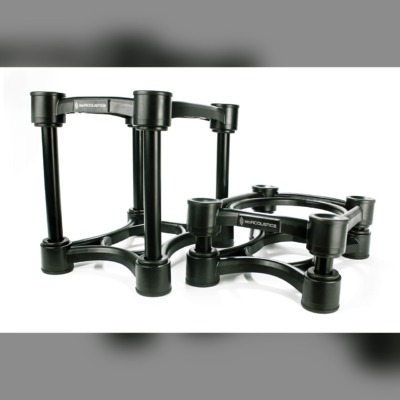

IsoAcoustics ISO-200 Isolation Stands (Pair)
- ✔️ Genuine IsoAcoustics, brand new, from an authorized Canadian dealer
- ✔️ A pair of isolation stands for large speakers and studio monitors
- ✔️ Rated to 75 lb (34 kg) short or 60 lb (27 kg) tall
- ✔️ Short 3.75 in (95 mm) or tall 8.5 in (215 mm), up to 6.5° of tilt
- ✔️ Pick up in Kanata by appointment, or shipped across Canada and internationally
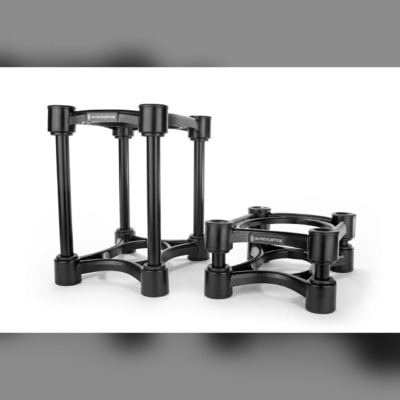

IsoAcoustics ISO-155 Isolation Stands (Pair)
- ✔️ Genuine IsoAcoustics, brand new, from an authorized Canadian dealer
- ✔️ A pair of isolation stands for medium speakers and studio monitors
- ✔️ Rated to 40 lb (18 kg) short or 35 lb (16 kg) tall
- ✔️ Short 3 in (76 mm) or tall 8.25 in (210 mm), up to 6.5° of tilt
- ✔️ Pick up in Kanata by appointment, or shipped across Canada and internationally


IsoAcoustics ISO-130 Isolation Stands (Pair)
- ✔️ Genuine IsoAcoustics, brand new, from an authorized Canadian dealer
- ✔️ A pair of isolation stands for small speakers and studio monitors, rated to 20 lb (9 kg)
- ✔️ Short 2.8 in (71 mm) or tall 8.25 in (210 mm), up to 6.5° of tilt
- ✔️ Top plate 5.1 × 6 in (130 × 152 mm)
- ✔️ Pick up in Kanata by appointment, or shipped across Canada and internationally
Related Products
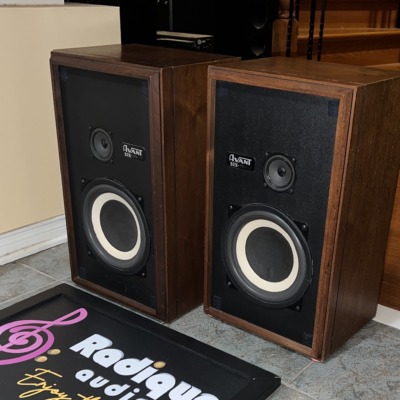
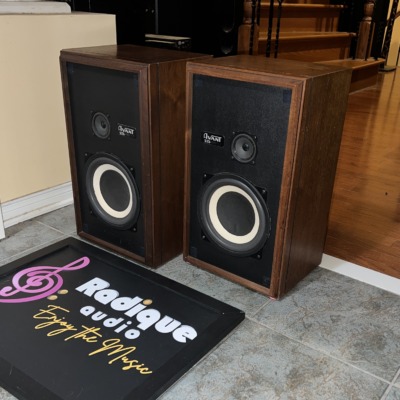
Avant 1AX Bookshelf Speakers, Pair – Canadian, Real Wood Veneer
A matched pair of Avant 1AX bookshelf speakers: Canadian-built, dressed in real wood veneer, with freshly refoamed woofers and sequential serial numbers.
✔️ Good condition — the real wood veneer is sound, with light scuffs on the tops
✔️ Woofers refoamed on our bench with new surrounds
✔️ Made in Canada — a sequential-serial matched pair
✔️ Covered by Radique Warranty
✔️ Includes Perpetual Trade-Back Program eligibility
✔️ Expertly packed for safe shipping
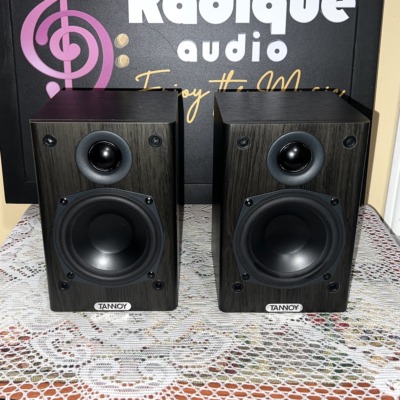
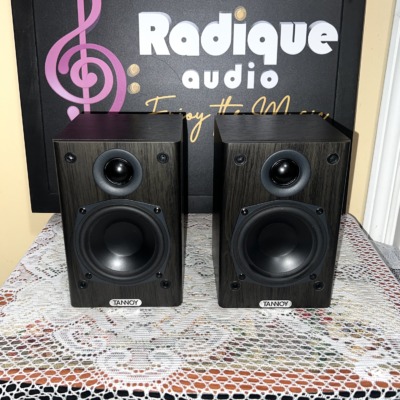
Tannoy Mercury FR Custom Compact Speakers – Dark Oak, Pair
A pair of compact two-way Tannoy speakers from the limited Custom edition of Tannoy's Mercury F-series, in very good condition, with a wall bracket built into the back of each cabinet.
✔️ Very good condition — free of significant marks; both grilles included
✔️ The limited Custom edition of Tannoy's Mercury F-series, in Dark Oak
✔️ Built-in wall bracket — hang them, or stand them on a shelf
✔️ Covered by Radique Warranty
✔️ Includes Perpetual Trade-Back Program eligibility
✔️ Expertly packed for safe shipping
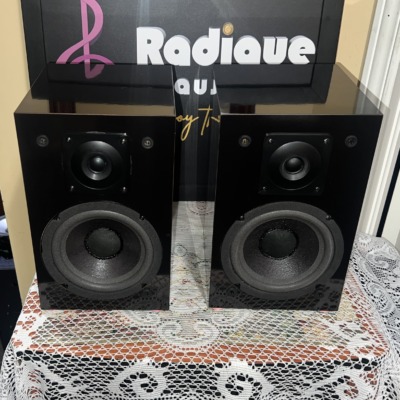
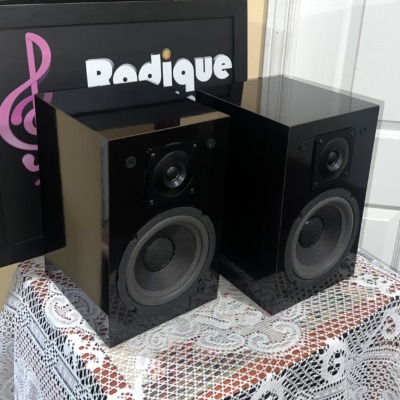
NHT Model 1C Bookshelf Speakers, Pair – Gloss Black, Re-Foamed
A pair of NHT Model 1C bookshelf speakers in gloss black, dated 1992, in very good condition and freshly re-foamed by us.
✔️ Very good condition — free of significant marks; grilles included
✔️ Freshly re-foamed by us — new woofer surrounds
✔️ Sealed and magnetically shielded — made in the USA in 1992
✔️ Covered by Radique Warranty
✔️ Includes Perpetual Trade-Back Program eligibility
✔️ Expertly packed for safe shipping
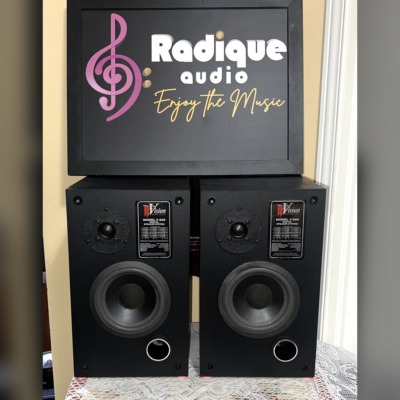
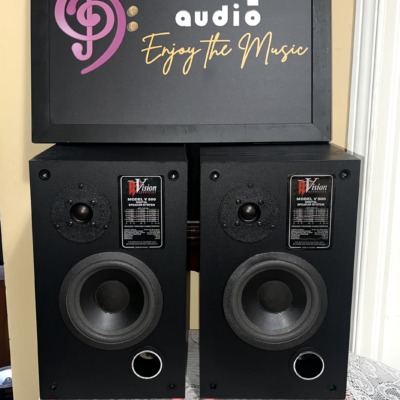
Vision Acoustics V500 Bookshelf Speakers, Pair – Made in Canada
A pair of solidly built, Canadian-made Vision Acoustics V 500 bookshelf speakers in black ash, rated at a sensitive 92 dB, fully tested on our bench and in very good condition.
✔️ Very good condition — free of significant marks, in black ash
✔️ Efficient 92 dB design, easy for a modest receiver to drive
✔️ Made in Canada, with 5-way binding posts
✔️ Covered by Radique Warranty
✔️ Includes Perpetual Trade-Back Program eligibility
✔️ Expertly packed for safe shipping
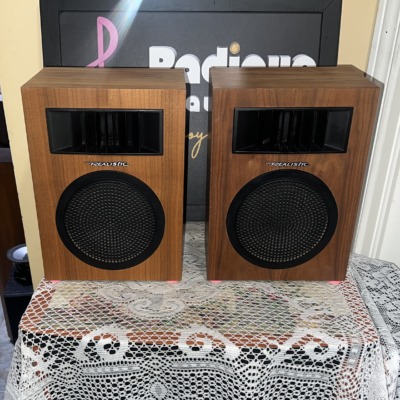
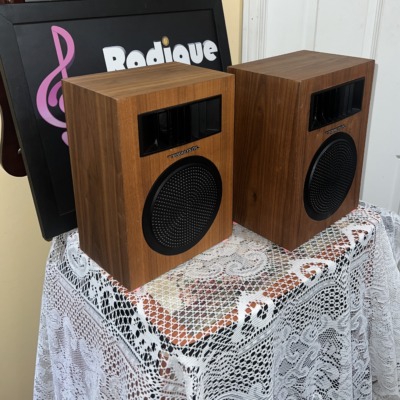
Realistic Minimus-5 Speakers, Pair – Vintage, Real Wood Veneer
A vintage pair of Realistic Minimus-5 two-way bookshelf speakers from Radio Shack, in a warm brown real wood veneer, with horn tweeters, fully tested on our bench and in very good condition.
✔️ Very good condition — free of significant marks
✔️ Real wood veneer, with rigid grilles over the woofers
✔️ Two ways in: small binding posts and an RCA-type speaker-level jack
✔️ Covered by Radique Warranty
✔️ Includes Perpetual Trade-Back Program eligibility
✔️ Expertly packed for safe shipping
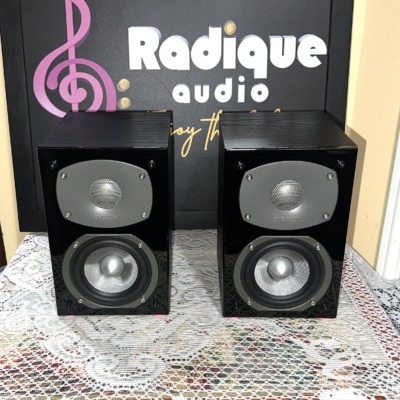
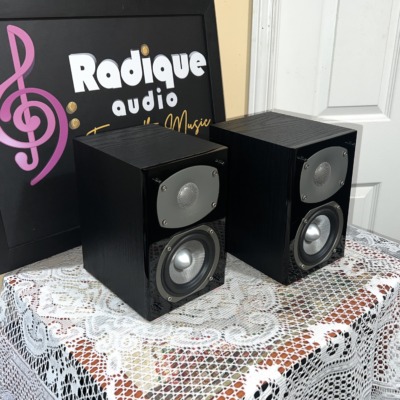
Energy C-50 Bookshelf Speakers, Pair – Ultra-Compact, Black Ash
A pair of ultra-compact Energy C-50 bookshelf speakers, designed and engineered in Canada, in black ash with gloss black front baffles and their black cloth grilles. They have been tested on our bench and are in very good condition.
✔️ Very good condition — black ash with gloss baffles, grilles included
✔️ 1-inch aluminum tweeter and 4½-inch woofer, video-shielded
✔️ Five-way binding posts — designed and engineered in Canada
✔️ Covered by Radique Warranty
✔️ Includes Perpetual Trade-Back Program eligibility
✔️ Expertly packed for safe shipping
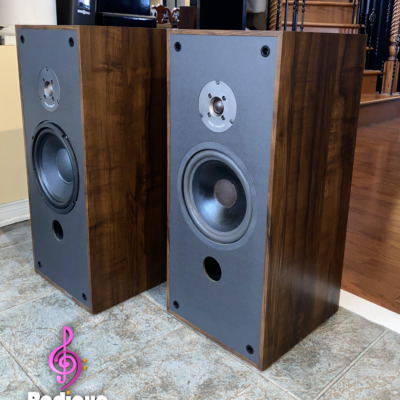
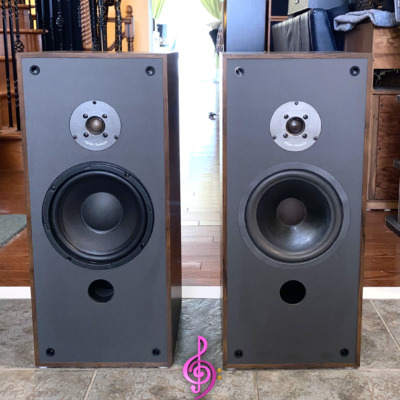
Paisley Reference Two Bookshelf Speakers, Pair – Made in Canada
A pair of Paisley Research Reference Two bookshelf speakers, made in Canada, in walnut-finish cabinets with black front baffles and their black cloth grilles. They have been tested on our bench, they play nicely, and they are in very good condition. One woofer is a replacement fitted by a previous owner, not by us; the details are under Condition.
✔️ Very good condition — walnut-finish cabinets, grilles included
✔️ Tested and playing nicely; one replacement woofer, disclosed below
✔️ 8-inch woofers, front-ported — made in Canada
✔️ Covered by Radique Warranty
✔️ Includes Perpetual Trade-Back Program eligibility
✔️ Expertly packed for safe shipping
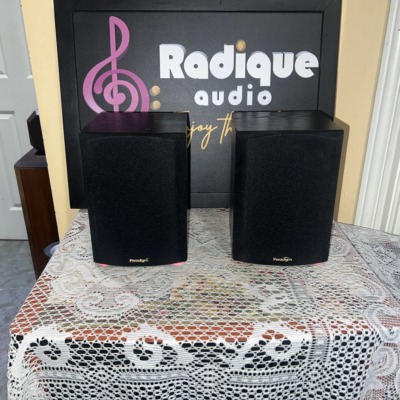
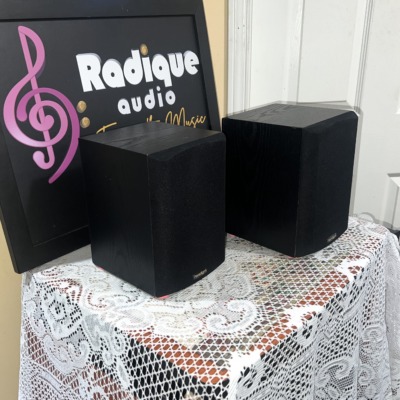
Paradigm Micro v.3 Bookshelf Speakers, Pair – Black Ash
A pair of Paradigm Micro v.3 speakers, the smallest of Paradigm's Canadian-designed Performance Series, with rubber woofer surrounds that will never need refoaming.
✔️ Tested on our bench
✔️ Fair condition, priced to match
✔️ Covered by Radique Warranty
✔️ Includes Perpetual Trade-Back Program eligibility
✔️ Expertly packed for safe shipping
