


Mirage Nanosat Speaker Stands (MS-STB-1) 31″ Tall
$125.00
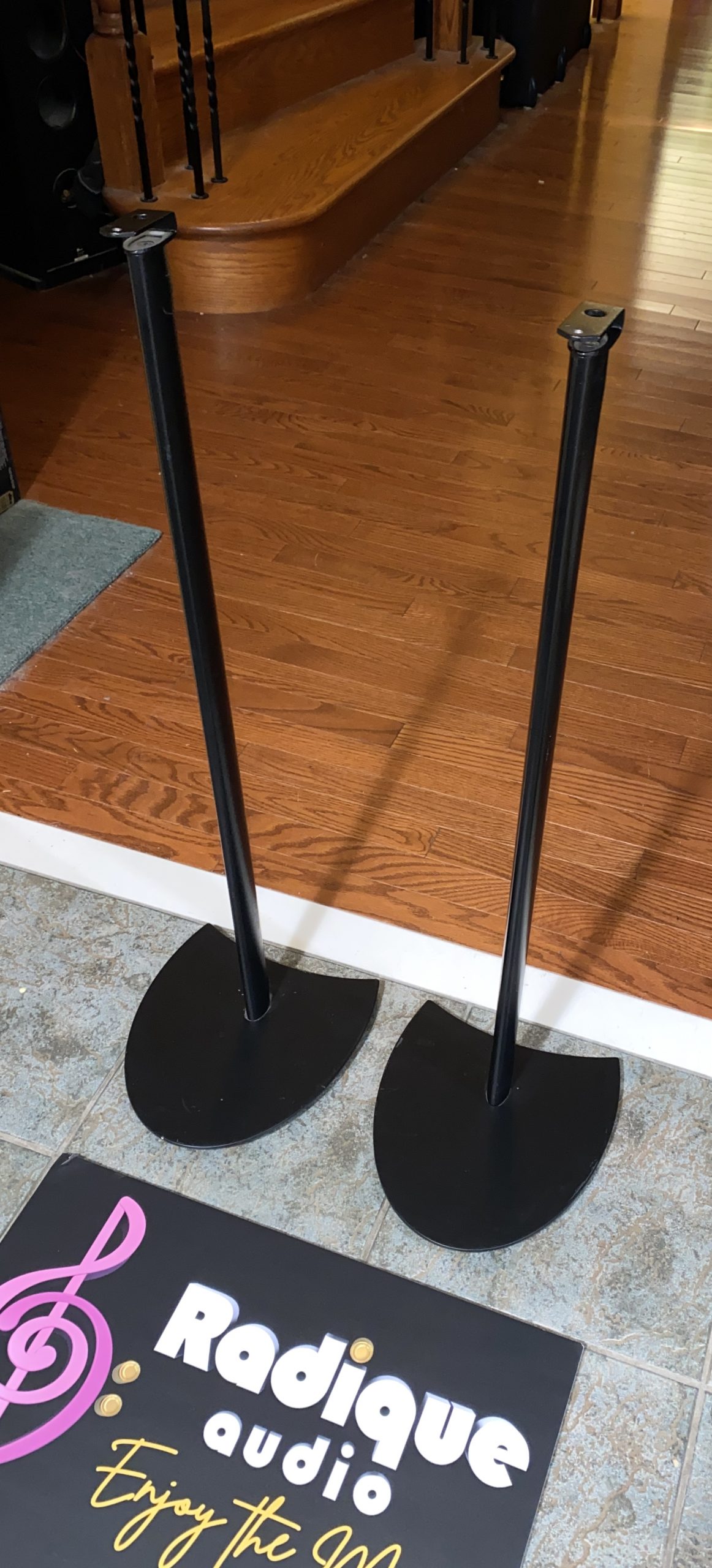
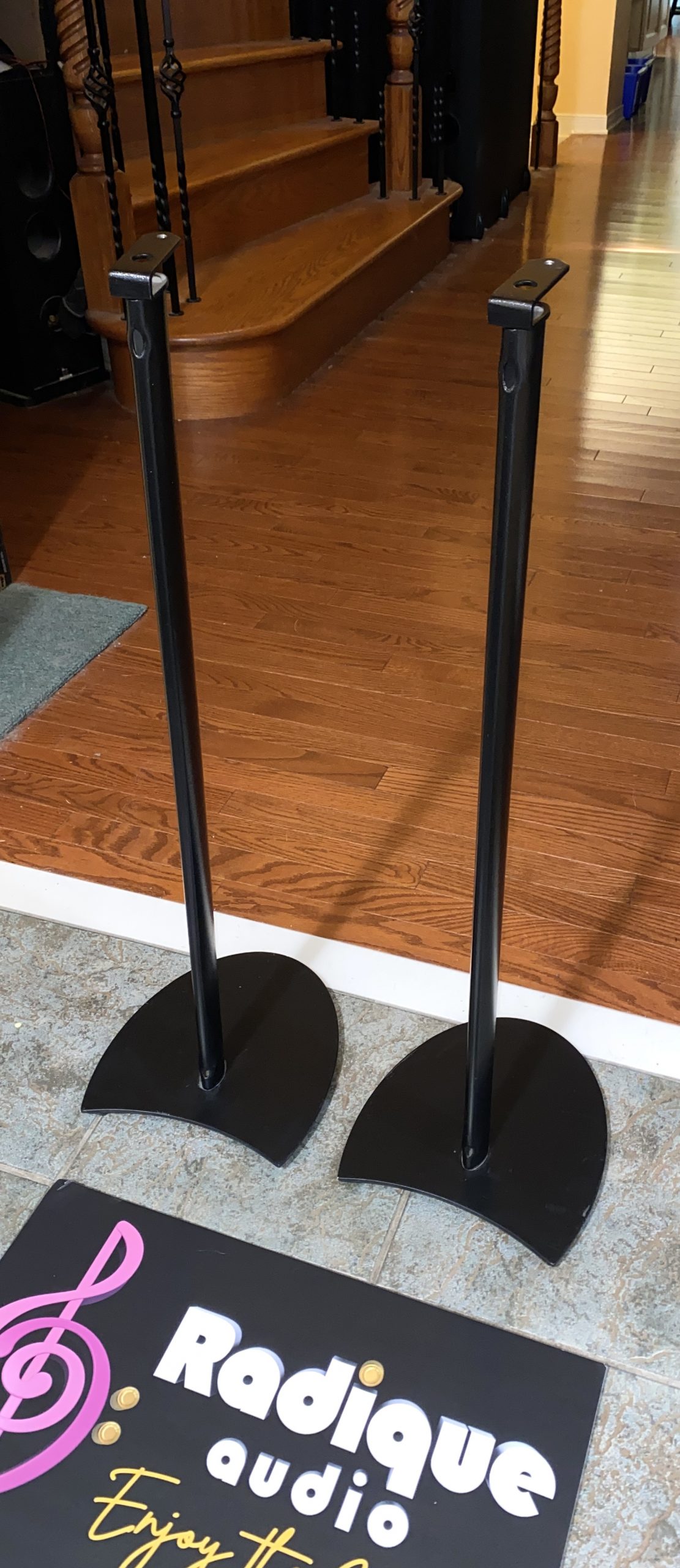
Mirage’s own stands for the Nanosat satellites, 31 inches, which is the height the Omnipolar dispersion was designed around. The satellite clips onto the top and takes a single screw into the threaded insert in its base, and the cable runs concealed inside the column. Weighted base measuring 10 by 9 inches. Fits original, Prestige and v2 Nanosats. Very good condition.
Out of stock
This one has sold. Want first dibs on the next one?
We take these in regularly. Leave your name and email, and we’ll email you the moment one is listed, so you hear first. No cost, no obligation.
Email me when one is listed
How we get a component ready for sale. What our bench covers →
Other speaker stands we have in stock now
3 in stock · $75.00–$245.00 · all ship
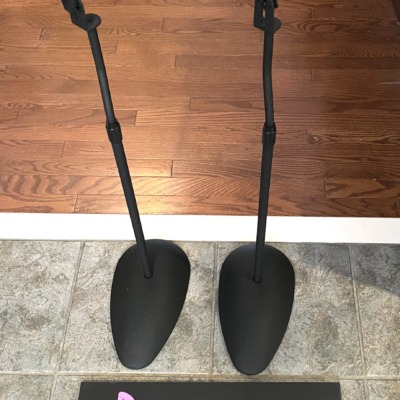
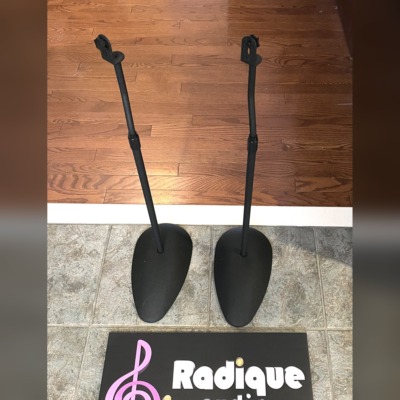 Height adjustable Black satellite stands with Oval Bases$75.00Ships
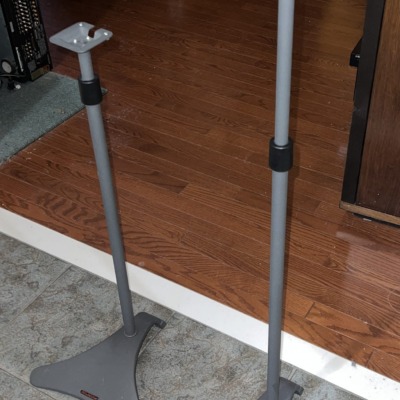
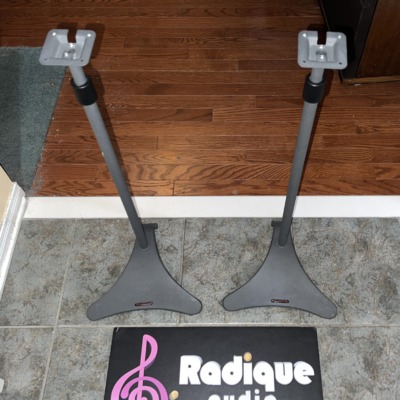 All Metal Atlantic Adjustable Satellite Speaker Stands 27" - 49"$75.00Ships
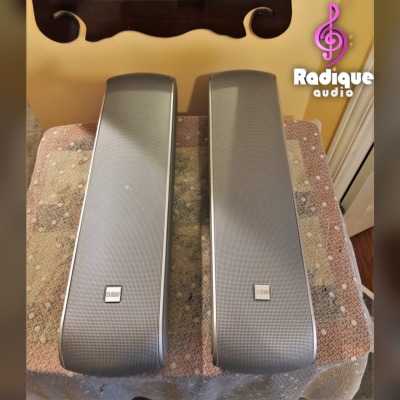 High Quality, Well-Reviewed B&W Satellite speakers VM1$245.00Ships
How we get a component ready for sale.
Before a used or vintage component is listed, it goes through our bench, and anything we service is tested again by a different tech. See exactly what our bench covers.
What our bench covers →Mirage Nanosat Speaker Stands (MS-STB-1) – Purpose-Built for Nanosat Satellites, 31″ tall, in black. Very Good Condition
Complete your Mirage Nanosat satellite speaker setup with these genuine Mirage MS-STB-1 speaker stands—designed specifically to complement and optimize the performance of Nanosat speakers. These stands provide the ideal mounting solution for your compact Omnipolar satellites while maintaining the sleek, minimalist aesthetic that made the Nanosat series so popular.
The MS-STB-1 stands were engineered by Mirage to perfectly match the Nanosat satellite speakers, providing optimal height positioning (31″) for maximum soundstage and imaging performance from the Omnipolar technology. The bottom of each Nanosat is designed to clip securely onto these stands with a single screw through the threaded insert at the bottom of each Nanosat, creating a seamless integration between speaker and stand. The clean, contemporary styling complements the Nanosat’s premium finish.
Built with solid construction and a stable base design, these stands ensure your valuable Nanosat speakers remain secure while delivering the recommended listening height for optimal Omnipolar dispersion. The stands allow proper clearance for the Nanosat’s unique upward-firing design and 360-degree sound radiation pattern.
Specifications:
Design: Purpose-built for Mirage Nanosat satellite speakers
Recommended Height: 31 inches (ideal for Nanosat placement)
Construction: Solid metal construction with stable base
Mounting: Clip-on system designed for Nanosat bottom keyway
Concealed cable routing
Compatibility: All Nanosat models including original, Prestige, and v2 versions
Weighted base design for maximum stability. Base measures 10″ x 9″
Condition: Very good—showing minimal wear with excellent structural integrity and full functionality
These genuine Mirage MS-STB-1 stands provide the perfect foundation for your Nanosat speakers, positioning them at the ideal height for Omnipolar technology to create the immersive, room-filling sound experience that defines the Nanosat system.
Asking $125.
| Weight | 15 lbs |
|---|---|
| Dimensions | 13 × 12 × 33 in |
Mirage is a Canadian speaker brand, founded in Toronto in the late 1970s and later built by Audio Products International in Scarborough, in the same factory as Energy. Its bipolar and Omnipolar designs send sound in more than one direction. We carry Mirage towers, satellites, centre channels and subwoofers. We've had more than 110 Mirage listings so far. Every used Mirage here is inspected, tested and serviced as required, then photographed in-house and covered by our Bumper-to-Bumper Warranty and Perpetual Trade-Back Program. Don't see the model you want? Tell us on First Dibs and we'll email you when one arrives.
The Mirage story
Jeff Percy, Jeff Soltysek and Patrick Dempster founded Mirage in Toronto in the late 1970s (1979, according to Stereophile). Kevin Voecks, later of Snell and Revel, did the original designs. Audio Products International of Scarborough, which already assembled Mirage speakers, took the company over in the mid-1980s.
Bipolar. The M-1 of 1987, begun by Voecks and completed by API's Ian Paisley, fired identical drivers forward and backward, in phase. Mirage's engineers worked with the National Research Council's loudspeaker research here in Ottawa.
Omnipolar. The OM-6 of 1997 was the first commercial version of Mirage's Omnipolar idea, and the Omnisat satellite system followed in 2002.
New owners. Klipsch bought API in 2006, and VOXX bought Klipsch in 2011. Later models were made in China; the 2007 OMD-28 was "designed by API in Canada and built in China". Around the end of 2022, Oscar Bernardo, a former API executive, bought the Mirage brand himself to relaunch it.
Which Mirage is which?
Early two-ways (1980s to early 1990s): models owners discuss include the SM-1, 190, 290, M-360 and M-460.
M-series bipolar (1987 to late 1990s): the M-1, M-3, and the "si" models such as the M-1si, M-3si and M-7si.
OM-series Omnipolar (1997 to early 2000s): the OM-6, OM-7 and OM-9, and the OM-5 subwoofer.
Home theatre: FRx (2001), Omnisat and Nanosat satellites (2002 to 2005), OMD (2007) and MX (2009), plus the OMNI towers and Uni-Theater.
Subwoofers: the BPS bipolar subs, the LF-150 and MM-6, and the Nano subwoofers.
Buying used Mirage: what to check
Surrounds. Materials vary by model: some M-series midranges use foam surrounds that turn brittle, while many woofers use rubber. Check the rear-firing drivers too.
Tweeters. Owners report that original M-1 tweeters become fragile and have been unavailable for years. Check that every tweeter plays, front and rear.
Powered woofers and subwoofers. Test the built-in amplifier at volume; owners report failed sub amplifiers with no replacement available.
Finish and pairs. M-series panels are lacquered and some clip off plastic fasteners, so look for damage. The M-1si was built in mirror-image pairs.
Placement. Omnipolar and bipolar speakers sound best well out from the wall.
Everything we list is inspected, tested and serviced as required here, and comes with our warranty.
Related Products
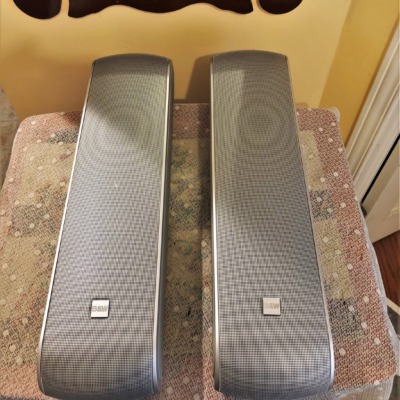
High Quality, Well-Reviewed B&W Satellite speakers VM1
A two-way vented-box satellite: 125mm cone bass/mid, 25mm high-frequency unit, crossed at 3.5 kHz, 91 dB into 8 ohms. Magnetically shielded, 20.6 inches tall on a footprint under five inches wide. Each speaker comes with its own all-metal shelf stand for horizontal or vertical placement, no extra hardware needed. They retailed around $600 Canadian.
All Metal Atlantic Adjustable Satellite Speaker Stands 27″ – 49″
All-metal stands that adjust tool-free from roughly 27 to 49 inches, which covers seated ear height or a surround position well above it. Speaker wire runs inside the hollow column, and the wide base is fitted with felt feet for hard floors. Rated to about 10 lbs a stand — satellites and small bookshelves. Condition very good, light signs of use.
