
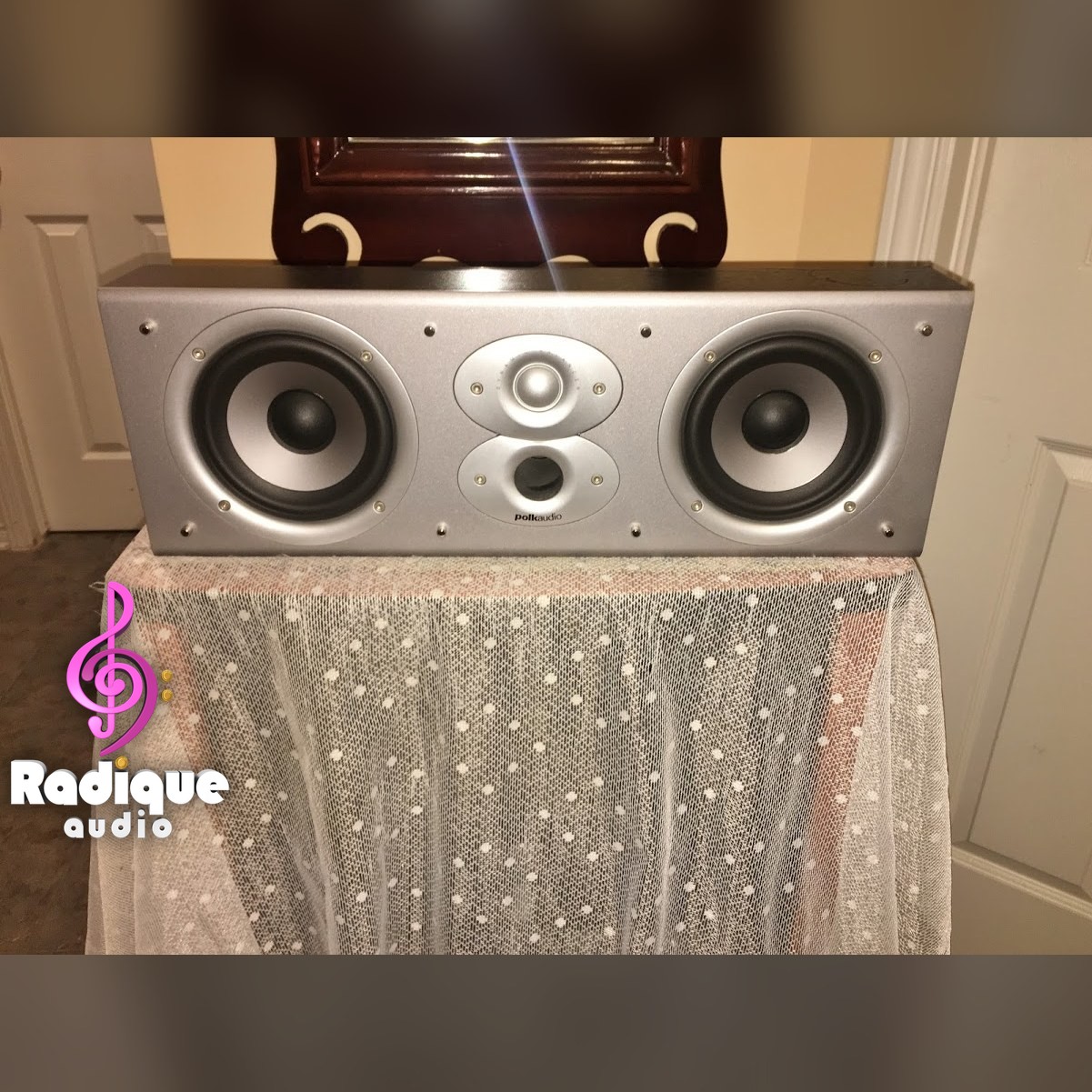





Large, Recent Model Polk Center CSi3
$145.00
Two 5.25-inch Dynamic Balance woofers and a 1-inch silk/polymer tweeter in a braced MDF cabinet wrapped in real wood veneer, 20 inches wide and 17.8 lbs. 89 dB, 8 ohms, handles up to 180 watts, 65 Hz to 26 kHz. Video-shielded, five-way binding posts, voice-matched to Polk’s RTi and FXi models. Two available.
1 in stock
Large, Recent Model Polk Center in Gorgeous Real Wood Finish. 2 Available.
Polk’s CSi3 center channel speaker sports the latest generation of Dynamic Balance® drivers for exceptional home theater performance. The dual 5-1/4″ woofers and 1″ silk/polymer tweeter work together to anchor on-screen dialogue and special effects to your television’s picture. Voice-matched to Polk’s RTi tower and bookshelf speakers and FXi surround speakers, you can put together a stunning home theater speaker package that will do your DVD movies and multichannel music sources justice.
As usual, Polk has paid close attention to the details: 5-way binding post terminals for sure connections, solid MDF construction with real wood veneer (available in black oak or cherry finish), internal bracings for reduced resonance and cleaner sound, and a computer-designed tweeter faceplate for more open and spacious imaging.
Video-shielded, Bass-reflex, 5-way binding post terminals, Real wood veneer
Frequency response 65-26,000 Hz (-3dB)
Sensitivity 89 dB
Handles up to 180 watts @ 8-ohm impedance
Dimensions: 20″W x 6-15/16″H x 9-7/16″D, Weight: 17.8 lbs.
Retailed for $299 + tax. 2 Available. Asking $145 each.
| Weight | 20 lbs |
|---|---|
| Dimensions | 14 × 24 × 11 in |
- Hard-to-beat pricing
- Free shipping across Canada
- Manufacturer's warranty
- Get a quote on new Polk
Polk Audio began in Baltimore in 1972, founded by Matthew Polk, George Klopfer and Sandy Gross. Its SDA speakers of the 1980s used a cable between the left and right speakers to widen the stereo image. We carry Polk towers, bookshelf speakers, centre channels and subwoofers. We've had more than 180 Polk listings so far, covering more than 80 different models. Every used Polk here is inspected, tested and serviced as required, then photographed in-house and covered by our Bumper-to-Bumper Warranty and Perpetual Trade-Back Program. Looking for new Polk? We also quote new Polk Audio direct from the Canadian distributor, with free shipping within Canada: request a quote below. Don't see the model you want? Tell us on First Dibs and we'll email you when one arrives.
Our five best-selling Polk models so far: the RTi10 towers, the PSW10 and PSW125 subwoofers, the RTi4 bookshelf speakers and the CSi3 centre.
The Polk story, 1972 to today
Matthew Polk, George Klopfer and Sandy Gross, graduates of Johns Hopkins, founded Polk Audio in Baltimore, Maryland, in 1972. The Monitor 7 of 1974 was their first model to succeed, and the Monitor 10 followed in 1976.
SDA. In 1984 Polk introduced SDA (Stereo Dimensional Array). A cable between the left and right speakers lets each one cancel the sound that crosses over to the wrong ear, for a wider stereo image.
Growth. Polk went public in 1986 and moved to new premises in Baltimore. It began moving manufacturing to Tijuana, Mexico, in 1988, and by 2012 Stereophile reported that Polk designed in the US and built in China.
New owners. Directed Electronics agreed to buy Polk in 2006. Polk later became part of Sound United, Masimo bought Sound United in 2022, and in September 2025 HARMAN, a Samsung company, completed its purchase of Sound United. The 2018 Legend series brought SDA back.
Which Polk is which?
Monitor (1970s to early 1990s): the Monitor 4, 5, 7, 10 and 12, with A, B and C revisions.
SDA (1984 to about 1991): the SDA-1 and SDA-2 families, CRS, SRS and the later "TL" models.
RTA (1979 to 1992): towers such as the RTA 11t, with two woofers and two passive radiators.
RT and RTi (2001 onward): Polk's lower-priced lines. Our best-selling RTi10 towers and RTi4 bookshelf speakers come from here.
CSi centres and PSW subwoofers: the CSi3 centre and the PSW10 and PSW125 subwoofers are among the Polks we sell most.
LSi (about 2001 to 2010) and LSiM (2011): Polk's flagship lines of that decade, followed by Signature (2016), Legend (2018) and Reserve (2021).
Buying used Polk: what to check
SDA cable. SDA speakers need the interconnect cable between them for the SDA effect, and early SDA models need a common-ground amplifier. Make sure the cable comes with the pair.
Tweeters. Owners report that some SL3000 tweeters on the 1989 to 1991 SDA TL models leaked their ferrofluid and failed, and that Monitor-series pairs may carry mismatched factory or replacement tweeters. Check that every tweeter plays.
Surrounds. Some early Polks used foam surrounds, which rot with age; later models such as the RTA 11t and LSiM use rubber. Press gently on each woofer surround.
Everything we list is inspected, tested and serviced as required here, and comes with our warranty.
You may also like…
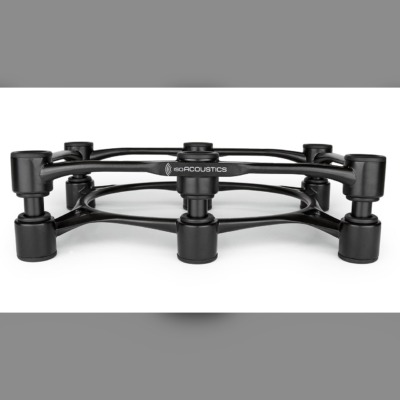

IsoAcoustics Aperta 300 Center Channel Isolation Stand
- ✔️ Genuine IsoAcoustics Aperta 300 center channel isolation stand, brand new in box
- ✔️ Single stand for center-channel speakers and similar applications up to 60 lbs (27.2 kg)
- ✔️ Available in Black or Silver with up to 6.5 degrees of tilt adjustment
- ✔️ Helps reduce cabinet resonance and improve clarity, focus, and dialogue intelligibility
- ✔️ Backed by a 2-year manufacturer's warranty in Canada
Related Products
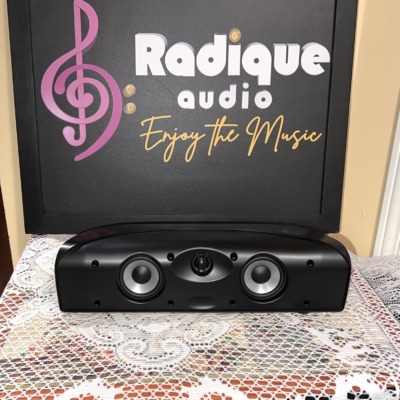
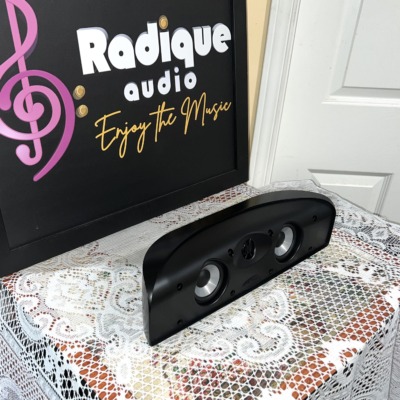
Polk Audio Blackstone TL1 Center Channel Speaker – Gloss Black
A slim, wall-mountable center channel from Polk Audio's Blackstone series, in very good condition, that gives movie dialogue the clarity and presence it deserves.
✔️ Very Good condition — cabinet, baffle and drivers present cleanly; grille included
✔️ Slim and wall-mountable — keyhole slots and a threaded insert on the back
✔️ Covered by Radique Warranty
✔️ Includes Perpetual Trade-Back Program eligibility
✔️ Expertly packed for safe shipping
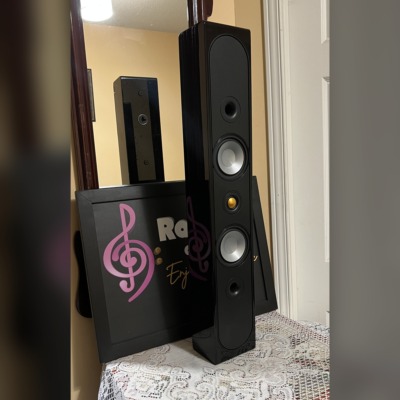
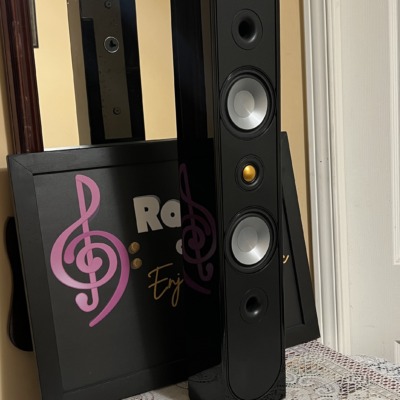
Monitor Audio Radius 250HD LCR Speaker – Gloss Black, Wall-Mount
A slim gloss black Monitor Audio speaker from the Radius HD range, in good condition, built to work as a left, center, right or rear speaker, standing upright, lying flat or hung on a wall.
✔️ Good condition — light scratches visible under bright light; grille included
✔️ One slim speaker for left, center, right or rear duty
✔️ Two rear keyhole slots; the matching wall bracket is listed separately
✔️ Covered by Radique Warranty
✔️ Includes Perpetual Trade-Back Program eligibility
✔️ Expertly packed for safe shipping
Monitor Audio Radius 250HD LCR Speakers, Pair – Gloss Black
A matched pair of slim gloss black Monitor Audio speakers from the Radius HD range, in good condition, each built to work as a left, center, right or rear speaker, standing upright, lying flat or hung on a wall.
✔️ Good condition — light scratches visible under bright light; grilles included
✔️ Two slim speakers for a stereo pair, left and right of a center, or a set of rears
✔️ Two rear keyhole slots on each; the matching wall bracket is listed separately
✔️ Covered by Radique Warranty
✔️ Includes Perpetual Trade-Back Program eligibility
✔️ Expertly packed for safe shipping
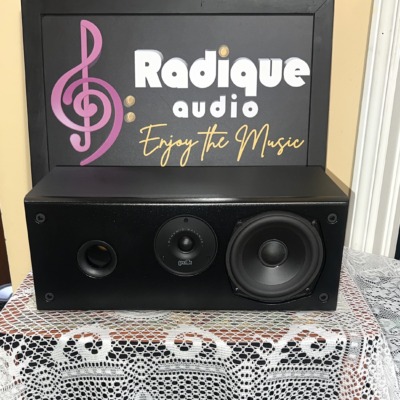
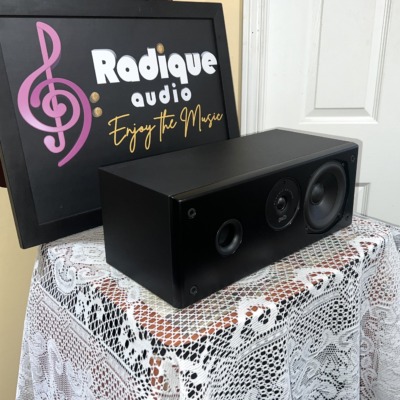
Polk Audio CS175 Center Channel Speaker – Front-Ported, Black
A Polk Audio CS175 two-way center channel speaker in black, a solidly built cabinet at nearly 14 pounds, with a front port and proper 5-way binding posts, fully tested on our bench and in very good condition.
✔️ Very good condition — free of significant marks, grille included
✔️ Front-ported two-way center with 5-way binding posts
✔️ Solidly built, at nearly 14 pounds
✔️ Covered by Radique Warranty
✔️ Includes Perpetual Trade-Back Program eligibility
✔️ Expertly packed for safe shipping
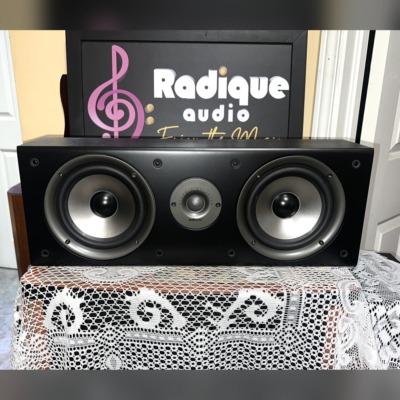
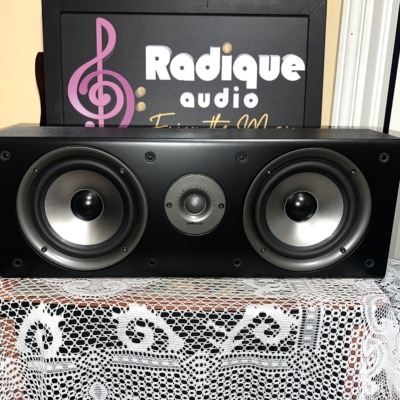
Polk CS2 Series II Center Channel Speaker – Dual 6.5″ Woofers
A Polk Audio Monitor CS2 Series II center channel speaker in black, with dual 6½-inch woofers for full-bodied, clear dialogue. It has been tested on our bench and is in very good condition.
✔️ Very good condition — black wood-grain, black cloth grille included
✔️ Dual 6½-inch Dynamic Balance woofers for clear, full-bodied dialogue
✔️ 90 dB, 8 ohms, magnetically shielded — tested on our bench
✔️ Covered by Radique Warranty
✔️ Includes Perpetual Trade-Back Program eligibility
✔️ Expertly packed for safe shipping
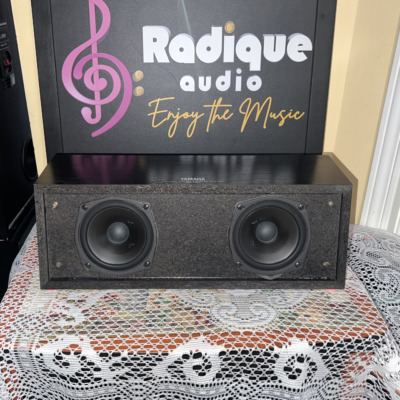
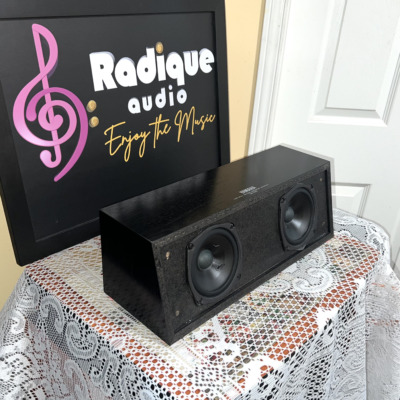
Yamaha NS-C90 Center Speaker – Dual-Angle Tilt, Made in Japan
The cabinet is asymmetrical on purpose: flip it over and it tilts the other way, aiming up at you from a low shelf or down at you from the top of a cabinet. Sealed rather than ported, so it needs no rear clearance. Two full-range drivers, nothing crossing in the vocal band. 6 ohms, 50 watts nominal. Built in Japan; very good condition.
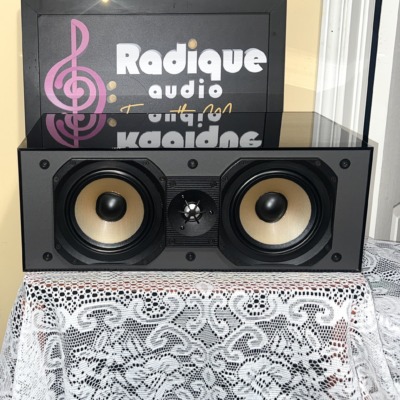
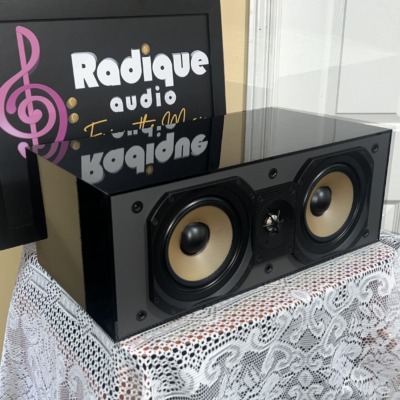
Paradigm Reference LCR-450 — Made in Canada, High Gloss Black
A Canadian-built Reference monitor in a high gloss black we have not had this model in before — the line of this era usually turns up in black, light cherry or dark rosenut. Sealed MTM design with Paradigm's pure-aluminium dome tweeter, and it works as a centre or as a left or right. Excellent, with its original box.
