
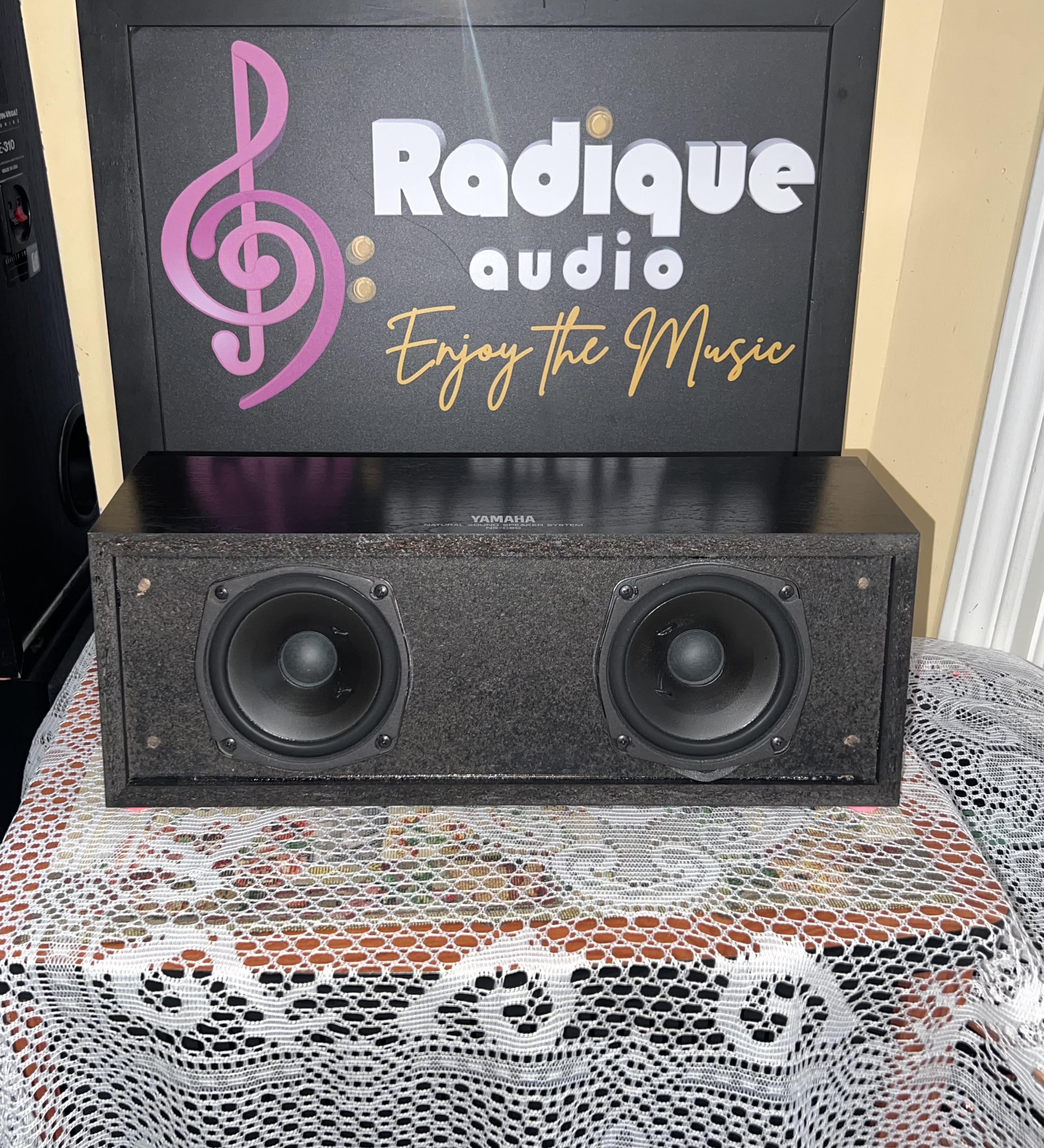

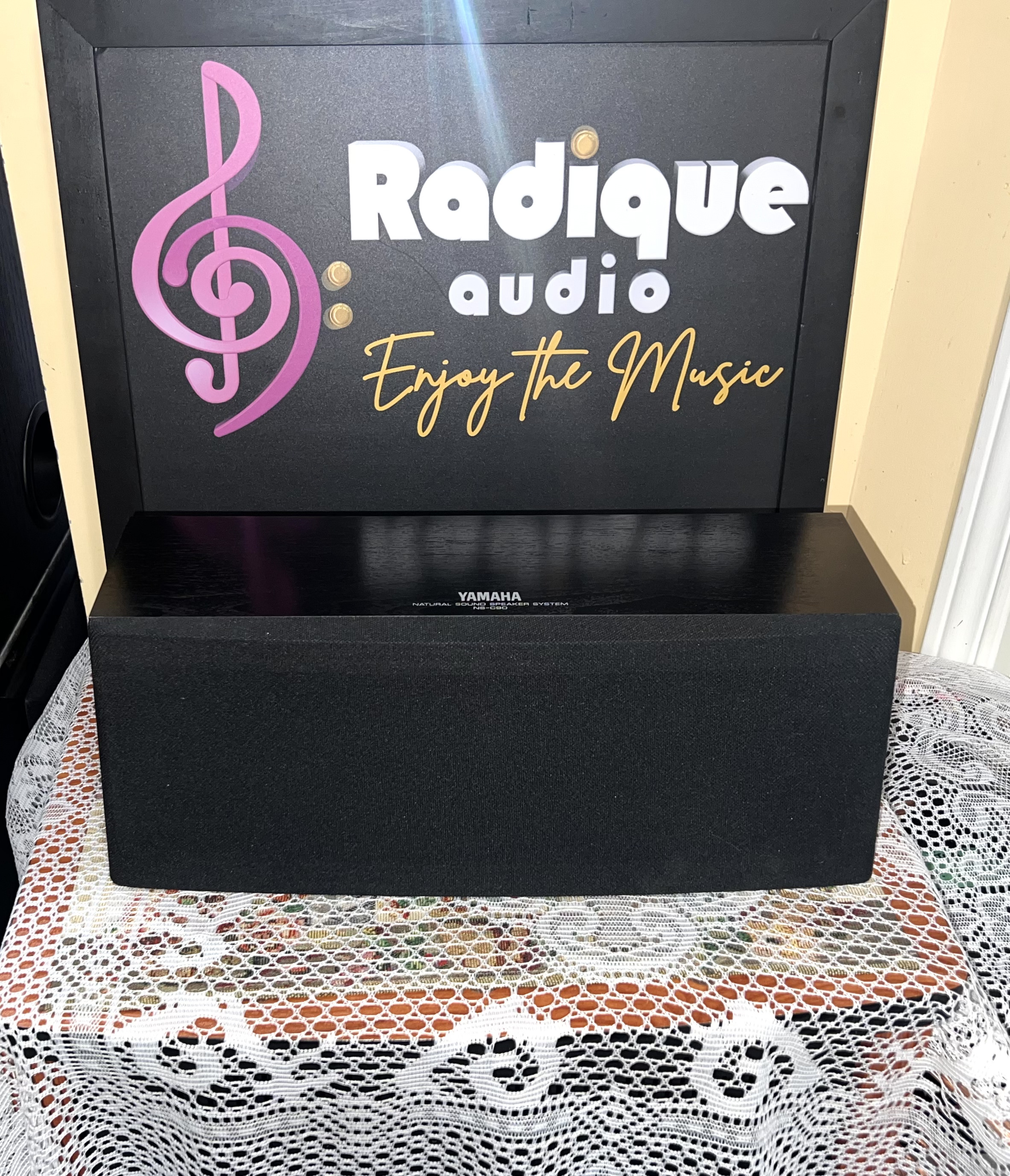

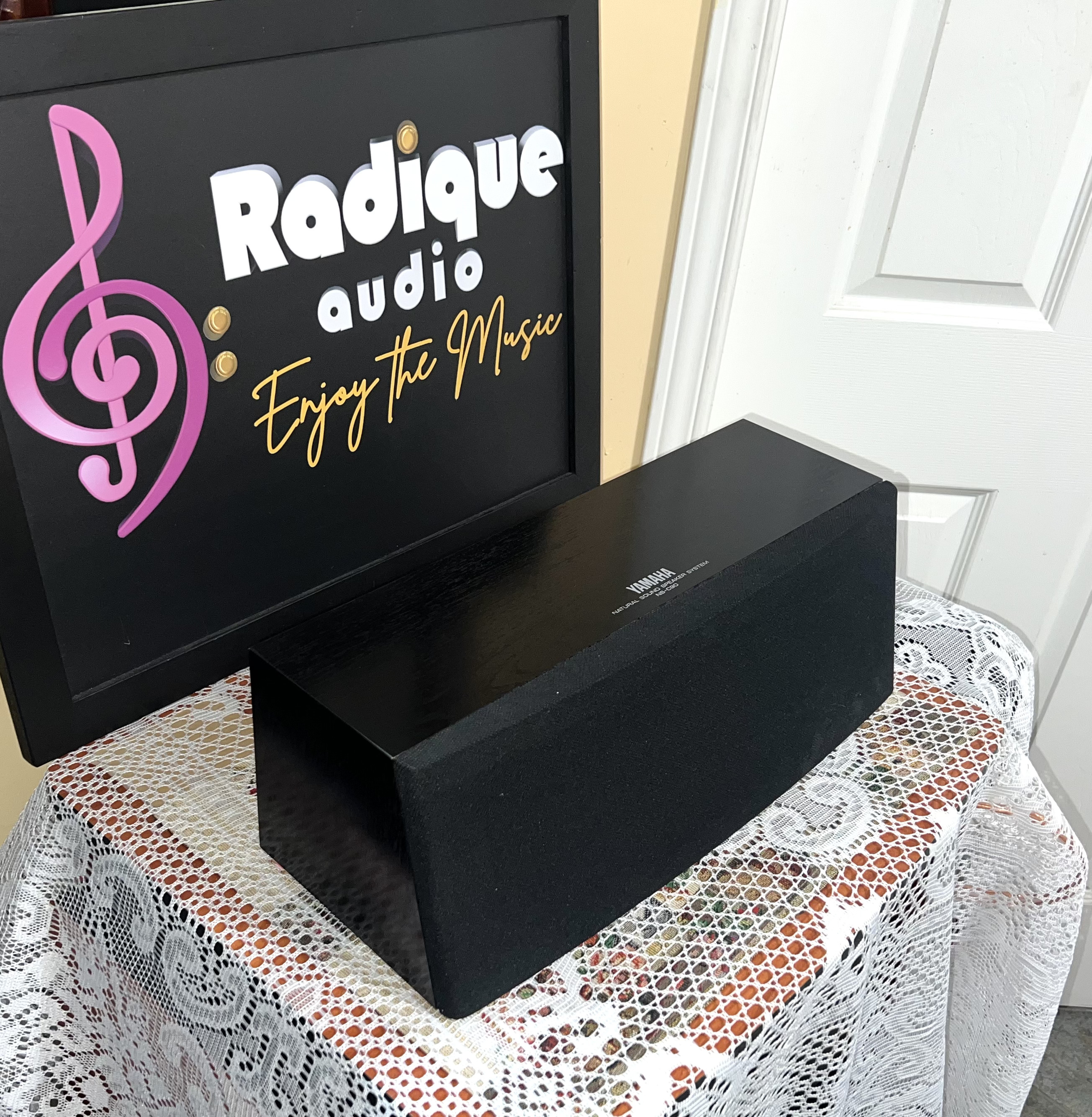
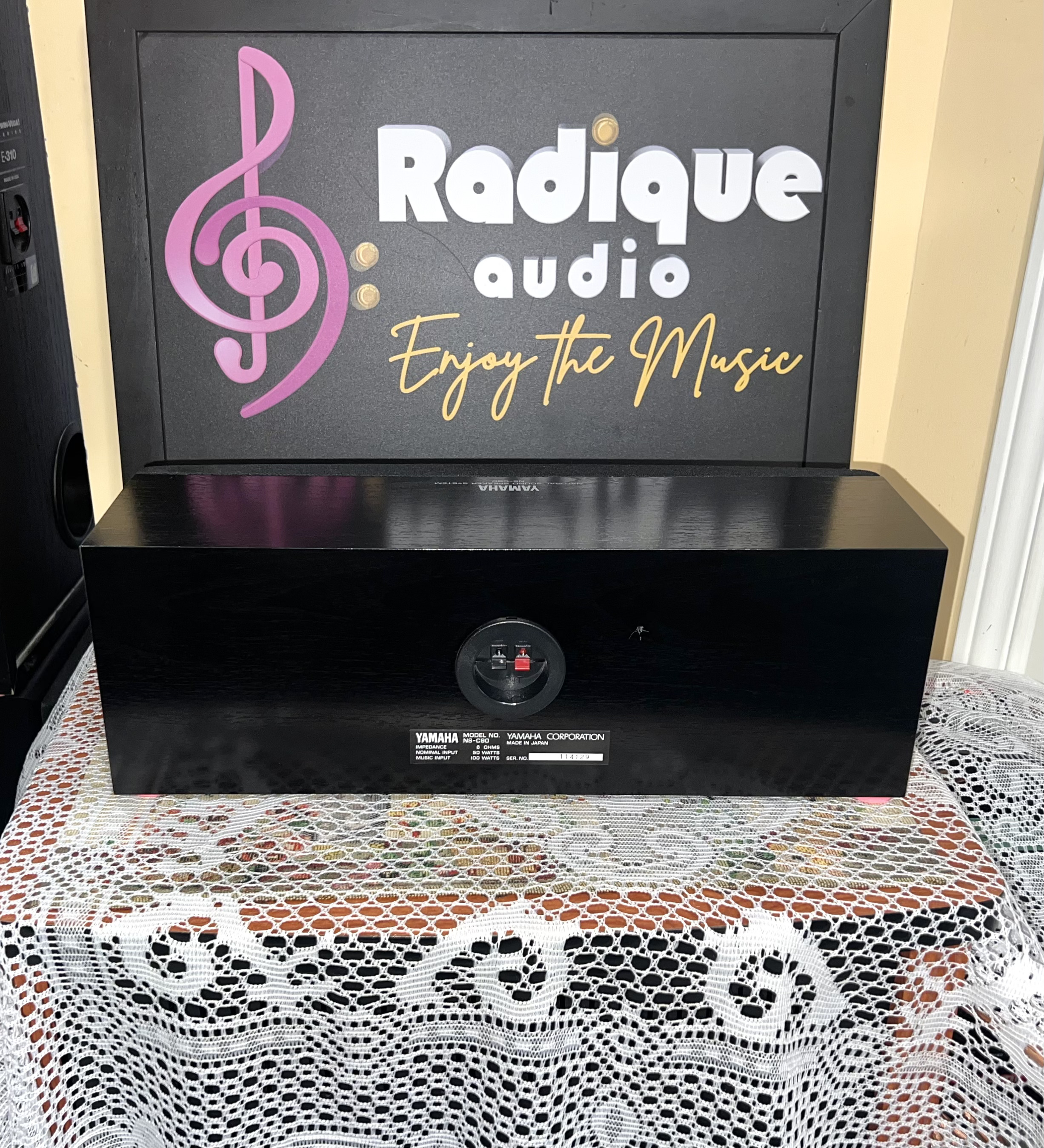
Yamaha NS-C90 Center Speaker – Dual-Angle Tilt, Made in Japan
$75.00
Consignment piece. We sell it on behalf of its owner, and it's covered exactly like everything else we sell: inspected and serviced as required, and backed by our Bumper-to-Bumper Warranty and Perpetual Trade-Back Program. The one difference: it isn't eligible for Cue It Up layaway.
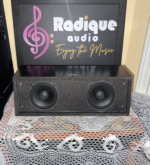
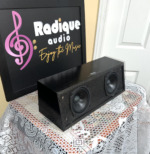
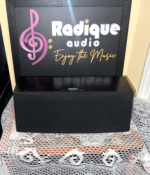
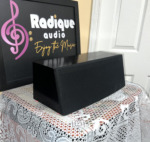
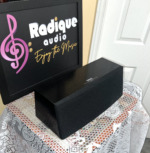
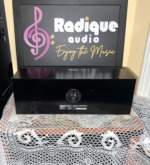
The cabinet is asymmetrical on purpose: flip it over and it tilts the other way, aiming up at you from a low shelf or down at you from the top of a cabinet. Sealed rather than ported, so it needs no rear clearance. Two full-range drivers, nothing crossing in the vocal band. 6 ohms, 50 watts nominal. Built in Japan; very good condition.
1 in stock
Yamaha NS-C90 — Dual-Angle Tilt Cabinet, Built in Japan
Yamaha NS-C90 Natural Sound Center Speaker – Made in Japan, Dual-Angle Tilt Cabinet, Sealed Design, Very Good Condition
A well-built Japanese centre channel with a genuinely clever cabinet, and a better answer to dialogue than most budget centres manage.
The cabinet is the reason to want this one. It is asymmetrical by design, so it can be flipped to sit at either of two tilt angles — aiming up at you when it sits low on a media shelf, or down at you when it sits high on top of a cabinet. That sounds minor until you have actually lived with a centre channel firing over your head or into your shins. Most people solve it with a folded coaster. Yamaha solved it in the moulding, and it costs you nothing but which way up you set it down.
It is also a sealed design rather than a ported one, which brings a second practical advantage: it needs no rear clearance. You can sit it inside a cabinet, in a shelf recess, or tight against a wall without choking it. Ported centres pushed into those same spots turn boomy and congested, which is exactly where a centre usually has to live.
Two full-range drivers do the work, crossing nothing in the vocal band, and that is the point of a design like this — dialogue arrives in one piece rather than being handed between drivers halfway through a word. At 6 ohms and rated for 50 watts nominal and 100 watts music power, it will take whatever a typical receiver sends it.
Then there is the badge. Made in Japan is an uncommon thing to find on a centre channel, and there is a reason for it: centre speakers only became a mainstream category once home theatre took hold, by which time much of the industry’s speaker production had already moved offshore. This one was built in Japan during Yamaha’s Natural Sound era, and you can see where the money went — the cabinet work is a cut above what this class of speaker usually gets.
Condition
Cosmetically this is in very good condition, with a clean cabinet and grille.
It has been thoroughly inspected and tested to confirm full functionality.
Features: Dual-angle tilt cabinet — flip it to aim up from a low shelf or down from a high one Sealed cabinet — no rear clearance required, suits cabinet and shelf placement Two full-range drivers for coherent dialogue Built in Japan — uncommon in a centre channel 6 ohm nominal impedance, easy for any receiver Removable front fabric grille
Yamaha NS-C90 Specifications
- Model: NS-C90
- Configuration: Sealed two-way centre channel, dual-angle cabinet
- Nominal Impedance: 6 ohms
- Nominal Input Power: 50 watts
- Music Power: 100 watts
- Country of Manufacture: Japan
- Dimensions: (Width x Height x Depth) 17.5 x 6 x 6.75 inches (445 x 152 x 171 mm)
- Weight: 8.8 lbs (4 kg)
✅ Buy With Confidence — The Radique Promise
Backed by Radique Audio’s Bumper-to-Bumper Warranty and our Perpetual Trade-Back Program. When you’re ready to move on, we’ll take it back. That’s the Radique difference.
📦 Watch how we protect your gear — our unboxing video.
📺 Curious about our business? Check out our YouTube channel for behind-the-scenes videos and more!
📞 Questions? Use the Ask a Question button above, or call us at 613-416-9995.
🔌 The Right Connector for Spring-Clip Terminals
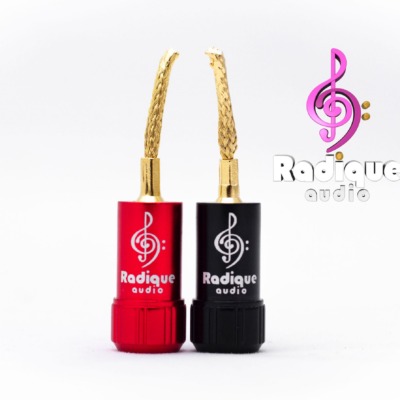
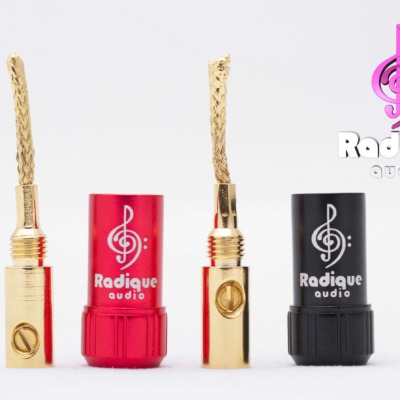
Bare wire in a spring clip frays and works loose over time. Our own gold-plated Radique Audio Pin Connectors are made for exactly these terminals — a clean, secure, properly finished connection. Specify them, with your length and cable, when you build your custom speaker cable. 👉
>
| Weight | 10.8 lbs |
|---|---|
| Dimensions | 10.75 × 21.5 × 10 in |
| Impedance | 6 Ω |
| Power Handling | 101–200 W |
| Sensitivity | 86–89 dB |
| Woofer Size | 5″ and under |
Yamaha began as an organ maker in Hamamatsu, Japan, in 1887. It made gramophones from the 1920s and began hi-fi with the 1954 HiFi Player. We carry Yamaha AV receivers, vintage stereo receivers, CD players, subwoofers and speakers. We've had more than 280 Yamaha listings so far, covering nearly 200 different models. Every used Yamaha here is inspected, tested and serviced as required, then photographed in-house and covered by our Bumper-to-Bumper Warranty and Perpetual Trade-Back Program. Every AV receiver we list is tested input by input on our bench: each HDMI input and output, the analog, optical and coaxial inputs, the subwoofer outputs and the wireless features where it has them. Don't see the model you want? Tell us on First Dibs and we'll email you when one arrives.
Yamaha models we've sold most often: the SW-3 subwoofer, the NX-E270 surrounds, and the RX-V1400, RX-V850 and RX-V800 AV receivers.
The Yamaha hi-fi story
Torakusu Yamaha built his first reed organ in Hamamatsu in 1887 and founded Nippon Gakki in 1897; the company was renamed Yamaha Corporation in 1987. Yamaha calls the 1954 HiFi Player its first audio product, and dates its first Natural Sound (NS) speakers to 1967.
1970s hi-fi. The CA-700 and CA-500 of 1972 were Yamaha's first integrated amplifiers, and the CA-1000 of 1973 could switch its output stage between Class A and Class A/B. The NS-1000 and NS-1000M speakers of 1974 used beryllium dome drivers, and the NS-10M of 1978, sold for home use, became a studio monitor.
CD and surround. The CD-1 of 1982 was Yamaha's first CD player. The DSP-1 of 1986 was a Digital Sound Field Processor, and in 1993 the RX-V870 became the first Yamaha receiver with CINEMA DSP. The RX-V992 of 1997 added built-in Dolby Digital decoding.
AVENTAGE. The AVENTAGE (RX-A) receiver line launched in 2010, above the RX-V range.
Which Yamaha is which?
CA integrated amplifiers (1972 to about 1979): the CA-500, CA-700, CA-1000 and CA-2000, followed by the A-series.
CR receivers (mid-1970s to about 1980): the CR-1000, then the CR-620 to CR-2020 generation of 1977 to 1979.
NS speakers: from the NS-690 and the beryllium NS-1000 to the NS-10M bookshelf speaker, made from 1978 to 2001.
CD players: from the CD-1 of 1982 to the CDX and GT-CD models.
RX-V AV receivers (from at least 1991): such as the RX-V800, RX-V850 and RX-V1400 we sell often. Built-in Dolby Digital arrived in 1997, YPAO room calibration in 2003 and HDMI in the mid-2000s.
RX-A AVENTAGE (from 2010): the step-up AV receivers. The RX-Z models were the flagships until 2007.
Buying used Yamaha: what to check
Formats. On an AV receiver, check what it decodes and connects to: Dolby Digital from 1997, room calibration from 2003, HDMI from the mid-2000s.
HDMI boards. On modern AV receivers, HDMI is usually the first thing to fail. We test every HDMI input and output before listing.
CR receivers. Owners suggest asking whether service bulletins were done on a CR-2020, and expect scratchy controls and burnt-out dial lamps on any unserviced unit.
NS speakers. Check that the tweeters on an NS-10M are original and both work, and inspect the beryllium domes on an NS-1000, since Yamaha stopped making beryllium diaphragms in 1997.
Everything we list is inspected, tested and serviced as required here, and comes with our warranty.
You may also like…
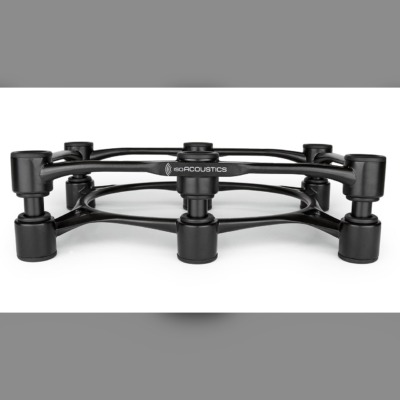

IsoAcoustics Aperta 300 Center Channel Isolation Stand
- ✔️ Genuine IsoAcoustics Aperta 300 center channel isolation stand, brand new in box
- ✔️ Single stand for center-channel speakers and similar applications up to 60 lbs (27.2 kg)
- ✔️ Available in Black or Silver with up to 6.5 degrees of tilt adjustment
- ✔️ Helps reduce cabinet resonance and improve clarity, focus, and dialogue intelligibility
- ✔️ Backed by a 2-year manufacturer's warranty in Canada
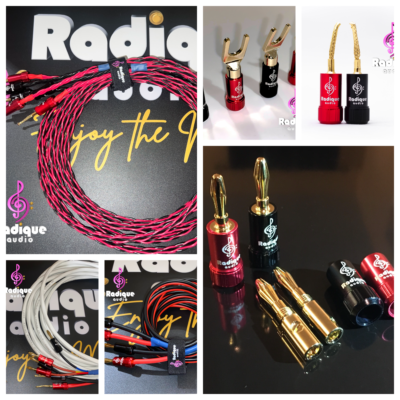
Custom Speaker Cable Builder
Your specs, your cable: choose the cable, the length and each connector, with live pricing.
- House CCA, House OFC, House Quad, Kimber 4PR or Kimber 4TC
- Banana, spade, pin, small spade or bare wire, chosen for each end
- Bi-wire on Kimber 4PR, Kimber 4TC and House Quad
- Hand-assembled, heat-shrink reinforced and colour-coordinated
- 1-year warranty
Related Products
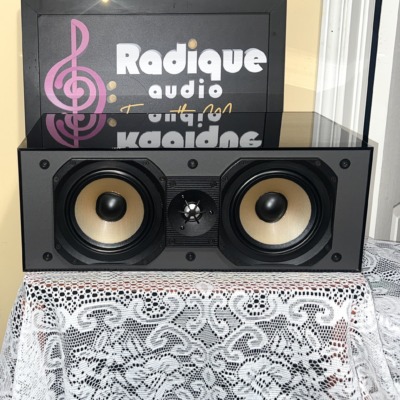
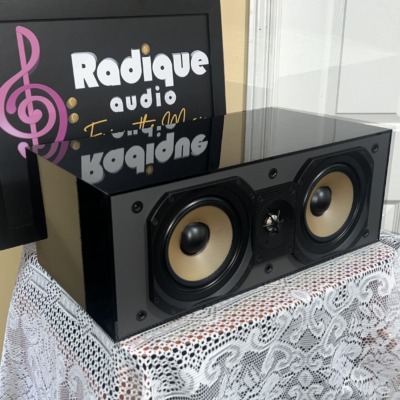
Paradigm Reference LCR-450 — Made in Canada, High Gloss Black
A Canadian-built Reference monitor in a high gloss black we have not had this model in before — the line of this era usually turns up in black, light cherry or dark rosenut. Sealed MTM design with Paradigm's pure-aluminium dome tweeter, and it works as a centre or as a left or right. Excellent, with its original box.
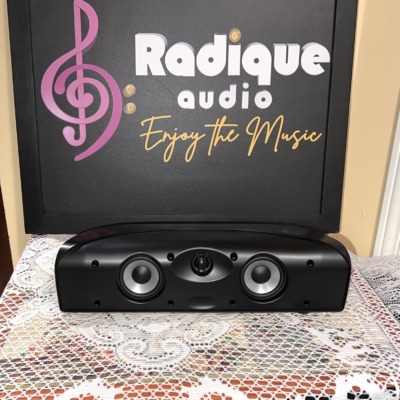
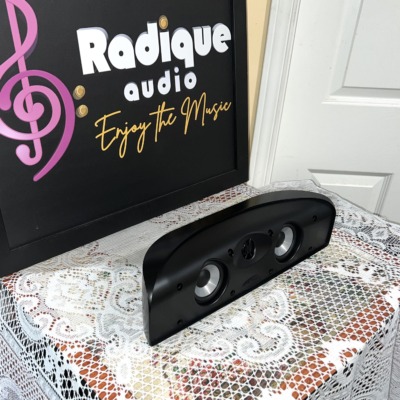
Polk Audio Blackstone TL1 Center Channel Speaker – Gloss Black
A slim, wall-mountable center channel from Polk Audio's Blackstone series, in very good condition, that gives movie dialogue the clarity and presence it deserves.
✔️ Very Good condition — cabinet, baffle and drivers present cleanly; grille included
✔️ Slim and wall-mountable — keyhole slots and a threaded insert on the back
✔️ Covered by Radique Warranty
✔️ Includes Perpetual Trade-Back Program eligibility
✔️ Expertly packed for safe shipping
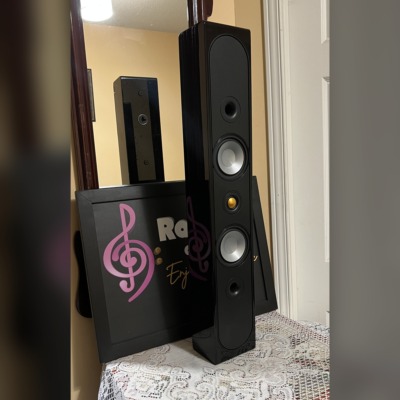
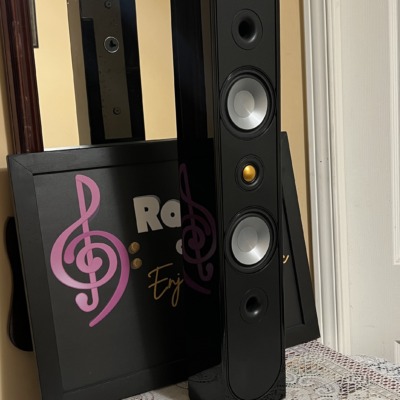
Monitor Audio Radius 250HD LCR Speaker – Gloss Black, Wall-Mount
A slim gloss black Monitor Audio speaker from the Radius HD range, in good condition, built to work as a left, center, right or rear speaker, standing upright, lying flat or hung on a wall.
✔️ Good condition — light scratches visible under bright light; grille included
✔️ One slim speaker for left, center, right or rear duty
✔️ Two rear keyhole slots; the matching wall bracket is listed separately
✔️ Covered by Radique Warranty
✔️ Includes Perpetual Trade-Back Program eligibility
✔️ Expertly packed for safe shipping
Monitor Audio Radius 250HD LCR Speakers, Pair – Gloss Black
A matched pair of slim gloss black Monitor Audio speakers from the Radius HD range, in good condition, each built to work as a left, center, right or rear speaker, standing upright, lying flat or hung on a wall.
✔️ Good condition — light scratches visible under bright light; grilles included
✔️ Two slim speakers for a stereo pair, left and right of a center, or a set of rears
✔️ Two rear keyhole slots on each; the matching wall bracket is listed separately
✔️ Covered by Radique Warranty
✔️ Includes Perpetual Trade-Back Program eligibility
✔️ Expertly packed for safe shipping
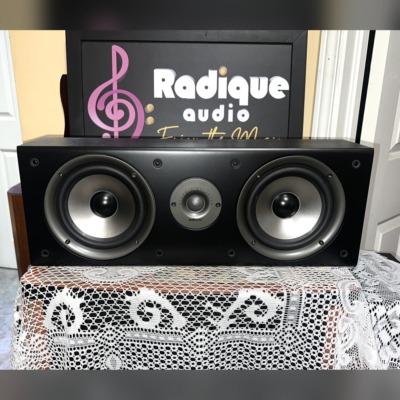
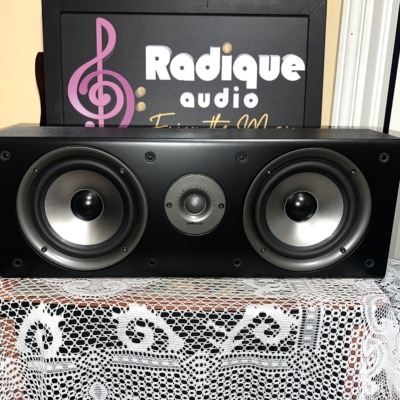
Polk CS2 Series II Center Channel Speaker – Dual 6.5″ Woofers
A Polk Audio Monitor CS2 Series II center channel speaker in black, with dual 6½-inch woofers for full-bodied, clear dialogue. It has been tested on our bench and is in very good condition.
✔️ Very good condition — black wood-grain, black cloth grille included
✔️ Dual 6½-inch Dynamic Balance woofers for clear, full-bodied dialogue
✔️ 90 dB, 8 ohms, magnetically shielded — tested on our bench
✔️ Covered by Radique Warranty
✔️ Includes Perpetual Trade-Back Program eligibility
✔️ Expertly packed for safe shipping
