
KEF HTS7001 Matching Wall Mount Bracket
$15.00
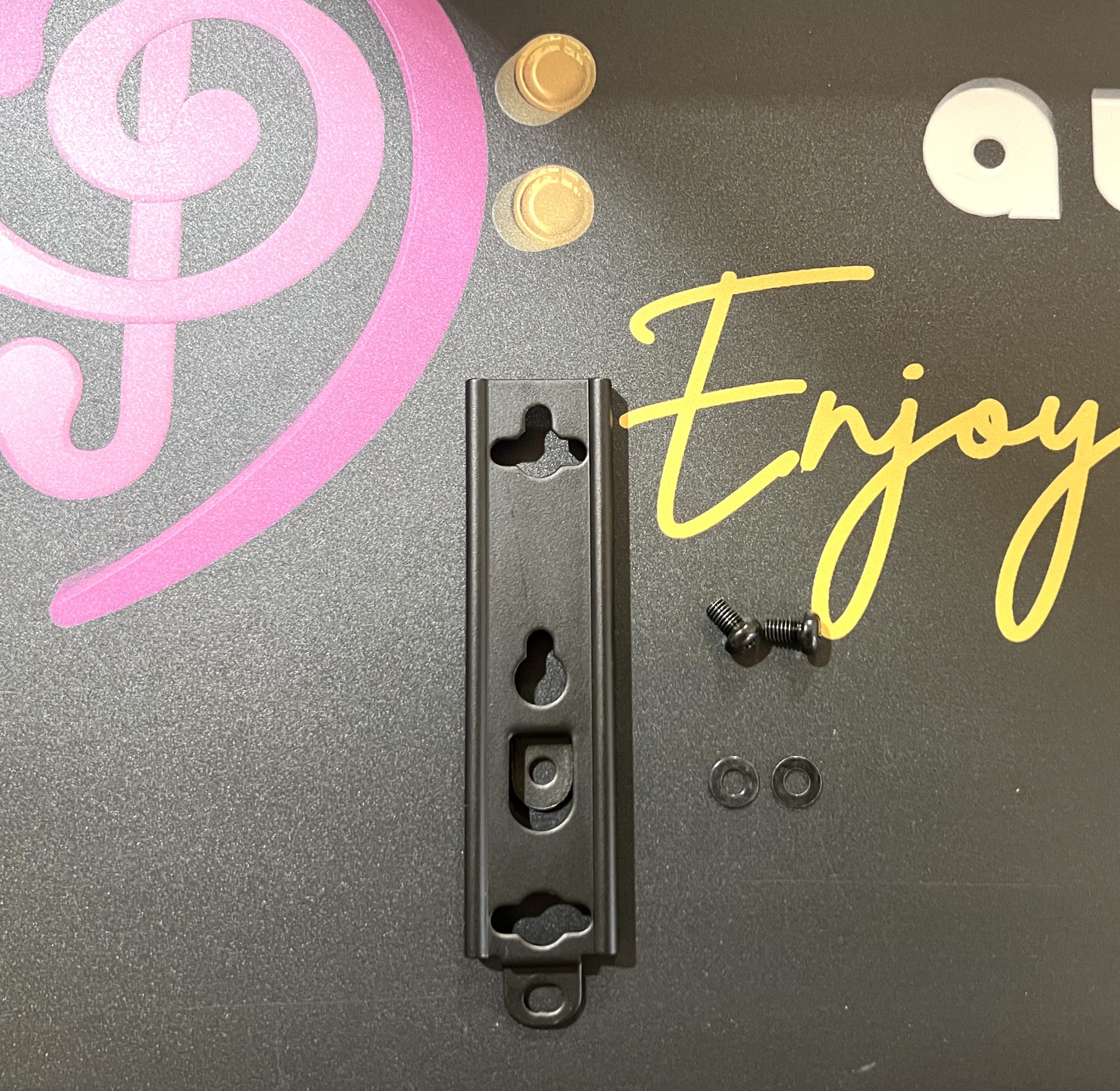
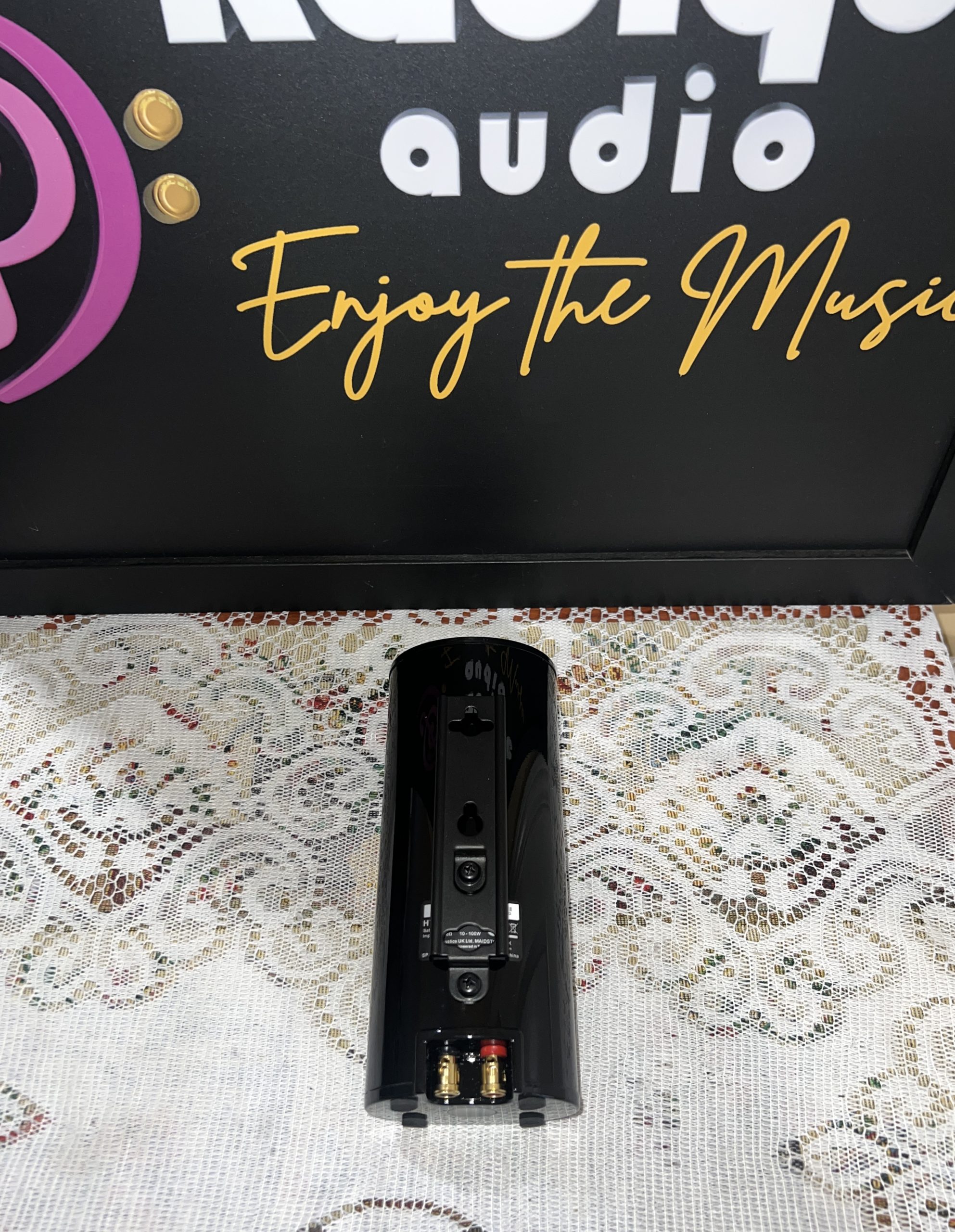
A rigid metal plate that screws to the back of an HTS7001 satellite — the two machine screws for that are included — and then hangs on two wall screws through integrated keyhole slots. It goes up vertically or horizontally, whichever suits the channel. Five inches long, in black, sitting discreetly behind the speaker. Wall anchors and screws are yours to supply. Excellent condition, lightly used.
5 in stock
KEF HTS7001 Matching Wall Mount Brackets
These KEF HTS7001 wall mount brackets provide a neat, low-profile way to mount HTS7001 compact aluminum satellite speakers vertically or horizontally on a wall.
Each bracket screws securely to the rear of the HTS7001 using the two included machine screws, then hangs on two user-supplied wall screws via integrated keyhole slots for easy, secure installation. This design lets the customer choose vertical or horizontal orientation to suit their room layout and surround channel placement. Brackets are in excellent condition with only light signs of careful prior use and are fully ready for reuse in a new home theatre or satellite/sub system.
Specifications:
Product type: Wall-mount bracket for KEF HTS7001 satellite speakers
Compatibility: KEF HTS7001 compact aluminum satellite speakers
Mounting method (speaker): Attaches to speaker with 2 included screws
Mounting method (wall): Hangs on 2 customer-supplied wall screws via keyhole slots
Orientation: Designed for vertical or horizontal mounting
Construction: Rigid metal plate with integrated keyhole slots
Included hardware: 2 dedicated machine screws per bracket (for attaching to speaker)
Required hardware (customer-supplied): Wall anchors and mounting screws appropriate to wall material
Finish: Black, designed to sit discreetly behind the speaker
Dimensions: (Width x Height x Depth) 5.0 x 1.25 x 0.38 inches (127 x 32 x 10 mm)
Weight: 0.14 lbs (0.06 kg) per bracket including the two speaker-mount screws
These matching HTS7001 brackets are an easy, cost-effective way to complete a clean KEF on-wall installation, they are ideal for finishing or expanding an HTS7001 surround setup. Backed by Radique Audio’s Bumper-to-Bumper Warranty and our Perpetual Trade-Back Program, you can purchase with confidence.
| Weight | 1 lbs |
|---|---|
| Dimensions | 4 × 9 × 5.25 in |
KEF was founded in 1961 by former BBC engineer Raymond Cooke, in a Nissen hut on the Kent Engineering & Foundry site in Maidstone, England, which gave the company its name. We carry KEF satellite systems, bookshelf speakers, towers, centre channels and subwoofers. We've had more than 70 KEF listings so far, covering nearly 40 different models. Every used KEF here is inspected, tested and serviced as required, then photographed in-house and covered by our Bumper-to-Bumper Warranty and Perpetual Trade-Back Program. Don't see the model you want? Tell us on First Dibs and we'll email you when one arrives.
The KEF models we've sold most often include the HTS1001.2 satellites and HTC1001.2 centre from the KHT1005.2 system, the KUBE-1 subwoofer, the C75 towers and the Q95c centre.
The KEF story, 1961 to today
Raymond Cooke, a former BBC engineer, founded KEF in 1961 in Maidstone, Kent, and named it after the owner of the site, Kent Engineering & Foundry. Its first speaker, the three-way K1, used a tweeter with a Melinex diaphragm, and the compact Celeste followed.
BBC monitors and Reference. KEF drive units were used in the BBC's LS3/5a mini-monitor of 1975, and KEF built it under licence. The Reference Series followed from 1977.
Uni-Q. In 1988 KEF introduced its Uni-Q driver, which puts the tweeter in the centre of the midrange cone, first in the C Series. Uni-Q went on to the Q Series, the KHT satellite systems of the 2000s such as the "Egg", the LS50 of 2012 and the LS50 Meta of 2020.
Today. KEF belongs to Hong Kong's Gold Peak group, through GP Industries, which also owns Celestion, and it is still based in Maidstone.
Which KEF is which?
1960s and 1970s classics: the K1, Celeste, Concord, Chorale, Cantata, Calinda and Corelli.
Reference Series (from 1977): such as the 103, 104/2 and 105, and the Model 100 centre of the 1990s.
C Series (1985 to about 1991): the first C models, then Uni-Q models from 1988, such as the C35, C95 and the C75 tower.
Q Series (from 1990): several generations, including the Q15 to Q95c of 1997 to 2000.
KHT satellite systems (2000s): the KHT2005 "Egg", the KHT1005 and KHT1005.2 (with HTS1001.2 satellites, an HTC1001.2 centre and the KUBE-1 subwoofer), and the KHT5005.2.
T Series (2010) and LS50 (2012 on): the slim T101 speakers for walls and stands, and the LS50 and LS50 Meta.
Buying used KEF: what to check
Satellites need their sub. KEF's small satellites hand the bass to a subwoofer, so buy them with one or make sure you have one.
Uni-Q drivers. The tweeter sits in the centre of the midrange cone. Check the cone for dents, and make sure every tweeter plays.
Subwoofers. Play a KUBE-1 or PSW subwoofer at volume, and check the surround on the KUBE-1's passive radiator.
T Series. The cabinets are only 35 mm deep and were designed for walls or KEF's own stands, so check that the brackets or stands come with them.
Older models. C Series and Reference models are now 35 to 40 years old, so inspect every surround.
Everything we list is inspected, tested and serviced as required here, and comes with our warranty.
You may also like…
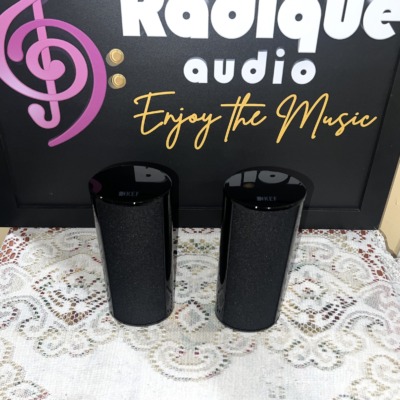

KEF HTS7001 Compact Aluminium Satellite Speaker High Gloss Black Pair
Cast aluminium cabinets rather than moulded plastic, in high gloss black — a 19 mm aluminium dome over two 50 mm bass drivers, crossed at 2.8 kHz. Response runs from 120 Hz up, so they want a subwoofer under them; 85 dB, 8 ohms, up to 100 watts. Wall-mount brackets are built in and the binding posts are gold-plated. Very good condition.
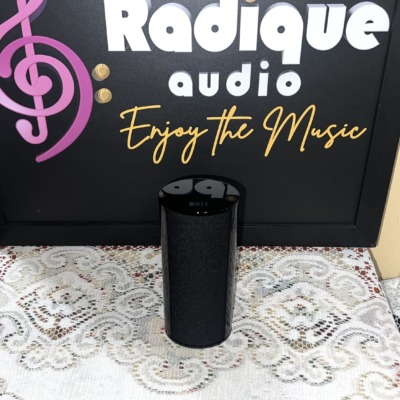
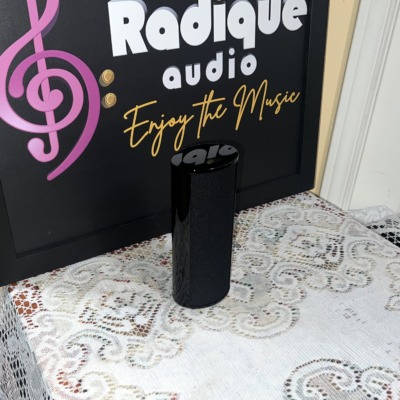
KEF HTS7001 Compact Aluminium Satellite Speaker High Gloss Black
A 19mm aluminium dome between two 50mm drivers in a sculpted cast aluminium cabinet, crossed at 2.8 kHz — 120 Hz to 22 kHz, 85 dB, 8 ohms, rated to 100 watts. High gloss black, magnetically shielded, gold-plated binding posts and an integrated wall-mount bracket. Just over a pound each, and best crossed over to a subwoofer. Cosmetics very good.
Related Products
- Genuine original Mirage factory wall/ceiling mount bracket for the Nanosat satellite speaker
- Compatible with all Nanosat v1 finishes — Black/Silver, All Black, and All White
- Single-screw keyhole slot system — speaker clicks on and off cleanly
- Positions speaker right-side up or inverted for ideal Omnipolar® sound dispersion
- Includes mounting screw
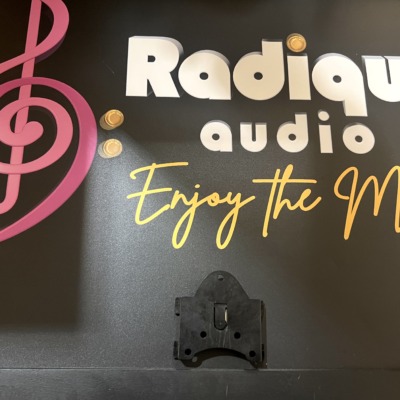
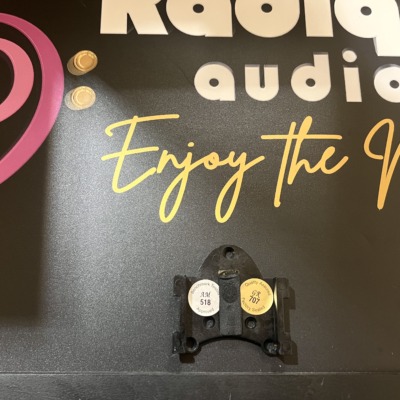
Mirage Omnisat Wall & Ceiling Mount Clip – Original Factory Part
The factory clip supplied with the first-generation Omnisat, and the part its moulded base was shaped to accept. The clip goes on the wall or ceiling first and the speaker slides down onto it under its own weight — a one-person job, and the speaker lifts off again in seconds. Three-quarters of an inch of profile. Not the v2 bracket; the two do not interchange. Very good condition.
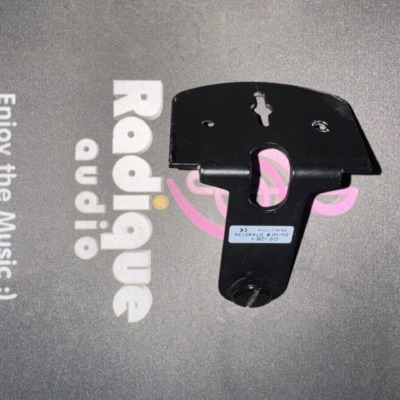
Mirage Omnisat V2 Wall/Ceiling Mount Bracket (OS v2B-1)
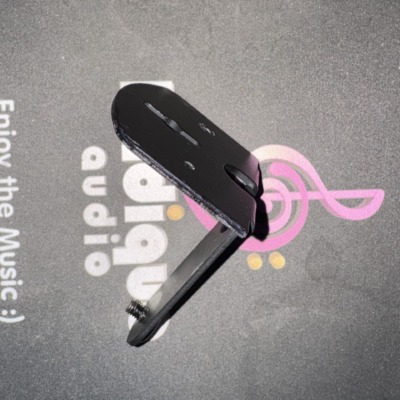
The factory bracket for the Omnisat v2, model OS v2B-1, for wall or ceiling. A single bolt threads into the base of the speaker and the plate anchors to the surface, keeping the satellite close in and correctly aimed — tidier and safer than a universal mount. The screw is included. Some paint transfer on the wall-facing side; the hardware itself is very good.
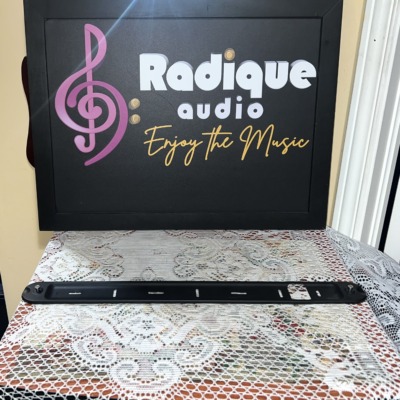
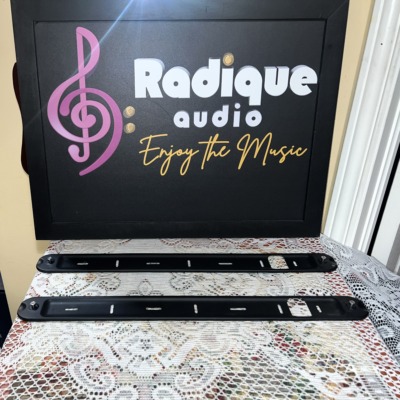
Monitor Audio Radius 250HD Wall Bracket – Black Metal Rail
A dedicated wall bracket for the Monitor Audio Radius 250HD LCR speaker: a slim black metal rail that mounts the speaker on the wall, horizontally or vertically.
✔️ Very good condition — free of significant marks
✔️ Mounts the Radius 250HD horizontally or vertically
✔️ Sold individually — order two for a pair
✔️ Covered by Radique Warranty
✔️ Includes Perpetual Trade-Back Program eligibility
✔️ Expertly packed for safe shipping
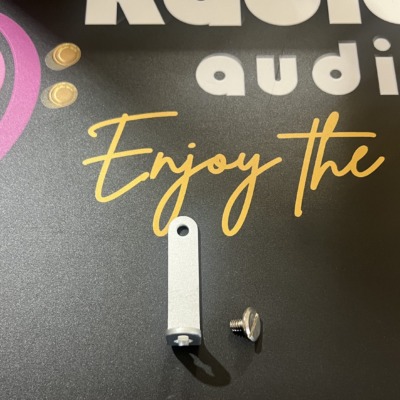
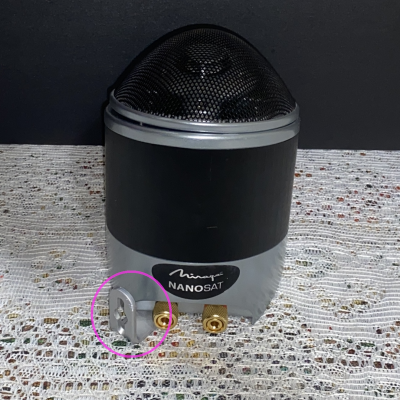
Mirage Nanosat Wall/Ceiling Mount Bracket (Original) | Radique
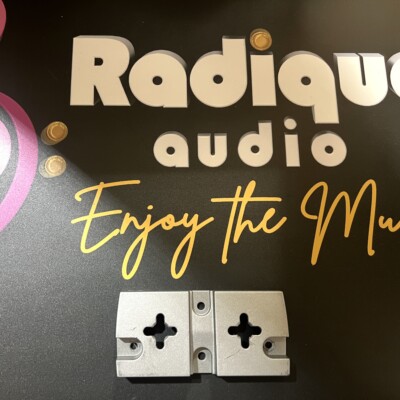
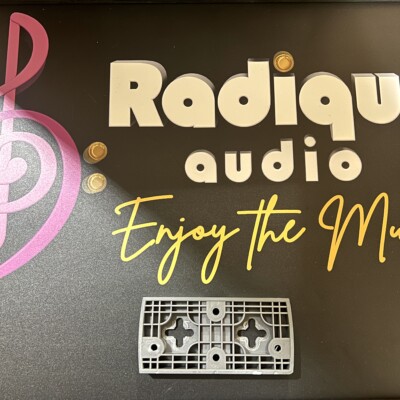
Paradigm Cinema 330 v3 – Genuine Wall-Mount Bracket 330 v3 Wall-mount
The factory bracket for Paradigm's Cinema 330 v3 on-wall speaker, mating directly to the rear interface for a close-to-wall fit. It sits behind the cabinet and is largely hidden once installed, which is why we supply whatever colour is in stock — black, silver or white — and cannot guarantee a choice. Wall anchors and screws are not included.
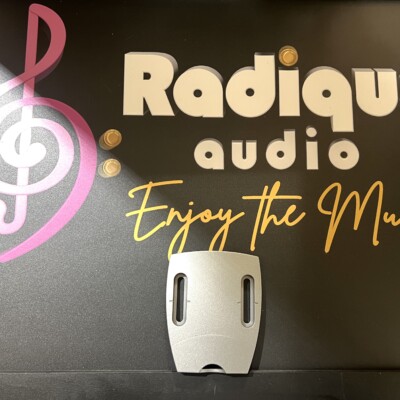
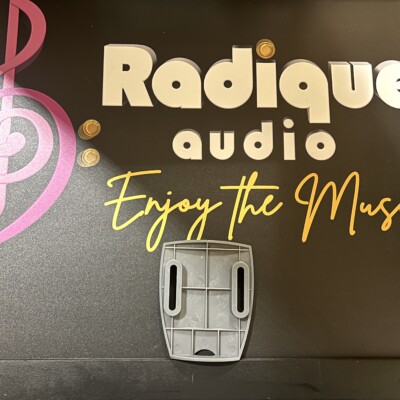
Paradigm Cinema 330 v3 – Genuine Shelf-Mount Support 330 v3 Shelf-mount
The genuine Paradigm support that lets a Cinema 330 v3 sit horizontally on a shelf, mating with the speaker’s base and tilting so the tweeter can be aimed at ear level. Four inches by 3.75, 28 grams, and no additional hardware is needed. Stock comes in black, silver or white; the colour cannot be chosen in advance.
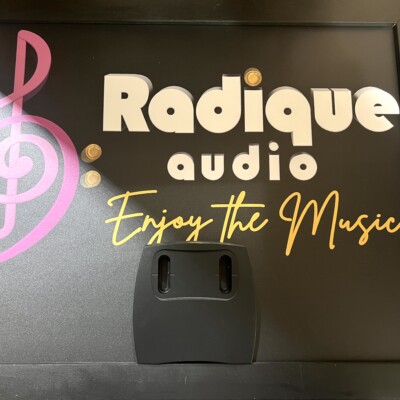
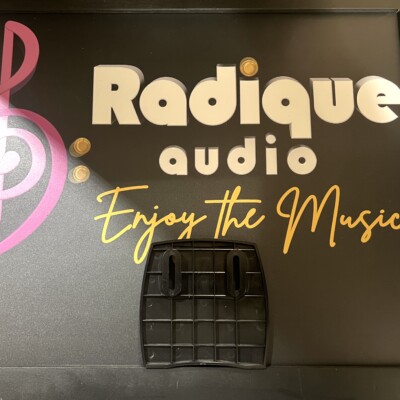
Paradigm Cinema 200/400/Trio – Horizontal Shelf-Mount Support
The genuine Paradigm support that lets a Cinema 200, 400 or Trio sit horizontally on a shelf rather than on a wall, with adjustable tilt so the tweeter can be aimed at ear height — which matters most when it is under a television. It stays visible in use and is styled to match. 4.75 by 4.5 inches, 57 grams. Supplied in black, silver or white as stock allows; the colour cannot be chosen.
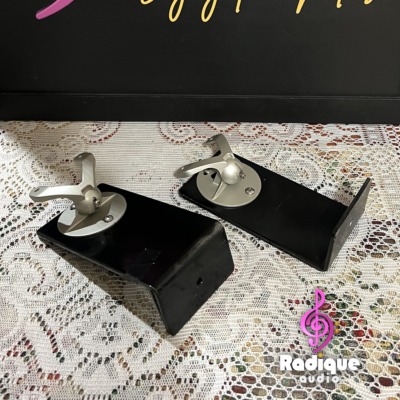
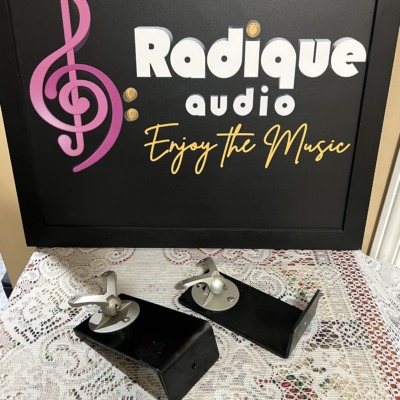
Monitor Audio Radius 90 Wall Brackets, Pair – Steel, Swivel Arm
A pair of wall brackets made for the Monitor Audio Radius 90: heavy black steel wall plates with silver ball-joint swivel arms.
✔️ Good condition — the light scuffs of a working accessory
✔️ Made for the Monitor Audio Radius 90 — sold as a pair
✔️ Ball-joint swivel arms to aim each speaker at the listening seat
✔️ Covered by Radique Warranty
✔️ Includes Perpetual Trade-Back Program eligibility
✔️ Expertly packed for safe shipping
