

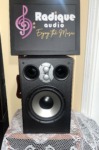
Mirage Omnisat Wall & Ceiling Mount Clip – Original Factory Part
$20.00
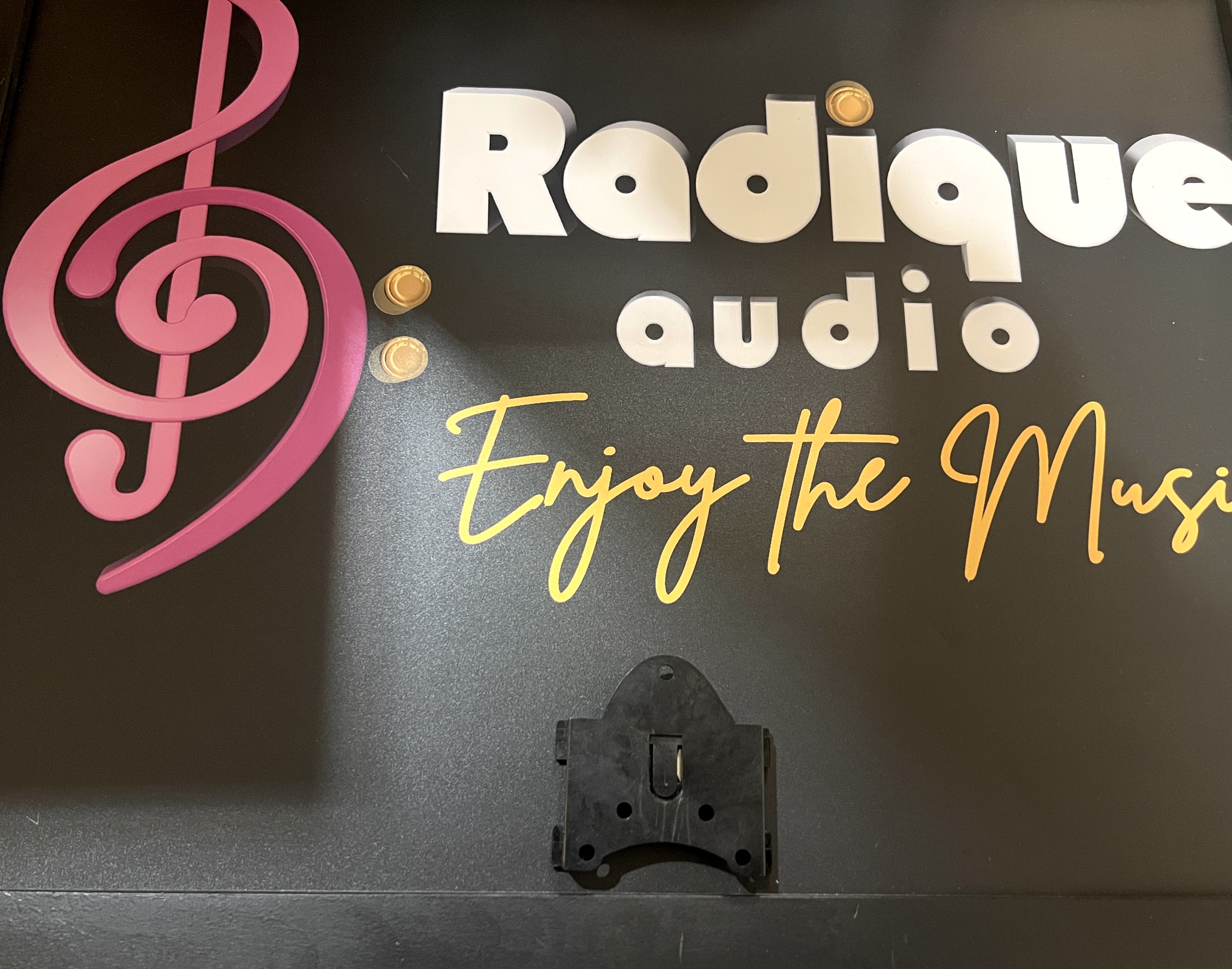
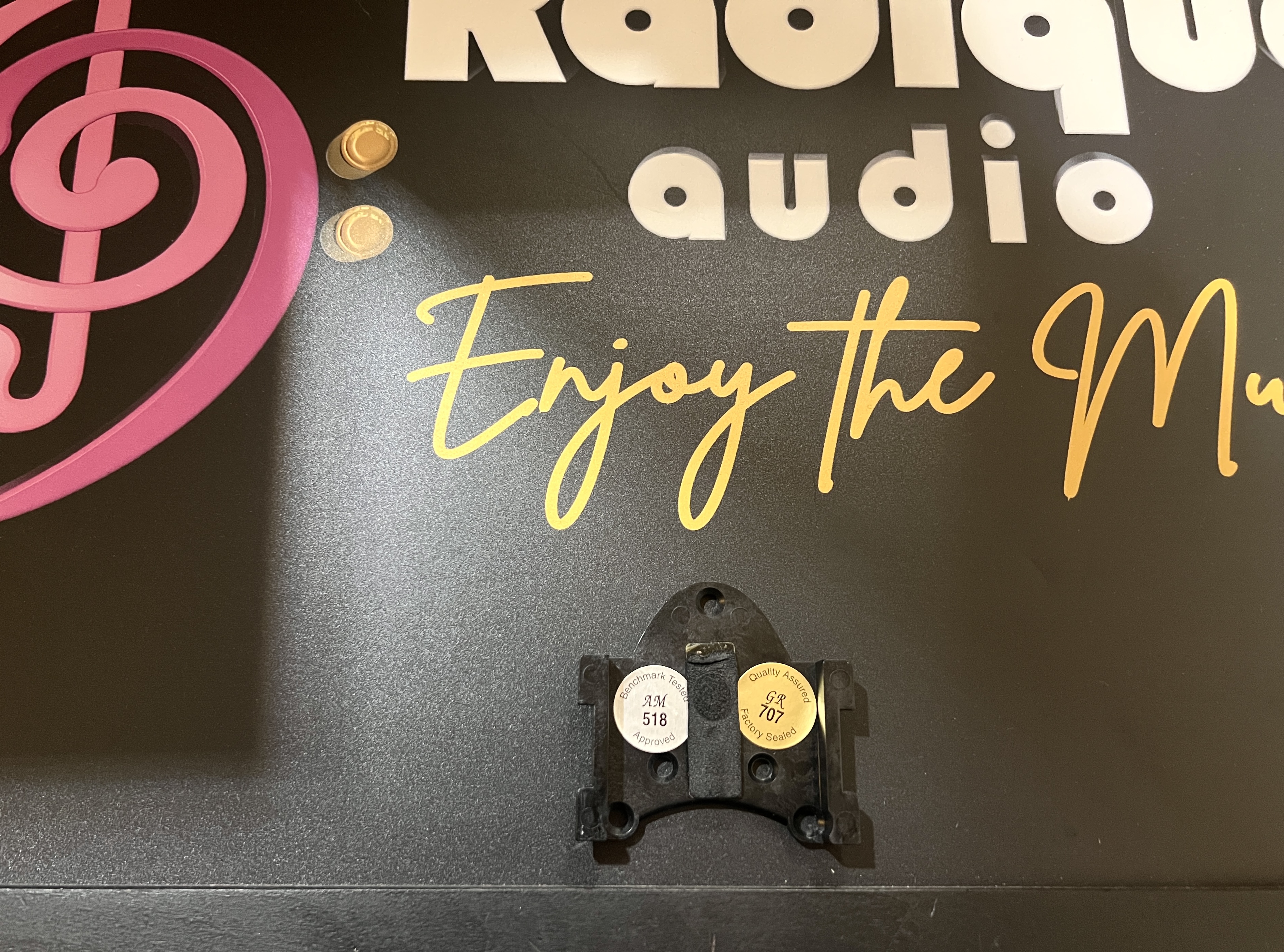
The factory clip supplied with the first-generation Omnisat, and the part its moulded base was shaped to accept. The clip goes on the wall or ceiling first and the speaker slides down onto it under its own weight — a one-person job, and the speaker lifts off again in seconds. Three-quarters of an inch of profile. Not the v2 bracket; the two do not interchange. Very good condition.
1 in stock
Mirage Omnisat Mount Clip — The Correct Original Factory Part
Mirage Omnisat Wall and Ceiling Mount Clip – Original Factory Part for the First-Generation Omnisat, Very Good Condition
The factory mounting clip supplied with the original Mirage Omnisat, and the correct part for a clean flush installation.
The base of the Omnisat is moulded into a specific shape designed to accept this clip. The clip screws flat to the wall or ceiling on its own, and the speaker then slides down onto it and seats under its own weight. That sounds like a small thing until you have tried to hold a satellite in place with one hand while starting a screw with the other. It is a one-person job, and a quick one.
It also means the speaker lifts straight off again. Painting, rearranging, or taking the system with you becomes a matter of seconds, and the clip stays exactly where you set it.
The clip is moulded plastic and holds the speaker tight to the surface — just three quarters of an inch of profile — with nothing standing proud to catch the eye. A generic universal mount will hold a speaker up, but it will hold it away from the wall and at the wrong orientation, and the Omnipolar dispersion is worth more than that.
Installation note: the original Omnisat weighs 7 lbs. Mirage’s own instructions call for mounting into a wall stud wherever possible, or using proper heavy-duty anchors rated for the weight. Please do not hang one of these on bare drywall.
Worth knowing: the Omnisat offers three separate mounting methods, and they are not interchangeable. This clip engages the moulded base. The speaker also has dual key-way channels that let it hang directly on a single screw head, and a 3/8″-16 threaded insert at the rear for Mirage’s optional Macromount bracket. If you are after the rear-insert option, this is not the part you need.
It is in very good condition, clean and undamaged, with no cracked tabs or stripped screw holes.
Please note this is the clip for the original first-generation Omnisat. The Omnisat v2 uses a different bracket, and the two are not interchangeable.
Features: Original Mirage factory part, as supplied with the first-generation Omnisat Engages the moulded shape in the base of the speaker Slide-on fitting — mount the clip first, speaker drops on Suits wall or ceiling installation Low profile at just 0.75″ from the wall Speaker lifts off without tools
Mirage Omnisat Mount Clip Specifications
- Dimensions: (Width x Height x Depth) 2.12 x 4.13 x 0.75 inches (54 x 105 x 19 mm)
- Weight: 2.8 oz (80 g)
📦 Watch how we protect your gear — our unboxing video.
📺 Curious about our business? Check out our YouTube channel for behind-the-scenes videos and more!
📞 Questions? Use the Ask a Question button above, or call us at 613-416-9995.
| Weight | 2.2 lbs |
|---|---|
| Dimensions | 4.75 × 6.12 × 8.13 in |
Mirage is a Canadian speaker brand, founded in Toronto in the late 1970s and later built by Audio Products International in Scarborough, in the same factory as Energy. Its bipolar and Omnipolar designs send sound in more than one direction. We carry Mirage towers, satellites, centre channels and subwoofers. We've had more than 110 Mirage listings so far. Every used Mirage here is inspected, tested and serviced as required, then photographed in-house and covered by our Bumper-to-Bumper Warranty and Perpetual Trade-Back Program. Don't see the model you want? Tell us on First Dibs and we'll email you when one arrives.
The Mirage story
Jeff Percy, Jeff Soltysek and Patrick Dempster founded Mirage in Toronto in the late 1970s (1979, according to Stereophile). Kevin Voecks, later of Snell and Revel, did the original designs. Audio Products International of Scarborough, which already assembled Mirage speakers, took the company over in the mid-1980s.
Bipolar. The M-1 of 1987, begun by Voecks and completed by API's Ian Paisley, fired identical drivers forward and backward, in phase. Mirage's engineers worked with the National Research Council's loudspeaker research here in Ottawa.
Omnipolar. The OM-6 of 1997 was the first commercial version of Mirage's Omnipolar idea, and the Omnisat satellite system followed in 2002.
New owners. Klipsch bought API in 2006, and VOXX bought Klipsch in 2011. Later models were made in China; the 2007 OMD-28 was "designed by API in Canada and built in China". Around the end of 2022, Oscar Bernardo, a former API executive, bought the Mirage brand himself to relaunch it.
Which Mirage is which?
Early two-ways (1980s to early 1990s): models owners discuss include the SM-1, 190, 290, M-360 and M-460.
M-series bipolar (1987 to late 1990s): the M-1, M-3, and the "si" models such as the M-1si, M-3si and M-7si.
OM-series Omnipolar (1997 to early 2000s): the OM-6, OM-7 and OM-9, and the OM-5 subwoofer.
Home theatre: FRx (2001), Omnisat and Nanosat satellites (2002 to 2005), OMD (2007) and MX (2009), plus the OMNI towers and Uni-Theater.
Subwoofers: the BPS bipolar subs, the LF-150 and MM-6, and the Nano subwoofers.
Buying used Mirage: what to check
Surrounds. Materials vary by model: some M-series midranges use foam surrounds that turn brittle, while many woofers use rubber. Check the rear-firing drivers too.
Tweeters. Owners report that original M-1 tweeters become fragile and have been unavailable for years. Check that every tweeter plays, front and rear.
Powered woofers and subwoofers. Test the built-in amplifier at volume; owners report failed sub amplifiers with no replacement available.
Finish and pairs. M-series panels are lacquered and some clip off plastic fasteners, so look for damage. The M-1si was built in mirror-image pairs.
Placement. Omnipolar and bipolar speakers sound best well out from the wall.
Everything we list is inspected, tested and serviced as required here, and comes with our warranty.
You may also like…
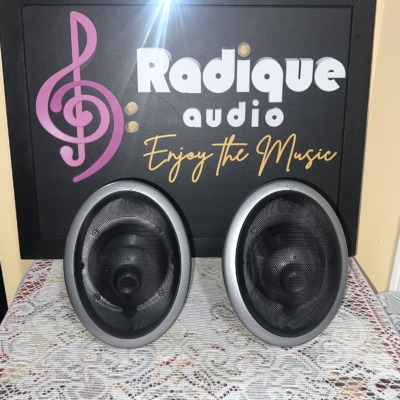
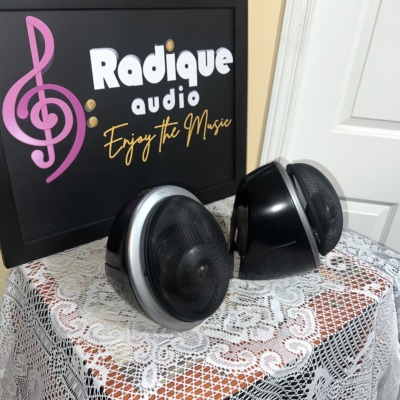
Mirage Omnisat OS 1PB-1 Omnipolar Satellite (Pair) – Made in Canada
Both drivers fire upward into spoon-shaped OMNIGUIDE reflectors, giving 360-degree dispersion with a deliberate forward bias. 70 Hz to 20 kHz, 89 dB, cast aluminum woofer baffle and butyl surrounds rather than foam. These are the original 7 lb version; the later revisions come in under five. Very good condition.
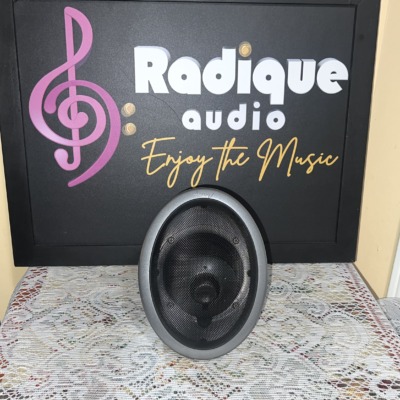
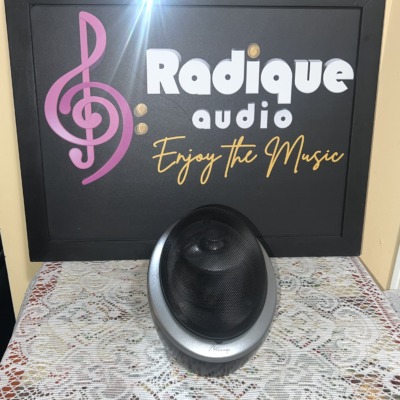
Mirage Omnisat OS 1PB-1 Omnipolar Satellite – Made in Canada
Both drivers fire upward into spoon-shaped reflectors Mirage calls OMNIGUIDEs, throwing sound through a full 360 degrees with a deliberate bias toward the front — which is what takes the sweet spot off a single chair. This is the original version at a genuine 7 lbs each, with a cast aluminium baffle and butyl rubber surrounds rather than foam. Built in Canada; condition very good.
Related Products
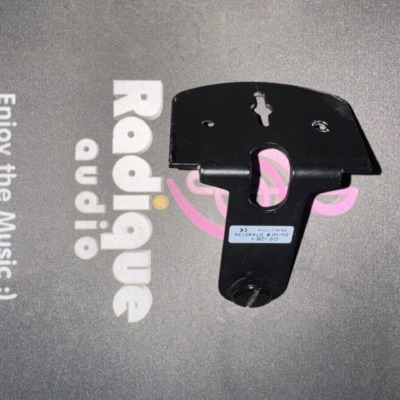
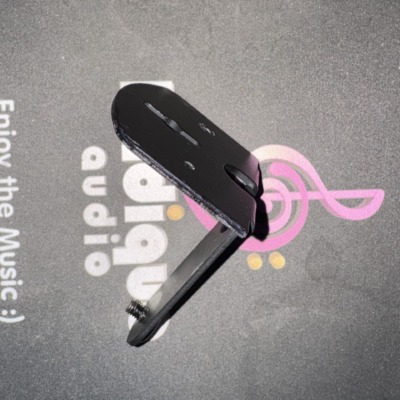
Mirage Omnisat V2 Wall/Ceiling Mount Bracket (OS v2B-1)
The factory bracket for the Omnisat v2, model OS v2B-1, for wall or ceiling. A single bolt threads into the base of the speaker and the plate anchors to the surface, keeping the satellite close in and correctly aimed — tidier and safer than a universal mount. The screw is included. Some paint transfer on the wall-facing side; the hardware itself is very good.
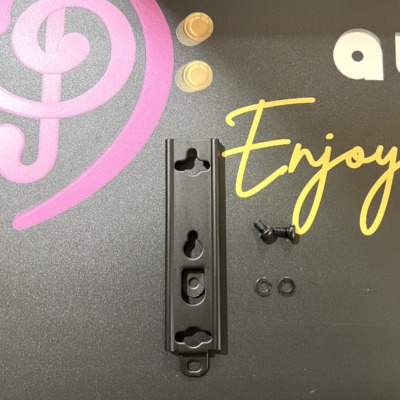
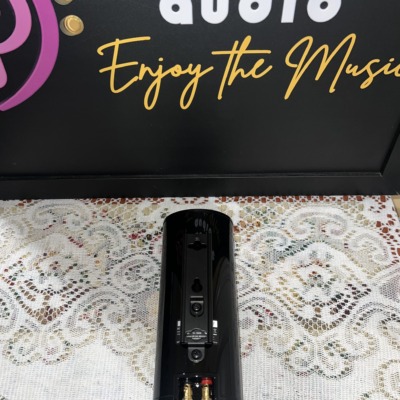
KEF HTS7001 Matching Wall Mount Bracket
A rigid metal plate that screws to the back of an HTS7001 satellite — the two machine screws for that are included — and then hangs on two wall screws through integrated keyhole slots. It goes up vertically or horizontally, whichever suits the channel. Five inches long, in black, sitting discreetly behind the speaker. Wall anchors and screws are yours to supply. Excellent condition, lightly used.
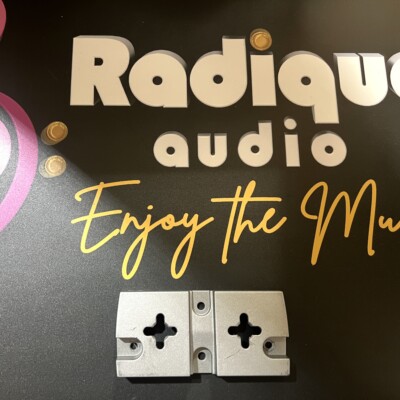
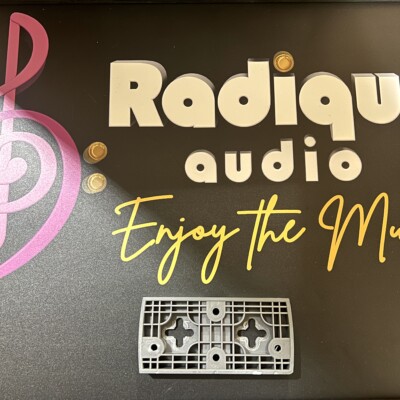
Paradigm Cinema 330 v3 – Genuine Wall-Mount Bracket 330 v3 Wall-mount
The factory bracket for Paradigm's Cinema 330 v3 on-wall speaker, mating directly to the rear interface for a close-to-wall fit. It sits behind the cabinet and is largely hidden once installed, which is why we supply whatever colour is in stock — black, silver or white — and cannot guarantee a choice. Wall anchors and screws are not included.
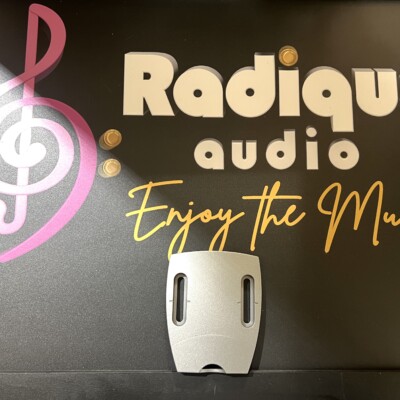
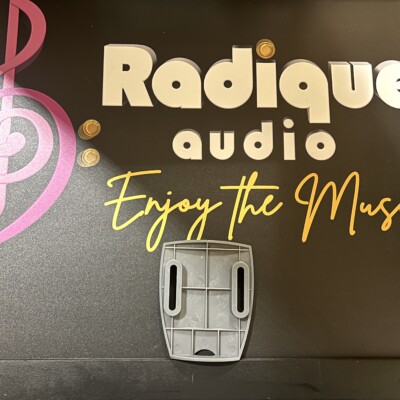
Paradigm Cinema 330 v3 – Genuine Shelf-Mount Support 330 v3 Shelf-mount
The genuine Paradigm support that lets a Cinema 330 v3 sit horizontally on a shelf, mating with the speaker’s base and tilting so the tweeter can be aimed at ear level. Four inches by 3.75, 28 grams, and no additional hardware is needed. Stock comes in black, silver or white; the colour cannot be chosen in advance.
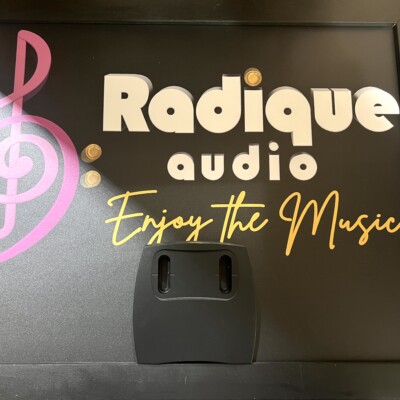
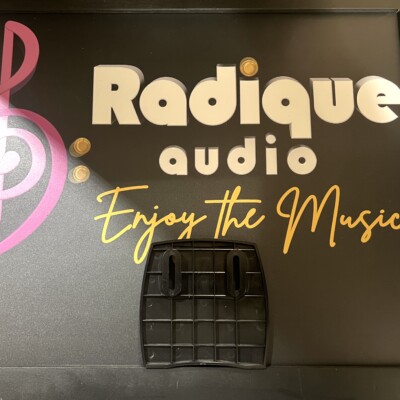
Paradigm Cinema 200/400/Trio – Horizontal Shelf-Mount Support
The genuine Paradigm support that lets a Cinema 200, 400 or Trio sit horizontally on a shelf rather than on a wall, with adjustable tilt so the tweeter can be aimed at ear height — which matters most when it is under a television. It stays visible in use and is styled to match. 4.75 by 4.5 inches, 57 grams. Supplied in black, silver or white as stock allows; the colour cannot be chosen.
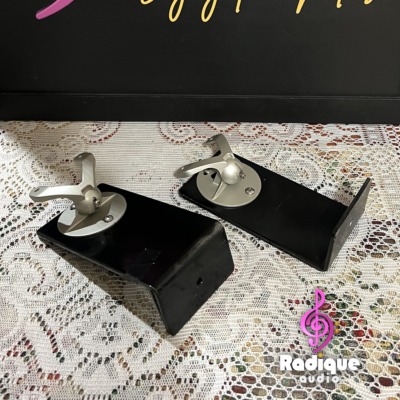
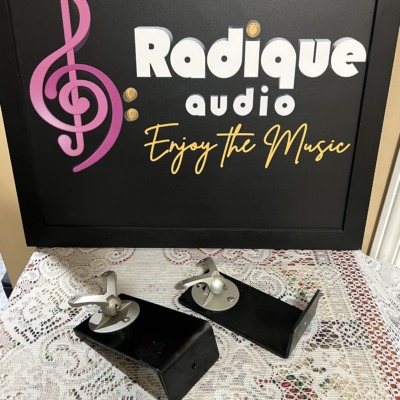
Monitor Audio Radius 90 Wall Brackets, Pair – Steel, Swivel Arm
A pair of wall brackets made for the Monitor Audio Radius 90: heavy black steel wall plates with silver ball-joint swivel arms.
✔️ Good condition — the light scuffs of a working accessory
✔️ Made for the Monitor Audio Radius 90 — sold as a pair
✔️ Ball-joint swivel arms to aim each speaker at the listening seat
✔️ Expertly packed for safe shipping
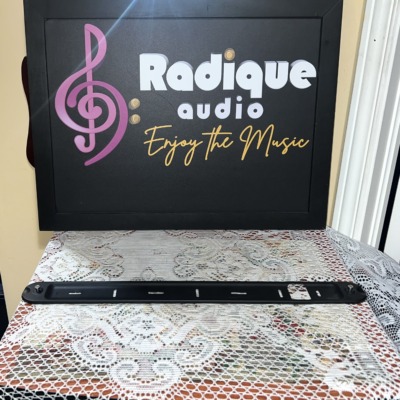
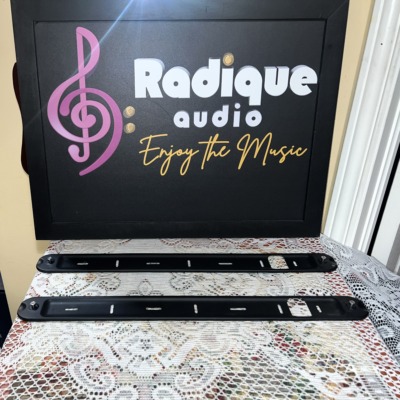
Monitor Audio Radius 250HD Wall Bracket – Black Metal Rail
A dedicated wall bracket for the Monitor Audio Radius 250HD LCR speaker: a slim black metal rail that mounts the speaker on the wall, horizontally or vertically.
✔️ Very good condition — free of significant marks
✔️ Mounts the Radius 250HD horizontally or vertically
✔️ Sold individually — order two for a pair
✔️ Expertly packed for safe shipping
