



Paradigm Cinema 330 v3 – Genuine Wall-Mount Bracket 330 v3 Wall-mount
$20.00
The factory bracket for Paradigm’s Cinema 330 v3 on-wall speaker, mating directly to the rear interface for a close-to-wall fit. It sits behind the cabinet and is largely hidden once installed, which is why we supply whatever colour is in stock — black, silver or white — and cannot guarantee a choice. Wall anchors and screws are not included.
2 in stock
Paradigm Cinema 330 v3 – Genuine Wall-Mount Bracket
This is a genuine Paradigm wall-mount bracket designed specifically for the Cinema 330 v3 on-wall speaker. It mates directly with the rear mounting interface of the Cinema 330 v3, ensuring a secure, close-to-wall installation and proper alignment for on-wall use.
This factory bracket is ideal as a replacement for a lost or damaged original mount, or to add wall-mount capability to a Cinema 330 v3 that is currently shelf- or stand-mounted. The bracket itself sits behind the speaker and is largely hidden from view when the speaker is installed, so its finish is not prominent in normal use.
We may supply brackets in black, silver, or white, depending on current stock levels. Because these are surplus/OEM parts and the bracket is mostly concealed in use, specific colour selection cannot be guaranteed in advance and a colour choice is not offered at checkout.
Please note that this listing is for the Paradigm Cinema 330 v3 wall-mount bracket only. No additional hardware is included, and you will need to supply your own appropriate wall anchors and screws tailored to your wall construction (stud, concrete, drywall, etc.), as Paradigm’s manuals also recommend selecting mounting hardware based on wall type.
Manufacturer: Paradigm
Product: Genuine wall-mount bracket
Model compatibility: Paradigm Cinema 330 v3 on-wall speaker (specific to this model)
Installation: Close-to-wall, bracket sits behind the speaker and is mostly hidden when installed
Finish: Black, silver, or white (supplied according to availability; colour cannot be chosen)
Included: 1 × Paradigm Cinema 330 v3 wall-mount bracket
Not included: Wall screws, anchors, or any other mounting hardware (user must supply suitable fasteners)
Dimensions: (L x W x D) 4.75″ x 2.25″ x 0.75″ (121 x 57 x 19 mm)
Weight: 44 g (0.10 lbs)
Intended use: Replacement or additional original-style wall mount for Paradigm Cinema 330 v3 speakers
A simple, authentic way to wall-mount your Paradigm Cinema 330 v3 using the correct Paradigm-designed bracket, with a clean look once the speaker is in place.
| Weight | 2 lbs |
|---|---|
| Dimensions | 8 × 10 × 2 in |
Paradigm has designed loudspeakers in the Toronto area since 1982, with engineering roots that run through Ottawa: it took part in the National Research Council's loudspeaker research here, and its research lab has been in Ottawa since 1993. We've had more than 600 Paradigm listings so far, covering 193 different models, more than any other brand we resell. Every used Paradigm here is inspected, tested and serviced as required, then photographed in-house and covered by our Bumper-to-Bumper Warranty and Perpetual Trade-Back Program. Don't see the model you want? Tell us on First Dibs and we'll email you when one arrives.
Our five best-selling Paradigm models so far: the Cinema 330 v.3 on-wall speakers, the Mini Monitor bookshelf speakers, the Monitor 7 towers, and the PS-1000 and PDR-10 subwoofers.
The Paradigm story, 1982 to today
Jerry VanderMarel and Scott Bagby founded Paradigm in 1982 in the Toronto area, VanderMarel running sales and marketing and Bagby design and manufacturing. Their first speakers made their debut at a Toronto audio show that year, and Paradigm says 12 dealers signed on.
The Ottawa years. In the 1980s almost every major Canadian speaker maker measured its designs in the National Research Council's anechoic chamber here in Ottawa, and Paradigm took part in the research Dr. Floyd Toole led at the NRC, which paired chamber measurements with blind listening tests. Paradigm built its own anechoic chamber in 1988, sparing its engineers the five-hour drive to Ottawa. In the late 1980s and early 1990s it was one of several Canadian companies in the NRC's Athena project, which studied speakers that adapt to the room. NRC scientists Peter Schuck and Marc Bonneville then joined Paradigm, which says it opened its Ottawa research centre, PARC, for them in 1993. That lab went on to design Anthem's electronics and its room-correction system. A 1990s Paradigm Titan is now part of the collection at Ingenium, Canada's science and technology museums, here in Ottawa.
Growth. Paradigm moved into the US market in the mid-1980s, added its first in-wall speaker in 1989 and launched the Monitor series in 1990. The Titan was a hit by 1991, the Atom followed in 1992, and the PS-1000 of 1994 was its first powered subwoofer. By 1992 Stereophile counted about 256 Paradigm dealers in the US.
Reference and the new factory. The Reference line, with its Studio speakers, arrived in the mid-1990s; Stereophile reviewed the Studio/100 in 1997. In 1998 Paradigm bought Sonic Frontiers, which brought Anthem into the family. In 2001 it moved into a new Mississauga factory with what it calls the hemisphere's largest privately owned anechoic chamber, at 33,000 cubic feet. A tour that year found the plant finishing 1,500 speakers a day, with driver frames cast, cones moulded and voice coils wound in-house.
Changes of hands. Co-founder Jerry VanderMarel left in 2005, when the private-equity firm ShoreView Industries became Scott Bagby's partner; together they went on to buy MartinLogan. Compact lines such as Cinema were built overseas from the start, and from the 2010s Monitor was too, while Prestige (2014), Persona (2016) and Founder (2021) have been built in Mississauga. In 2019 Scott Bagby and his son John bought Paradigm, Anthem and MartinLogan back from ShoreView, and their company, PML Sound International, added GoldenEar at the start of 2025.
Which Paradigm is which?
Performance Series (1990s to 2006): the entry line, with the Atom, Titan, Focus, Esprit and Phantom. A 1990s Titan's label reads "Performance Series … Made in Canada". At the end of 2006 the Atom and Titan moved into the Monitor line.
Monitor (from 1990): the step-up line, and from 2006 the entry line; today's version is Monitor SE. In the early 1990s it was topped by the Studio Monitor tower, in real wood veneer.
Reference Studio (mid-1990s to mid-2010s): the Studio/20, 40, 60, 80 and 100 plus matching centres, with die-cast aluminium driver chassis and aluminium-dome tweeters, made in numbered versions. From the v.2 generation of 1999 the sides came in laminate or, for a little more, real wood veneer. A favourite here is the Studio/80 v.2, a slim 2.5-way tower from about 1999 to 2003; the pairs with real wood sides are the ones to find.
Signature (2004–2016): the flagship of its day, part of the Reference family.
Cinema (from about 2000): compact home-theatre satellites and centres in polymer cabinets, designed to be used with a subwoofer, later sold as Cinema CT packages.
Millenia (from 2006): slim aluminium-cabinet speakers made to suit flat-panel TVs. The little MilleniaOne was Sound & Vision's 2011 Product of the Year.
Stylus (from 1999): weatherproof outdoor speakers.
Today's lines: Monitor SE, Premier (2018), Prestige (2014), Founder (2021) and the Persona flagship (2016).
Subwoofers: from the PS-1000 (1994) and Servo-15 (1996) through the PS and PW series to Defiance (2018).
Buying used Paradigm: what to check
The rear label. Where a Paradigm was built depends on the line and the year, and some names were reused (the Atom and Titan moved from Performance to Monitor, and the Esprit name appeared in more than one line), so the label tells you exactly what you have.
Veneer or laminate. On Reference Studio models from 1999 on, real wood veneer sides were an option; look closely at the sides before you assume.
Woofer surrounds. Owners report foam surrounds needing replacement on some older models, including early Titans. Press gently around each one.
Powered subwoofers. The amplifier is the part most likely to have aged. Run a used sub at volume and check that auto-on still works.
Everything we list is inspected, tested and serviced as required here, and comes with our warranty.
You may also like…


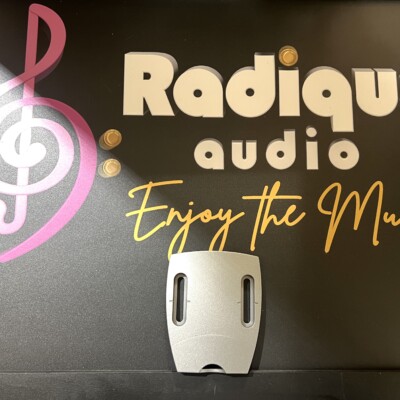
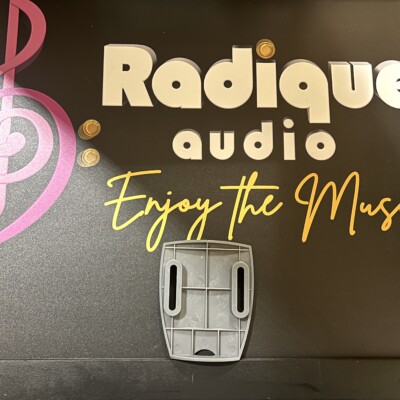
Paradigm Cinema 330 v3 – Genuine Shelf-Mount Support 330 v3 Shelf-mount
The genuine Paradigm support that lets a Cinema 330 v3 sit horizontally on a shelf, mating with the speaker’s base and tilting so the tweeter can be aimed at ear level. Four inches by 3.75, 28 grams, and no additional hardware is needed. Stock comes in black, silver or white; the colour cannot be chosen in advance.
Related Products
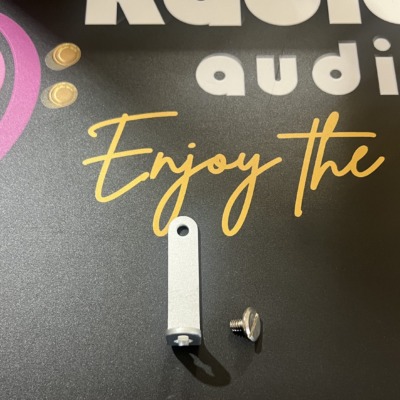
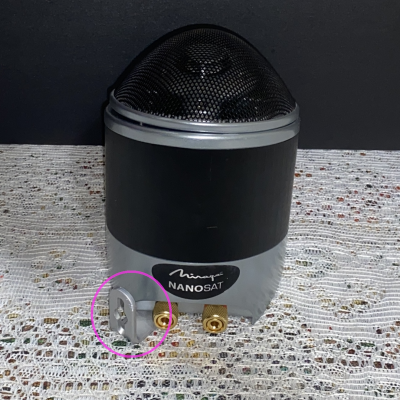
- Genuine original Mirage factory wall/ceiling mount bracket for the Nanosat satellite speaker
- Compatible with all Nanosat v1 finishes — Black/Silver, All Black, and All White
- Single-screw keyhole slot system — speaker clicks on and off cleanly
- Positions speaker right-side up or inverted for ideal Omnipolar® sound dispersion
- Includes mounting screw
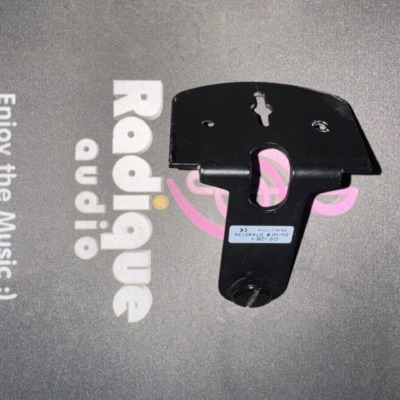
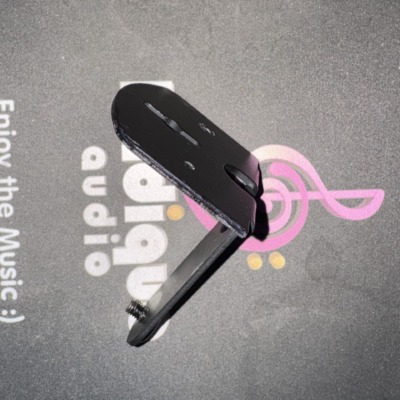
Mirage Omnisat V2 Wall/Ceiling Mount Bracket (OS v2B-1)
The factory bracket for the Omnisat v2, model OS v2B-1, for wall or ceiling. A single bolt threads into the base of the speaker and the plate anchors to the surface, keeping the satellite close in and correctly aimed — tidier and safer than a universal mount. The screw is included. Some paint transfer on the wall-facing side; the hardware itself is very good.
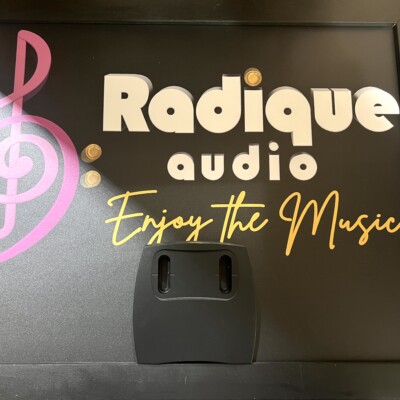
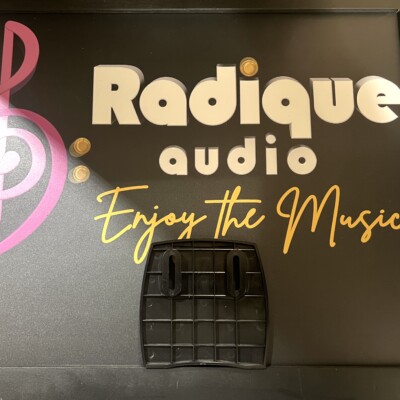
Paradigm Cinema 330 v3 – Genuine Shelf-Mount Support 330 v3 Shelf-mount
The genuine Paradigm support that lets a Cinema 330 v3 sit horizontally on a shelf, mating with the speaker’s base and tilting so the tweeter can be aimed at ear level. Four inches by 3.75, 28 grams, and no additional hardware is needed. Stock comes in black, silver or white; the colour cannot be chosen in advance.
Paradigm Cinema 200/400/Trio – Horizontal Shelf-Mount Support
The genuine Paradigm support that lets a Cinema 200, 400 or Trio sit horizontally on a shelf rather than on a wall, with adjustable tilt so the tweeter can be aimed at ear height — which matters most when it is under a television. It stays visible in use and is styled to match. 4.75 by 4.5 inches, 57 grams. Supplied in black, silver or white as stock allows; the colour cannot be chosen.
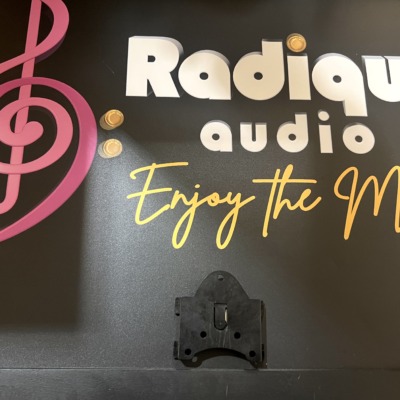
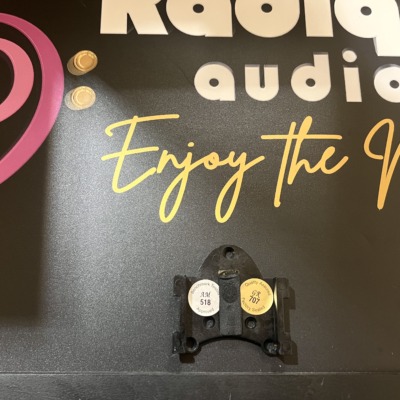
Mirage Omnisat Wall & Ceiling Mount Clip – Original Factory Part
The factory clip supplied with the first-generation Omnisat, and the part its moulded base was shaped to accept. The clip goes on the wall or ceiling first and the speaker slides down onto it under its own weight — a one-person job, and the speaker lifts off again in seconds. Three-quarters of an inch of profile. Not the v2 bracket; the two do not interchange. Very good condition.
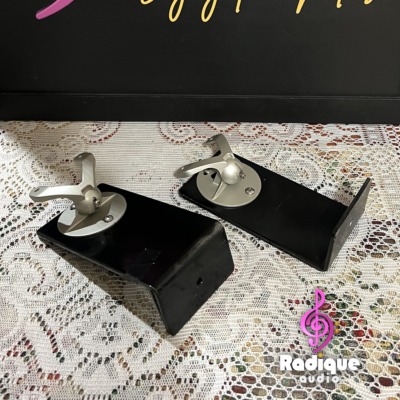
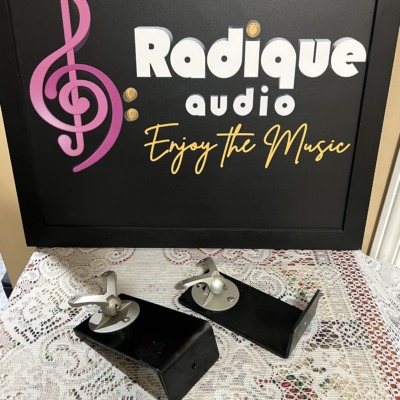
Monitor Audio Radius 90 Wall Brackets, Pair – Steel, Swivel Arm
A pair of wall brackets made for the Monitor Audio Radius 90: heavy black steel wall plates with silver ball-joint swivel arms.
✔️ Good condition — the light scuffs of a working accessory
✔️ Made for the Monitor Audio Radius 90 — sold as a pair
✔️ Ball-joint swivel arms to aim each speaker at the listening seat
✔️ Covered by Radique Warranty
✔️ Includes Perpetual Trade-Back Program eligibility
✔️ Expertly packed for safe shipping
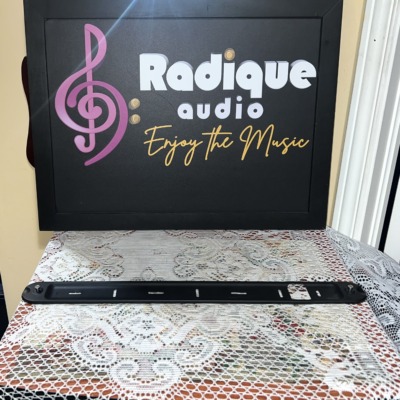
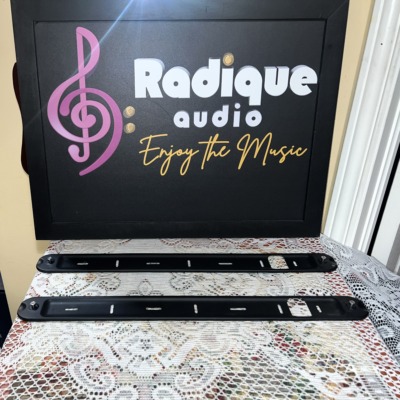
Monitor Audio Radius 250HD Wall Bracket – Black Metal Rail
A dedicated wall bracket for the Monitor Audio Radius 250HD LCR speaker: a slim black metal rail that mounts the speaker on the wall, horizontally or vertically.
✔️ Very good condition — free of significant marks
✔️ Mounts the Radius 250HD horizontally or vertically
✔️ Sold individually — order two for a pair
✔️ Covered by Radique Warranty
✔️ Includes Perpetual Trade-Back Program eligibility
✔️ Expertly packed for safe shipping
Mirage Nanosat Wall/Ceiling Mount Bracket (Original) | Radique
KEF HTS7001 Matching Wall Mount Bracket
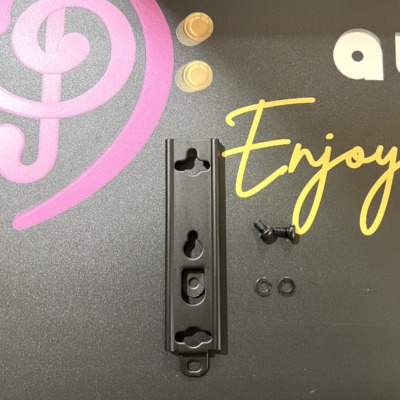
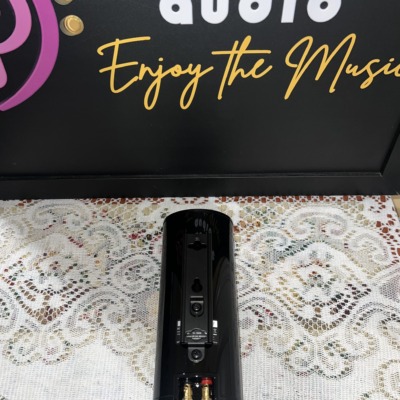
A rigid metal plate that screws to the back of an HTS7001 satellite — the two machine screws for that are included — and then hangs on two wall screws through integrated keyhole slots. It goes up vertically or horizontally, whichever suits the channel. Five inches long, in black, sitting discreetly behind the speaker. Wall anchors and screws are yours to supply. Excellent condition, lightly used.
