
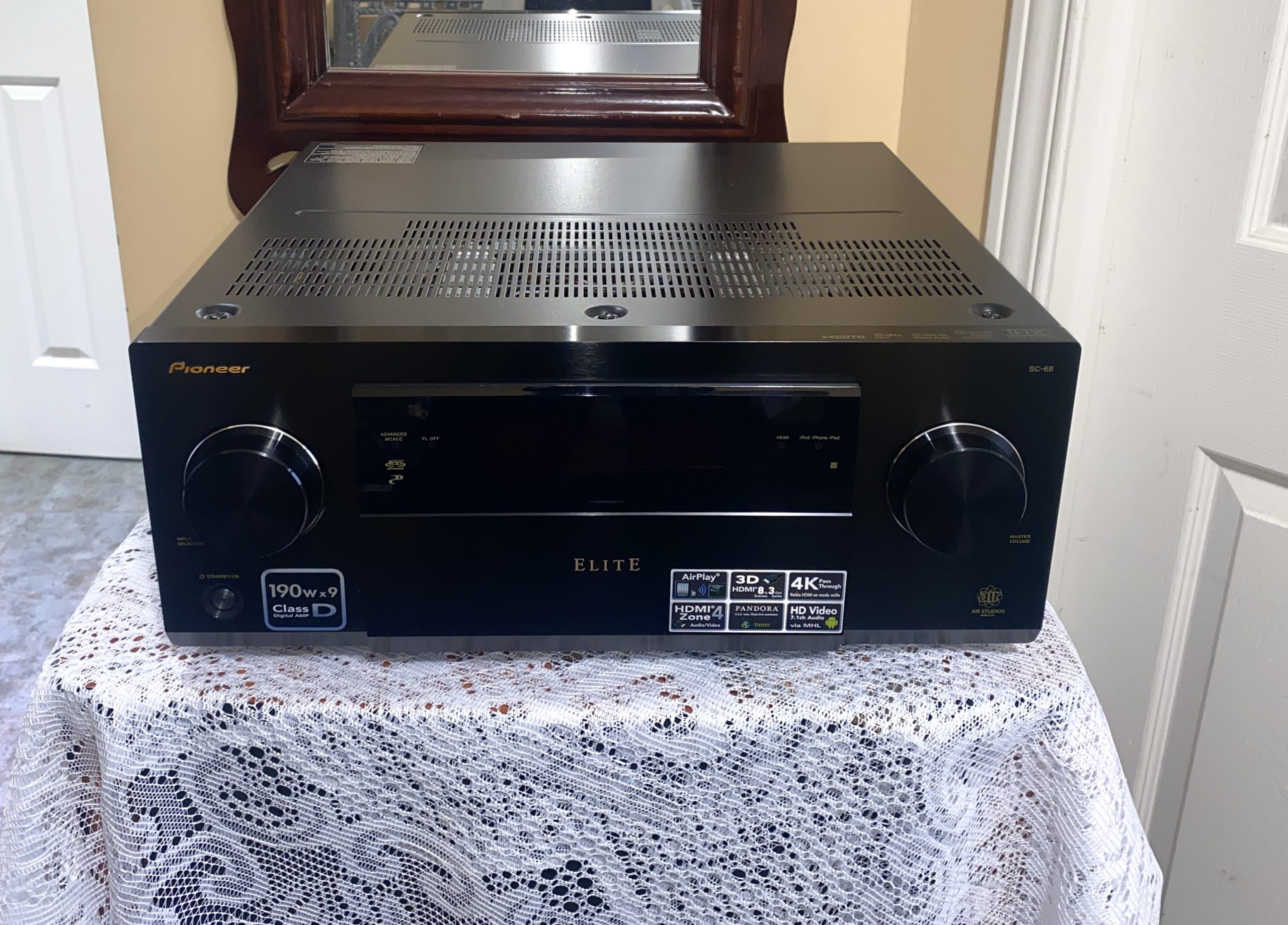
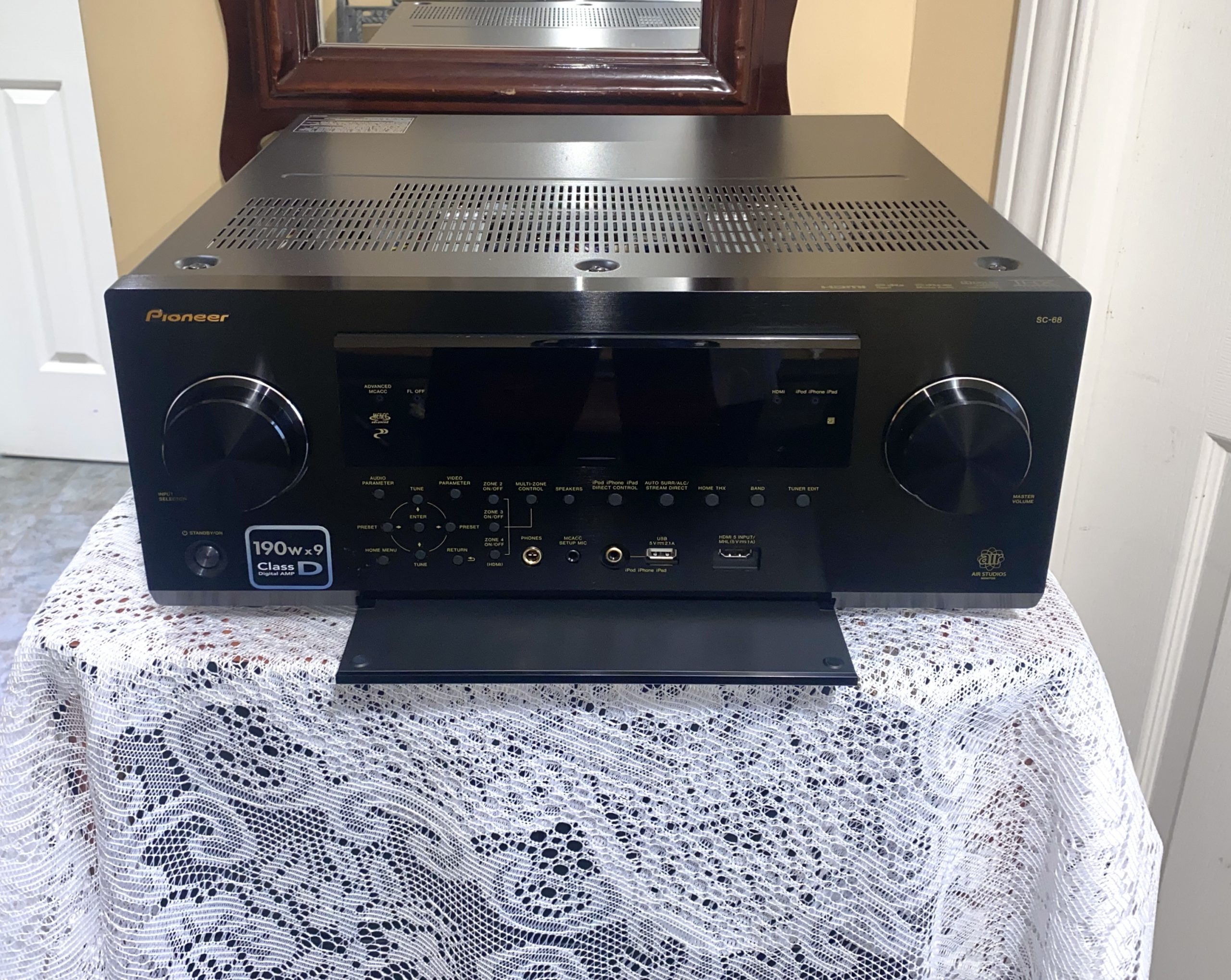
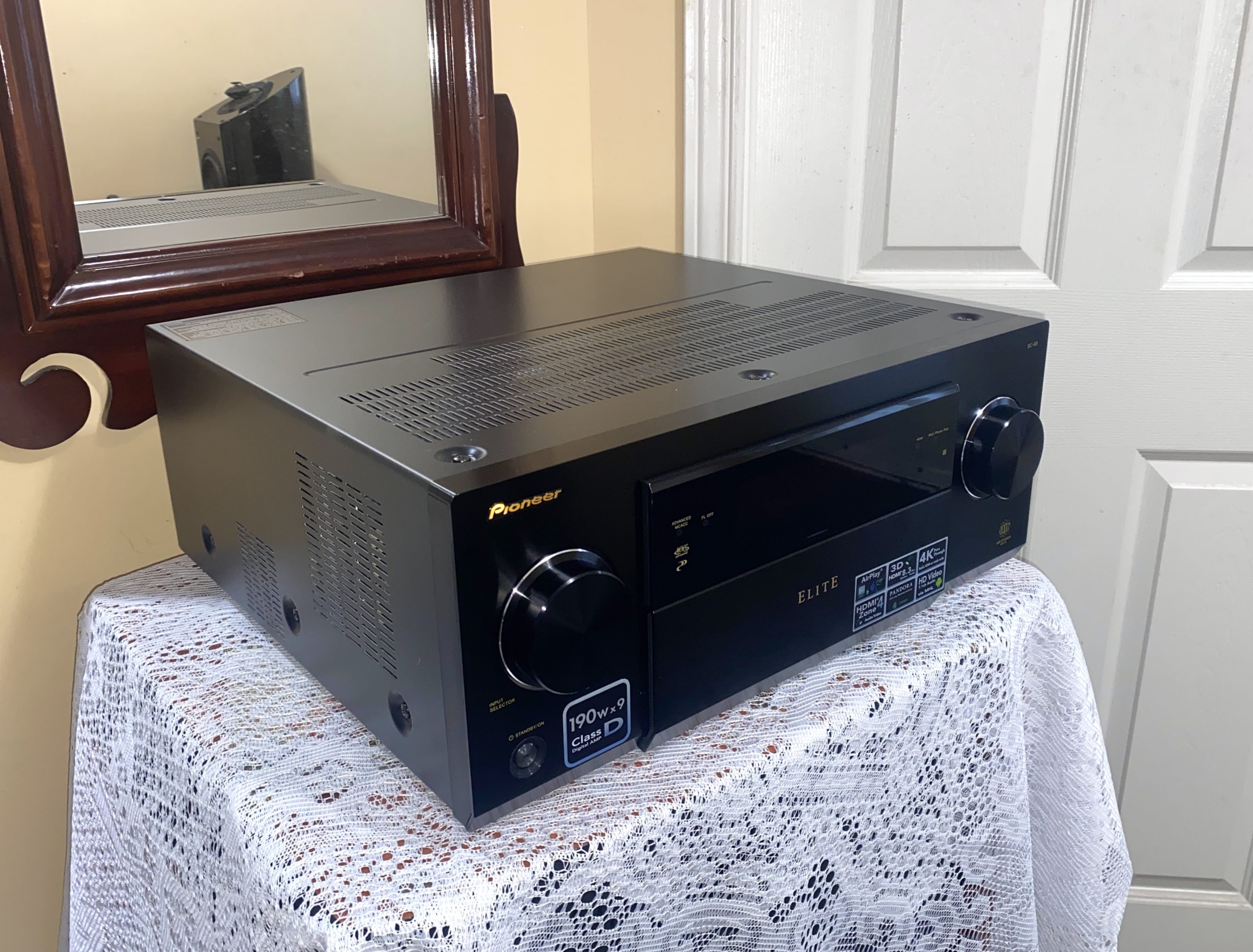

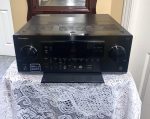
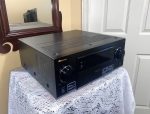


Loaded Pioneer Elite 9.2 AVR 140 WPC, 8 x 4K HDMI 4 Zn! SC-68
$895.00
Out of stock
Get first dibs on the next one
Loaded Pioneer Elite 9.2 AVR 140 WPC, 8 x 4K HDMI, 4 Zones! 11.2 Pre-Outs
32-bit asynchronous USB DAC • D3 Class D amplification • All the Apple trimmings • THX Certified: Ultra2 Plus
The SC-68, scion of Pioneer’s upper-crust Elite line, uses a new generation of switching amplification Pioneer calls D3. And its feature roster is as long as a mobster’s rap sheet. It has virtually everything a receiver could possibly have, plus a few things no one but Pioneer has, such as AIR Studios Monitor Certification.
Perhaps most impressively, this receiver’s USB DAC, which can accept direct input from a computer, essentially turning the receiver into a 32-bit, 192-kilohertz, asynchronous, jitter-busting, digital-to-analog conversion machine, one that can turn a chaotically clocked bitstream into something musical. In theory, this might put Pioneer in the same category as the high-end USB component-DAC makers.
Now, computers tend to make lousy audio sources. They’re often so unsuitable for playback of high-resolution content that they practically negate the purpose of buying it. Besides being cumbersome objects, they tend to multitask, resulting in jitter— with audible timing errors in the bitstream. The receiver’s asynchronous DAC wrestles the clocking function away from the PC and cleans up the sound considerably. Even plain ol’ MP3s benefit—but what’s especially gratifying is that you can now use the computer to download lossless FLAC or uncompressed WAV files, play them on the computer itself, and hear the benefit of their higher resolution on your primary theater speakers. The DAC offers the option of requantizing 16-, 20-, and 24-bit material to 32 bits to achieve what the manual calls “smoother, more subtle musical expression.” Its digital filter can be set as follows: “slow (soft and warm), sharp (solid and tight), and short (quick and forward).” You can easily toggle these two functions on or off via remote buttons.
D3 is the third generation of Pioneer’s switching amplification strategy. Class D, in general, is more energy efficient than the Class AB used in most receivers because it dissipates less energy in the form of heat. Pioneer says D3 uses 44 percent less energy than its previous version of Class D, and 50 percent less than Class AB, while providing a wider dynamic range and supporting speaker impedances down to 4 ohms, even when more than one zone is operating.
The amp also benefits from a newly designed heat sink, discrete seven- and nine-channel inputs, and more direct signal paths, eliminating EMI filtering, feedback loops, impedance selectors, and current limiters. Pioneer says this reduces coloration, ringing, and noise, especially at high frequencies.
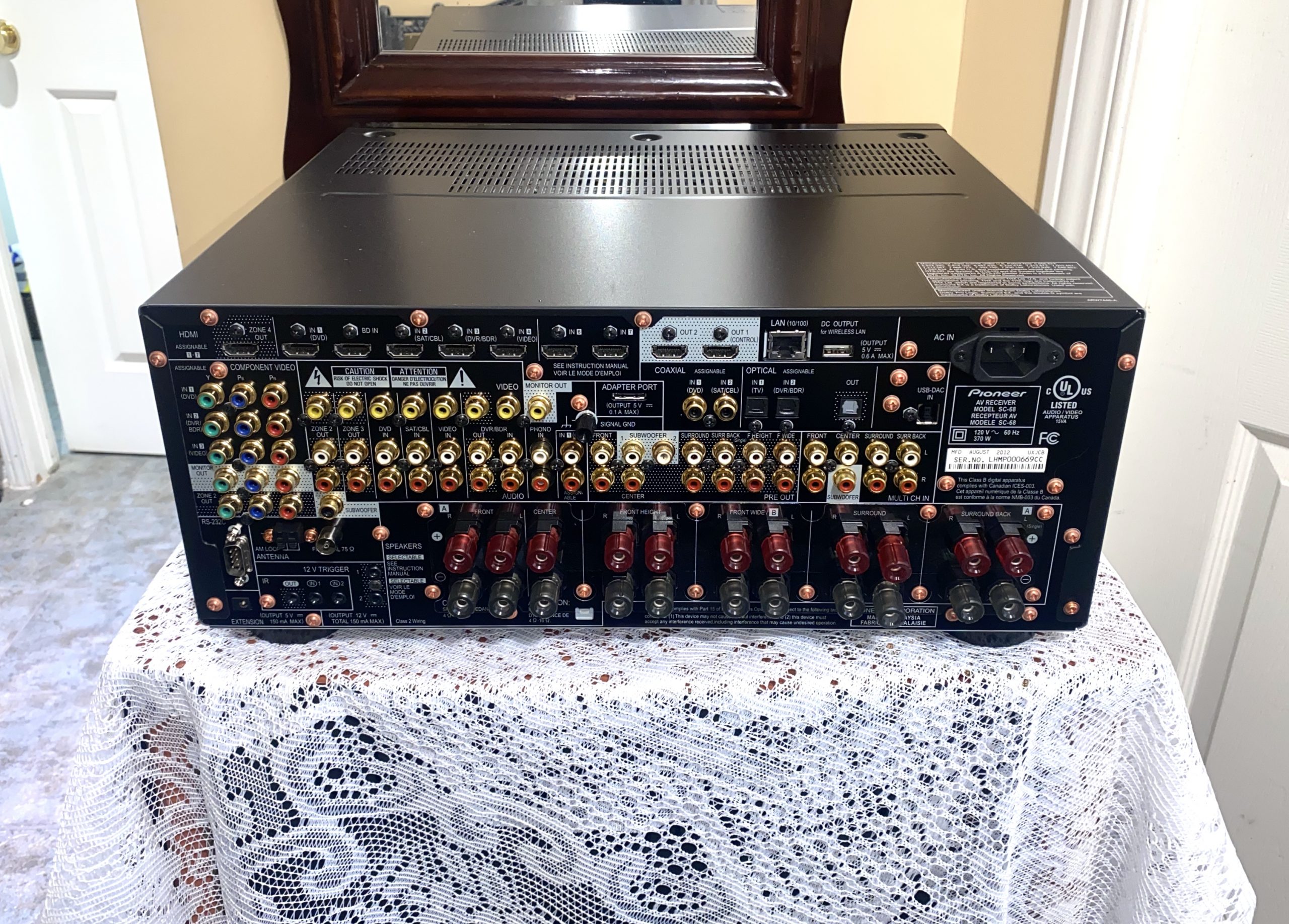
Just 7.25 inches tall, this 9.2-channel receiver is rated at 140 watts into 8 ohms with two channels driven. Surround is at heart a 5.1-channel medium, so you have two extra pairs of amp channels to play with, plus provision for a second sub. You might use the extra amp channels to run front-height and back-surround speakers simultaneously. But they have other potential uses, including biamplification of the front left/right channels and multiple zones. Mix and match to your heart’s content: This receiver will let you set up to 10 output configurations. And it facilitates multiple wiring schemes, with 11.2-channel preamp outs and 11 sets of binding posts. If you like having high def in more than one place, note that one of the four zones is associated with an HDMI output, another with component out, and two more with composite outs—so half the total is HD capable.
Want to get music from your smartphone or tablet into the receiver? Pioneer offers multiple wireless and wired paths. Prominent among them is Apple AirPlay. It’s oh so easy to use: Just enable Network Standby in the GUI. But you’re not limited to that. Pioneer now supports the HTC Connect standard for music streaming from HTC One smartphones, pushing album art and metadata to the video display. This receiver accommodates MHL (Mobile High-definition Link)–compatible devices via the front-panel HDMI jack—and it’s noteworthy that MHL has at least the potential to offer better-than-CD resolution.
Via USB, the receiver supports FLAC, WAV, MP3, WMA, and various iPod formats. Via network, the list also includes LPCM. FLAC and WAV are both supported at 192 kHz. The front USB jack accepts direct dockless plug-in of all but the oldest iPads, iPhones, and iPods. Interestingly, in another industry first for AVRs, the USB jack also accepts the
DSD DFF files that give the Super Audio CD its high resolution. Legal DFF downloads are available from a few small music labels such as Blue Coast, Channel Classics, and 2L. It’s also possible to rip SACDs to DFF, FLAC, or WAV if you have the appropriate third-party software.
Specifications: Audio Decoding: Dolby: TrueHD, Digital, EX, Pro Logic II/IIx/IIz DTS: DTS-HD MA, HRA, DTS, ES, 96/24, Neo: 6 Lossy File Formats: AAC, MP3, WMA High-Res File Formats: FLAC, WAV Streaming: Pandora, vTuner Other: 12 DSP modes, Full Stage Surround Advance (Focus/Wide), Sound Retriever AIR, Auto Sound Retriever, Phones Surround 3D: Yes THX Certified: Ultra2 Plus Number of Amp Channels: 9 Rated Power (Watts Per Channel): 140 into 8 ohms, two channels driven Specified Frequency Response: 5 Hz to 100 kHz, +1/–3 dB Video Processing: Qdeo with 4K x 2K passthrough
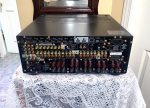
Connections: Inputs: Video: HDMI 1.4a (8), component video (3), composite video (5) Audio: Coaxial digital (2), optical digital (2), analog stereo (5), 7.1-channel analog (1), phono (1), Additional: Ethernet (1), USB (1), USB-DAC in (1), Sirius (1), AM (1), FM (1), IR remote (2) Accessory: Wi-Fi adapter port (1), Bluetooth adapter port (1) Outputs: Video: HDMI 1.4a (3), component video (2), composite video (3) Audio: Optical digital (1), 11.2-channel pre out (1), analog stereo (2), subwoofer (Z2), 0.25-inch headphone Additional: RS-232 (1), IR remote (1), RF remote extension (1), 12-volt trigger (2)
Dimensions (W x H x D, Inches): 17.13 x 7.25 x 17.38, Weight (Pounds): 39.2
Includes original Pioneer remote, and soft copy of manual in PDF. Retailed new for $2500 USD ~$3950 CND with HST. Asking just $895 CND for this extremely impressive Pioneer Elite SC-68, thoroughly tested and working perfectly.
| Weight | 44.2 lbs |
|---|---|
| Dimensions | 21.4 × 21.1 × 11.25 in |
Related Products
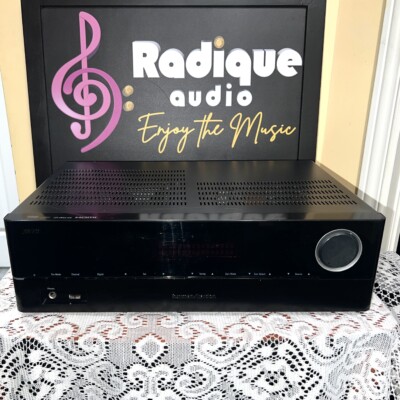
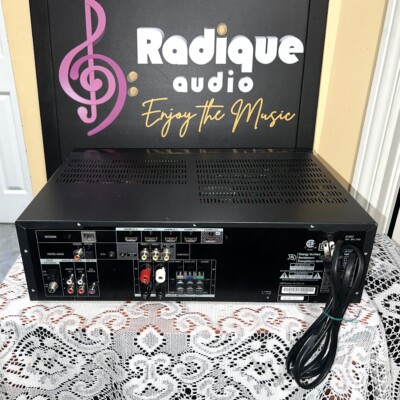
Harman Kardon AVR 1510S 375W 5.1 Receiver – 4K HDMI, Spotify
Seventy-five watts to each of five channels, four 3D-ready HDMI inputs with 4K pass-through, and one HDMI output with ARC. Spotify Connect, vTuner and DLNA over Ethernet, front-panel USB, optical and coaxial digital in. A digital supply keeps the whole thing to ten pounds. Level 1 serviced here; cosmetically graded Good.
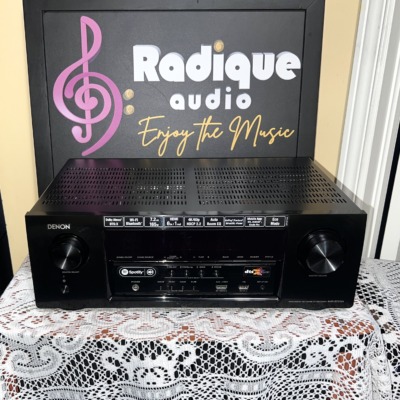
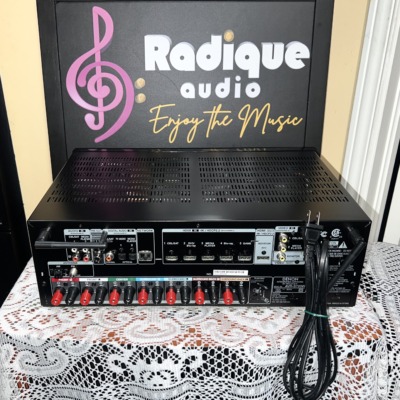
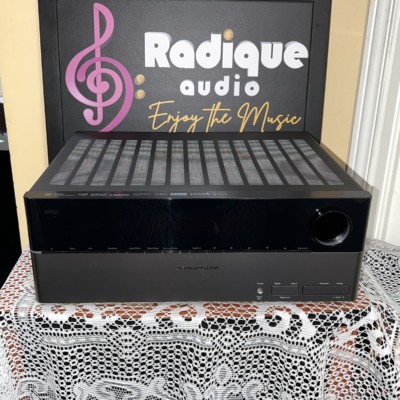
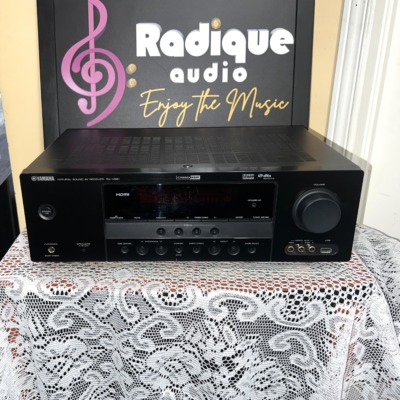
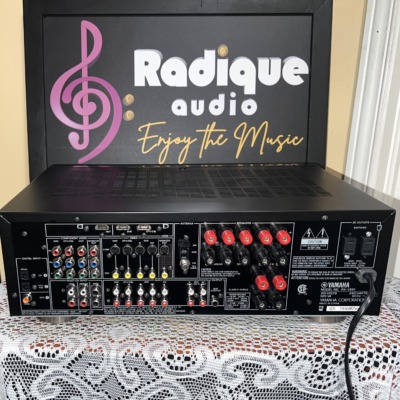
Yamaha RX-V561 5.1 AVR 500W — 2x HDMI, 3 Digital In, Remote
100 watts minimum RMS on every one of the five channels into 8 ohms, and dynamic power that climbs to 110, 130, 160 and 180 watts into 8, 6, 4 and 2 ohms — a receiver that keeps increasing output as the load gets harder has a supply with something in reserve. Where it earns its keep is bass management: a crossover selectable across nine points from 40 Hz to 200 Hz with a 12 dB per octave high-pass on front, centre and surround. Two HDMI inputs, three digital, remote included. Very good condition.
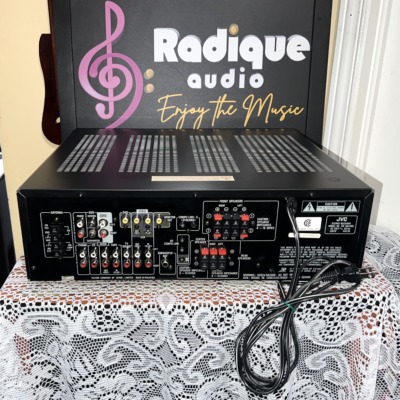
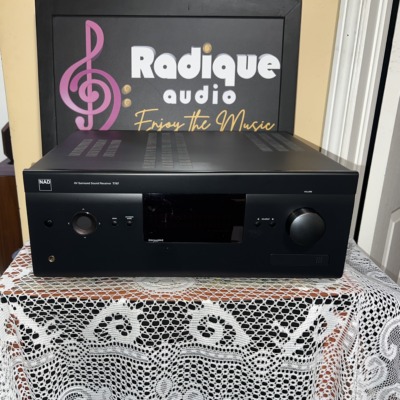
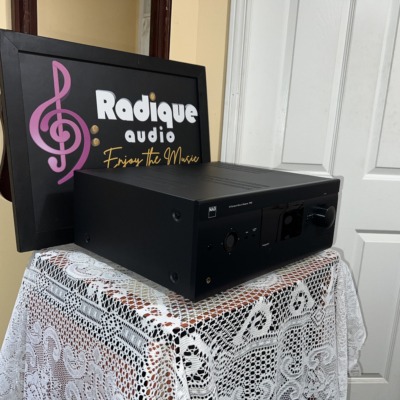
NAD T 757 7.1 AV Receiver – 7 x 60W, 7 Digital Inputs, Remote
A 7.1-channel NAD surround receiver in very good condition, rated at 60 watts per channel with all seven channels driven, with seven digital audio inputs, NAD's modular design and a remote.
✔️ Very good condition — free of significant marks; remote included
✔️ 7 x 60 W, all channels driven — Dolby TrueHD and DTS-HD Master Audio
✔️ Seven digital audio inputs and four HDMI inputs (1080p and 3D)
✔️ Covered by Radique Warranty
✔️ Includes Perpetual Trade-Back Program eligibility
✔️ Expertly packed for safe shipping
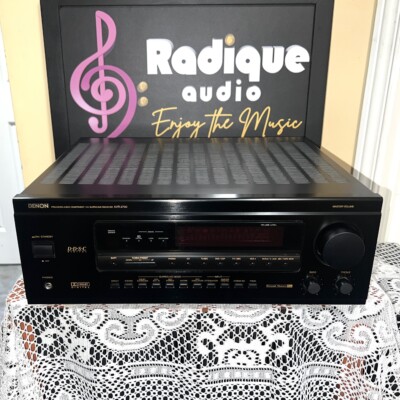
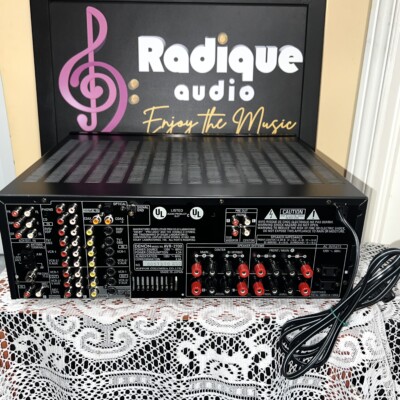
Denon AVR-2700 5.1-Channel AV Receiver 400W w/ Remote – Japan
Eighty watts to every one of the five channels, equally rated, at 0.05% distortion. Coaxial and optical digital inputs, composite and S-video switching, Dolby Digital and Pro Logic, a five-channel stereo mode, and a moving-magnet phono stage at 2.5 mV. Tape monitor loop for an outboard EQ. Made in Japan in 1999, original Denon remote included. Very good condition.
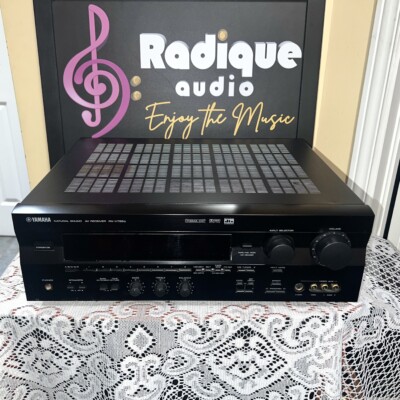

Yamaha RX-V795A 5.1 AV Receiver – 425W Peak, Phono
Eighty-five watts into 8 ohms on each of five channels at 0.04% distortion, with Dolby Digital, DTS and Yamaha’s Cinema DSP modes. An MM phono input, three optical and one coaxial digital input, and a full set of 5.1 pre-outs if you later want outboard amplification. Ships with a new compatible remote, not the original. Level 1 serviced; very good condition.
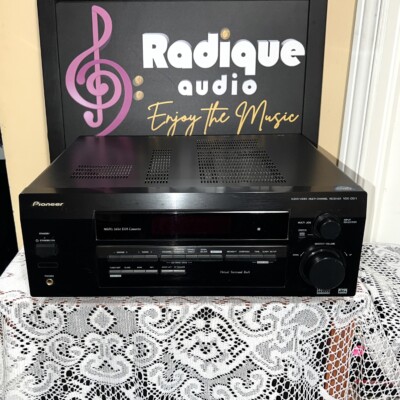
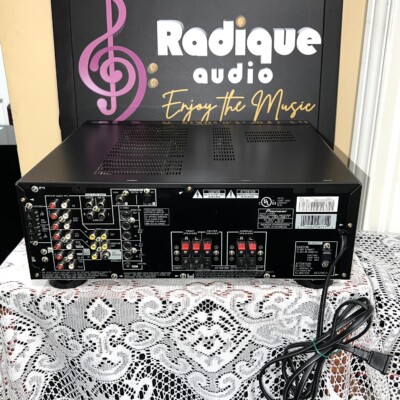
Pioneer VSX-D511 5.1 AVR — 500W Total, Coax & Optical
One hundred watts a channel across all five into 8 ohms, so 500 watts of system power, with Dolby Digital, DTS and Pro Logic II decoding through a 96kHz/24-bit DAC. One coaxial and one optical digital input, three composite/S-Video inputs, a subwoofer pre-out, and a 30-preset AM/FM tuner. Original Pioneer remote. Very good condition, tested.
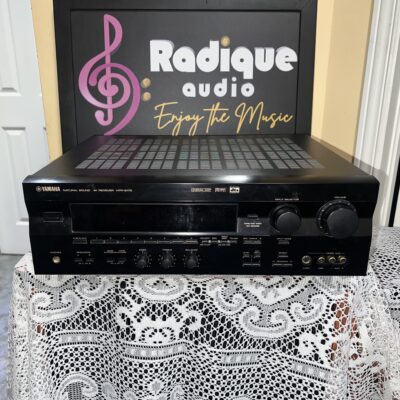
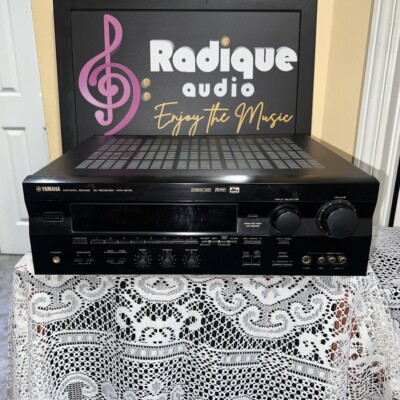
Yamaha HTR-5170 425W AV Receiver – Phono, Dolby Digital & DTS
Eighty-five watts into 8 ohms on all five channels, measured across 20 Hz to 20 kHz at 0.04% distortion — rated the honest way rather than at a single frequency. A rear-panel selector takes the mains down to 4 ohms. Dolby Digital, DTS and Cinema DSP, MM phono, three optical and one coaxial digital input, and full 5.1 pre-outs. Same platform as the RX-V795a; 28.7 lbs.
