
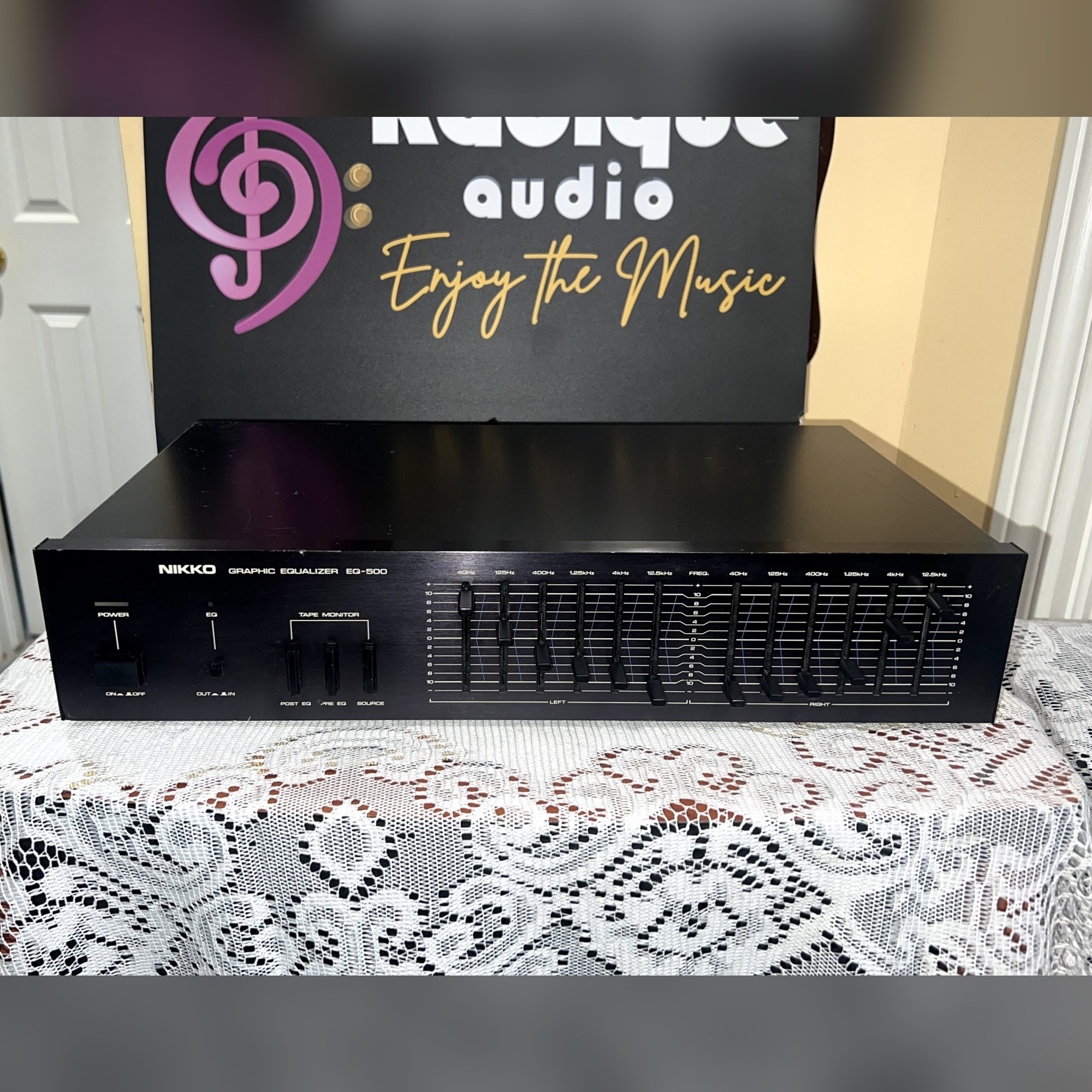
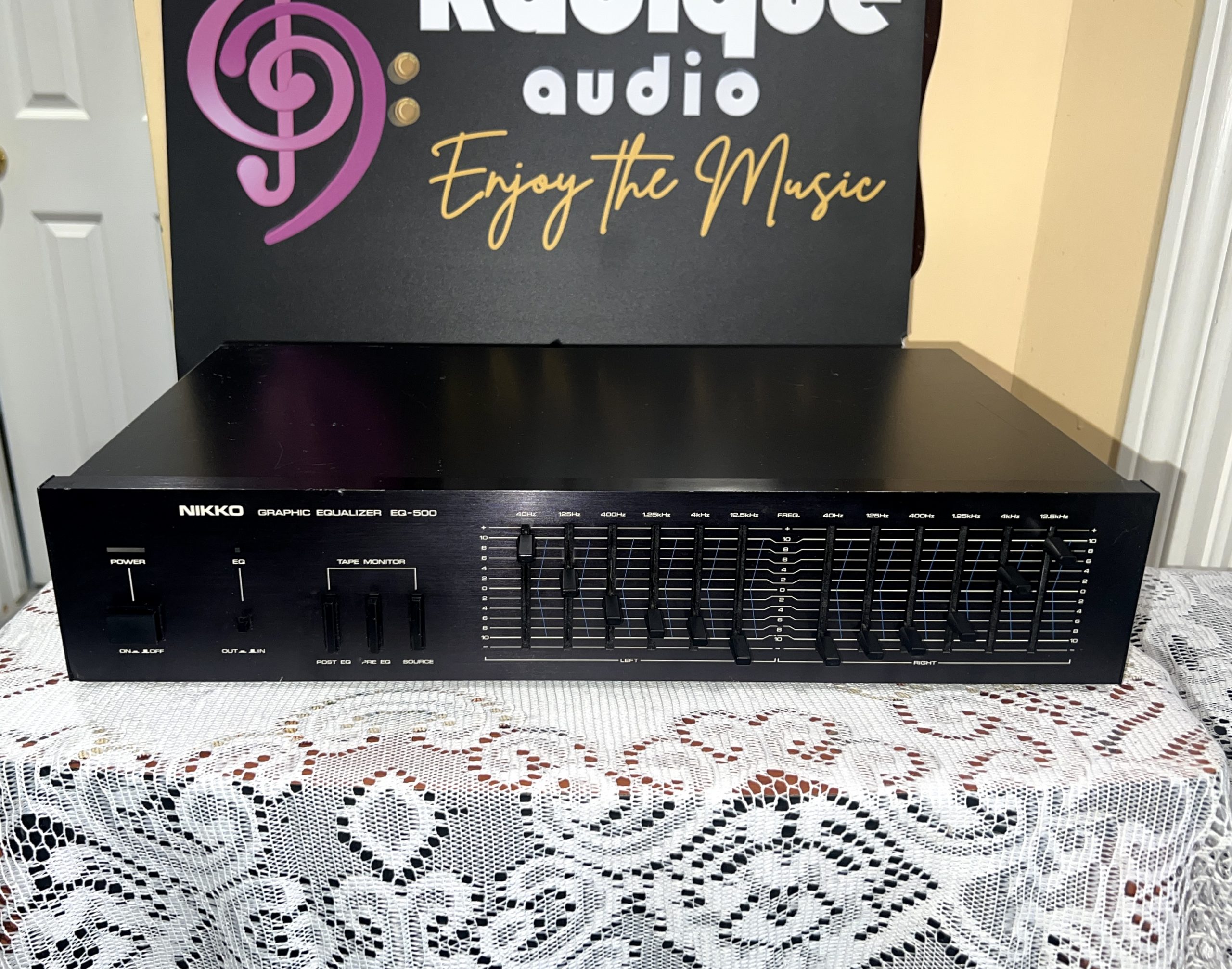
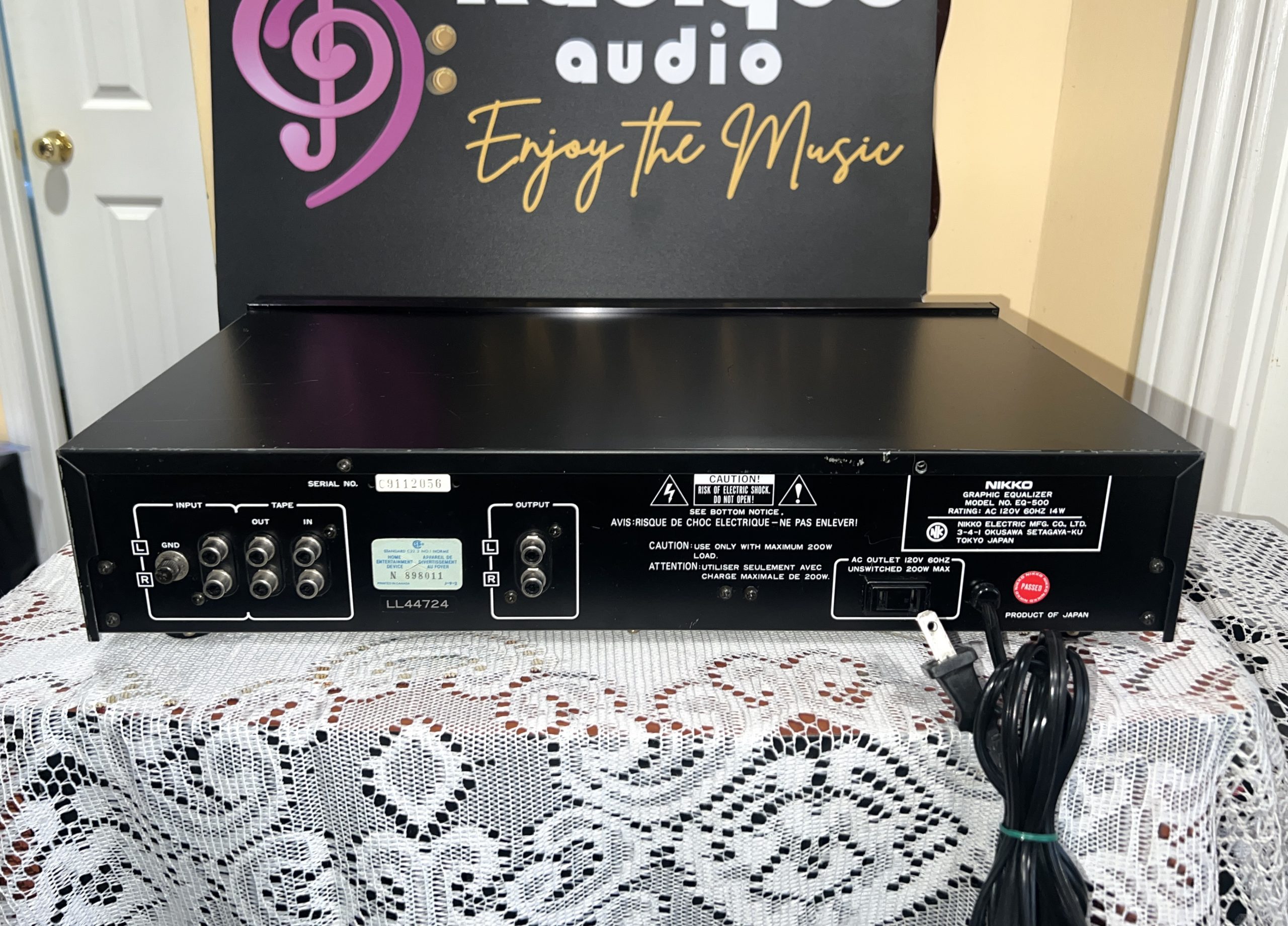
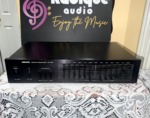
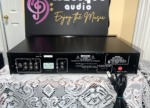
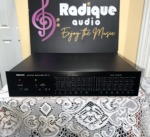

Nikko EQ-500 6-Band Stereo Graphic Equalizer Made in Japan
$125.00
Six sliders a channel at 40, 125, 400, 1,250, 4,000 and 12,500 Hz, each giving 12 dB of cut or boost in 2 dB steps. Distortion is 0.01%, signal-to-noise better than 100 dB, response 10 Hz to 30 kHz — it adds nothing of its own. Bypass switch and a pre/post-EQ tape loop. Made in Japan. Cosmetic condition fair; fully tested and working.
1 in stock
Nikko EQ-500 6-Band Stereo Graphic Equalizer Made in Japan
A practical, well-specified six-band stereo graphic equalizer from Nikko Electric of Tokyo, the EQ-500 delivers honest frequency shaping with excellent measured performance in a functional black finish — in fair cosmetic condition and fully working.
The Nikko EQ-500 is the natural companion to Nikko’s 1980s receiver lineup, sharing the same six-band equalizer frequencies and circuit topology as the EQ-II but in an updated cabinet design. Each channel provides slider controls at 40 Hz, 125 Hz, 400 Hz, 1.25 kHz, 4 kHz, and 12.5 kHz with ±12 dB of cut or boost in 2 dB steps — precise enough for meaningful room correction and system tailoring. The measured specifications are strong: 0.01% THD, better than 100 dB signal-to-noise ratio, and a frequency response from 10 Hz to 30 kHz, ensuring the EQ contributes no audible colouration of its own. A bypass switch allows instant before/after comparison, and a pre/post EQ tape switching facility adds flexibility for cassette or reel-to-reel integration.
Key Specifications:
Type: Stereo graphic equalizer
Bands: 6 bands per channel at 40, 125, 400, 1,250, 4,000, 12,500 Hz
Control range: ±12 dB per band (2 dB steps)
Frequency response: 10 Hz – 30,000 Hz
Total harmonic distortion: 0.01%
Signal-to-noise ratio: >100 dB
Input impedance: 80 ohms
Features: Bypass switch, pre/post EQ tape switch
Years of manufacture: 1981 / 1985–1987
Country of manufacture: Japan
Finish: Black
Condition: Fair cosmetic condition, fully tested and working
Dimensions: (Width x Height x Depth) 440 x 96 x 329 mm (17.3 x 3.8 x 13.0 inches)
Weight: 4.1 kg (9 lbs)
Made in Japan, this Nikko EQ-500 is a solid, practical six-band graphic equalizer that gets the job done with excellent specifications and honest sound — a sensible and affordable choice for anyone looking to add frequency control to their vintage or modern system.
Backed by Radique Audio’s Bumper-to-Bumper Warranty and our Perpetual Trade-Back Program, you can purchase with confidence.
| Weight | 11 lbs |
|---|---|
| Dimensions | 17 × 20.3 × 7.8 in |
Nikko was a Japanese hi-fi maker whose components were sold from the late 1960s to the early 1990s, best known for its Alpha power amplifiers and Beta preamplifiers. The brand no longer exists. We carry Nikko power amplifiers, preamplifiers, stereo receivers, tuners and equalizers. We've had more than 35 Nikko listings so far. Every used Nikko here is inspected, tested and serviced as required, then photographed in-house and covered by our Bumper-to-Bumper Warranty and Perpetual Trade-Back Program. Don't see the model you want? Tell us on First Dibs and we'll email you when one arrives.
Our best-selling Nikko models so far: the Beta 30 preamplifier and the Alpha 230 power amplifier, followed by the NT-700 II tuner and the Alpha 130 power amplifier.
The Nikko story
One of Nikko's first hi-fi products was the TRM-50 integrated amplifier of September 1969, and its STA receivers and FAM tuners followed in the early 1970s.
The Professional Series. From 1977 Nikko sold Alpha power amplifiers and Beta preamplifiers, designed to be paired, alongside NR receivers, Gamma and NT tuners and EQ graphic equalizers.
The end. The last Alpha models date from 1988 to 1991, and Nikko hi-fi ended in the early 1990s. It has no connection with Nikko, the radio-control toy maker.
Which Nikko is which?
Late 1960s to early 1970s: TRM integrated amps, STA receivers and FAM tuners.
Alpha power amps: the Alpha I to VI (1977 to 1982), the Alpha 220 and 440 (1979 to 1983), the Alpha 130, 230, 450 and 650 of the mid 1980s, and later models up to the Alpha 2000 (1988 to 1991).
Beta preamps: the Beta I to V (1977 to 1979), the Beta 20 and 40 (1981), the Beta 30 and 50 (1982) and later models. The Beta 30 was built from 1982 to 1985.
NR receivers: such as the NR-700 of 1981 to 1983, at 40 watts per channel.
Tuners and equalizers: Gamma and NT tuners such as the NT-700 II (1985 to 1987), and EQ equalizers such as the EQII of 1979.
Related Products
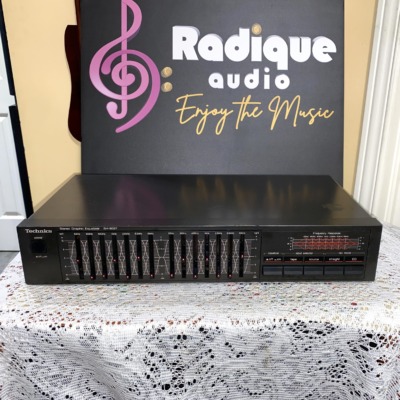
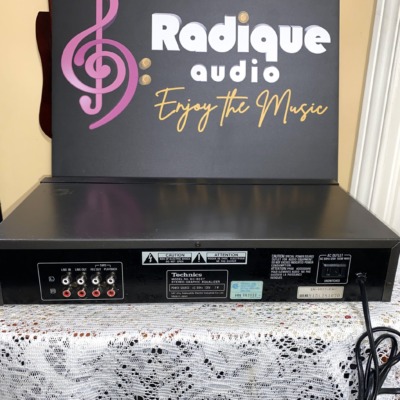
Technics 7-Band Graphic Equalizer – Made in Japan SH-8027
Seven bands a channel — 63 Hz, 160, 400, 1 k, 2.5 k, 6.3 k and 16 kHz — on illuminated red sliders you can read in a dark rack. Two RCA pairs in and out, a built-in mains cord, and an unswitched 150-watt accessory outlet on the back. Made in Japan somewhere between 1980 and 1985. Level 1 serviced here.
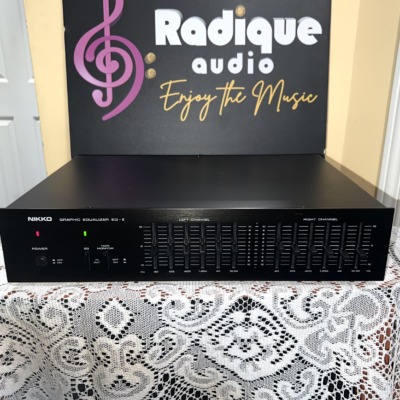
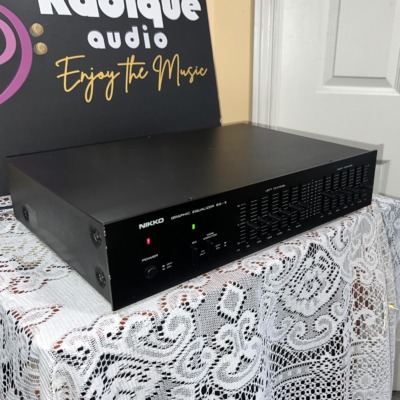
Nikko EQ-II 6-Band Stereo Graphic Equalizer Made in Japan
Six sliders a channel at 40Hz, 125Hz, 400Hz, 1.25kHz, 4kHz and 12.5kHz, each with 12dB of boost or cut, and a bypass switch for an instant A/B against the unprocessed signal. 0.01% distortion, better than 100dB signal to noise, 10Hz to 30kHz — it adds nothing of its own. Built in Tokyo between 1977 and 1981. Excellent condition, fully tested.
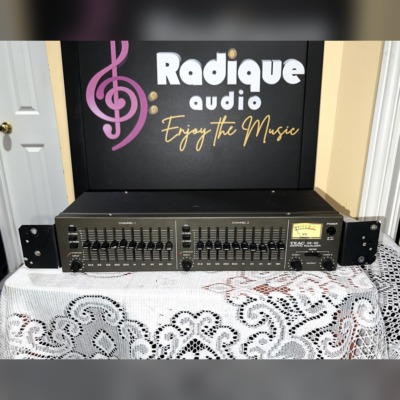
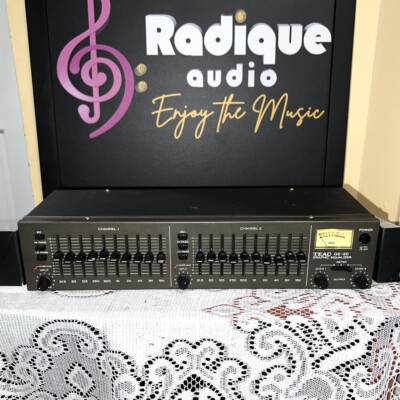
Teac GE-20 2-Channel 10-Band Stereo Graphic Equalizer, Japan
Ten ISO-standard bands per channel from 31.5 Hz to 16 kHz at ±12 dB, with separate left and right sliders and switchable VU metering. Filters at 31.5 Hz and 16 kHz roll off rumble and ultrasonic noise without touching the audible band, and an EQ defeat switch lets you A/B against flat. Made in Japan, 1978; serviced, good cosmetic condition.
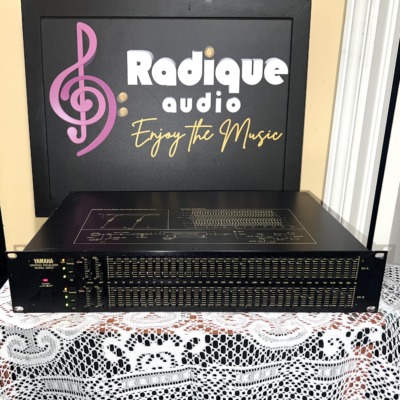
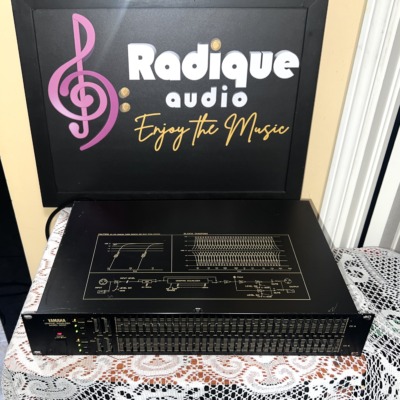
Yamaha Q2031 Dual 31-Band Graphic Equalizer – Made in Japan, 2U
Thirty-one bands per channel on ISO third-octave centres, 20Hz to 20kHz, on two fully independent channels — fine enough to pull a single room mode down without touching what sits either side of it. A range switch halves boost and cut to ±6dB for careful work, and the high-pass filters sweep from 20 to 200Hz. Balanced XLR and 1/4-inch throughout, 2U rack. Condition good.
