
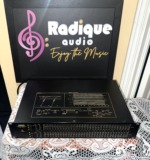
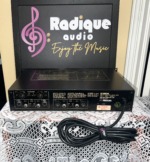
Yamaha Q2031 Dual 31-Band Graphic Equalizer – Made in Japan, 2U
$295.00
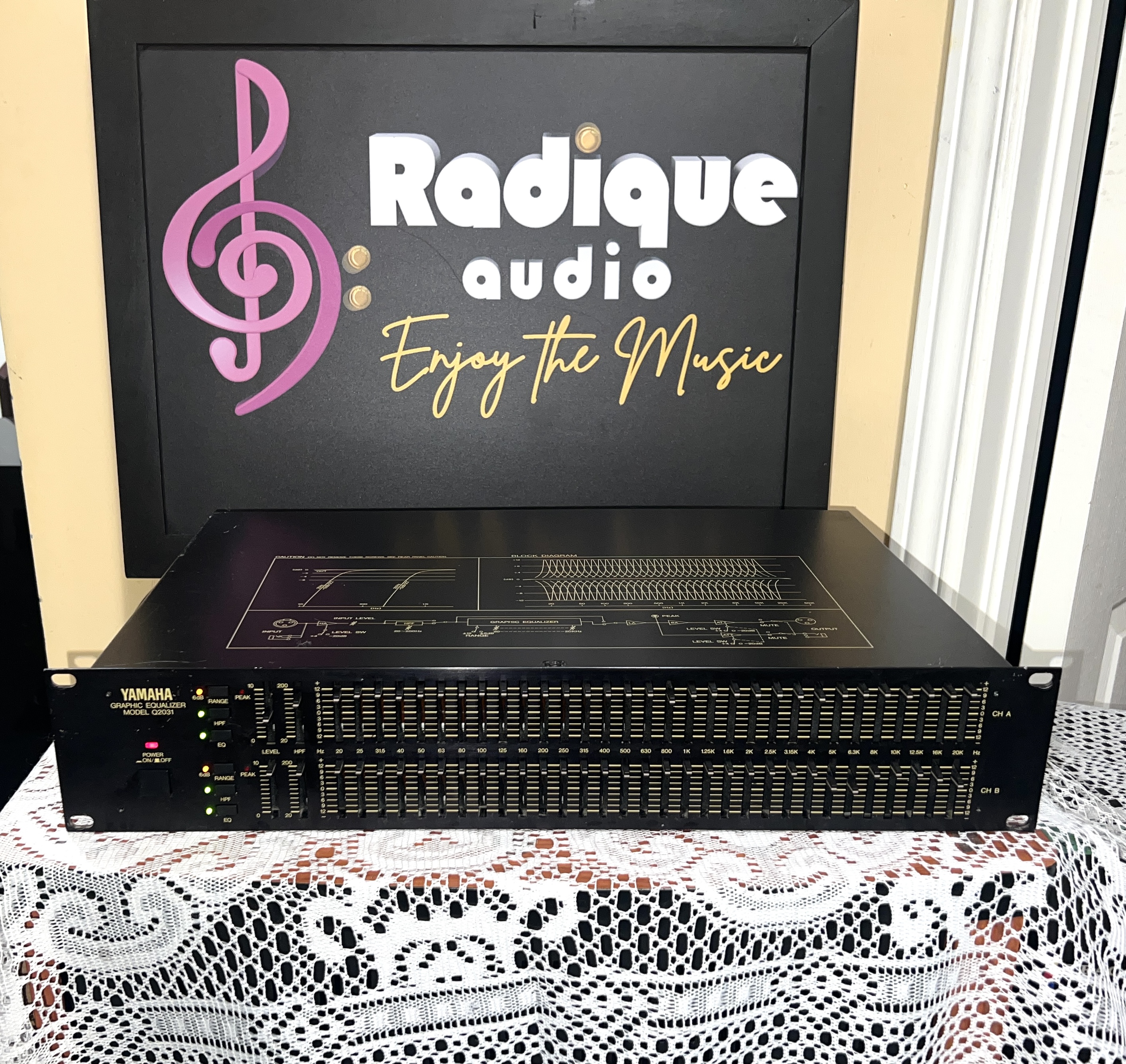
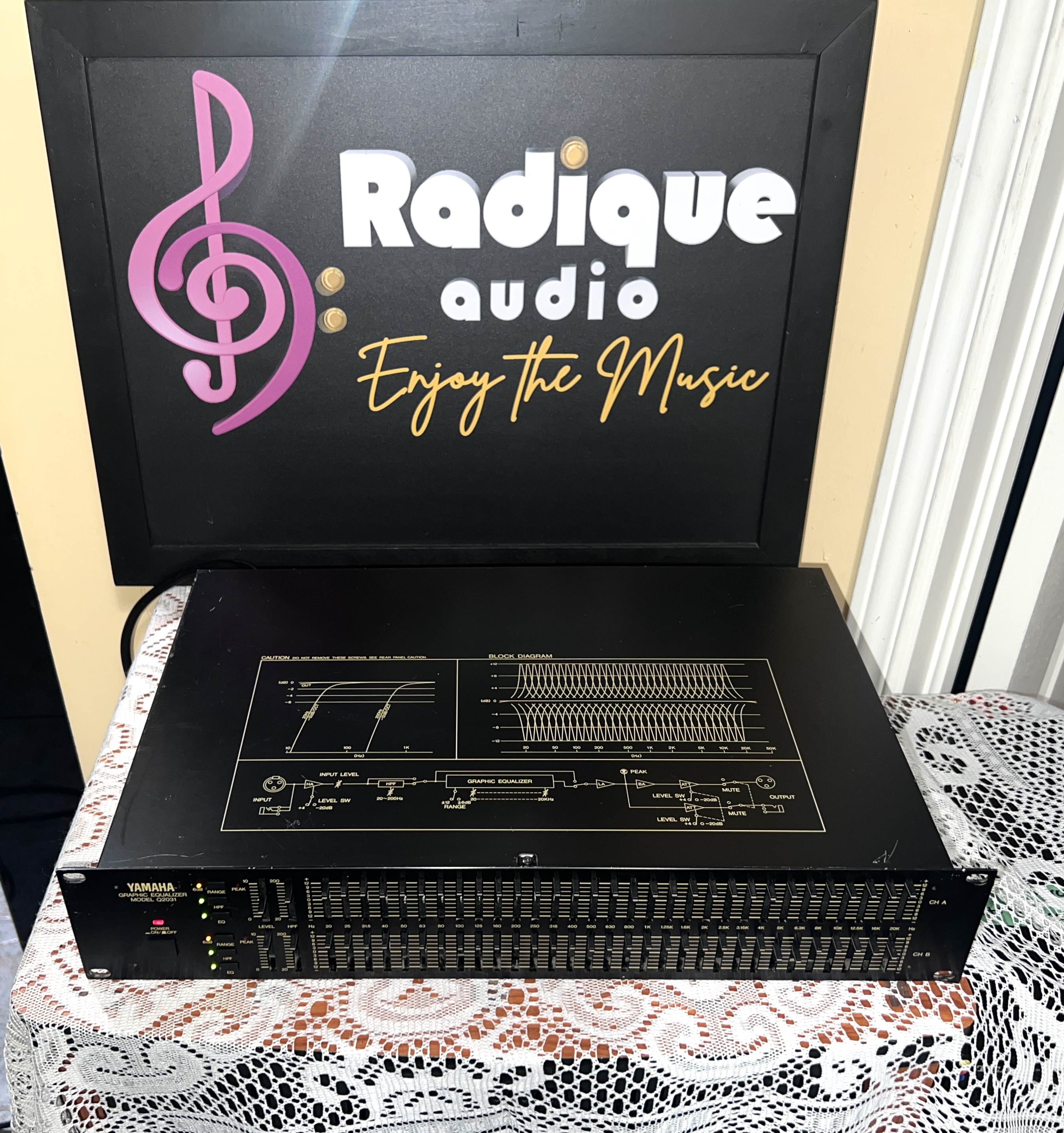
Thirty-one bands per channel on ISO third-octave centres, 20Hz to 20kHz, on two fully independent channels — fine enough to pull a single room mode down without touching what sits either side of it. A range switch halves boost and cut to ±6dB for careful work, and the high-pass filters sweep from 20 to 200Hz. Balanced XLR and 1/4-inch throughout, 2U rack. Condition good.
1 in stock
Yamaha Q2031 — Thirty-One Bands per Channel, Professional Grade
Yamaha Q2031 Stereo 31-Band Graphic Equalizer – Two Independent Channels, XLR and 1/4-Inch Balanced I/O, Made in Japan, Good Condition
A professional-grade dual 31-band equalizer from 1984, and a considerably more serious instrument than the graphic EQs that came in consumer receivers.
The difference is resolution. Domestic equalizers of the era gave you seven or ten bands per channel. This gives you thirty-one, on ISO third-octave centres from 20Hz right up to 20kHz, on each channel independently. That is fine enough to pull down a single room mode without touching anything either side of it, which is the whole reason to own a real equalizer rather than a tone control.
The rest of it is built to professional standards too. A range switch on each channel drops the boost and cut from ±12dB to ±6dB, which doubles the precision of every fader when you are doing careful acoustic tuning rather than broad shaping. Continuously variable high-pass filters on both channels roll off 12dB per octave below anywhere from 20Hz to 200Hz — useful for clearing out subsonic rumble that otherwise wastes amplifier power on frequencies you cannot hear. Peak LEDs light 3dB below clipping, and an automatic muting circuit holds the outputs quiet for three to five seconds after switch-on so that turn-on transients never reach your amplifier or speakers.
This is the original Q2031, and it is worth knowing the difference. Later versions of this equalizer were slimmed down considerably — the 1990s model runs 230mm deep and weighs four kilograms. This one is 298mm deep and weighs 4.8. That extra chassis and iron is where the transformers and the power supply live.
The active filters are designed for minimum phase shift, so the equalization stays clean at any setting rather than smearing what it touches.
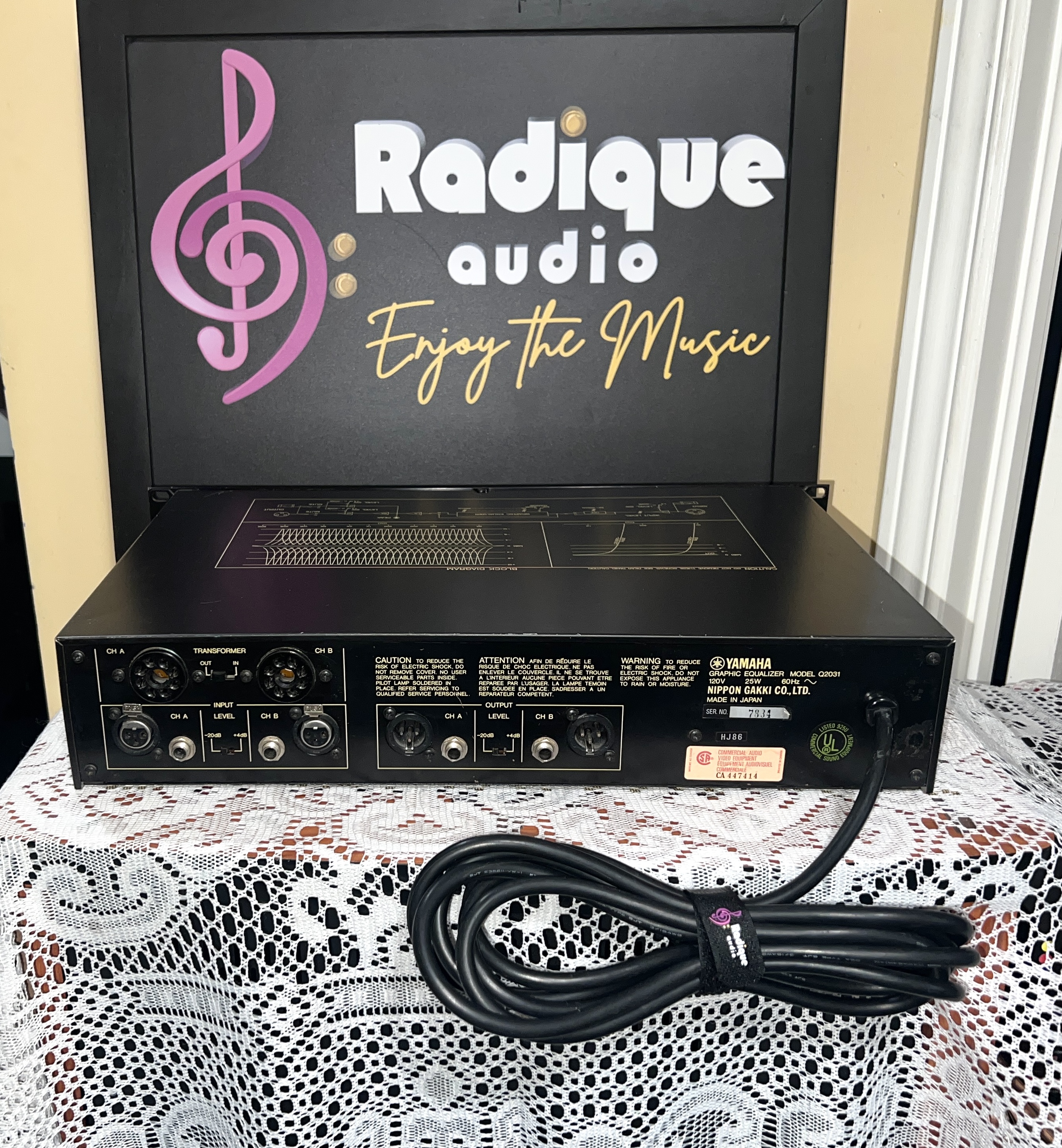
Connections are professional: balanced XLR and standard 1/4-inch phone jacks on every input and output. If you are putting this into a home system you will want a pair of 1/4-inch to RCA cables, which are inexpensive and readily available — and once wired in, it works exactly as it would in a studio rack.
It is a standard 2U rack unit, so it will drop straight into a 19-inch rack, or sit on a shelf just as happily.
This one has clearly worked for a living. The front rack-mount ears carry some slight bending from years of being racked and unracked, and there is light general wear — but it presents very well for a component of this age and history, and it is complete and fully tested.
Features: 31 bands per channel at ISO third-octave centres, 20Hz to 20kHz Two fully independent channels from input to output Switchable ±6dB or ±12dB range for fine or broad control Continuously variable high-pass filters, 20Hz to 200Hz, 12dB per octave Automatic output muting for 3 to 5 seconds at switch-on Peak indicator LEDs, lighting 3dB below clipping Balanced XLR and 1/4-inch phone connections on all inputs and outputs Standard 2U 19-inch rack mounting Made in Japan
This equalizer launched at ¥90,000 in December 1984 — well over a thousand dollars in today’s money.
Yamaha Q2031 Specifications
- Model: Q2031
- Type: Stereo 31-band graphic equalizer
- Introduced: December 1984
- Bands: 20, 25, 31.5, 40, 50, 63, 80, 100, 125, 160, 200, 250, 315, 400, 500, 630, 800Hz, 1k, 1.25k, 1.6k, 2k, 2.5k, 3.15k, 4k, 5k, 6.3k, 8k, 10k, 12.5k, 16k, 20kHz
- EQ Range: switchable ±6dB or ±12dB
- High Pass Filter: variable 20Hz – 200Hz, 12dB/octave
- Connections: Balanced XLR and 1/4″ phone, inputs and outputs
- Rack Size: 2U
- Country of Manufacture: Japan
- Dimensions: (Width x Height x Depth) 480 x 88 x 298 mm (18.9 x 3.5 x 11.7 inches)
- Weight: 4.8 kg (10.6 lbs)
⚠️ Important Information for International Buyers
This unit is configured for North American 110/120V power. Buyers outside North America will require a step-down transformer and appropriate plug adapter.
✅ Buy With Confidence — The Radique Promise
Backed by Radique Audio’s Bumper-to-Bumper Warranty and our Perpetual Trade-Back Program. When you’re ready to move on, we’ll take it back. That’s the Radique difference.
📦 Watch how we protect your gear — our unboxing video.
📺 Curious about our business? Check out our YouTube channel for behind-the-scenes videos and more!
📞 Questions? Use the Ask a Question button above, or call us at 613-416-9995.
| Weight | 12.6 lbs |
|---|---|
| Dimensions | 15.7 × 22.9 × 7.5 in |
Related Products
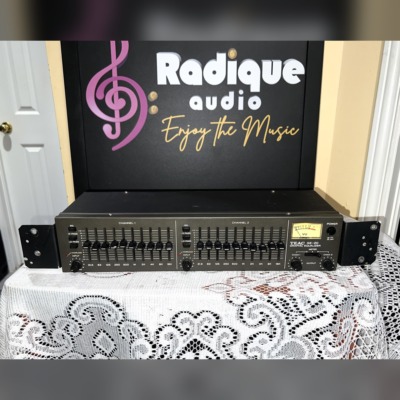
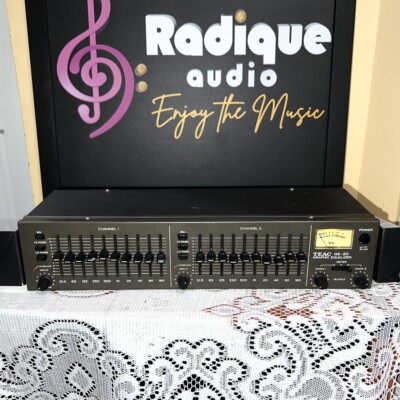
Teac GE-20 2-Channel 10-Band Stereo Graphic Equalizer, Japan
Ten ISO-standard bands per channel from 31.5 Hz to 16 kHz at ±12 dB, with separate left and right sliders and switchable VU metering. Filters at 31.5 Hz and 16 kHz roll off rumble and ultrasonic noise without touching the audible band, and an EQ defeat switch lets you A/B against flat. Made in Japan, 1978; serviced, good cosmetic condition.
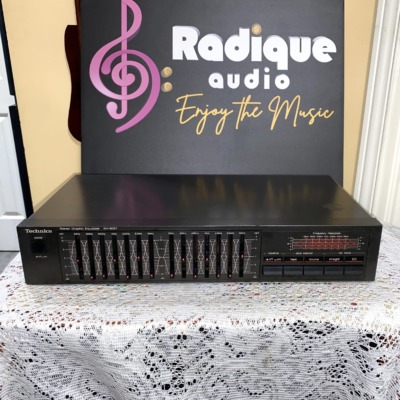
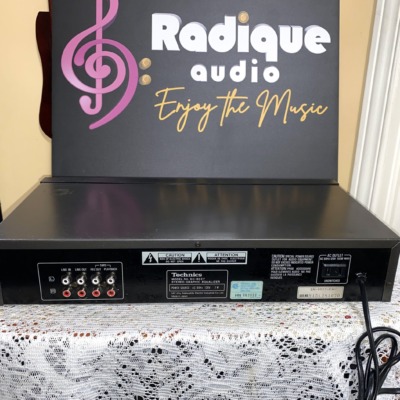
Technics 7-Band Graphic Equalizer – Made in Japan SH-8027
Seven bands a channel — 63 Hz, 160, 400, 1 k, 2.5 k, 6.3 k and 16 kHz — on illuminated red sliders you can read in a dark rack. Two RCA pairs in and out, a built-in mains cord, and an unswitched 150-watt accessory outlet on the back. Made in Japan somewhere between 1980 and 1985. Level 1 serviced here.
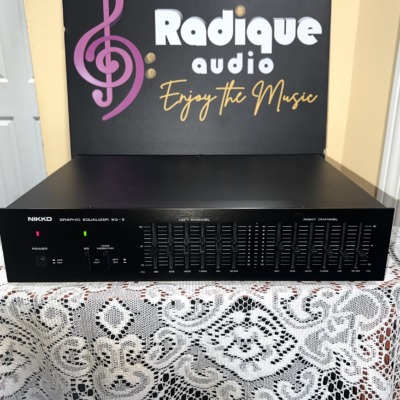
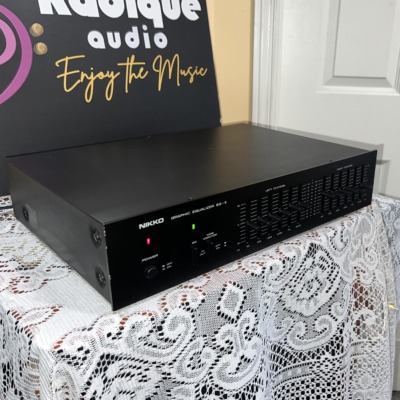
Nikko EQ-II 6-Band Stereo Graphic Equalizer Made in Japan
Six sliders a channel at 40Hz, 125Hz, 400Hz, 1.25kHz, 4kHz and 12.5kHz, each with 12dB of boost or cut, and a bypass switch for an instant A/B against the unprocessed signal. 0.01% distortion, better than 100dB signal to noise, 10Hz to 30kHz — it adds nothing of its own. Built in Tokyo between 1977 and 1981. Excellent condition, fully tested.
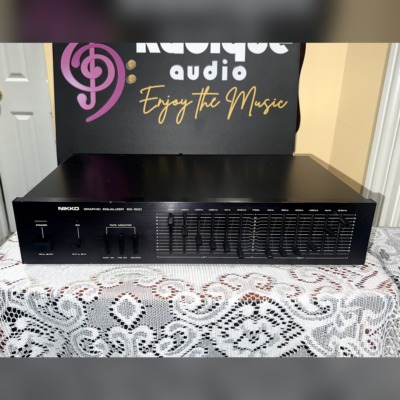
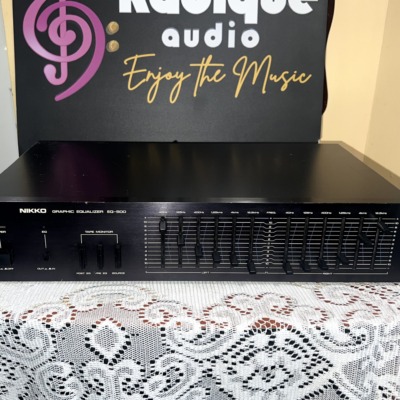
Nikko EQ-500 6-Band Stereo Graphic Equalizer Made in Japan
Six sliders a channel at 40, 125, 400, 1,250, 4,000 and 12,500 Hz, each giving 12 dB of cut or boost in 2 dB steps. Distortion is 0.01%, signal-to-noise better than 100 dB, response 10 Hz to 30 kHz — it adds nothing of its own. Bypass switch and a pre/post-EQ tape loop. Made in Japan. Cosmetic condition fair; fully tested and working.
