




Luxman 70 WPC Stereo Receiver w/ Phono & Elite Tuner R-115
$495.00
Out of stock
This one has sold. Looking for one?
We take these in regularly. Leave your name and we’ll email you the moment one arrives, before it goes up for sale.
Email me when one arrives
Give your next receiver Bluetooth. RA-Twin II, $39.00 →
Other stereo receivers we have in stock now
3 in stock · $495.00–$1,195.00 · all ship
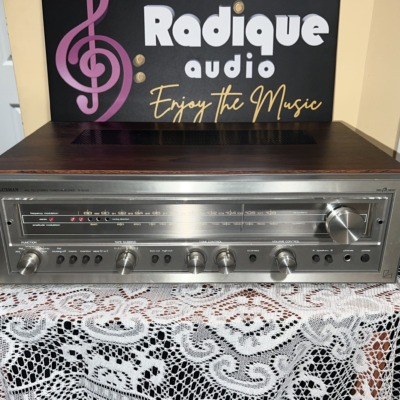 Luxman R-3030 Stereo Receiver – 30 WPC, Real Mahogany Veneer$495.00Ships
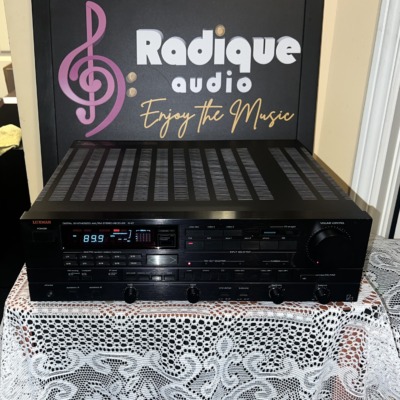 Luxman R-117 Flagship Stereo Receiver — 160 WPC, MM & MC Phono$1,195.00Ships
 Sony STR-V55 - 55 WPC Stereo Receiver - Cherry Upgrade, Japan Price range: $495.00 through $514.00Ships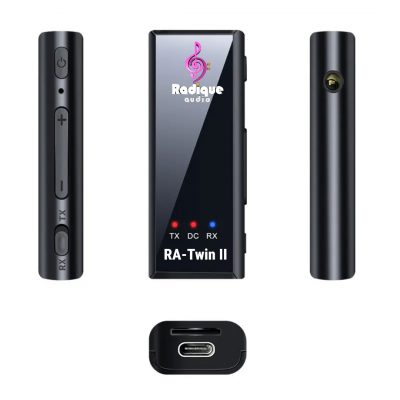
Give your next receiver Bluetooth.
The RA-Twin II adds Bluetooth streaming to any vintage receiver or amp with a spare input. Phone to stereo in about a minute, and nothing on the receiver is modified.
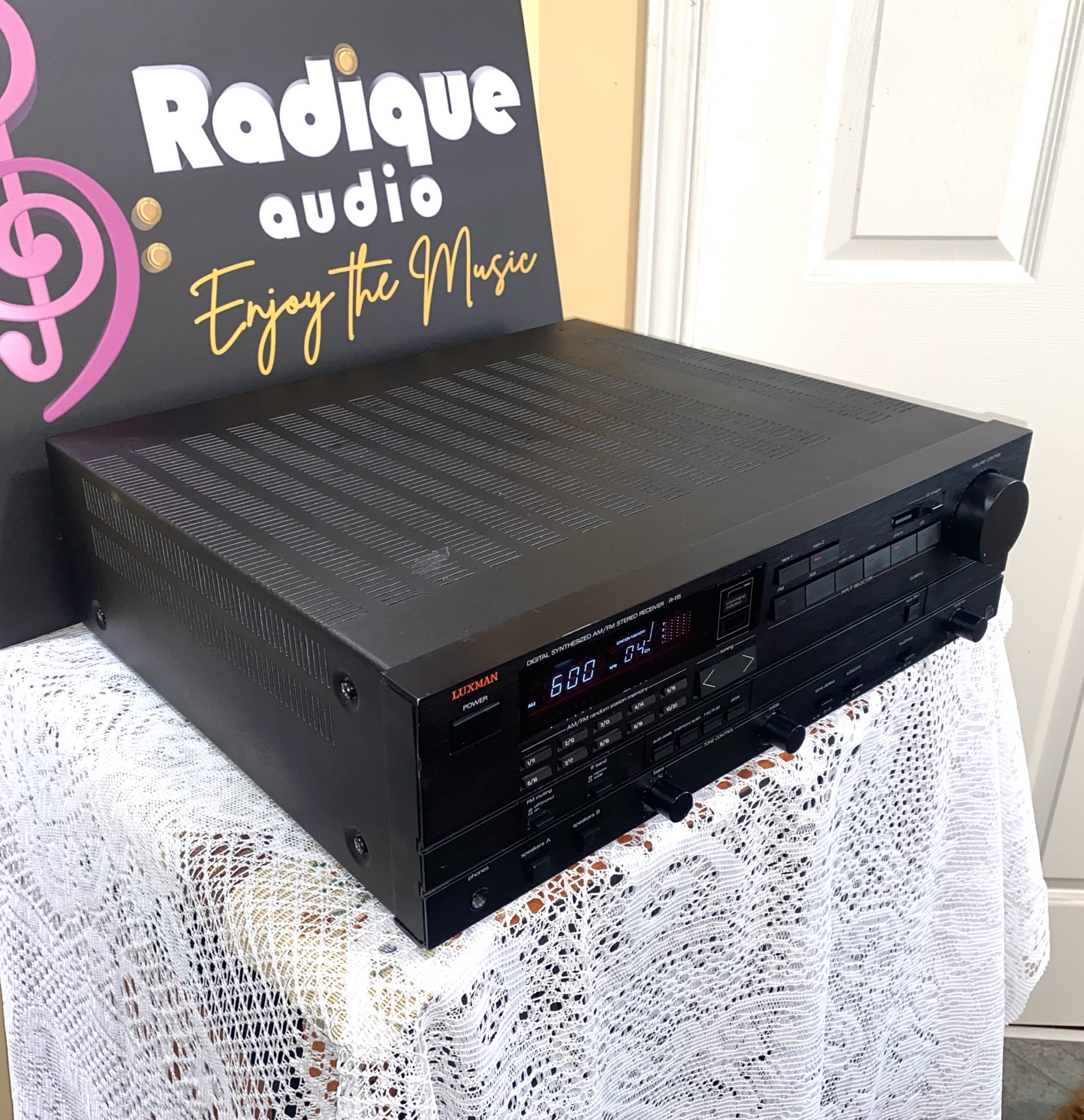
RA-Twin II, $39.00 →Impressive Luxman 70 WPC Stereo Receiver with excellent Phono, Dual Sets of Pre-outs, Elite Quality (5-Gang) FM Tuner, and a wide range of other high end features.
Details below excerpted from HiFi Classic’s Exceptionally thorough and well written review: (If you don’t want to read all the details, please skim down to the summary down at the end).
Luxman’s R-115 stereo fm/am receiver offers an exceptional combination of high performance and functional, easy-to-use controls. It incorporates circuit and construction features of other Luxman products, including a Duo-Beta amplifier with separate wide-band and DC feedback paths and the STAR circuit layout, which minimizes signal-path lengths and is claimed to eliminate undesirable coupling between stages and through common ground paths.
The audio inputs of the receiver can be connected to a CD player, a turntable, and two tape decks, with dubbing from Tape 2 to Tape 1 and full monitoring facilities.
The internal signal sources of the R-115 are its digital-synthesis am and fm tuners. For installations where the fm band is supplied by a cable system, the normal 200-kHz tuning steps of the fm tuner can be changed to 25 kHz by an internal switch. The tuner has twenty preset memories in two banks of ten; each preset is assignable to an am or an fm channel.
The fm tuner features a new front end using dual-gate mosfet’s and five-gang varactor tuning for its preselector stages, which accounts for its exceptional image-rejection rating of 100 dB. The intermediate-frequency (if) section uses selected ceramic filters for improved group-delay characteristics and has a narrow-band reception mode in which an extra filter section is switched into the circuit. An auto-blend system reduces noise on weak stereo signals by narrowing the channel separation to 8 dB at 10,000 Hz.
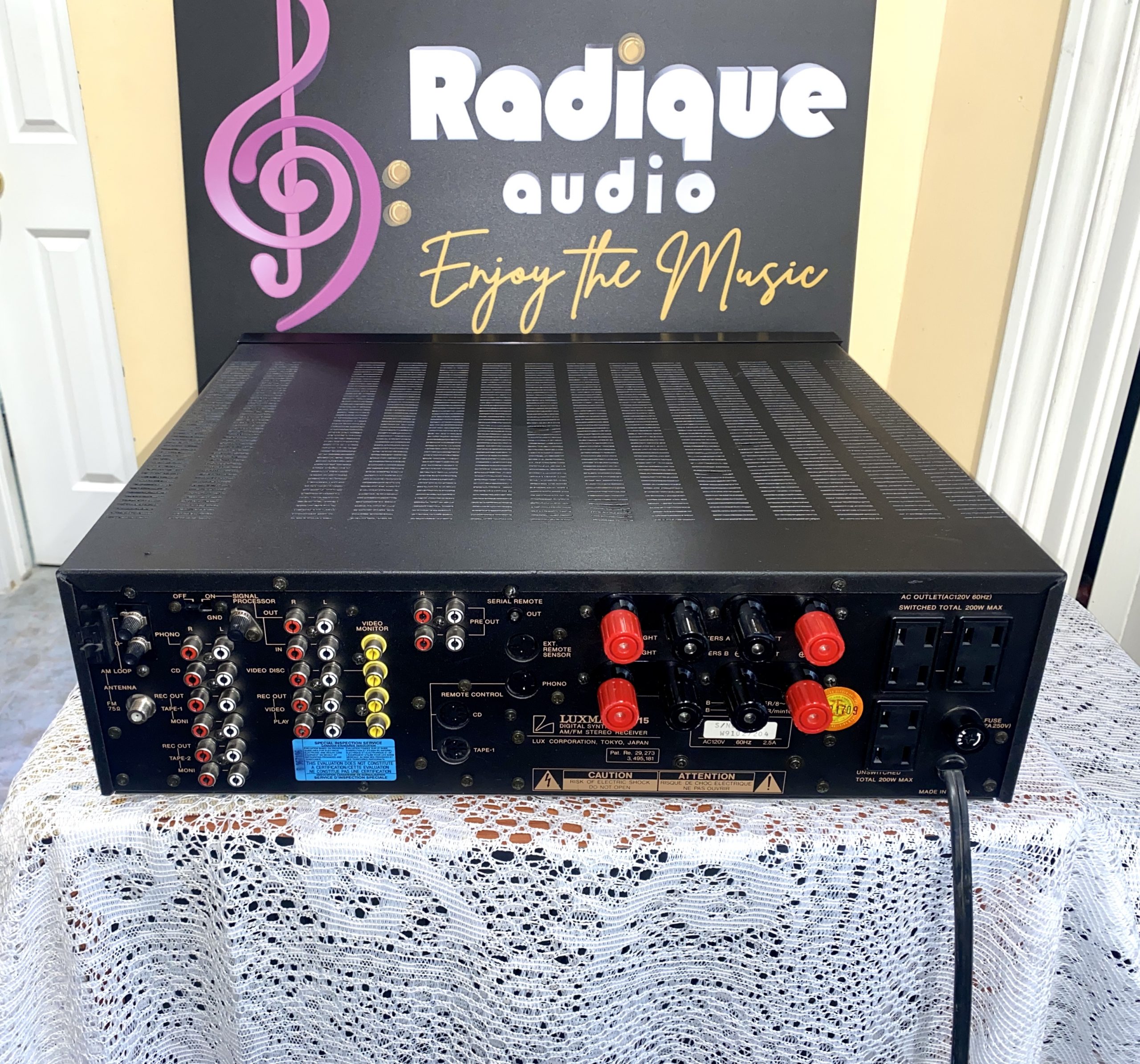
The preamplifier section has two sets of output jacks, which can be used to drive additional amplifiers in multiple-room systems or to re- cord a signal after it has been modified by the tone controls or an external processor. The signal-processor in/out jacks are normally joined by a nearby slide switch on the rear apron. Input selectors are soft-touch push buttons that display a lighted bar when activated. An unusual feature is the separate CD straight button, which connects a CD player’s outputs to the receiver’s amplifier section directly, bypassing the tone and balance controls, loudness compensation, and subsonic filter.
Small buttons select the subsonic filter and loudness compensation or bypass the tone controls. Others select the fm tuner’s mono, stereo, or muting modes and wide or narrow if bandwidth, control the auto-seek FM tuning, and program the preset assignments. Larger, square buttons control the tape-dubbing connections, the two sets of speaker outputs, and power switching.
The display window shows the tuner’s selected frequency and band (even while one of the other inputs is in use), preset number, and operating conditions. Below it are the ten preset buttons and a large, center-pivoted rocker switch that moves the tuned frequency up or down the band. The tone and balance controls use small knobs with center detents, and the large volume-control knob contains a red LED as an index pointer.
The dual power amplifiers can deliver high currents. Although rated for only 70 watts continuous output into 8 ohms (from 20 to 20,000 Hz with no more than 0.03 percent total harmonic distortion), they are also rated to drive 2-ohm loads at up to 270 watts per channel for short periods. The large power transformer and filter capacitance give the receiver a 3-dB dynamic headroom over its rated power output into 8 ohms.
The rear apron contains the audio and video input and output jacks, a 75-ohm coaxial connector for the fm antenna, and binding-post terminals for the supplied removable wire-loop am antenna. A 300- to 75-ohm matching transformer is provided for use with 300-ohm fm antennas. The heavy, insulated binding posts for the two sets of speaker outputs accept the stripped ends of the speaker wires. Two of the three AC outlets are switched.
The attractively styled Luxman R-115 is finished in black with clear, legible white markings and red led indicators. It measures 17-1/4 inches wide, 16-3/4 inches deep and 5-1/2 inches high, and it weighs 25-1/2 pounds.
Lab Tests
The R-115’s power output at clipping into 8-ohm loads at 1,000 Hz was 105 watts per channel, well above its 70-watt rating. Into 4 ohms, the output was 148 watts, and into 2 ohms it was a potent 210 watts. The dynamic power output during a 20-millisecond tone burst was 170 watts into 8 ohms, 275 watts into 4 ohms, and 350 watts into 2 ohms. The 8-ohm clipping and dynamic headrooms were 1.77 and 3.85 dB, respectively.
The 1,000-Hz amplifier distortion was 0.01 percent or less up to the clipping point into 8- or 4-ohm loads and only slightly higher into 2 ohms. The distortion varied only slightly with power across the audio range, measuring between 0.006 and 0.02 percent from 20 to 20,000 Hz at power levels from 7 to 70 watts. The slew factor exceeded our measurement limit of 25.
The tone controls had a maximum range of about ±12 dB in the bass and ±10 dB in the treble. The loudness compensation was moderate, boosting the output by 8 and 6 dB, respectively, at the low- and high-frequency extremes. The subsonic filter appeared to have a 6-dB-per-octave slope, reducing the response by 2.5 dB at 20 Hz. The RIAA phono equalization was extremely accurate, varying only + 0.2, -0.1 dB from 20 to 20,000 Hz. The phono-input impedance was 47,000 ohms in parallel with a 175-picofarad capacitance.
As good as the amplifier section was, the fm tuner of the R-115 provided the major surprises of our test. It was very sensitive (10.8-dBf mono usable sensitivity and 14-dBf 50-dB quieting sensitivity) and had low distortion (about 0.05 percent in mono and 0.08 percent in stereo).
The frequency response was exceptionally flat, and the channel-separation readings were among the best we have measured, reaching 65 dB at 1,000 Hz. The 1-dB capture ratio was excellent, and the image rejection, 138 dB, was among the best we have encountered. The narrow – if operating mode for fm provided good selectivity without any significant increase in distortion, which remained under 0.08 percent in both mono and stereo. Even the am tuner was one of the better-sounding ones we have tested, with a frequency response down 6 dB at 20 and 3,000 Hz and a relatively low noise level.
Summary:
The Luxman R-115 is one of those too-rare products that looks good, feels good, and sounds good. Obviously, a lot of thought went into its design, and the result is a component that is thoroughly enjoyable to use and to listen to.
Most receivers in the middle and high price ranges have tuner sections that are quite good but present no challenge to a top-rank separate tuner. The fm section of the R-115, however, can hold its own with some of the best component tuners. It displayed superior capture ratio and image rejection, and we were also impressed with some characteristics that emerged in our tests, including its symmetrical response and tuning calibration that was accurate enough not to require detuning our signal generator for optimum performance.
The power-amplifier section of the R-115 exemplifies what appears to be a long-overdue trend toward high dynamic headroom in receivers. The weight, size, and cost of this receiver are consistent with those of a good 70-watt amplifier, but its actual power capability with real-world program signals and speakers is far greater.
The Luxman R-115, though not inexpensive, delivers good value for the money. It is also one of the few receivers that can hold its own with separate components anywhere near its price level.
The Luxman R-115 receiver has the following dimensions:
Width: 438 mm (17.24 inches)
Height: 139 mm (5.47 inches)
Depth: 424 mm (16.69 inches)
Weight: 11.6 kg (25.6 lbs)
Originally retailed for $750 USD. Asking just $495 Canadian for this exceptionally well designed and executed Luxman Receiver.
| Weight | 27.6 lbs |
|---|---|
| Dimensions | 20.7 × 21.24 in |
Related Products
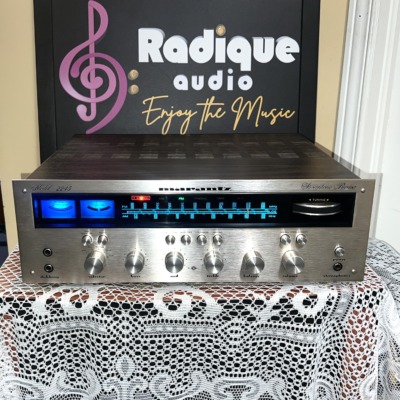
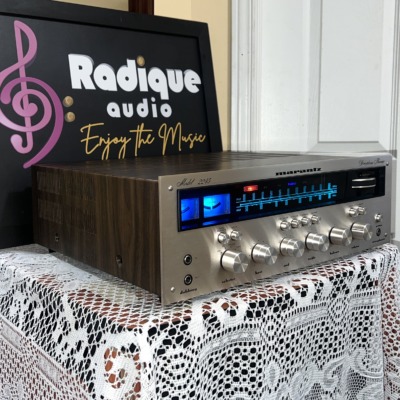
Marantz 2245 Stereo Receiver – 45 WPC, Level 1 Serviced, Japan
A Marantz 2245 from the golden age of the receiver, serviced on our bench and wearing its original Marantz case.
✔️ Condition: Very Good — original vented woodgrain case, sound
✔️ Level 1 service on our own bench, with post-service testing
✔️ 45 WPC · MM phono stage · tape loop · pre-out / main-in · two speaker pairs
✔️ Made in Japan — confirmed on the rear rating plate
✔️ Covered by Radique Warranty
✔️ Includes Perpetual Trade-Back Program eligibility
✔️ Ottawa Valley cherry cabinet available to order
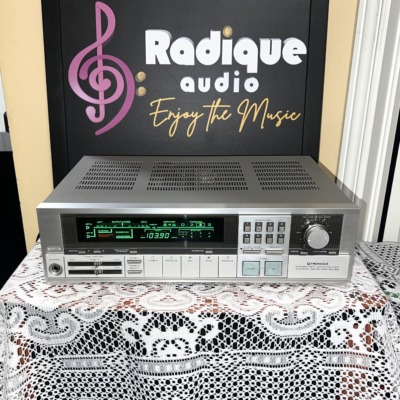
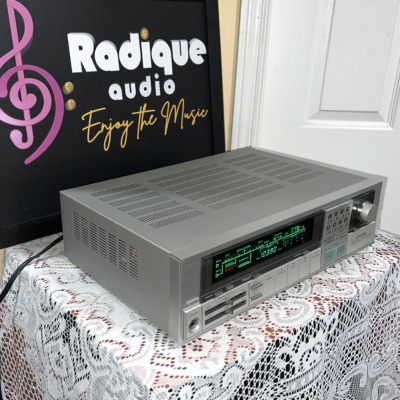
Pioneer SX-50 Silver Face Receiver – 50 WPC, Pre-Outs, 1983
Fifty watts a channel into 8 ohms at 0.007% distortion, and — unusually for a receiver this size — pre-out and main-in jacks on the back, so it can feed a subwoofer, take an equalizer in the loop, or hand off to a larger power amp. Introduced in 1983 with switchable CD and TV audio inputs, presets held by three AA cells, and the silver face of the decade that was ending. Graded Very Good.

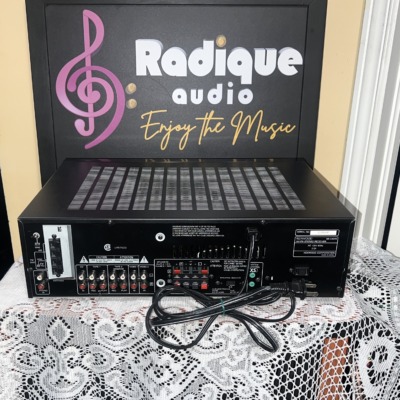
Kenwood KR-A4070 Stereo Receiver – 60WPC, Phono, Original Remote
Sixty watts a channel into 8 ohms across the full band at 0.01% distortion, with an MM phono input at 2.5mV, a tape monitor loop, and separate bass, treble and balance. The original Kenwood remote is here, which is uncommon on a receiver of this age. Level 1 serviced; cosmetically graded Good, with honest wear for its years.
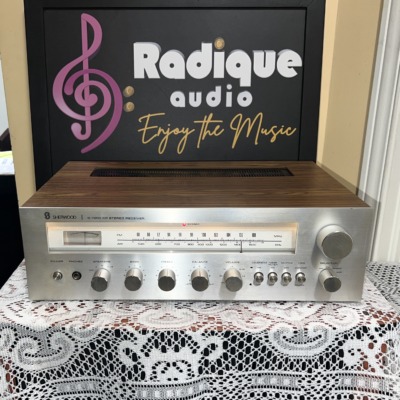
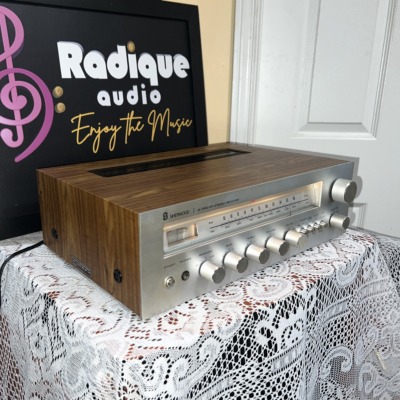
Sherwood S-7250 CP Stereo Receiver – 20WPC, Phono, Wood Cabinet
Twenty watts a channel into 8 ohms across the full 20 Hz to 20 kHz band, an MM phono input at 80 dB signal-to-noise, and a tape monitor loop. Sherwood built these in small runs in Chicago and sold them through the same shops that carried Marantz and McIntosh. Still in its original wood cabinet. Level 1 serviced here; condition Very Good.
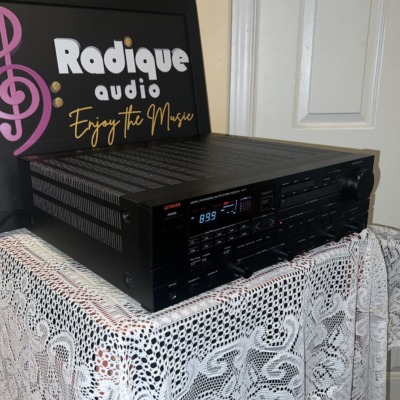
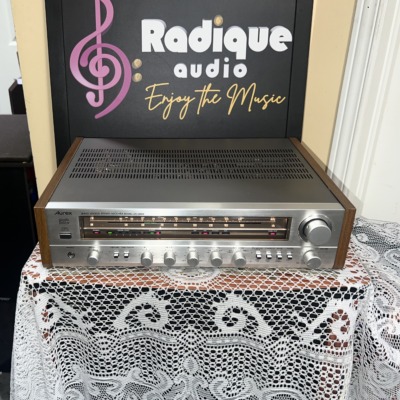
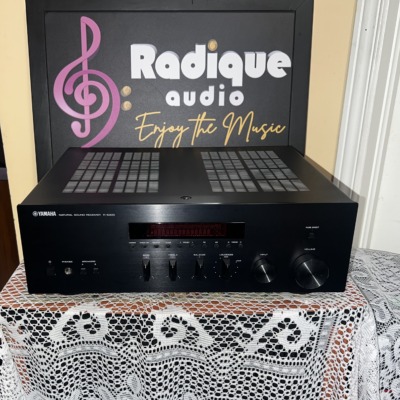
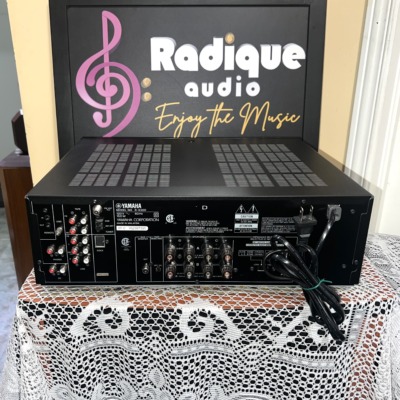
Yamaha R-S300 Stereo Receiver — 50 WPC, MM Phono, Sub Out
A two-channel Yamaha receiver from the R-S series, 50 watts a side, with a proper moving-magnet phono stage, a subwoofer output and switching for two pairs of speakers.
✔️ Condition: Very Good — tested and confirmed working across all inputs and both speaker channels
✔️ Covered by Radique Warranty
✔️ Includes Perpetual Trade-Back Program eligibility
✔️ Expertly packed for safe shipping
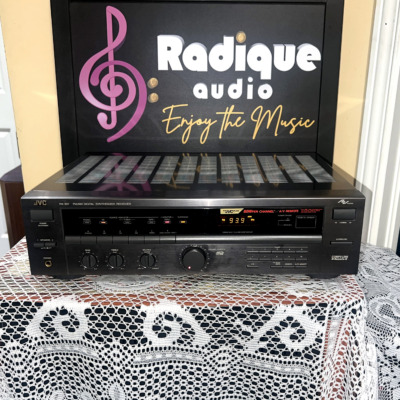
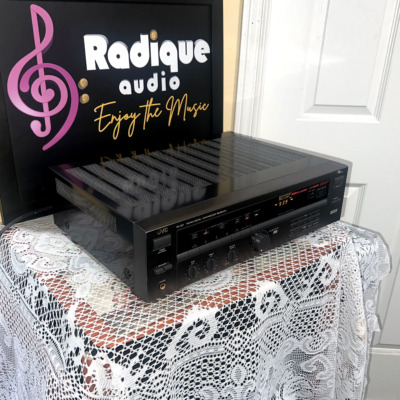
JVC RX-307 Stereo Receiver — 80 WPC, Original Remote & Manual
Eighty watts a side, a proper phono input, and the two things these almost never come with any more: the original remote and the printed manual.
✔️ Condition: Very Good
✔️ Covered by Radique Warranty
✔️ Includes Perpetual Trade-Back Program eligibility
✔️ Expertly packed for safe shipping
