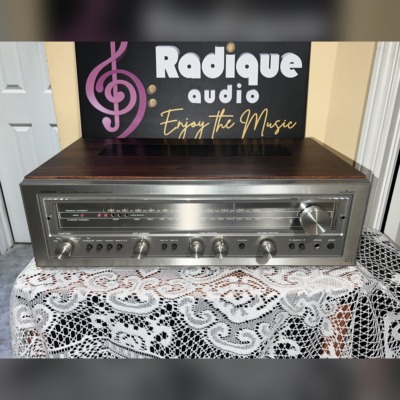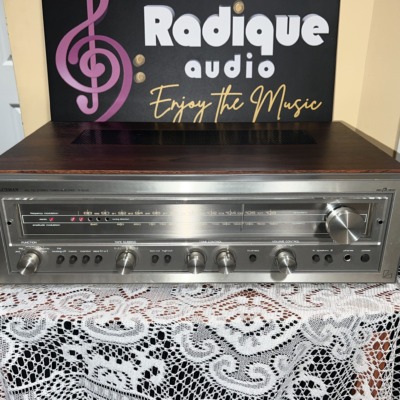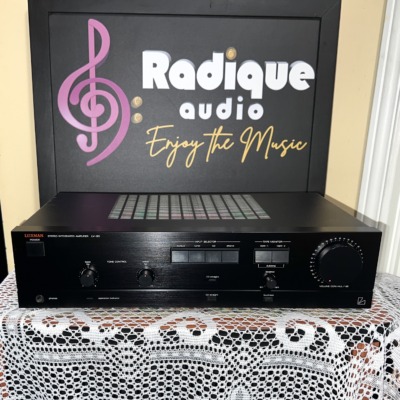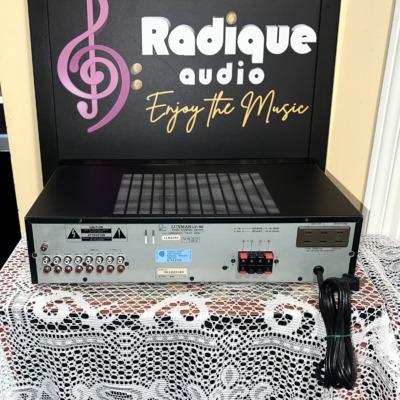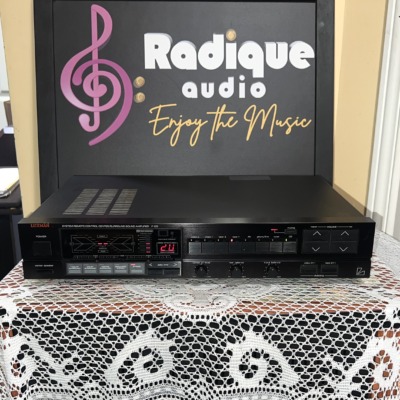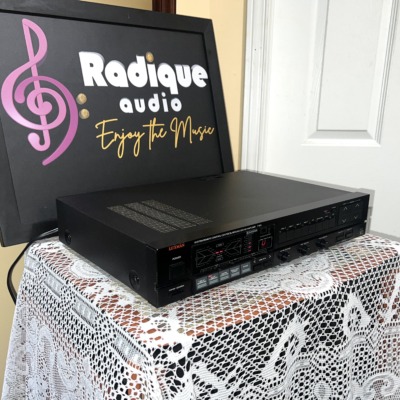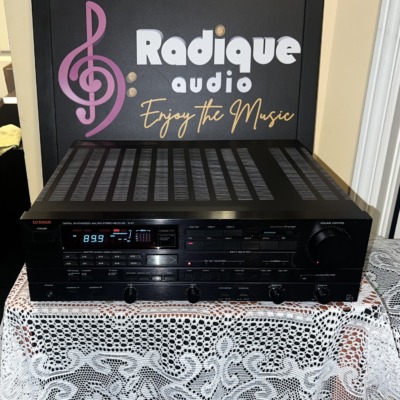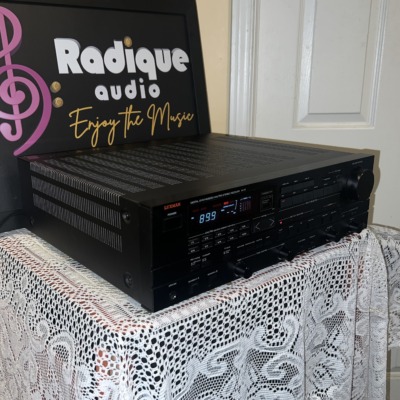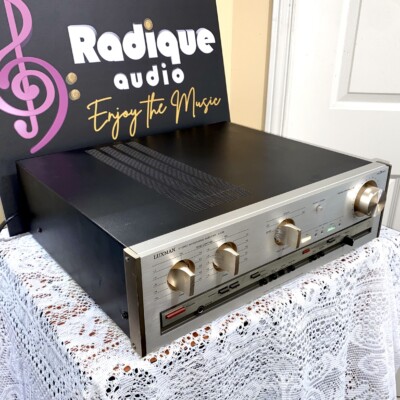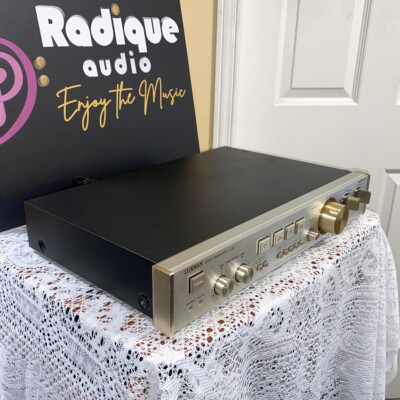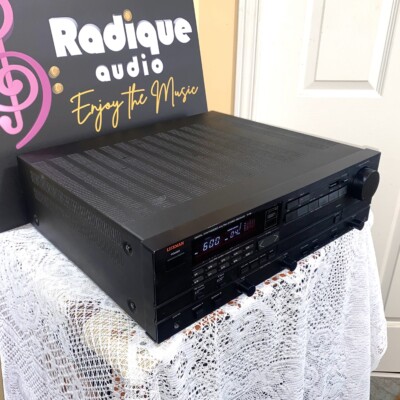


Luxman began in Osaka in June 1925 as the radio department of the Kinsuido picture-frame store, run by T. Hayakawa and his brother K. Yoshikawa, in the year radio broadcasting started in Japan. We carry Luxman stereo receivers, integrated amplifiers, preamplifiers, CD players, cassette decks and tuners. We’ve had 20 Luxman listings so far, covering 14 different models. Every used Luxman here is inspected, tested and serviced as required, then photographed in-house and covered by our Bumper-to-Bumper Warranty and Perpetual Trade-Back Program. Don’t see the model you want? Tell us on First Dibs and we’ll email you when one arrives.
The Luxman models we’ve sold most often: the RX-102 receiver, the DZ-111 CD player and the L-435 integrated amplifier.
The Luxman story, 1925 to today
Kinsuido was a picture-frame importer in Osaka. In 1925 it opened a radio department, which Luxman says was the first to display and sell radio sets in a store, and crowds stopped to listen. Its first products, the LUX-1730 phonograph and LUX-735 radio, followed in 1928.
Transformers and tubes. Lux developed its own OY-type output transformers in the early 1950s, and its first hi-fi product, the MA-7A tube power amplifier, arrived in 1958.
The Alpine years. In 1984 Luxman became part of Alpine Electronics, and some products were badged Alpine/Luxman. The fit was never easy, and Alpine sold the brand about ten years later.
Today. The International Audio Group bought Luxman in 2009, alongside Wharfedale and Quad. Luxman, based in Yokohama, celebrated its 100th anniversary in 2025.
Which Luxman is which?
Receivers: receivers such as the R-104, R-115 and our best-selling RX-102.
Integrated amplifiers: the L-series, such as the L-435.
CD players: D- and DZ-series players such as the DZ-111.
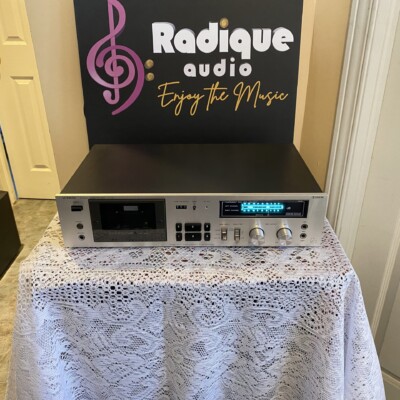
Cassette decks: K-series decks such as the K-100 and K-113.
Tube amplifiers: from the MA-7A of 1958 to models such as the MQ-88.