

Sansui Z-9000X Vintage Stereo Receiver – 130 WPC, Made in Japan
$1,195.00
1 in stock
Sansui Z-9000X — Flagship of the Z-Series
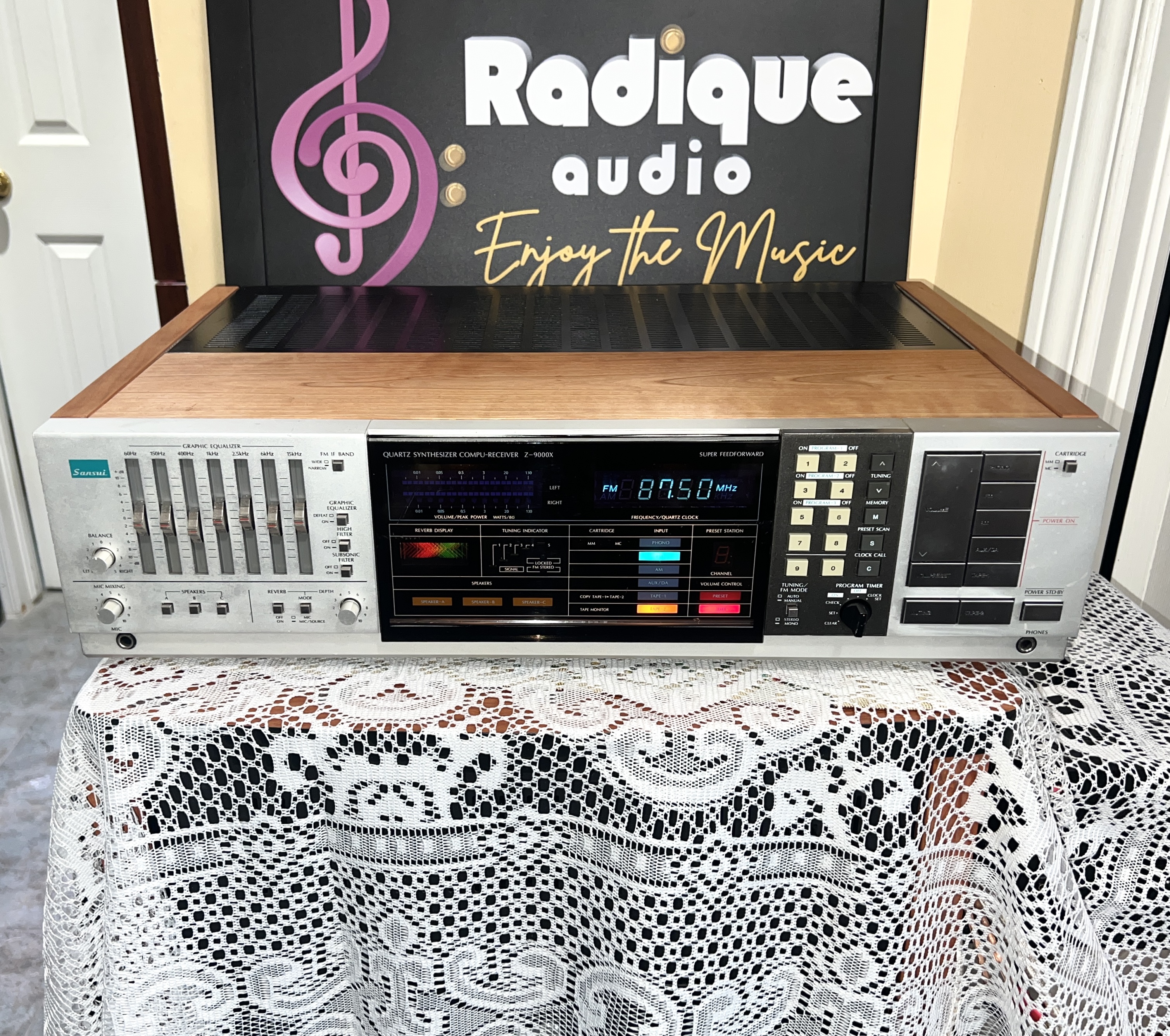
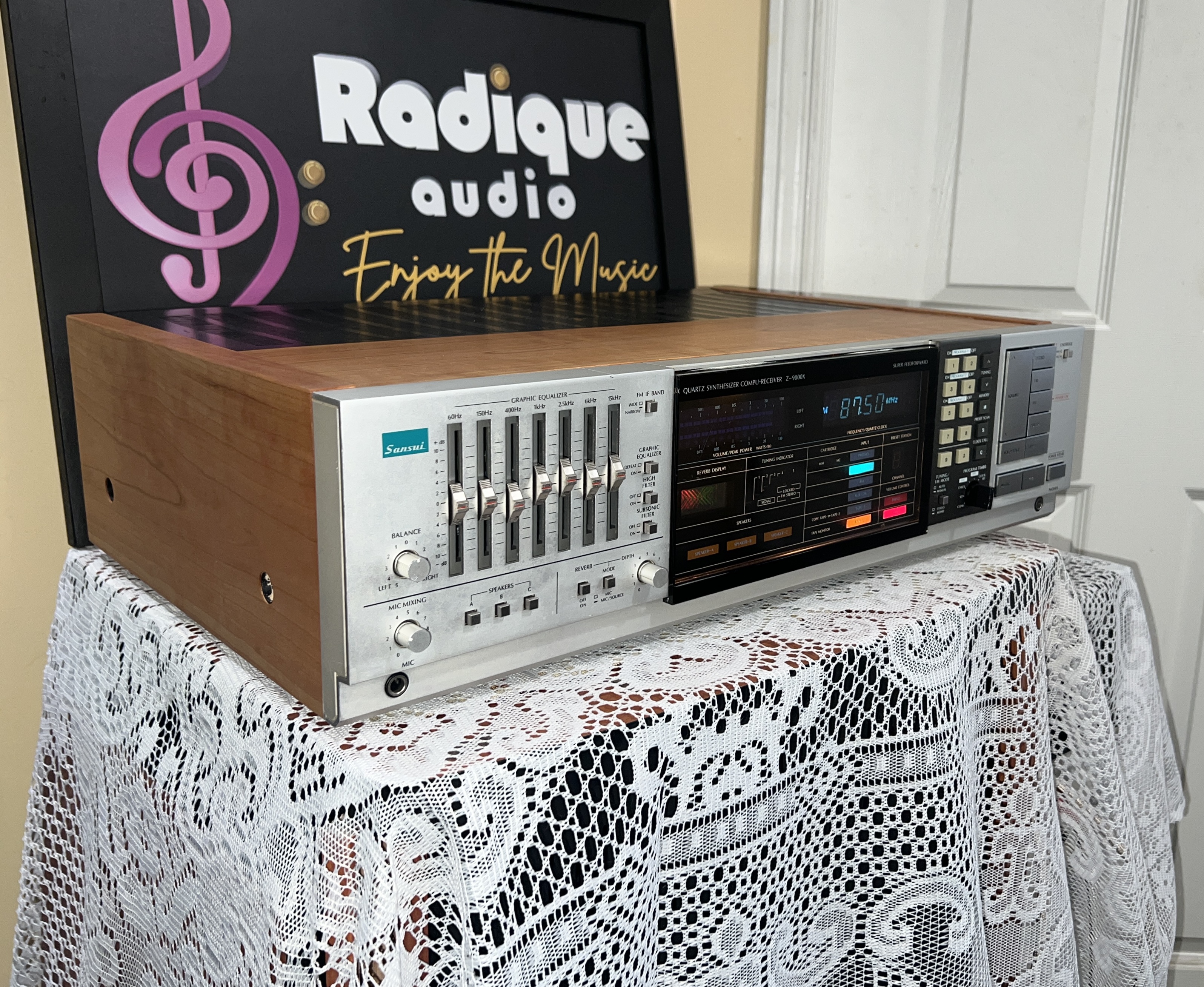
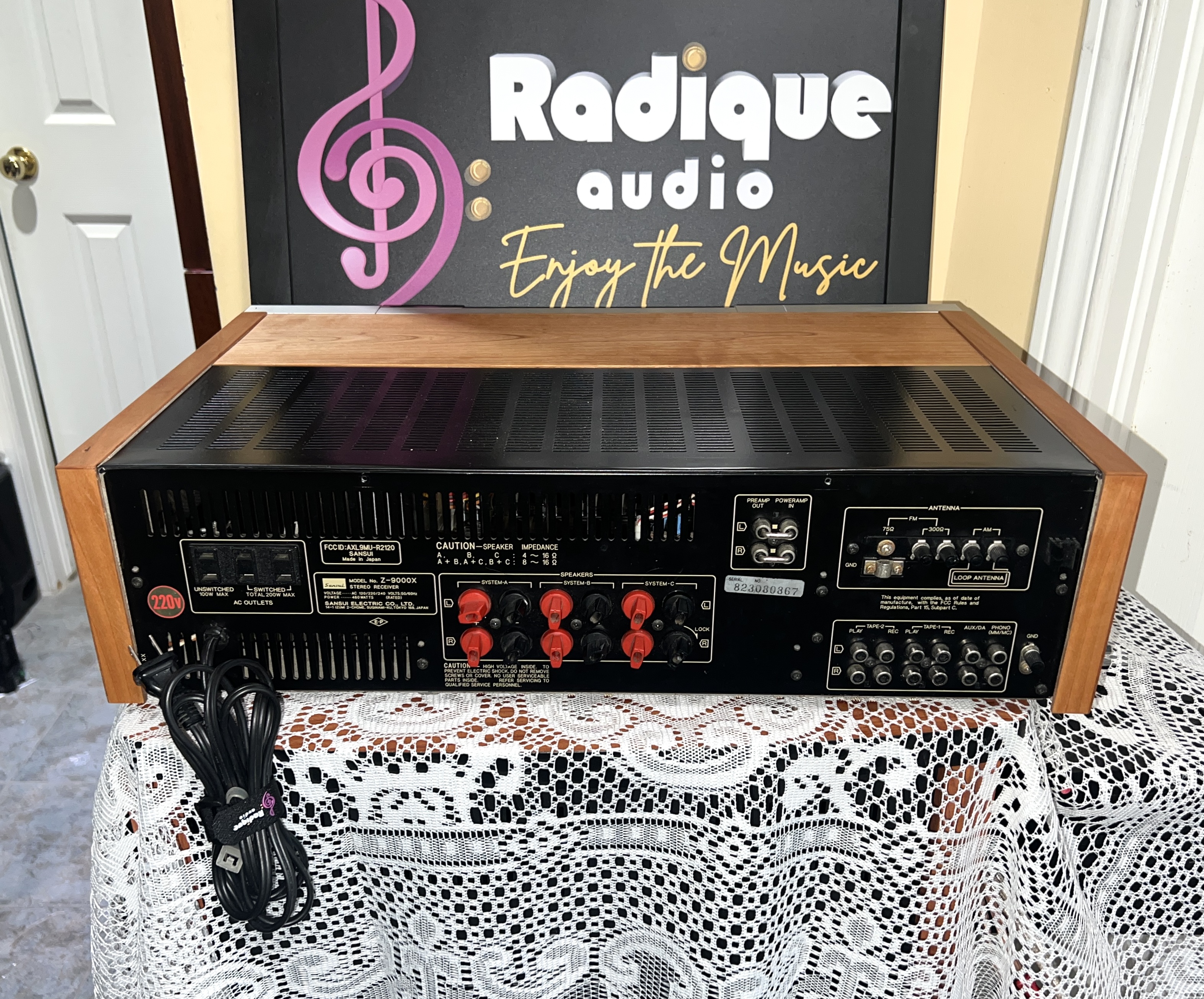
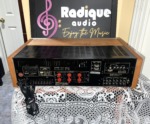
The flagship of Sansui’s legendary Z-series, the Z-9000X is a formidable 130 watts per channel Quartz Synthesizer Compu-Receiver made in Japan — featuring a built-in 7-band graphic equalizer, Moving Coil and Moving Magnet phono stages, onboard reverb, pre-out/main-in flexibility, and a stunning real wood cabinet that makes it one of the most visually and sonically impressive receivers of the early 1980s. Level One serviced and working beautifully.
The Sansui Z-9000X represents the absolute pinnacle of the Z-series lineup — the flagship model above the Z-7000, Z-5000, and Z-3000 — and its specifications and feature set reflect that position unambiguously. Rated at 130 watts per channel into 8 ohms with a vanishingly low 0.005% THD and a frequency response extending to 200 kHz, the Z-9000X uses Sansui’s proprietary Super Feed Forward circuit technology — a sophisticated error-correction topology that reduces distortion and noise below what conventional feedback designs can achieve, and that gives the Z-series its distinctively clean, open, and dynamically effortless sound. The quartz-synthesized FM/AM tuner with digital frequency display ensures rock-solid station lock and eliminates the drift that plagues conventional analogue tuners, while the Compu-Receiver control logic provides a level of operational sophistication unusual for its era.
Features and Flexibility
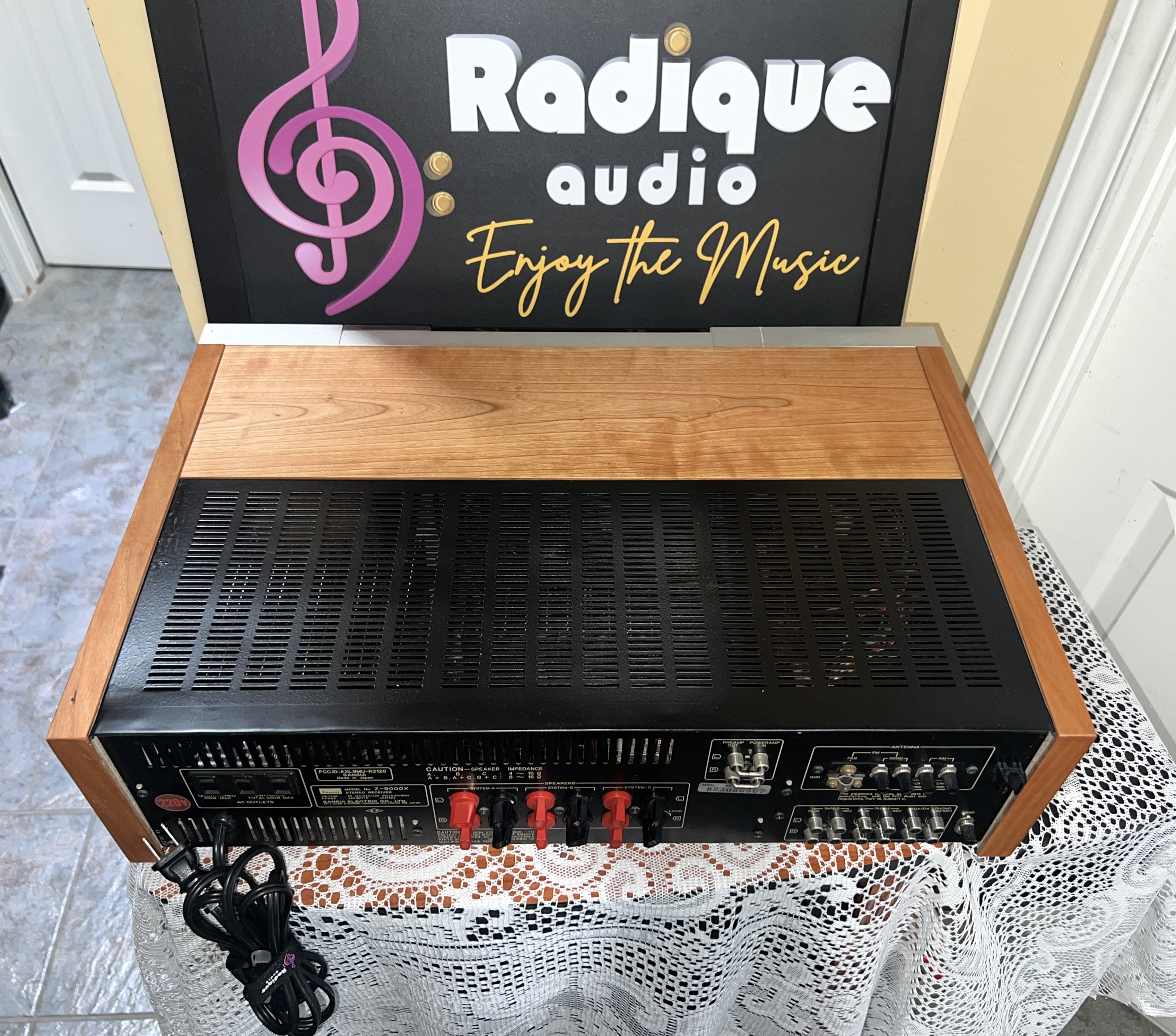
The feature set is genuinely exceptional even by today’s standards. The built-in 7-band graphic equalizer provides precise room and system tuning without requiring an external component, while the onboard reverb adds spatial depth for certain programme material. Both Moving Coil (0.25 mV) and Moving Magnet (2.5 mV) phono inputs are provided, along with a microphone input — making this one of the most versatile receivers ever produced. Pre-out / Main-in jacks at 1V allow the Z-9000X to be used as a standalone preamplifier or power amplifier, and three pairs of speaker outputs (A, B, and C) provide flexibility for multi-room or bi-amping configurations. The receiver handles 4–8 ohm speaker loads, making it compatible with a wide range of loudspeakers including modern designs that dip below 8 ohms.
The Real Wood Cabinet
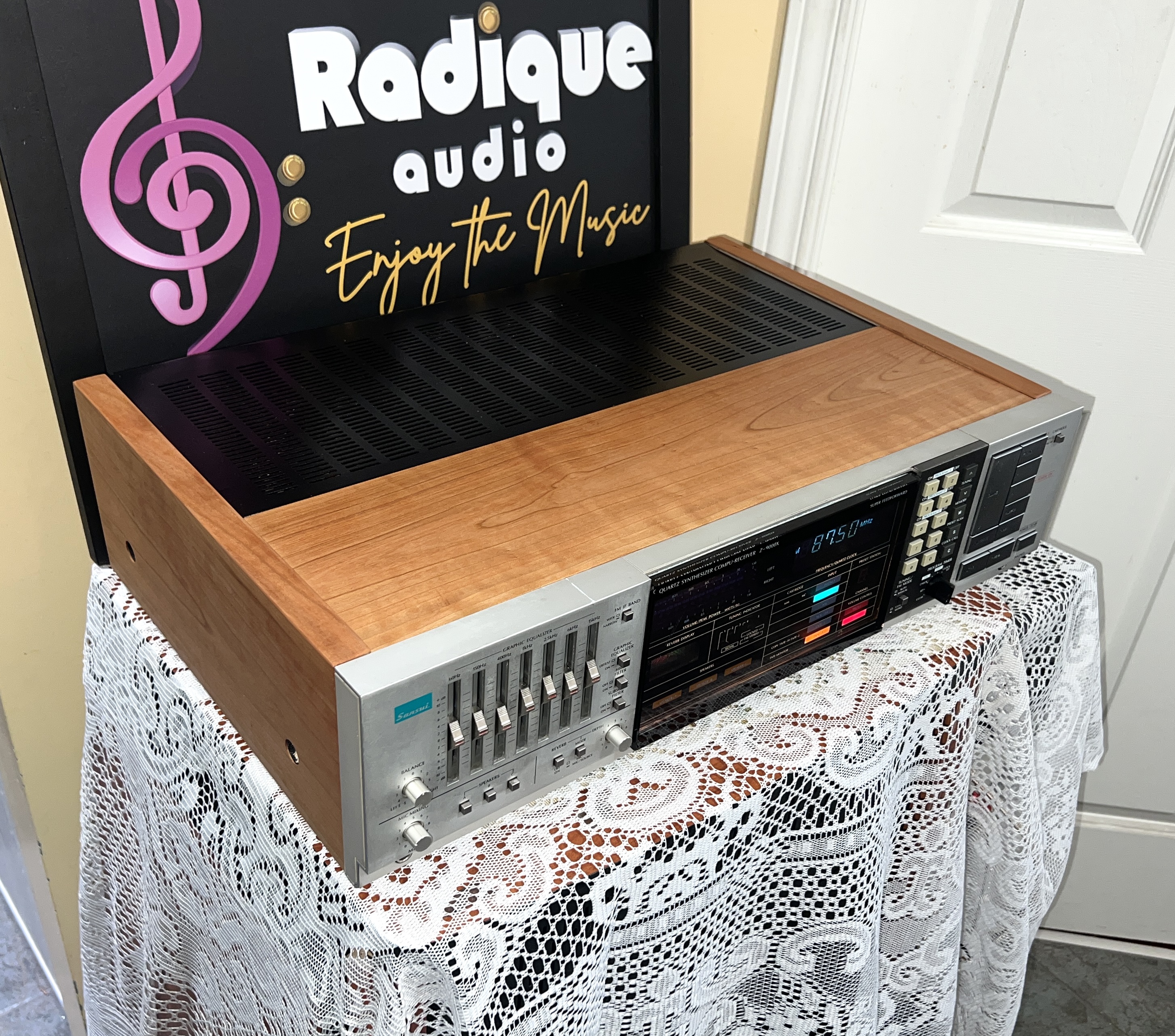
The real wood cabinet is a hallmark of the Z-series premium positioning, and adds warmth and visual presence that transforms this receiver into a genuine furniture-grade centrepiece. The combination of substantial power reserves, extraordinary feature depth, and classic Sansui build quality makes the Z-9000X one of the most compelling vintage receiver purchases available at any price. Enthusiasts who have heard the Z-9000X alongside later receivers note that it consistently holds its own — and frequently surpasses — more modern designs in terms of musical engagement and dynamic authority.
Service and Condition
This example has undergone our Level One service and testing which should ensure many more years of reliable performance ahead. Cleaned inside and out, all pots and switches deoxidized for smooth, silent operation, lamps replaced for full illumination, and bias and DC offset checked and adjusted to specification — it is performing exactly as it should and sounds superb.
Sansui Z-9000X Specifications
Type: AM/FM Quartz Synthesizer Compu-Receiver, stereo
Power output: 130 watts per channel into 8 ohms, both channels driven
Total harmonic distortion: 0.005%
Frequency response: 5 Hz – 200 kHz
Input sensitivity: 0.25 mV (MC phono), 2.5 mV (MM phono), 1 mV (mic), 150 mV (line)
Signal-to-noise ratio: 68 dB (MC), 82 dB (MM)
Channel separation: 55 dB (MM), 60 dB (line)
Output: 150 mV (line), 1V (pre-out)
Speaker load impedance: 4 – 8 ohms
Speaker outputs: A, B, and C (three pairs)
Phono: Moving Coil and Moving Magnet inputs
Built-in features: 7-band graphic equalizer, reverb, microphone input
Pre-out / Main-in: 1V (preamplifier / power amplifier flexibility)
Tuner: Quartz synthesized FM/AM with digital frequency display
Circuit technology: Super Feed Forward
Cabinet: Real wood
Years of manufacture: 1983–1985
Country of manufacture: Japan
Finish: Silver with real wood cabinet
Condition: Level One serviced, fully tested and working beautifully
Dimensions: (Width x Height x Depth) 550 x 150 x 386 mm (21.7 x 5.9 x 15.2 inches)
Weight: 15.2 kg (33.5 lbs)
Why Buy This Receiver
Made in Japan, the Sansui Z-9000X is a flagship-grade receiver that delivers 130 watts of Super Feed Forward-driven power, an extraordinary feature set including built-in 7-band EQ and reverb, MC/MM phono flexibility, and stunning real wood cabinet presentation — a rare opportunity to own the best Sansui Z-series receiver at a fraction of its original cost.
Backed by Radique Audio’s Bumper-to-Bumper Warranty and our Perpetual Trade-Back Program, you can purchase with confidence.
⭐ Don’t Just Take Our Word For It
Radique Audio holds over 600 customer ratings averaging 4.97 stars across six public platforms — Facebook Marketplace, Kijiji, Canuck Audio Mart, Google and others. Every rating lives somewhere we don’t control, so you can read the originals yourself, including the less flattering ones. See what our customers say. 👉
| Weight | 36 lbs |
|---|---|
| Dimensions | 19.2 × 25.7 × 9.9 in |
Sansui was founded in Tokyo by Kosaku Kikuchi, who began making transformers in 1944 and incorporated Sansui Electric in 1947. We carry Sansui stereo receivers, integrated amplifiers, tuners, equalizers and cassette decks. We've had more than 40 Sansui listings so far. Every used Sansui here is inspected, tested and serviced as required, then photographed in-house and covered by our Bumper-to-Bumper Warranty and Perpetual Trade-Back Program. Don't see the model you want? Tell us on First Dibs and we'll email you when one arrives.
Sansui models we've sold more than once include the RG-700 and SE-1000 equalizers.
The Sansui story, 1947 to today
Kosaku Kikuchi started making transformers in Tokyo in 1944 and founded Sansui Electric in 1947. Amplifier kits and finished amplifiers followed from 1954, tube receivers from 1956, and the AU-111 tube integrated amplifier in 1965.
The golden age. Solid-state amplifiers such as the AU-555 arrived in the late 1960s. In the 1970s Sansui made QS four-channel receivers and big stereo receivers such as the 9090DB, and from 1978 DC amplifiers such as the AU-717 and AU-919 and the G-series receivers.
New owners. In 1989 Polly Peck of London took control of Sansui. In the 1990s a controlling interest passed to the Semi-Tech group of James Ting, a Canadian businessman whose electronics company was based in Markham, Ontario, and Grande Holdings of Hong Kong took over in 1999.
After the original company. Production wound down in the early 2000s, and Sansui filed for court rehabilitation in 2012 and went bankrupt in 2014. Products sold under the Sansui name since then are made by licensees in different countries, not by the original company.
Which Sansui is which?
Tube era (1950s to 1960s): kits and amplifiers such as the AU-111 of 1965.
1970s receivers: such as the 8080 and 9090DB, the 1976 "No. 1 Line" from the 221 to the 881, and the QRX four-channel receivers.
Integrated amplifiers: the AU-555 of the late 1960s, the AU-x07 and AU-x17 families from 1978 such as the AU-717, the AU-919, budget A-series models, and the AU-α907i of 1987.
G-series receivers (1978 to 1980): from the G-2000 to the G-33000, with quartz-locked digital tuning on the later G-x700 models.
Tuners and equalizers: such as the TU-9900 and T-510 tuners, the SE-9 and SE-1000 equalizers, and the RG-700 and RG-707.
Cassette decks: SC, D and D-X series decks.
Buying used Sansui: what to check
Fuse resistors. A technician who restored a 9090DB for Sound & Vision called replacing the fusible resistors on the driver board the number one job, and restorers find fuse resistors gone high in value on other models.
Capacitors and glue. TONE Audio says AU-717s will probably need most of their capacitors replaced, and that the glue used at the factory has become corrosive and should be removed. Ask for proof of any recap.
No relay click. If the protection relay doesn't click in, an output may have DC on it, which often means failed output transistors.
Controls and lamps. Scratchy volume and balance controls need cleaning, and dial lamps are often converted to LED.
Later products. Goods sold as Sansui since the early 2000s were made by licensees, so don't expect vintage Sansui engineering in them.
Everything we list is inspected, tested and serviced as required here, and comes with our warranty.
You may also like…
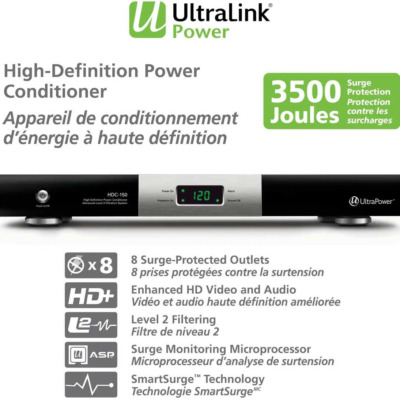
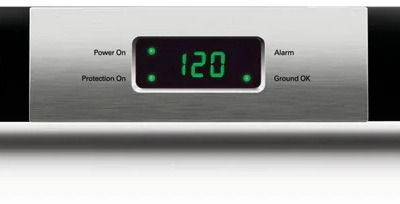
Ultralink High Def Power Conditioner with Display, BNIB HDC150
Eight surge-protected, filtered AC outlets with isolated banks for digital, video, audio and high-current components — four always-on, four switched.
Enough outlets for the whole stack, not just the amplifier — television, Blu-ray and streamer alongside a receiver, or turntable, CD player and cassette deck alongside a vintage amp. 3,500 joule protection, EMI/RFI filtration to 58 dB, and surge protection on the coax and network lines most conditioners leave unguarded. Patented ASP voltage monitoring and a 15 amp resettable breaker.
Brand new, unopened, in original packaging with full manufacturer warranty.
Related Products
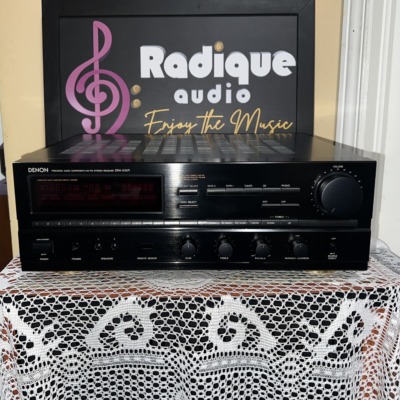
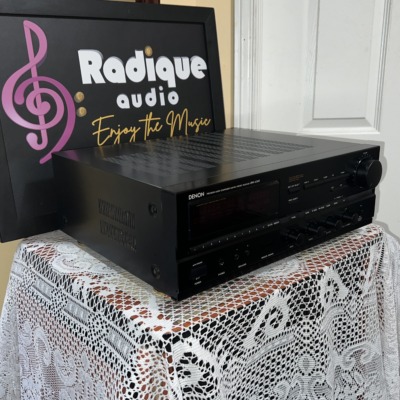
Denon DRA-835R Vintage Stereo Receiver – 100 WPC, Made in Japan
The second-from-the-top model in Denon's early-nineties stereo receiver range, made in Japan and in very good condition, with 100 watts per channel, a phono stage, motorized volume and its original remote.
✔️ Very good condition — free of significant marks
✔️ 100 WPC, MM phono and motorized volume — made in Japan
✔️ Original Denon remote included
✔️ Covered by Radique Warranty
✔️ Includes Perpetual Trade-Back Program eligibility
✔️ Expertly packed for safe shipping
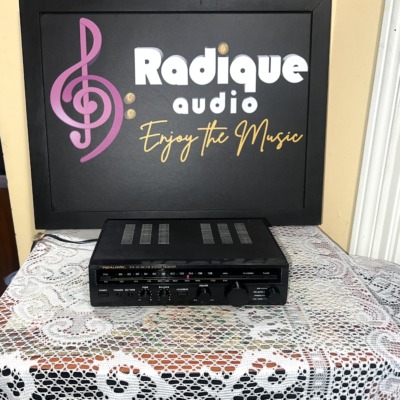
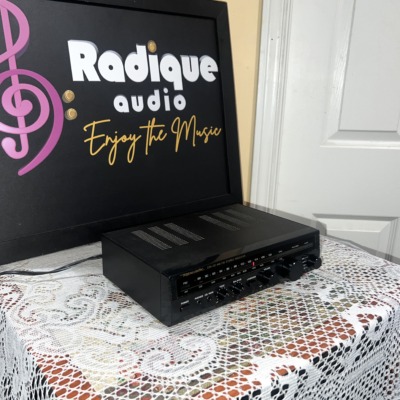
Realistic STA-20 Compact AM/FM Stereo Receiver – 5 WPC, Serviced
Radio Shack's smallest AM/FM stereo receiver of the 1990s, the Realistic STA-20: 5 watts per channel, a rear EQ switch made for mini-speakers, a phono input and a front jack for a phone.
✔️ Serviced on our bench to our Level 1 standard
✔️ Very good condition
✔️ Covered by Radique Warranty
✔️ Includes Perpetual Trade-Back Program eligibility
✔️ Expertly packed for safe shipping
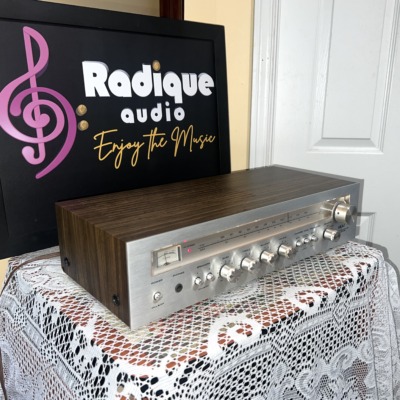
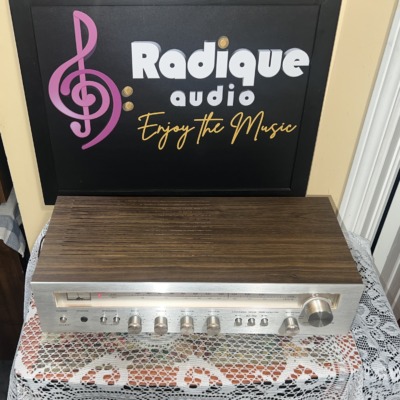
Akai AA-1115 Vintage Stereo Receiver – 15 WPC, Made in Japan
A slim late-1970s Akai AA-1115 AM/FM stereo receiver, made in Japan, silver face in its original woodgrain cabinet.
✔️ Tested on our bench, every input, output and control
✔️ Very good condition
✔️ MM phono, PLL FM tuner, speakers A and B
✔️ Covered by Radique Warranty
✔️ Includes Perpetual Trade-Back Program eligibility
✔️ Expertly packed for safe shipping
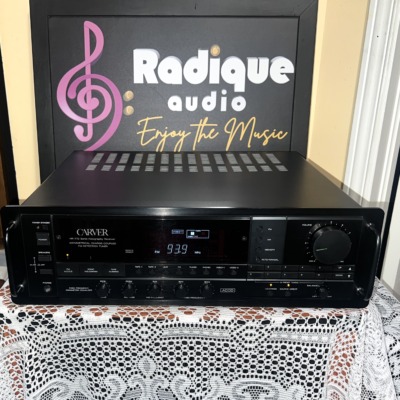
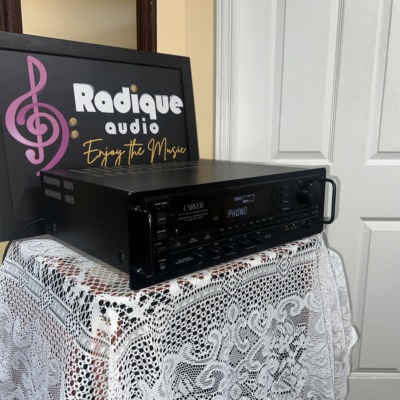
Carver HR-772 Sonic Holography Receiver – 140 WPC, Rack Ears
A Carver HR-772 stereo receiver, Carver's early-1990s flagship: 140 watts per channel, Sonic Holography, and rack ears with front handles.
✔️ Tested on our bench, Sonic Holography included
✔️ Very good condition
✔️ 140 WPC, stable to 2 ohms, MM phono, five-band EQ
✔️ Rack ears and handles for a 19-inch rack
✔️ Covered by Radique Warranty
✔️ Includes Perpetual Trade-Back Program eligibility
✔️ Expertly packed for safe shipping
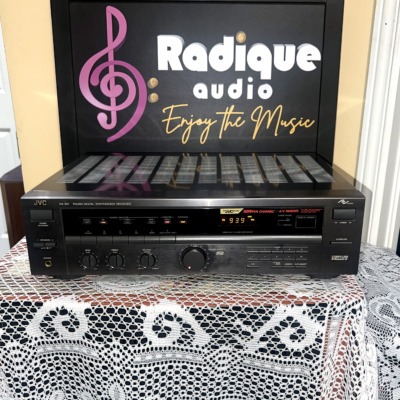
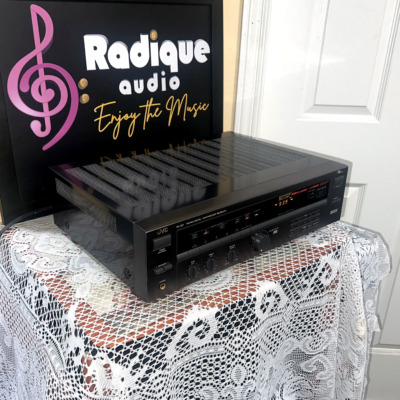
JVC RX-307 Stereo Receiver – 80 WPC, Original Remote & Manual
Eighty watts a side, a proper phono input, and the two things these almost never come with any more: the original remote and the printed manual.
✔️ Condition: Very Good
✔️ Covered by Radique Warranty
✔️ Includes Perpetual Trade-Back Program eligibility
✔️ Expertly packed for safe shipping
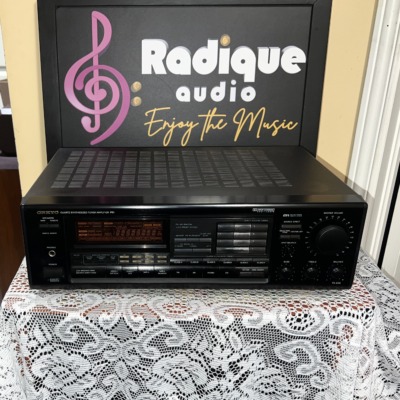
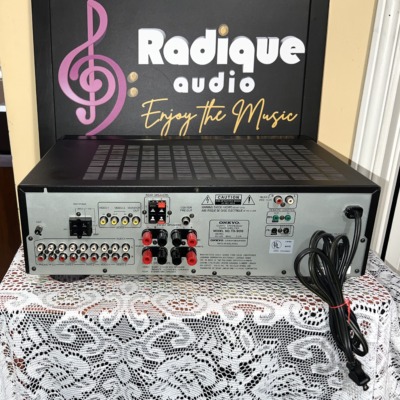
Onkyo TX-906 Stereo Receiver – 80 WPC, Dolby Pro Logic
An early-nineties Onkyo receiver with real power behind it and a phono input for your turntable, through our Level 1 service and playing as it should.
✔️ Good condition — works as it should; the black cabinet and faceplate present well
✔️ Through our Level 1 service — cleaned, deoxidized, checked and thoroughly tested on our bench
✔️ Phono input for your turntable, plus CD and two tape inputs
✔️ Covered by Radique Warranty
✔️ Includes Perpetual Trade-Back Program eligibility
✔️ Expertly packed for safe shipping
