


Great Sounding Nakamichi CD Player OMS-1A
$195.00
Out of stock
Get first dibs on the next one
Great Sounding Nakamichi CD Player
From Nakamichi: For less than you might imagine, you could be listening to a Nakamichi CD player. The OMS-1A is our least expensive player yet it shares many of the features and performance qualities of more costly Nakamichi units:
Oversampled digital filtering and 16-bit conversion for best frequency and phase response
Dual-mono analog circuitry for superior channel separation
Synchronized timing to eliminate beats
3-beam laser with high-precision servo and disc-centering system to reduce interpolation error
Shock-mounted disc drive
Independent digital and analog supplies to reduce switching noise
15-track program memory
Bidirectional skip search, repeat play and audible dual-speed cueing
Combination Track/Time/Remaining Time indicator that tells you where you are on the disc
And, with Nakamichi Direct Operation, you need only place a disc on the tray, press Play, and the OMS-1 loads and plays by itself.
Specs: Digital converter: PCM56P
CD Mechanism: AT-D16 / D64 / OC82727A
Frequency response: 5Hz to 20kHz
Dynamic range: 90dB
Signal to Noise Ratio: 96dB
Channel separation: 88dB
Total harmonic distortion: 0.006%
Dimensions: 16.9 x 3.0 x 10.6 inches, (430 x 75 x 270mm), Weight: 8.2 pounds (3.7kg)
This Nakamichi is in very good condition, and sounds great as well. Asking just $195 for this made in Japan Nakamichi Compact Disc Player. Includes soft copy of manual in PDF.
| Weight | 10.5 lbs |
|---|---|
| Dimensions | 14.6 × 21 × 7 in |
Nakamichi began in Tokyo in 1948, founded by Etsuro Nakamichi as a research company, and its 1000 deck of 1973 is widely credited as the first three-head cassette deck. We carry Nakamichi cassette decks, receivers and CD players. We've had more than 140 Nakamichi listings so far. Every used Nakamichi here is inspected, tested and serviced as required, then photographed in-house and covered by our Bumper-to-Bumper Warranty and Perpetual Trade-Back Program. Don't see the model you want? Tell us on First Dibs and we'll email you when one arrives.
The Nakamichi story, 1948 to today
Etsuro Nakamichi founded the company in Tokyo in 1948 as a research firm, and his brother Niro later made it known for high-end cassette decks. Before selling under its own name from 1972, it built tape recorders and cassette decks for other brands, including Harman Kardon.
Three heads. The 1000 and 700 of 1973 were three-head decks with separate record and playback heads, and the 1000 is widely credited as the first. The two-head 500 and 600 followed in 1974 and 1975, and the "Silent Mechanism" transport arrived with the 580 series in 1978.
The Dragon. The Dragon of 1982 was Nakamichi's first deck to play in both directions, with automatic playback-azimuth correction (NAAC). It was made until 1993.
Beyond tape. Nakamichi made CD players from 1984, and its Stasis receivers and amplifiers of the late 1980s used a circuit licensed from Nelson Pass of Threshold. Hong Kong's Grande Holdings took over in the late 1990s, Nakamichi Japan went into court-supervised reorganisation in 2002, and the brand now sells mainly soundbars and home theatre systems.
Which Nakamichi is which?
First-generation decks (1973 to 1979): the 1000 and 700 (three heads, dual capstan), the 500 and 600, the 550 portable, and II versions.
Second-generation "Silent Mechanism" decks (1978 onward): the 480, 580 and 680ZX families, the 1000ZXL and 700ZXL, the ZX-7 and ZX-9, and the Dragon.
Third-generation decks (1982 to 1998): the BX, CR and DR families, such as the BX-300 and CR-7.
RX auto-reverse decks (1983): the RX-202, RX-303 and RX-505, which lift the cassette and turn it over.
Receivers and amplifiers: the 730 receiver (1978 to 1982), the Stasis SR receivers and PA amplifiers, and later receivers such as the RE-2.
CD players: the OMS models from 1984 and the MusicBank changers.
Buying used Nakamichi: what to check
Belts, idler and pinch rollers. Technicians say thin belts stretch even on the shelf, and many decks need a full transport overhaul: belts, idler tire and lubrication. Ask what has been done.
Azimuth and calibration. Recalibration needs test tapes and specialist equipment. Play a known-good tape, in both directions on an auto-reverse deck.
Heads. Dull sound can come from dirty, magnetised or worn heads. On a three-head deck, make a test recording too.
Model quirks. Owners report broken switch tabs on the RX-505, and first-generation transports have nylon posts that can break in shipping, so these decks need careful packing.
Parts. Many Nakamichi parts are now hard to find.
Everything we list is inspected, tested and serviced as required here, and comes with our warranty.
Related Products
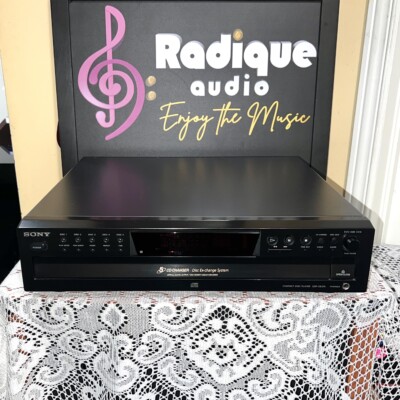
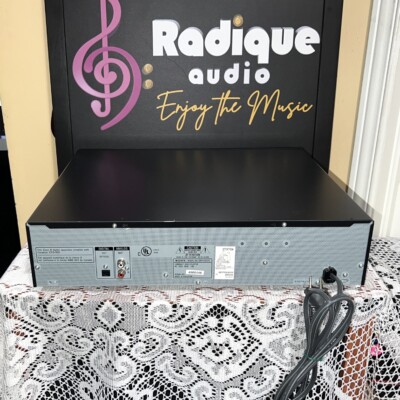
Sony CDP-CE375 5-Disc CD Changer — Optical Out | Play & Exchange
A five-disc carousel using Sony's Play 1/Exchange 4 mechanism — you can swap four discs while the fifth keeps playing. Hybrid Pulse D/A conversion, 0.0045% distortion, better than 102 dB signal-to-noise, and a Toslink optical output for an outboard DAC or receiver. Reads CD-R and CD-RW. A third-party universal remote comes with it, covering the key functions but not all of the original ones.
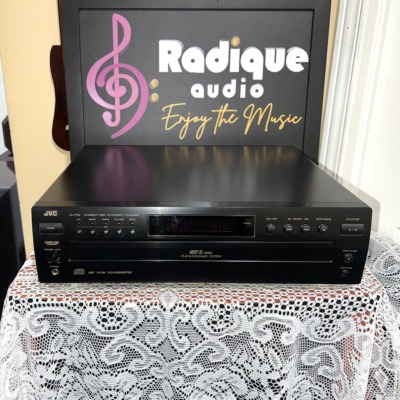
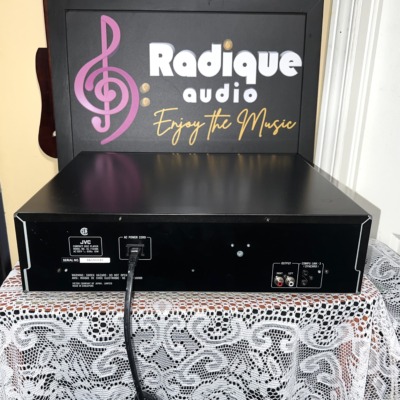
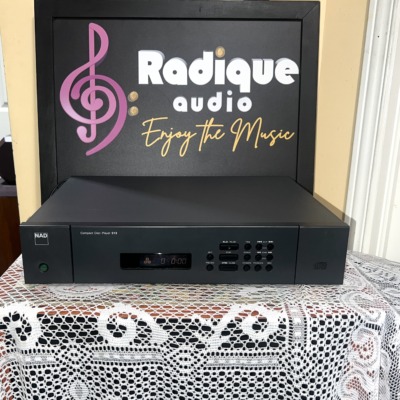
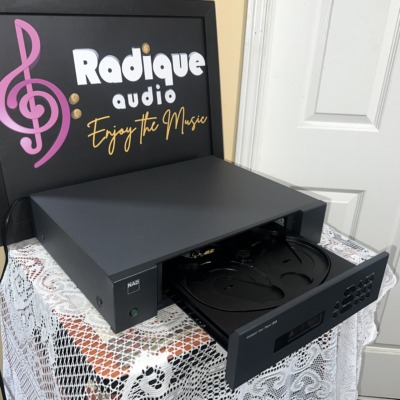
NAD 513 3-Disc CD Changer – Original Remote, Serviced
A 1995 NAD 513 three-disc CD changer hidden in a slim, minimalist case, with a 1-bit MASH converter, CD-R playback and NAD's original remote.
✔️ Serviced on our bench
✔️ Original remote included
✔️ Very good condition
✔️ Covered by Radique Warranty
✔️ Includes Perpetual Trade-Back Program eligibility
✔️ Expertly packed for safe shipping
