


Very Heavy (20lb!) Polk Bookshelf Speakers RT35
$245.00
Out of stock
This one has sold. Want first dibs on the next one?
We take these in regularly. Leave your name and email, and we’ll email you the moment one is listed, so you hear first. No cost, no obligation.
Email me when one is listed
Whatever you end up with, it needs cable. Build a set to length →
Other bookshelf speakers we have in stock now
3 in stock · $95.00–$295.00 · all ship
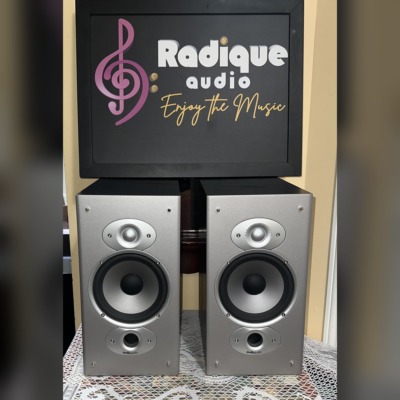 Polk Audio RTi6 Bookshelf Speakers – Real Wood, Bi-Wireable$295.00Ships
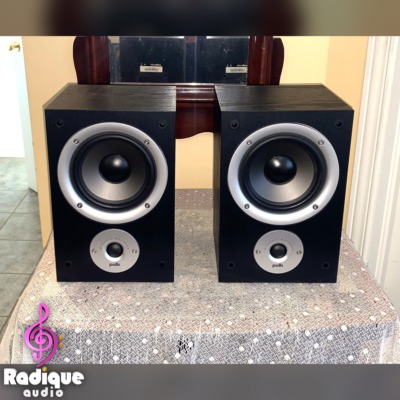 Great Sounding Budget Speakers from Polk Audio R150$145.00Ships
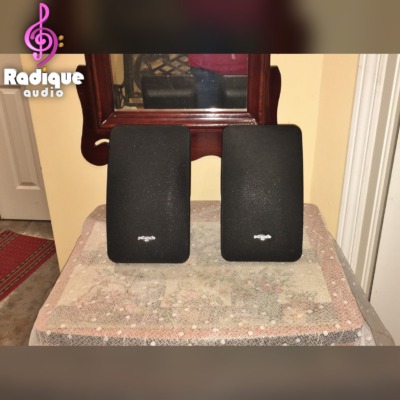 Weird Looking Polk Audio Speakers w Good Sound M2$95.00Ships
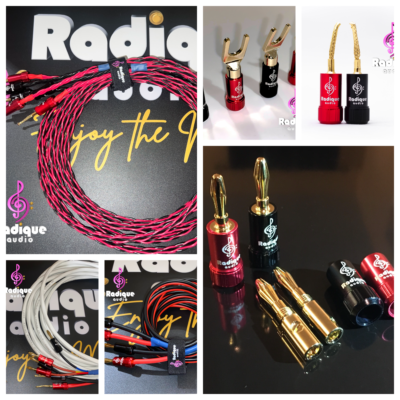
Whatever you end up with, it needs cable.
We hand-build speaker cable to your exact length and terminate it however you like: banana, spade, pin or bare wire. Tell us the run and the ends, and it ships ready to plug in.
Build a set to length →Polk’s RT35 is a solid two-way bookshelf design incorporating Polk’s 6 1/2″ polymer/mineral-composite woofer and 1″ shielded polymer-dome tweeter. The speaker’s walls are fabricated from 3/4″ MDF, and the front baffle is a full 1″ thick, while the rear baffle is of an injection-molded mineral-filled polymer. Polk has also incorporated several proprietary technologies in the RT35.
Beginning in 1988, Polk began a long-term research project in partnership with Johns Hopkins University. This resulted in a new research tool that enabled Polk to view and analyze the entire vibrating surface of a speaker driver. In particular, Polk was able to see and understand the resonance that develops on loudspeaker cones as they move. Modal resonance is a major cause of frequency-response aberrations and other distortions in loudspeakers. The result of this analysis, Polk’s Dynamic Balance[R] technology, allows the company to design drive units with, in their words, “unusual clarity, detail and extension.”
Additionally, Polk’s Power Port[TM] technology refers to the company’s method of reducing air turbulence at the mouth of the bass port. Polk says that by reducing this turbulence, in addition to reducing “chuffing” noise, they actually improve bass efficiency by a full 3dB while reducing distortion. The Power Port itself consists of a “cone” at the mouth of the port that occupies the space between the port (pointing into the port’s mouth) and a supporting plinth. According to Polk, “the cone promotes laminar airflow and the ever-increasing cross-sectional area of the space mimics a very long flared port.” Conveniently, the port’s plinth also acts as a handy wall-mount bracket.
Perhaps the most interesting of the technologies incorporated is the Acoustic Resonance Control system. Simply put, this is a method of counteracting identified internal box resonance’s by designing a port system tuned to those same resonance frequencies — but out of phase. As the out-of-phase output from the ports combine with the resonance of the speaker system, the two cancel each other out. Polk adds: “The audible results are greater midrange clarity and detail with noticeably more natural and accurate reproduction of vocals. Imaging is also markedly improved, [and] the speaker exhibits superior localization stability and image depth.”
Connection to the RT35 is via a single pair of gold-plated five-way binding posts. Finish is a black wood-grain-vinyl, but the front baffle is a pebble-grain black vinyl — quite handsome actually.
Polk states a frequency response with -3dB points of 50Hz and 23kHz. Crossover is accomplished by second-order high- and low-pass filters at 2kHz. Sensitivity is stated as 90dB, and nominal impedance is said to be compatible with 8-ohm outputs.
The speakers measure 15″H x 8″W x 12″D and weigh 20 pounds each.
The RT35’s retailed for $399 USD. Asking just $245 for these excellent quality speakers.
| Weight | 45 lbs |
|---|---|
| Dimensions | 16 × 22 × 19 in |
- Hard-to-beat pricing
- Free shipping across Canada
- Manufacturer's warranty
- Get a quote on new Polk
Polk Audio began in Baltimore in 1972, founded by Matthew Polk, George Klopfer and Sandy Gross. Its SDA speakers of the 1980s used a cable between the left and right speakers to widen the stereo image. We carry Polk towers, bookshelf speakers, centre channels and subwoofers. We've had more than 180 Polk listings so far, covering more than 80 different models. Every used Polk here is inspected, tested and serviced as required, then photographed in-house and covered by our Bumper-to-Bumper Warranty and Perpetual Trade-Back Program. Looking for new Polk? We also quote new Polk Audio direct from the Canadian distributor, with free shipping within Canada: request a quote below. Don't see the model you want? Tell us on First Dibs and we'll email you when one arrives.
Our five best-selling Polk models so far: the RTi10 towers, the PSW10 and PSW125 subwoofers, the RTi4 bookshelf speakers and the CSi3 centre.
The Polk story, 1972 to today
Matthew Polk, George Klopfer and Sandy Gross, graduates of Johns Hopkins, founded Polk Audio in Baltimore, Maryland, in 1972. The Monitor 7 of 1974 was their first model to succeed, and the Monitor 10 followed in 1976.
SDA. In 1984 Polk introduced SDA (Stereo Dimensional Array). A cable between the left and right speakers lets each one cancel the sound that crosses over to the wrong ear, for a wider stereo image.
Growth. Polk went public in 1986 and moved to new premises in Baltimore. It began moving manufacturing to Tijuana, Mexico, in 1988, and by 2012 Stereophile reported that Polk designed in the US and built in China.
New owners. Directed Electronics agreed to buy Polk in 2006. Polk later became part of Sound United, Masimo bought Sound United in 2022, and in September 2025 HARMAN, a Samsung company, completed its purchase of Sound United. The 2018 Legend series brought SDA back.
Which Polk is which?
Monitor (1970s to early 1990s): the Monitor 4, 5, 7, 10 and 12, with A, B and C revisions.
SDA (1984 to about 1991): the SDA-1 and SDA-2 families, CRS, SRS and the later "TL" models.
RTA (1979 to 1992): towers such as the RTA 11t, with two woofers and two passive radiators.
RT and RTi (2001 onward): Polk's lower-priced lines. Our best-selling RTi10 towers and RTi4 bookshelf speakers come from here.
CSi centres and PSW subwoofers: the CSi3 centre and the PSW10 and PSW125 subwoofers are among the Polks we sell most.
LSi (about 2001 to 2010) and LSiM (2011): Polk's flagship lines of that decade, followed by Signature (2016), Legend (2018) and Reserve (2021).
Buying used Polk: what to check
SDA cable. SDA speakers need the interconnect cable between them for the SDA effect, and early SDA models need a common-ground amplifier. Make sure the cable comes with the pair.
Tweeters. Owners report that some SL3000 tweeters on the 1989 to 1991 SDA TL models leaked their ferrofluid and failed, and that Monitor-series pairs may carry mismatched factory or replacement tweeters. Check that every tweeter plays.
Surrounds. Some early Polks used foam surrounds, which rot with age; later models such as the RTA 11t and LSiM use rubber. Press gently on each woofer surround.
Everything we list is inspected, tested and serviced as required here, and comes with our warranty.
You may also like…
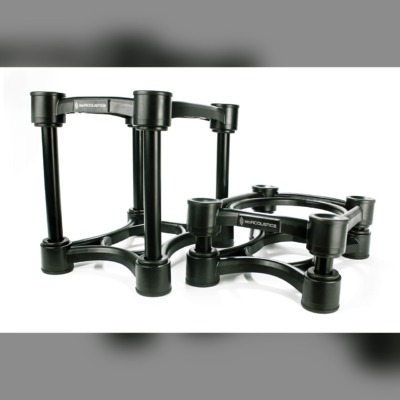

IsoAcoustics ISO-200 Isolation Stands (Pair)
- ✔️ Genuine IsoAcoustics, brand new, from an authorized Canadian dealer
- ✔️ A pair of isolation stands for large speakers and studio monitors
- ✔️ Rated to 75 lb (34 kg) short or 60 lb (27 kg) tall
- ✔️ Short 3.75 in (95 mm) or tall 8.5 in (215 mm), up to 6.5° of tilt
- ✔️ Pick up in Kanata by appointment, or shipped across Canada and internationally
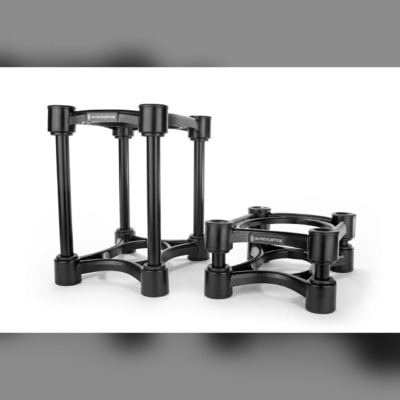

IsoAcoustics ISO-155 Isolation Stands (Pair)
- ✔️ Genuine IsoAcoustics, brand new, from an authorized Canadian dealer
- ✔️ A pair of isolation stands for medium speakers and studio monitors
- ✔️ Rated to 40 lb (18 kg) short or 35 lb (16 kg) tall
- ✔️ Short 3 in (76 mm) or tall 8.25 in (210 mm), up to 6.5° of tilt
- ✔️ Pick up in Kanata by appointment, or shipped across Canada and internationally


IsoAcoustics ISO-130 Isolation Stands (Pair)
- ✔️ Genuine IsoAcoustics, brand new, from an authorized Canadian dealer
- ✔️ A pair of isolation stands for small speakers and studio monitors, rated to 20 lb (9 kg)
- ✔️ Short 2.8 in (71 mm) or tall 8.25 in (210 mm), up to 6.5° of tilt
- ✔️ Top plate 5.1 × 6 in (130 × 152 mm)
- ✔️ Pick up in Kanata by appointment, or shipped across Canada and internationally
Custom Speaker Cable Builder
Your specs, your cable: choose the cable, the length and each connector, with live pricing.
- House CCA, House OFC, House Quad, Kimber 4PR or Kimber 4TC
- Banana, spade, pin, small spade or bare wire, chosen for each end
- Bi-wire on Kimber 4PR, Kimber 4TC and House Quad
- Hand-assembled, heat-shrink reinforced and colour-coordinated
- 1-year warranty
Related Products
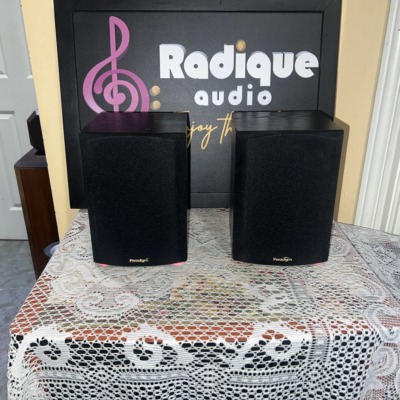
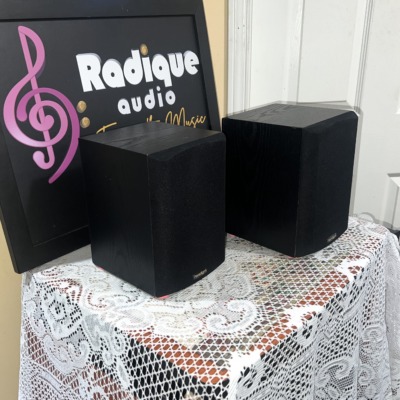
Paradigm Micro v.3 Bookshelf Speakers, Pair – Black Ash
A pair of Paradigm Micro v.3 speakers, the smallest of Paradigm's Canadian-designed Performance Series, with rubber woofer surrounds that will never need refoaming.
✔️ Tested on our bench
✔️ Fair condition, priced to match
✔️ Covered by Radique Warranty
✔️ Includes Perpetual Trade-Back Program eligibility
✔️ Expertly packed for safe shipping
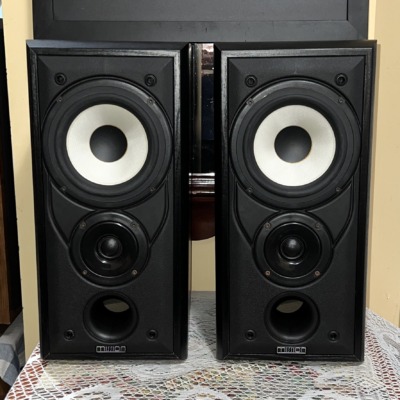
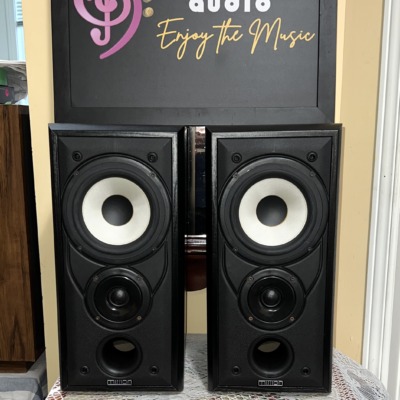
Mission 701 Bookshelf Speakers, Pair – British Design, Black Ash
A pair of Mission 701 two-way bookshelf speakers in black ash, with Mission's inverted driver layout and their grilles. One of our favourites in this size.
✔️ Tested on our bench, woofer and tweeter in each
✔️ Very good, grilles included
✔️ 89 dB, 8 ohms: easy for any receiver
✔️ Covered by Radique Warranty
✔️ Includes Perpetual Trade-Back Program eligibility
✔️ Expertly packed for safe shipping
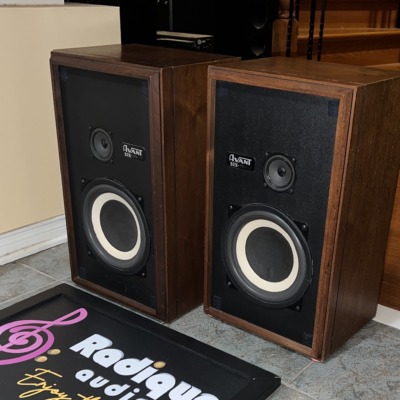
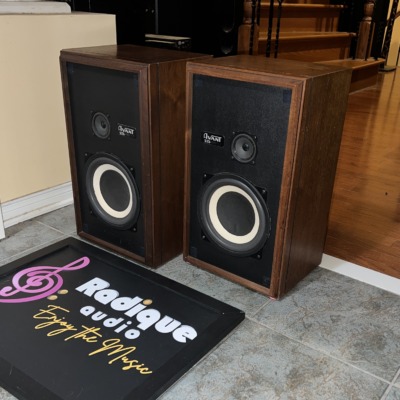
Avant 1AX Bookshelf Speakers, Pair – Canadian, Real Wood Veneer
A matched pair of Avant 1AX bookshelf speakers: Canadian-built, dressed in real wood veneer, with freshly refoamed woofers and sequential serial numbers.
✔️ Good condition — the real wood veneer is sound, with light scuffs on the tops
✔️ Woofers refoamed on our bench with new surrounds
✔️ Made in Canada — a sequential-serial matched pair
✔️ Covered by Radique Warranty
✔️ Includes Perpetual Trade-Back Program eligibility
✔️ Expertly packed for safe shipping
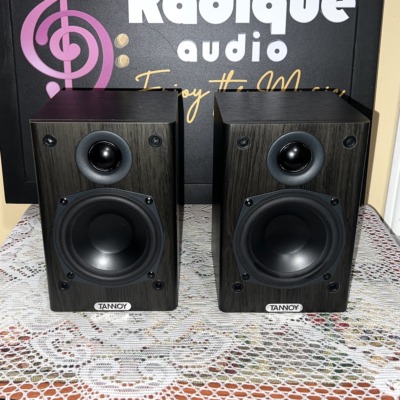
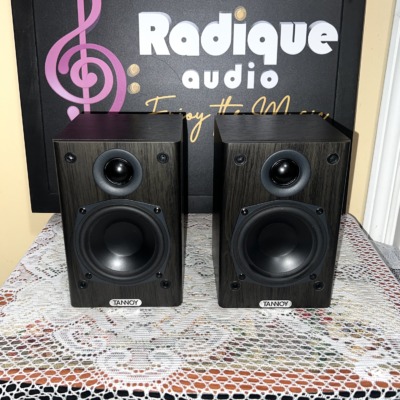
Tannoy Mercury FR Custom Compact Speakers – Dark Oak, Pair
A pair of compact two-way Tannoy speakers from the limited Custom edition of Tannoy's Mercury F-series, in very good condition, with a wall bracket built into the back of each cabinet.
✔️ Very good condition — free of significant marks; both grilles included
✔️ The limited Custom edition of Tannoy's Mercury F-series, in Dark Oak
✔️ Built-in wall bracket — hang them, or stand them on a shelf
✔️ Covered by Radique Warranty
✔️ Includes Perpetual Trade-Back Program eligibility
✔️ Expertly packed for safe shipping
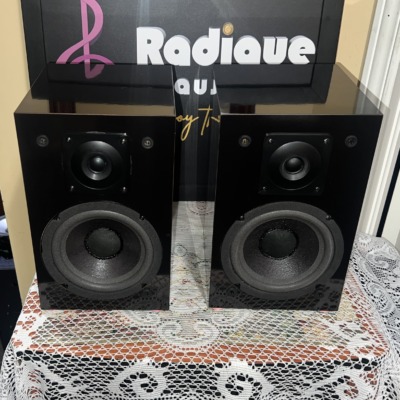
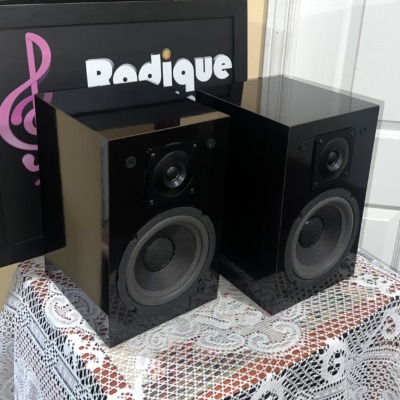
NHT Model 1C Bookshelf Speakers, Pair – Gloss Black, Re-Foamed
A pair of NHT Model 1C bookshelf speakers in gloss black, dated 1992, in very good condition and freshly re-foamed by us.
✔️ Very good condition — free of significant marks; grilles included
✔️ Freshly re-foamed by us — new woofer surrounds
✔️ Sealed and magnetically shielded — made in the USA in 1992
✔️ Covered by Radique Warranty
✔️ Includes Perpetual Trade-Back Program eligibility
✔️ Expertly packed for safe shipping
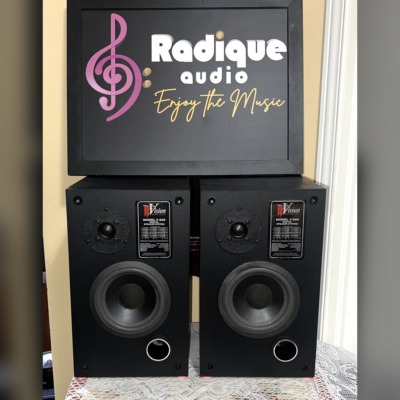
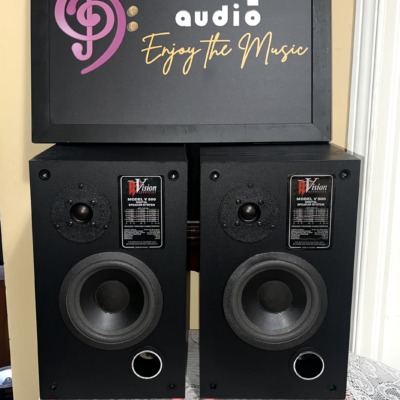
Vision Acoustics V500 Bookshelf Speakers, Pair – Made in Canada
A pair of solidly built, Canadian-made Vision Acoustics V 500 bookshelf speakers in black ash, rated at a sensitive 92 dB, fully tested on our bench and in very good condition.
✔️ Very good condition — free of significant marks, in black ash
✔️ Efficient 92 dB design, easy for a modest receiver to drive
✔️ Made in Canada, with 5-way binding posts
✔️ Covered by Radique Warranty
✔️ Includes Perpetual Trade-Back Program eligibility
✔️ Expertly packed for safe shipping
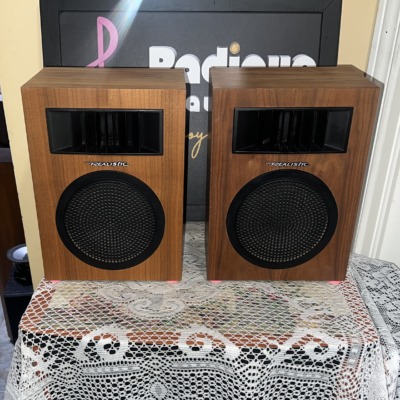
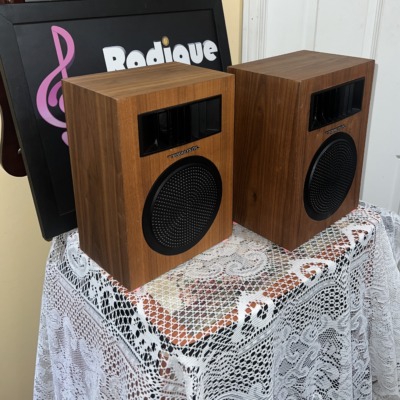
Realistic Minimus-5 Speakers, Pair – Vintage, Real Wood Veneer
A vintage pair of Realistic Minimus-5 two-way bookshelf speakers from Radio Shack, in a warm brown real wood veneer, with horn tweeters, fully tested on our bench and in very good condition.
✔️ Very good condition — free of significant marks
✔️ Real wood veneer, with rigid grilles over the woofers
✔️ Two ways in: small binding posts and an RCA-type speaker-level jack
✔️ Covered by Radique Warranty
✔️ Includes Perpetual Trade-Back Program eligibility
✔️ Expertly packed for safe shipping
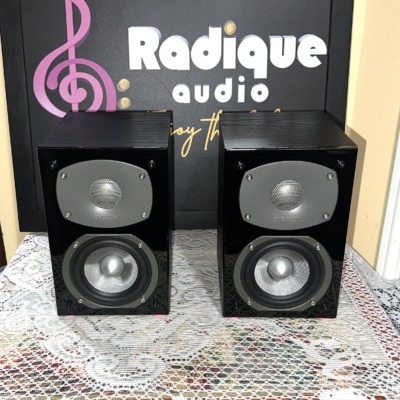
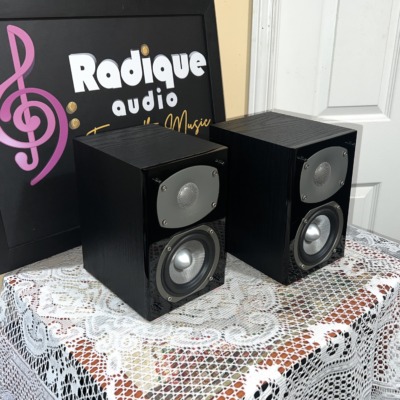
Energy C-50 Bookshelf Speakers, Pair – Ultra-Compact, Black Ash
A pair of ultra-compact Energy C-50 bookshelf speakers, designed and engineered in Canada, in black ash with gloss black front baffles and their black cloth grilles. They have been tested on our bench and are in very good condition.
✔️ Very good condition — black ash with gloss baffles, grilles included
✔️ 1-inch aluminum tweeter and 4½-inch woofer, video-shielded
✔️ Five-way binding posts — designed and engineered in Canada
✔️ Covered by Radique Warranty
✔️ Includes Perpetual Trade-Back Program eligibility
✔️ Expertly packed for safe shipping
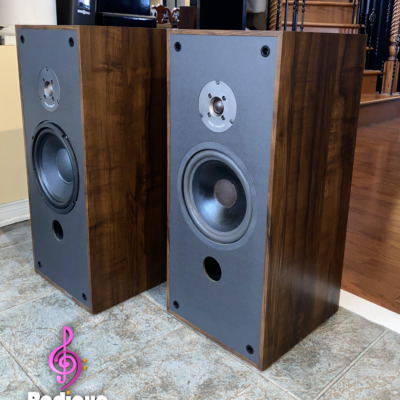
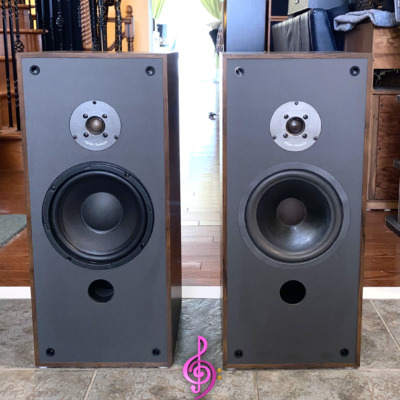
Paisley Reference Two Bookshelf Speakers, Pair – Made in Canada
A pair of Paisley Research Reference Two bookshelf speakers, made in Canada, in walnut-finish cabinets with black front baffles and their black cloth grilles. They have been tested on our bench, they play nicely, and they are in very good condition. One woofer is a replacement fitted by a previous owner, not by us; the details are under Condition.
✔️ Very good condition — walnut-finish cabinets, grilles included
✔️ Tested and playing nicely; one replacement woofer, disclosed below
✔️ 8-inch woofers, front-ported — made in Canada
✔️ Covered by Radique Warranty
✔️ Includes Perpetual Trade-Back Program eligibility
✔️ Expertly packed for safe shipping
