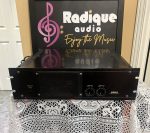

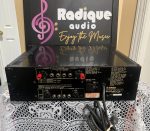
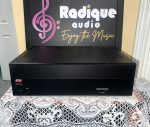
Yamaha P2250 Vintage Power Amplifier – 170 WPC, Japan
$445.00
Out of stock
This one has sold. Want first dibs on the next one?
We take these in regularly. Leave your name and email, and we’ll email you the moment one is listed, so you hear first. No cost, no obligation.
Email me when one is listed
Give your next receiver Bluetooth. RA-Twin II, $39.00 →
Other power amps we have in stock now
3 in stock · $395.00–$495.00 · all ship
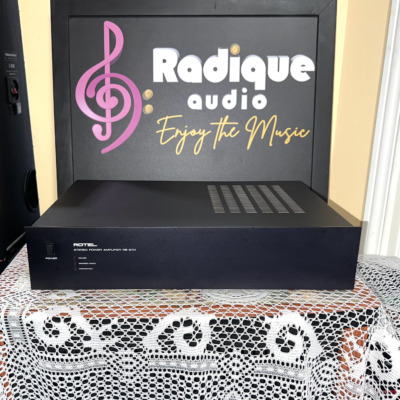 Rotel RB-870 Stereo Power Amplifier – 60 WPC, Bridgeable$395.00Ships
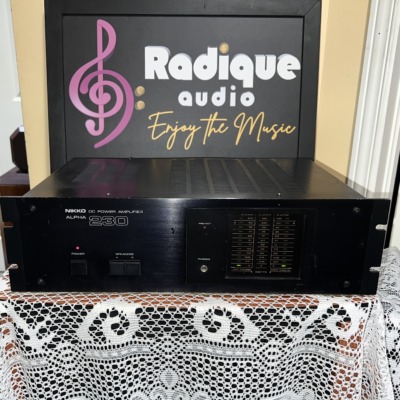 Nikko Alpha 230 Vintage Power Amplifier – 120 WPC$495.00Ships
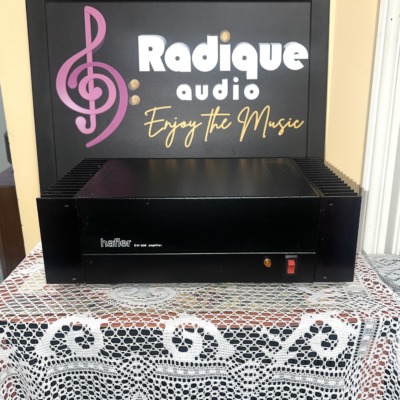 Hafler DH-200 Vintage Power Amplifier – 100 WPC, MOSFET, USA$495.00Ships
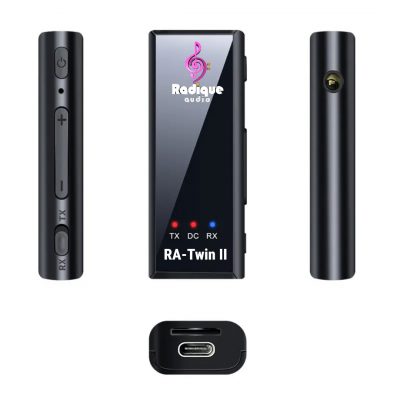
Give your next receiver Bluetooth.
The RA-Twin II adds Bluetooth streaming to any vintage receiver or amp with a spare input. Phone to stereo in about a minute, and nothing on the receiver is modified.
RA-Twin II, $39.00 →Yamaha P2250 Professional Stereo Power Amplifier 170WPC Japan
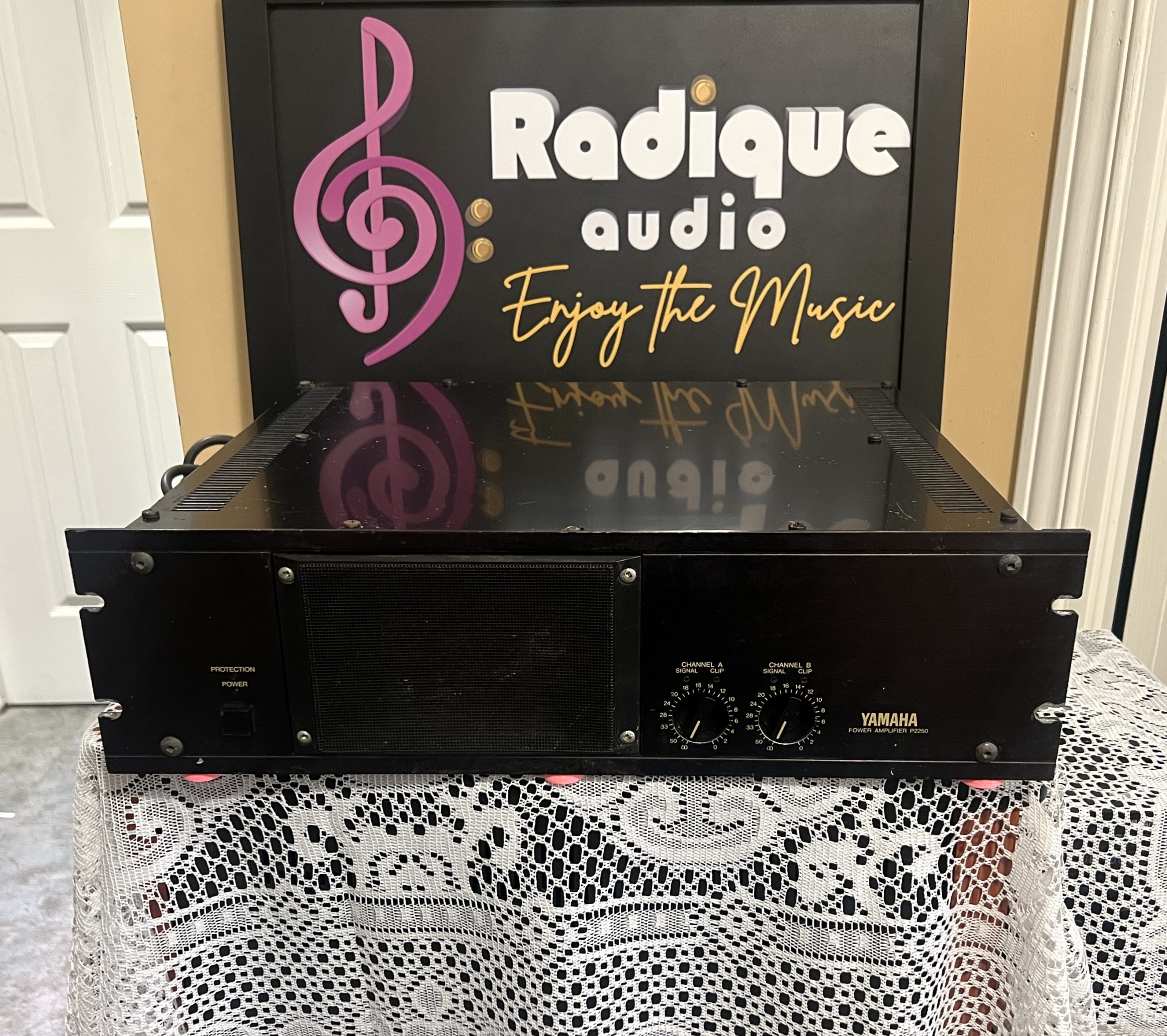
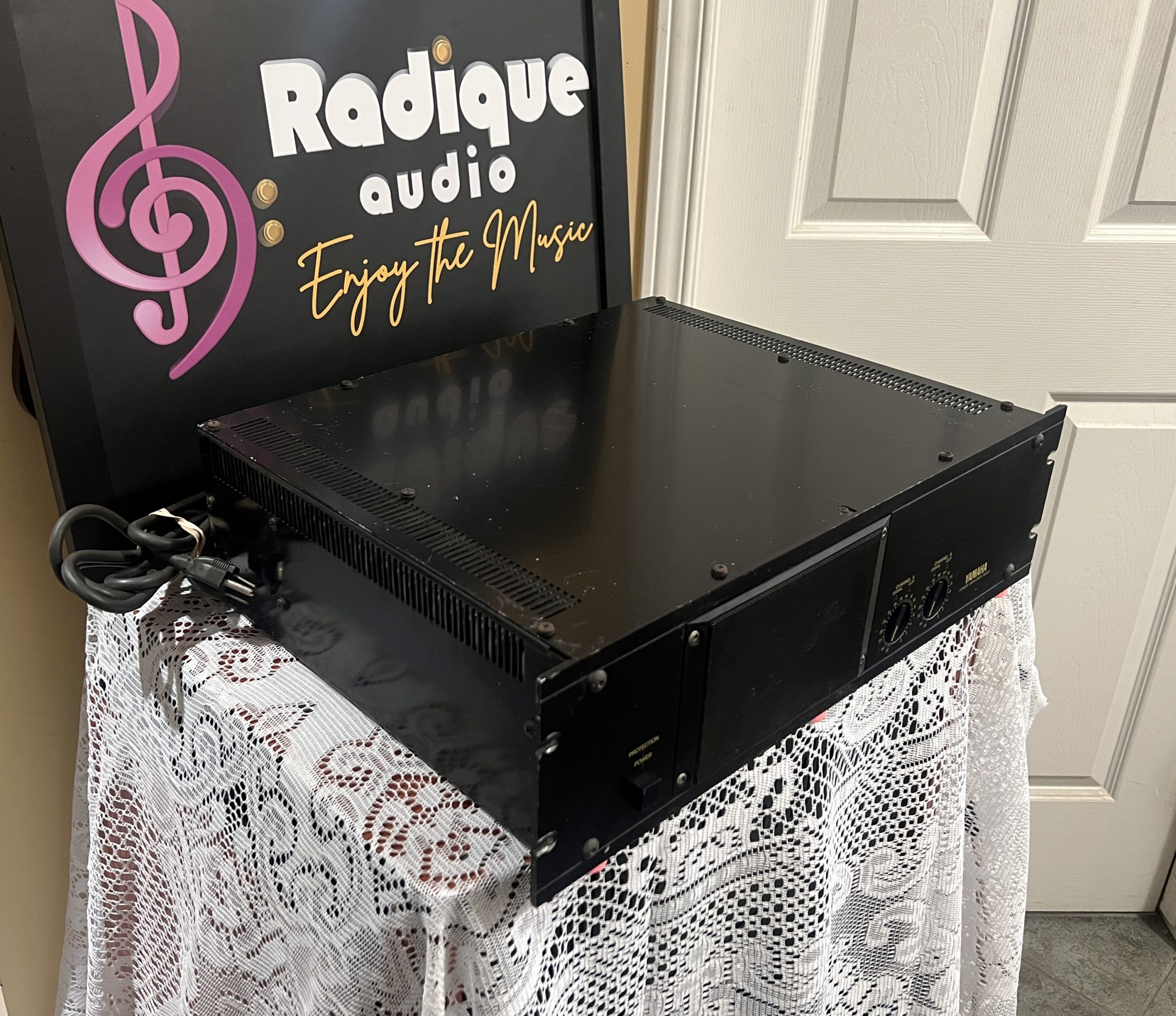
Professional-grade Yamaha power delivering 170 watts per channel — or a formidable 500 watts bridged mono — at a fraction of the cost of audiophile equivalents, made in Japan, level one serviced, in fair cosmetic condition and working superbly.
The Yamaha P2250 is one of the best-kept secrets in vintage amplification. Built for continuous professional duty rather than the consumer market, it delivers specifications that rival or surpass amplifiers costing many times the price: 0.007% THD, a 115 dB signal-to-noise ratio, and a damping factor of 110 place it firmly in the same technical league as high-end audiophile amplifiers from the likes of Mark Levinson or Krell — at a fraction of the asking price. Designed for commercial installation and live sound reinforcement, the P2250 was built to handle continuous duty in demanding environments, with a robust power supply, substantial heatsinking, and quality output devices that manage reactive, difficult speaker loads with composure that many consumer amplifiers simply cannot match. For the pragmatic, informed buyer who prioritises power, low distortion, and reliability, this is a genuinely outstanding amplifier at any price — and at this price, it is exceptional value.
Yamaha’s pro audio division has long been respected for engineering rigour, and the P2250 reflects that fully. The bridged mono mode producing 500 watts into 8 ohms makes it equally capable as a dedicated subwoofer amplifier or high-headroom bass channel, while the stereo 170 WPC mode drives even inefficient or low-impedance speakers with authority and control. We have had consistently strong results with this series and with pro-audio power amplifiers in general — customers regularly tell us they are surprised by how refined and musical a well-built professional amplifier sounds in a home listening context once it is properly set up.
This example has undergone our Level One service and testing which should ensure many more years of reliable performance ahead. The unit is in fair cosmetic condition — showing honest wear consistent with its professional history — but electrically and sonically it is performing exactly as it should.
Key Specifications:
Type: Professional stereo power amplifier
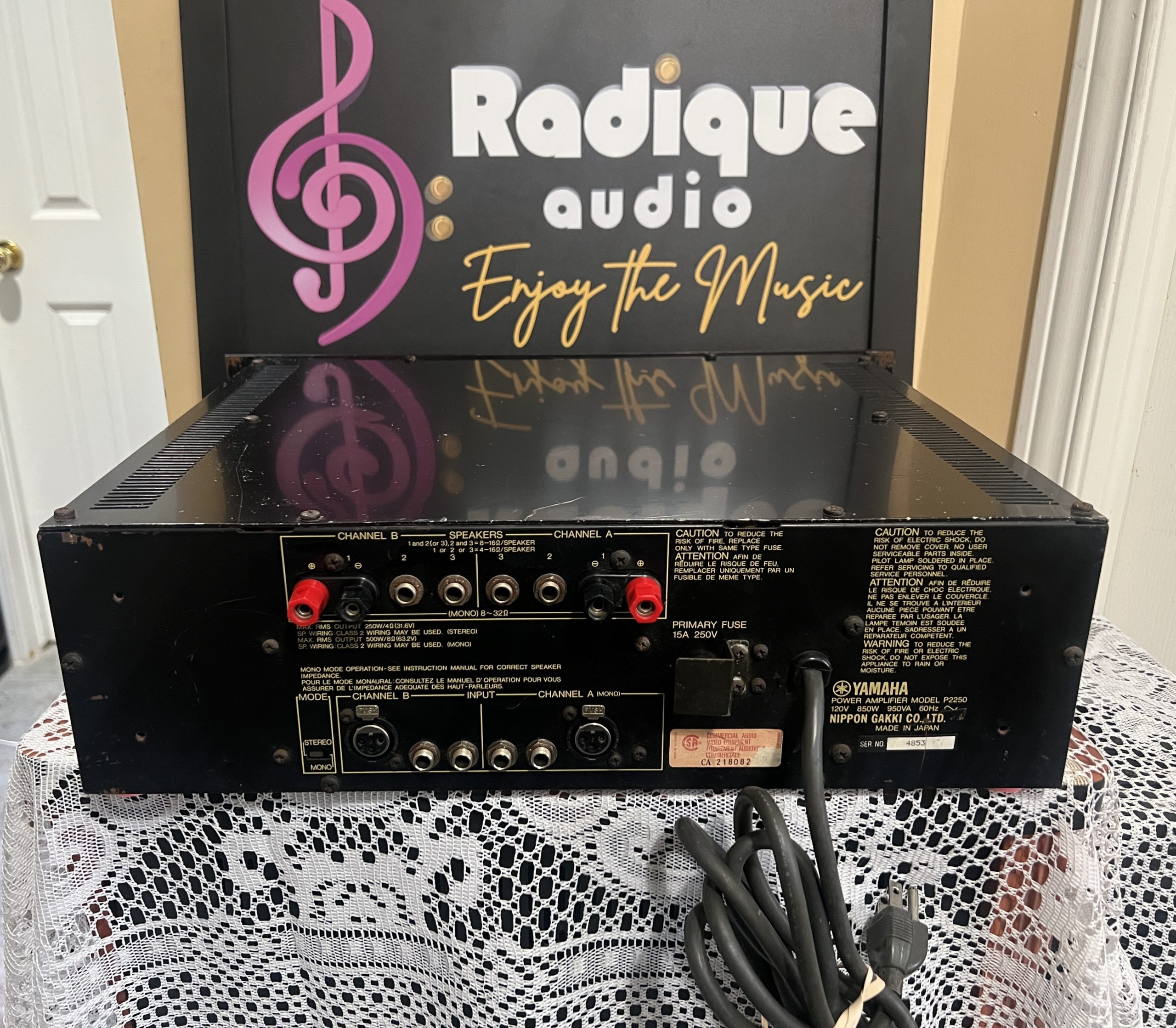
Power output: 170 watts per channel into 8 ohms (stereo, both channels driven)
Power output (bridged mono): 500 watts into 8 ohms
Total harmonic distortion: 0.007%
Frequency response: 10 Hz – 50 kHz (+0, -1 dB at 1W)
Signal-to-noise ratio: 115 dB
Damping factor: 110
Channel separation: >70 dB
Input sensitivity: 1.23V
Gain: 28.3 dB
Speaker load impedance: 4 ohms minimum (stereo); 8 ohms minimum (bridged mono)
Year of manufacture: 1985
Country of manufacture: Japan
Condition: Fair cosmetic condition, Level One serviced, fully tested and working
Dimensions: (Width x Height x Depth) 480 x 132 x 423 mm (18.9 x 5.2 x 16.7 inches)
Weight: 19 kg (41.9 lbs)
Made in Japan, this Yamaha P2250 offers professional-grade power, vanishingly low distortion, and a build quality engineered for decades of continuous duty — all at a price that makes it one of the most compelling value propositions in high-power amplification, regardless of budget.
Backed by Radique Audio’s 90-day warranty and our perpetual trade-back policy, you can purchase with confidence; asking $445.
| Weight | 45 lbs |
|---|---|
| Dimensions | 20.7 × 22.9 × 9.2 in |
Yamaha began as an organ maker in Hamamatsu, Japan, in 1887. It made gramophones from the 1920s and began hi-fi with the 1954 HiFi Player. We carry Yamaha AV receivers, vintage stereo receivers, CD players, subwoofers and speakers. We've had more than 280 Yamaha listings so far, covering nearly 200 different models. Every used Yamaha here is inspected, tested and serviced as required, then photographed in-house and covered by our Bumper-to-Bumper Warranty and Perpetual Trade-Back Program. Every AV receiver we list is tested input by input on our bench: each HDMI input and output, the analog, optical and coaxial inputs, the subwoofer outputs and the wireless features where it has them. Don't see the model you want? Tell us on First Dibs and we'll email you when one arrives.
Yamaha models we've sold most often: the SW-3 subwoofer, the NX-E270 surrounds, and the RX-V1400, RX-V850 and RX-V800 AV receivers.
The Yamaha hi-fi story
Torakusu Yamaha built his first reed organ in Hamamatsu in 1887 and founded Nippon Gakki in 1897; the company was renamed Yamaha Corporation in 1987. Yamaha calls the 1954 HiFi Player its first audio product, and dates its first Natural Sound (NS) speakers to 1967.
1970s hi-fi. The CA-700 and CA-500 of 1972 were Yamaha's first integrated amplifiers, and the CA-1000 of 1973 could switch its output stage between Class A and Class A/B. The NS-1000 and NS-1000M speakers of 1974 used beryllium dome drivers, and the NS-10M of 1978, sold for home use, became a studio monitor.
CD and surround. The CD-1 of 1982 was Yamaha's first CD player. The DSP-1 of 1986 was a Digital Sound Field Processor, and in 1993 the RX-V870 became the first Yamaha receiver with CINEMA DSP. The RX-V992 of 1997 added built-in Dolby Digital decoding.
AVENTAGE. The AVENTAGE (RX-A) receiver line launched in 2010, above the RX-V range.
Which Yamaha is which?
CA integrated amplifiers (1972 to about 1979): the CA-500, CA-700, CA-1000 and CA-2000, followed by the A-series.
CR receivers (mid-1970s to about 1980): the CR-1000, then the CR-620 to CR-2020 generation of 1977 to 1979.
NS speakers: from the NS-690 and the beryllium NS-1000 to the NS-10M bookshelf speaker, made from 1978 to 2001.
CD players: from the CD-1 of 1982 to the CDX and GT-CD models.
RX-V AV receivers (from at least 1991): such as the RX-V800, RX-V850 and RX-V1400 we sell often. Built-in Dolby Digital arrived in 1997, YPAO room calibration in 2003 and HDMI in the mid-2000s.
RX-A AVENTAGE (from 2010): the step-up AV receivers. The RX-Z models were the flagships until 2007.
Buying used Yamaha: what to check
Formats. On an AV receiver, check what it decodes and connects to: Dolby Digital from 1997, room calibration from 2003, HDMI from the mid-2000s.
HDMI boards. On modern AV receivers, HDMI is usually the first thing to fail. We test every HDMI input and output before listing.
CR receivers. Owners suggest asking whether service bulletins were done on a CR-2020, and expect scratchy controls and burnt-out dial lamps on any unserviced unit.
NS speakers. Check that the tweeters on an NS-10M are original and both work, and inspect the beryllium domes on an NS-1000, since Yamaha stopped making beryllium diaphragms in 1997.
Everything we list is inspected, tested and serviced as required here, and comes with our warranty.
You may also like…
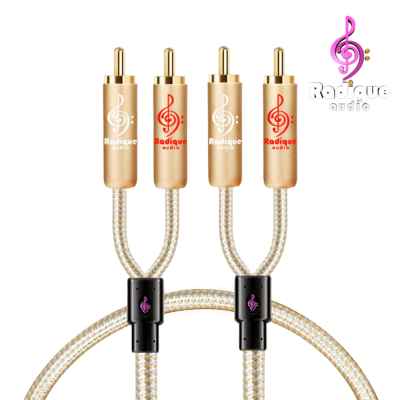
Radique Audio Gold Series RCA Stereo Interconnect Cable
RCA cables that are kind to vintage jacks: dual RCA to dual RCA, in 0.2, 0.75 or 1.5 m.
- Slim gold-plated plugs with vintage-safe grip pressure
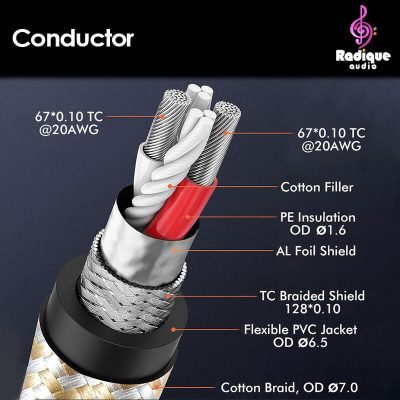
- Dual shielding: aluminum foil and 128-strand braided copper
- Reinforced splitters; 7 mm gold cotton and nylon mesh jacket
- Three lengths, chosen above the Add to Cart button
- 1-year warranty
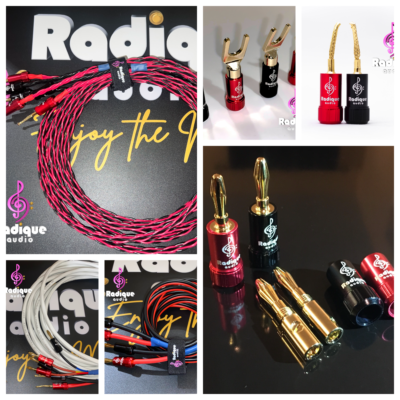
Custom Speaker Cable Builder
Your specs, your cable: choose the cable, the length and each connector, with live pricing.
- House CCA, House OFC, House Quad, Kimber 4PR or Kimber 4TC
- Banana, spade, pin, small spade or bare wire, chosen for each end
- Bi-wire on Kimber 4PR, Kimber 4TC and House Quad
- Hand-assembled, heat-shrink reinforced and colour-coordinated
- 1-year warranty
Related Products
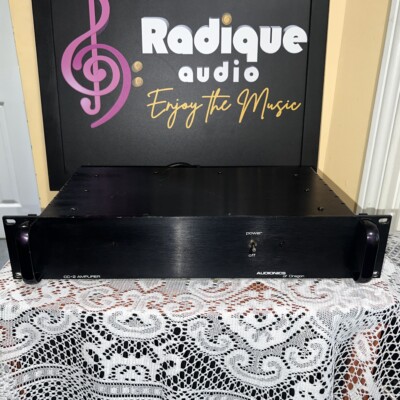
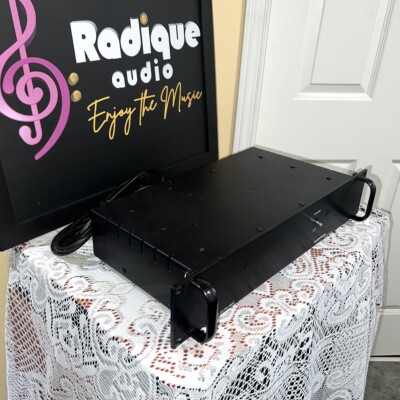
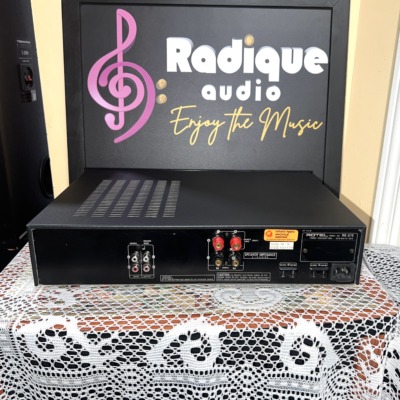
Rotel RB-870 Stereo Power Amplifier – 60 WPC, Bridgeable
Sixty watts a channel into 8 ohms at 0.03% distortion, a damping factor of 280, and response running out to 120kHz. A rear-panel switch bridges the two channels into a single 120-watt mono amplifier, so a second one later gives you monoblocks. The speaker terminals clamp bare wire or spades only — no bananas. Very good condition, inspected and tested.
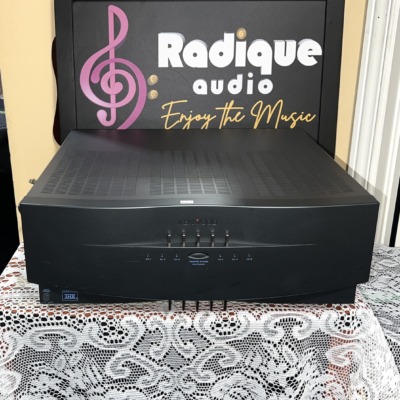
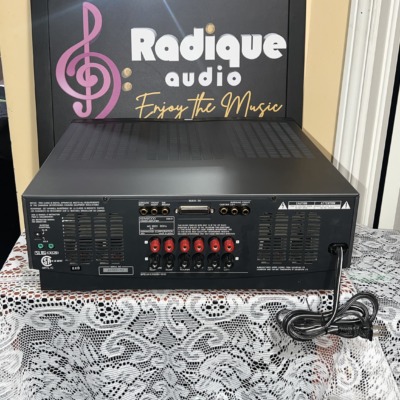
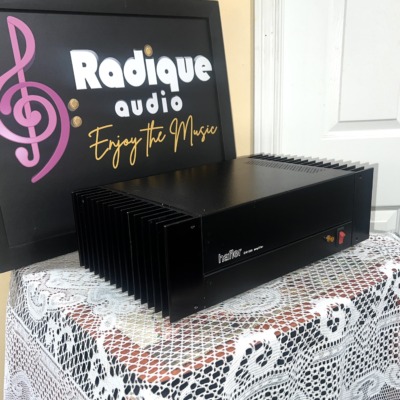
Hafler DH-200 Vintage Power Amplifier – 100 WPC, MOSFET, USA
David Hafler's second act, and the amplifier that put MOSFETs into American hi-fi.
✔️ Condition: Very Good
✔️ Covered by Radique Warranty
✔️ Includes Perpetual Trade-Back Program eligibility
✔️ Expertly packed for safe shipping
