
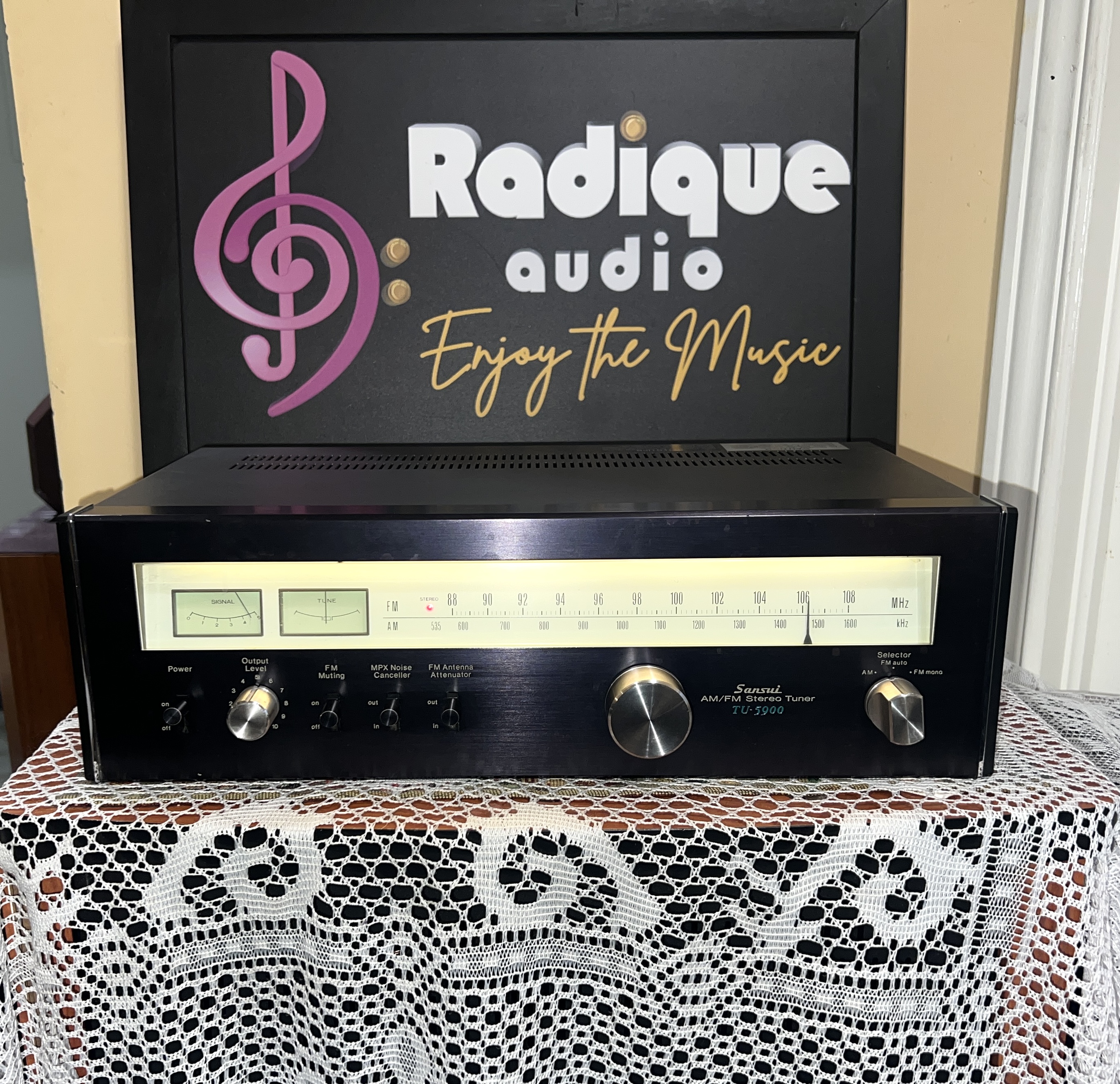
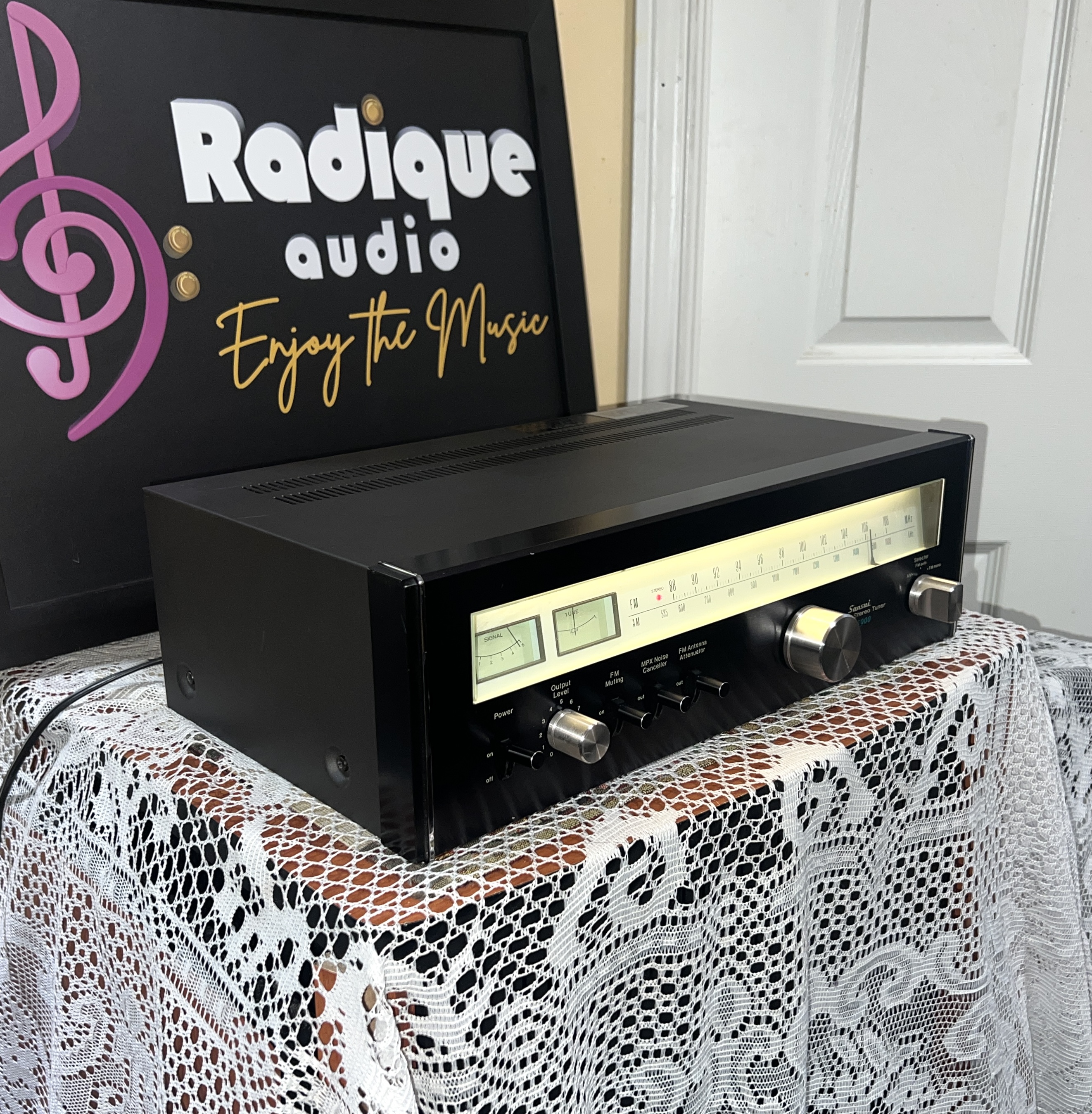
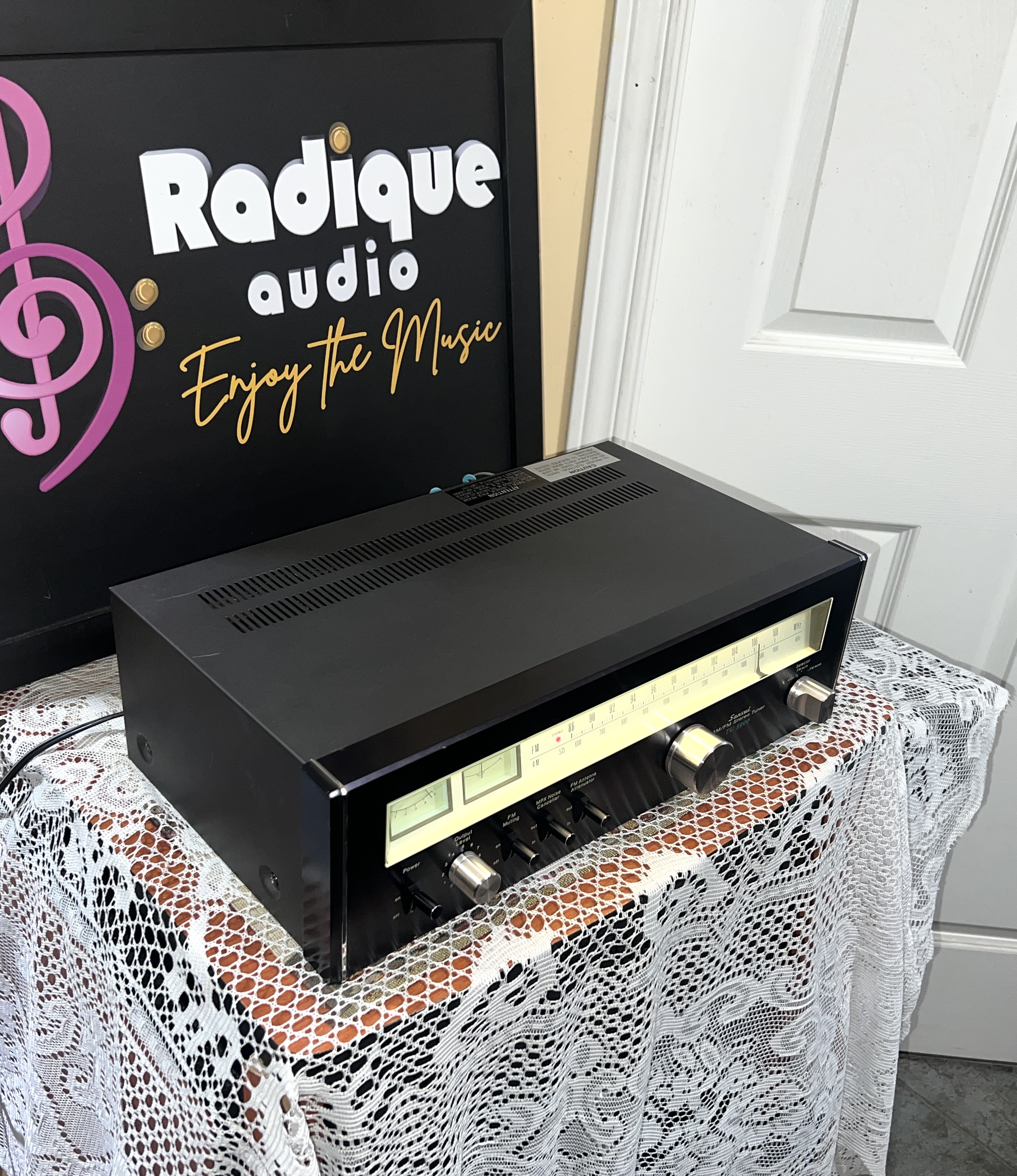
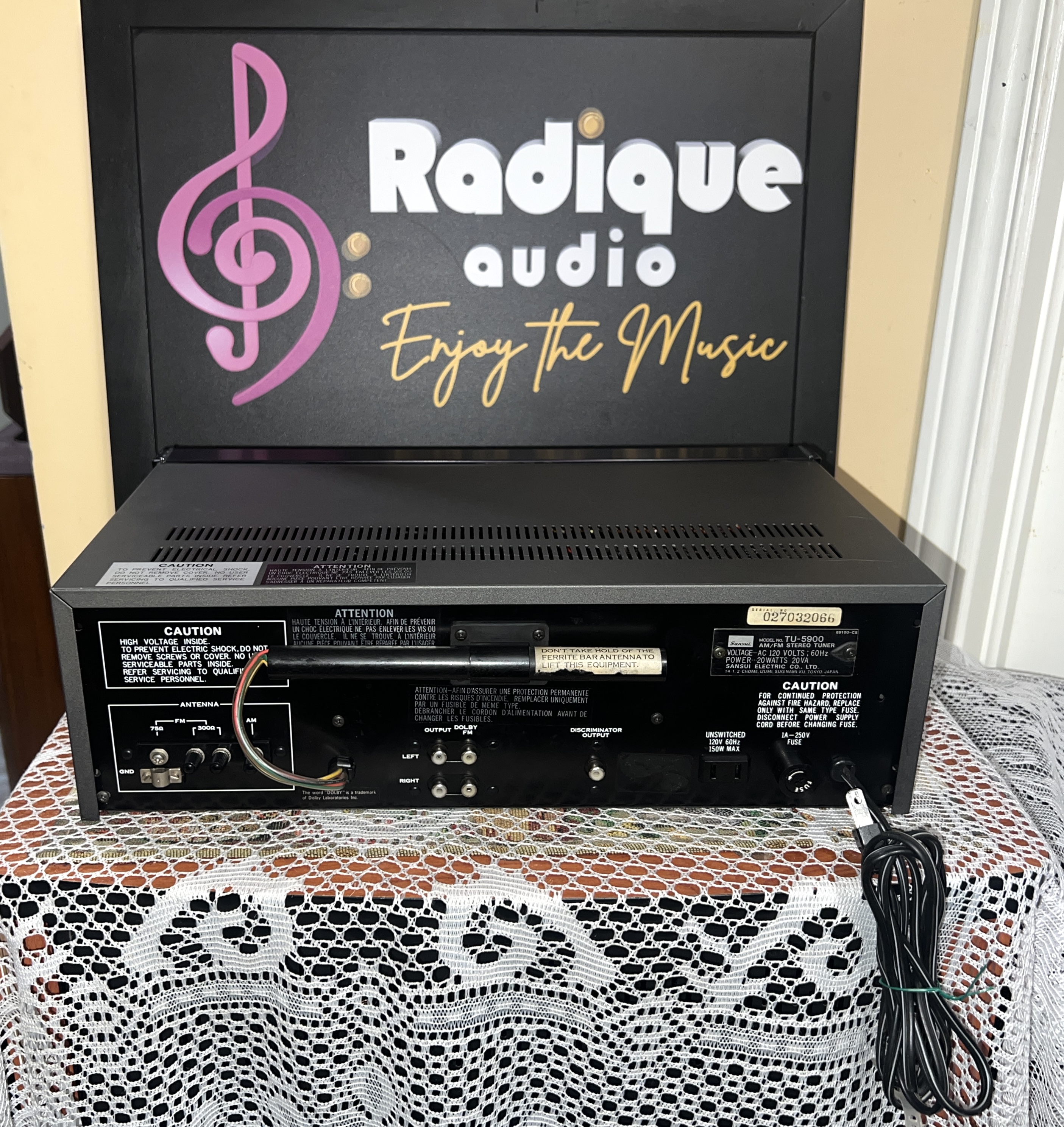
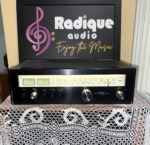
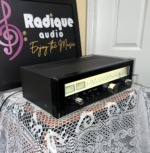
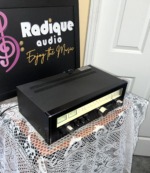
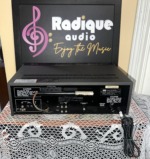
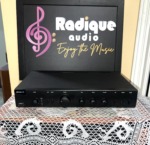
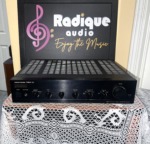
Sansui TU-5900 AM/FM Stereo Tuner — Dolby FM, Made in Japan
$395.00
Consignment piece. We sell it on behalf of its owner, and it's covered exactly like everything else we sell: inspected and serviced as required, and backed by our Bumper-to-Bumper Warranty and Perpetual Trade-Back Program. The one difference: it isn't eligible for Cue It Up layaway.
An analogue AM/FM stereo tuner from Sansui's strongest years, built in Japan in the mid-seventies as the matching partner to the AU-series integrated amplifiers, and a good deal more serious inside than its modest size suggests.
✔️ Condition: Very Good
✔️ Level One — named in the copy
✔️ Covered by Radique Warranty
✔️ Includes Perpetual Trade-Back Program eligibility
✔️ Expertly packed for safe shipping
1 in stock
An analogue AM/FM stereo tuner from Sansui’s strongest years, built in Japan in the mid-seventies as the matching partner to the AU-series integrated amplifiers, and a good deal more serious inside than its modest size suggests.
Sansui built the TU-5900 to sit beside an AU amplifier rather than beneath a lesser one, and the front end reflects that. A low-noise dual-gate MOS FET leads into a precision three-gang frequency-linear tuning capacitor, with ceramic filters handling selectivity and a phase-locked-loop integrated circuit doing the stereo demodulation. PLL demodulation was the good way to do it and not yet the common way — it locks the stereo subcarrier rather than chasing it, which is why a well-kept tuner of this generation still separates channels cleanly on a weak signal where cheaper contemporaries collapse toward mono.
Selectivity is rated at 60 decibels, which is the specification that decides whether a tuner is useful in a crowded band. Ottawa, Gatineau and the border stations put a great deal of signal into the same stretch of dial, and a tuner that cannot reject the neighbour two notches over will never quite settle. This one will.
Two features raise it above the ordinary. There is a Dolby FM output, for the broadcast noise-reduction standard a number of stations ran in the seventies — and in practice a useful extra output that feeds a Dolby-equipped tape deck directly, whether or not anyone is still broadcasting the encoding. And there is an antenna attenuation switch, which matters more than it sounds: if you live close to a transmitter, a strong local signal can overload a sensitive front end and spray images across the dial. The attenuator pulls the input down and puts the band back in order. Most tuners at this price simply did not offer the option.
The AM section is properly implemented rather than an afterthought, with its own two-gang tuning section covering the full broadcast band.
Condition is Very Good and it has been through our Level One service: cleaned inside and out, all controls and switches deoxidised for smooth silent operation, illumination checked and replaced where needed, and full bench testing across both bands. It tunes, locks and holds exactly as it should, and it presents well on a shelf.
A few relevant specifications:
A properly engineered analogue tuner from the era when Sansui was building to a standard rather than to a price, matched to the AU amplifiers and ready for another few decades of broadcast.
Available for pickup in Kanata, or shipped across Canada and internationally — we have sent equipment to fifteen countries in the past year, each piece packed in-house in 275 lb test double-wall boxes. Live shipping rates for your address are calculated at checkout. Backed by Radique Audio’s Bumper-to-Bumper Warranty and our Perpetual Trade-Back Program. Available for audition by appointment in Kanata.
Sansui TU-5900 AM/FM stereo tuner Specifications
- AM/FM stereo tuner, analogue dial
- Low-noise dual-gate MOS FET front end
- Three-gang frequency-linear tuning capacitor, FM; two-gang, AM
- Ceramic filter selectivity, 60 dB
- Phase-locked-loop stereo demodulator IC
- Dolby FM output
- Four-channel adaptor facility
- Antenna attenuation switch for high-signal areas
- FM tuning range 88 to 108 MHz
- AM tuning range 535 to 1605 kHz
- Frequency response 30 Hz to 15 kHz, FM
- Output level 775 mV
- Made in Japan, mid-1970s
- Dimensions: (Width x Height x Depth) 16.9 x 5.2 x 9.6 inches (430 x 132 x 243 mm)
- Weight: 14.1 lbs (6.4 kg)
🎚️ Gold Series RCA Interconnects
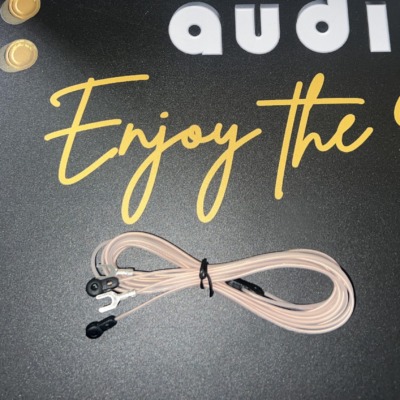
Our own Gold Series RCA Stereo Interconnect is a shielded, gold-plated stereo pair, in stock and ready to go. It is the cable that connects this to the rest of your system, and it is a straightforward upgrade on the free leads that come in the box with most equipment. 👉
✅ Good News for International Buyers
This unit is switchable between 120V and 220V, so it can be set to suit most markets worldwide. No step-down transformer is required — only an appropriate plug adapter.
✅ Buy With Confidence — The Radique Promise
Backed by Radique Audio’s Bumper-to-Bumper Warranty and our Perpetual Trade-Back Program. When you’re ready to move on, we’ll take it back. That’s the Radique difference.
📦 Watch how we protect your gear — our unboxing video.
📺 Curious about our business? Check out our YouTube channel for behind-the-scenes videos and more!
📞 Questions? Use the Ask a Question button above, or call us at 613-416-9995.
| Weight | 16.1 lbs |
|---|---|
| Dimensions | 13.6 × 20.9 × 9.2 in |
| Mains Voltage | Selectable / Universal Voltage |
Sansui was founded in Tokyo by Kosaku Kikuchi, who began making transformers in 1944 and incorporated Sansui Electric in 1947. We carry Sansui stereo receivers, integrated amplifiers, tuners, equalizers and cassette decks. We've had more than 40 Sansui listings so far. Every used Sansui here is inspected, tested and serviced as required, then photographed in-house and covered by our Bumper-to-Bumper Warranty and Perpetual Trade-Back Program. Don't see the model you want? Tell us on First Dibs and we'll email you when one arrives.
Sansui models we've sold more than once include the RG-700 and SE-1000 equalizers.
The Sansui story, 1947 to today
Kosaku Kikuchi started making transformers in Tokyo in 1944 and founded Sansui Electric in 1947. Amplifier kits and finished amplifiers followed from 1954, tube receivers from 1956, and the AU-111 tube integrated amplifier in 1965.
The golden age. Solid-state amplifiers such as the AU-555 arrived in the late 1960s. In the 1970s Sansui made QS four-channel receivers and big stereo receivers such as the 9090DB, and from 1978 DC amplifiers such as the AU-717 and AU-919 and the G-series receivers.
New owners. In 1989 Polly Peck of London took control of Sansui. In the 1990s a controlling interest passed to the Semi-Tech group of James Ting, a Canadian businessman whose electronics company was based in Markham, Ontario, and Grande Holdings of Hong Kong took over in 1999.
After the original company. Production wound down in the early 2000s, and Sansui filed for court rehabilitation in 2012 and went bankrupt in 2014. Products sold under the Sansui name since then are made by licensees in different countries, not by the original company.
Which Sansui is which?
Tube era (1950s to 1960s): kits and amplifiers such as the AU-111 of 1965.
1970s receivers: such as the 8080 and 9090DB, the 1976 "No. 1 Line" from the 221 to the 881, and the QRX four-channel receivers.
Integrated amplifiers: the AU-555 of the late 1960s, the AU-x07 and AU-x17 families from 1978 such as the AU-717, the AU-919, budget A-series models, and the AU-α907i of 1987.
G-series receivers (1978 to 1980): from the G-2000 to the G-33000, with quartz-locked digital tuning on the later G-x700 models.
Tuners and equalizers: such as the TU-9900 and T-510 tuners, the SE-9 and SE-1000 equalizers, and the RG-700 and RG-707.
Cassette decks: SC, D and D-X series decks.
Buying used Sansui: what to check
Fuse resistors. A technician who restored a 9090DB for Sound & Vision called replacing the fusible resistors on the driver board the number one job, and restorers find fuse resistors gone high in value on other models.
Capacitors and glue. TONE Audio says AU-717s will probably need most of their capacitors replaced, and that the glue used at the factory has become corrosive and should be removed. Ask for proof of any recap.
No relay click. If the protection relay doesn't click in, an output may have DC on it, which often means failed output transistors.
Controls and lamps. Scratchy volume and balance controls need cleaning, and dial lamps are often converted to LED.
Later products. Goods sold as Sansui since the early 2000s were made by licensees, so don't expect vintage Sansui engineering in them.
Everything we list is inspected, tested and serviced as required here, and comes with our warranty.
You may also like…
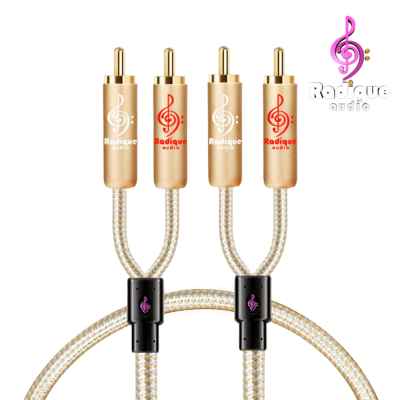
Radique Audio Gold Series RCA Stereo Interconnect Cable
RCA cables that are kind to vintage jacks: dual RCA to dual RCA, in 0.2, 0.75 or 1.5 m.
- Slim gold-plated plugs with vintage-safe grip pressure
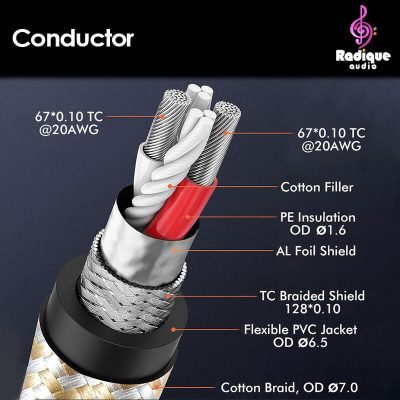
- Dual shielding: aluminum foil and 128-strand braided copper
- Reinforced splitters; 7 mm gold cotton and nylon mesh jacket
- Three lengths, chosen above the Add to Cart button
- 1-year warranty
Related Products
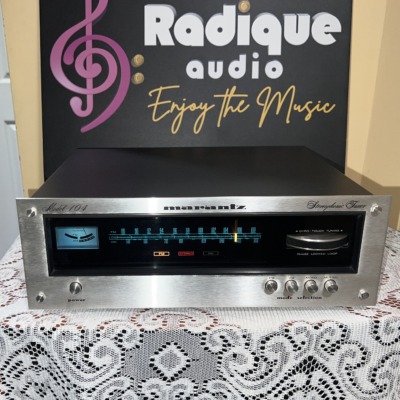

Marantz Model 104 AM/FM Tuner — Made in Japan, Excellent
We sold this tuner ourselves and it came back through our Perpetual Trade-Back Program — so we know what it was when it left, and it has been through our bench again since. A 1976 Model 104 in excellent cosmetic condition: silver face, blue dial lighting, made in Japan.
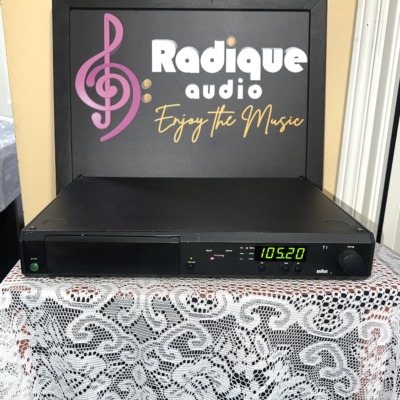
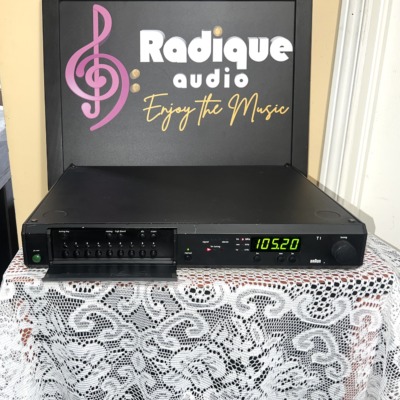
Braun Atelier T1 Slim AM/FM Tuner — 9 Presets, Quartz, Japan
An analogue tuner given a quartz-referenced five-digit readout — the precision of a synthesised design with a real analogue front end behind it, which tends to hold a weak signal more gracefully. The nine presets are not memories: each station button carries its own tuning adjustment, set by hand with a small screwdriver through the panel, so it is effectively nine little tuners in one chassis. Made in Japan, 445 mm wide and 70 mm tall to match the Atelier deck. Good condition.
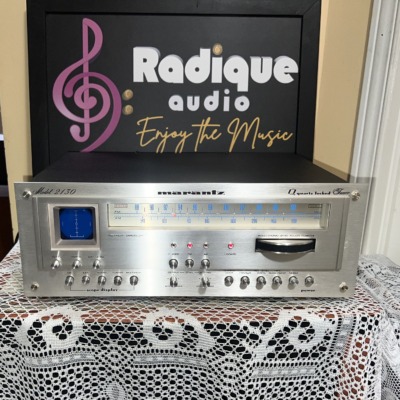
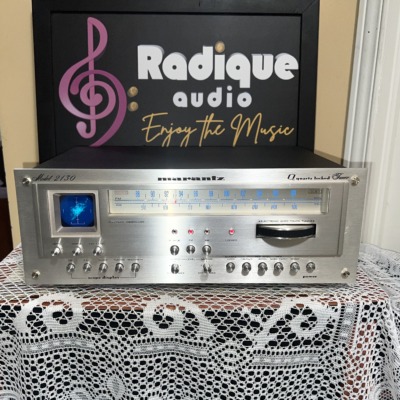
Marantz Model 2130 AM/FM Tuner – Oscilloscope, Original Box
Marantz's quartz-locked flagship tuner with its built-in oscilloscope, in excellent condition and complete with its original Marantz carton.
✔️ Excellent condition — the scope traces cleanly, and the original Marantz carton is included
✔️ Tested on our bench and needed no service
✔️ Built-in oscilloscope, quartz lock and wide/narrow IF — Marantz's flagship tuner of 1978
✔️ Covered by Radique Warranty
✔️ Includes Perpetual Trade-Back Program eligibility
✔️ Expertly packed for safe shipping
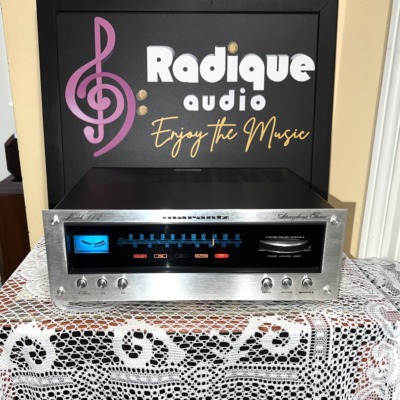
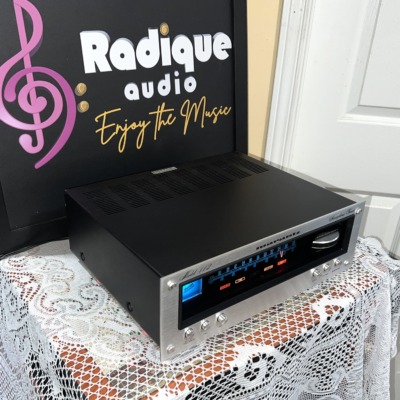
Marantz Model 112 Vintage AM/FM Stereo Tuner – Made in Japan
A mid-1970s Marantz Model 112 AM/FM stereo tuner, designed in the USA and made in Japan, serviced on our bench.
✔️ Serviced on our bench, dial lamps replaced
✔️ Very good condition
✔️ Gyro-Touch flywheel tuning, tuning meter, FM stereo in our bench test
✔️ Bare chassis, or in a cherry cabinet built by our master woodworker
✔️ Covered by Radique Warranty
✔️ Includes Perpetual Trade-Back Program eligibility
✔️ Expertly packed for safe shipping
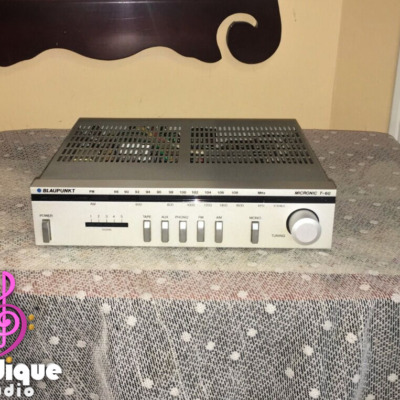
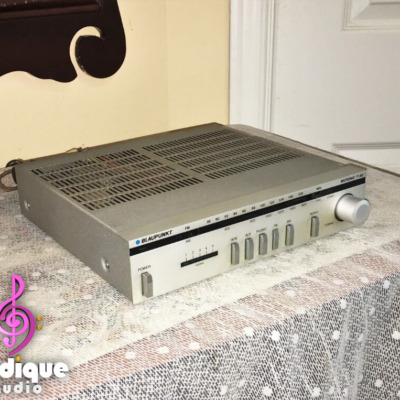
Blaupunkt Micronic T-60 AM/FM Tuner & Preamp – Made in Japan
A rare Blaupunkt Micronic T-60 AM/FM tuner and preamplifier from 1981, designed in Germany and made in Japan, with a phono input for your turntable.
✔️ Tested on our bench, every input, the output and the tuner
✔️ Very good condition
✔️ AM/FM tuner plus phono, aux and tape inputs
✔️ Covered by Radique Warranty
✔️ Includes Perpetual Trade-Back Program eligibility
✔️ Expertly packed for safe shipping
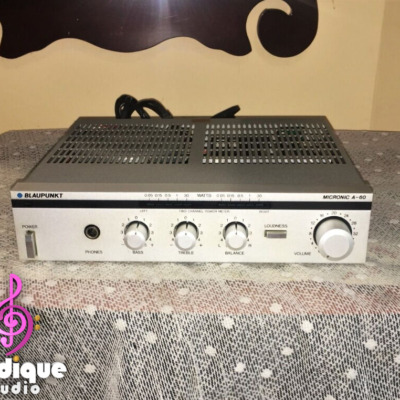
Blaupunkt Micronic A-60 + T-60 Micro System – 20 WPC, Bundle
The complete Blaupunkt Micronic 60 system from 1981, the A-60 amplifier and the matching T-60 AM/FM tuner and preamplifier, together for less than buying them separately.
✔️ Tested on our bench, both units
✔️ Both very good
✔️ Radio, phono, tape and a 20-watt amplifier in a stack 25 cm wide
✔️ Covered by Radique Warranty
✔️ Includes Perpetual Trade-Back Program eligibility
✔️ Expertly packed for safe shipping
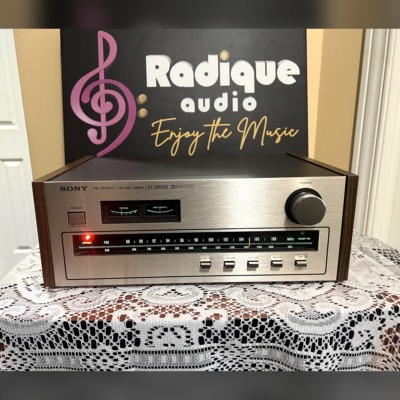
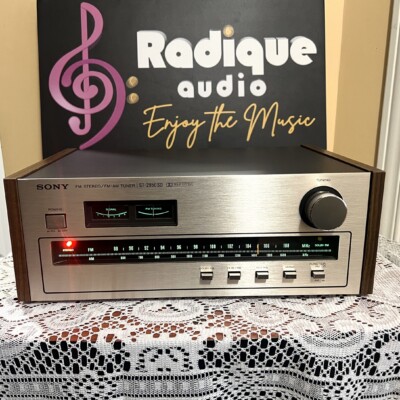
Sony ST-2950 SD AM/FM Stereo Tuner – Walnut Side Panels
Two microvolts IHF sensitivity and 73 dB signal-to-noise, with FM distortion at 0.5% mono and 0.7% stereo — enough front end to hold a weak station cleanly. Silver faceplate, illuminated dial, and the original faux walnut side panels. Made in Japan between 1976 and 1979. Tested and verified working; good cosmetic condition.
