
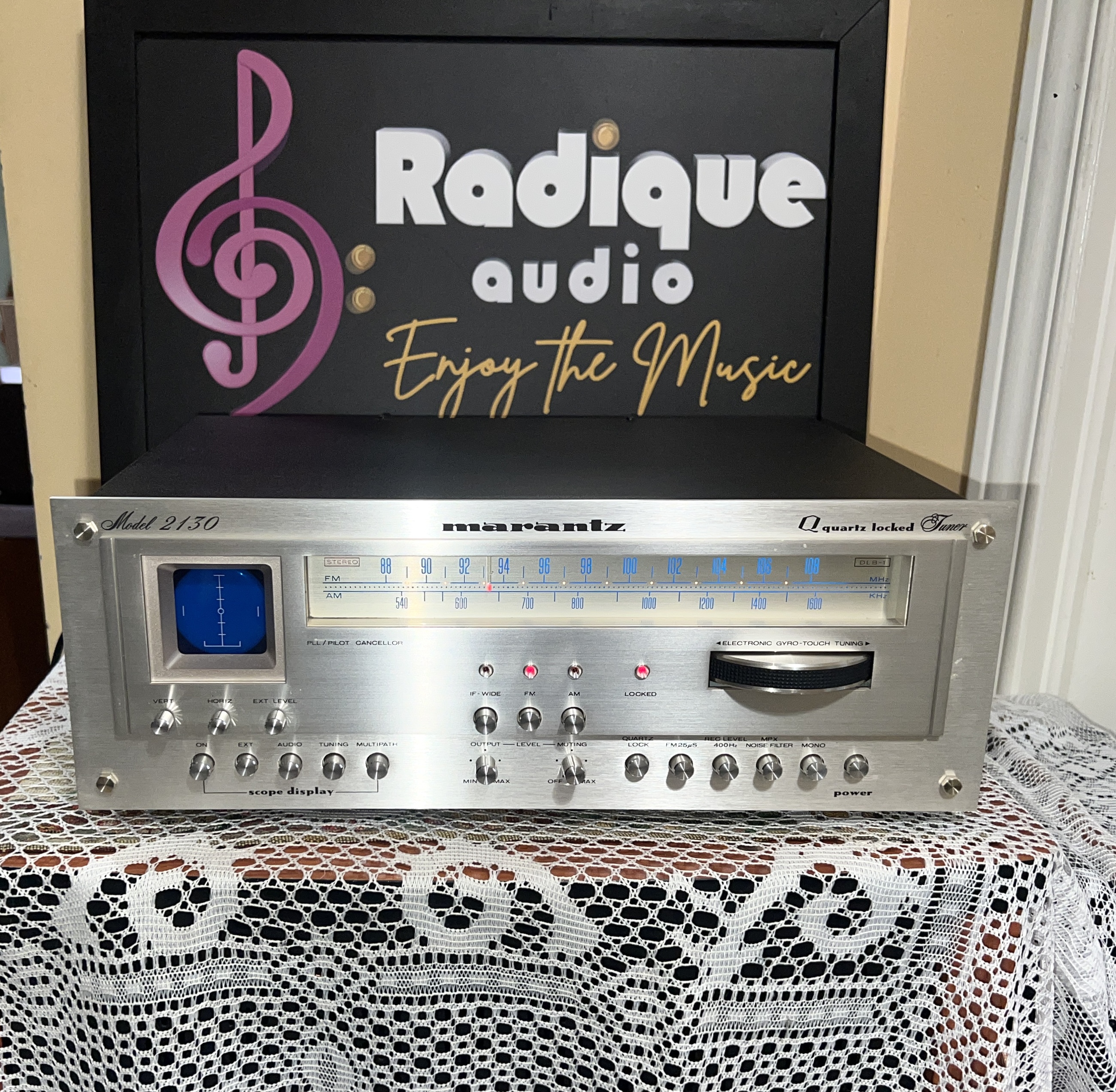
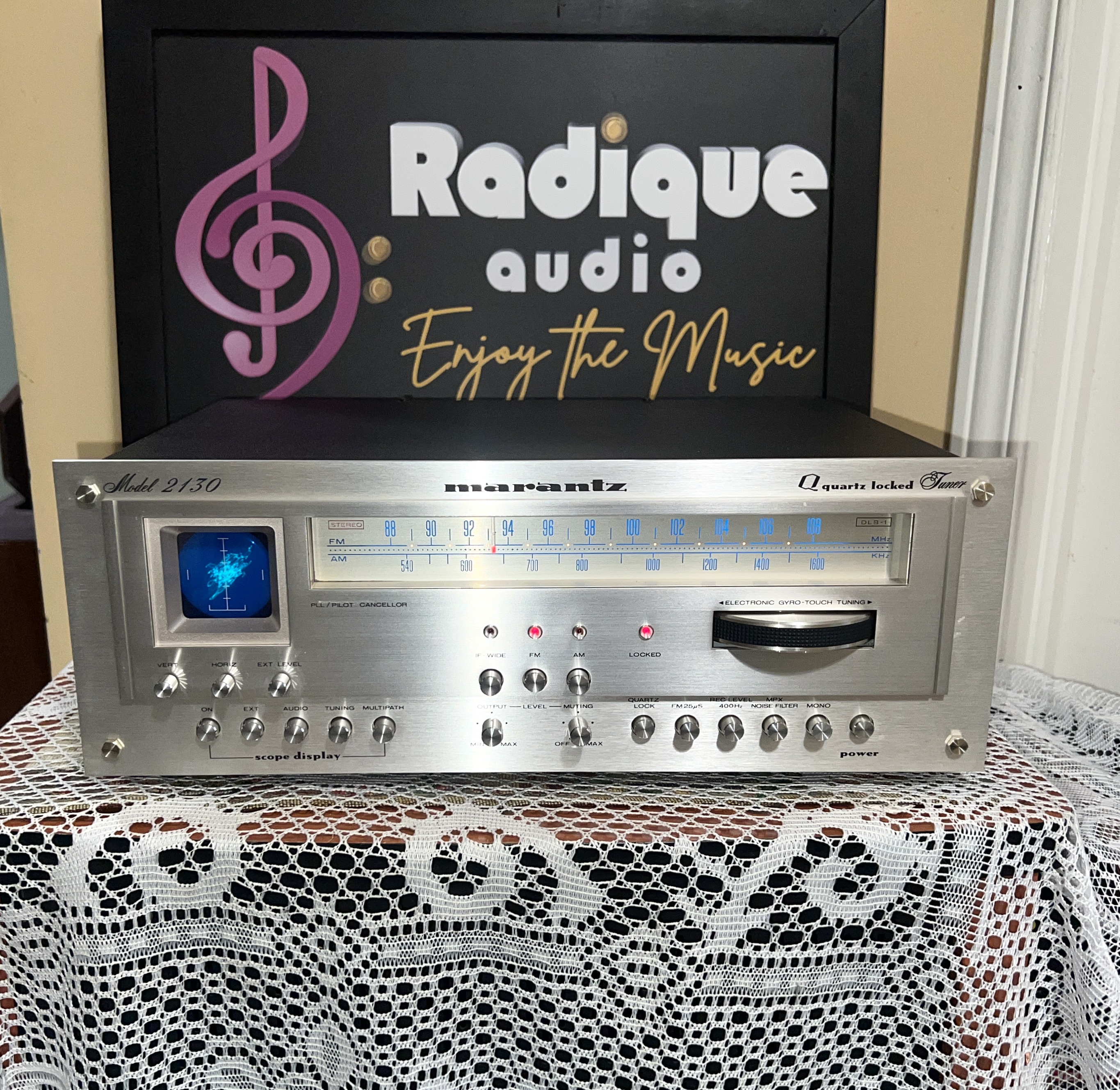
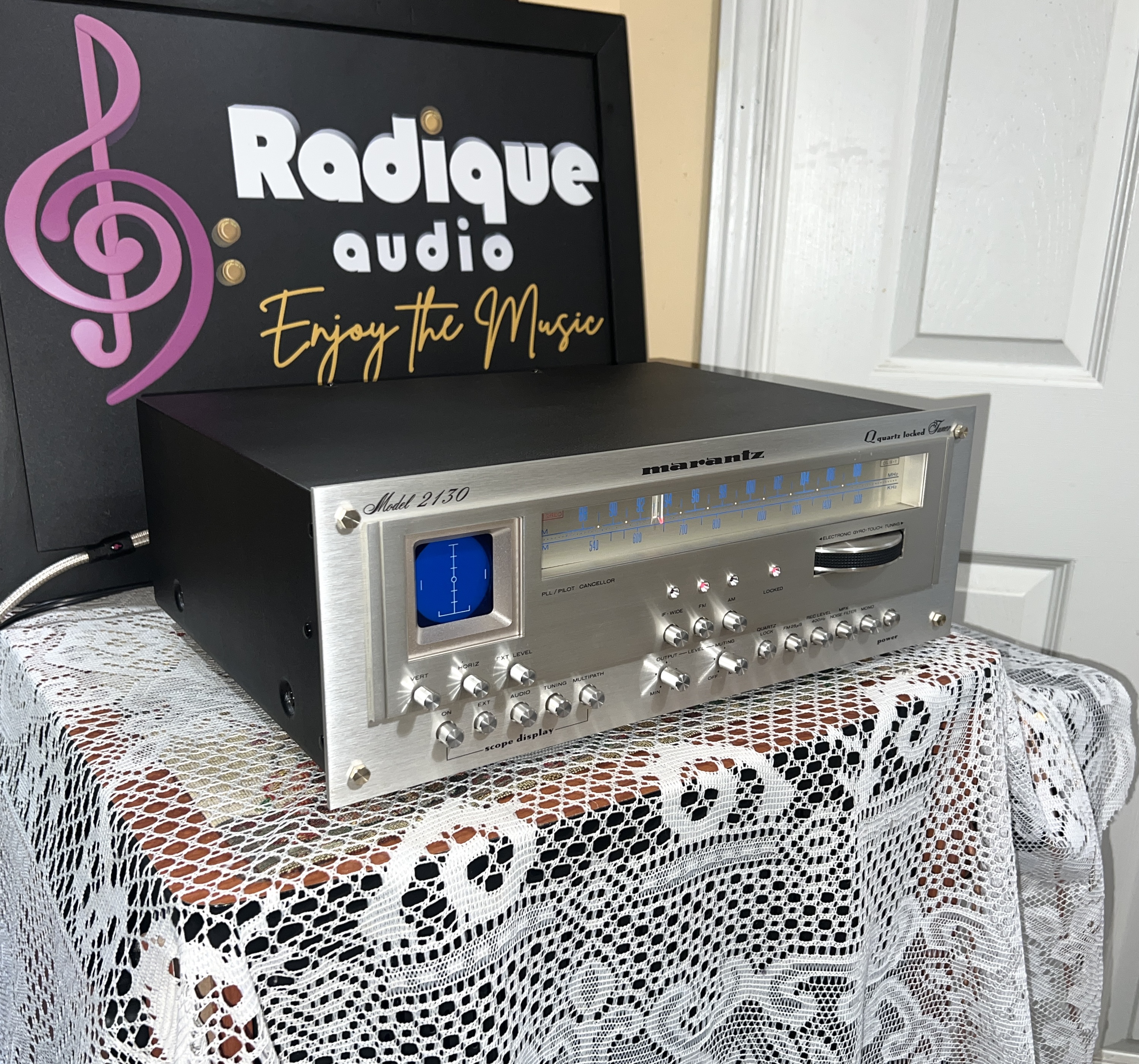
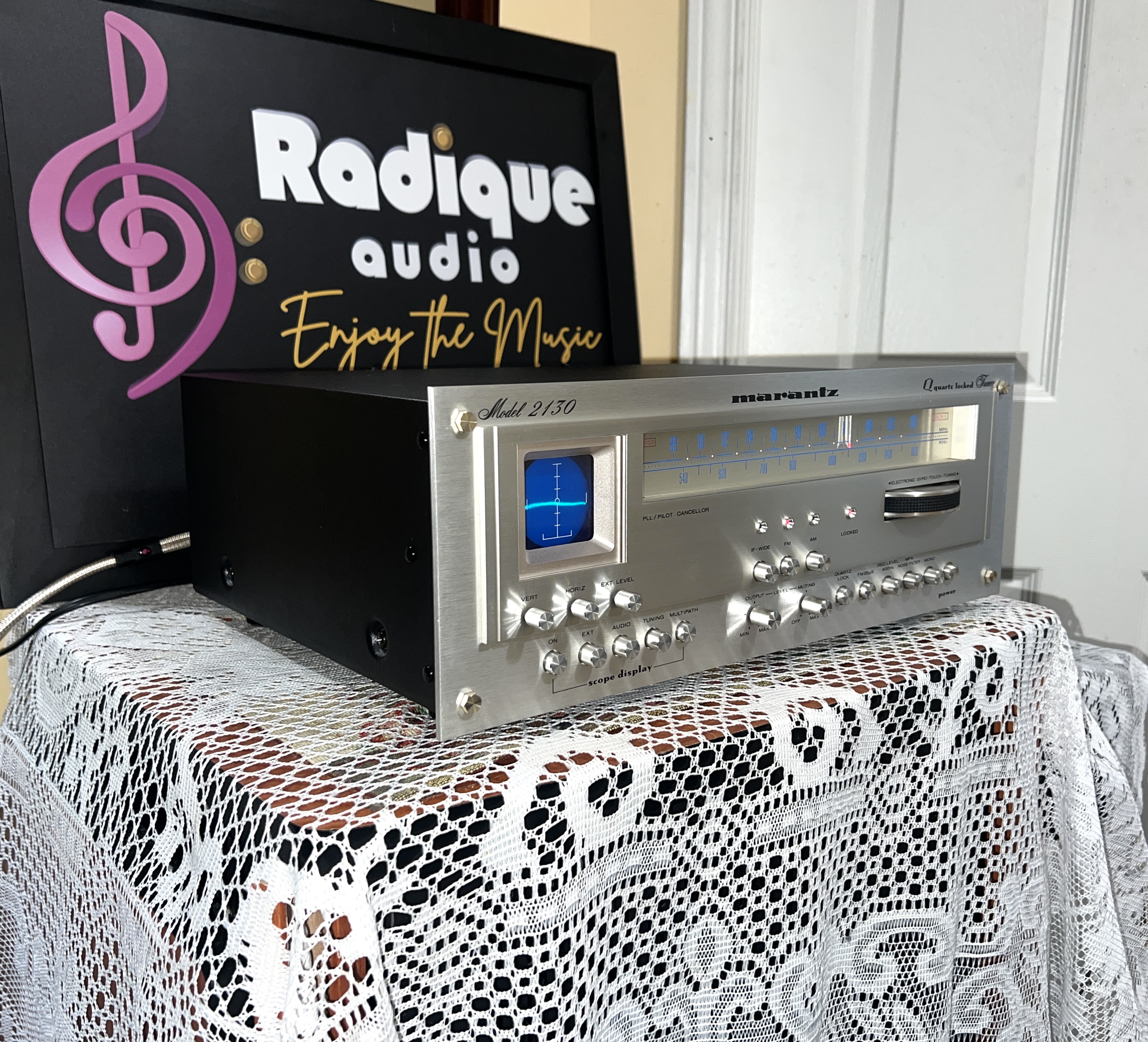
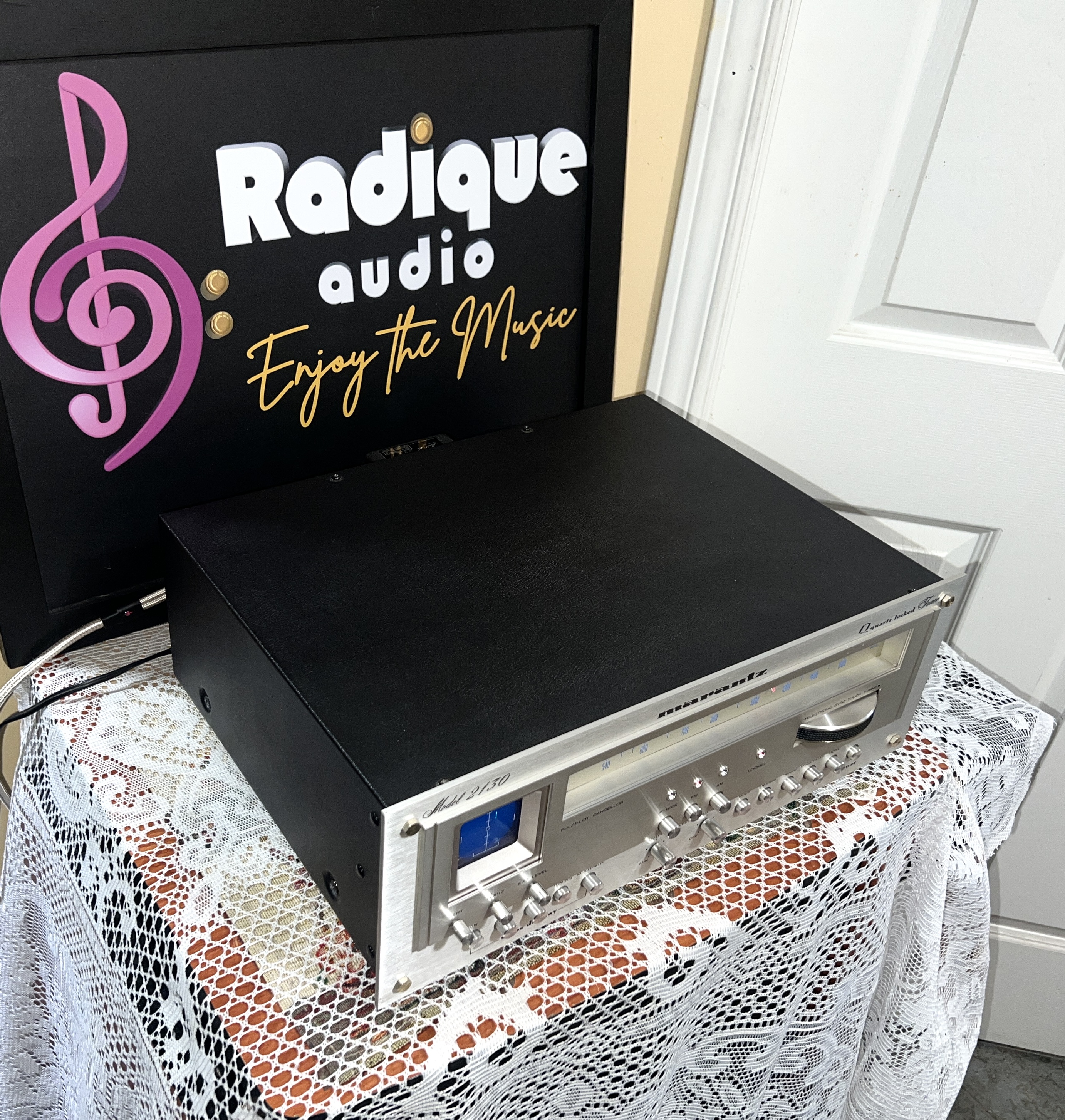
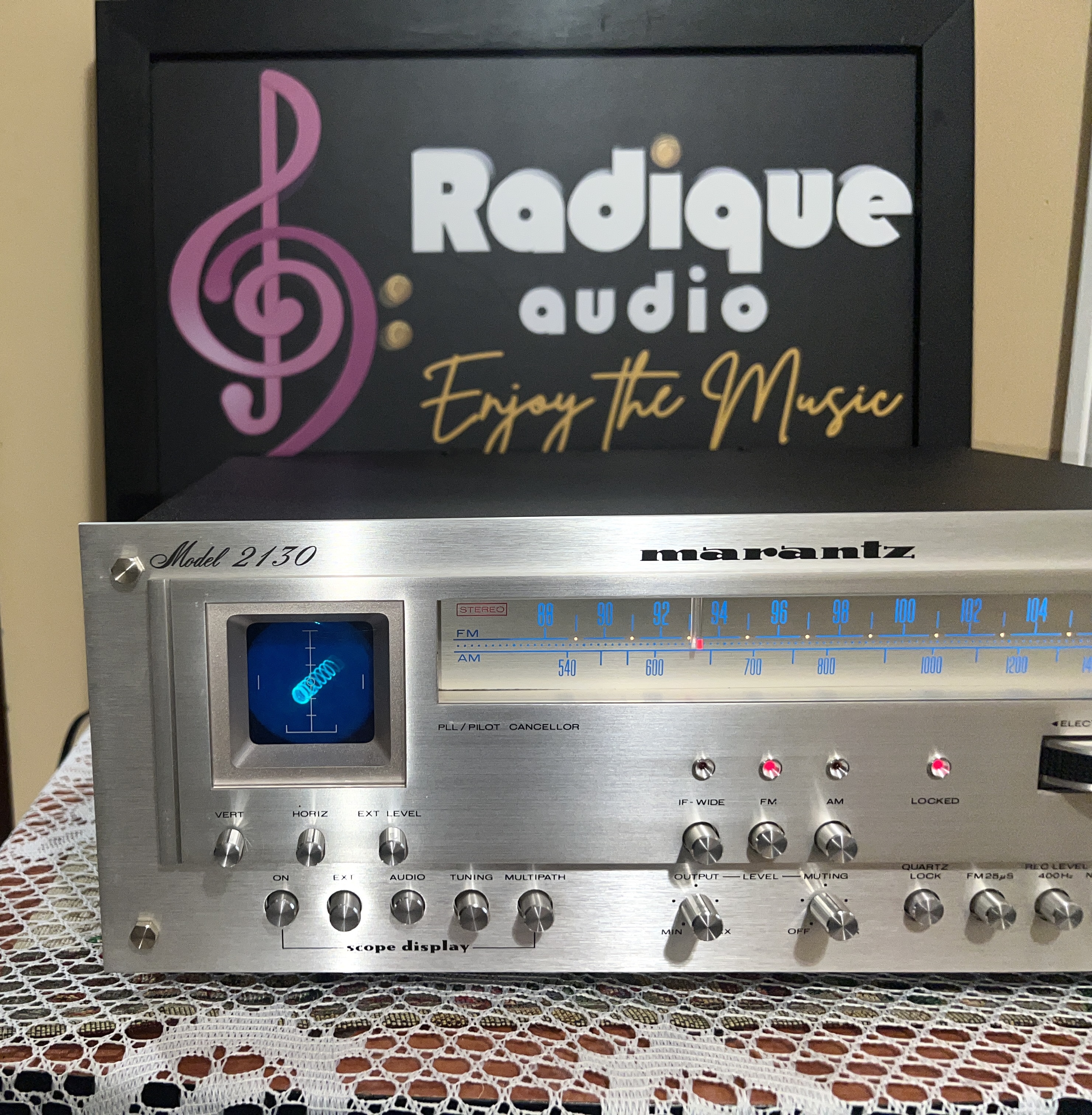
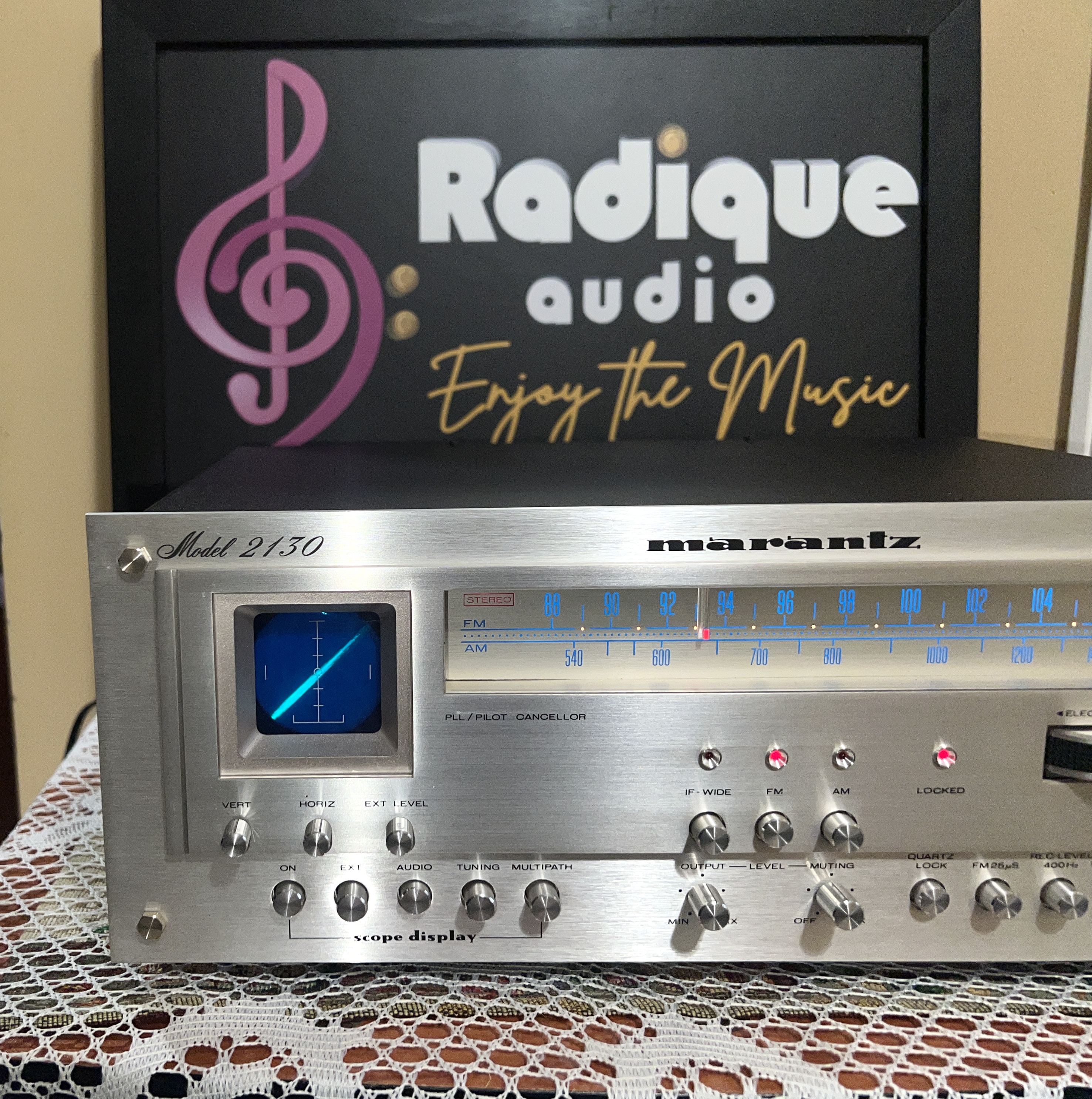
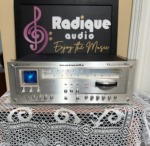
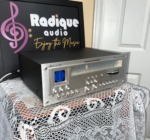
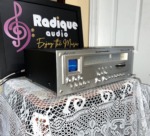
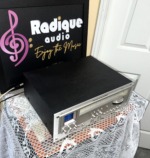
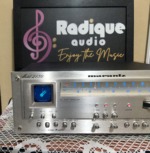
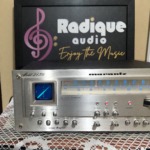
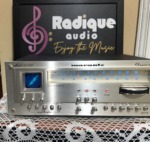
Marantz Model 2130 AM/FM Tuner – Oscilloscope, Original Box
$1,995.00
Consignment piece. We sell it on behalf of its owner, and it's covered exactly like everything else we sell: inspected and serviced as required, and backed by our Bumper-to-Bumper Warranty and Perpetual Trade-Back Program. The one difference: it isn't eligible for Cue It Up layaway.
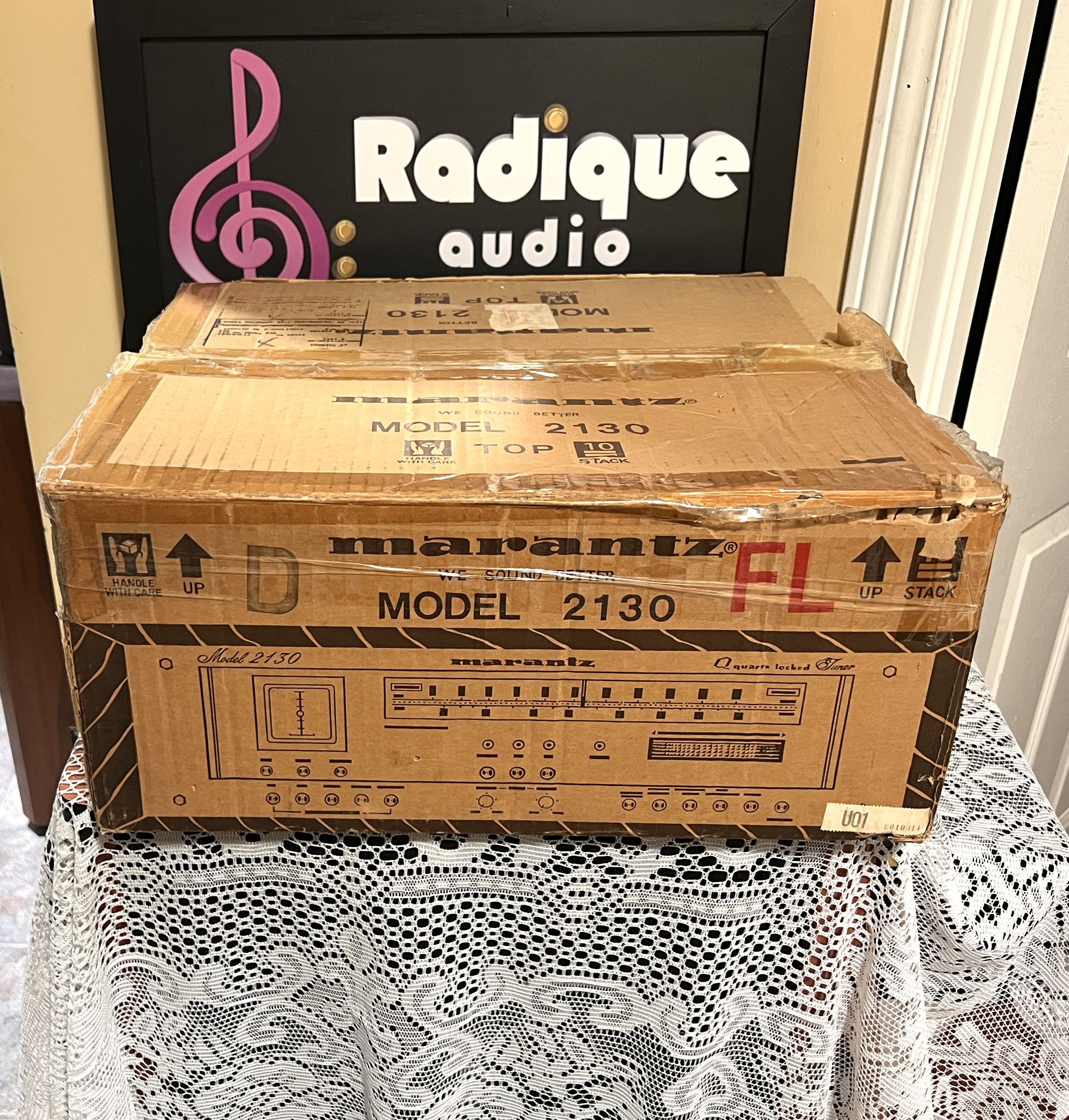
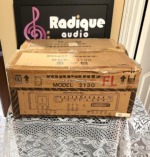
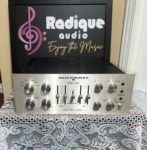
Marantz's quartz-locked flagship tuner with its built-in oscilloscope, in excellent condition and complete with its original Marantz carton.
✔️ Excellent condition — the scope traces cleanly, and the original Marantz carton is included
✔️ Tested on our bench and needed no service
✔️ Built-in oscilloscope, quartz lock and wide/narrow IF — Marantz’s flagship tuner of 1978
✔️ Covered by Radique Warranty
✔️ Includes Perpetual Trade-Back Program eligibility
✔️ Expertly packed for safe shipping
1 in stock
Marantz’s quartz-locked flagship tuner with its built-in oscilloscope, in excellent condition and complete with its original Marantz carton.
What it is
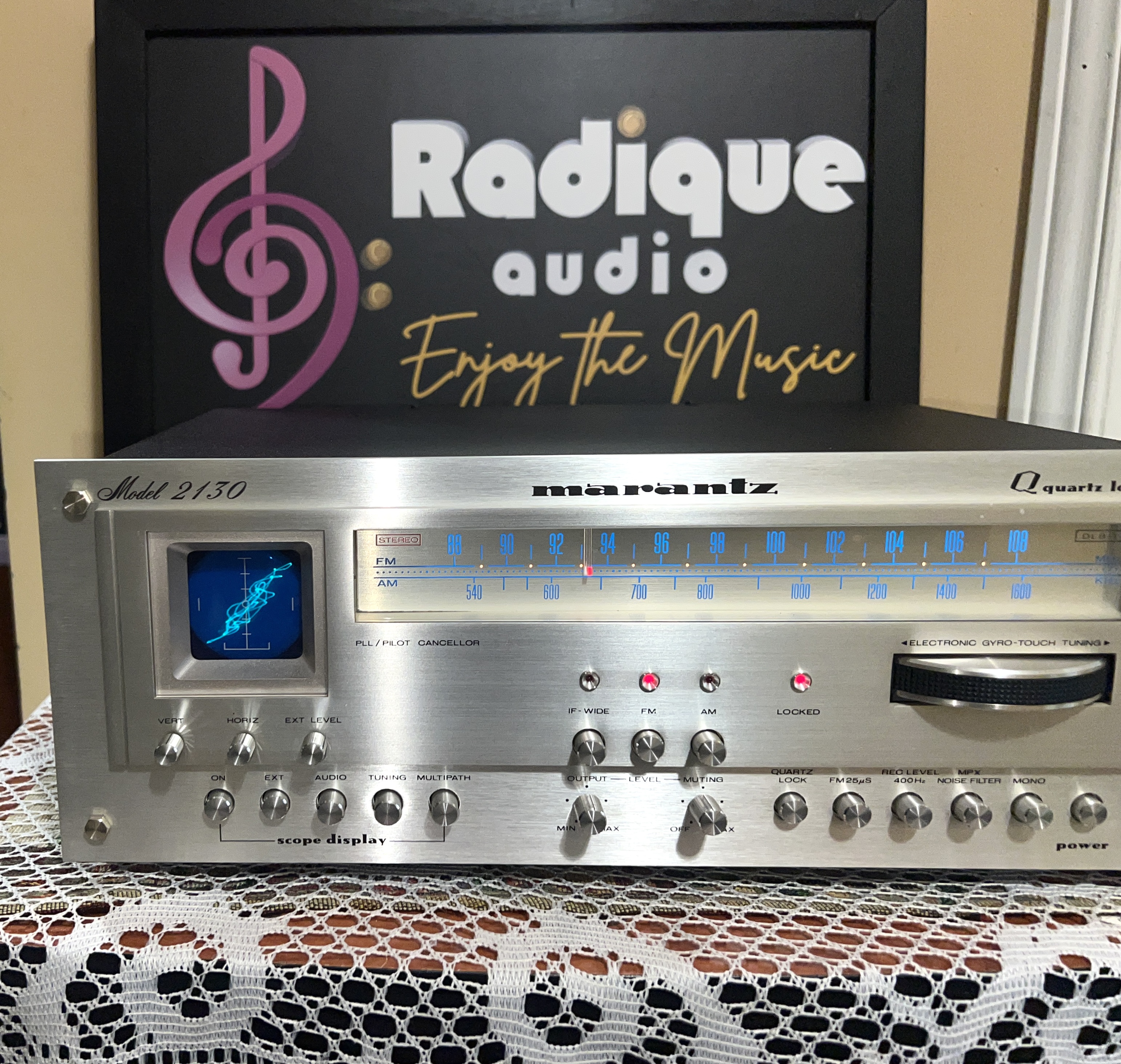
The 2130 arrived in 1978 as the top of Marantz’s tuner line, and it carries on the idea that made the Model 10B famous: a real cathode-ray oscilloscope in the faceplate. Designed in the United States at Marantz’s Chatsworth, California headquarters and built in Japan, it pairs that scope with serious FM engineering: quartz frequency lock, a PLL multiplex decoder with pilot cancelling, and switchable wide and narrow IF bandwidth, so you can favour fidelity on a strong station or selectivity on a crowded dial. The Tuner Information Center credits it with “better selectivity in the wide IF bandwidth mode than most tuners.”
Tuning is by Marantz’s Electronic Gyro-Touch wheel, a flywheel you spin across the long blue-lit FM and AM scales, with a Locked lamp that lights once quartz lock takes hold.
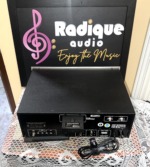
The oscilloscope is not just for tuning. Its five display buttons show tuning center, multipath (so you can aim an antenna by eye), the tuner’s own audio, and EXT: feed any other component into the scope inputs on the back, set the level from the front, and watch its signal on the screen. Vertical and horizontal controls sit beside it, with focus and brightness on the rear panel.
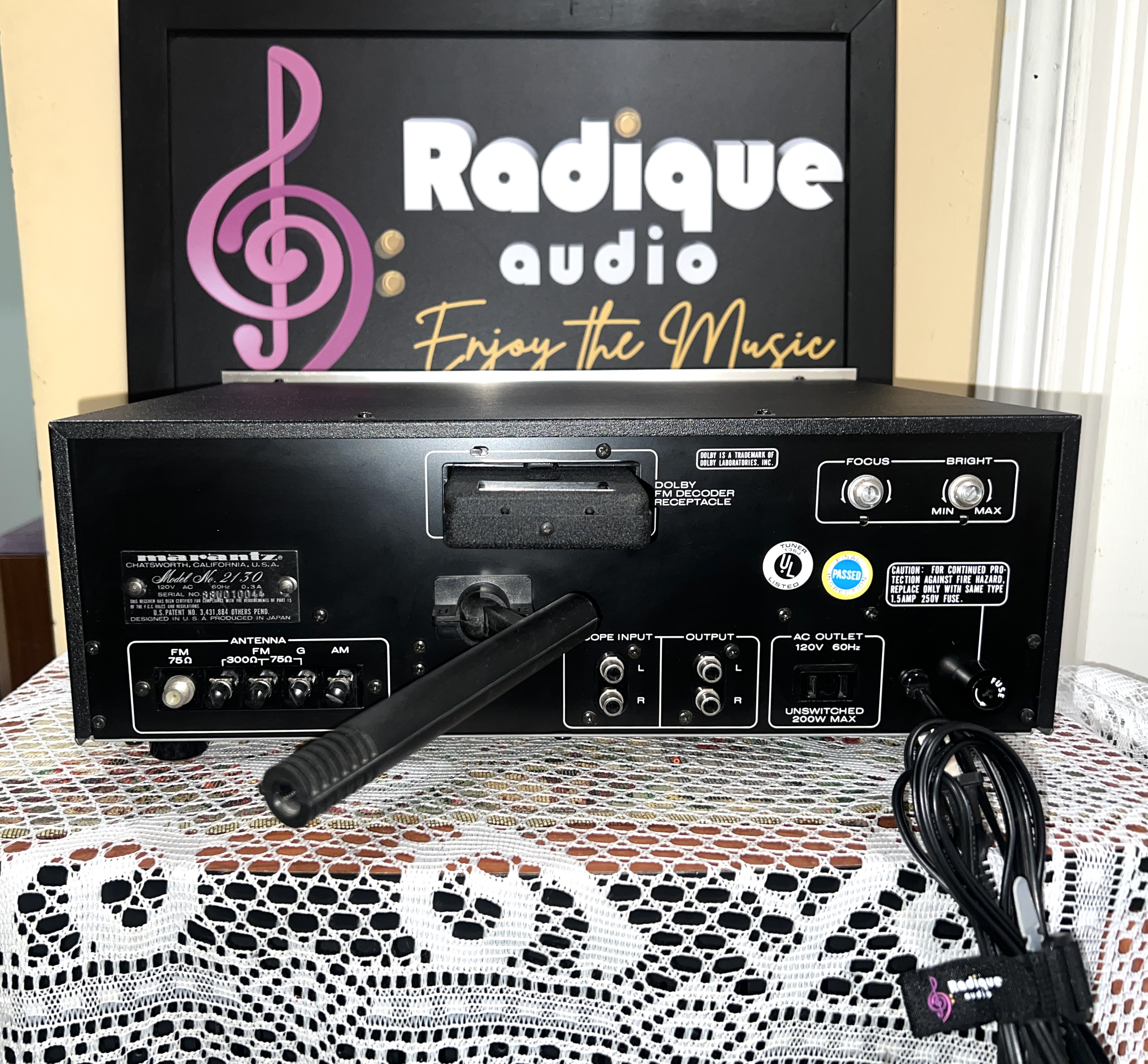
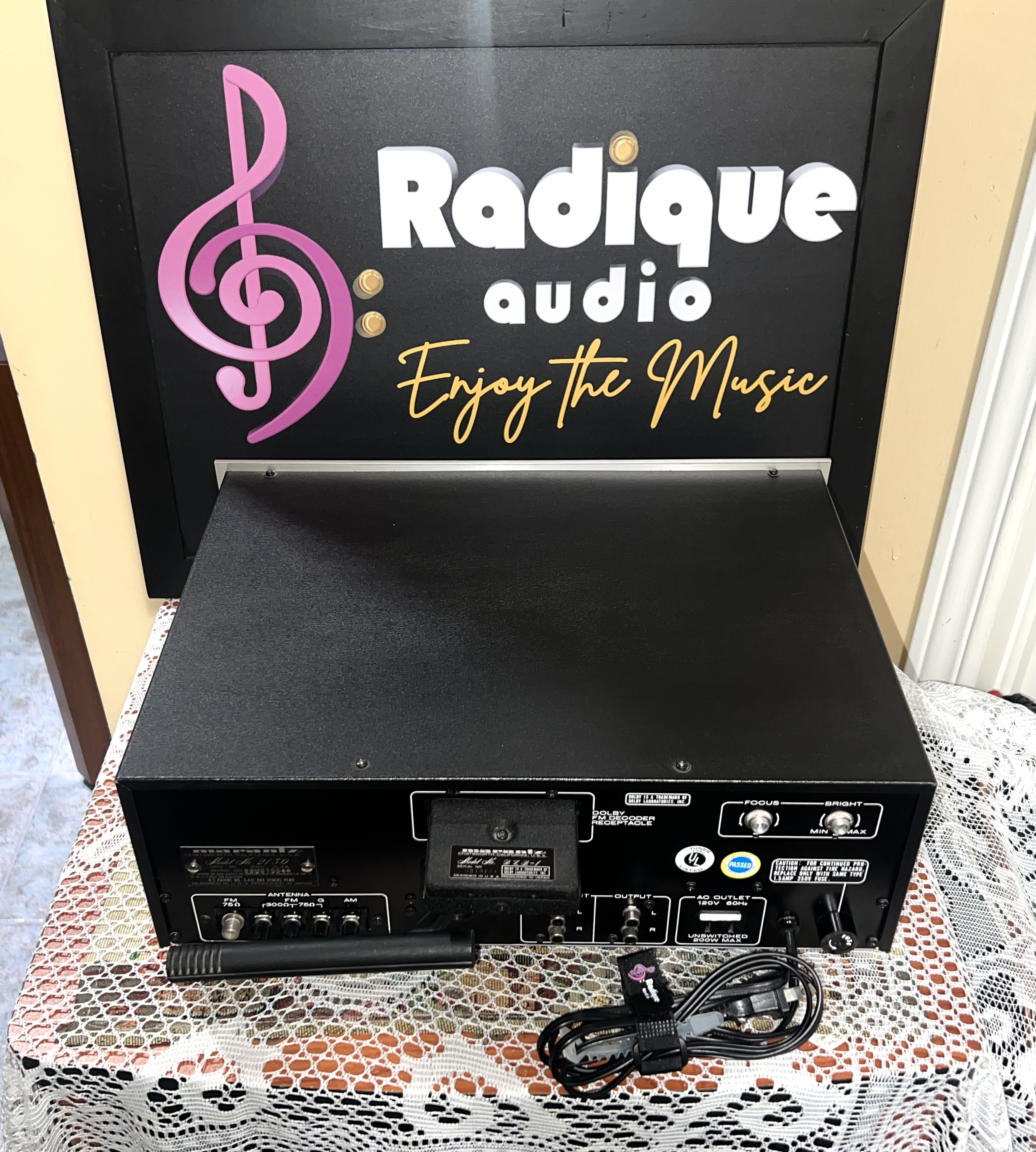
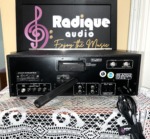
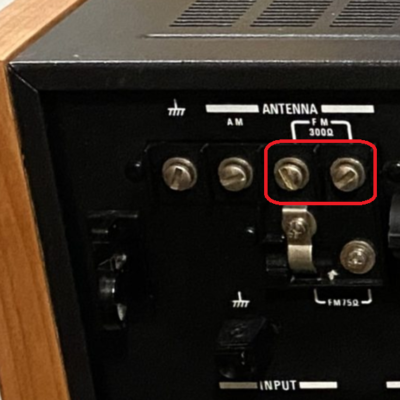
Around it you get everything a recordist wanted in 1978: variable output level, variable muting, an MPX noise filter, a mono switch, a 400 Hz recording-level tone for setting a tape deck, and a 25 µs de-emphasis switch with a rear receptacle for a plug-in Dolby FM decoder. The back also carries 75 ohm and 300 ohm FM antenna terminals, AM terminals and an unswitched AC outlet.
Condition
Excellent. The brushed faceplate, knobs, switches and dial glass all present beautifully, the scope traces cleanly, and it comes with its original Marantz shipping carton. It tested well on our bench and needed no service.
The Marantz tuner with a window into the signal, in the condition and the box a collector hopes for.
Available for pickup in Kanata, or shipped across Canada and internationally — we have sent equipment to fifteen countries in the past year, each piece packed in-house in 275 lb test double-wall boxes. Live shipping rates for your address are calculated at checkout. Backed by Radique Audio’s Bumper-to-Bumper Warranty and our Perpetual Trade-Back Program. Available for audition by appointment in Kanata.
Marantz Model 2130 Specifications
- Type: AM/FM stereo tuner with built-in oscilloscope
- Tuning: Electronic Gyro-Touch wheel, quartz frequency lock
- FM IF bandwidth: wide / narrow, switchable
- FM sensitivity: 1.2 µV; 50 dB stereo quieting 17 µV
- Signal-to-noise ratio: 83 dB mono, 76 dB stereo
- Total harmonic distortion: 0.05% mono, 0.07% stereo
- Stereo separation: 55 dB at 1 kHz
- Capture ratio: 1.5 dB
- Oscilloscope: tuning, multipath, audio and external input displays
- Rear panel: FM 75 / 300 ohm and AM antenna terminals, audio output L/R, scope input L/R, Dolby FM decoder receptacle, unswitched AC outlet
- Power: 120 V, 60 Hz
- Designed in the USA, made in Japan (1978 – 1980)
- Includes the original Marantz carton
- Dimensions: (Width x Height x Depth) 16.4 x 5.75 x 11.9 inches (416 x 146 x 301 mm)
- Weight: approx. 19.8 lbs (9 kg)
🎚️ Gold Series RCA Interconnects
Our own Gold Series RCA Stereo Interconnect is a shielded, gold-plated stereo pair, in stock and ready to go. It is the cable that connects this to the rest of your system, and it is a straightforward upgrade on the free leads that come in the box with most equipment. 👉
📡 Pull In More Stations — FM Dipole Antenna
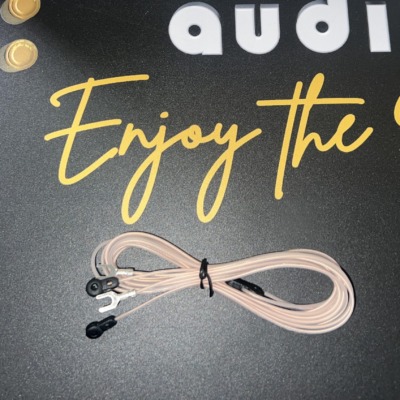
The 2130’s rear panel has 300 ohm FM antenna terminals, and our FM Dipole Antenna is a 300 ohm twin-lead with spade connectors that fit them. Set the scope to its multipath display and you can aim the antenna by eye for the cleanest signal. 👉
⚠️ Important Information for International Buyers
This unit is configured for North American 110/120V power. Buyers outside North America will require a step-down transformer and appropriate plug adapter.
✅ Buy With Confidence — The Radique Promise
Backed by Radique Audio’s Bumper-to-Bumper Warranty and our Perpetual Trade-Back Program. When you’re ready to move on, we’ll take it back. That’s the Radique difference.
📦 Watch how we protect your gear — our unboxing video.
📺 Curious about our business? Check out our YouTube channel for behind-the-scenes videos and more!
📞 Questions? Use the Ask a Question button above, or call us at 613-416-9995.
| Weight | 21.8 lbs |
|---|---|
| Dimensions | 15.9 × 20.4 × 9.75 in |
Marantz began in 1953 in Queens, New York, where Saul Marantz built tube preamplifiers and amplifiers, and by the 1970s it was making receivers with champagne-gold faceplates, blue-lit dials and flywheel tuning. We carry Marantz receivers, amplifiers and preamps, turntables, tuners, CD players and cassette decks. We've had more than 150 Marantz listings so far, covering nearly 100 different models. Every used Marantz here is inspected, tested and serviced as required, then photographed in-house and covered by our Bumper-to-Bumper Warranty and Perpetual Trade-Back Program. Many Marantz components were sold without their wood case, so we also make new cherry WC-22 and WC-10 style cabinets. Don't see the model you want? Tell us on First Dibs and we'll email you when one arrives.
Our five best-selling Marantz models so far: the SR4023 stereo receiver, the vintage 2225, the SR7000 AV receiver, the SR4320 stereo receiver and the vintage 2238B.
The Marantz story, 1953 to today
Saul B. Marantz founded the company in New York in 1953. His first product, the Audio Consolette preamplifier, became the Model 1, and Marantz dates the first Consolettes to 1952–53. Marantz says the early factory was in Woodside, Queens.
The tube years. Through the late 1950s and early 1960s Marantz built a small run of tube separates in New York that collectors still chase: the Model 7 preamplifier (1958), the Model 9 power amplifier (1960) and the Model 10B tuner (1964).
Superscope and the move to Japan. In 1964 Superscope, the company that also distributed Sony tape recorders in the US, bought Marantz, and Saul Marantz resigned at the end of 1967. The Model Eighteen of 1968 was the first Marantz receiver, rated at 40 watts per channel. Under Superscope, design moved to California and, from the late 1960s, production moved to Japan through Standard Radio, which became Marantz Japan in 1975. Receivers such as the 2230 and 2270 are listed as designed in the USA and produced in Japan.
The power race. After a 1974 Federal Trade Commission rule tightened how amplifier power was rated, receiver makers competed on watts. Marantz's Model 2500 of the late 1970s was rated at 250 watts per channel and had an oscilloscope tuning display.
Philips, Denon and today. In 1980 Philips bought Superscope's stake in Marantz Japan and the brand outside the US and Canada. Marantz says its CD-63 of 1982 was one of the first CD players, and its "KI Signature" models carry the initials of Ken Ishiwata, who joined in 1978. In 2001 Marantz Japan bought the trademark back from Philips, and in 2002 it combined with Denon to form D&M Holdings. In September 2025 HARMAN, a Samsung company, completed its purchase of Sound United, the parent of Marantz and Denon.
Which Marantz is which?
Tube separates (1950s–60s): the Models 1, 7, 8B, 9 and 10B, built in New York. Rare collector pieces.
First receivers (from 1968): the Model Eighteen, followed by the Nineteen at the end of 1969.
22xx receivers (from 1972): the first set was the 2215, 2230, 2245 and 2270, with the champagne-gold faceplate, blue-lit dial and "Gyro-Touch" flywheel tuning. A higher number generally means more power: the 2230 is rated at 30 watts per channel, the 2270 at 70. Later "B" versions such as the 2220B and 2285B followed.
Big late-1970s receivers: the 2325 (125 watts per channel), the 2500 flagship and four-channel "Quad" receivers.
1000-series integrated amplifiers: for example the 1060 (30 watts per channel, from 1971), the 1070 and the 1150 (75 watts per channel). The slim 1030, 1040, 1060 and 1070 share their case size with tuners such as the 104, 105 and 112.
Tuners: from the tube Model 10B to solid-state models such as the 2130, with its oscilloscope display.
Wood cases: Marantz sold its wood cases separately: the WC-22 for the 22xx receivers, the WC-10 for the slim 1000-series amplifiers and 100-series tuners, and the WC-1 for larger models such as the 1200. That is why so many turn up bare. A customer who sold Marantz in Ontario in the 1970s told us the cases his shop ordered were built here in Canada, by Westinghouse. Our own cherry WC-22 and WC-10 style cabinets are made in Canada too.
CD players: from the CD-63 of 1982 to the KI Signature versions.
Buying used Marantz: what to check
Dial and meter lamps. Burnt-out bulbs are common on 1970s receivers and are often replaced, sometimes with LEDs. Ask which, if the look of the dial matters to you.
The dial itself. The diffuser sheet behind the dial ages and can dull the glow. Check that the Gyro-Touch pointer moves smoothly and tracks the stations; dial cords are a common replacement part.
Controls and switches. Crackle when you turn a control or work a switch usually means dirt. Try every input, and walk away from a unit that drops a channel.
Capacitors and bias. Electrolytic capacitors in 1970s gear are often past their best, and full restorations replace them. Restorers also set the bias and DC offset.
Cosmetics. Pitting on the faceplate points to damp storage, and dents or water stains to rough handling.
Everything we list is inspected, tested and serviced as required here, and comes with our warranty.
You may also like…
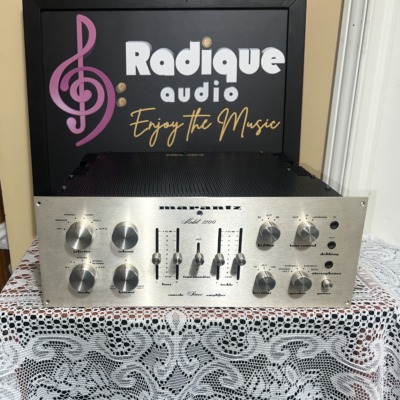
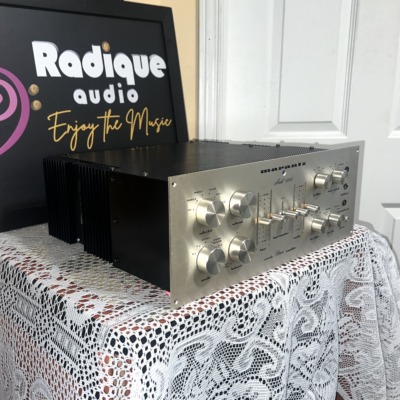
Marantz 1200 Vintage Integrated Amplifier – 100 WPC, Made in USA
Marantz's flagship integrated of the early seventies, built in Sun Valley, California, through our Level 2 service and playing as it should.
✔️ Very Good condition — faceplate and knobs present well, light marks of age; offered in the stock black metal case
✔️ Through our Level 2 service — a substantial round of component replacement on the bench, then bias and offset set and the amp run in
✔️ Covered by Radique Warranty
✔️ Includes Perpetual Trade-Back Program eligibility
✔️ Expertly packed for safe shipping
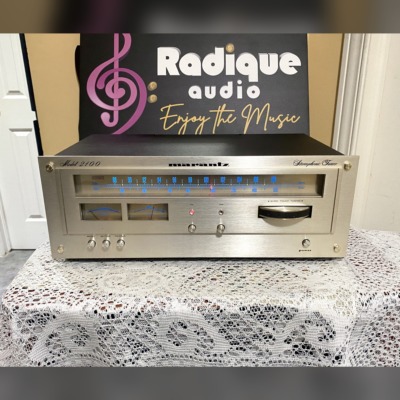

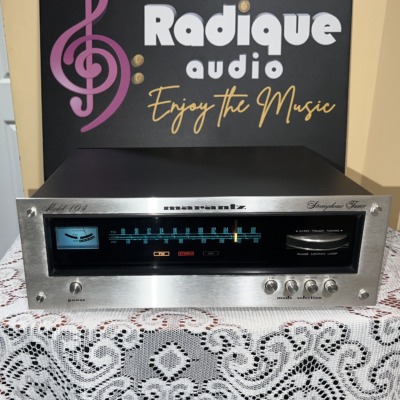

Marantz Model 104 AM/FM Tuner — Made in Japan, Excellent
We sold this tuner ourselves and it came back through our Perpetual Trade-Back Program — so we know what it was when it left, and it has been through our bench again since. A 1976 Model 104 in excellent cosmetic condition: silver face, blue dial lighting, made in Japan.
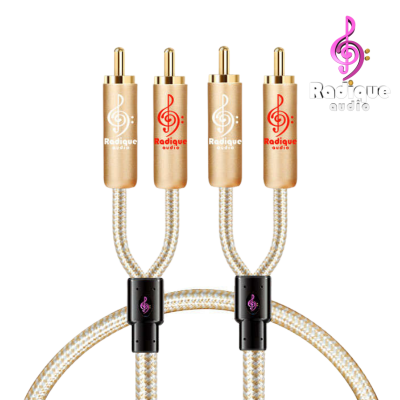
Gold Series RCA Stereo Interconnect | Radique Audio
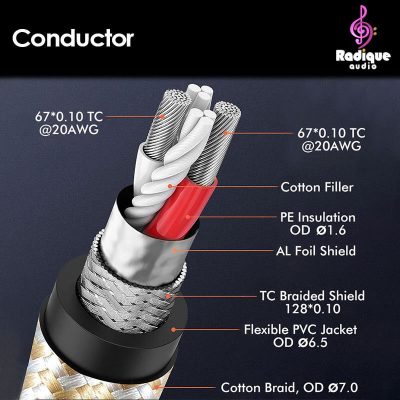
Radique Audio Gold Series RCA Stereo Interconnect — dual RCA to dual RCA with vintage-safe, gold-plated connectors and 6-layer shielded construction. Featuring 262 strands of tinned copper, dual-layer copper and foil shielding, and slim narrow-profile connector barrels designed to fit tightly spaced vintage RCA jacks. Available in 0.2 m, 0.75 m, and 1.5 m lengths. Audiophile quality without the audiophile pricing.
Related Products
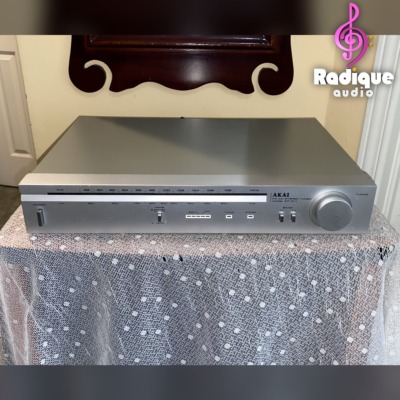
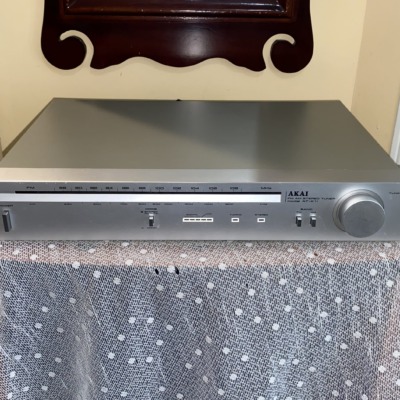
AKAI AT-K11 AM/FM Stereo Tuner – Professional Build Grade
A 1981 analog tuner with a mechanical servo that locks onto a station and holds it, so there is no digital drift to think about. 65dB signal to noise on FM, 775mV out on FM and 250mV on AM, into a single RCA pair. Nearly ten pounds of chassis, heavier than this end of the range usually got. Tested across both bands; good cosmetic condition.
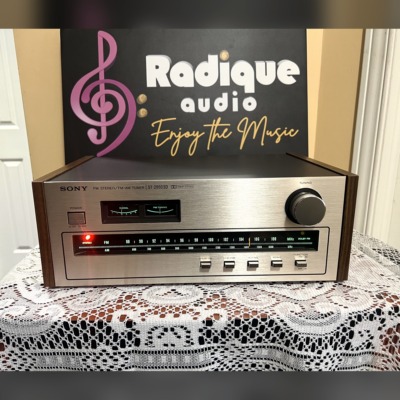
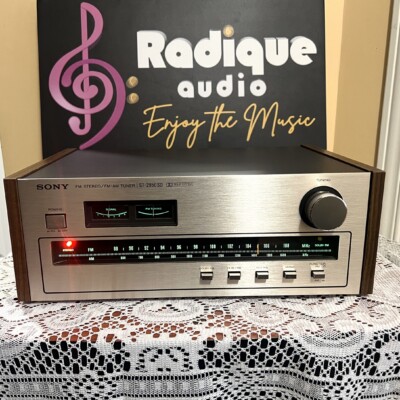
Sony ST-2950 SD AM/FM Stereo Tuner – Walnut Side Panels
Two microvolts IHF sensitivity and 73 dB signal-to-noise, with FM distortion at 0.5% mono and 0.7% stereo — enough front end to hold a weak station cleanly. Silver faceplate, illuminated dial, and the original faux walnut side panels. Made in Japan between 1976 and 1979. Tested and verified working; good cosmetic condition.
Marantz Model 104 AM/FM Tuner — Made in Japan, Excellent
We sold this tuner ourselves and it came back through our Perpetual Trade-Back Program — so we know what it was when it left, and it has been through our bench again since. A 1976 Model 104 in excellent cosmetic condition: silver face, blue dial lighting, made in Japan.
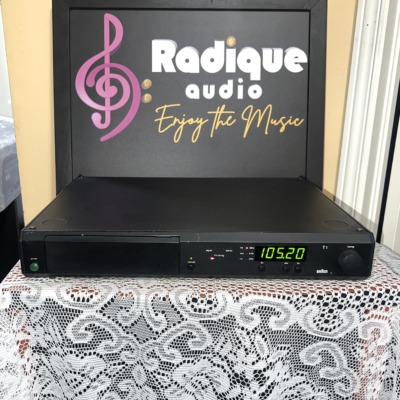
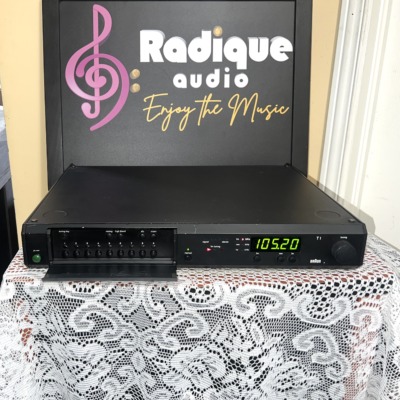
Braun Atelier T1 Slim AM/FM Tuner — 9 Presets, Quartz, Japan
An analogue tuner given a quartz-referenced five-digit readout — the precision of a synthesised design with a real analogue front end behind it, which tends to hold a weak signal more gracefully. The nine presets are not memories: each station button carries its own tuning adjustment, set by hand with a small screwdriver through the panel, so it is effectively nine little tuners in one chassis. Made in Japan, 445 mm wide and 70 mm tall to match the Atelier deck. Good condition.
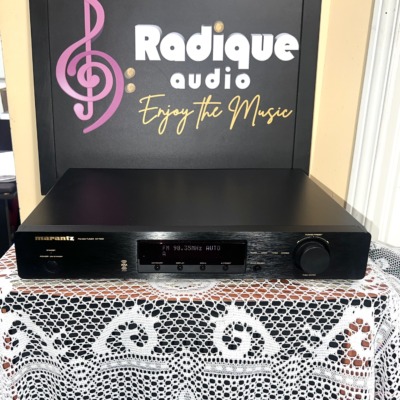
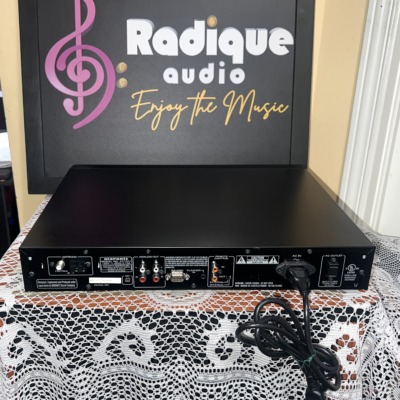
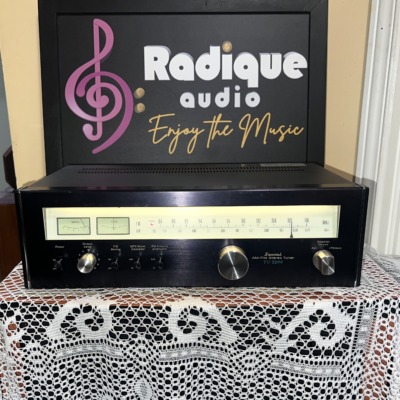
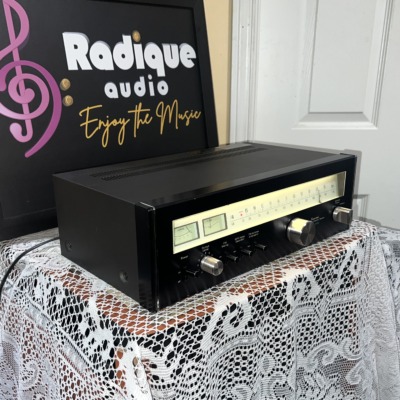
Sansui TU-5900 AM/FM Stereo Tuner — Dolby FM, Made in Japan
An analogue AM/FM stereo tuner from Sansui's strongest years, built in Japan in the mid-seventies as the matching partner to the AU-series integrated amplifiers, and a good deal more serious inside than its modest size suggests.
✔️ Condition: Very Good
✔️ Level One — named in the copy
✔️ Covered by Radique Warranty
✔️ Includes Perpetual Trade-Back Program eligibility
✔️ Expertly packed for safe shipping
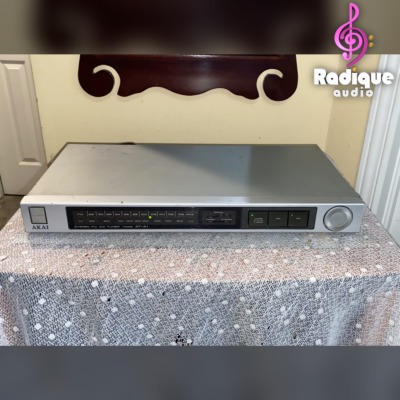

AKAI AT-A1 AM/FM Stereo Tuner – Ultra Slim Profile
An analog tuner from 1980 in a chassis 50mm tall — two inches, which is about as thin as a full-width component gets. Needle-pointer dial with a printed scale, an AM/FM selector, a single RCA output, and nothing else. Tuning engages smoothly across both bands and the output is clean. Condition good, with a clean front bezel and honest age on a 45-year-old component.
