


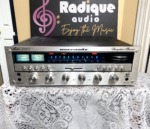
JVC RX-97x Integrated Amplifier – 125 WPC, EQ
$207.00
Out of stock
Get first dibs on the next one
JVC AX-R97 Japan-Made 125 Watt Per Channel Integrated Amplifier – Powerful Vintage Performance
Made in Japan, the JVC AX-R97 is a robust, high-fidelity integrated amplifier designed for discerning audio enthusiasts seeking both power and precision in their vintage setup.
Delivering a muscular 125 watts per channel into 8 ohms with exceptionally low distortion (0.03% THD, 20Hz–20kHz), the AX-R97 stands out for its clean, dynamic sound and flexible connectivity. Its seven-band S.E.A. graphic equalizer allows for detailed tone shaping across a wide frequency spectrum, while a dedicated phono input ensures your vinyl collection shines. The AX-R97 features multiple line-level inputs, speaker A/B switching, and JVC’s proprietary Compulink Synchro system for seamless integration with other JVC components. The classic black finish and tactile controls exude vintage charm, and the amplifier’s build quality reflects its Japanese heritage.
Specifications:
Power Output: 125W + 125W (8 ohms, 20Hz–20kHz, 0.03% THD)
Total Harmonic Distortion: 0.004% @ 125W, 1kHz, 8 ohms
Frequency Response: 5Hz–60kHz (+0, –3dB @ 8 ohms)
Signal-to-Noise Ratio: 103dB (line), 78dB (phono)
7-band S.E.A. graphic equalizer (63Hz, 160Hz, 400Hz, 1kHz, 2.5kHz, 6.3kHz, 16kHz, ±10dB)
Inputs: 6 x line-level, 1 x phono
Speaker Outputs: A/B switching
Compulink Synchro system
Loudness control (+5dB @ 800Hz)
Attractive stereo power meters
Dimensions: 17.1 x 2.4 x 11 inches (435 x 61 x 279 mm)
Weight: 19.2 lbs (8.8 kg)
This Japan-made JVC AX-R97 is a rare find for collectors and audiophiles, combining vintage style with serious power and flexibility. Add this high-performance amplifier to your system and experience the musicality and reliability that define classic JVC. Contact Radique Audio to make it yours!
Asking $295 for this one, buy with confidence and benefit from Radique’s “Bumper to Bumper” warranty and Perpetual trade back policy.
| Weight | 22 lbs |
|---|---|
| Dimensions | 15 × 21 × 6.5 in |
JVC was founded in Yokohama, Japan, in 1927 as the Japanese arm of America's Victor Talking Machine Company, first making phonographs and records. We carry JVC stereo receivers and AV receivers, cassette decks, CD players, turntables and speakers. We've had more than 90 JVC listings so far, covering more than 80 different models. Every AV receiver we list is tested input by input on our bench: each HDMI input and output, the analog, optical and coaxial inputs, the subwoofer outputs and the wireless features where it has them. Every used JVC here is inspected, tested and serviced as required, then photographed in-house and covered by our Bumper-to-Bumper Warranty and Perpetual Trade-Back Program. Don't see the model you want? Tell us on First Dibs and we'll email you when one arrives.
JVC models we've sold more than once include the RX-7000VBK and RX-8000VBK AV receivers.
The JVC story, 1927 to today
JVC began in 1927 as the Japanese subsidiary of the Victor Talking Machine Company, making phonographs and records, and built a large plant in Yokohama in 1930. RCA bought Victor in 1929, and in the late 1930s JVC passed to Japanese owners.
Stereo, quad and video. JVC joined the Matsushita (Panasonic) group in the early 1950s. It developed the CD-4 discrete four-channel record system in the early 1970s and the SEA graphic equalizer built into its receivers, and in 1976 its video division introduced VHS.
Hi-fi highlights. The late 1970s and early 1980s brought the JR-S receivers, whose SEA sliders replaced the tone controls, the Super-A amplifiers and the QL quartz-lock turntables, and around 1990 the XL-Z CD players with JVC's K2 Interface.
Today. JVC merged with Kenwood between 2008 and 2011, and JVCKENWOOD Corporation now owns the brand. JVC has had its own Canadian distribution since the 1970s, and JVCKENWOOD Canada is based in Mississauga, Ontario.
Which JVC is which?
1970s receivers: early four-channel models with CD-4 demodulators, and the JR-S series of 1976 to 1977, with built-in SEA equalizers.
Super-A amplifiers and receivers (1979 to the early 1980s): such as the A-X5 and A-X9 amplifiers and the R-S33 receiver.
Turntables: QL quartz-lock direct-drive models such as the QL-A7 and QL-Y5F, and belt-drive automatics such as the JL-A1.
Cassette decks and CD players: KD and CD-S decks from the 1970s, TD-W dual-well decks, and XL-Z CD players and XL changers.
AV receivers (2000 to 2004): the RX-x000V, RX-x010V and RX-x020V families, including the RX-7000VBK, RX-8000VBK and RX-6020VBK, and the RX-8040B.
Buying used JVC: what to check
SEA sliders. On JR-S and R-S receivers, work every equalizer slider through its range and listen for crackle or a channel dropping out.
FM muting. Stereo Review found the JR-S600's muting could thump when tuning on or off a station, so turn the volume down before tuning.
AV receivers. Run every channel, centre and surrounds included, at moderate volume. Owners report overload shutdowns on some 2000s models, which can come from a short in the speaker wiring.
Turntables. On QL servo turntables, check that the tracking-force and damping dials respond and that the arm finds the lead-in at both record sizes. Older JL automatics often need old grease cleaned out and a new belt.
Cassette decks. Treat belts and pinch rollers on any 1970s to 1990s deck as service items.
Everything we list is inspected, tested and serviced as required here, and comes with our warranty.
You may also like…
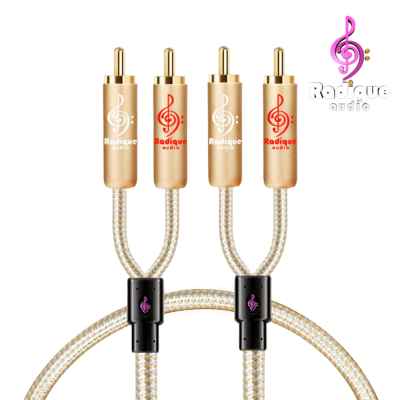
Radique Audio Gold Series RCA Stereo Interconnect Cable
RCA cables that are kind to vintage jacks: dual RCA to dual RCA, in 0.2, 0.75 or 1.5 m.
- Slim gold-plated plugs with vintage-safe grip pressure
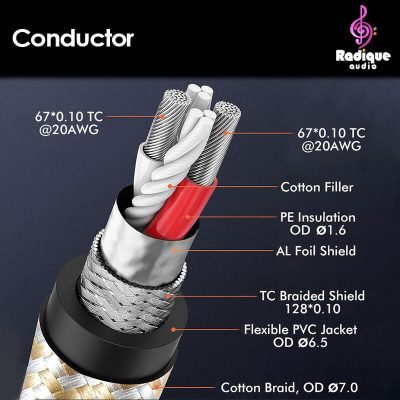
- Dual shielding: aluminum foil and 128-strand braided copper
- Reinforced splitters; 7 mm gold cotton and nylon mesh jacket
- Three lengths, chosen above the Add to Cart button
- 1-year warranty
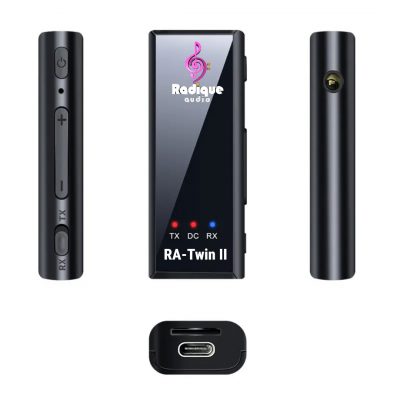
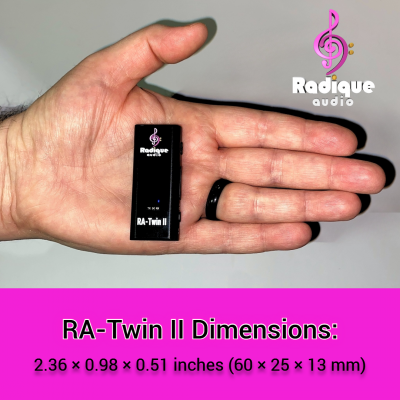
RA-Twin II Bluetooth Adapter for Vintage Stereo – Receiver & Transmitter
Add Bluetooth to any vintage stereo, amplifier or car stereo, or send your TV or stereo to Bluetooth headphones. Tiny but mighty, and set up in minutes.
- RX, TX and Mobile (microSD) modes
- Bluetooth 5.4, up to 10 m range
- Up to 10 hours per charge, USB-C
- Clear online manual in English & French
- 1-year warranty, Ottawa-based support
Related Products
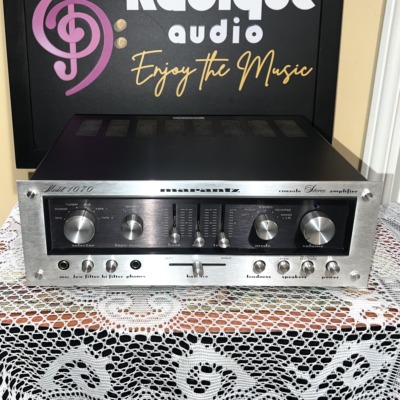
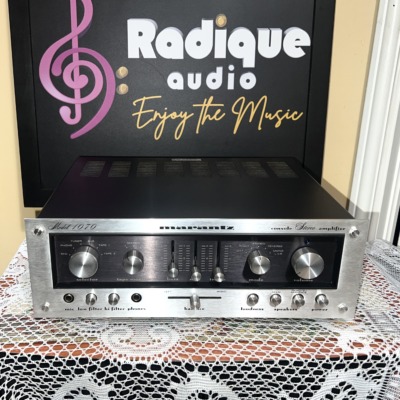
Marantz 1070 Vintage Integrated Amplifier – 35 WPC, Serviced
A slim mid-seventies Marantz integrated amplifier, through our Level 1 service, in very good condition, with a phono stage, a three-band tone section and a microphone input on the front panel.
✔️ Very good condition — free of significant marks
✔️ Through our Level 1 service on our own bench
✔️ MM phono stage, three-band tone sliders and a front-panel mic input
✔️ Covered by Radique Warranty
✔️ Includes Perpetual Trade-Back Program eligibility
✔️ Expertly packed for safe shipping
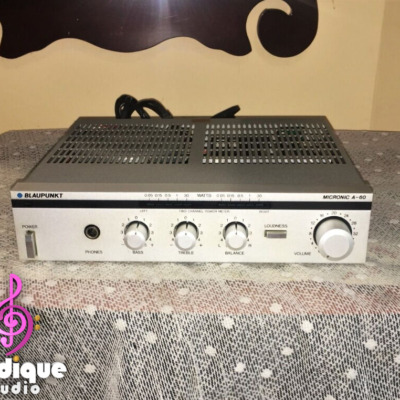
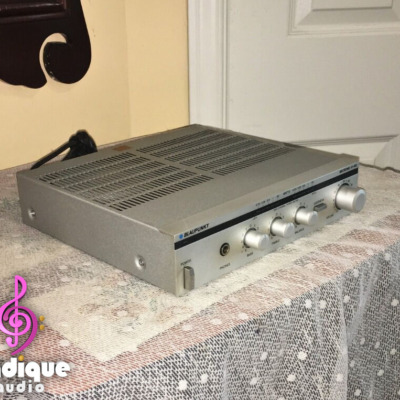
Blaupunkt Micronic A-60 Micro Amplifier – 20 WPC, Made in Japan
A rare Blaupunkt Micronic A-60 micro amplifier from 1981, designed in Germany and made in Japan: 20 watts per channel with LED power meters, in a case 25 cm wide.
✔️ Tested on our bench, input, outputs and every control
✔️ Very good condition
✔️ 20 WPC, LED power meters, one RCA input
✔️ Covered by Radique Warranty
✔️ Includes Perpetual Trade-Back Program eligibility
✔️ Expertly packed for safe shipping
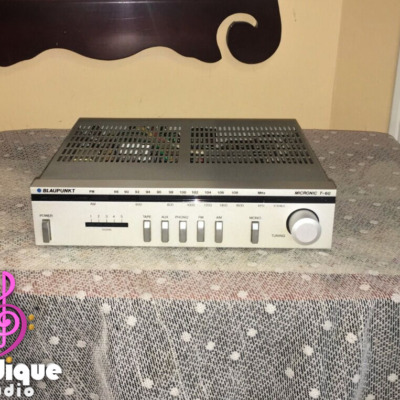
Blaupunkt Micronic A-60 + T-60 Micro System – 20 WPC, Bundle
The complete Blaupunkt Micronic 60 system from 1981, the A-60 amplifier and the matching T-60 AM/FM tuner and preamplifier, together for less than buying them separately.
✔️ Tested on our bench, both units
✔️ Both very good
✔️ Radio, phono, tape and a 20-watt amplifier in a stack 25 cm wide
✔️ Covered by Radique Warranty
✔️ Includes Perpetual Trade-Back Program eligibility
✔️ Expertly packed for safe shipping
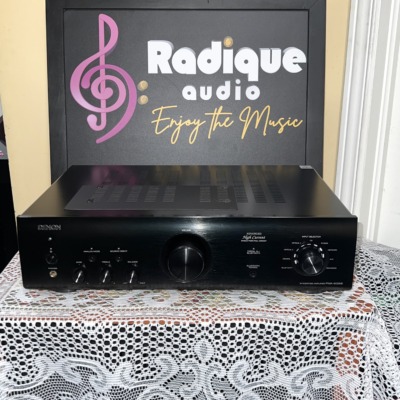
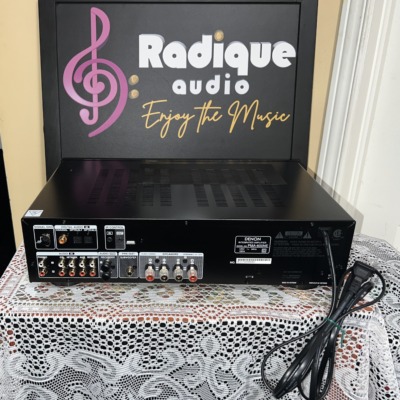
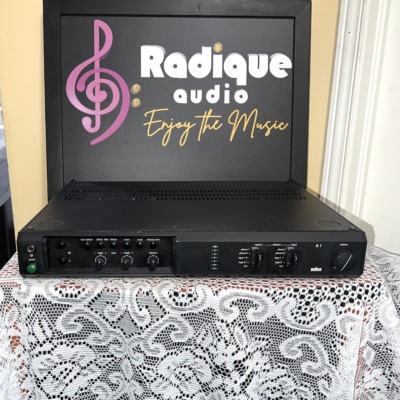
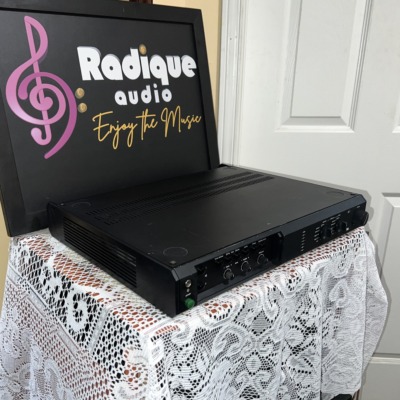
Braun Atelier A1 Vintage Integrated Amp – 55 WPC, Pre-Out, Japan
The component that makes the rest of an Atelier system work, and the one people hunting these usually look for first. 55 watts per channel into 8 ohms and 80 into 4, with a preamplifier section that separates from the power stage — engineering that is not an afterthought to the industrial design. 445 mm wide and 70 mm tall, the exact footprint of the T1 tuner and C1 deck, so the stack reads as one machined object. Made in Japan for Braun. Good condition.
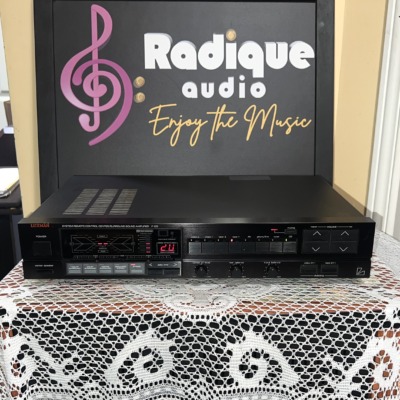
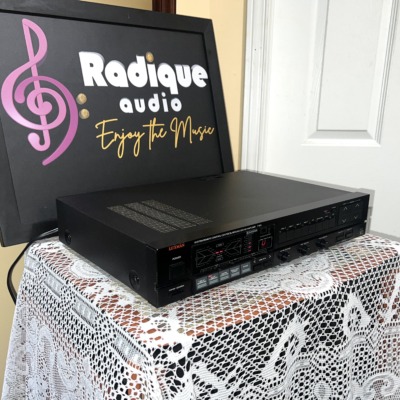
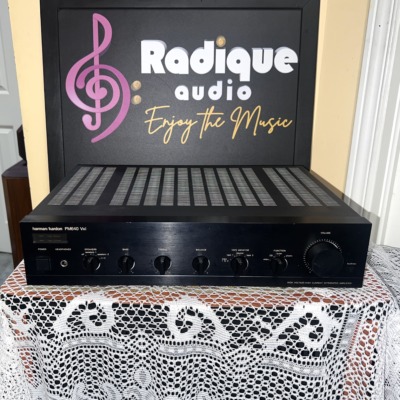
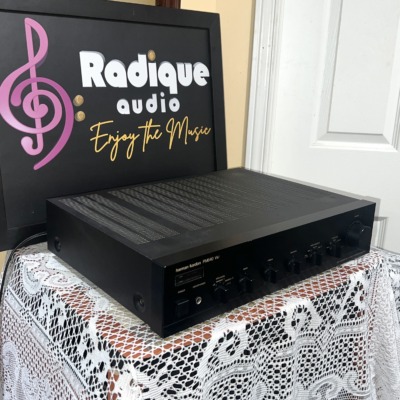
Harman Kardon PM640VXi Vintage Integrated Amp – 45 WPC, Japan
A 45-watt amplifier built by a company that spent the 1980s arguing the watts were the wrong thing to look at.
✔️ Condition: Very Good
✔️ Covered by Radique Warranty
✔️ Includes Perpetual Trade-Back Program eligibility
✔️ Expertly packed for safe shipping
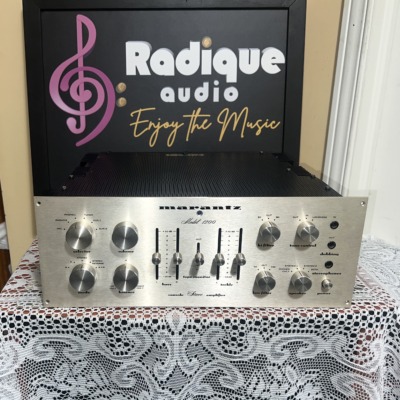
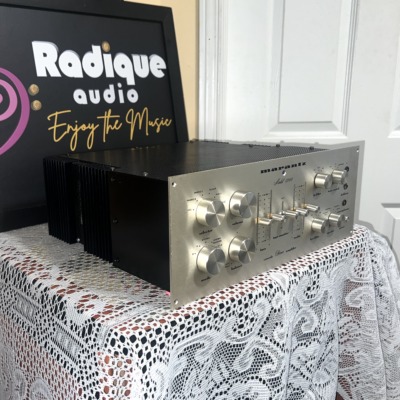
Marantz 1200 Vintage Integrated Amplifier – 100 WPC, Made in USA
Marantz's flagship integrated of the early seventies, built in Sun Valley, California, through our Level 2 service and playing as it should.
✔️ Very Good condition — faceplate and knobs present well, light marks of age; offered in the stock black metal case
✔️ Through our Level 2 service — a substantial round of component replacement on the bench, then bias and offset set and the amp run in
✔️ Covered by Radique Warranty
✔️ Includes Perpetual Trade-Back Program eligibility
✔️ Expertly packed for safe shipping
