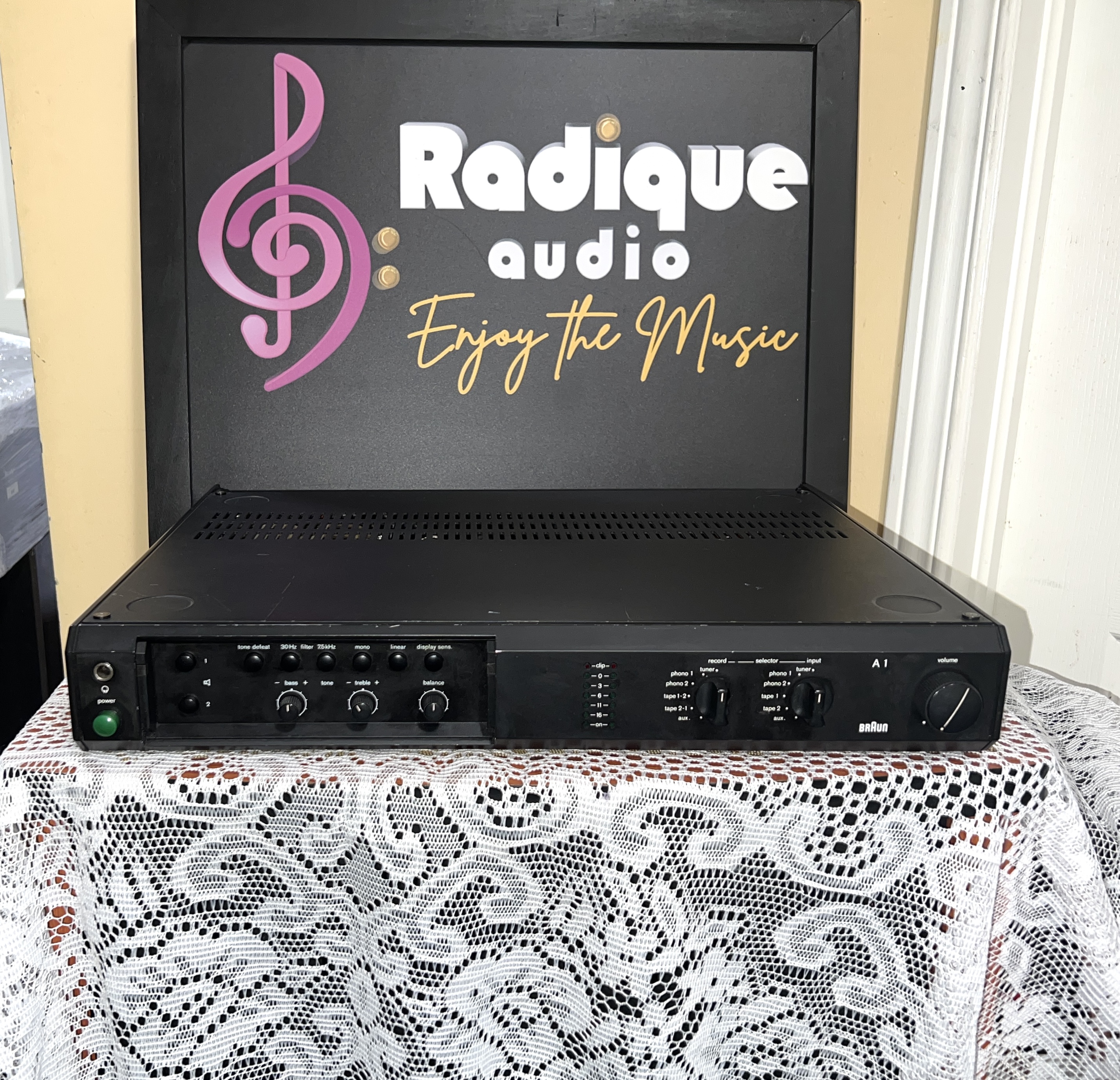
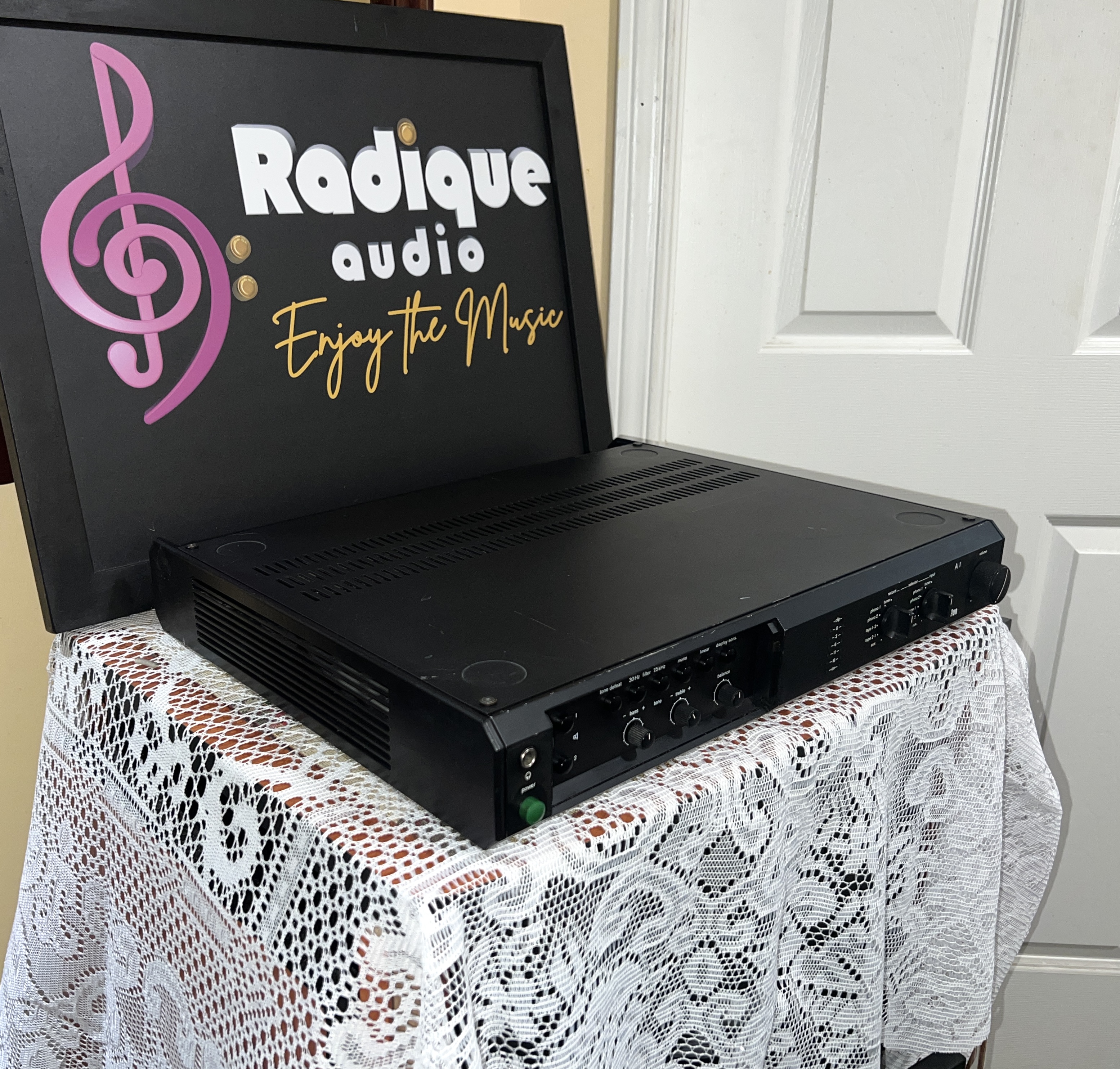
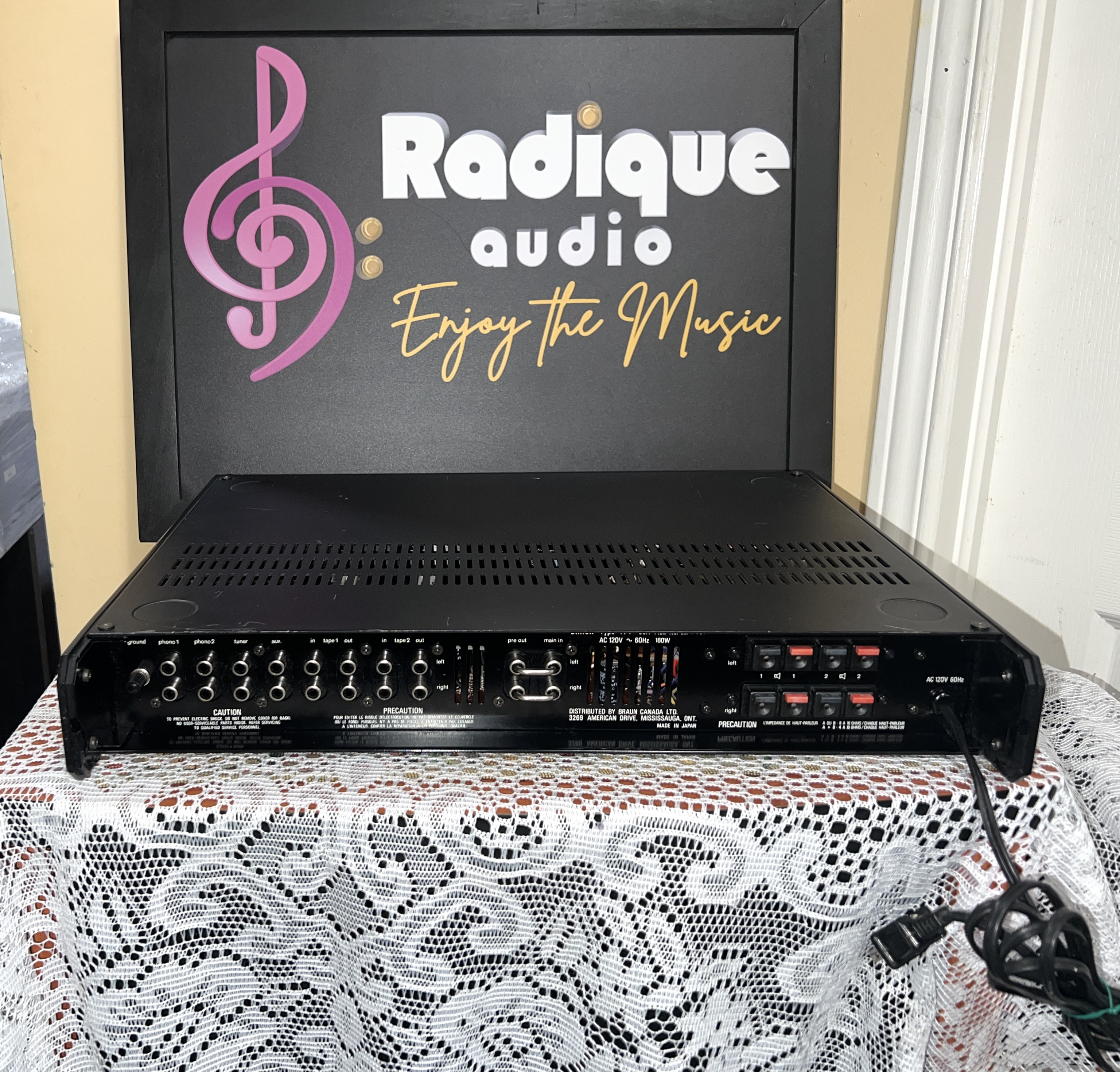

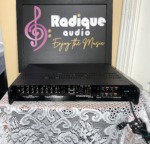
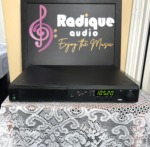
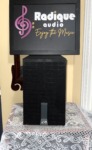
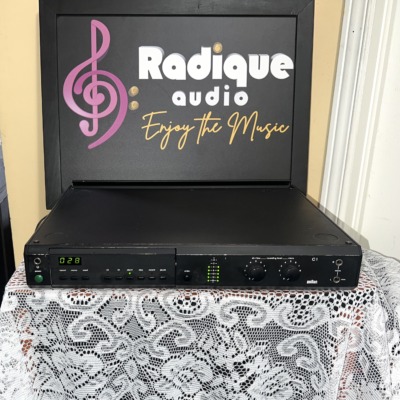
Braun Atelier A1 Vintage Integrated Amp – 55 WPC, Pre-Out, Japan
$445.00
The component that makes the rest of an Atelier system work, and the one people hunting these usually look for first. 55 watts per channel into 8 ohms and 80 into 4, with a preamplifier section that separates from the power stage — engineering that is not an afterthought to the industrial design. 445 mm wide and 70 mm tall, the exact footprint of the T1 tuner and C1 deck, so the stack reads as one machined object. Made in Japan for Braun. Good condition.
1 in stock
Braun Atelier A1 — 55 Watts a Channel, a Separable Preamplifier, and the Heart of the Atelier System
A Braun Atelier A1 stereo integrated amplifier in black, made in Japan, and the component that makes the rest of an Atelier system work — the piece people looking for one of these are usually looking for first.
The Atelier System
Braun’s Atelier system ran from 1980 to 1991 and is the most collected hi-fi the company ever produced: this A1 amplifier, the T1 tuner, the P1 turntable and the C1 cassette deck, all drawn in a single visual language and meant to be stacked or shelved as one object. The A1 shares the exact footprint of its siblings, 445 mm wide and 70 mm tall, so components sit together as though machined from one billet. Complete Atelier systems now trade as design pieces rather than as audio equipment. Individual components appear far less often, and in North America they are genuinely scarce.
More Than a Design Object
What separates the A1 from most design-led equipment of the period is that the engineering is not an afterthought. It delivers 55 watts per channel into 8 ohms and 80 watts into 4 ohms, with frequency response running from 10 Hz to 100 kHz and total harmonic distortion at 0.05 percent. The 4 ohm figure is the interesting one: an amplifier that increases its output into a harder load is one with a power supply built to hold up, and that is not the usual story on a slim 70 mm chassis where the easy path is to fit a small transformer and quote one comfortable number.
The Preamp Loop
The back panel carries a preamplifier output and main amplifier input as a separable loop, and that is worth more than it sounds. It means the A1 can be used as an integrated amplifier now and as a preamplifier later if you add a power amplifier, or its power section can be driven directly from something else. Very few integrated amplifiers at this size were built to come apart, and it is the feature that keeps an amplifier useful long after the system around it has changed.
Inputs
Input provision is generous and reflects what a serious system looked like in 1980. There are two phono inputs rather than one, plus tuner, tape and auxiliary, and separate selector switches for listening and for recording — so you can record from one source while listening to another, which is exactly the flexibility that disappeared from equipment once tape did. Speaker outputs are switchable A and B. Level indication is by light-emitting diode with switchable sensitivity, and there is a channel-separated clipping indicator that warns of overdrive independently, so it tells you something the level display alone cannot. Bass and treble are switchable, and the volume control is linear rather than stepped.
The Design
The industrial design is why these are collected, and it does not need overselling. Dieter Rams led the design team that produced the Atelier line, and the visual grammar he established at Braun is the acknowledged ancestor of a great deal of what has been designed since. What matters when you own one is quieter than that: everything on the front panel is there because it does something, the controls are laid out in the order you actually use them, and nothing is decorated. A component built to that discipline forty-five years ago still looks deliberate on a shelf today, which is more than can be said for most of what stood beside it in 1980.
Service
This unit has undergone our Level 1 service and testing, which should ensure many more years of reliable performance ahead. Level 1 covers thorough testing of all inputs, outputs and controls, deep cleaning and deoxidation of every pot and switch, replacement of any blown indicator lamps, and post-service burn-in and sign-off. The level describes how much work a unit needed on arrival, not how it performs on the way out: every unit leaves our bench to the same standard and carries the same warranty.
Condition
Cosmetically this amplifier is graded Good. There is light wear along the edges and more across the top, the honest signature of a component that spent its life in a stack. The front panel presents well, and none of the top wear is visible once the unit is on a shelf at eye level.
A scarce piece of design history that is also a properly engineered amplifier, made in Japan, and freshly through our bench. Available for pickup in Kanata, or shipped across Canada and internationally — we have sent equipment to fifteen countries in the past year, each piece packed in-house in 275 lb test double-wall boxes. Live shipping rates for your address are calculated at checkout. Backed by Radique Audio’s Bumper-to-Bumper Warranty and our Perpetual Trade-Back Program. Available for audition by appointment in Kanata.
Braun Atelier A1 Specifications
- Type: Stereo integrated amplifier, separable preamplifier and power amplifier sections
- Power output: 55 watts per channel into 8 ohms, 80 watts per channel into 4 ohms
- Frequency response: 10 Hz – 100,000 Hz
- Total harmonic distortion: 0.05%
- Inputs: Two phono, tuner, tape, auxiliary
- Outputs: Preamplifier output, speakers A and B, switchable
- Loop: Preamplifier out and main amplifier in, separable
- Selectors: Independent listening and recording source selectors
- Indication: LED level display with switchable sensitivity, channel-separated clipping indicator
- Tone controls: Switchable bass and treble, linear volume control
- Protection: Electronic and thermal power amplifier fusing
- Finish: Black
- Country of manufacture: Japan
- Dimensions: (Width x Height x Depth) 17.5 x 2.8 x 14.8 inches (445 x 70 x 375 mm)
- Weight: 18.1 lbs (8.2 kg)
⚠️ Important Information for International Buyers
This unit is configured for North American 110/120V power. Buyers outside North America will require a step-down transformer and appropriate plug adapter.
✅ Buy With Confidence — The Radique Promise
Backed by Radique Audio’s Bumper-to-Bumper Warranty and our Perpetual Trade-Back Program. When you’re ready to move on, we’ll take it back. That’s the Radique difference.
📦 Watch how we protect your gear — our unboxing video.
📺 Curious about our business? Check out our YouTube channel for behind-the-scenes videos and more!
📞 Questions? Use the Ask a Question button above, or call us at 613-416-9995.
⭐ Don’t Just Take Our Word For It
Radique Audio holds over 600 customer ratings averaging 4.97 stars across six public platforms — Facebook Marketplace, Kijiji, Canuck Audio Mart, Google and others. Every rating lives somewhere we don’t control, so you can read the originals yourself, including the less flattering ones. See what our customers say. 👉
| Weight | 20.1 lbs |
|---|---|
| Dimensions | 18.8 × 21.5 × 6.8 in |
You may also like…
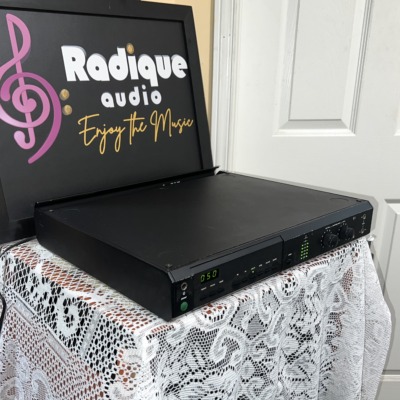
Braun Atelier C1 Slim Cassette Deck — Motorized Drawer, Japan
70 mm tall, almost exactly the height of a cassette case, and that is not a coincidence. The tape does not stand upright behind a door the way it does in every Japanese deck of the era — it lies flat and is drawn in horizontally on a motorised tray, the mechanism disappearing into a slot barely thicker than the cassette itself. The C1 arrived in 1980, two years before a CD player made that gesture familiar. Built for Braun in Japan, the matching deck to the Atelier A1 and T1. Good condition.
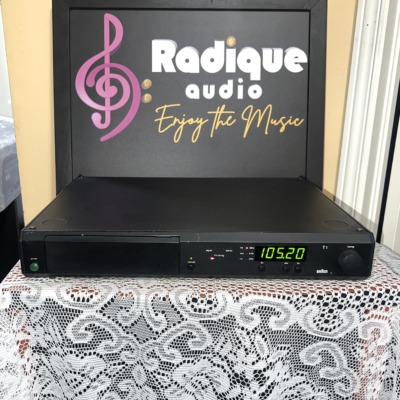
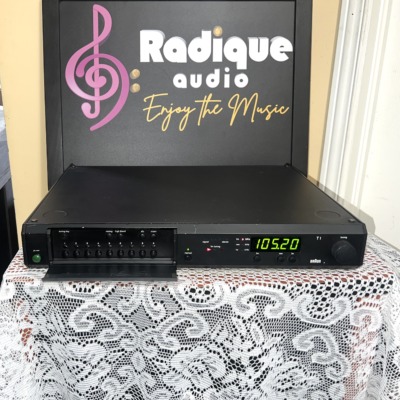
Braun Atelier T1 Slim AM/FM Tuner — 9 Presets, Quartz, Japan
An analogue tuner given a quartz-referenced five-digit readout — the precision of a synthesised design with a real analogue front end behind it, which tends to hold a weak signal more gracefully. The nine presets are not memories: each station button carries its own tuning adjustment, set by hand with a small screwdriver through the panel, so it is effectively nine little tuners in one chassis. Made in Japan, 445 mm wide and 70 mm tall to match the Atelier deck. Good condition.
Related Products
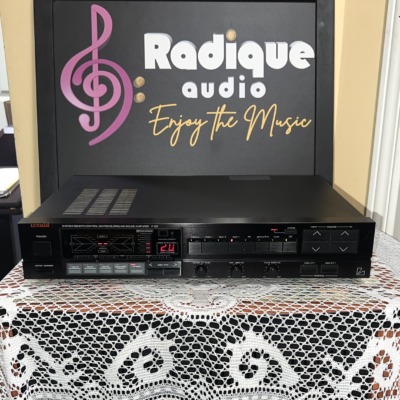
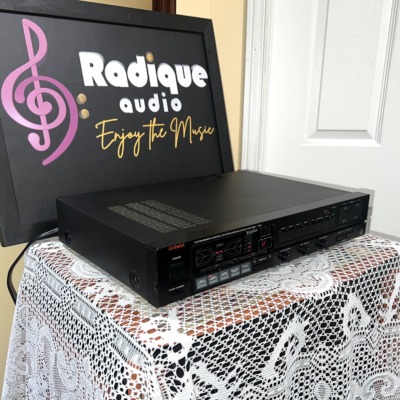
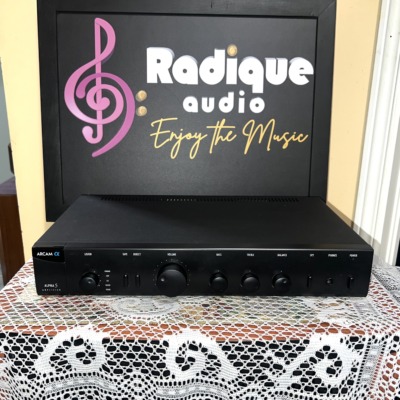
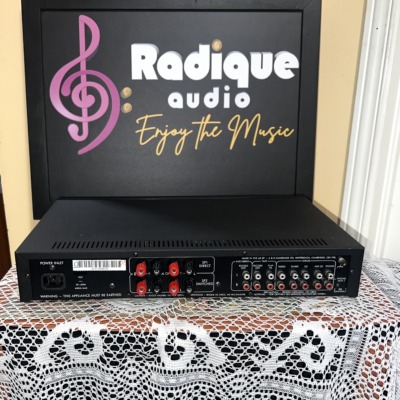
Arcam Alpha 5 Integrated Amplifier – 40 WPC, Made in England
A British integrated amplifier from Arcam's Cambridge factory, 40 watts a side, built on the principle that anything which does not improve the sound does not go in the box.
✔️ Condition: Very Good — tested and working properly
✔️ Covered by Radique Warranty
✔️ Includes Perpetual Trade-Back Program eligibility
✔️ Expertly packed for safe shipping
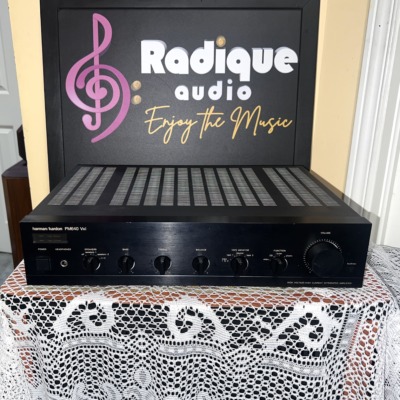
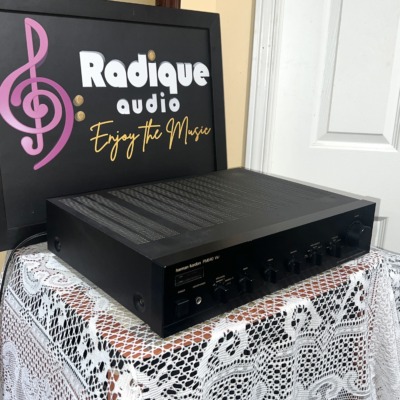
Harman Kardon PM640VXi Vintage Integrated Amp – 45 WPC, Japan
A 45-watt amplifier built by a company that spent the 1980s arguing the watts were the wrong thing to look at.
✔️ Condition: Very Good
✔️ Covered by Radique Warranty
✔️ Includes Perpetual Trade-Back Program eligibility
✔️ Expertly packed for safe shipping
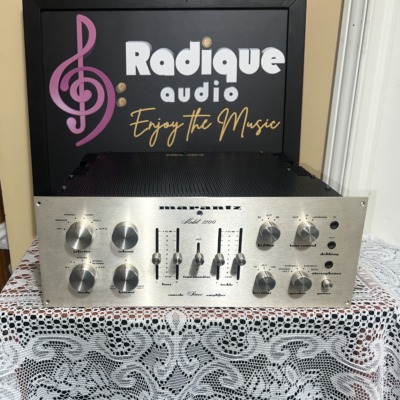
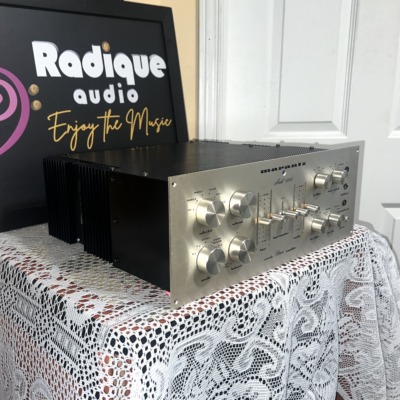
Marantz 1200 Vintage Integrated Amplifier – 100 WPC, Made in USA
Marantz's flagship integrated of the early seventies, built in Sun Valley, California, through our Level 2 service and playing as it should.
✔️ Very Good condition — faceplate and knobs present well, light marks of age; offered in the stock black metal case
✔️ Through our Level 2 service — a substantial round of component replacement on the bench, then bias and offset set and the amp run in
✔️ Covered by Radique Warranty
✔️ Includes Perpetual Trade-Back Program eligibility
✔️ Expertly packed for safe shipping
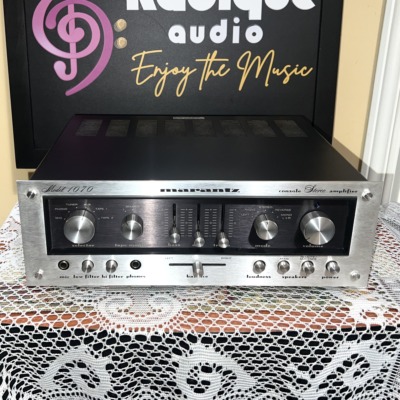
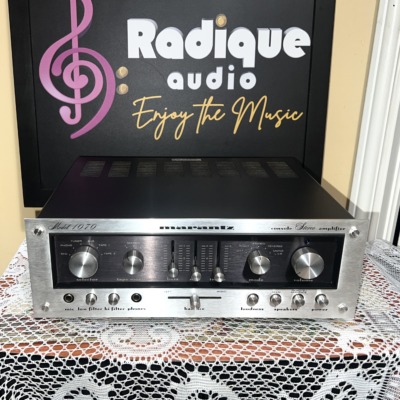
Marantz 1070 Vintage Integrated Amplifier – 35 WPC, Serviced
A slim mid-seventies Marantz integrated amplifier, through our Level 1 service, in very good condition, with a phono stage, a three-band tone section and a microphone input on the front panel.
✔️ Very good condition — free of significant marks
✔️ Through our Level 1 service on our own bench
✔️ MM phono stage, three-band tone sliders and a front-panel mic input
✔️ Covered by Radique Warranty
✔️ Includes Perpetual Trade-Back Program eligibility
✔️ Expertly packed for safe shipping
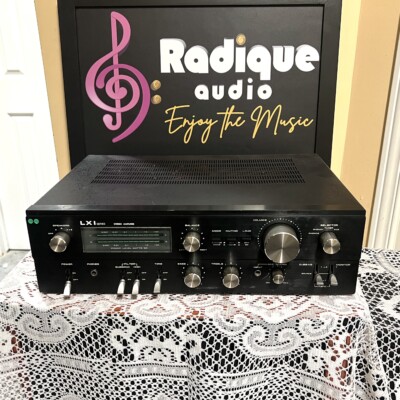
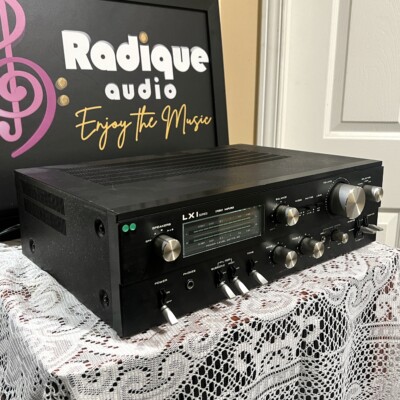
LXI AM4002 Vintage Integrated Amp – 80 WPC (est.), Dual Phono
Sold through Sears in the late seventies and heavier than that suggests — 22.9 lb, a 450 VA power rating, and metal knobs on everything. Two separate phono inputs, tape monitor and dubbing, subsonic and high filters, A/B speakers, and a front-panel mic mixing input. No factory manual survives, so the 80 WPC is our own conservative estimate. Level 1 serviced here; good cosmetic condition.