



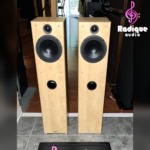
NAD C 272 Stereo Power Amplifier – 150 WPC, 300 W Bridged
$645.00
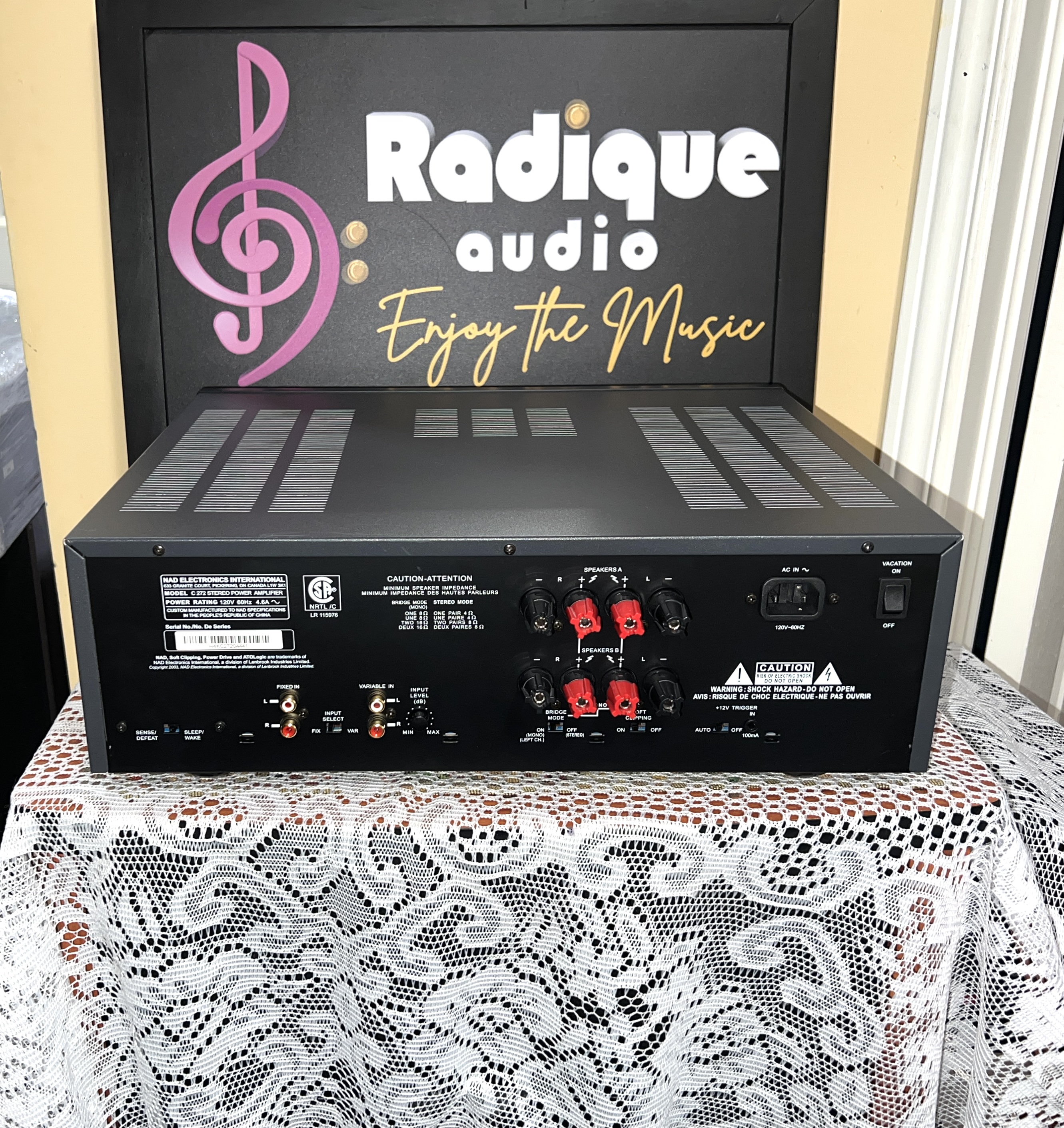
Start with the number that is not on the front: 150 watts per channel into 8 ohms and 150 into 4. Most amplifiers quote a comfortable 8 ohm figure and hope you never connect anything harder; this one holds its full rating into half the impedance, from a high-current Holmgren toroidal feeding all-discrete circuitry with NAD’s PowerDrive topology behind it. A BRIDGE MODE switch on the back turns it into a single mono channel of roughly 300 watts into 8 ohms, so the system can be rearranged later rather than replaced. Very Good condition.
Out of stock
This one has sold. Want first dibs on the next one?
We take these in regularly. Leave your name and email, and we’ll email you the moment one is listed, so you hear first. No cost, no obligation.
Email me when one is listed
Give your next receiver Bluetooth. RA-Twin II, $39.00 →
Other power amps we have in stock now
3 in stock · $495.00–$595.00 · all ship
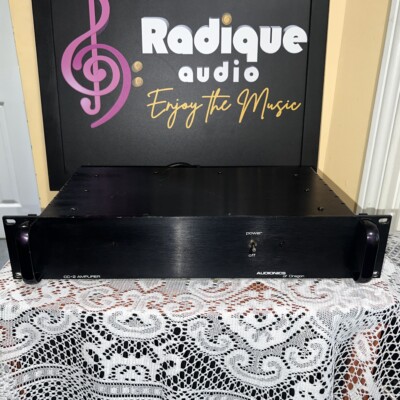 Audionics of Oregon CC-2 Vintage Power Amplifier – 70 WPC, USA$595.00Ships
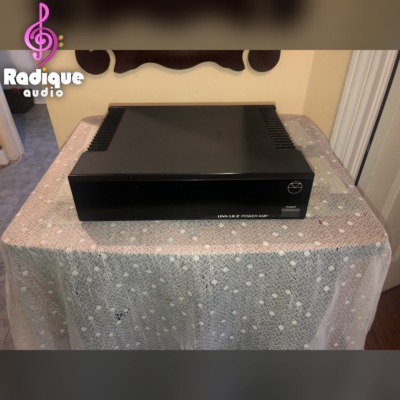 Linn LK2 Vintage Stereo Power Amplifier – 60 WPC, Compact$595.00Ships
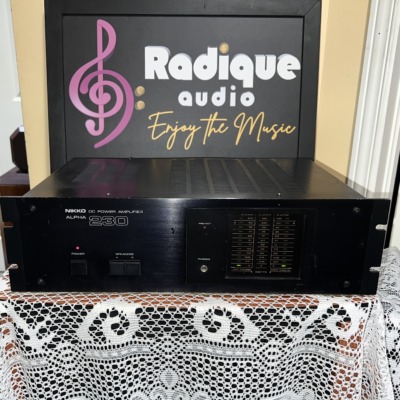 Nikko Alpha 230 Vintage Power Amplifier – 120 WPC$495.00Ships
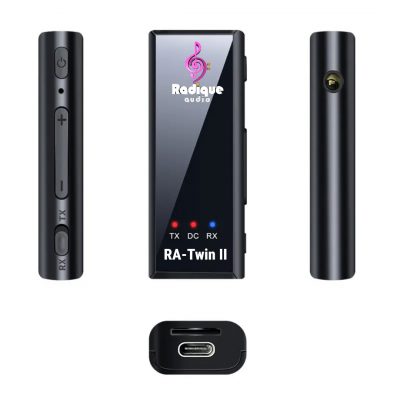
Give your next receiver Bluetooth.
The RA-Twin II adds Bluetooth streaming to any vintage receiver or amp with a spare input. Phone to stereo in about a minute, and nothing on the receiver is modified.
RA-Twin II, $39.00 →NAD C 272 — 150 Watts a Channel, Bridgeable to 300, and Built to Be Reconfigured
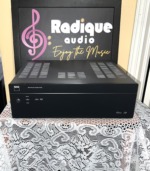
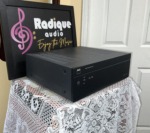
A NAD C 272 stereo power amplifier, 150 watts per channel, and one of the few amplifiers at any price that lets you decide later what shape your system takes.
Power and Current
Start with the number that matters, because it is not the one on the front. The C 272 is rated at 150 watts per channel into 8 ohms and 150 watts per channel into 4 ohms. Most amplifiers quote a comfortable 8 ohm figure and quietly hope you never connect anything harder. This one holds its full rating into half the impedance, which is the difference between a specification and a promise, and it is why the C 272 stays composed on speakers that make lesser amplifiers sound thin and strained at volume. Power comes from a high-current Holmgren toroidal transformer feeding all-discrete circuitry, with NAD’s PowerDrive supply topology behind it.
Bridge Mode
The C 272 is built to be reconfigured, and that is the real reason to buy one. A BRIDGE MODE switch on the rear panel turns the amplifier into a single mono channel of approximately 300 watts into 8 ohms, so the same amplifier that runs your main pair today becomes a monoblock for a bigger speaker tomorrow, or the amplifier for a passive subwoofer. The front panel carries a lit BRIDGE MODE indicator, so the configuration is visible from your seat rather than something you go around the back to check. One note that matters: bridged, the amplifier sees the load as halved, so NAD specifies 8 ohms minimum in bridge and does not recommend lower-impedance speakers there.
The Input Level Control
Then there is the feature almost nothing else in this class has. The C 272 offers both fixed and variable inputs, switch-selectable, with a level control that sets the amplifier’s own gain. Three things this solves. It lets you match levels when the C 272 drives speakers of different efficiency to the rest of a surround system. It rescues a preamplifier whose gain is so high that everything happens between nine and twelve o’clock on the volume knob, where the steps are coarse and channel balance is at its worst, by letting you turn the input down and use the whole range of the control instead. And it makes bi-amping work properly: when two different amplifiers drive the woofer and the tweeter of the same speaker, one always has more gain than the other, and this is the control that brings them back into balance. A useful side effect NAD notes in the manual is that reducing the input level also pushes down any residual hiss or hum the preamplifier’s high-level stage contributes.
Adding a Second C 272 Later: Bi-Amping or Monoblocks
We have one C 272 here. It is worth knowing what a second one would add, whenever you come across it, because this amplifier was designed for the job.
A second C 272 opens something a single amplifier cannot do. Vertical bi-amping puts one amplifier on each loudspeaker, one channel driving the low-frequency section and the other the high-frequency section, so each speaker gets its own transformer and its own supply and the bass demands of one channel stop modulating the supply feeding the other. The obstacle that normally spoils bi-amping is gain: any two amplifiers differ slightly, and a woofer and tweeter running at mismatched levels sound worse than they did before you started. The input level control is the fix, in hardware, at the amplifier, in about a minute. NAD’s manual names bi-amping as one of the three reasons that control exists. The alternative is a pair of bridged 300 watt monoblocks, one per speaker, each with its own supply and its own AC feed — a great deal of monoblock for the money if your speakers are a comfortable 8 ohm load, and the reason to bi-amp instead if they dip lower. The same two amplifiers do either job, so the choice stays open.
The Rest of the Specification
The rest is the sort of specification NAD has always quietly over-delivered on. Two full sets of speaker binding posts wired in parallel, so bi-wiring or a second pair in another room needs no adapters. Switchable Soft Clipping, NAD’s long-standing circuit that rounds off peaks instead of hard-clipping them, with its own front-panel indicator. Gold-plated RCA inputs, a detachable IEC power cord, and an output relay that mutes switch-on and switch-off and stands guard against short circuits and overheating.
Integration
It will also fit into an automated system without a controller. NAD’s ATO Logic gives the amplifier three independent ways to wake up: the front-panel button, a 12V trigger from a preamplifier or processor, or its own signal-sensing circuit, which brings it out of standby the moment audio appears at any input and returns it to standby after roughly five minutes of silence. A rear VACATION switch is the true master cut-off for when the house is empty.
Condition
Cosmetically this amplifier is graded Very Good.
A serious, genuinely flexible power amplifier that does not lose its footing on a difficult load and can be reconfigured as your system changes rather than replaced. Available for pickup in Kanata, or shipped across Canada and internationally — we have sent equipment to fifteen countries in the past year, each piece packed in-house in 275 lb test double-wall boxes. Live shipping rates for your address are calculated at checkout. Backed by Radique Audio’s Bumper-to-Bumper Warranty and our Perpetual Trade-Back Program. Available for audition by appointment in Kanata.
NAD C 272 Specifications
- Type: Two-channel stereo power amplifier, all-discrete circuitry, bridgeable to mono
- Continuous power: 150 watts per channel into 8 ohms, 150 watts per channel into 4 ohms, 20 Hz – 20,000 Hz, both channels driven
- Bridged mono power: Approximately 300 watts into 8 ohms
- Rated total harmonic distortion: 0.03%
- Frequency response: -3 dB at 3 Hz and 70,000 Hz
- Signal to noise ratio: Better than 100 dB referenced to 1 watt, better than 120 dB referenced to rated power
- Damping factor: Greater than 150
- Input sensitivity: 1.2 V, plus or minus 0.1 V
- Input impedance: 20 kilohms, 470 pF
- Voltage gain: 29 dB
- Inputs: Fixed and Variable line inputs on gold-plated RCA, switch-selectable, with input level control
- Outputs: Two sets of loudspeaker binding posts wired in parallel for bi-wiring or a second pair
- Minimum load impedance: 4 ohms in stereo, 8 ohms in bridged mono
- Power supply: High-current Holmgren toroidal transformer, PowerDrive topology
- Features: Switchable Soft Clipping, Bridge Mode switch with front-panel indicator, 12V trigger input, signal-sensing auto turn-on, ATO Logic, rear Vacation master switch, detachable IEC power cord
- Dimensions: (Width x Height x Depth) 17.1 x 5.2 x 13.8 inches (435 x 133 x 350 mm)
- Weight: 27.5 lbs (12.5 kg)
⚠️ Important Information for International Buyers
This unit is configured for North American 110/120V power. Buyers outside North America will require a step-down transformer and appropriate plug adapter.
✅ Buy With Confidence — The Radique Promise
Backed by Radique Audio’s Bumper-to-Bumper Warranty and our Perpetual Trade-Back Program. When you’re ready to move on, we’ll take it back. That’s the Radique difference.
📦 Watch how we protect your gear — our unboxing video.
📺 Curious about our business? Check out our YouTube channel for behind-the-scenes videos and more!
📞 Questions? Use the Ask a Question button above, or call us at 613-416-9995.
⭐ Don’t Just Take Our Word For It
Radique Audio holds over 600 customer ratings averaging 4.97 stars across six public platforms — Facebook Marketplace, Kijiji, Canuck Audio Mart, Google and others. Every rating lives somewhere we don’t control, so you can read the originals yourself, including the less flattering ones. See what our customers say. 👉
| Weight | 29.5 lbs |
|---|---|
| Dimensions | 17.8 × 21.1 × 9.2 in |
NAD began in London in 1972 as New Acoustic Dimension, a brand created by a group of hi-fi distributors and led by American audio executive Martin L. Borish. Since 1999 it has been part of Lenbrook of Pickering, Ontario, which also owns PSB. We carry NAD stereo receivers and AV receivers, integrated and power amplifiers, phono preamps and CD players. We've had more than 110 NAD listings so far, covering nearly 70 different models. Every used NAD here is inspected, tested and serviced as required, then photographed in-house and covered by our Bumper-to-Bumper Warranty and Perpetual Trade-Back Program. Don't see the model you want? Tell us on First Dibs and we'll email you when one arrives.
Our five best-selling NAD models so far: the 2150 power amplifier, the 705 and 7020e stereo receivers, the T 531 DVD and CD player, and the 7140 receiver.
The NAD story, 1972 to today
NAD began in London in 1972, when a group of hi-fi distributors organized by Martin L. Borish, then of Acoustic Research, planned a new brand of affordable electronics they could sell: New Acoustic Dimension. Borish left his post as president of Acoustic Research in 1976 to run NAD full time, and in its early years NAD was run from his London apartment.
The 3020. Norwegian-born engineer Bjørn Erik Edvardsen designed the NAD 3020 integrated amplifier, introduced in 1978 at 20 watts per channel and built in Taiwan. It sold well over a million units, and Stereophile named it one of the 100 most significant audio products of its first 40 years. NAD calls it the best-selling hi-fi amplifier in history.
From distributors to owners. Lenbrook became NAD's Canadian distributor in 1978. In the 1990s NAD was owned by the Scandinavian distributor AudioNord, and in 1999 the Lenbrook Group of Pickering, Ontario, bought it.
Today. NAD is still part of Lenbrook, alongside PSB and Bluesound. Its range runs from C-series integrated amplifiers such as the C 320BEE, named with Edvardsen's initials, to direct-digital designs and the Masters Series. The C 3050 LE of 2023, a 50th-anniversary model, was limited to 1,972 units.
Which NAD is which?
1970s receivers: early models such as the 160 and 160a.
The 3020 family (from 1978): the 3020 and 3020e integrated amplifiers, and receivers such as the 7020 and the 7020e of 1988, which shares the 3020e's amplifier section.
1980s amplifiers: the 3140 and 3150 integrated amps and the 2150 and 2200 power amps, many with NAD's soft-clipping and bridging switches. Our best-selling 2150 is a 50-watt-per-channel power amp from the early 1980s.
Later receivers: the 7140 (about 1984 to 1989), the Monitor Series 7100 and its siblings from 1988, and the 705 of the early 1990s.
Home theatre: T-series AV receivers such as the T 757, whose Modular Design Construction lets the receiver be upgraded with new modules, and the T 531 DVD and CD player.
C-series and Masters Series (2000s on): the C 320BEE and later C-series integrated amps, the direct-digital C 390DD, and the Masters Series.
Buying used NAD: what to check
Pre-out and main-in jumpers. Many NAD integrated amps split the preamp and power amp at the back panel. If the jumpers between pre-out and main-in are missing, the inputs play nothing, so make sure they are there.
Switches on the back. Many 1980s NADs have soft-clipping, bridging or impedance switches. An amp that sounds wrong may just have one set oddly, so check every switch before blaming the amp.
Age. Technicians restoring 3020s report blown fuses, failed output transistors and leaky capacitors, and reviewers call cleaning the selectors and volume control almost mandatory on 1980s units. Ask what has been done.
Receivers. On late-1980s Monitor Series receivers, test every front-panel button, both speaker relays and the preset memory. The 7140's display can fail, though it can be repaired.
Disc players. Play both a CD and a DVD in a T-series player before you buy.
Everything we list is inspected, tested and serviced as required here, and comes with our warranty.
You may also like…
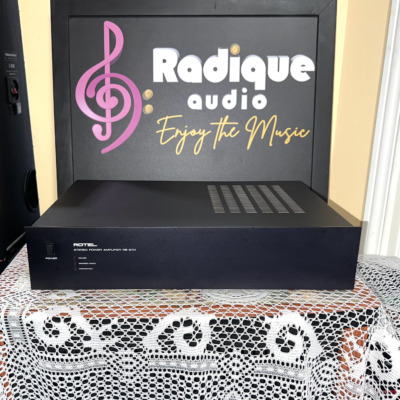
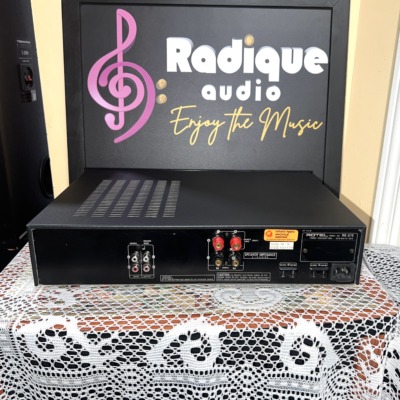
Rotel RB-870 Stereo Power Amplifier – 60 WPC, Bridgeable
Sixty watts a channel into 8 ohms at 0.03% distortion, a damping factor of 280, and response running out to 120kHz. A rear-panel switch bridges the two channels into a single 120-watt mono amplifier, so a second one later gives you monoblocks. The speaker terminals clamp bare wire or spades only — no bananas. Very good condition, inspected and tested.
Related Products
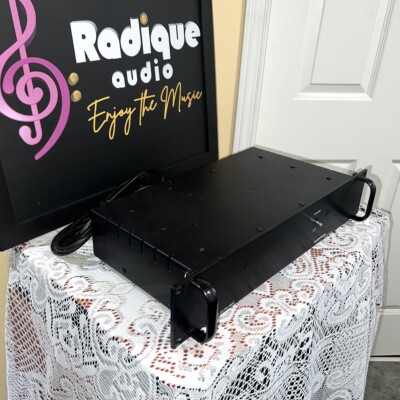
Rotel RB-870 Stereo Power Amplifier – 60 WPC, Bridgeable
Sixty watts a channel into 8 ohms at 0.03% distortion, a damping factor of 280, and response running out to 120kHz. A rear-panel switch bridges the two channels into a single 120-watt mono amplifier, so a second one later gives you monoblocks. The speaker terminals clamp bare wire or spades only — no bananas. Very good condition, inspected and tested.
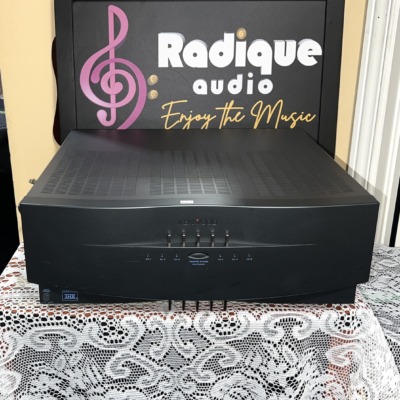
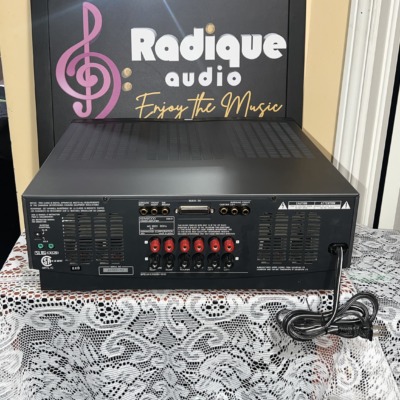
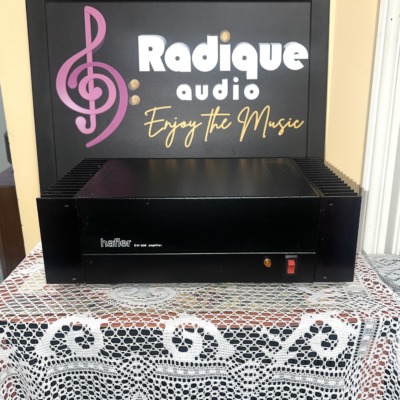
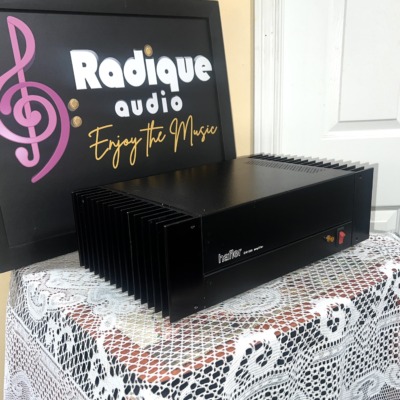
Hafler DH-200 Vintage Power Amplifier – 100 WPC, MOSFET, USA
David Hafler's second act, and the amplifier that put MOSFETs into American hi-fi.
✔️ Condition: Very Good
✔️ Covered by Radique Warranty
✔️ Includes Perpetual Trade-Back Program eligibility
✔️ Expertly packed for safe shipping
