
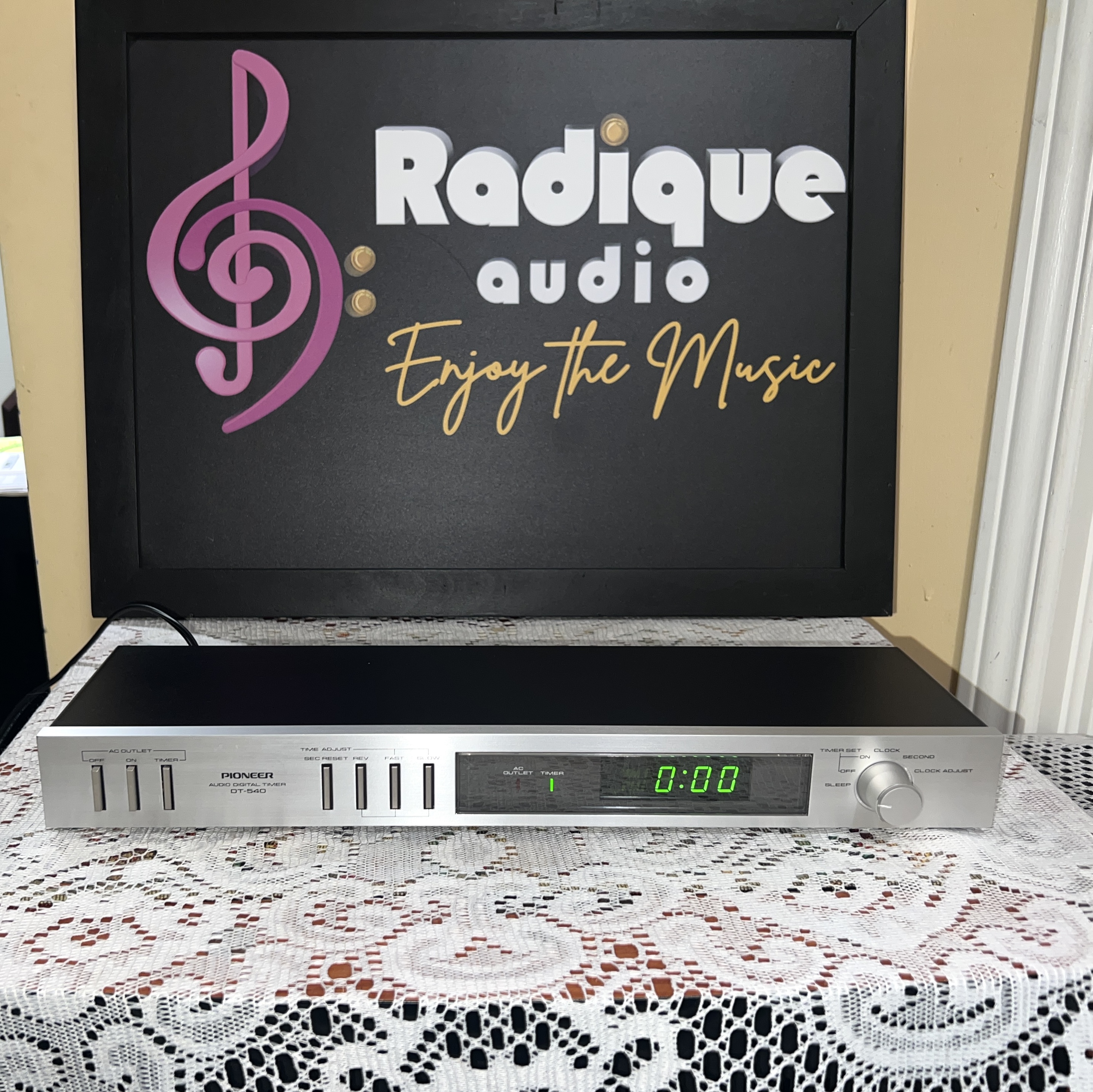
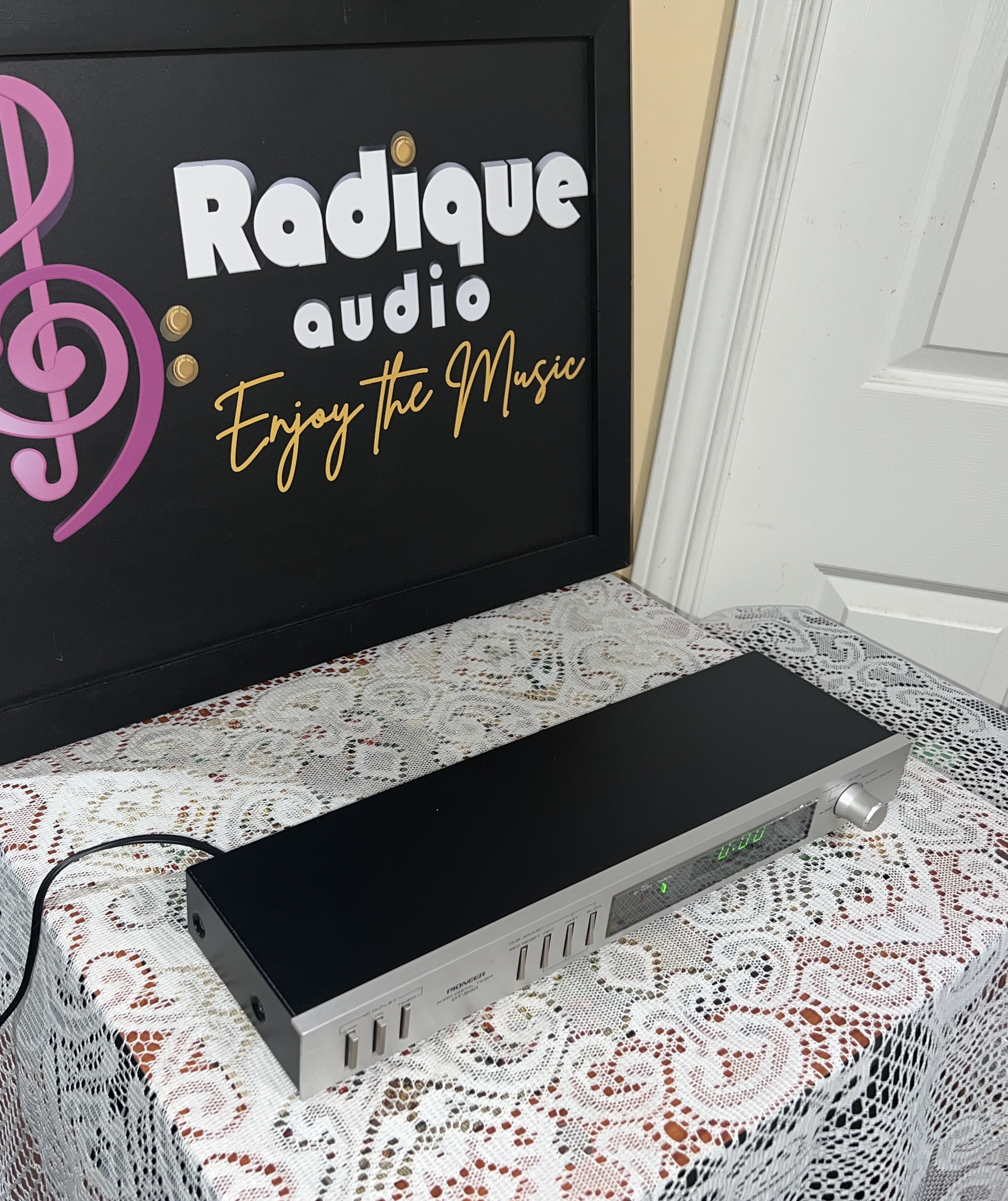
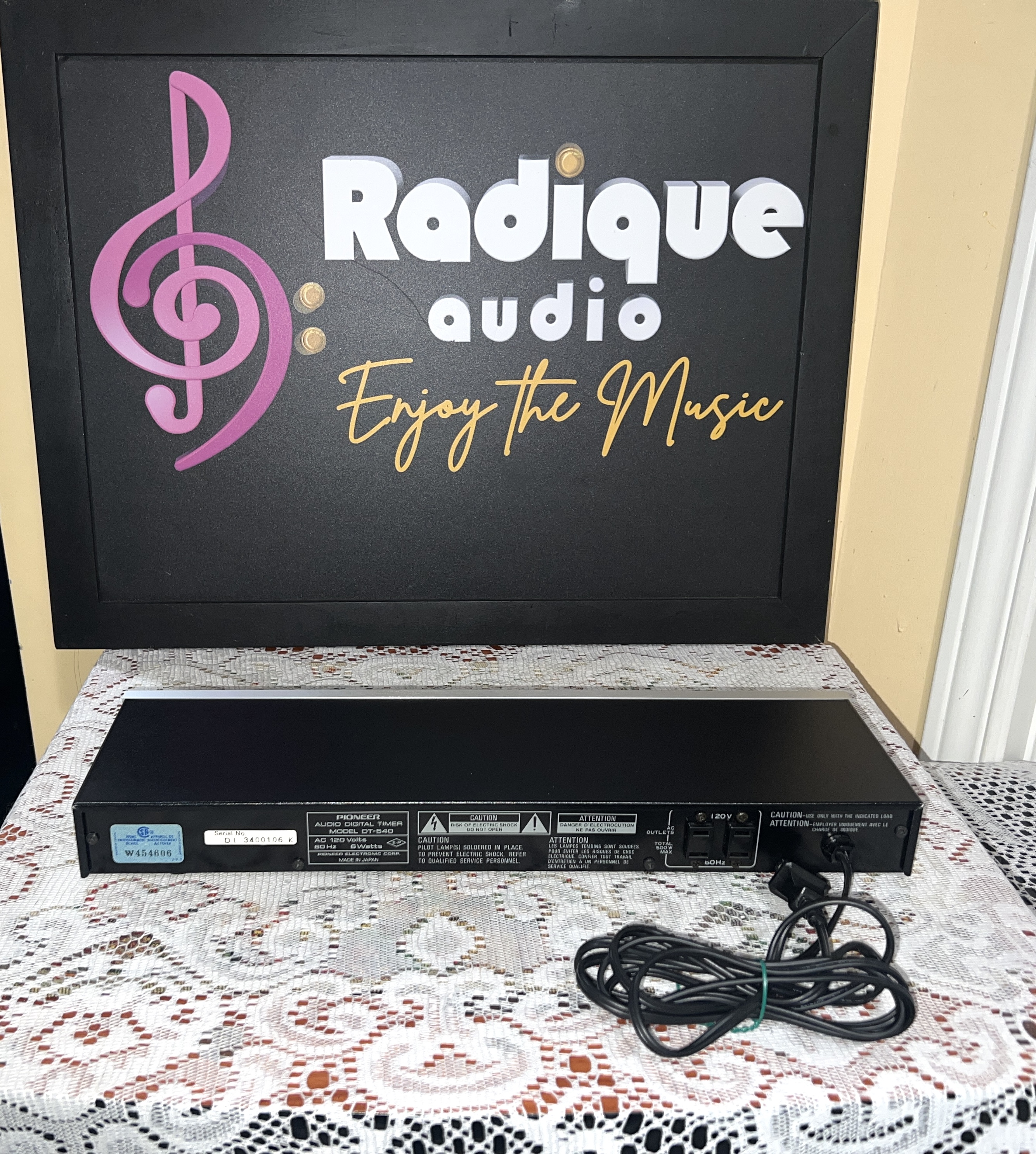

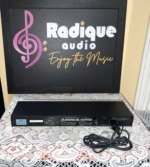

Pioneer DT-540 Audio Digital Timer – Made in Japan, 1983
$145.00
Consignment piece. We sell it on behalf of its owner, and it's covered exactly like everything else we sell: inspected and serviced as required, and backed by our Bumper-to-Bumper Warranty and Perpetual Trade-Back Program. The one difference: it isn't eligible for Cue It Up layaway.
Two switched AC outlets on a 24-hour schedule, accurate to a tenth of a second against line frequency, with a sleep function and a fluorescent display tube. Rated to 500 watts total — enough for a receiver, deck, turntable and tuner, but not a large power amplifier. Full component width at 16.5 inches. Very good condition, timer and clock both confirmed working.
1 in stock
Pioneer DT-540 — The Silver-Era Component Almost Nobody Kept
A proper component-width digital timer from Pioneer’s silver era — the piece most people don’t know exists until they see a vintage system that has one.
What It Does
The DT-540 does something simple and does it precisely: it switches two AC outlets on and off on a 24-hour schedule, with timer accuracy to a tenth of a second synchronised to line frequency, plus a sleep function. Plug a receiver and a tape deck into it and the system will wake you with the radio in the morning, record a broadcast while you are out, and shut itself down when you fall asleep. In 1983 that was genuinely clever engineering. Today it is something better — a component that makes a vintage system behave the way its owners originally intended.
The Honest Case for One
Be straightforward about the practical case. A modern smart plug will switch power on a schedule for very little money. What it will not do is sit in a rack at full component width, in matching Pioneer silver, with a fluorescent display tube glowing alongside your receiver and tape deck. This is bought for the same reason people buy the matching tuner rather than streaming from a phone: because the stack should look and work like a stack. That it remains genuinely useful is a bonus rather than the argument.
Capacity
The dual outlets are rated to 500 watts total, which comfortably covers a receiver, a deck, a turntable and a tuner. A large power amplifier is beyond it, and we would rather say so now than have you discover it later. At 16.5 inches wide it sits correctly with full-size components, and at 3.3 lbs it will not trouble a shelf.
Rarity
These were sold alongside Pioneer’s X-A series systems and turn up far less often than the receivers and decks they were meant to accompany. Anyone assembling a period-correct silver-face Pioneer system will already know how hard the small pieces are to find.
Condition
Cosmetically graded Very Good, and we don’t hand that rating out casually. Thoroughly inspected and tested in-house, with both timer and clock functions confirmed working.
An uncommon and genuinely charming piece of the silver era, working as designed and ready to finish a system that deserves finishing.
Pioneer DT-540 Specifications
- Design: Audio digital timer, dual switched AC outlets
- Display: Fluorescent display tube
- Timer type: 24 hour
- Timer accuracy: 0.1 second
- Sleep timer accuracy: 59 seconds
- Time accuracy: Synchronised with line frequency
- Outlet rating: 500 watts maximum, 120V 60Hz
- Year: 1983
- Original manufacturer: Pioneer – Made in Japan
- Dimensions: (Width x Height x Depth) 16.54 x 2.05 x 5.67 inches (420 x 52 x 144 mm)
- Weight: 3.3 lbs (1.5 kg)
⚠️ Important Information for International Buyers
This unit is configured for North American 110/120V power. Buyers outside North America will require a step-down transformer and appropriate plug adapter.
✅ Buy With Confidence — The Radique Promise
Backed by Radique Audio’s Bumper-to-Bumper Warranty and our Perpetual Trade-Back Program. When you’re ready to move on, we’ll take it back. That’s the Radique difference.
📦 Watch how we protect your gear — our unboxing video.
📺 Curious about our business? Check out our YouTube channel for behind-the-scenes videos and more!
📞 Questions? Use the Ask a Question button above, or call us at 613-416-9995.
| Weight | 5.3 lbs |
|---|---|
| Dimensions | 9.67 × 20.54 × 6.05 in |
Pioneer began in Tokyo in January 1938, when Nozomu Matsumoto set up shop around the A-8 speaker he had built the year before. By the late 1970s its SX receivers were at the heart of the hi-fi power race. We carry Pioneer stereo receivers and AV receivers, CD players, cassette decks, tuners and equalizers. We've had more than 240 Pioneer listings so far, covering 140 different models. Every used Pioneer here is inspected, tested and serviced as required, then photographed in-house and covered by our Bumper-to-Bumper Warranty and Perpetual Trade-Back Program. Don't see the model you want? Tell us on First Dibs and we'll email you when one arrives.
Pioneer is one of our two top-selling brands of vintage amps and receivers, along with Marantz. Our five best-selling Pioneer models so far: the SX-650, SX-750, SX-580, SX-780 and SX-680, all vintage stereo receivers from the 1976 and 1978 SX families. We also offer our custom cherry cabinets for these vintage Pioneers, hand-made from all-natural Ottawa Valley cherry, and we've upgraded dozens of Pioneers with them so far.
The Pioneer story, 1938 to today
Nozomu Matsumoto developed the A-8 speaker in 1937, and in January 1938 he set up Fukuin Shokai Denki Seisakusho in Tokyo. "Pioneer" was first the name of that speaker. Some histories give 1936 in Osaka as the start, but Pioneer dates itself to January 1938 in Tokyo. The company was incorporated in 1947 and renamed Pioneer Electronic Corporation in 1961.
Stereo and the US. In 1962 Pioneer introduced the PSC-5A, which it calls the first stereo with separate speaker cabinets, and its first PL turntables. Pioneer Electronics U.S.A. was founded in New York in 1966.
The power race. After a 1974 US Federal Trade Commission rule tightened how amplifier power was rated, receiver makers competed on watts. Pioneer's SX-1250 of 1976 was rated at 160 watts per channel, and the SX-1980 of 1978 to 1980 at 270.
CD and Elite. The P-D1 of 1982 was Pioneer's first CD player, and Elite-branded components were on sale by 1985.
Today. Pioneer sold its home audio business to Onkyo in 2015, keeping its car and DJ businesses, and Pioneer-branded home theatre gear was later made under licence. In December 2025 CarUX, part of Taiwan's Innolux, completed its purchase of Pioneer Corporation, which now focuses on in-car products.
Which Pioneer is which?
Early-1970s SX receivers: models such as the SX-424 to SX-828, rated at about 15 to 50 watts per channel.
The 1976 "x50" SX receivers: from the SX-450 at 15 watts per channel up to the SX-1250 at 160. Our best-selling SX-650 and SX-750 come from this family.
The 1978 "x80" SX receivers: including the SX-580, SX-680 and SX-780 we sell most, up to the SX-1980 flagship with quartz-lock tuning, which weighs more than 35 kg.
Spec and Exclusive separates: higher-end amplifiers such as the Spec-1 preamplifier (1976 to 1980) and the Exclusive C3/M3 pair (1974).
Elite: Pioneer's upper line from the mid-1980s, for example the PD-9010X CD player.
PL turntables, CT cassette decks and CD players: PL turntables from 1962, such as the PL-12 and the linear-tracking PL-L1; CT decks such as the three-head CT-F1000; and CD players from the 1982 P-D1 to magazine-loading changers such as the PD-M6.
Buying used Pioneer: what to check
Controls and switches. Crackle when you turn a control or work a switch usually means dirt, and restorers clean every pot and switch.
Capacitors. Electrolytic capacitors in 1970s receivers are often past their best, and full restorations replace them.
Big SX models. Owners and restorers report heat stress on the power-supply board of large receivers such as the SX-1250. Ask what has been done.
Relay, lamps and bias. The protection relay is a common replacement, dial lamps burn out and are often converted to LED, and restorers set the bias and DC offset.
Cassette decks. Check the heads, fast-forward and rewind, Dolby and every button. Belts age even when the deck looks perfect.
Everything we list is inspected, tested and serviced as required here, and comes with our warranty.
You may also like…
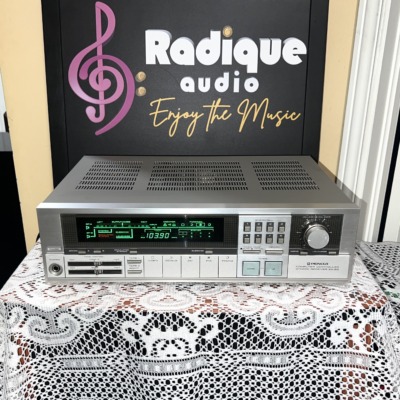
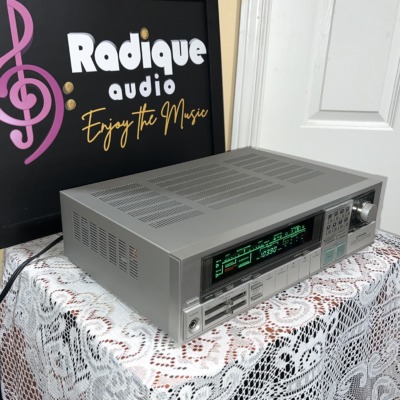
Pioneer SX-50 Vintage Stereo Receiver – 50 WPC, Silver Face
Fifty watts a channel into 8 ohms at 0.007% distortion, and — unusually for a receiver this size — pre-out and main-in jacks on the back, so it can feed a subwoofer, take an equalizer in the loop, or hand off to a larger power amp. Introduced in 1983 with switchable CD and TV audio inputs, presets held by three AA cells, and the silver face of the decade that was ending. Graded Very Good.
Related Products
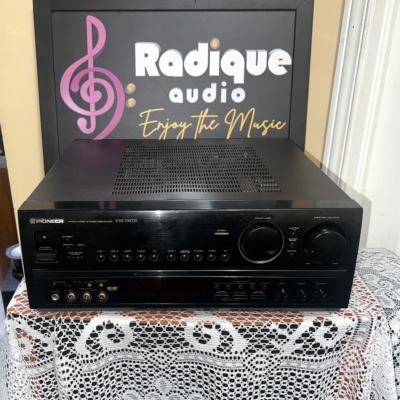
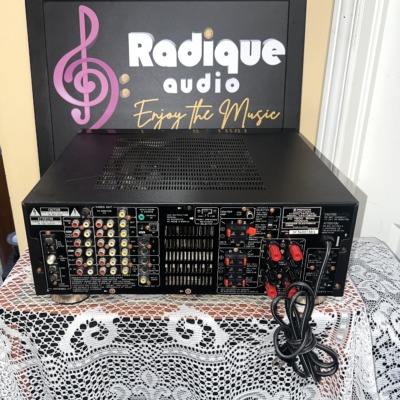
Pioneer VSX-D903S AV Receiver – 1994, For Parts/Repair
Sold as-is for parts or repair, with no warranty and no trade-back: it powers on, but there is no sound from the front or surround speakers. A 1994 Pioneer Pro Logic receiver for a donor or a DIY repair.
✔️ Sold as-is, for parts or repair
✔️ No warranty or trade-back; all sales final
✔️ Expertly packed for safe shipping
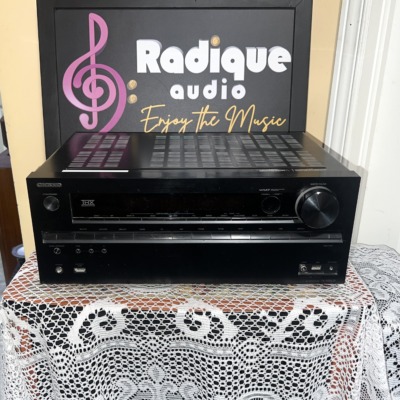
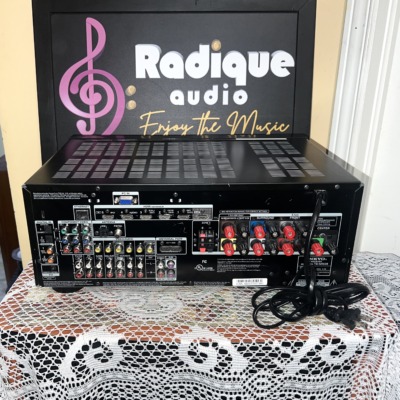
Onkyo TX-NR609 7.2 AV Receiver – 2011, For Parts/Repair
Sold as-is for parts or repair, with no warranty and no trade-back: a relay clicks repeatedly but it never powers on, and our senior tech was uncertain it could be repaired. A 2011 Onkyo 7.2 receiver for a donor or a troubleshooting project.
✔️ Sold as-is, for parts or repair
✔️ No warranty or trade-back; all sales final
✔️ Expertly packed for safe shipping
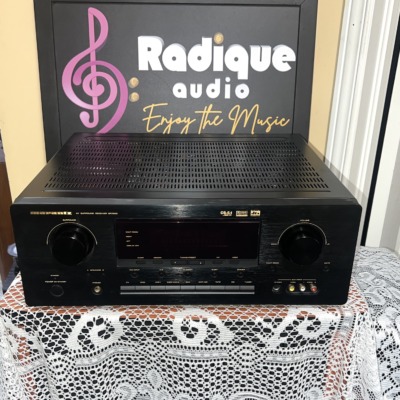
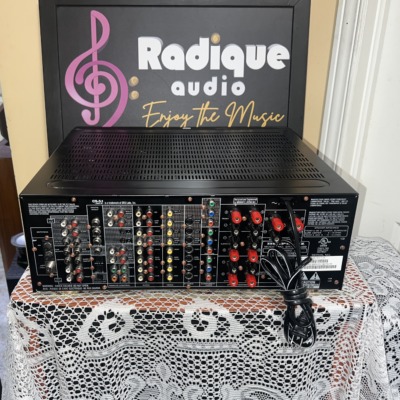
Marantz SR7200 6.1 AV Receiver – For Parts/Repair
Sold as-is for parts or repair, with no warranty and no trade-back: our confirmed issue is a scratchy front left channel that cuts in and out when its connection is wiggled. A Marantz 6.1 receiver of 2001 for a DIY repair or high-quality donor parts.
✔️ Sold as-is, for parts or repair
✔️ No warranty or trade-back; all sales final
✔️ Expertly packed for safe shipping
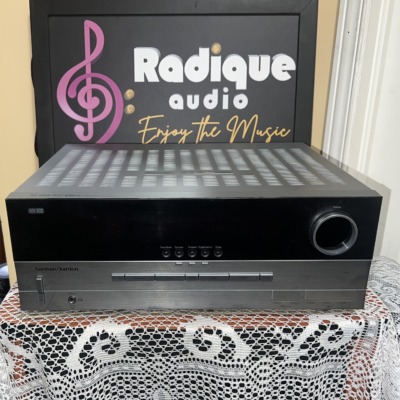
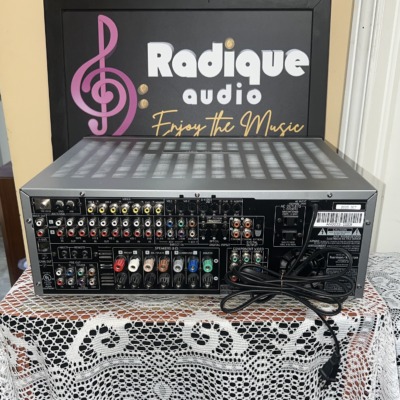
Harman Kardon AVR 340 7.1 AV Receiver – For Parts/Repair
Sold as-is for parts or repair, with no warranty and no trade-back: sound comes only from the subwoofer output, on analog and digital, even after a factory reset. A Harman Kardon 7.1 receiver for the DIY repair crowd.
✔️ Sold as-is, for parts or repair
✔️ No warranty or trade-back; all sales final
✔️ Expertly packed for safe shipping

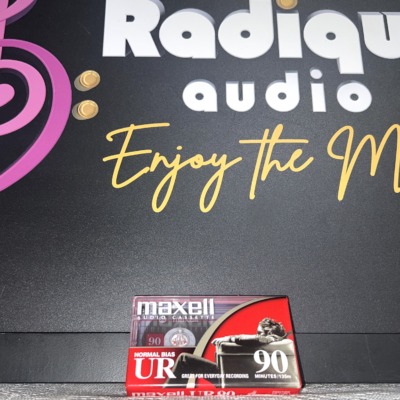
Maxell UR 90 Blank Cassette – Normal Bias, Sealed
A sealed, unused Maxell UR 90 blank cassette: normal bias Type I, 45 minutes a side.
✔️ Factory sealed, never opened
✔️ Normal bias Type I: works in any deck
✔️ 90 minutes, 45 per side
✔️ Covered by Radique Warranty
✔️ Includes Perpetual Trade-Back Program eligibility
✔️ Expertly packed for safe shipping
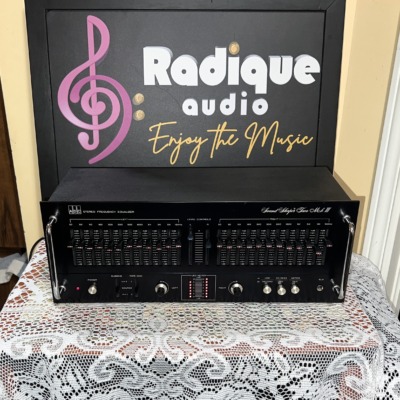
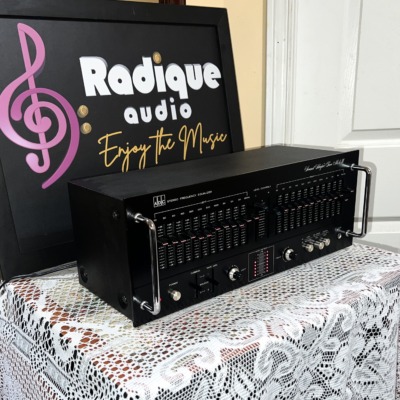
ADC Sound Shaper Two Mk III Equalizer – 12-Band Stereo, Serviced
An ADC Sound Shaper Two Mk III stereo graphic equalizer: twelve sliders per channel, an LED level meter and chrome rack handles. Serviced on our bench and tested well, and the display lights up beautifully.
✔️ 12 bands per channel, with separate left and right controls
✔️ LED level meter and chrome rack handles
✔️ Serviced: sliders re-secured, cleaned and tested
✔️ Very good condition
✔️ Covered by Radique Warranty
✔️ Includes Perpetual Trade-Back Program eligibility
✔️ Expertly packed for safe shipping
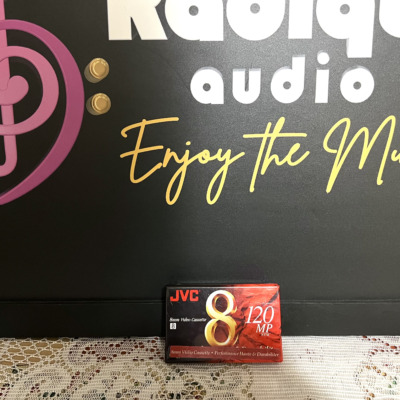
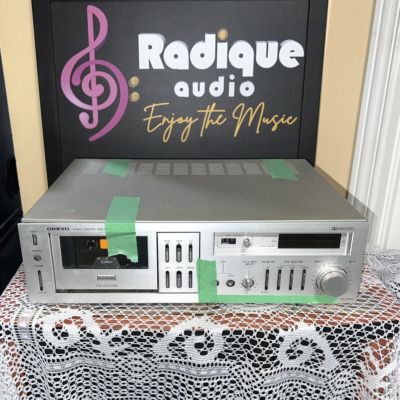
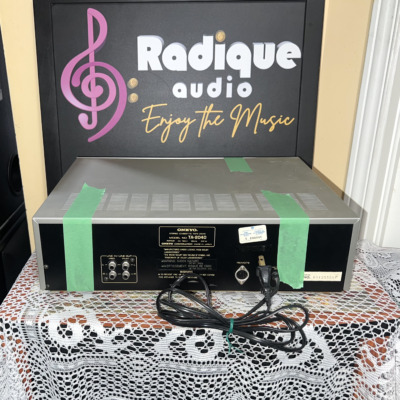
Onkyo TA-2040 Cassette Deck – Silver, Japan, For Parts/Repair
Sold as-is for parts or repair: multiple faults, not covered by our warranty, not eligible for trade-back, all sales final. What it is, is a 1980 Japanese-built two-head deck with a sendust head, full-logic transport, FG-servo motor and Dolby B — not economic for our bench, and a completely different arithmetic if you have a soldering iron.
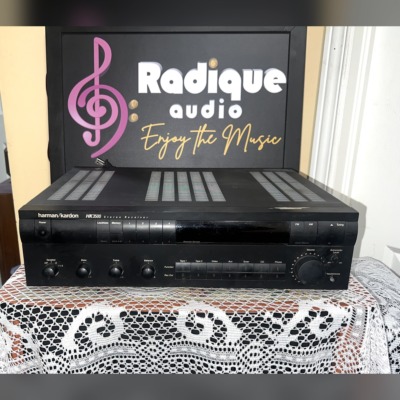
Harman Kardon HK3500 Stereo Receiver – 50 WPC, For Parts/Repair
Sold as-is for parts or repair, with no warranty and no trade-back: input lights stay on, the tuner input only holds while its button is pressed, and the controls crackle. A 50-watt-per-channel Harman Kardon with a subwoofer out, for the DIY tech.
✔️ Sold as-is, for parts or repair
✔️ No warranty or trade-back; all sales final
✔️ Expertly packed for safe shipping
