




Pioneer SG-90 Graphic Equalizer – 17 Bands, Silver, Japan
$345.00
Out of stock
Get first dibs on the next one
Pioneer SG-90 — Seventeen Bands per Channel at 0.001% Distortion
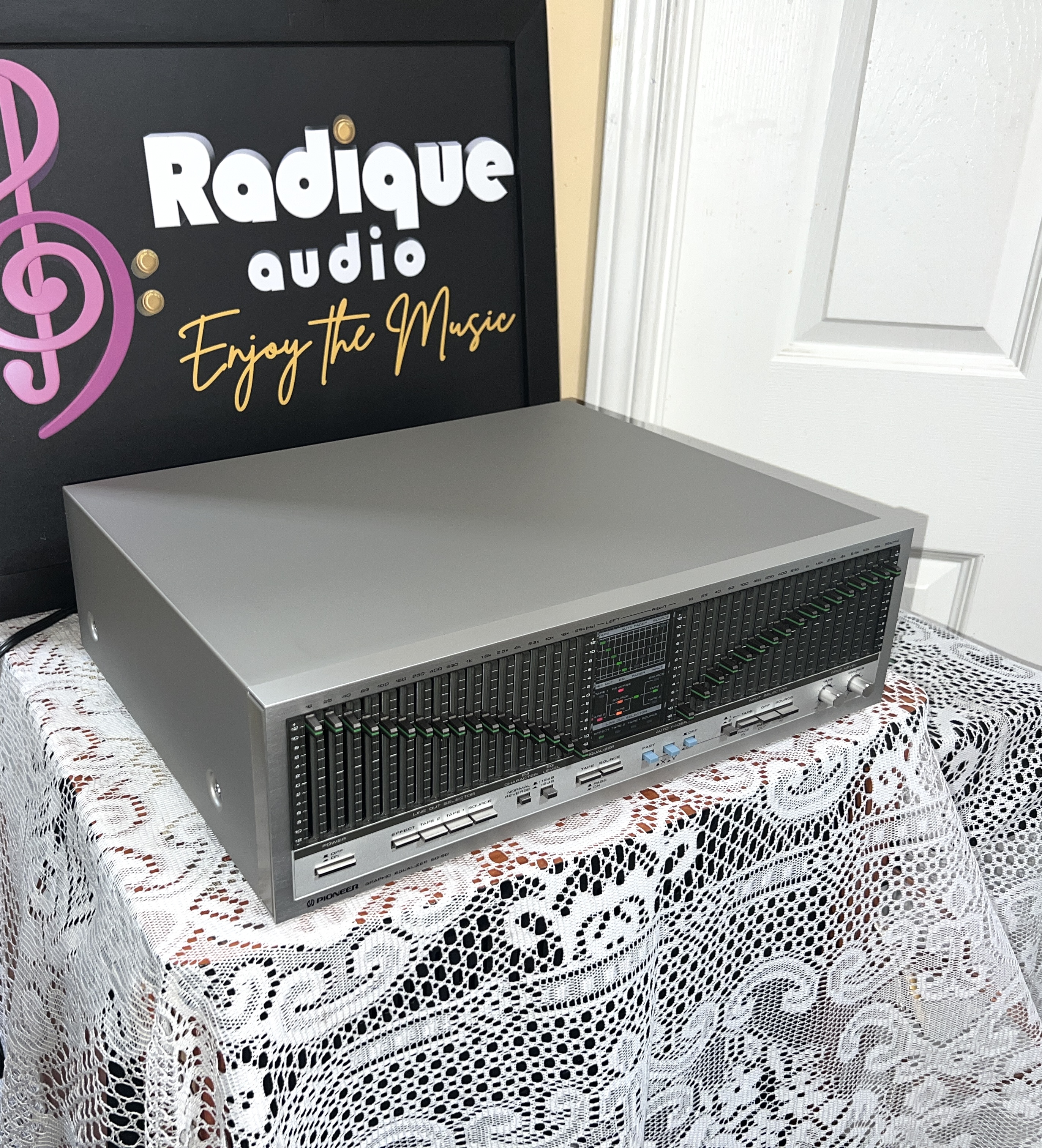
A Japanese-built silver-faced two-thirds-octave equalizer with seventeen bands per channel — thirty-four sliders in total — and a specification sheet that belongs on considerably more expensive equipment.
Seventeen Bands per Channel
Most graphic equalizers give you seven or ten bands per channel, which is enough to shape a sound but not enough to fix a room. The SG-90 gives you seventeen, on two-thirds-octave centres running from 16 Hz to 25,000 Hz. That resolution is the difference between nudging “the bass” and actually addressing the specific 63 Hz peak your room produces because of where the walls are. Anyone who has fought a boomy corner or a hard-surfaced living room will understand immediately why this matters.
Measured Performance
The measured performance is what elevates it. Total harmonic distortion of 0.001% with controls flat, a signal-to-noise ratio of 120 dB, and frequency response from 10 Hz to 100,000 Hz. Those are figures you would expect from serious separates, not from a tone-shaping accessory, and they mean the SG-90 can sit permanently in your signal path without costing you anything when it is not being used. It was built in Japan, in the years when that still described the top of Pioneer’s manufacturing rather than the average of it.
Control Ranges
Two control ranges are provided. The plus or minus 12 dB setting is for normal corrective work; switching to plus or minus 6 dB halves the range across every slider so the same physical movement produces a finer adjustment. It is the difference between a coarse tool and a precise one, and it is exactly what you want once you are past the obvious problems and into the last few decibels.
Beyond Equalization
There is more here than equalization. An auto fader with display creates smooth fade-ins and fade-outs, which is a genuine luxury for anyone still making compilations. The equalizer character selector inverts the entire frequency curve, which allows the SG-90 to perform tape noise reduction by recording with one curve and playing back with its mirror image. Two tape decks can be connected with equalization applied during dubbing, and EQ switches let you equalize what you are listening to while recording the source unequalized. It is a piece built when tape was still how people kept music, and it takes that job seriously.
Connections
Connection is by standard RCA through a tape monitor loop, so it works with essentially any receiver or integrated amplifier that has tape terminals. It is also switchable between 120 and 220 volts.
Condition
Cosmetically graded Good, with honest wear consistent with its age and nothing affecting performance. Thoroughly inspected and tested in-house and working properly.
Seventeen bands per channel with distortion at one thousandth of a percent is a genuinely uncommon combination, and it makes the SG-90 one of the more capable equalizers of its era — a piece that can properly fix a difficult room rather than merely colour it.
Pioneer SG-90 Specifications
- Design: Stereo graphic equalizer, two-thirds octave
- Bands: 17 per channel, 34 total
- Centre frequencies: 16, 25, 40, 63, 100, 160, 250, 400, 630, 1k, 1.6k, 2.5k, 4k, 6.3k, 10k, 16k, 25kHz
- Control range: +/-12dB / +/-6dB, switchable
- Total harmonic distortion: 0.001% (20Hz-20kHz, controls flat)
- Signal to noise ratio: 120dB
- Frequency response: 10Hz-100,000Hz
- Output level: 1V
- Gain: 0dB, controls flat
- Features: Auto fader with display, equalizer character selector (reverse response), two-deck dubbing with EQ, Tape 1 / Tape 2 / Source selection
- Power: 120V / 220V switchable
- Finish: Silver
- Year of introduction: 1983
- Original manufacturer: Pioneer – Made in Japan
- Dimensions: (Width x Height x Depth) 16.54 x 5.16 x 13.82 inches (420 x 131 x 351 mm)
- Weight: 15.9 lbs (7.2 kg)
✅ Good News for International Buyers
This unit is switchable between 120V and 220V, so it can be set to suit most markets worldwide. No step-down transformer is required — only an appropriate plug adapter.
✅ Buy With Confidence — The Radique Promise
Backed by Radique Audio’s Bumper-to-Bumper Warranty and our Perpetual Trade-Back Program. When you’re ready to move on, we’ll take it back. That’s the Radique difference.
📦 Watch how we protect your gear — our unboxing video.
📺 Curious about our business? Check out our YouTube channel for behind-the-scenes videos and more!
📞 Questions? Use the Ask a Question button above, or call us at 613-416-9995.
| Weight | 18 lbs |
|---|---|
| Dimensions | 17.82 × 20.54 × 9.16 in |
| Mains Voltage | Selectable / Universal Voltage |
You may also like…
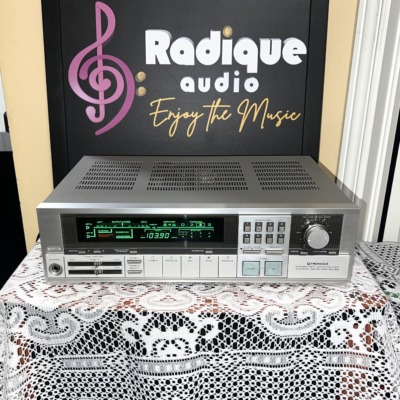
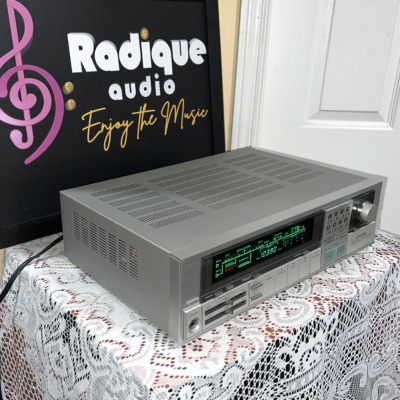
Pioneer SX-50 Vintage Stereo Receiver – 50 WPC, Silver Face
Fifty watts a channel into 8 ohms at 0.007% distortion, and — unusually for a receiver this size — pre-out and main-in jacks on the back, so it can feed a subwoofer, take an equalizer in the loop, or hand off to a larger power amp. Introduced in 1983 with switchable CD and TV audio inputs, presets held by three AA cells, and the silver face of the decade that was ending. Graded Very Good.
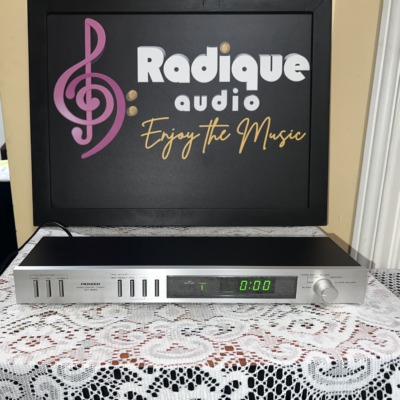

Pioneer DT-540 Audio Digital Timer – Made in Japan, 1983
Two switched AC outlets on a 24-hour schedule, accurate to a tenth of a second against line frequency, with a sleep function and a fluorescent display tube. Rated to 500 watts total — enough for a receiver, deck, turntable and tuner, but not a large power amplifier. Full component width at 16.5 inches. Very good condition, timer and clock both confirmed working.
Related Products
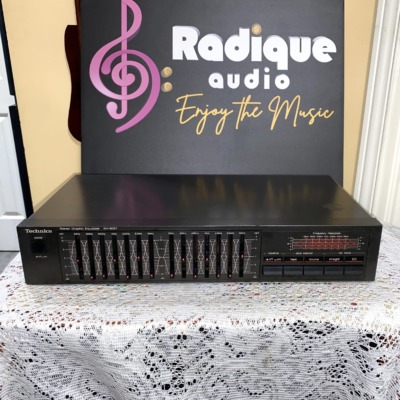
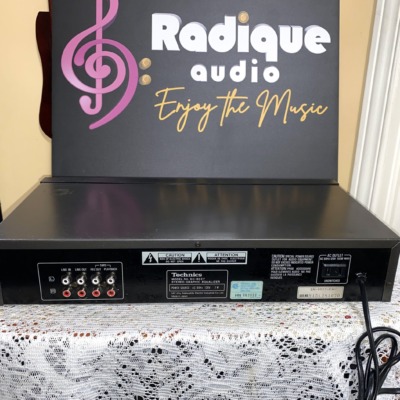
Technics 7-Band Graphic Equalizer – Made in Japan SH-8027
Seven bands a channel — 63 Hz, 160, 400, 1 k, 2.5 k, 6.3 k and 16 kHz — on illuminated red sliders you can read in a dark rack. Two RCA pairs in and out, a built-in mains cord, and an unswitched 150-watt accessory outlet on the back. Made in Japan somewhere between 1980 and 1985. Level 1 serviced here.
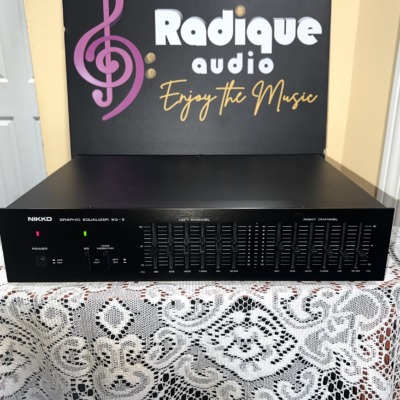
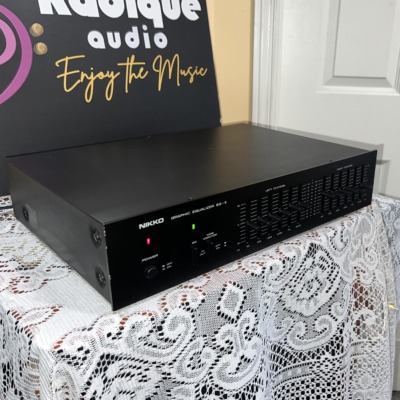
Nikko EQ-II 6-Band Stereo Graphic Equalizer Made in Japan
Six sliders a channel at 40Hz, 125Hz, 400Hz, 1.25kHz, 4kHz and 12.5kHz, each with 12dB of boost or cut, and a bypass switch for an instant A/B against the unprocessed signal. 0.01% distortion, better than 100dB signal to noise, 10Hz to 30kHz — it adds nothing of its own. Built in Tokyo between 1977 and 1981. Excellent condition, fully tested.
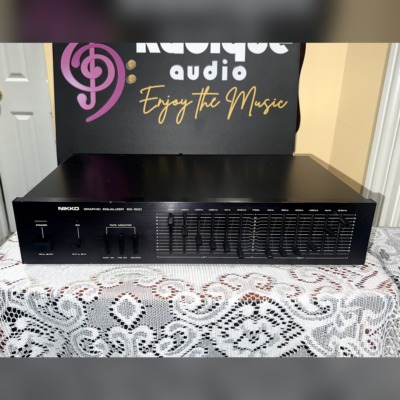
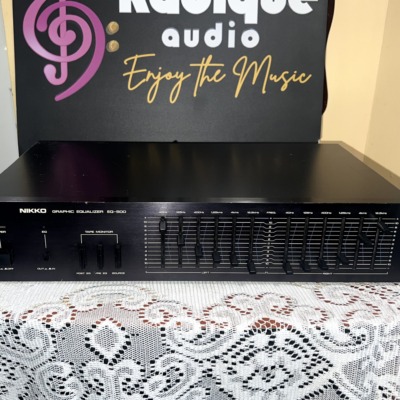
Nikko EQ-500 6-Band Stereo Graphic Equalizer Made in Japan
Six sliders a channel at 40, 125, 400, 1,250, 4,000 and 12,500 Hz, each giving 12 dB of cut or boost in 2 dB steps. Distortion is 0.01%, signal-to-noise better than 100 dB, response 10 Hz to 30 kHz — it adds nothing of its own. Bypass switch and a pre/post-EQ tape loop. Made in Japan. Cosmetic condition fair; fully tested and working.
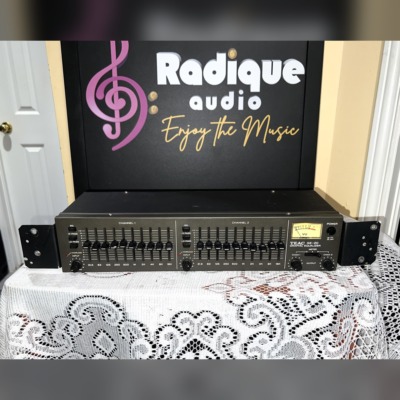
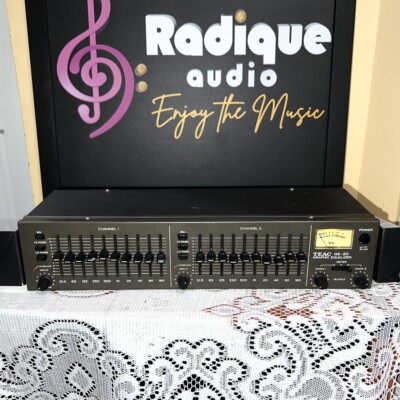
Teac GE-20 2-Channel 10-Band Stereo Graphic Equalizer, Japan
Ten ISO-standard bands per channel from 31.5 Hz to 16 kHz at ±12 dB, with separate left and right sliders and switchable VU metering. Filters at 31.5 Hz and 16 kHz roll off rumble and ultrasonic noise without touching the audible band, and an EQ defeat switch lets you A/B against flat. Made in Japan, 1978; serviced, good cosmetic condition.
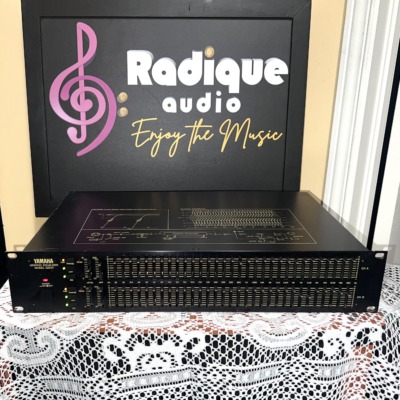
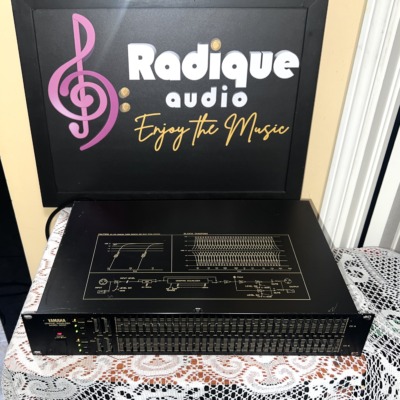
Yamaha Q2031 Dual 31-Band Graphic Equalizer – Made in Japan, 2U
Thirty-one bands per channel on ISO third-octave centres, 20Hz to 20kHz, on two fully independent channels — fine enough to pull a single room mode down without touching what sits either side of it. A range switch halves boost and cut to ±6dB for careful work, and the high-pass filters sweep from 20 to 200Hz. Balanced XLR and 1/4-inch throughout, 2U rack. Condition good.
