


Pioneer SG-9500 Dual 10-Band Graphic Equalizer Flagship Model
$895.00
Out of stock
This one has sold. Want first dibs on the next one?
We take these in regularly. Leave your name and email, and we’ll email you the moment one is listed, so you hear first. No cost, no obligation.
Email me when one is listed
How we get a component ready for sale. What our bench covers →
Other equalizers we have in stock now
3 in stock · $175.00–$345.00 · all ship
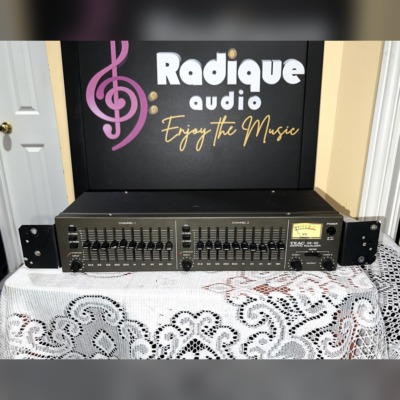 Teac GE-20 2-Channel 10-Band Stereo Graphic Equalizer, Japan$345.00Ships
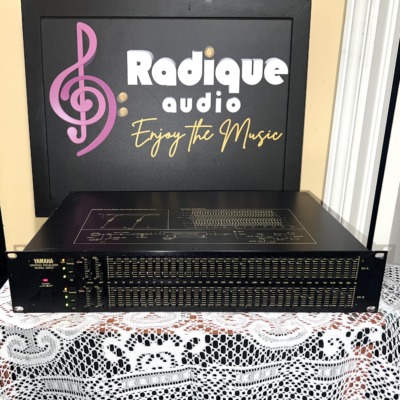 Yamaha Q2031 Dual 31-Band Graphic Equalizer – Made in Japan, 2U$295.00Ships
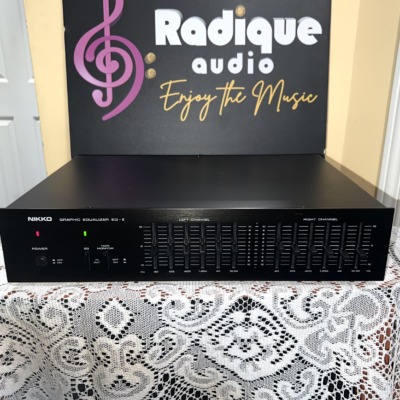 Nikko EQ-II 6-Band Stereo Graphic Equalizer Made in Japan$175.00Ships
How we get a component ready for sale.
Before a used or vintage component is listed, it goes through our bench, and anything we service is tested again by a different tech. See exactly what our bench covers.
What our bench covers →Pioneer SG-9500 Dual 10-Band Graphic Equalizer Flagship Model, Made in Japan
Flagship Pioneer SG-9500 dual 10-band graphic equalizer from the legendary Spec Line series—exceptional specifications, iconic silver-faced styling, and genuine collector-grade status.
The Pioneer SG-9500 is a sophisticated dual-channel 10-band graphic equalizer from 1976-1979, representing the pinnacle of consumer equalizer design during Pioneer’s golden era. As part of the prestigious Spec Line series, the SG-9500 was engineered without compromise: each channel features ten ISO-standard frequency bands (32, 64, 125, 250, 500, 1K, 2K, 4K, 8K, and 16 kHz) with ±10 dB boost/cut range via precision slider controls. With an extraordinary frequency response of 5 Hz to 70 kHz, vanishingly low 0.04% total harmonic distortion, and 90 dB signal-to-noise ratio, this equalizer delivers reference-grade transparency that rivals or exceeds modern digital EQ units. The stunning silver faceplate, large LED level meters, and classic Spec Line industrial design make the SG-9500 a visual centerpiece that commands attention in any vintage or contemporary system. This example is in very good cosmetic condition with clean, smooth-operating sliders and has been thoroughly tested.
Beyond simple tone adjustment, the SG-9500 offers professional-grade flexibility: separate tape monitor loop, mode switches for stereo, mono, or independent left/right operation, bypass function, and individual channel defeat. The large LED level meters provide precise visual monitoring to prevent clipping and maintain optimal signal levels. Output capability extends to 6V maximum, ensuring compatibility with any preamp or integrated amplifier. This equalizer can compensate for room acoustics, correct speaker response irregularities, adjust for source material colorations, or provide creative tonal shaping—all while maintaining exceptional transparency that preserves the character of your system.
The SG-9500 has become highly collectible among vintage audio enthusiasts, not only for its exceptional technical performance but for its status as a flagship Spec Line component from Pioneer’s peak engineering period. Clean, fully functional examples with that iconic silver face are increasingly scarce in today’s market, making this a genuine investment-grade vintage component that combines usability with long-term value retention.
Key Specifications:
Type: Dual-channel 10-band graphic equalizer
Frequency bands: 32, 64, 125, 250, 500, 1000, 2000, 4000, 8000, 16000 Hz (ISO standard center frequencies)
Control range: ±10 dB per band
Frequency response: 5 Hz – 70 kHz (exceptionally wide bandwidth)
Total harmonic distortion: 0.04% (reference-grade transparency)
Signal-to-noise ratio: 90 dB
Output level: 1 V nominal, 6 V maximum
Gain: ±0 dB
Circuit complement: 14 x IC, 2 x FET, 12 x transistors, 13 x diodes
Features: Tape monitor loop, mode switches (stereo/mono/separate), bypass, individual channel defeat, LED level meters
Series: Pioneer Spec Line (flagship vintage series)
Condition: Very good cosmetic condition with beautiful silver faceplate, fully tested and operational
Dimensions: (Width x Height x Depth) 420 x 150 x 341 mm (16.5 x 6 x 13.5 inches)
Weight: 6.9 kg (15 lbs)
At 15 lbs, the SG-9500 reflects the uncompromising build philosophy of late-1970s Pioneer Spec Line components: robust metal chassis, quality Japanese slider potentiometers, substantial internal shielding, and thoughtful circuit layout that contribute directly to its reference-grade specifications and long-term reliability.
Made in Japan during Pioneer’s peak engineering era, this SG-9500 graphic equalizer represents a rare opportunity to own one of the most desirable vintage equalizers ever produced. The combination of exceptional technical performance, iconic silver-faced Spec Line styling, and increasing collector scarcity makes this a standout addition to serious vintage systems or modern setups seeking that classic aesthetic with genuine audiophile performance.
Backed by Radique Audio’s 90-day warranty and our perpetual trade-back policy, you can purchase with confidence; asking $895.
| Weight | 17 lbs |
|---|---|
| Dimensions | 17.5 × 20.5 × 10 in |
Pioneer began in Tokyo in January 1938, when Nozomu Matsumoto set up shop around the A-8 speaker he had built the year before. By the late 1970s its SX receivers were at the heart of the hi-fi power race. We carry Pioneer stereo receivers and AV receivers, CD players, cassette decks, tuners and equalizers. We've had more than 240 Pioneer listings so far, covering 140 different models. Every used Pioneer here is inspected, tested and serviced as required, then photographed in-house and covered by our Bumper-to-Bumper Warranty and Perpetual Trade-Back Program. Don't see the model you want? Tell us on First Dibs and we'll email you when one arrives.
Pioneer is one of our two top-selling brands of vintage amps and receivers, along with Marantz. Our five best-selling Pioneer models so far: the SX-650, SX-750, SX-580, SX-780 and SX-680, all vintage stereo receivers from the 1976 and 1978 SX families. We also offer our custom cherry cabinets for these vintage Pioneers, hand-made from all-natural Ottawa Valley cherry, and we've upgraded dozens of Pioneers with them so far.
The Pioneer story, 1938 to today
Nozomu Matsumoto developed the A-8 speaker in 1937, and in January 1938 he set up Fukuin Shokai Denki Seisakusho in Tokyo. "Pioneer" was first the name of that speaker. Some histories give 1936 in Osaka as the start, but Pioneer dates itself to January 1938 in Tokyo. The company was incorporated in 1947 and renamed Pioneer Electronic Corporation in 1961.
Stereo and the US. In 1962 Pioneer introduced the PSC-5A, which it calls the first stereo with separate speaker cabinets, and its first PL turntables. Pioneer Electronics U.S.A. was founded in New York in 1966.
The power race. After a 1974 US Federal Trade Commission rule tightened how amplifier power was rated, receiver makers competed on watts. Pioneer's SX-1250 of 1976 was rated at 160 watts per channel, and the SX-1980 of 1978 to 1980 at 270.
CD and Elite. The P-D1 of 1982 was Pioneer's first CD player, and Elite-branded components were on sale by 1985.
Today. Pioneer sold its home audio business to Onkyo in 2015, keeping its car and DJ businesses, and Pioneer-branded home theatre gear was later made under licence. In December 2025 CarUX, part of Taiwan's Innolux, completed its purchase of Pioneer Corporation, which now focuses on in-car products.
Which Pioneer is which?
Early-1970s SX receivers: models such as the SX-424 to SX-828, rated at about 15 to 50 watts per channel.
The 1976 "x50" SX receivers: from the SX-450 at 15 watts per channel up to the SX-1250 at 160. Our best-selling SX-650 and SX-750 come from this family.
The 1978 "x80" SX receivers: including the SX-580, SX-680 and SX-780 we sell most, up to the SX-1980 flagship with quartz-lock tuning, which weighs more than 35 kg.
Spec and Exclusive separates: higher-end amplifiers such as the Spec-1 preamplifier (1976 to 1980) and the Exclusive C3/M3 pair (1974).
Elite: Pioneer's upper line from the mid-1980s, for example the PD-9010X CD player.
PL turntables, CT cassette decks and CD players: PL turntables from 1962, such as the PL-12 and the linear-tracking PL-L1; CT decks such as the three-head CT-F1000; and CD players from the 1982 P-D1 to magazine-loading changers such as the PD-M6.
Buying used Pioneer: what to check
Controls and switches. Crackle when you turn a control or work a switch usually means dirt, and restorers clean every pot and switch.
Capacitors. Electrolytic capacitors in 1970s receivers are often past their best, and full restorations replace them.
Big SX models. Owners and restorers report heat stress on the power-supply board of large receivers such as the SX-1250. Ask what has been done.
Relay, lamps and bias. The protection relay is a common replacement, dial lamps burn out and are often converted to LED, and restorers set the bias and DC offset.
Cassette decks. Check the heads, fast-forward and rewind, Dolby and every button. Belts age even when the deck looks perfect.
Everything we list is inspected, tested and serviced as required here, and comes with our warranty.
Related Products
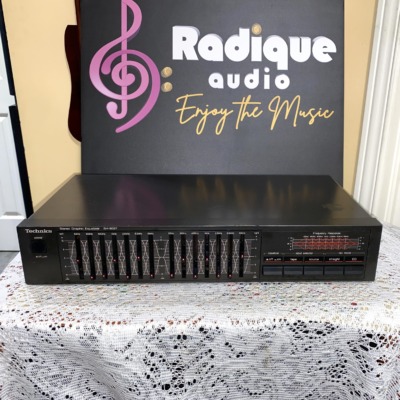
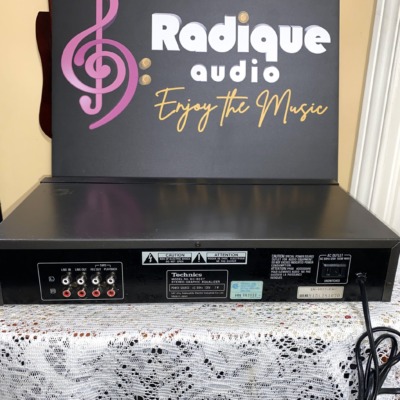
Technics 7-Band Graphic Equalizer – Made in Japan SH-8027
Seven bands a channel — 63 Hz, 160, 400, 1 k, 2.5 k, 6.3 k and 16 kHz — on illuminated red sliders you can read in a dark rack. Two RCA pairs in and out, a built-in mains cord, and an unswitched 150-watt accessory outlet on the back. Made in Japan somewhere between 1980 and 1985. Level 1 serviced here.
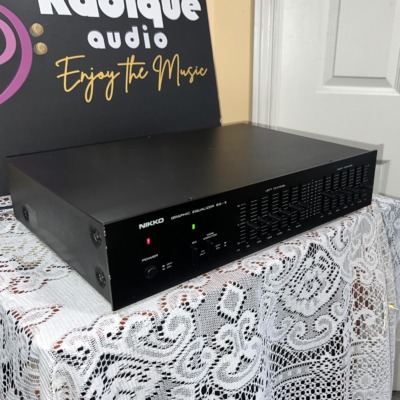
Nikko EQ-II 6-Band Stereo Graphic Equalizer Made in Japan
Six sliders a channel at 40Hz, 125Hz, 400Hz, 1.25kHz, 4kHz and 12.5kHz, each with 12dB of boost or cut, and a bypass switch for an instant A/B against the unprocessed signal. 0.01% distortion, better than 100dB signal to noise, 10Hz to 30kHz — it adds nothing of its own. Built in Tokyo between 1977 and 1981. Excellent condition, fully tested.
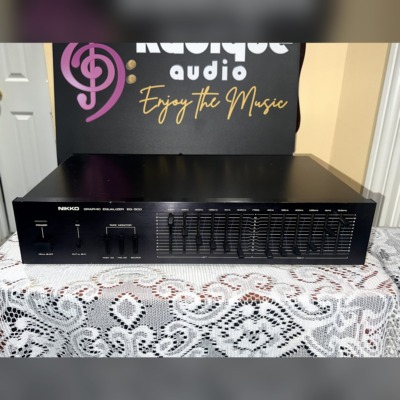
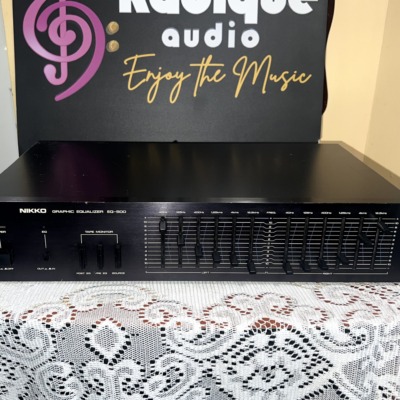
Nikko EQ-500 6-Band Stereo Graphic Equalizer Made in Japan
Six sliders a channel at 40, 125, 400, 1,250, 4,000 and 12,500 Hz, each giving 12 dB of cut or boost in 2 dB steps. Distortion is 0.01%, signal-to-noise better than 100 dB, response 10 Hz to 30 kHz — it adds nothing of its own. Bypass switch and a pre/post-EQ tape loop. Made in Japan. Cosmetic condition fair; fully tested and working.
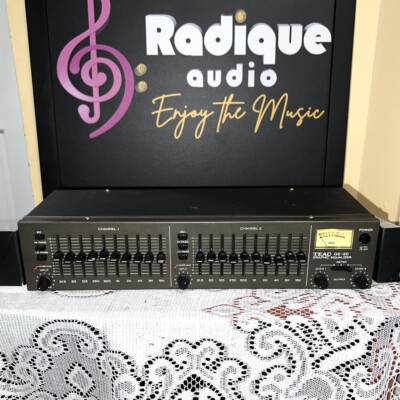
Teac GE-20 2-Channel 10-Band Stereo Graphic Equalizer, Japan
Ten ISO-standard bands per channel from 31.5 Hz to 16 kHz at ±12 dB, with separate left and right sliders and switchable VU metering. Filters at 31.5 Hz and 16 kHz roll off rumble and ultrasonic noise without touching the audible band, and an EQ defeat switch lets you A/B against flat. Made in Japan, 1978; serviced, good cosmetic condition.
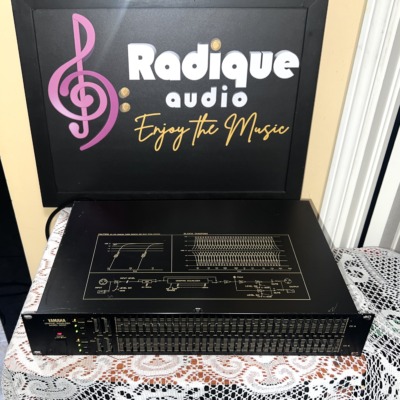
Yamaha Q2031 Dual 31-Band Graphic Equalizer – Made in Japan, 2U
Thirty-one bands per channel on ISO third-octave centres, 20Hz to 20kHz, on two fully independent channels — fine enough to pull a single room mode down without touching what sits either side of it. A range switch halves boost and cut to ±6dB for careful work, and the high-pass filters sweep from 20 to 200Hz. Balanced XLR and 1/4-inch throughout, 2U rack. Condition good.
