


Sansui RG-700 Graphic EQ & Reverb, Japan, Gorgeous LED
$245.00
Out of stock
This one has sold. Want first dibs on the next one?
We take these in regularly. Leave your name and email, and we’ll email you the moment one is listed, so you hear first. No cost, no obligation.
Email me when one is listed
How we get a component ready for sale. What our bench covers →
Other equalizers we have in stock now
3 in stock · $145.00–$295.00 · all ship
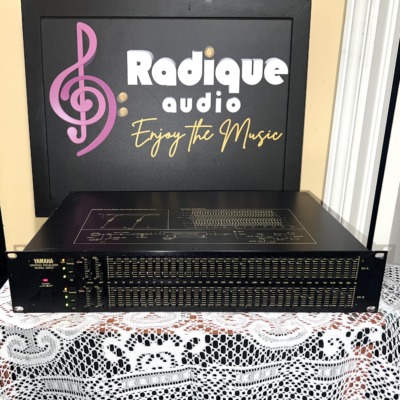 Yamaha Q2031 Dual 31-Band Graphic Equalizer – Made in Japan, 2U$295.00Ships
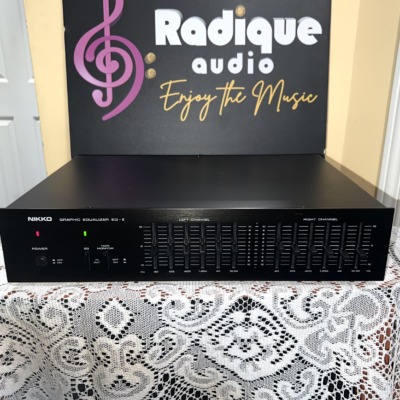 Nikko EQ-II 6-Band Stereo Graphic Equalizer Made in Japan$175.00Ships
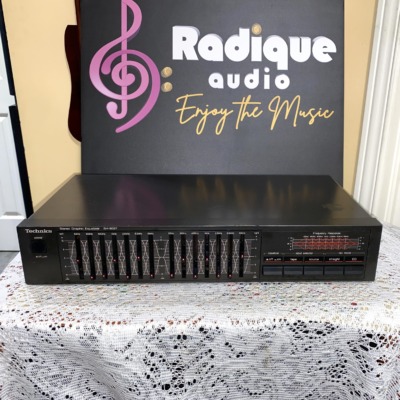 Technics 7-Band Graphic Equalizer – Made in Japan SH-8027$145.00Ships
How we get a component ready for sale.
Before a used or vintage component is listed, it goes through our bench, and anything we service is tested again by a different tech. See exactly what our bench covers.
What our bench covers →Sansui RG-700 Graphic Equalizer & Reverb Consolette – Made in Japan, Lights Beautifully
The Sansui RG-700 is a rare, unusually capable stereo graphic equalizer and reverb processor from Sansui’s 1980s vintage era, built in Japan during the golden age of analog audio engineering. What makes this consolette truly special is not just its technical prowess but its gorgeous multi-color LED display that illuminates the unit with a visual feast whenever power is applied—a design choice that reflects the same aesthetic philosophy that made Sansui’s vintage tuners and receivers so iconic. Beyond the display, the RG-700 combines three separate equalizers, a BBD (bucket-brigade delay) reverb circuit, mixing functions, and a defeatable “Multidimension” rotary control into one compact, forward-thinking package. This unit has been thoroughly tested and verified fully functional across all circuits; it lights up beautifully, all sliders respond smoothly, and the reverb tanks with their signature spring character deliver natural, lush spatial depth. Cosmetic condition is good with light signs of age and use.
The RG-700’s architecture is deceptively sophisticated. The main 7-band graphic equalizer allows fine-tuned frequency shaping across the spectrum (63Hz, 160Hz, 400Hz, 1kHz, 2.5kHz, 6.3kHz, and 16kHz), each with ±12dB of control range, giving you the ability to shape everything from bass bloom to presence peaks. A separate 5-band equalizer is dedicated exclusively to the reverb circuit, allowing you to tone-shape the reverb’s character independently from the main signal—an unusual and sophisticated feature that lets you dial in anything from subtle, controlled ambience to elaborate, colored spaciousness. A third 5-band equalizer processes a secondary input source, making it possible to route two independent stereo sources through the RG-700 and blend them together using front-panel faders and mixing controls.
The reverb section uses genuine electromechanical spring tanks—the same technology found in classic Fender amps and high-end studio reverb units. The BBD circuit controls the reverb’s wet/dry mix, and the reverb’s own EQ section allows deep customization of the reverb’s tonal character, from bright and shimmery to warm and cavernous. The “Multidimension” rotary control is Sansui’s proprietary effect that adds depth and dimension to the overall soundfield—a precursor to modern spatial processing concepts, though entirely analog in execution.
Input sensitivity of 150mV and output level of 150mV make the RG-700 compatible with line-level sources (CD players, tape decks, tuners, mixing boards) without requiring additional buffering. Frequency response extends from 20Hz to 20kHz, and with a signal-to-noise ratio of 75dB and total harmonic distortion of just 0.05%, the EQ and reverb circuits are transparent and clean enough to use on high-resolution audio without audible degradation. Channel separation of 60dB ensures stereo imaging remains pristine.
The front panel is a delight: compact layout with dual-slider sets for each of the three equalizers, illuminated toggle switches, a fader for reverb wet/dry mixing, and mixing faders for blending two input sources. The multi-color LED display glows steadily when powered, creating an understated but unmistakably retro visual signature. The rear panel includes adjustable gain control for fine-tuning input levels and, notably, a voltage selector switch that allows operation with 120V, 220V, or 240V AC power—a thoughtful touch that reflects the RG-700’s international design brief and makes it compatible with studio installations worldwide.
Build quality is quintessentially Sansui: solid aluminum chassis, clean internal layout, and components selected for longevity and reliability. At just 2.8kg (6.2 lbs), it’s remarkably lightweight yet feels substantial and well-engineered.
Key Features & Specifications
Stereo graphic equalizer and reverb processor consolette
Made in Japan (1980s)
Main 7-band graphic equalizer: 63Hz, 160Hz, 400Hz, 1kHz, 2.5kHz, 6.3kHz, 16kHz (±12dB range per band)
Dedicated 5-band reverb equalizer for independent reverb tone-shaping
Secondary source 5-band equalizer for blending two input sources
Electromechanical spring tank reverb with BBD circuit control
“Multidimension” rotary control for spatial depth enhancement
Fader and mixing functions for stereo source blending
Input sensitivity: 150mV (line level)
Output level: 150mV
Frequency response: 20Hz to 20kHz
Signal-to-noise ratio: 75dB
Total harmonic distortion: 0.05%
Channel separation: 60dB
Adjustable rear-panel gain control for precise level matching
Voltage selector: 120V / 220V / 240V AC operation
Gorgeous multi-color LED display illuminates on power-up
Fully functional reverb tanks with lush, natural spring character
All sliders, controls, and circuits tested and verified working
Good cosmetic condition with light signs of age and use
Dimensions & Weight
Dimensions (Width × Height × Depth): 430 × 78 × 223 mm (16.9 × 3.1 × 8.8 inches)
Weight: 2.8 kg (6.2 lbs)
The Sansui RG-700 is a genuinely unusual and sophisticated piece of audio gear that bridges the worlds of meticulous equalization, analog spatial processing, and forward-thinking studio design. Whether used as a mastering-grade EQ for final mixes, a reverb processor for adding warmth and dimension to vinyl or tape playback, or simply as a beautiful, functional sculptural element in a vintage audio system, the RG-700 delivers both measurable transparency and unmistakable character. Its combination of three independent EQs, genuine spring reverb, and mixing capability makes it far more versatile than typical graphic equalizers of its era, while the iconic LED display and compact footprint ensure it looks at home on any shelf or in any rack. A rare and genuinely fun piece of Japanese audio engineering that invites experimentation and rewarding sonic exploration.
Backed by Radique Audio’s 90-day warranty and our perpetual trade-back policy, you can purchase with confidence.
Asking $245
| Weight | 8.2 lbs |
|---|---|
| Dimensions | 12.8 × 20.9 × 7.1 in |
| Mains Voltage | Selectable / Universal Voltage |
Sansui was founded in Tokyo by Kosaku Kikuchi, who began making transformers in 1944 and incorporated Sansui Electric in 1947. We carry Sansui stereo receivers, integrated amplifiers, tuners, equalizers and cassette decks. We've had more than 40 Sansui listings so far. Every used Sansui here is inspected, tested and serviced as required, then photographed in-house and covered by our Bumper-to-Bumper Warranty and Perpetual Trade-Back Program. Don't see the model you want? Tell us on First Dibs and we'll email you when one arrives.
Sansui models we've sold more than once include the RG-700 and SE-1000 equalizers.
The Sansui story, 1947 to today
Kosaku Kikuchi started making transformers in Tokyo in 1944 and founded Sansui Electric in 1947. Amplifier kits and finished amplifiers followed from 1954, tube receivers from 1956, and the AU-111 tube integrated amplifier in 1965.
The golden age. Solid-state amplifiers such as the AU-555 arrived in the late 1960s. In the 1970s Sansui made QS four-channel receivers and big stereo receivers such as the 9090DB, and from 1978 DC amplifiers such as the AU-717 and AU-919 and the G-series receivers.
New owners. In 1989 Polly Peck of London took control of Sansui. In the 1990s a controlling interest passed to the Semi-Tech group of James Ting, a Canadian businessman whose electronics company was based in Markham, Ontario, and Grande Holdings of Hong Kong took over in 1999.
After the original company. Production wound down in the early 2000s, and Sansui filed for court rehabilitation in 2012 and went bankrupt in 2014. Products sold under the Sansui name since then are made by licensees in different countries, not by the original company.
Which Sansui is which?
Tube era (1950s to 1960s): kits and amplifiers such as the AU-111 of 1965.
1970s receivers: such as the 8080 and 9090DB, the 1976 "No. 1 Line" from the 221 to the 881, and the QRX four-channel receivers.
Integrated amplifiers: the AU-555 of the late 1960s, the AU-x07 and AU-x17 families from 1978 such as the AU-717, the AU-919, budget A-series models, and the AU-α907i of 1987.
G-series receivers (1978 to 1980): from the G-2000 to the G-33000, with quartz-locked digital tuning on the later G-x700 models.
Tuners and equalizers: such as the TU-9900 and T-510 tuners, the SE-9 and SE-1000 equalizers, and the RG-700 and RG-707.
Cassette decks: SC, D and D-X series decks.
Buying used Sansui: what to check
Fuse resistors. A technician who restored a 9090DB for Sound & Vision called replacing the fusible resistors on the driver board the number one job, and restorers find fuse resistors gone high in value on other models.
Capacitors and glue. TONE Audio says AU-717s will probably need most of their capacitors replaced, and that the glue used at the factory has become corrosive and should be removed. Ask for proof of any recap.
No relay click. If the protection relay doesn't click in, an output may have DC on it, which often means failed output transistors.
Controls and lamps. Scratchy volume and balance controls need cleaning, and dial lamps are often converted to LED.
Later products. Goods sold as Sansui since the early 2000s were made by licensees, so don't expect vintage Sansui engineering in them.
Everything we list is inspected, tested and serviced as required here, and comes with our warranty.
You may also like…
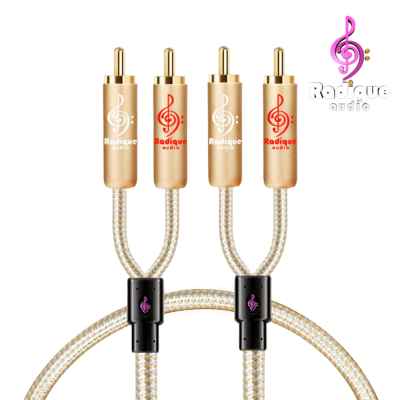
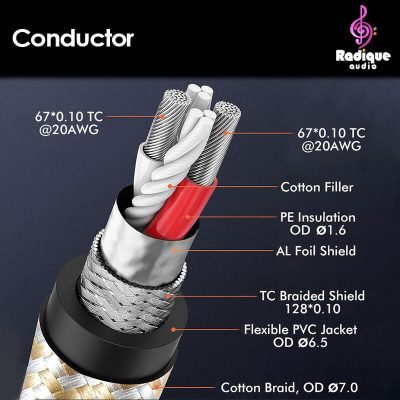
Radique Audio Gold Series RCA Stereo Interconnect Cable
RCA cables that are kind to vintage jacks: dual RCA to dual RCA, in 0.2, 0.75 or 1.5 m.
- Slim gold-plated plugs with vintage-safe grip pressure
- Dual shielding: aluminum foil and 128-strand braided copper
- Reinforced splitters; 7 mm gold cotton and nylon mesh jacket
- Three lengths, chosen above the Add to Cart button
- 1-year warranty
Related Products
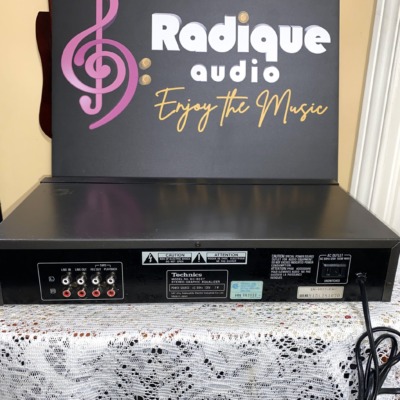
Technics 7-Band Graphic Equalizer – Made in Japan SH-8027
Seven bands a channel — 63 Hz, 160, 400, 1 k, 2.5 k, 6.3 k and 16 kHz — on illuminated red sliders you can read in a dark rack. Two RCA pairs in and out, a built-in mains cord, and an unswitched 150-watt accessory outlet on the back. Made in Japan somewhere between 1980 and 1985. Level 1 serviced here.
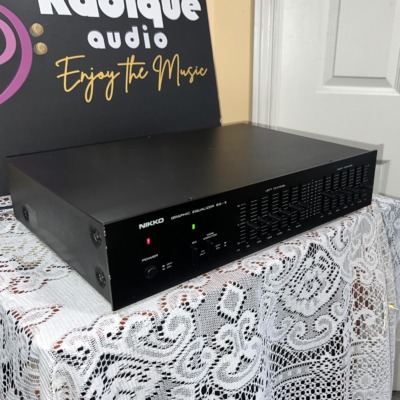
Nikko EQ-II 6-Band Stereo Graphic Equalizer Made in Japan
Six sliders a channel at 40Hz, 125Hz, 400Hz, 1.25kHz, 4kHz and 12.5kHz, each with 12dB of boost or cut, and a bypass switch for an instant A/B against the unprocessed signal. 0.01% distortion, better than 100dB signal to noise, 10Hz to 30kHz — it adds nothing of its own. Built in Tokyo between 1977 and 1981. Excellent condition, fully tested.
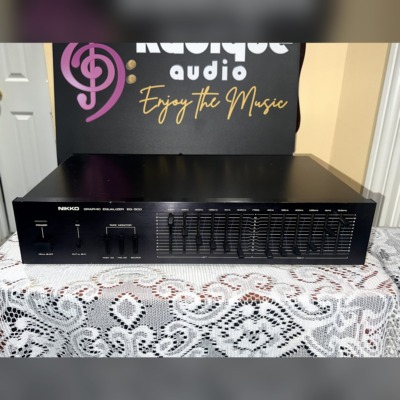
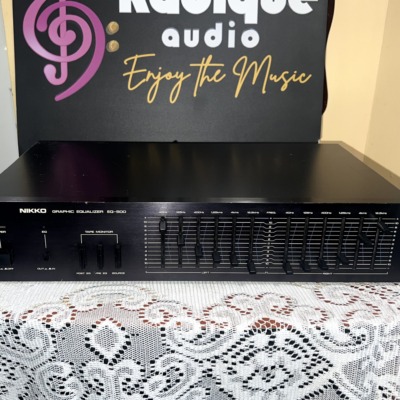
Nikko EQ-500 6-Band Stereo Graphic Equalizer Made in Japan
Six sliders a channel at 40, 125, 400, 1,250, 4,000 and 12,500 Hz, each giving 12 dB of cut or boost in 2 dB steps. Distortion is 0.01%, signal-to-noise better than 100 dB, response 10 Hz to 30 kHz — it adds nothing of its own. Bypass switch and a pre/post-EQ tape loop. Made in Japan. Cosmetic condition fair; fully tested and working.
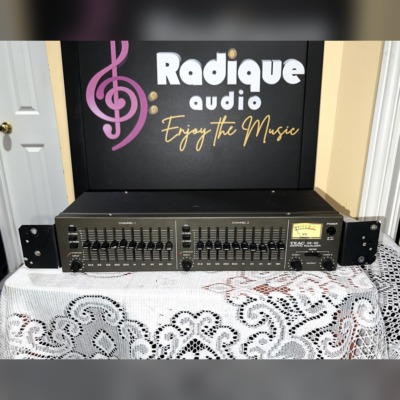
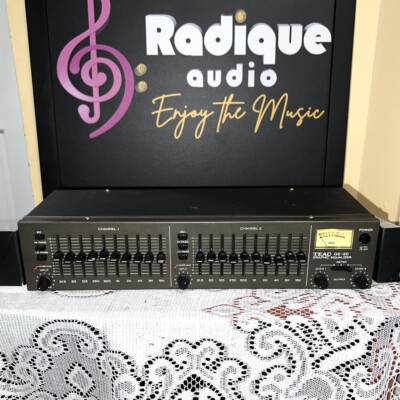
Teac GE-20 2-Channel 10-Band Stereo Graphic Equalizer, Japan
Ten ISO-standard bands per channel from 31.5 Hz to 16 kHz at ±12 dB, with separate left and right sliders and switchable VU metering. Filters at 31.5 Hz and 16 kHz roll off rumble and ultrasonic noise without touching the audible band, and an EQ defeat switch lets you A/B against flat. Made in Japan, 1978; serviced, good cosmetic condition.
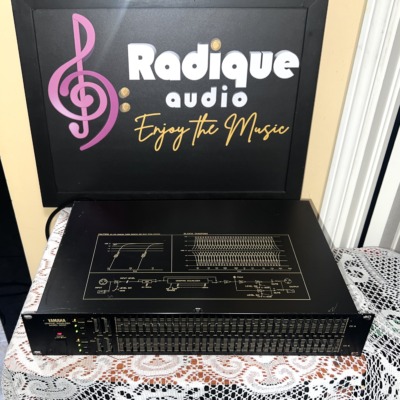
Yamaha Q2031 Dual 31-Band Graphic Equalizer – Made in Japan, 2U
Thirty-one bands per channel on ISO third-octave centres, 20Hz to 20kHz, on two fully independent channels — fine enough to pull a single room mode down without touching what sits either side of it. A range switch halves boost and cut to ±6dB for careful work, and the high-pass filters sweep from 20 to 200Hz. Balanced XLR and 1/4-inch throughout, 2U rack. Condition good.
