
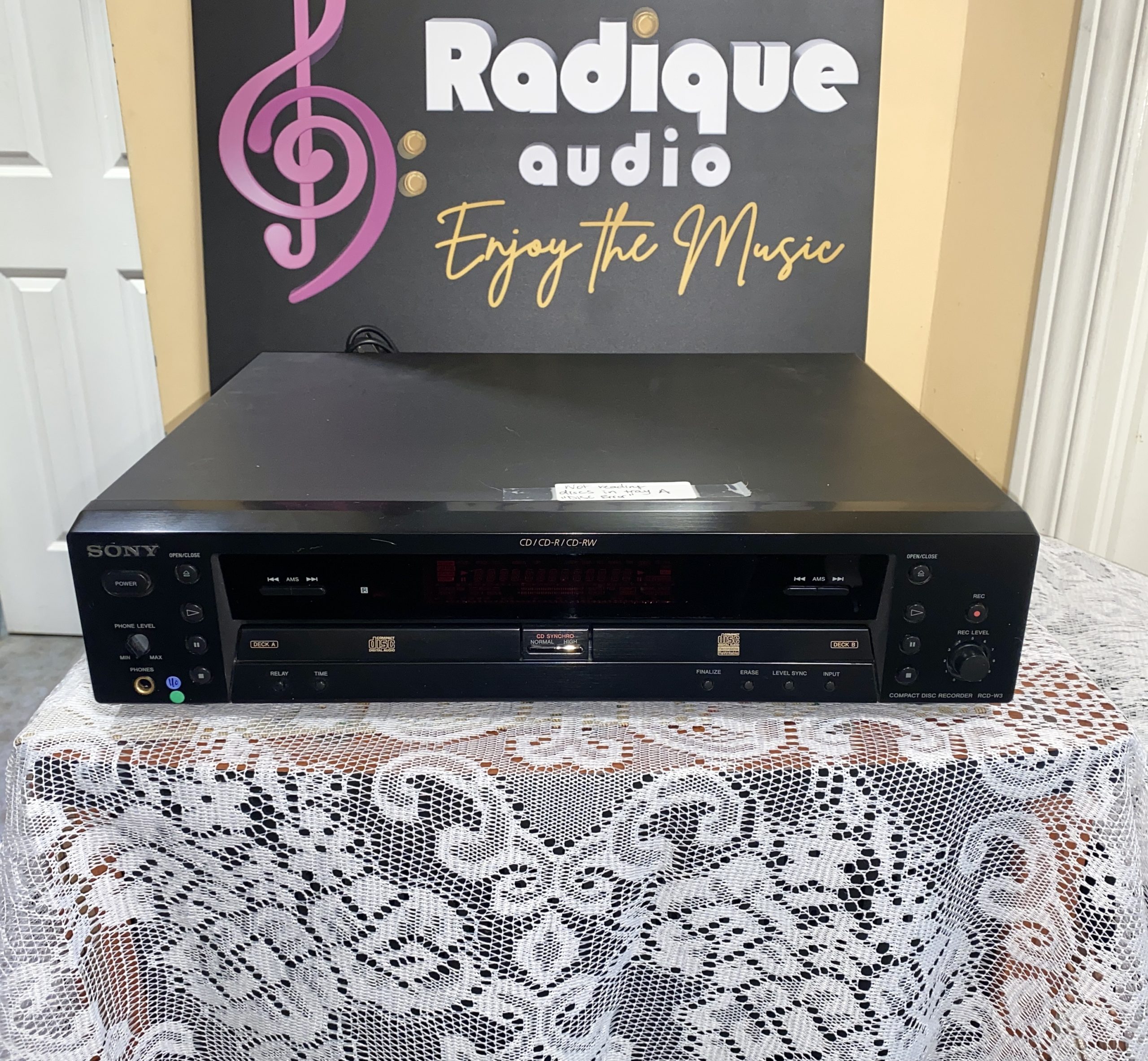
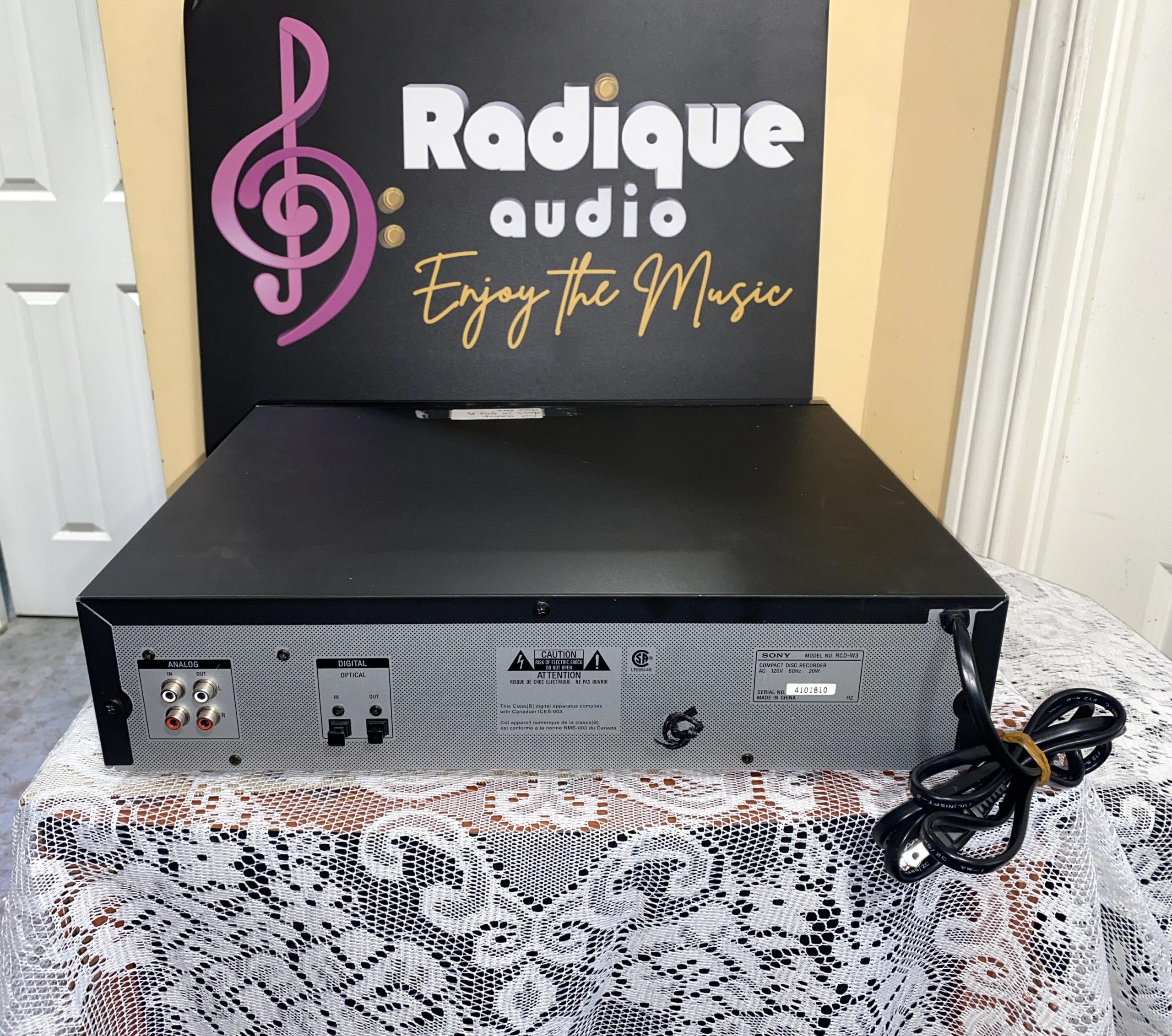


Sony RCD-W3 Single Deck Playback – See Description
$45.00
Sold as-is, and here is why: the left tray’s laser has failed, so it will not record and will not play from that side. The right tray still plays CD, CD-R and CD-RW, and the digital outputs, analogue outputs and headphone jack with level control all work. That makes it a working CD player, a repair project, or parts. No returns, no warranty.
1 in stock
Sony RCD-W3 Dual-Tray CD Recorder – As-Is, Left Tray Laser Failed, Right Tray Playback Working
The Sony RCD-W3 is a legendary dual-tray CD recorder from 2002 featuring innovative dual mechanisms for high-speed copying and recording. This unit is sold as-is: the left tray laser has failed (recording unavailable), but the right tray remains fully functional for playback of CD, CD-R, and CD-RW discs.
What Works:
✅ Right tray playback (all CD formats)
✅ Digital and analog outputs
✅ Headphone output with level control
What Doesn’t:
❌ Left tray laser failed – no recording or left-tray playback
Potential Uses:
Basic CD player (right tray only)
Restoration/repair project for technically-inclined enthusiasts
Parts machine or collector piece
Key Specs:
Dual-tray design – Independent playback/record mechanisms
Format Support: CD, CD-R, CD-RW (playback via right tray)
Frequency Response: 20Hz–20kHz (±0.5dB)
S/N Ratio: 100dB
Optical & RCA connections
Year: 2002
Summary:
A capable CD playback device with the right tray fully functional. Suitable for budget-conscious buyers, restorers, or collectors of CD recorder history.
Sold As-Is – No Returns/Warranty
Asking $45
| Weight | 10.1 lbs |
|---|---|
| Dimensions | 21 × 19 × 9 in |
Sony began in Tokyo in 1946, founded by Masaru Ibuka and Akio Morita, and it helped bring the world the Walkman and the compact disc. We carry Sony stereo and AV receivers, CD players, cassette decks, amplifiers and speakers. We've had more than 220 Sony listings so far, covering more than 185 different models. Every used Sony here is inspected, tested and serviced as required, then photographed in-house and covered by our Bumper-to-Bumper Warranty and Perpetual Trade-Back Program. Don't see the model you want? Tell us on First Dibs and we'll email you when one arrives.
Sony models we've sold more than once include the TC-K61 cassette deck, the CDP-CE305 and CDP-C335 CD players, the STR-DA5700ES AV receiver and the STR-4800SD stereo receiver.
The Sony story, 1946 to today
Masaru Ibuka and Akio Morita founded Tokyo Tsushin Kogyo ("Totsuko") in Tokyo in 1946, growing out of a radio repair business Ibuka had started the year before. The company was renamed Sony in 1958.
Tape and transistors. The G-model tape recorder of 1950 is described as Japan's first, and the TR-55 transistor radio of 1955 was the first Sony-branded product.
ES. Sony describes the TA-1120 integrated amplifier of 1965 as the first all-silicon-transistor stereo amplifier and dates its ES ("Elevated Standard") line from it.
Walkman and CD. The Walkman went on sale in Japan in July 1979. Sony worked with Philips on the compact disc, and Sony's CDP-101 was among the first CD players on sale in Japan in October 1982. Sony still makes ES AV receivers.
Which Sony is which?
STR receivers: stereo receivers from the late 1960s on, such as the STR-6120, and later AV receivers, including ES models.
TA amplifiers and ES separates: from the TA-1120 to the TA-E86 preamplifier and TA-N86 power amplifier (1978).
CDP CD players: from the CDP-101 (1982) and CDP-701ES (1983) to changers such as the CDP-CE305 and CDP-C335 we sell often.
TC tape decks: reel-to-reel recorders until 1985, and cassette decks such as the TC-K61 and the three-head TC-K777ES.
SS speakers: such as the SS-G7 floorstanders of 1978.
Buying used Sony: what to check
CD players. Open and close the drawer several times; hesitation can be an early sign of trouble. Laser pickups wear, skipping is a symptom, and tray belts age.
Cassette decks. Belts dry out and cause slipping or uneven playback, and worn heads dull the sound. Run fast-forward and rewind, and check Dolby.
Amplifiers and receivers. Noisy switches and dirty relay contacts cause many faults, and bias settings drift with age. On tuners, look for blown bulbs and broken dial cords.
Everything we list is inspected, tested and serviced as required here, and comes with our warranty.
You may also like…


Related Products

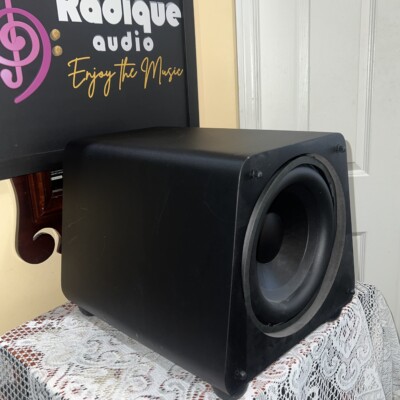
GoldenEar ForceField 4 Subwoofer – Parts/Repair, Amp Needs Work
Sold as-is for parts or repair — the amplifier board requires service and is not represented as working. What is good: the cabinet, very good cosmetically with its non-parallel walls intact; the custom front-firing 10-inch long-throw woofer, tested and working; and the 11 by 13 inch quadratic planar down-firing passive radiator, undamaged. GoldenEar supplies a replacement amplifier board through its service channel.

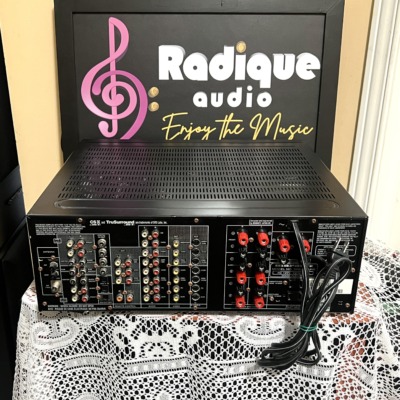
Marantz SR6300 6.1-Ch AV Receiver 100 WPC — For Parts/Repair
Does not power on. Sold as-is for parts or repair, with no warranty and no trade-back. Cosmetically it presents very well, with no significant marks to the faceplate or cabinet. Working, it was a 100-watt-per-channel 6.1 receiver with Dolby Digital EX, DTS-ES and a full set of 6.1 pre-outs. 32.7 lbs of bench project.
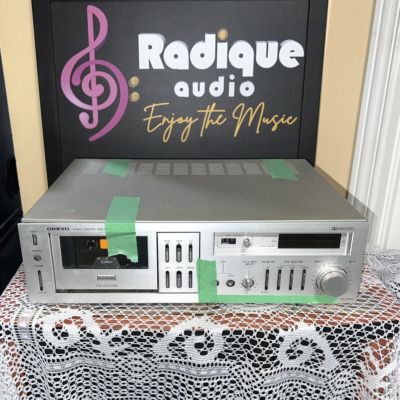
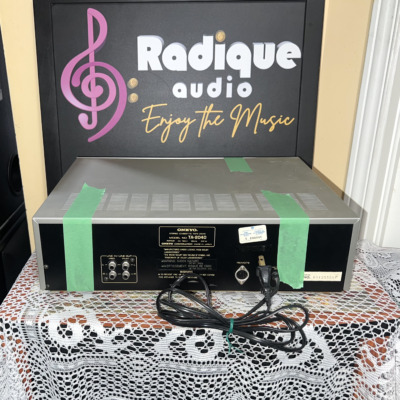
Onkyo TA-2040 Cassette Deck – Silver, Japan, For Parts/Repair
Sold as-is for parts or repair: multiple faults, not covered by our warranty, not eligible for trade-back, all sales final. What it is, is a 1980 Japanese-built two-head deck with a sendust head, full-logic transport, FG-servo motor and Dolby B — not economic for our bench, and a completely different arithmetic if you have a soldering iron.
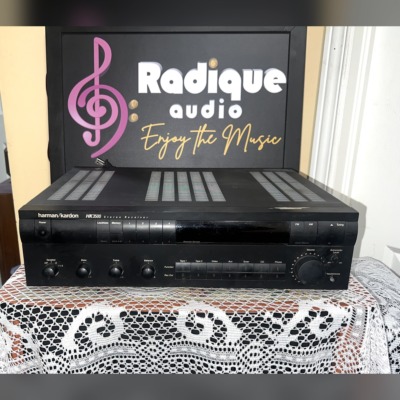
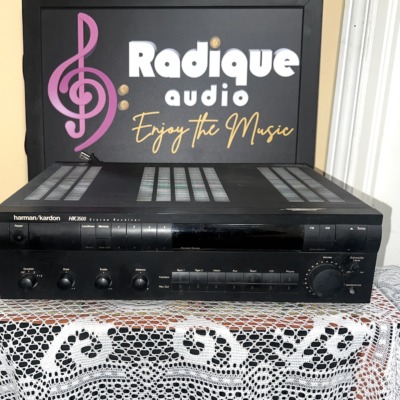
Harman Kardon HK3500 Stereo Receiver – 50 WPC, For Parts/Repair
Sold as-is for parts or repair, with no warranty and no trade-back: input lights stay on, the tuner input only holds while its button is pressed, and the controls crackle. A 50-watt-per-channel Harman Kardon with a subwoofer out, for the DIY tech.
✔️ Sold as-is, for parts or repair
✔️ No warranty or trade-back; all sales final
✔️ Expertly packed for safe shipping
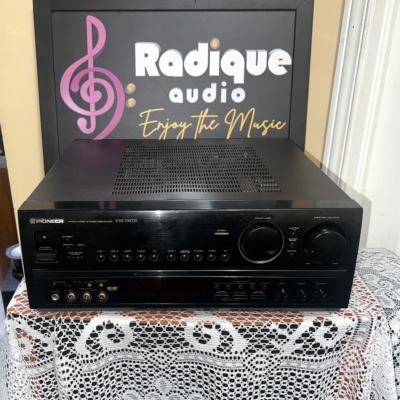
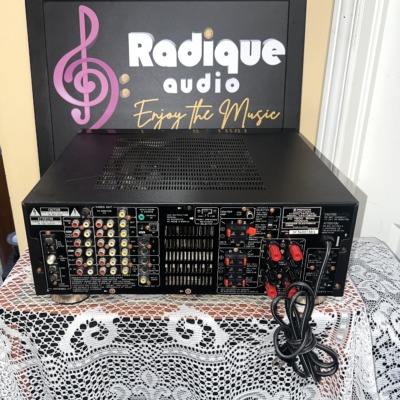
Pioneer VSX-D903S AV Receiver – 1994, For Parts/Repair
Sold as-is for parts or repair, with no warranty and no trade-back: it powers on, but there is no sound from the front or surround speakers. A 1994 Pioneer Pro Logic receiver for a donor or a DIY repair.
✔️ Sold as-is, for parts or repair
✔️ No warranty or trade-back; all sales final
✔️ Expertly packed for safe shipping
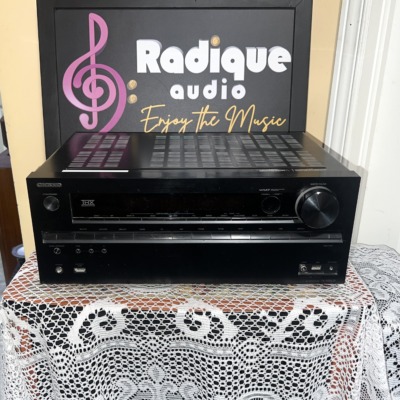
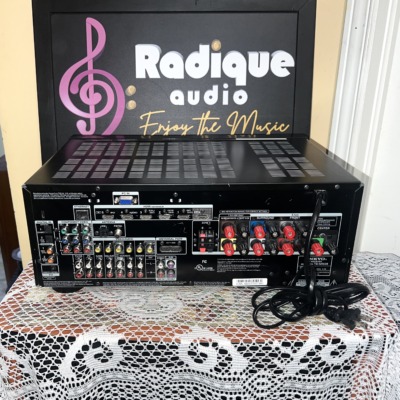
Onkyo TX-NR609 7.2 AV Receiver – 2011, For Parts/Repair
Sold as-is for parts or repair, with no warranty and no trade-back: a relay clicks repeatedly but it never powers on, and our senior tech was uncertain it could be repaired. A 2011 Onkyo 7.2 receiver for a donor or a troubleshooting project.
✔️ Sold as-is, for parts or repair
✔️ No warranty or trade-back; all sales final
✔️ Expertly packed for safe shipping
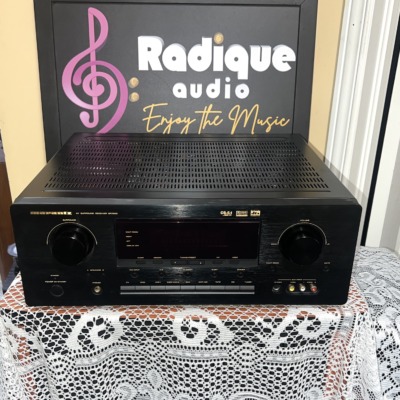
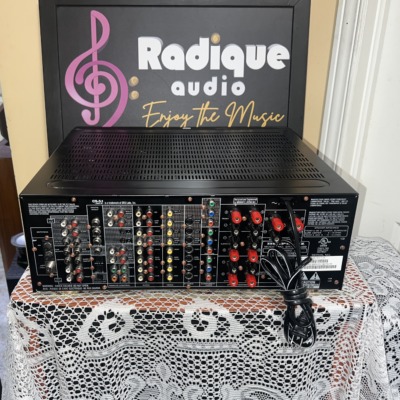
Marantz SR7200 6.1 AV Receiver – For Parts/Repair
Sold as-is for parts or repair, with no warranty and no trade-back: our confirmed issue is a scratchy front left channel that cuts in and out when its connection is wiggled. A Marantz 6.1 receiver of 2001 for a DIY repair or high-quality donor parts.
✔️ Sold as-is, for parts or repair
✔️ No warranty or trade-back; all sales final
✔️ Expertly packed for safe shipping
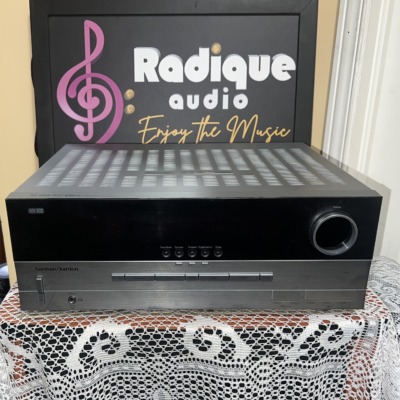
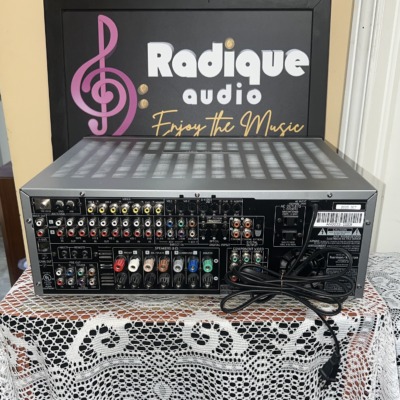
Harman Kardon AVR 340 7.1 AV Receiver – For Parts/Repair
Sold as-is for parts or repair, with no warranty and no trade-back: sound comes only from the subwoofer output, on analog and digital, even after a factory reset. A Harman Kardon 7.1 receiver for the DIY repair crowd.
✔️ Sold as-is, for parts or repair
✔️ No warranty or trade-back; all sales final
✔️ Expertly packed for safe shipping


Yamaha RX-V1070 41lb! Natural Sound AVR *As-Is*
Sold as-is, for parts or repair, with no warranty and no trade-back. There is no sound output from any channel and the display is frozen; it has not been serviced. When it worked it was a 1993 flagship — 110 watts a channel at 0.015% distortion, Dolby Pro Logic, MM phono, pre-outs, and 41 lbs of it. For someone who repairs things.
