

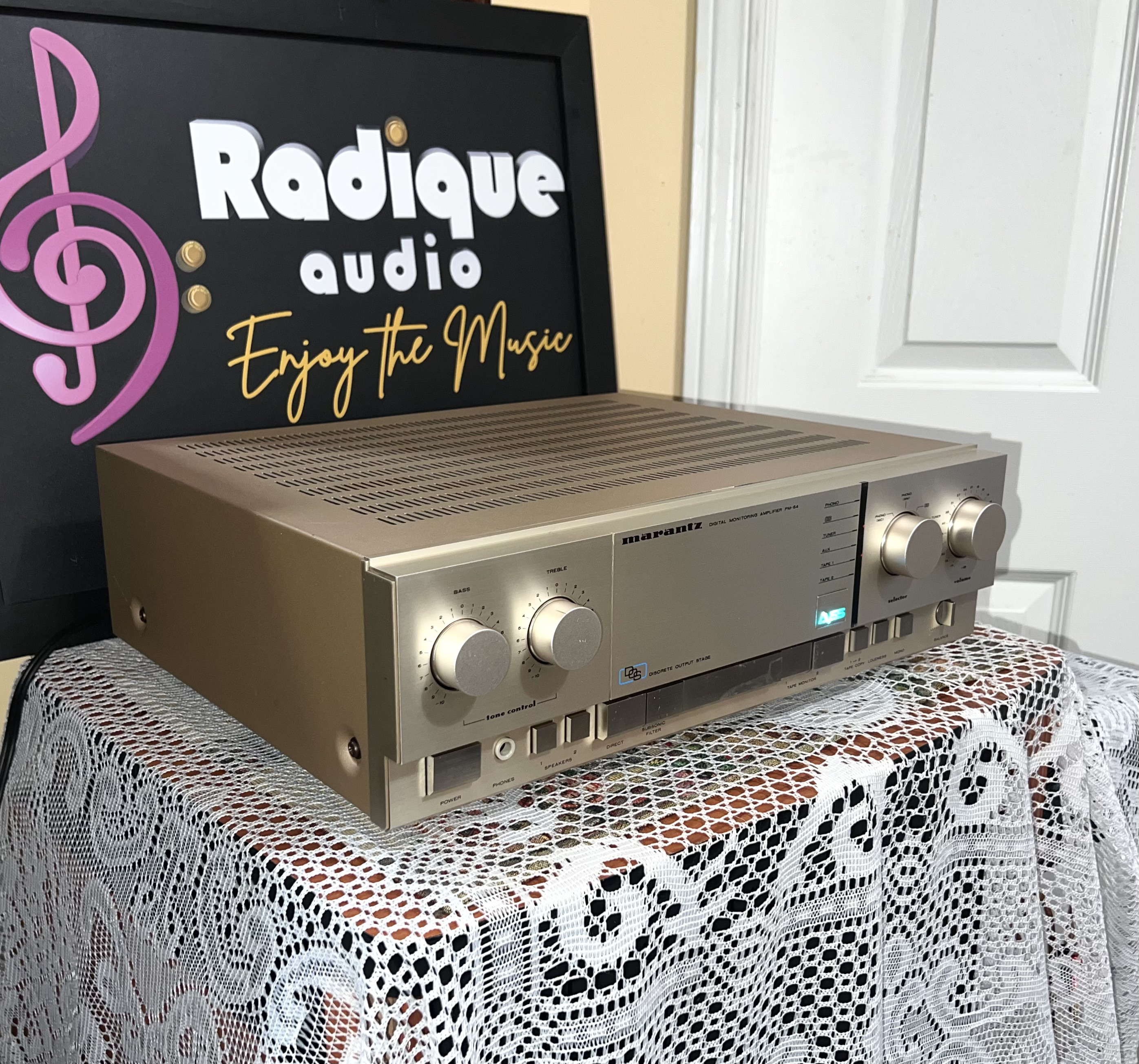




Marantz PM-64 Vintage Integrated Amplifier – 100 WPC, Japan
$695.00
Out of stock
This one has sold. Want first dibs on the next one?
We take these in regularly. Leave your name and email, and we’ll email you the moment one is listed, so you hear first. No cost, no obligation.
Email me when one is listed
Give your next receiver Bluetooth. RA-Twin II, $39.00 →
Other integrated amps we have in stock now
3 in stock · $495.00–$1,895.00 · all ship
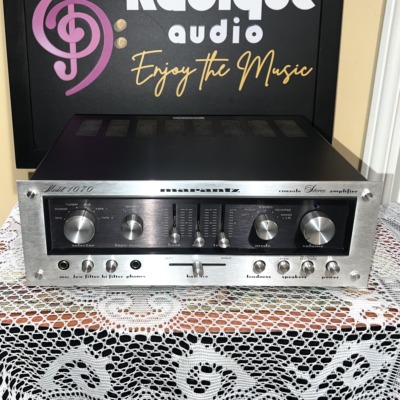 Marantz 1070 Vintage Integrated Amplifier – 35 WPC, Serviced$995.00Ships
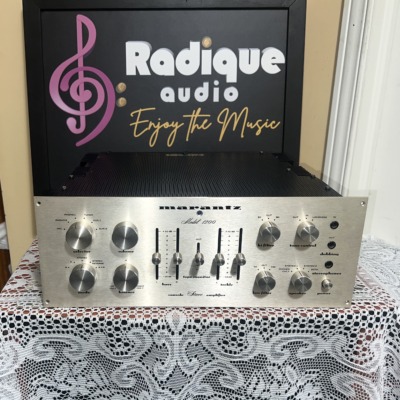 Marantz 1200 Vintage Integrated Amplifier – 100 WPC, Made in USA$1,895.00Ships
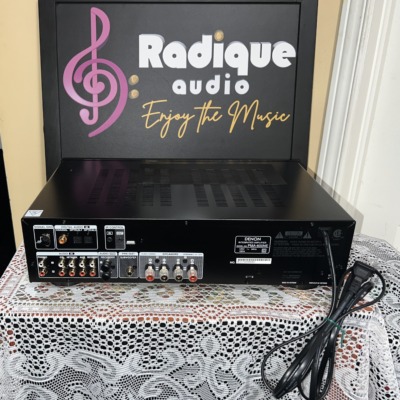
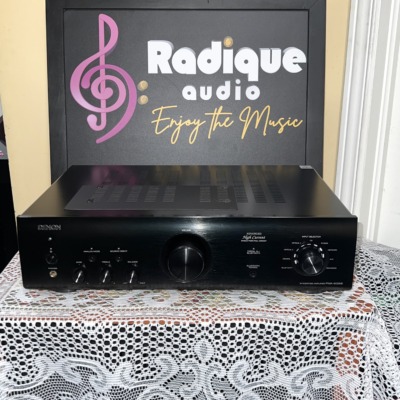 Denon PMA-600NE Integrated Amplifier – 45 WPC, Phono, Bluetooth$495.00Ships
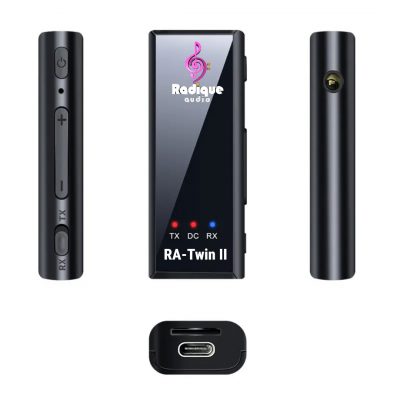
Give your next receiver Bluetooth.
The RA-Twin II adds Bluetooth streaming to any vintage receiver or amp with a spare input. Phone to stereo in about a minute, and nothing on the receiver is modified.
RA-Twin II, $39.00 →Marantz PM-64 — AVSS Power Supply, 100 Watts, Champagne
Marantz PM-64 Stereo Integrated Amplifier – 100 Watts Per Channel, AVSS Power Supply, MM/MC Phono, Champagne, Level 1 Serviced, Good Condition
A hundred watts a side from a Marantz built in Japan in 1984, with a power supply design most integrated amplifiers of any era never bothered with.
The headline feature is AVSS — Auto Voltage Shift Supply. Rather than running the output stage from a single fixed rail voltage, the PM-64 shifts its supply voltage according to how much power the music is actually demanding, driving the output devices at the voltage best suited to the moment from quiet passages up to full output. The practical result is high power without the quality compromise that usually comes with chasing it, and it was Marantz’s answer to the wide dynamic range of the then-new digital sources. The PM-64 inherited the concept directly from the flagship PM-84.
It is also designed for low impedance, holding its power when a speaker’s impedance momentarily dips to an awkward value — which is precisely when most amplifiers of this vintage begin to struggle. A hundred watts into 8 ohms, a hundred and forty into 4, with total harmonic distortion of 0.015 percent and a damping factor of 100. The output bandwidth runs from 5Hz to 40kHz.
There is a Direct switch, and it does what the name says: it bypasses the tone amplifier and subsonic filter entirely, so the signal takes the shortest possible path from selector to volume control to power amplifier. For a good source, that is the setting to use.
The phono stage is a serious one. Both moving magnet and moving coil are catered for, with RIAA accuracy held to ±0.2dB across the band, 86dB signal to noise on MM and 70dB on MC, and a maximum input of 140mV on MM — which means it will not be overloaded by a hot cartridge on a loud passage, a failing that quietly spoils a great many phono stages. Line inputs run at 98dB signal to noise.
Alongside phono are CD, tuner and auxiliary inputs, two full tape loops with tape copy in either direction, and terminals for two pairs of speakers switchable independently or together. Front-panel controls cover bass, treble, volume and balance — each tone control giving ±10dB — with subsonic filter, loudness and mono switches, and a headphone jack.
The champagne faceplate is the finish that suits this amplifier best, and it has kept its lustre.
This example has undergone our Level 1 service and testing, which should ensure many more years of reliable performance ahead.
A word on the condition grade. We have graded this one Good and we grade strictly — what you will find is honest wear consistent with forty years of use rather than anything significant. It presents well.
Features: AVSS Auto Voltage Shift Supply, inherited from the flagship PM-84 100 watts per channel into 8 ohms, 140 watts into 4 ohms Total harmonic distortion of just 0.015% Damping factor of 100, designed for low-impedance loads Direct switch bypassing tone stage and subsonic filter MM and MC phono inputs with ±0.2dB RIAA accuracy Two tape loops with tape copy in either direction Two pairs of speaker terminals, switchable Subsonic filter, loudness and mono switches Headphone output Champagne faceplate Made in Japan
Marantz PM-64 Specifications
- Model: PM-64
- Type: Stereo integrated amplifier (pre-main)
- Year of Manufacture: 1984
- Rated Output: 100 watts + 100 watts (8 ohms, 20Hz–20kHz); 140 watts + 140 watts (4 ohms, 1kHz)
- Output Bandwidth: 5Hz – 40kHz (8 ohms, 0.03% THD)
- Total Harmonic Distortion: 0.015% (20Hz–20kHz, 8 ohms)
- Cross Modulation Distortion: 0.015%
- Frequency Response: 20Hz – 20kHz, +0 / -0.3dB
- Damping Factor: 100 at 8 ohms
- Input Sensitivity: 2.5mV/47kΩ (MM), 250µV/100Ω (MC), 150mV/25kΩ (line)
- RIAA Deviation: ±0.2dB, 20Hz–20kHz
- Signal to Noise Ratio (IHF-A): 86dB (MM), 70dB (MC), 98dB (line)
- Phono Maximum Input: 140mV (MM), 14mV (MC)
- Tone Controls: Bass ±10dB at 100Hz, Treble ±10dB at 10kHz
- Subsonic Filter: 50Hz
- Country of Manufacture: Japan
- Finish: Champagne
- Dimensions: (Width x Height x Depth) 416 x 136 x 334 mm (16.4 x 5.4 x 13.1 inches)
- Weight: 10.5 kg (23.1 lbs)
⚠️ Important Information for International Buyers
This unit is configured for North American 110/120V power. Buyers outside North America will require a step-down transformer and appropriate plug adapter.
✅ Buy With Confidence — The Radique Promise
Backed by Radique Audio’s Bumper-to-Bumper Warranty and our Perpetual Trade-Back Program. When you’re ready to move on, we’ll take it back. That’s the Radique difference.
📦 Watch how we protect your gear — our unboxing video.
📺 Curious about our business? Check out our YouTube channel for behind-the-scenes videos and more!
📞 Questions? Use the Ask a Question button above, or call us at 613-416-9995.
⭐ Don’t Just Take Our Word For It
Radique Audio holds over 600 customer ratings averaging 4.97 stars across six public platforms — Facebook Marketplace, Kijiji, Canuck Audio Mart, Google and others. Every rating lives somewhere we don’t control, so you can read the originals yourself, including the less flattering ones. See what our customers say. 👉
| Weight | 25.1 lbs |
|---|---|
| Dimensions | 17.1 × 20.4 × 9.4 in |
Marantz began in 1953 in Queens, New York, where Saul Marantz built tube preamplifiers and amplifiers, and by the 1970s it was making receivers with champagne-gold faceplates, blue-lit dials and flywheel tuning. We carry Marantz receivers, amplifiers and preamps, turntables, tuners, CD players and cassette decks. We've had more than 150 Marantz listings so far, covering nearly 100 different models. Every used Marantz here is inspected, tested and serviced as required, then photographed in-house and covered by our Bumper-to-Bumper Warranty and Perpetual Trade-Back Program. Many Marantz components were sold without their wood case, so we also make new cherry WC-22 and WC-10 style cabinets. Don't see the model you want? Tell us on First Dibs and we'll email you when one arrives.
Our five best-selling Marantz models so far: the SR4023 stereo receiver, the vintage 2225, the SR7000 AV receiver, the SR4320 stereo receiver and the vintage 2238B.
The Marantz story, 1953 to today
Saul B. Marantz founded the company in New York in 1953. His first product, the Audio Consolette preamplifier, became the Model 1, and Marantz dates the first Consolettes to 1952–53. Marantz says the early factory was in Woodside, Queens.
The tube years. Through the late 1950s and early 1960s Marantz built a small run of tube separates in New York that collectors still chase: the Model 7 preamplifier (1958), the Model 9 power amplifier (1960) and the Model 10B tuner (1964).
Superscope and the move to Japan. In 1964 Superscope, the company that also distributed Sony tape recorders in the US, bought Marantz, and Saul Marantz resigned at the end of 1967. The Model Eighteen of 1968 was the first Marantz receiver, rated at 40 watts per channel. Under Superscope, design moved to California and, from the late 1960s, production moved to Japan through Standard Radio, which became Marantz Japan in 1975. Receivers such as the 2230 and 2270 are listed as designed in the USA and produced in Japan.
The power race. After a 1974 Federal Trade Commission rule tightened how amplifier power was rated, receiver makers competed on watts. Marantz's Model 2500 of the late 1970s was rated at 250 watts per channel and had an oscilloscope tuning display.
Philips, Denon and today. In 1980 Philips bought Superscope's stake in Marantz Japan and the brand outside the US and Canada. Marantz says its CD-63 of 1982 was one of the first CD players, and its "KI Signature" models carry the initials of Ken Ishiwata, who joined in 1978. In 2001 Marantz Japan bought the trademark back from Philips, and in 2002 it combined with Denon to form D&M Holdings. In September 2025 HARMAN, a Samsung company, completed its purchase of Sound United, the parent of Marantz and Denon.
Which Marantz is which?
Tube separates (1950s–60s): the Models 1, 7, 8B, 9 and 10B, built in New York. Rare collector pieces.
First receivers (from 1968): the Model Eighteen, followed by the Nineteen at the end of 1969.
22xx receivers (from 1972): the first set was the 2215, 2230, 2245 and 2270, with the champagne-gold faceplate, blue-lit dial and "Gyro-Touch" flywheel tuning. A higher number generally means more power: the 2230 is rated at 30 watts per channel, the 2270 at 70. Later "B" versions such as the 2220B and 2285B followed.
Big late-1970s receivers: the 2325 (125 watts per channel), the 2500 flagship and four-channel "Quad" receivers.
1000-series integrated amplifiers: for example the 1060 (30 watts per channel, from 1971), the 1070 and the 1150 (75 watts per channel). The slim 1030, 1040, 1060 and 1070 share their case size with tuners such as the 104, 105 and 112.
Tuners: from the tube Model 10B to solid-state models such as the 2130, with its oscilloscope display.
Wood cases: Marantz sold its wood cases separately: the WC-22 for the 22xx receivers, the WC-10 for the slim 1000-series amplifiers and 100-series tuners, and the WC-1 for larger models such as the 1200. That is why so many turn up bare. A customer who sold Marantz in Ontario in the 1970s told us the cases his shop ordered were built here in Canada, by Westinghouse. Our own cherry WC-22 and WC-10 style cabinets are made in Canada too.
CD players: from the CD-63 of 1982 to the KI Signature versions.
Buying used Marantz: what to check
Dial and meter lamps. Burnt-out bulbs are common on 1970s receivers and are often replaced, sometimes with LEDs. Ask which, if the look of the dial matters to you.
The dial itself. The diffuser sheet behind the dial ages and can dull the glow. Check that the Gyro-Touch pointer moves smoothly and tracks the stations; dial cords are a common replacement part.
Controls and switches. Crackle when you turn a control or work a switch usually means dirt. Try every input, and walk away from a unit that drops a channel.
Capacitors and bias. Electrolytic capacitors in 1970s gear are often past their best, and full restorations replace them. Restorers also set the bias and DC offset.
Cosmetics. Pitting on the faceplate points to damp storage, and dents or water stains to rough handling.
Everything we list is inspected, tested and serviced as required here, and comes with our warranty.
You may also like…
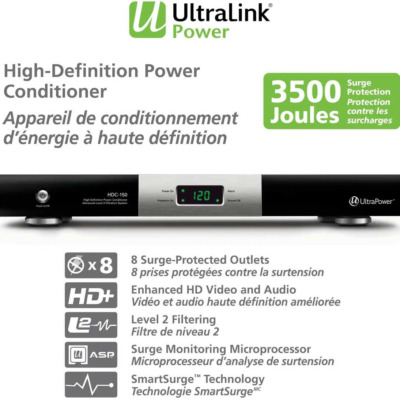
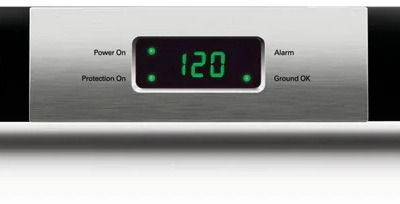
Ultralink High Def Power Conditioner with Display, BNIB HDC150
Eight surge-protected, filtered AC outlets with isolated banks for digital, video, audio and high-current components — four always-on, four switched.
Enough outlets for the whole stack, not just the amplifier — television, Blu-ray and streamer alongside a receiver, or turntable, CD player and cassette deck alongside a vintage amp. 3,500 joule protection, EMI/RFI filtration to 58 dB, and surge protection on the coax and network lines most conditioners leave unguarded. Patented ASP voltage monitoring and a 15 amp resettable breaker.
Brand new, unopened, in original packaging with full manufacturer warranty.
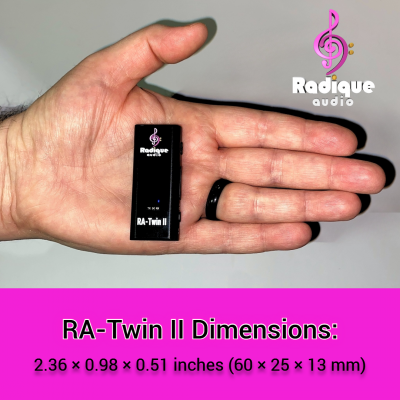
RA-Twin II Bluetooth Adapter for Vintage Stereo – Receiver & Transmitter
Add Bluetooth to any vintage stereo, amplifier or car stereo, or send your TV or stereo to Bluetooth headphones. Tiny but mighty, and set up in minutes.
- RX, TX and Mobile (microSD) modes
- Bluetooth 5.4, up to 10 m range
- Up to 10 hours per charge, USB-C
- Clear online manual in English & French
- 1-year warranty, Ottawa-based support
Related Products
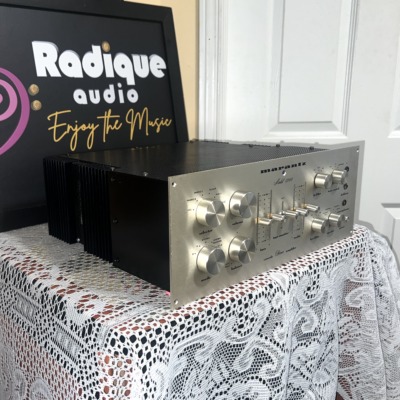
Marantz 1200 Vintage Integrated Amplifier – 100 WPC, Made in USA
Marantz's flagship integrated of the early seventies, built in Sun Valley, California, through our Level 2 service and playing as it should.
✔️ Very Good condition — faceplate and knobs present well, light marks of age; offered in the stock black metal case
✔️ Through our Level 2 service — a substantial round of component replacement on the bench, then bias and offset set and the amp run in
✔️ Covered by Radique Warranty
✔️ Includes Perpetual Trade-Back Program eligibility
✔️ Expertly packed for safe shipping
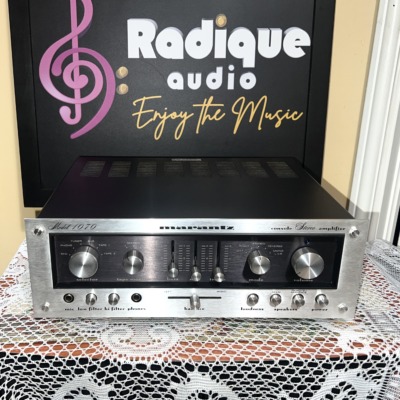
Marantz 1070 Vintage Integrated Amplifier – 35 WPC, Serviced
A slim mid-seventies Marantz integrated amplifier, through our Level 1 service, in very good condition, with a phono stage, a three-band tone section and a microphone input on the front panel.
✔️ Very good condition — free of significant marks
✔️ Through our Level 1 service on our own bench
✔️ MM phono stage, three-band tone sliders and a front-panel mic input
✔️ Covered by Radique Warranty
✔️ Includes Perpetual Trade-Back Program eligibility
✔️ Expertly packed for safe shipping
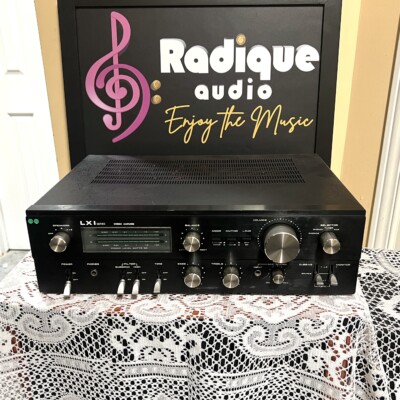
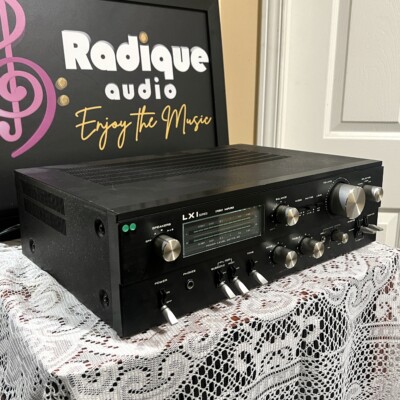
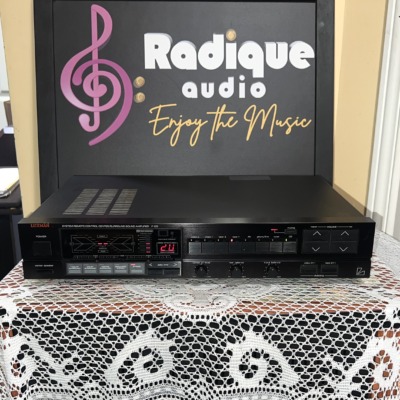
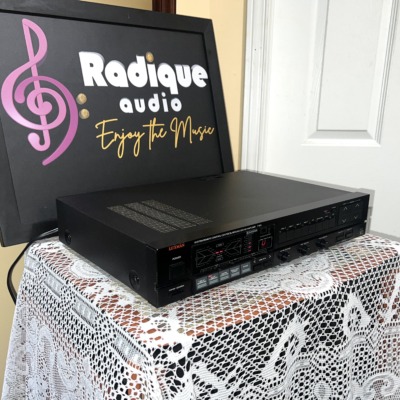
LXI AM4002 Vintage Integrated Amp – 80 WPC (est.), Dual Phono
Sold through Sears in the late seventies and heavier than that suggests — 22.9 lb, a 450 VA power rating, and metal knobs on everything. Two separate phono inputs, tape monitor and dubbing, subsonic and high filters, A/B speakers, and a front-panel mic mixing input. No factory manual survives, so the 80 WPC is our own conservative estimate. Level 1 serviced here; good cosmetic condition.
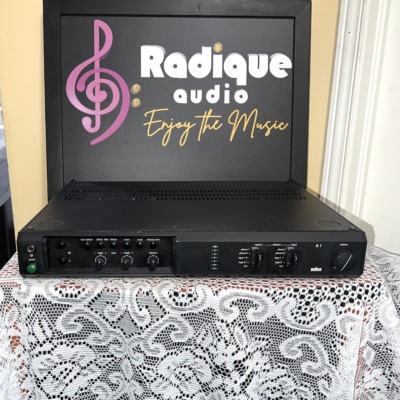
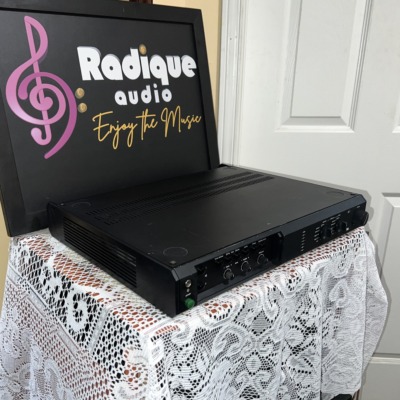
Braun Atelier A1 Vintage Integrated Amp – 55 WPC, Pre-Out, Japan
The component that makes the rest of an Atelier system work, and the one people hunting these usually look for first. 55 watts per channel into 8 ohms and 80 into 4, with a preamplifier section that separates from the power stage — engineering that is not an afterthought to the industrial design. 445 mm wide and 70 mm tall, the exact footprint of the T1 tuner and C1 deck, so the stack reads as one machined object. Made in Japan for Braun. Good condition.
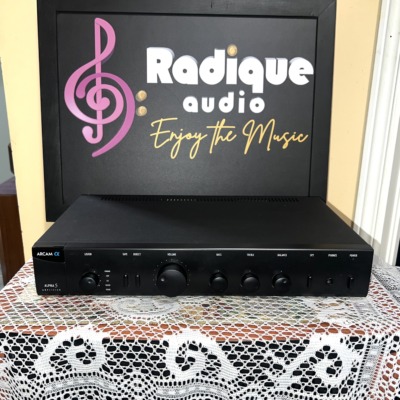
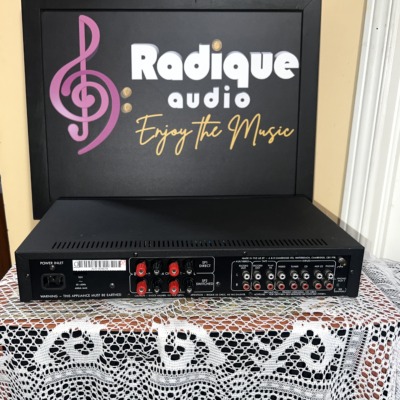
Arcam Alpha 5 Integrated Amplifier – 40 WPC, Made in England
A British integrated amplifier from Arcam's Cambridge factory, 40 watts a side, built on the principle that anything which does not improve the sound does not go in the box.
✔️ Condition: Very Good — tested and working properly
✔️ Covered by Radique Warranty
✔️ Includes Perpetual Trade-Back Program eligibility
✔️ Expertly packed for safe shipping
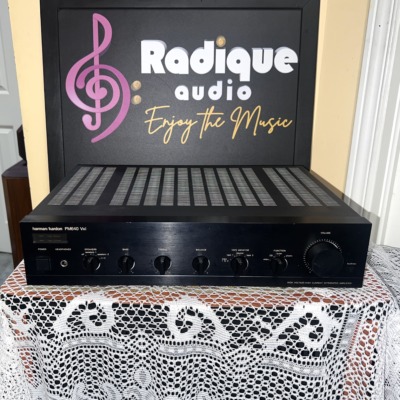
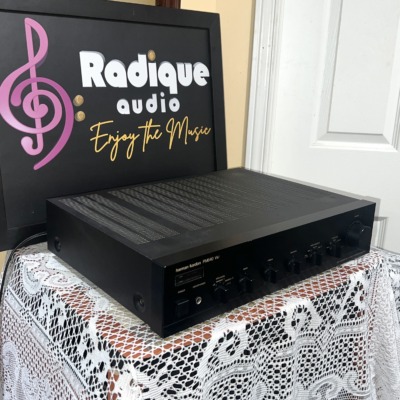
Harman Kardon PM640VXi Vintage Integrated Amp – 45 WPC, Japan
A 45-watt amplifier built by a company that spent the 1980s arguing the watts were the wrong thing to look at.
✔️ Condition: Very Good
✔️ Covered by Radique Warranty
✔️ Includes Perpetual Trade-Back Program eligibility
✔️ Expertly packed for safe shipping
