


Polk Audio RT15 2-Way Bookshelf Speakers — Versatile & Compact
$145.00
Two port systems doing different jobs: the flared rear Power Port takes the low end down without the turbulence of a straight tube, while a pair of small ARC ports either side of the tweeter damp cabinet resonance in the midrange. 5.25-inch composite woofer, 0.75-inch silk dome, 89 dB, 8 ohms, 20 to 100 watts. Video-shielded, with a keyhole slot for wall mounting. Good condition.
Out of stock
This one has sold. Want first dibs on the next one?
We take these in regularly. Leave your name and email, and we’ll email you the moment one is listed, so you hear first. No cost, no obligation.
Email me when one is listed
Whatever you end up with, it needs cable. Build a set to length →
Other bookshelf speakers we have in stock now
3 in stock · $75.00–$145.00 · all ship
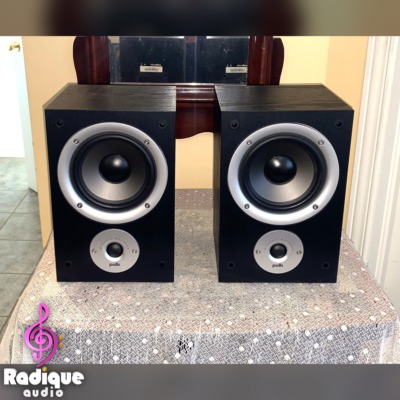 Polk Audio R150 Bookshelf Speakers – Pair, 5-Way Posts, 89 dB$145.00Ships
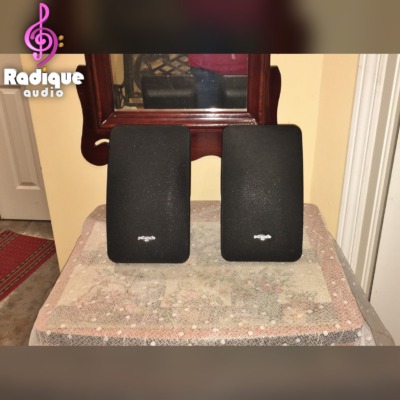 Polk Audio M2 Compact Speakers – Pair, Built-In Wall Mounts$95.00Ships
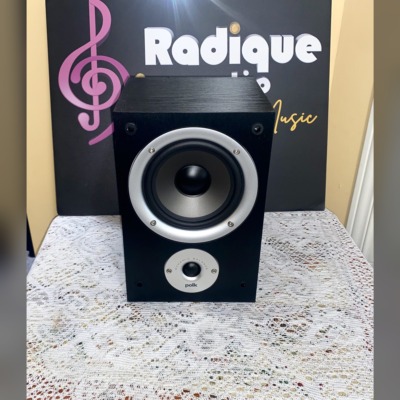 Polk Audio R150 Bookshelf Speaker – Single, 5-Way Posts$75.00Ships
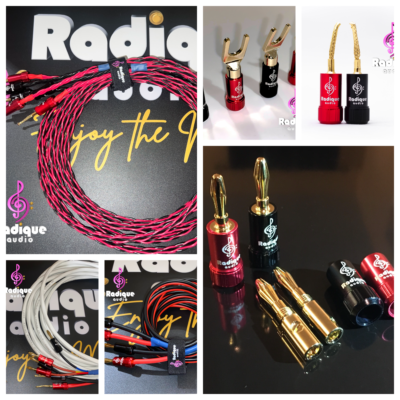
Whatever you end up with, it needs cable.
We hand-build speaker cable to your exact length and terminate it however you like: banana, spade, pin or bare wire. Tell us the run and the ends, and it ships ready to plug in.
Build a set to length →Polk Audio RT15 2-Way Bookshelf Speakers — Versatile & Compact
A capable compact bookshelf from Polk Audio, the RT15 delivers clean, well-balanced sound at a size and price that makes it equally at home in a dedicated stereo setup or as part of a home theater system.
The RT15 is a 2-way design built around Polk’s Dynamic Balance driver technology — a laser-imaging process used to select driver materials that minimize resonance for a smooth frequency response and low distortion. The 5.25″ composite woofer handles midrange and bass with authority for its size, while the 0.75″ silk dome tweeter keeps the high end smooth and fatigue-free over long listening sessions.
Polk’s Power Port bass venting on the rear panel shapes the outgoing airflow with a flared, funnel-like geometry that reduces port turbulence and delivers cleaner, more extended bass than a conventional straight-tube port. Complementing this, the RT15 also features Polk’s Acoustic Resonance Control (ARC) system — two small tuned ports flanking the tweeter on the front baffle — which suppress internal cabinet resonance for a more natural, open midrange. The two technologies work in tandem: Power Port handles low-end extension, ARC keeps voices and instruments clear and uncoloured.
Video shielding allows placement near a display without interference, and a keyhole slot on the rear Power Port plate enables wall mounting without additional hardware — useful for surround channel duty. The gold-plated 5-way binding posts accept bare wire, pin connectors, spade lugs, and single or dual banana plugs.
Type: 2-way, bass-reflex bookshelf speaker
Woofer: 5.25″ Dynamic Balance composite cone with rubber surround
Tweeter: 0.75″ Dynamic Balance silk dome
Frequency response: 60 Hz–24 kHz (65 Hz–20 kHz, -3 dB)
Sensitivity: 89 dB
Impedance: 8 ohms
Power handling: 20–100 watts
Bass venting: Rear Power Port + dual front ARC (Acoustic Resonance Control) ports
Finish: Black vinyl
Video shielded: Yes
Wall-mountable: Yes (keyhole slot on rear Power Port plate)
Binding posts: 5-way, gold-plated
Dimensions: (Width x Height x Depth) 6.5 x 10.7 x 7.3 inches (165 x 272 x 185 mm)
Weight: 9.5 lbs (4.3 kg) each
A clean, good-condition pair of Polk RT15 bookshelf speakers featuring both Power Port and ARC technologies — more refinement than you’d expect at this price point, and ready for immediate use.
Backed by Radique Audio’s 90-day warranty and our perpetual trade-back policy, you can purchase with confidence.
| Weight | 21 lbs |
|---|---|
| Dimensions | 11.3 × 19 × 14.7 in |
- Hard-to-beat pricing
- Free shipping across Canada
- Manufacturer's warranty
- Get a quote on new Polk
Polk Audio began in Baltimore in 1972, founded by Matthew Polk, George Klopfer and Sandy Gross. Its SDA speakers of the 1980s used a cable between the left and right speakers to widen the stereo image. We carry Polk towers, bookshelf speakers, centre channels and subwoofers. We've had more than 180 Polk listings so far, covering more than 80 different models. Every used Polk here is inspected, tested and serviced as required, then photographed in-house and covered by our Bumper-to-Bumper Warranty and Perpetual Trade-Back Program. Looking for new Polk? We also quote new Polk Audio direct from the Canadian distributor, with free shipping within Canada: request a quote below. Don't see the model you want? Tell us on First Dibs and we'll email you when one arrives.
Our five best-selling Polk models so far: the RTi10 towers, the PSW10 and PSW125 subwoofers, the RTi4 bookshelf speakers and the CSi3 centre.
The Polk story, 1972 to today
Matthew Polk, George Klopfer and Sandy Gross, graduates of Johns Hopkins, founded Polk Audio in Baltimore, Maryland, in 1972. The Monitor 7 of 1974 was their first model to succeed, and the Monitor 10 followed in 1976.
SDA. In 1984 Polk introduced SDA (Stereo Dimensional Array). A cable between the left and right speakers lets each one cancel the sound that crosses over to the wrong ear, for a wider stereo image.
Growth. Polk went public in 1986 and moved to new premises in Baltimore. It began moving manufacturing to Tijuana, Mexico, in 1988, and by 2012 Stereophile reported that Polk designed in the US and built in China.
New owners. Directed Electronics agreed to buy Polk in 2006. Polk later became part of Sound United, Masimo bought Sound United in 2022, and in September 2025 HARMAN, a Samsung company, completed its purchase of Sound United. The 2018 Legend series brought SDA back.
Which Polk is which?
Monitor (1970s to early 1990s): the Monitor 4, 5, 7, 10 and 12, with A, B and C revisions.
SDA (1984 to about 1991): the SDA-1 and SDA-2 families, CRS, SRS and the later "TL" models.
RTA (1979 to 1992): towers such as the RTA 11t, with two woofers and two passive radiators.
RT and RTi (2001 onward): Polk's lower-priced lines. Our best-selling RTi10 towers and RTi4 bookshelf speakers come from here.
CSi centres and PSW subwoofers: the CSi3 centre and the PSW10 and PSW125 subwoofers are among the Polks we sell most.
LSi (about 2001 to 2010) and LSiM (2011): Polk's flagship lines of that decade, followed by Signature (2016), Legend (2018) and Reserve (2021).
Buying used Polk: what to check
SDA cable. SDA speakers need the interconnect cable between them for the SDA effect, and early SDA models need a common-ground amplifier. Make sure the cable comes with the pair.
Tweeters. Owners report that some SL3000 tweeters on the 1989 to 1991 SDA TL models leaked their ferrofluid and failed, and that Monitor-series pairs may carry mismatched factory or replacement tweeters. Check that every tweeter plays.
Surrounds. Some early Polks used foam surrounds, which rot with age; later models such as the RTA 11t and LSiM use rubber. Press gently on each woofer surround.
Everything we list is inspected, tested and serviced as required here, and comes with our warranty.
You may also like…
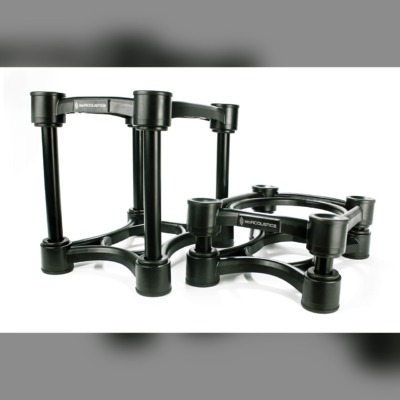

IsoAcoustics ISO-200 Isolation Stands (Pair)
- ✔️ Genuine IsoAcoustics, brand new, from an authorized Canadian dealer
- ✔️ A pair of isolation stands for large speakers and studio monitors
- ✔️ Rated to 75 lb (34 kg) short or 60 lb (27 kg) tall
- ✔️ Short 3.75 in (95 mm) or tall 8.5 in (215 mm), up to 6.5° of tilt
- ✔️ Pick up in Kanata by appointment, or shipped across Canada and internationally
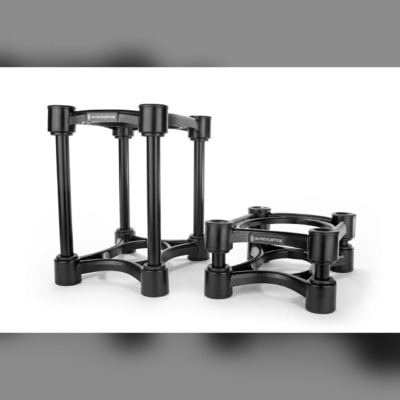

IsoAcoustics ISO-155 Isolation Stands (Pair)
- ✔️ Genuine IsoAcoustics, brand new, from an authorized Canadian dealer
- ✔️ A pair of isolation stands for medium speakers and studio monitors
- ✔️ Rated to 40 lb (18 kg) short or 35 lb (16 kg) tall
- ✔️ Short 3 in (76 mm) or tall 8.25 in (210 mm), up to 6.5° of tilt
- ✔️ Pick up in Kanata by appointment, or shipped across Canada and internationally
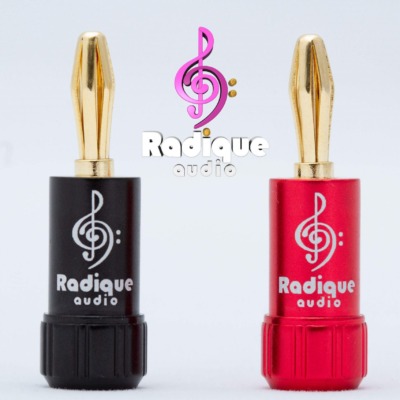
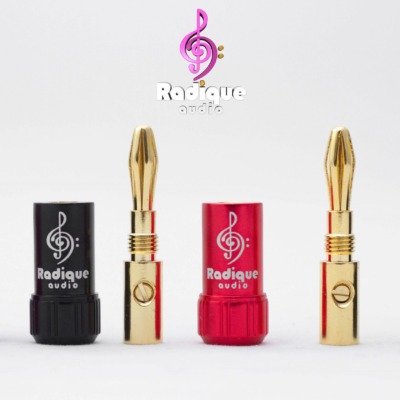
Radique Audio Banana Plugs – Gold-Plated, Dual Set Screws
Banana plugs that stay put: gold-plated, with two set screws holding the wire instead of one.
- Six-leaf gold-plated springs for a tight fit in the binding post
- Full-length non-conductive jackets, colour-coded red and black
- Fits 12 to 18 AWG speaker wire; 19.4 g a pair
- Packs of 1, 2, 4, 5, 7 or 14 pairs
- 1-year warranty


IsoAcoustics ISO-130 Isolation Stands (Pair)
- ✔️ Genuine IsoAcoustics, brand new, from an authorized Canadian dealer
- ✔️ A pair of isolation stands for small speakers and studio monitors, rated to 20 lb (9 kg)
- ✔️ Short 2.8 in (71 mm) or tall 8.25 in (210 mm), up to 6.5° of tilt
- ✔️ Top plate 5.1 × 6 in (130 × 152 mm)
- ✔️ Pick up in Kanata by appointment, or shipped across Canada and internationally
Custom Speaker Cable Builder
Your specs, your cable: choose the cable, the length and each connector, with live pricing.
- House CCA, House OFC, House Quad, Kimber 4PR or Kimber 4TC
- Banana, spade, pin, small spade or bare wire, chosen for each end
- Bi-wire on Kimber 4PR, Kimber 4TC and House Quad
- Hand-assembled, heat-shrink reinforced and colour-coordinated
- 1-year warranty
Related Products
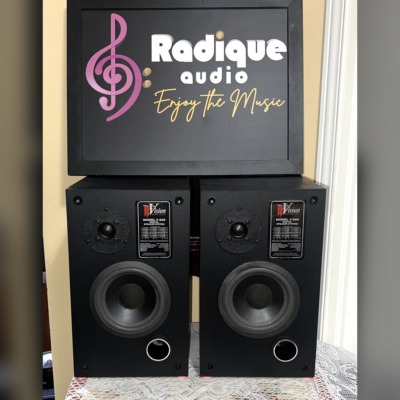
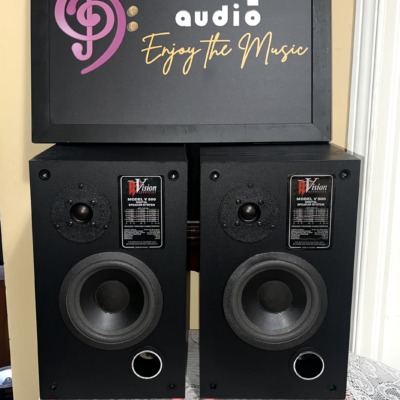
Vision Acoustics V500 Bookshelf Speakers, Pair – Made in Canada
A pair of solidly built, Canadian-made Vision Acoustics V 500 bookshelf speakers in black ash, rated at a sensitive 92 dB, fully tested on our bench and in very good condition.
✔️ Very good condition — free of significant marks, in black ash
✔️ Efficient 92 dB design, easy for a modest receiver to drive
✔️ Made in Canada, with 5-way binding posts
✔️ Covered by Radique Warranty
✔️ Includes Perpetual Trade-Back Program eligibility
✔️ Expertly packed for safe shipping
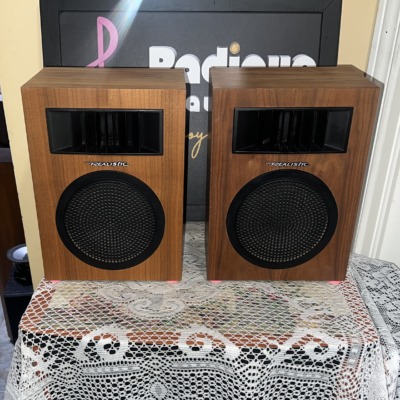
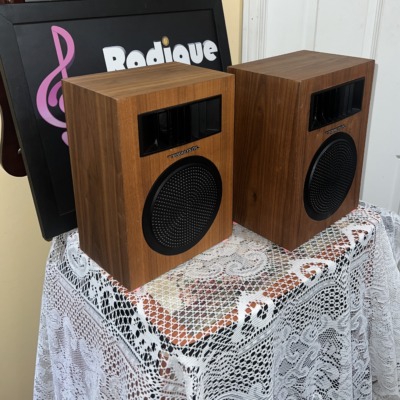
Realistic Minimus-5 Speakers, Pair – Vintage, Real Wood Veneer
A vintage pair of Realistic Minimus-5 two-way bookshelf speakers from Radio Shack, in a warm brown real wood veneer, with horn tweeters, fully tested on our bench and in very good condition.
✔️ Very good condition — free of significant marks
✔️ Real wood veneer, with rigid grilles over the woofers
✔️ Two ways in: small binding posts and an RCA-type speaker-level jack
✔️ Covered by Radique Warranty
✔️ Includes Perpetual Trade-Back Program eligibility
✔️ Expertly packed for safe shipping
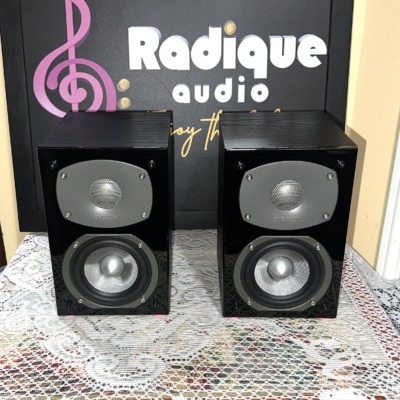
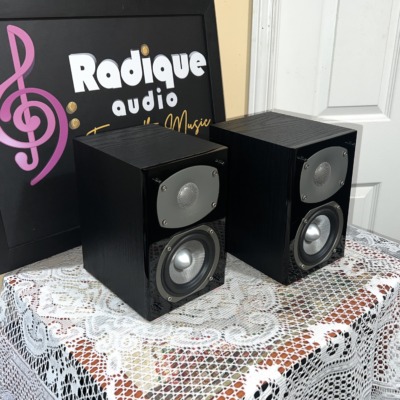
Energy C-50 Bookshelf Speakers, Pair – Ultra-Compact, Black Ash
A pair of ultra-compact Energy C-50 bookshelf speakers, designed and engineered in Canada, in black ash with gloss black front baffles and their black cloth grilles. They have been tested on our bench and are in very good condition.
✔️ Very good condition — black ash with gloss baffles, grilles included
✔️ 1-inch aluminum tweeter and 4½-inch woofer, video-shielded
✔️ Five-way binding posts — designed and engineered in Canada
✔️ Covered by Radique Warranty
✔️ Includes Perpetual Trade-Back Program eligibility
✔️ Expertly packed for safe shipping
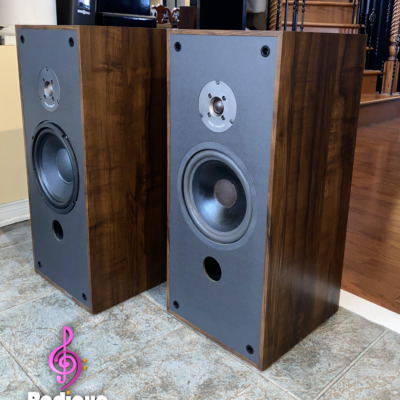
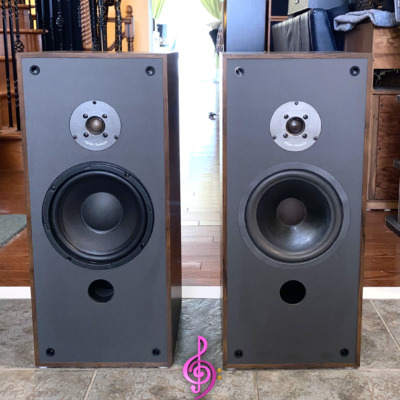
Paisley Reference Two Bookshelf Speakers, Pair – Made in Canada
A pair of Paisley Research Reference Two bookshelf speakers, made in Canada, in walnut-finish cabinets with black front baffles and their black cloth grilles. They have been tested on our bench, they play nicely, and they are in very good condition. One woofer is a replacement fitted by a previous owner, not by us; the details are under Condition.
✔️ Very good condition — walnut-finish cabinets, grilles included
✔️ Tested and playing nicely; one replacement woofer, disclosed below
✔️ 8-inch woofers, front-ported — made in Canada
✔️ Covered by Radique Warranty
✔️ Includes Perpetual Trade-Back Program eligibility
✔️ Expertly packed for safe shipping
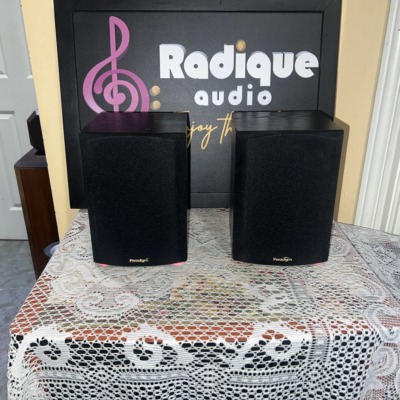
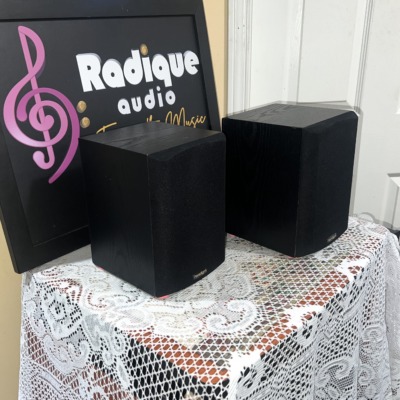
Paradigm Micro v.3 Bookshelf Speakers, Pair – Black Ash
A pair of Paradigm Micro v.3 speakers, the smallest of Paradigm's Canadian-designed Performance Series, with rubber woofer surrounds that will never need refoaming.
✔️ Tested on our bench
✔️ Fair condition, priced to match
✔️ Covered by Radique Warranty
✔️ Includes Perpetual Trade-Back Program eligibility
✔️ Expertly packed for safe shipping
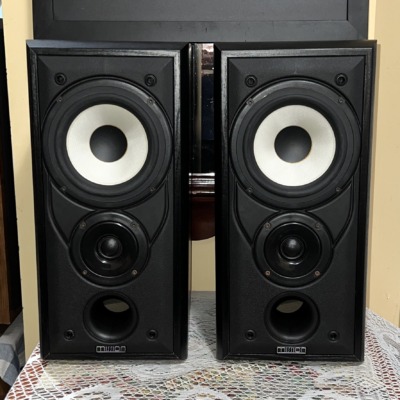
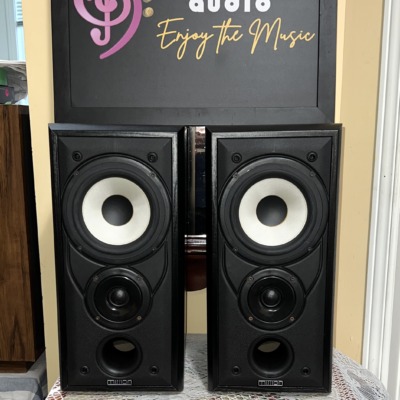
Mission 701 Bookshelf Speakers, Pair – British Design, Black Ash
A pair of Mission 701 two-way bookshelf speakers in black ash, with Mission's inverted driver layout and their grilles. One of our favourites in this size.
✔️ Tested on our bench, woofer and tweeter in each
✔️ Very good, grilles included
✔️ 89 dB, 8 ohms: easy for any receiver
✔️ Covered by Radique Warranty
✔️ Includes Perpetual Trade-Back Program eligibility
✔️ Expertly packed for safe shipping
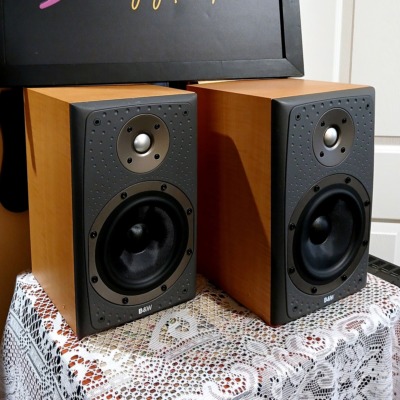
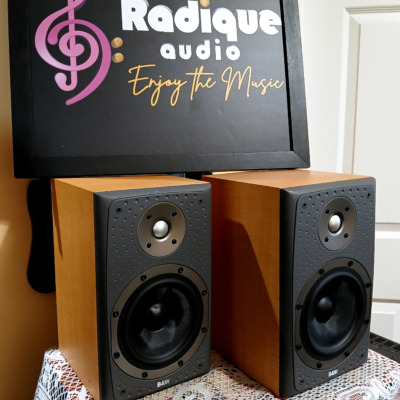
B&W DM303 Bookshelf Speakers, Pair – Made in England, Maple
A pair of B&W DM303 two-way bookshelf speakers in a light maple finish, made in England, with their black cloth grilles. Tested on our bench before listing.
✔️ Nautilus tube-loaded metal-dome tweeter and B&W's dimpled Flowport
✔️ 88 dB, 8 ohms, 25–100 W: easy for any receiver
✔️ Good condition: a few tiny nail holes, presents well
✔️ Covered by Radique Warranty
✔️ Includes Perpetual Trade-Back Program eligibility
✔️ Expertly packed for safe shipping
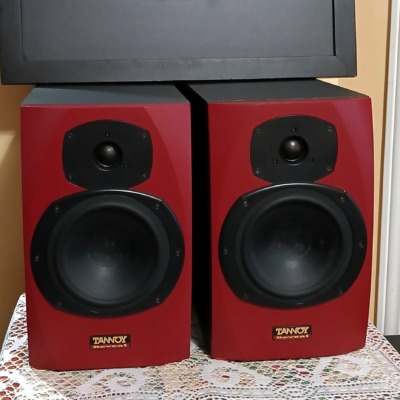
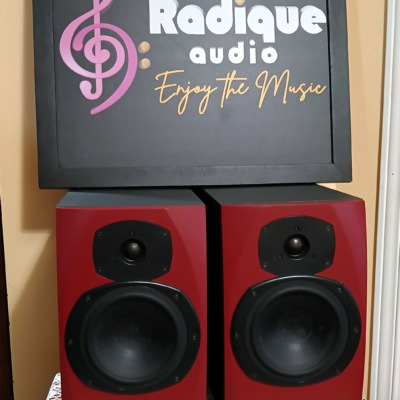
Tannoy Reveal Passive Studio Monitors, Pair – Made in Europe
A pair of Tannoy Reveal passive two-way studio monitors with their distinctive deep-red front baffles and gold Tannoy Reveal badges, in excellent condition. Tested on our bench before listing.
✔️ Real Tannoy studio pedigree for a desk, mixing room or living room
✔️ 90 dB, 6 ohms, 30–100 W: easy to drive
✔️ Magnetically shielded: fine beside a screen
✔️ Excellent condition
✔️ Covered by Radique Warranty
✔️ Includes Perpetual Trade-Back Program eligibility
✔️ Expertly packed for safe shipping
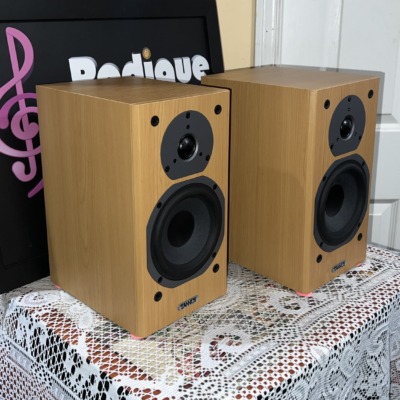
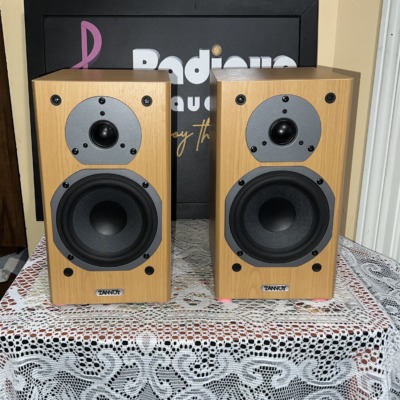
Tannoy Mercury mX1-M Bookshelf Speakers, Pair – Cherry
A pair of Tannoy Mercury mX1-M two-way bookshelf speakers in Tannoy's factory cherry finish, with their grey cloth grilles and removable port bungs. Tested on our bench before listing.
✔️ Tannoy's factory cherry finish, rarely seen
✔️ Removable port bungs: run them sealed or ported
✔️ 87 dB, 8 ohms, 10–100 W: easy to drive
✔️ Very good condition, grilles and port bungs included
✔️ Covered by Radique Warranty
✔️ Includes Perpetual Trade-Back Program eligibility
✔️ Expertly packed for safe shipping
