Braun Atelier C1 Slim Cassette Deck — Motorized Drawer, Japan
$345.00
1 in stock
Braun Atelier C1 — A 70 mm Cassette Deck with a Motorised Drawer, Built for Braun in Japan
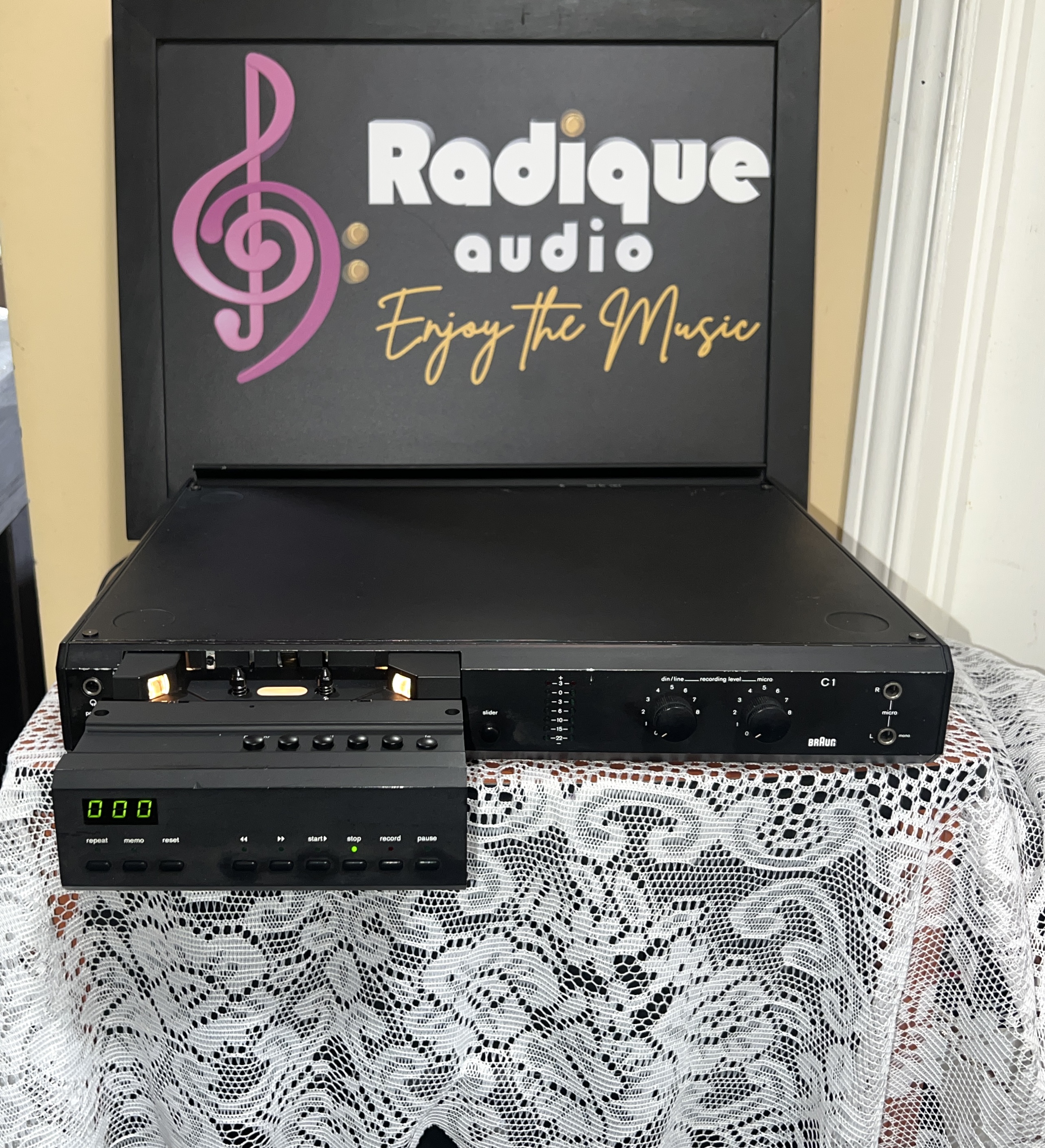
A Braun Atelier C1 stereo cassette deck, made in Japan, the rarest thing in the shop this month and one of the few components ever built where the industrial design is the reason to own it and the engineering still holds up.
The Atelier System
Braun’s Atelier system ran from 1980 to 1991 and is the most collected hi-fi the company ever produced: the A1 amplifier, T1 tuner, P1 turntable and this C1 cassette deck, all designed as a single visual language and meant to be stacked or shelved as one object. Complete Atelier systems now trade as design pieces rather than as audio equipment. Individual components appear far less often, and in North America they are genuinely scarce.
The Slim Chassis
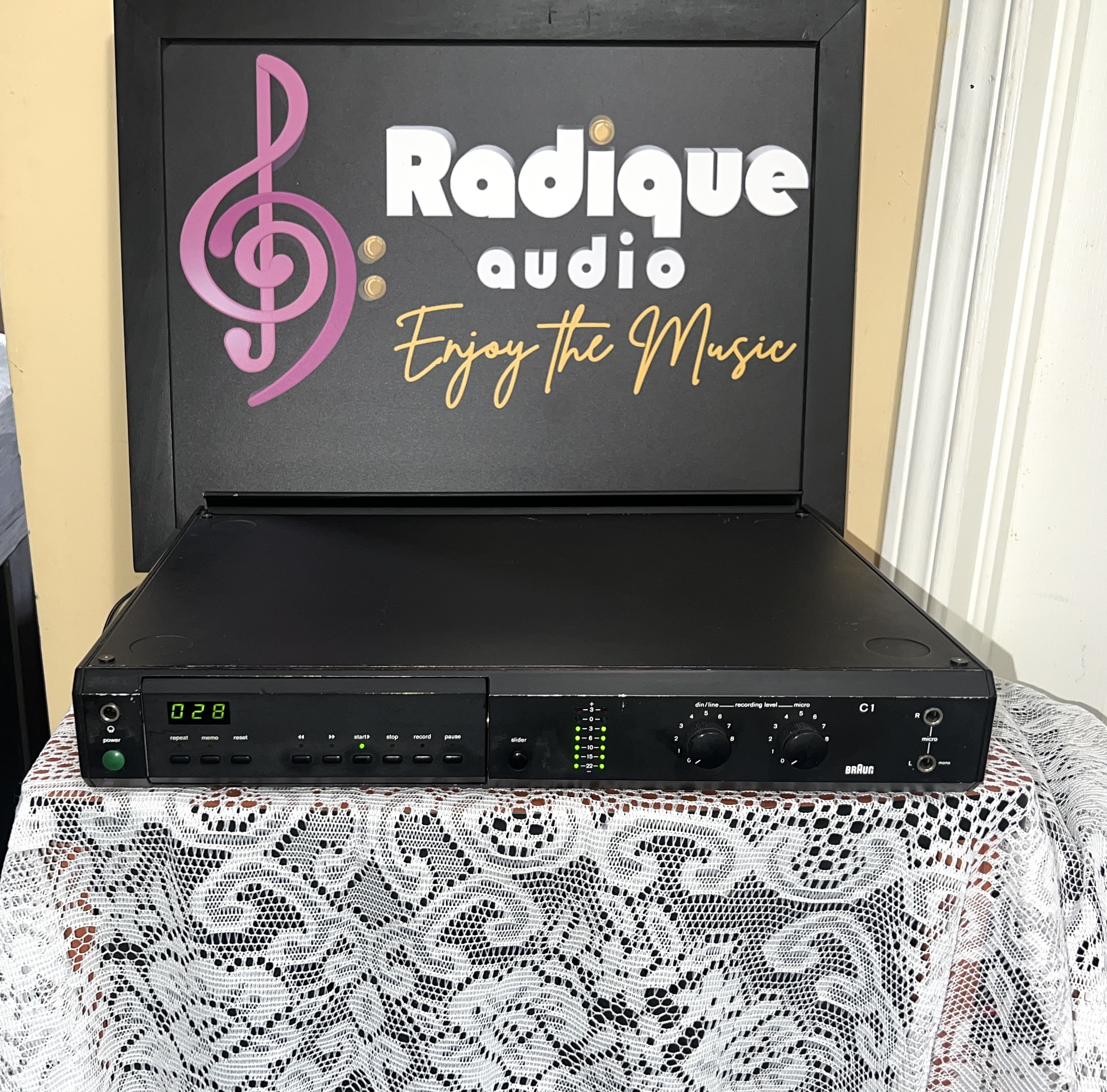
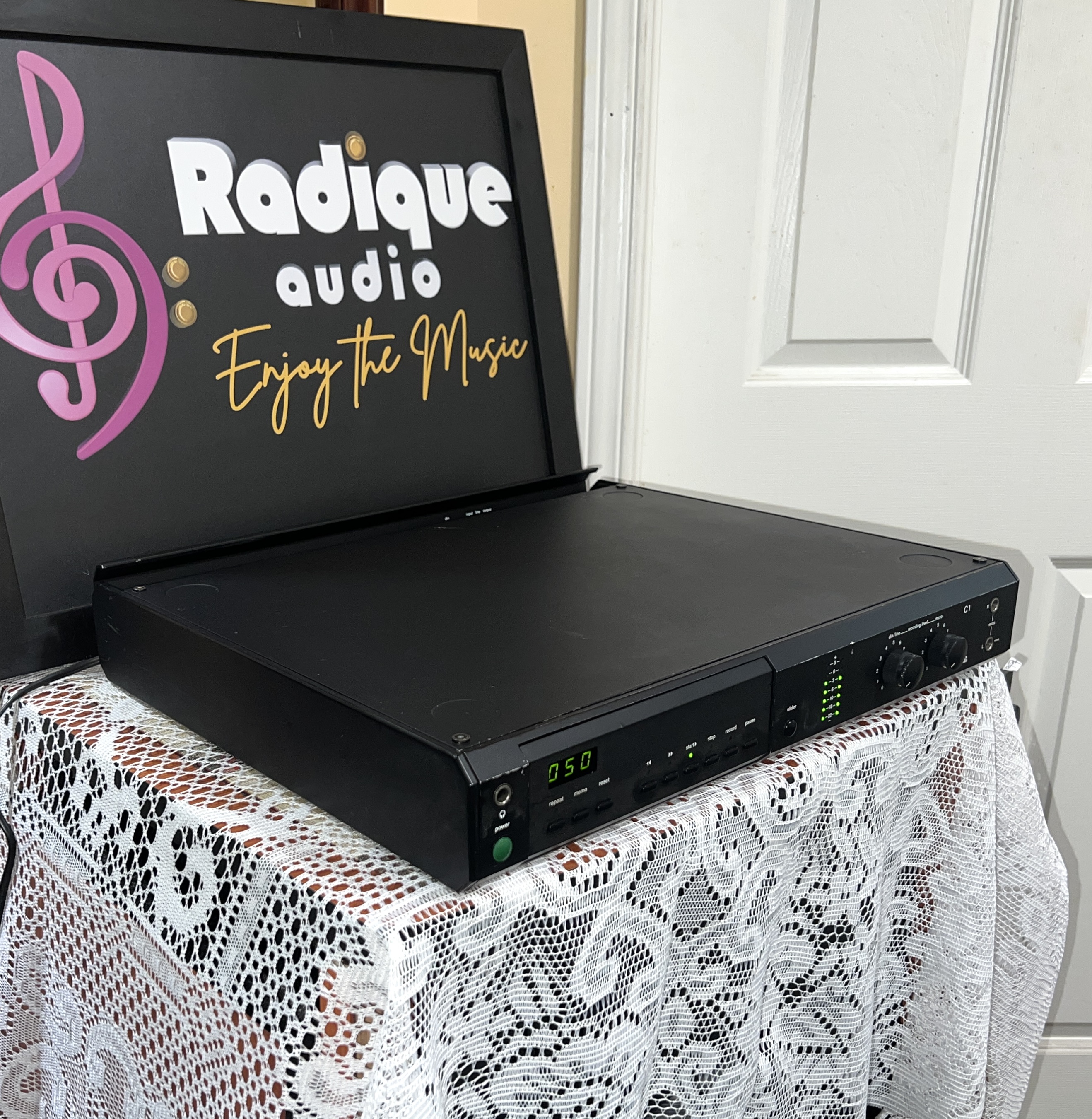
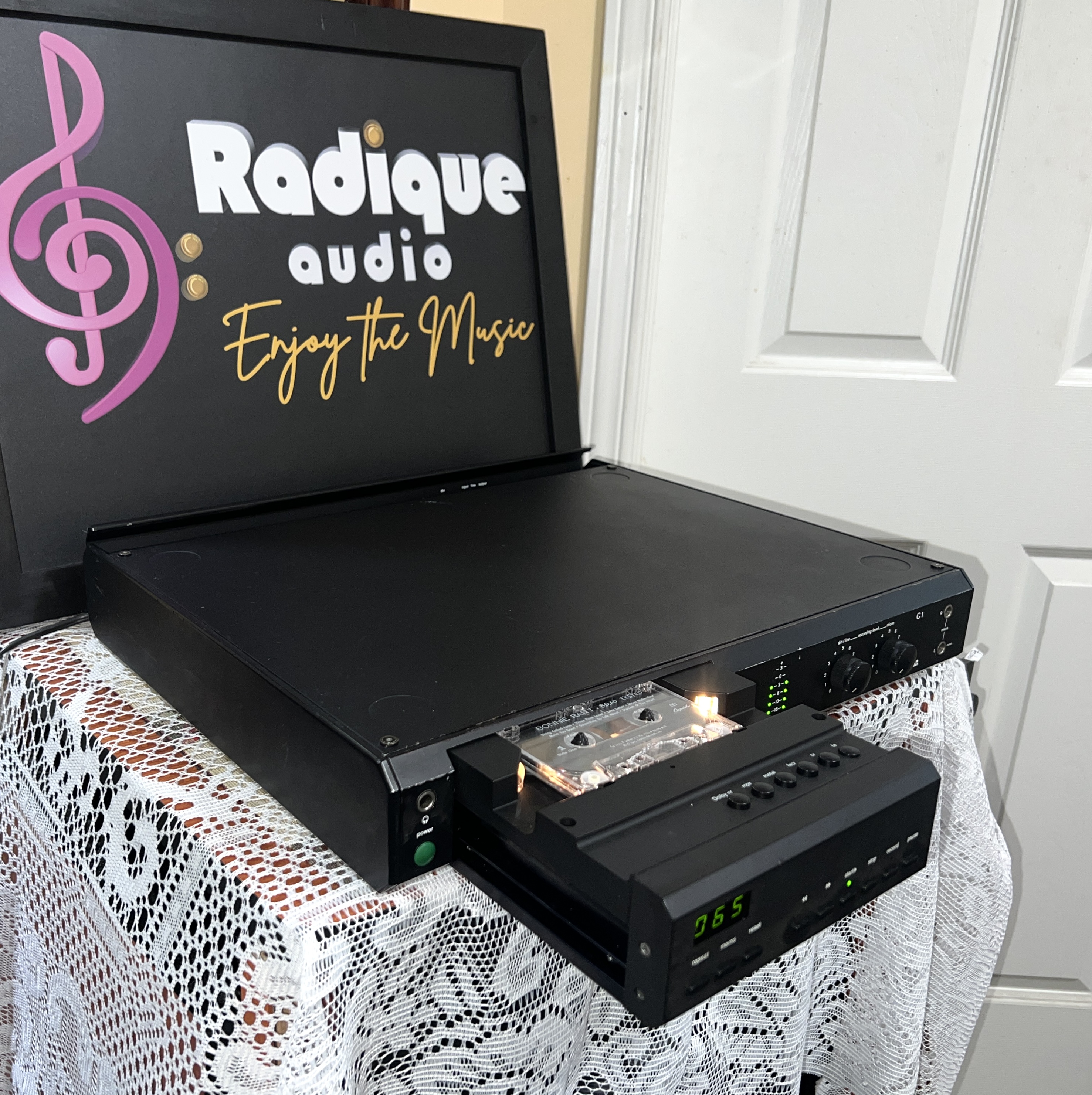
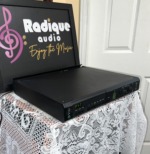
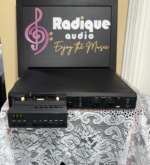
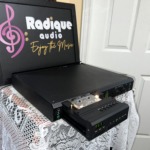
The C1 stands 70 mm tall, which is to say almost exactly the height of a cassette case, and that is not a coincidence. The cassette does not stand upright behind a door as it does in every Japanese deck of the era. It lies flat and is drawn in horizontally on a motorised tray, the whole mechanism disappearing into a slot barely thicker than the tape itself. Anyone who has ever loaded a CD will recognise the gesture at once, and the dates are the interesting part: the C1 arrived in 1980, two years before the Sony CDP-101 brought the motorised horizontal tray to market and made it the standard way a disc enters a machine. Braun was doing it with cassettes first. It is the sort of decision that costs a manufacturer a great deal of engineering and buys nothing measurable in return, and it is exactly why these are still wanted forty-five years later.
The Motorised Drawer
There is a further trick, and it is the one that makes people stop. The carriage can be driven out at the touch of a button while a tape is playing, and the well is lit, so the cassette carries on turning in front of you with the spools and the head visible. Most decks of the era hid the tape behind a smoked window. This one puts it on display and keeps playing.
The Transport and the Tape Path
Underneath the design, the specification is serious for a two-head deck that both records and plays. The head is laminated Sendust, chosen for hardness and for holding its gap geometry over long service, working alongside a separate erase head. Tape handling covers ferric, chrome, ferro-chrome and metal formulations; response runs 30 Hz to 16 kHz on ferric and chrome and 30 Hz to 17 kHz on metal, each within 1 dB. Wow and flutter is quoted at 0.05 percent, and Dolby B noise reduction brings signal to noise to 63 dB. Transport is full logic control with motorised loading and auto stop, driven by a belt capstan, and recording is engaged by pressing play and record together in the manner of the period.
Build Quality
Pick it up and the second surprise arrives. This deck weighs 18.3 lbs in a chassis under three inches tall, which is roughly twice what the proportions lead you to expect and more than most full-size receivers of the period carried in twice the height. The mass is in the transport casting and the chassis work, and it is the reason a machine this slim runs a tape without the resonance a thin sheet-metal deck picks up.
The Front Panel
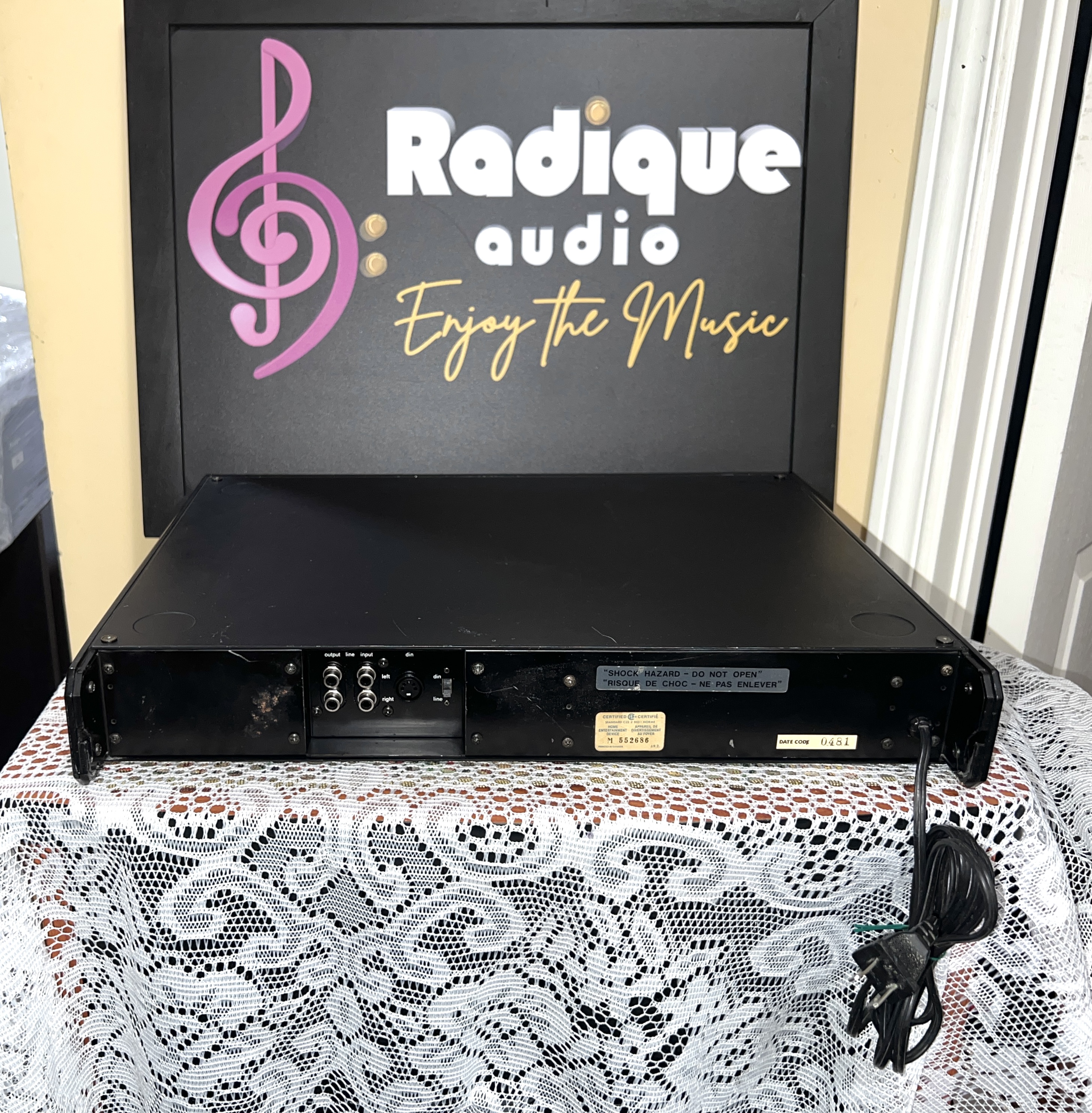
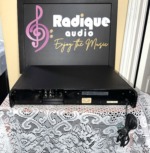
The front panel carries LED level indication and a fully electronic three-digit counter, all in the restrained Braun idiom where every indicator earns its place. A memo function marks a point on the tape and returns to it automatically, a repeat function loops after rewind, and an MPX filter is switchable for recording off an FM tuner. Connections comprise RCA line input and output, a DIN input and output for period European sources, two mono microphone inputs, and a 6.3 mm headphone jack with its own independent level control.
Service
This unit has undergone our Level 1 service and testing, which should ensure many more years of reliable performance ahead. Level 1 covers thorough testing of all inputs, outputs and controls, deep cleaning and deoxidation of every pot and switch, replacement of any blown indicator lamps, and post-service burn-in and sign-off. The level describes how much work a unit needed on arrival, not how it performs on the way out: every deck leaves our bench to the same standard and carries the same warranty.
Condition
Cosmetically this deck is graded Good. There is minor wear along a couple of the edges, which is where a deck this shape gets handled, and nothing beyond it. Overall it presents very nicely.
A scarce and genuinely desirable piece of design history, made in Japan and built to a standard that shows the moment you lift it, still doing the job it was made for and freshly through our bench. Available for pickup in Kanata, or shipped across Canada and internationally — we have sent equipment to fifteen countries in the past year, each piece packed in-house in 275 lb test double-wall boxes. Live shipping rates for your address are calculated at checkout. Backed by Radique Audio’s Bumper-to-Bumper Warranty and our Perpetual Trade-Back Program. Available for audition by appointment in Kanata.
Braun Atelier C1 Specifications
- Type: Two-head recording and playback stereo cassette deck, front loading with motorised horizontal carriage
- Track system: 4-track, 2-channel stereo
- Tape speed: 4.76 cm/s
- Head: Laminated Sendust, plus separate erase head
- Tape types: Normal, chrome, ferro-chrome and metal; manual selection
- Frequency response: 30 Hz – 16,000 Hz ferric and chrome; 30 Hz – 17,000 Hz metal, each within 1 dB
- Signal to noise ratio: 63 dB (Dolby B)
- Wow and flutter: 0.05%
- Noise reduction: Dolby B
- Transport: Full logic control, belt-driven capstan, motorised loading, auto stop
- Display: LED level indication, fully electronic three-digit counter, illuminated cassette well
- Functions: Memo with automatic return, repeat after rewind, switchable MPX filter
- Semiconductors: 67 transistors, 51 diodes, 22 LEDs, 10 integrated circuits
- Input sensitivity: 50 mV (line), 0.2 mV (microphone)
- Output level: 0.35 V (line)
- Connections: RCA line in and out, DIN in and out, two mono microphone inputs, 6.3 mm headphone jack with independent level control
- Country of manufacture: Japan
- Year of introduction: 1980
- Dimensions: (Width x Height x Depth) 17.5 x 2.8 x 14.8 inches (445 x 70 x 375 mm)
- Weight: 18.3 lbs (8.3 kg)
⚠️ Important Information for International Buyers
This unit is configured for North American 110/120V power. Buyers outside North America will require a step-down transformer and appropriate plug adapter.
✅ Buy With Confidence — The Radique Promise
Backed by Radique Audio’s Bumper-to-Bumper Warranty and our Perpetual Trade-Back Program. When you’re ready to move on, we’ll take it back. That’s the Radique difference.
📦 Watch how we protect your gear — our unboxing video.
📺 Curious about our business? Check out our YouTube channel for behind-the-scenes videos and more!
📞 Questions? Use the Ask a Question button above, or call us at 613-416-9995.
| Weight | 20.3 lbs |
|---|---|
| Dimensions | 18.8 × 21.5 × 6.8 in |
You may also like…
Related Products
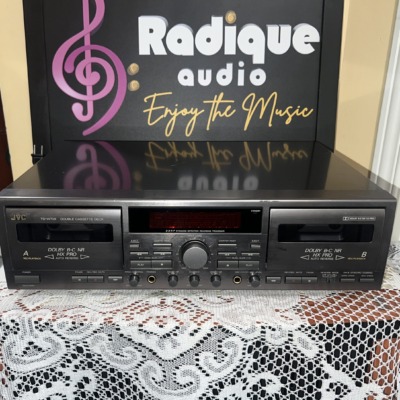
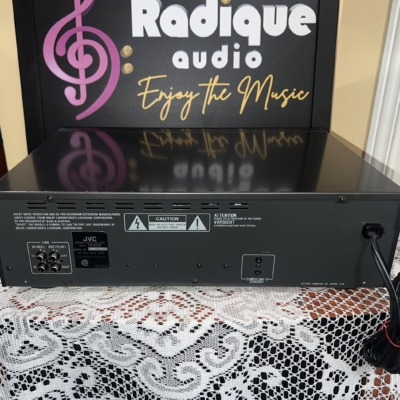
JVC TD-W709 Dual Cassette Deck – Auto-Reverse, Dolby B/C, HX Pro
Two auto-reverse wells with Dolby B, Dolby C and HX Pro, Deck 1 recording and high-speed dubbing between the two. Pitch control, relay play, a front mic input and JVC's COMPU LINK. 20 Hz to 17 kHz on metal tape, 73 dB signal-to-noise with Dolby C, 0.08% wow and flutter. Made in Japan, 1993 to 1995. Level 1 serviced here; cosmetics good.
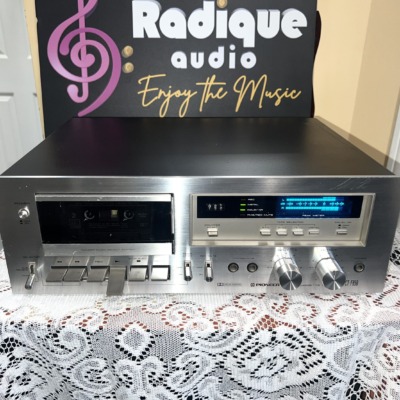
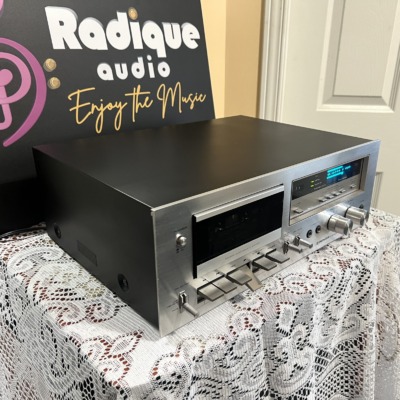
Pioneer CT-F650 Stereo Cassette Deck Metal Tape Made in Japan

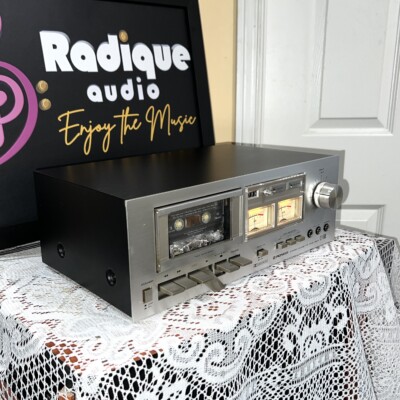
Pioneer CT-F500 Silver Face Cassette Deck – Serviced, Japan
Two-head transport with a DC servo motor and an 80 mm flywheel, wow and flutter of 0.05%, and Dolby B noise reduction. Type I, Type II and FeCr settings, backlit VU meters, microphone inputs with their own level controls, and a tape monitor loop for an outboard EQ. Built in Japan between 1978 and 1980. Level 1 serviced here; condition very good.