





Nakamichi 500 Dual-Tracer Cassette Deck – Walnut, Made in Japan
$695.00
Consignment piece. We sell it on behalf of its owner, and it's covered exactly like everything else we sell: inspected and serviced as required, and backed by our Bumper-to-Bumper Warranty and Perpetual Trade-Back Program. The one difference: it isn't eligible for Cue It Up layaway.
Nakamichi's mid-seventies top-loading deck with walnut side panels, serviced on our bench and playing as it should.
✔️ Good condition — honest general wear for a fifty-year-old deck, and no damage
✔️ Serviced on our bench — our standard cassette deck service before it was listed
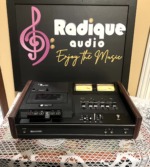
✔️ Walnut side panels fitted, with the original white side panels included
✔️ Covered by Radique Warranty
✔️ Includes Perpetual Trade-Back Program eligibility
✔️ Expertly packed for safe shipping
1 in stock
Nakamichi’s mid-seventies top-loading deck with walnut side panels, serviced on our bench and playing as it should.
What it is
The 500 comes from the years when Nakamichi was teaching the rest of the industry what a cassette could do. It is a two-head deck built around Nakamichi’s focused-gap record/playback head, badged SuperHead Crystalloy on the cassette door, driven by a servo-controlled DC motor. When Audio magazine’s George W. Tillett tested it in 1975, he called it “a well-engineered, very versatile cassette recorder which will appeal to those who want above-average performance,” and added that the focused-gap head “is obviously more than an advertising gimmick — it really works.”
It is also a recordist’s deck, laid out like a small studio console on its top plate, with headphone, microphone and blend-mic jacks along the front edge. There are six faders: a blend microphone channel, separate left and right microphone levels, left and right line levels, and a master output, so you can mix two microphones and a line source into one recording. Peak-reading meters watch the levels, a limiter catches overloads, and bias (Normal, EX-type and SX-type tape) and EQ (120 and 70 µs) are switched separately, so the deck can be matched to the tape you are using. Dolby B noise reduction is built in, with a calibration tone, and a memory rewind returns you to the spot you marked. On the rear, an MPX filter switch cleans up recordings from FM, with RCA line inputs and outputs, a DIN in/out socket and a ground post.
Real walnut side panels finish the black chassis, and it sits comfortably beside a wood-cased receiver. The deck’s original white side panels come with it too, at no charge, so you can return it to its factory look whenever you like.
The service it has had
Every cassette deck we sell goes through our bench before it is listed:
- Tape path, heads, capstan and pinch roller cleaned
- Controls and switches cleaned and deoxidized
- Every function tested: play, record, fast-forward, rewind, stop and eject, noise reduction and meters
- Post-service burn-in and sign-off
And, as each deck requires:
- Drive belts replaced
- Heads and tape path demagnetized
- Mechanism lubricated
- Tape speed and playback level adjusted
- Lamps replaced
Condition
Good. It shows general wear consistent with its age and nothing bad: no damage, just the honest marks of a fifty-year-old deck that has been used and enjoyed.
A genuine Nakamichi, set up for recording as much as playback, in the walnut dress it deserves.
Available for pickup in Kanata, or shipped across Canada and internationally — we have sent equipment to fifteen countries in the past year, each piece packed in-house in 275 lb test double-wall boxes. Live shipping rates for your address are calculated at checkout. Backed by Radique Audio’s Bumper-to-Bumper Warranty and our Perpetual Trade-Back Program. Available for audition by appointment in Kanata.
Nakamichi 500 Specifications
- Type: two-head stereo cassette deck
- Service: serviced on our bench (see above)
- Heads: focused-gap record/playback head (SuperHead Crystalloy) plus erase head
- Motor: servo-controlled DC motor
- Noise reduction: Dolby B, with calibration tone
- Bias: Normal, EX-type, SX-type · EQ: 120 µs and 70 µs
- Frequency response: 40 Hz – 17 kHz ±3 dB (SX / EX-II tape)
- Signal-to-noise ratio: 63 dB or better (weighted, Dolby on, SX tape)
- Wow and flutter: 0.08% WRMS or less
- Inputs: line (RCA), DIN, microphone L/R and blend
- Outputs: line (RCA), DIN, headphones
- Features: six-fader mixing, peak-reading meters, limiter, MPX filter, memory rewind
- Finish: black with real walnut side panels; original white side panels included at no charge
- Power: 117 V, 50/60 Hz, 23 W
- Made in Japan by Nakamichi Research Inc.
- Dimensions: (Width x Height x Depth) 15.1 x 4.3 x 10 inches (384 x 110 x 254 mm)
- Weight: approx. 15.4 lbs (7 kg)
🎚️ Gold Series RCA Interconnects
Our own Gold Series RCA Stereo Interconnect is a shielded, gold-plated stereo pair, in stock and ready to go. It is the cable that connects this to the rest of your system, and it is a straightforward upgrade on the free leads that come in the box with most equipment. 👉
⚠️ Important Information for International Buyers
This unit is configured for North American 110/120V power. Buyers outside North America will require a step-down transformer and appropriate plug adapter.
✅ Buy With Confidence — The Radique Promise
Backed by Radique Audio’s Bumper-to-Bumper Warranty and our Perpetual Trade-Back Program. When you’re ready to move on, we’ll take it back. That’s the Radique difference.
📦 Watch how we protect your gear — our unboxing video.
📺 Curious about our business? Check out our YouTube channel for behind-the-scenes videos and more!
📞 Questions? Use the Ask a Question button above, or call us at 613-416-9995.
| Weight | 17.4 lbs |
|---|---|
| Dimensions | 14 × 19.1 × 8.3 in |
| Cassette Wells | Single Well |
| Noise Reduction | Dolby B |
Nakamichi began in Tokyo in 1948, founded by Etsuro Nakamichi as a research company, and its 1000 deck of 1973 is widely credited as the first three-head cassette deck. We carry Nakamichi cassette decks, receivers and CD players. We've had more than 140 Nakamichi listings so far. Every used Nakamichi here is inspected, tested and serviced as required, then photographed in-house and covered by our Bumper-to-Bumper Warranty and Perpetual Trade-Back Program. Don't see the model you want? Tell us on First Dibs and we'll email you when one arrives.
The Nakamichi story, 1948 to today
Etsuro Nakamichi founded the company in Tokyo in 1948 as a research firm, and his brother Niro later made it known for high-end cassette decks. Before selling under its own name from 1972, it built tape recorders and cassette decks for other brands, including Harman Kardon.
Three heads. The 1000 and 700 of 1973 were three-head decks with separate record and playback heads, and the 1000 is widely credited as the first. The two-head 500 and 600 followed in 1974 and 1975, and the "Silent Mechanism" transport arrived with the 580 series in 1978.
The Dragon. The Dragon of 1982 was Nakamichi's first deck to play in both directions, with automatic playback-azimuth correction (NAAC). It was made until 1993.
Beyond tape. Nakamichi made CD players from 1984, and its Stasis receivers and amplifiers of the late 1980s used a circuit licensed from Nelson Pass of Threshold. Hong Kong's Grande Holdings took over in the late 1990s, Nakamichi Japan went into court-supervised reorganisation in 2002, and the brand now sells mainly soundbars and home theatre systems.
Which Nakamichi is which?
First-generation decks (1973 to 1979): the 1000 and 700 (three heads, dual capstan), the 500 and 600, the 550 portable, and II versions.
Second-generation "Silent Mechanism" decks (1978 onward): the 480, 580 and 680ZX families, the 1000ZXL and 700ZXL, the ZX-7 and ZX-9, and the Dragon.
Third-generation decks (1982 to 1998): the BX, CR and DR families, such as the BX-300 and CR-7.
RX auto-reverse decks (1983): the RX-202, RX-303 and RX-505, which lift the cassette and turn it over.
Receivers and amplifiers: the 730 receiver (1978 to 1982), the Stasis SR receivers and PA amplifiers, and later receivers such as the RE-2.
CD players: the OMS models from 1984 and the MusicBank changers.
Buying used Nakamichi: what to check
Belts, idler and pinch rollers. Technicians say thin belts stretch even on the shelf, and many decks need a full transport overhaul: belts, idler tire and lubrication. Ask what has been done.
Azimuth and calibration. Recalibration needs test tapes and specialist equipment. Play a known-good tape, in both directions on an auto-reverse deck.
Heads. Dull sound can come from dirty, magnetised or worn heads. On a three-head deck, make a test recording too.
Model quirks. Owners report broken switch tabs on the RX-505, and first-generation transports have nylon posts that can break in shipping, so these decks need careful packing.
Parts. Many Nakamichi parts are now hard to find.
Everything we list is inspected, tested and serviced as required here, and comes with our warranty.
You may also like…
Braun Atelier C1 Slim Cassette Deck — Motorized Drawer, Japan
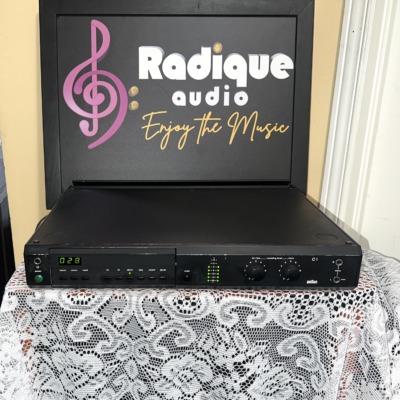
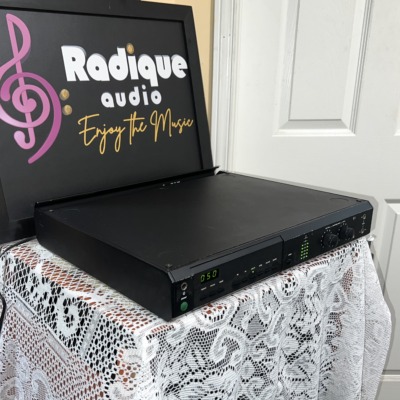
70 mm tall, almost exactly the height of a cassette case, and that is not a coincidence. The tape does not stand upright behind a door the way it does in every Japanese deck of the era — it lies flat and is drawn in horizontally on a motorised tray, the mechanism disappearing into a slot barely thicker than the cassette itself. The C1 arrived in 1980, two years before a CD player made that gesture familiar. Built for Braun in Japan, the matching deck to the Atelier A1 and T1. Good condition.
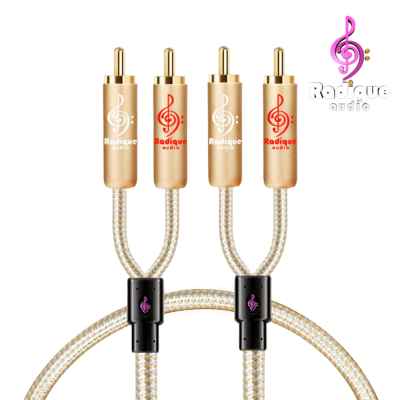
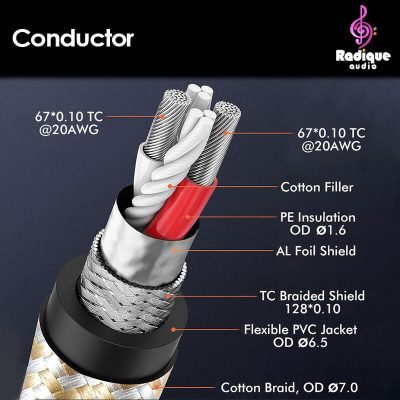
Radique Audio Gold Series RCA Stereo Interconnect Cable
RCA cables that are kind to vintage jacks: dual RCA to dual RCA, in 0.2, 0.75 or 1.5 m.
- Slim gold-plated plugs with vintage-safe grip pressure
- Dual shielding: aluminum foil and 128-strand braided copper
- Reinforced splitters; 7 mm gold cotton and nylon mesh jacket
- Three lengths, chosen above the Add to Cart button
- 1-year warranty
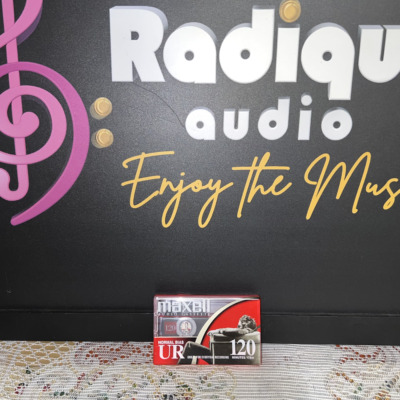
Maxell UR 120 Blank Cassette – Normal Bias, Sealed
A hundred and twenty minutes of Maxell UR, normal bias Type I, still in its factory wrap. Sixty minutes a side is a full album with room left over. Type I is the default setting on every deck ever made, so there is nothing to select, and it is the correct tape for the 9.5 cm/s speed on a two-speed machine. Unopened, unused.
Related Products
Braun Atelier C1 Slim Cassette Deck — Motorized Drawer, Japan
70 mm tall, almost exactly the height of a cassette case, and that is not a coincidence. The tape does not stand upright behind a door the way it does in every Japanese deck of the era — it lies flat and is drawn in horizontally on a motorised tray, the mechanism disappearing into a slot barely thicker than the cassette itself. The C1 arrived in 1980, two years before a CD player made that gesture familiar. Built for Braun in Japan, the matching deck to the Atelier A1 and T1. Good condition.
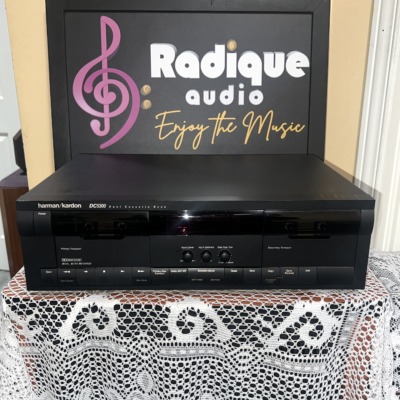
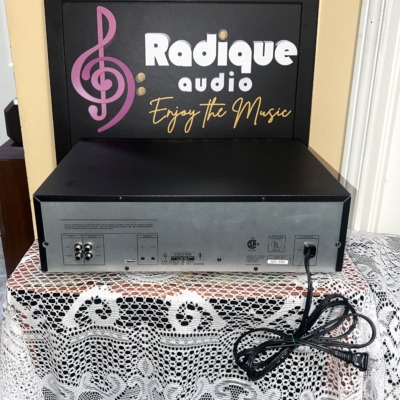
Harman Kardon DC5300 Dual Cassette Deck – Serviced, Japan
A Japanese-built Harman Kardon dual cassette deck from the early nineties, serviced on our bench and in very good condition.
✔️ Very Good condition — faceplate, cassette doors and display window present cleanly
✔️ Serviced on our bench — our standard cassette deck service before it was listed
✔️ Two auto-reverse decks with Dolby B and C, made in Japan
✔️ Covered by Radique Warranty
✔️ Includes Perpetual Trade-Back Program eligibility
✔️ Expertly packed for safe shipping
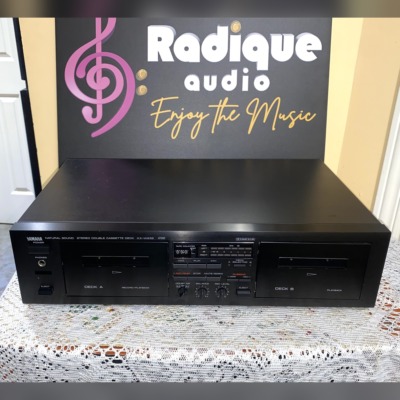
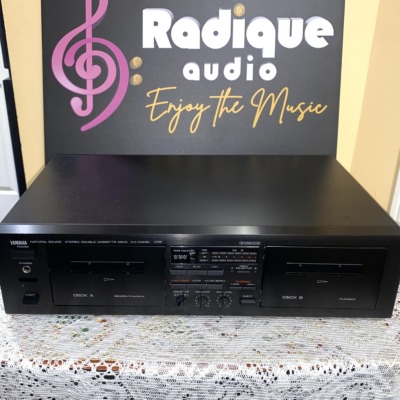
Yamaha KX-W232 Dual Cassette Deck – Dolby B & C, Made in Japan
A Japanese-built Yamaha dual cassette deck from the early nineties, tested on our bench and in good condition, priced to reflect one door quirk we describe below.
✔️ Good condition — a rear-panel crack and a Deck A door quirk, both explained below
✔️ Tested on our bench and working as it should
✔️ Two decks with Dolby B and C — made in Japan
✔️ Covered by Radique Warranty
✔️ Includes Perpetual Trade-Back Program eligibility
✔️ Expertly packed for safe shipping
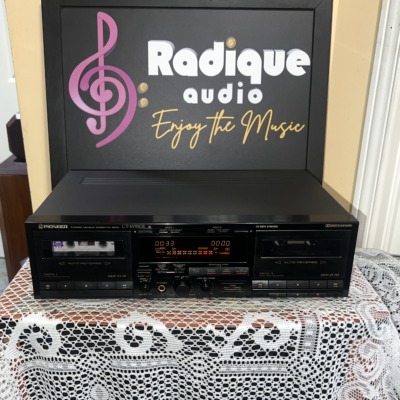
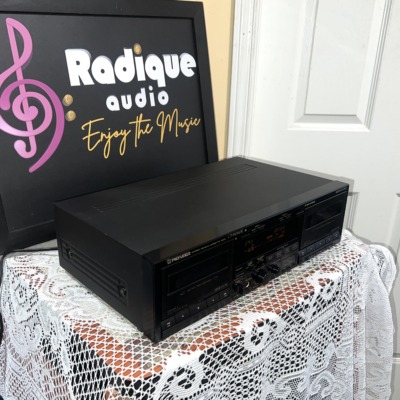
Pioneer CT-W550R Dual Cassette Deck – Dolby B/C, HX Pro, Japan
A 1991 Pioneer CT-W550R twin cassette deck, made in Japan, with auto-reverse on both decks, Dolby B and C and Dolby HX Pro.
✔️ Serviced on our bench
✔️ Very good condition
✔️ High-speed dubbing, CD synchro recording, music search
✔️ Covered by Radique Warranty
✔️ Includes Perpetual Trade-Back Program eligibility
✔️ Expertly packed for safe shipping
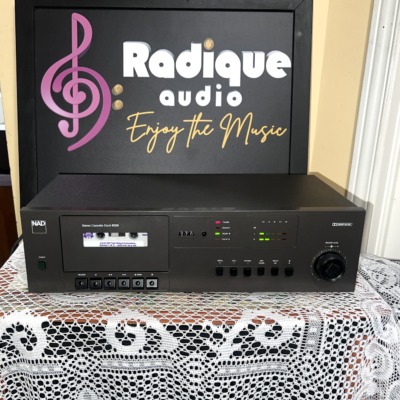
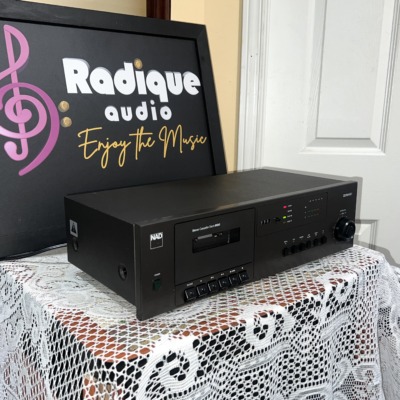
NAD 6130 Stereo Cassette Deck – Dolby B/C, Serviced, Japan
A mid-1980s NAD 6130 cassette deck, made in Japan, with Dolby B and C, a hard permalloy head and a belt-driven flywheel transport.
✔️ Serviced on our bench
✔️ Very good condition
✔️ Covered by Radique Warranty
✔️ Includes Perpetual Trade-Back Program eligibility
✔️ Expertly packed for safe shipping
