
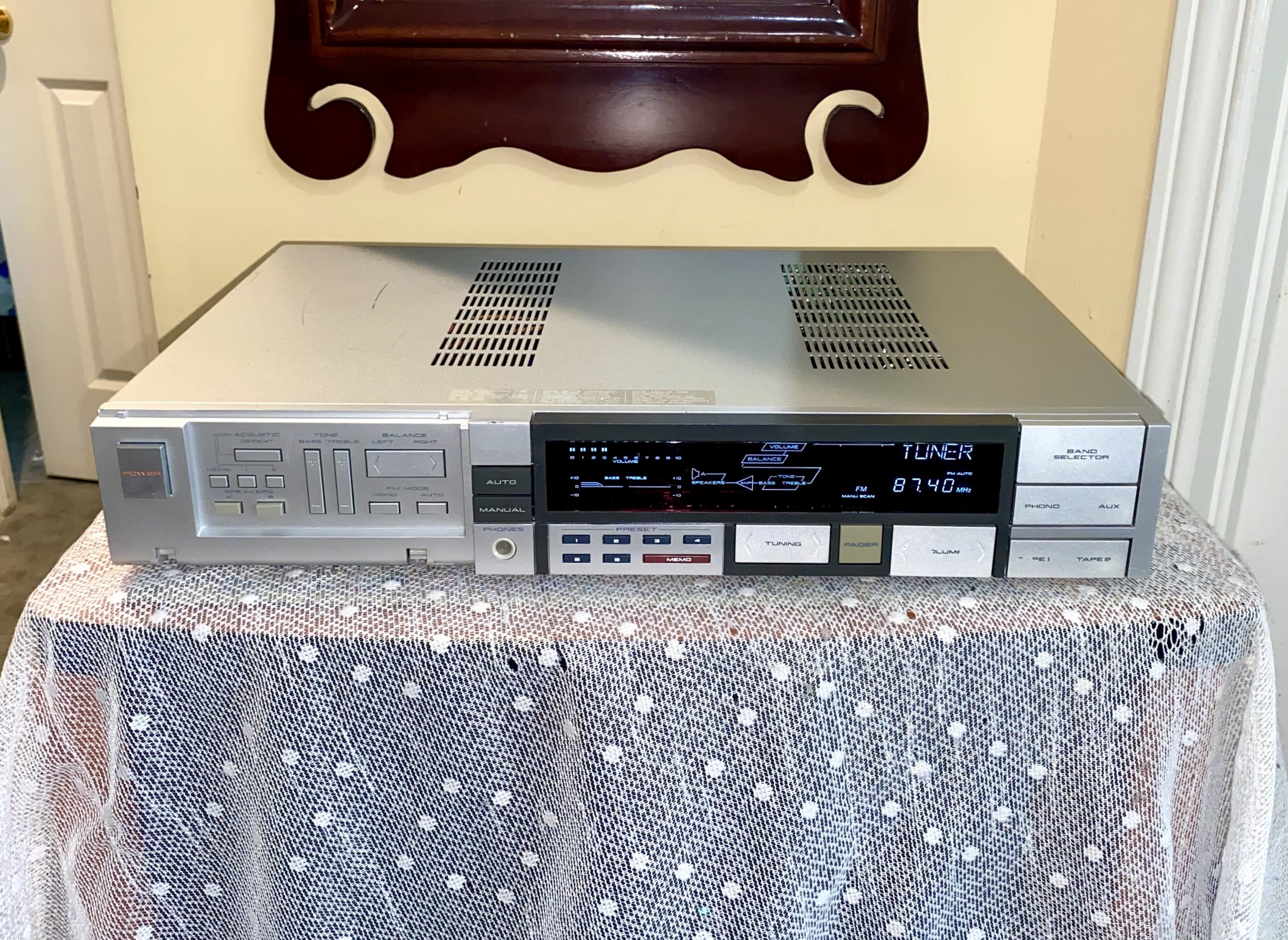
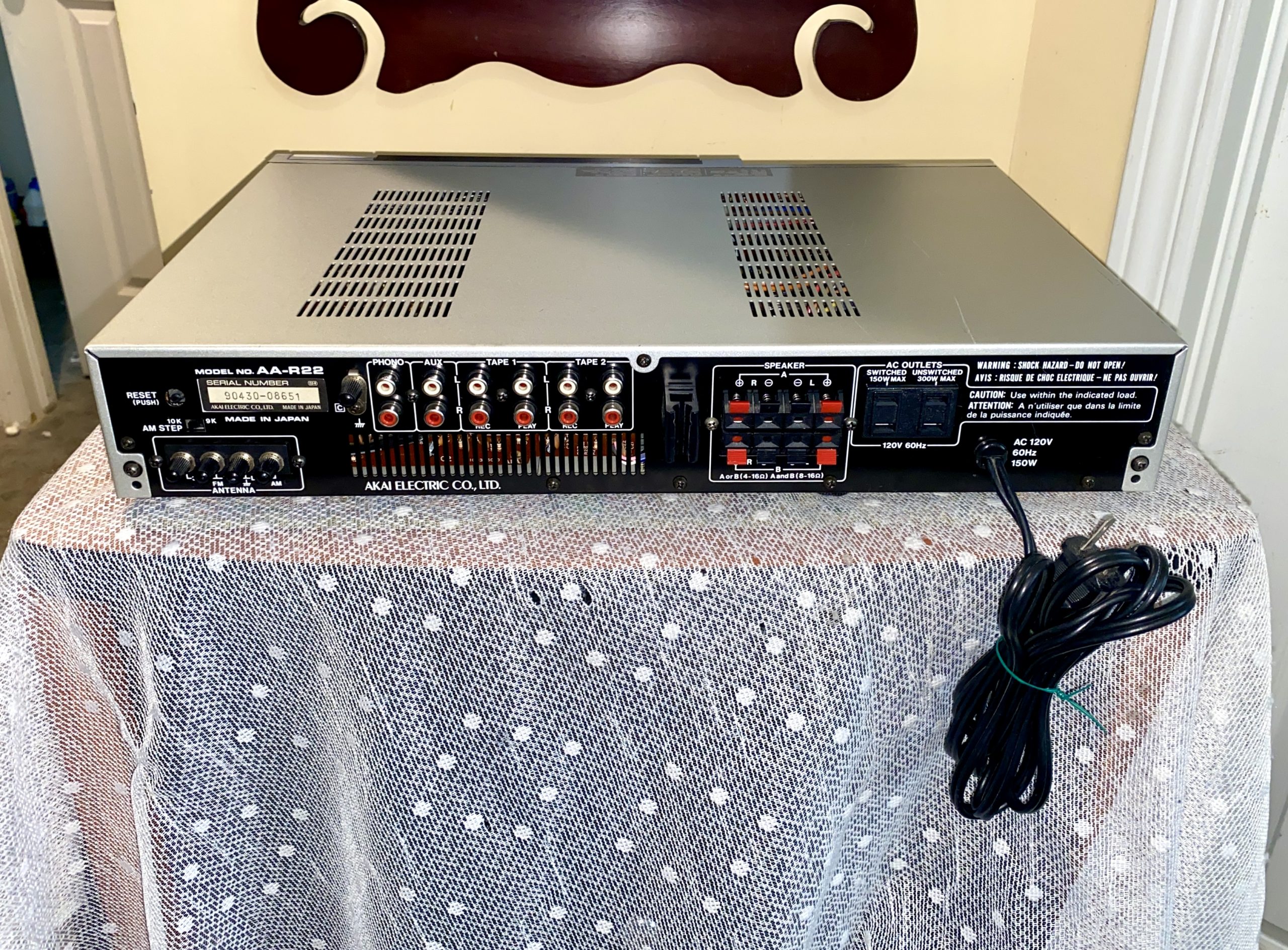
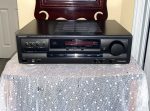
Akai AA-R22 Vintage Stereo Receiver – 30 WPC, Made in Japan
$125.00
Out of stock
This one has sold. Want first dibs on the next one?
We take these in regularly. Leave your name and email, and we’ll email you the moment one is listed, so you hear first. No cost, no obligation.
Email me when one is listed
Give your next receiver Bluetooth. RA-Twin II, $39.00 →
Other stereo receivers we have in stock now
3 in stock · $125.00–$245.00 · all ship
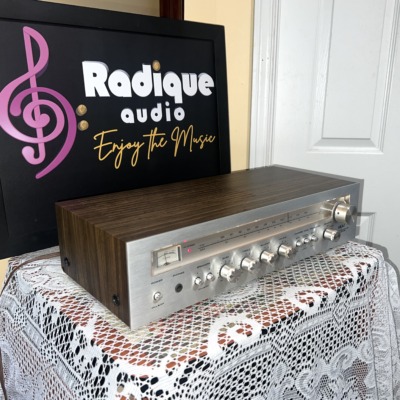 Akai AA-1115 Vintage Stereo Receiver – 15 WPC, Made in Japan$245.00Ships
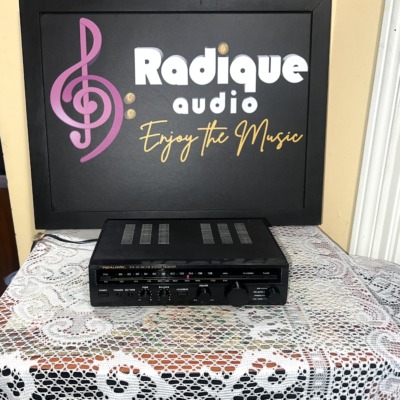 Realistic STA-20 Compact AM/FM Stereo Receiver – 5 WPC, Serviced$125.00Ships
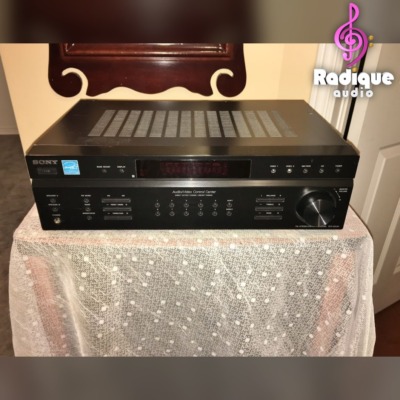 Sony STR-DE197 Stereo Receiver – 100 WPC$125.00Ships
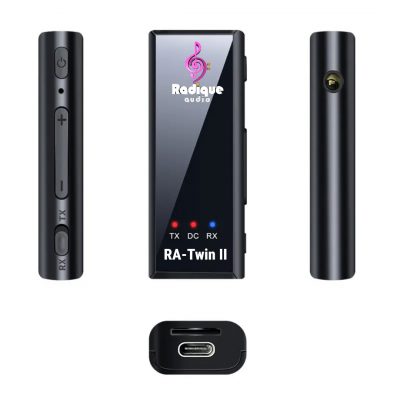
Give your next receiver Bluetooth.
The RA-Twin II adds Bluetooth streaming to any vintage receiver or amp with a spare input. Phone to stereo in about a minute, and nothing on the receiver is modified.
RA-Twin II, $39.00 →Akai AM/FM Computer Controlled 30 WPC Stereo Receiver, made in Japan
Tested thoroughly and working well.
Digital quartz synthesizer tuner with 12 station preset buttons (6 AM, 6 FM). Inputs for Phono and Aux/Tape, outputs for Tape, terminals for 2 pairs of loudspeakers, jack for headphones.
Tuning range: FM, AM
2 Presets for Bass/Treble setup
Power output: 30 watts per channel into 8Ω (stereo)
Frequency response: 5Hz to 80kHz
Total harmonic distortion: 0.05%
Damping factor: 30
Input sensitivity: 2.5mV (MM), 150mV (line)
Signal to noise ratio: 75dB (MM), 98dB (line)
Channel separation: 50dB (MM), 50dB (line)
Output: 150mV (line)
Speaker load impedance: 4Ω to 16Ω
Dimensions: 440 x 70 x 290mm, Weight: 13.5lbs
Asking just $125 for this early 1980’s vintage Stereo Receiver, made in Japan.
| Weight | 13.5 lbs |
|---|---|
| Dimensions | 21.32 × 6.76 × 15.42 in |
Akai was founded in Tokyo in 1929 by Masukichi Akai and his son Saburo as Akai Electric Company, a maker of radio parts. We carry vintage Akai stereo receivers, integrated amplifiers, tuners and cassette decks. We've had 18 Akai listings so far, covering 16 different models. Every used Akai here is inspected, tested and serviced as required, then photographed in-house and covered by our Bumper-to-Bumper Warranty and Perpetual Trade-Back Program. Don't see the model you want? Tell us on First Dibs and we'll email you when one arrives.
Akai models we've sold so far include the AM-U3 integrated amplifier, the AA-1030, AM-A3 and AM-U11 receivers, and the HX-A451W cassette deck.
The Akai story
Masukichi Akai started making radio components in Tokyo in 1929, and his son Saburo grew up in the factory. Some sources date the company to 1946, after the war.
Tape. Akai's first reel-to-reel, the AT-1, was offered as a kit in 1954, and the company became best known outside Japan for its tape recorders of the 1960s and 1970s, sold in the US through Roberts Electronics.
Hi-fi and music. Akai made receivers, amplifiers, tuners and cassette decks, and around 1980 started Akai Professional, which moved into electronic music in 1984.
Today. Akai Electric filed for insolvency in November 2000. The Akai name has since been used on products made by others, and Akai Professional, sold in 1999, is now owned separately.
Which Akai is which?
Reel-to-reel decks (1950s to 1980s): such as the 4000DS and the GX models.
AA receivers: such as the AA-1030, AA-R22 and AA-R31.
AM integrated amplifiers: such as the AM-A3, AM-U3 and AM-U11.
Tuners and cassette decks: AT tuners such as the AT-K03, and cassette decks such as the HX-A451W.
You may also like…
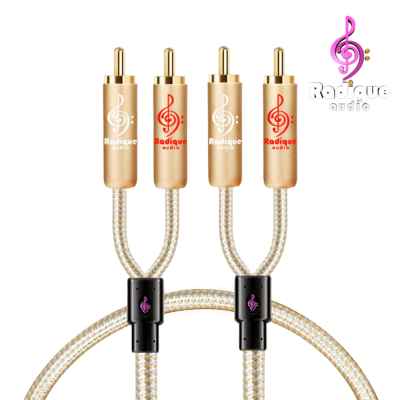
Radique Audio Gold Series RCA Stereo Interconnect Cable
RCA cables that are kind to vintage jacks: dual RCA to dual RCA, in 0.2, 0.75 or 1.5 m.
- Slim gold-plated plugs with vintage-safe grip pressure
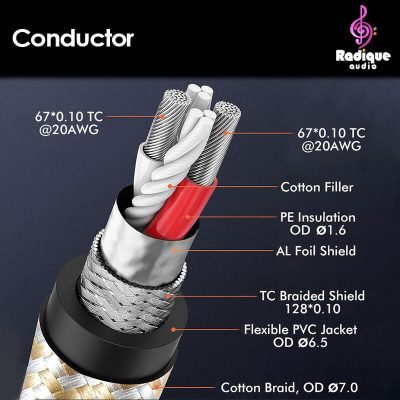
- Dual shielding: aluminum foil and 128-strand braided copper
- Reinforced splitters; 7 mm gold cotton and nylon mesh jacket
- Three lengths, chosen above the Add to Cart button
- 1-year warranty
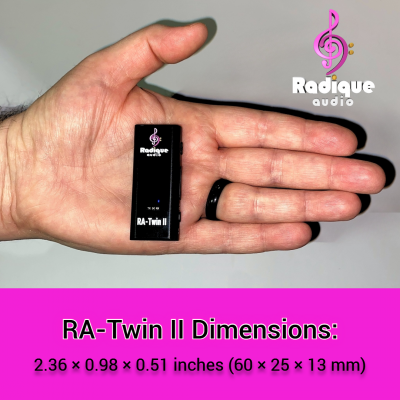
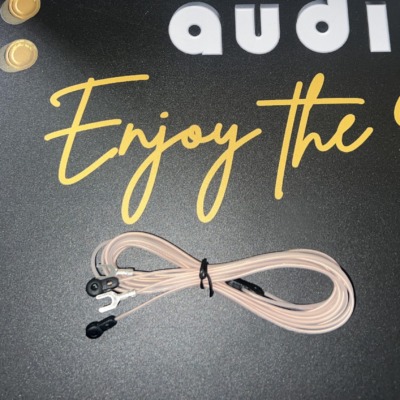
RA-Twin II Bluetooth Adapter for Vintage Stereo – Receiver & Transmitter
Add Bluetooth to any vintage stereo, amplifier or car stereo, or send your TV or stereo to Bluetooth headphones. Tiny but mighty, and set up in minutes.
- RX, TX and Mobile (microSD) modes
- Bluetooth 5.4, up to 10 m range
- Up to 10 hours per charge, USB-C
- Clear online manual in English & French
- 1-year warranty, Ottawa-based support
Related Products
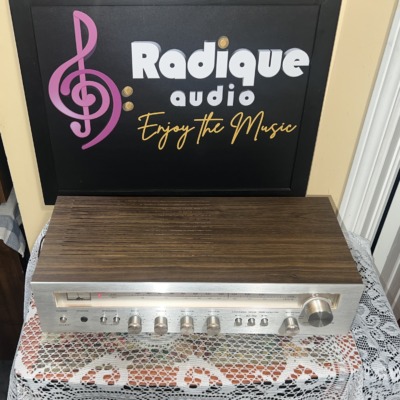
Akai AA-1115 Vintage Stereo Receiver – 15 WPC, Made in Japan
A slim late-1970s Akai AA-1115 AM/FM stereo receiver, made in Japan, silver face in its original woodgrain cabinet.
✔️ Tested on our bench, every input, output and control
✔️ Very good condition
✔️ MM phono, PLL FM tuner, speakers A and B
✔️ Covered by Radique Warranty
✔️ Includes Perpetual Trade-Back Program eligibility
✔️ Expertly packed for safe shipping
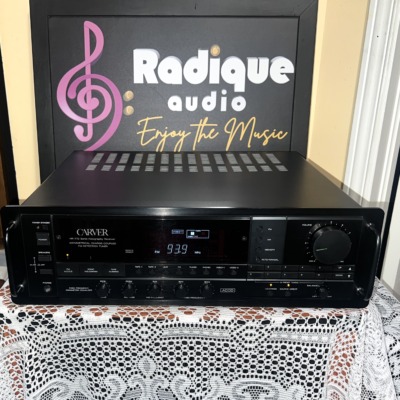
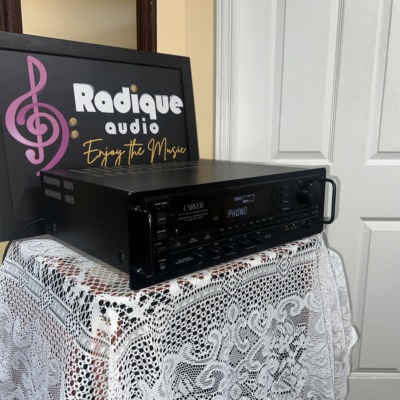
Carver HR-772 Sonic Holography Receiver – 140 WPC, Rack Ears
A Carver HR-772 stereo receiver, Carver's early-1990s flagship: 140 watts per channel, Sonic Holography, and rack ears with front handles.
✔️ Tested on our bench, Sonic Holography included
✔️ Very good condition
✔️ 140 WPC, stable to 2 ohms, MM phono, five-band EQ
✔️ Rack ears and handles for a 19-inch rack
✔️ Covered by Radique Warranty
✔️ Includes Perpetual Trade-Back Program eligibility
✔️ Expertly packed for safe shipping
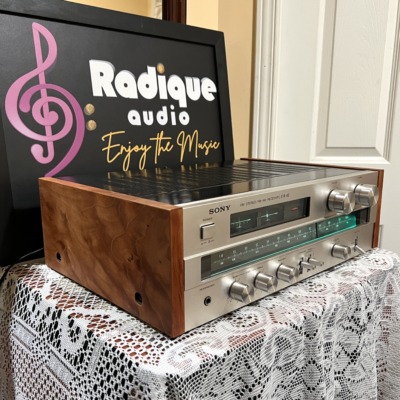
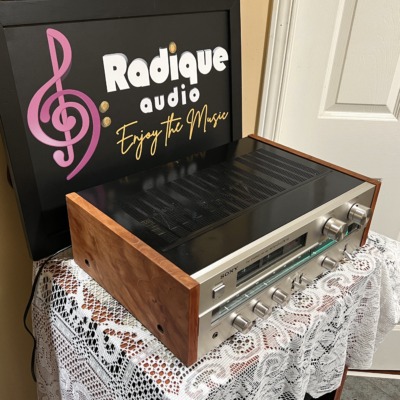
Sony STR-V2 Vintage Receiver – 25 WPC, Ottawa Valley Cherry
A 1978 Sony STR-V2 stereo receiver, dressed in Ottawa Valley cherry side panels hand-made by our master woodworker, Sean. Tested on our bench and working well.
✔️ 25 watts per channel, with a phono input for your turntable
✔️ Brushed silver faceplate with a long FM/AM dial and signal meter
✔️ Ottawa Valley cherry side panels, hand-made for this receiver
✔️ Tested on our bench and working well
✔️ Covered by Radique Warranty
✔️ Includes Perpetual Trade-Back Program eligibility
✔️ Expertly packed for safe shipping
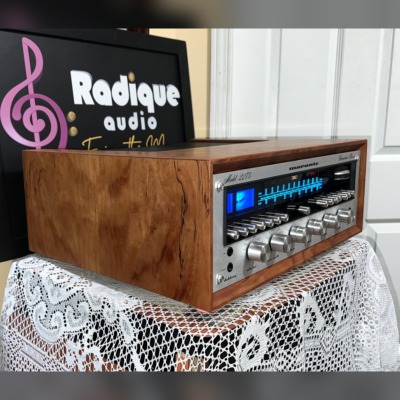
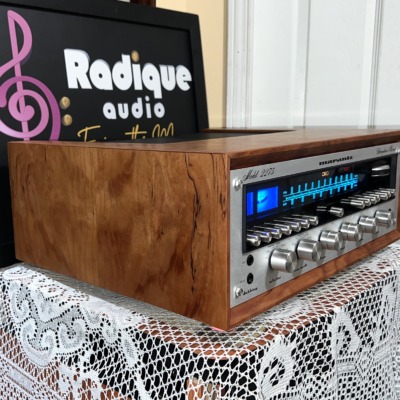
Marantz 2275 Vintage Stereo Receiver – 75 WPC, Cherry Cabinet
A 1974–77 Marantz 2275 stereo receiver, 75 watts per channel, through our Level 1 service with new dial lighting, in a one-of-a-kind cherry cabinet built by our master woodworker.
✔️ Radique Level 1 service, new dial lamp
✔️ 75 WPC, direct-coupled output
✔️ Bass, mid and treble, MM phono, Gyro-Touch tuning
✔️ In our hand-finished Ottawa Valley cherry cabinet
✔️ Covered by Radique Warranty
✔️ Includes Perpetual Trade-Back Program eligibility
✔️ Expertly packed for safe shipping
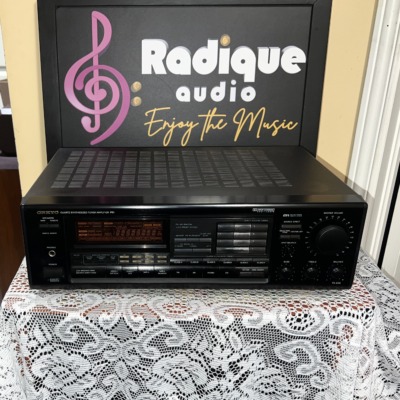
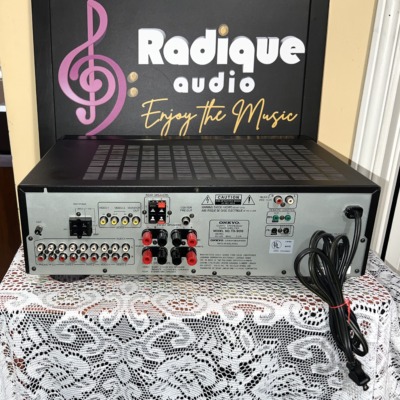
Onkyo TX-906 Stereo Receiver – 80 WPC, Dolby Pro Logic
An early-nineties Onkyo receiver with real power behind it and a phono input for your turntable, through our Level 1 service and playing as it should.
✔️ Good condition — works as it should; the black cabinet and faceplate present well
✔️ Through our Level 1 service — cleaned, deoxidized, checked and thoroughly tested on our bench
✔️ Phono input for your turntable, plus CD and two tape inputs
✔️ Covered by Radique Warranty
✔️ Includes Perpetual Trade-Back Program eligibility
✔️ Expertly packed for safe shipping
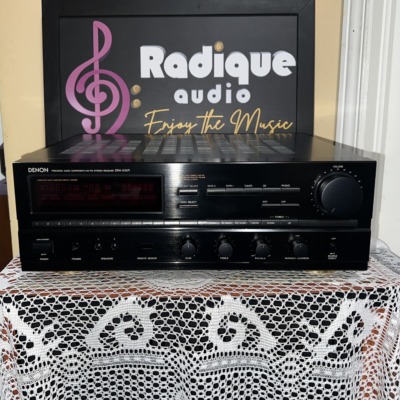
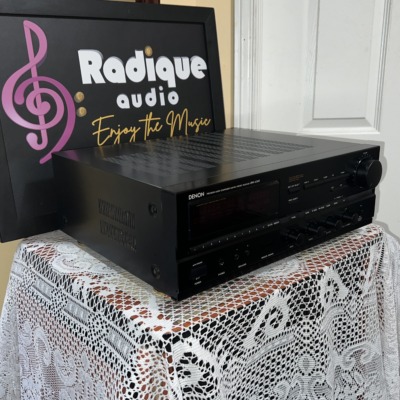
Denon DRA-835R Vintage Stereo Receiver – 100 WPC, Made in Japan
The second-from-the-top model in Denon's early-nineties stereo receiver range, made in Japan and in very good condition, with 100 watts per channel, a phono stage, motorized volume and its original remote.
✔️ Very good condition — free of significant marks
✔️ 100 WPC, MM phono and motorized volume — made in Japan
✔️ Original Denon remote included
✔️ Covered by Radique Warranty
✔️ Includes Perpetual Trade-Back Program eligibility
✔️ Expertly packed for safe shipping
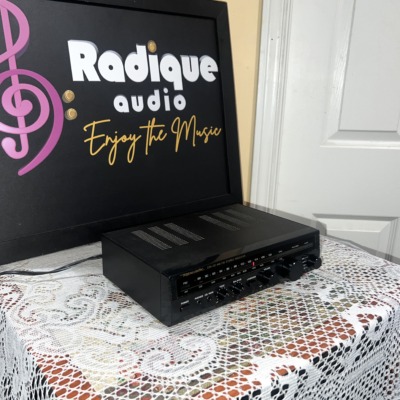
Realistic STA-20 Compact AM/FM Stereo Receiver – 5 WPC, Serviced
Radio Shack's smallest AM/FM stereo receiver of the 1990s, the Realistic STA-20: 5 watts per channel, a rear EQ switch made for mini-speakers, a phono input and a front jack for a phone.
✔️ Serviced on our bench to our Level 1 standard
✔️ Very good condition
✔️ Covered by Radique Warranty
✔️ Includes Perpetual Trade-Back Program eligibility
✔️ Expertly packed for safe shipping
