
Realistic STA-20 Compact AM/FM Stereo Receiver – 5 WPC, Serviced
$125.00
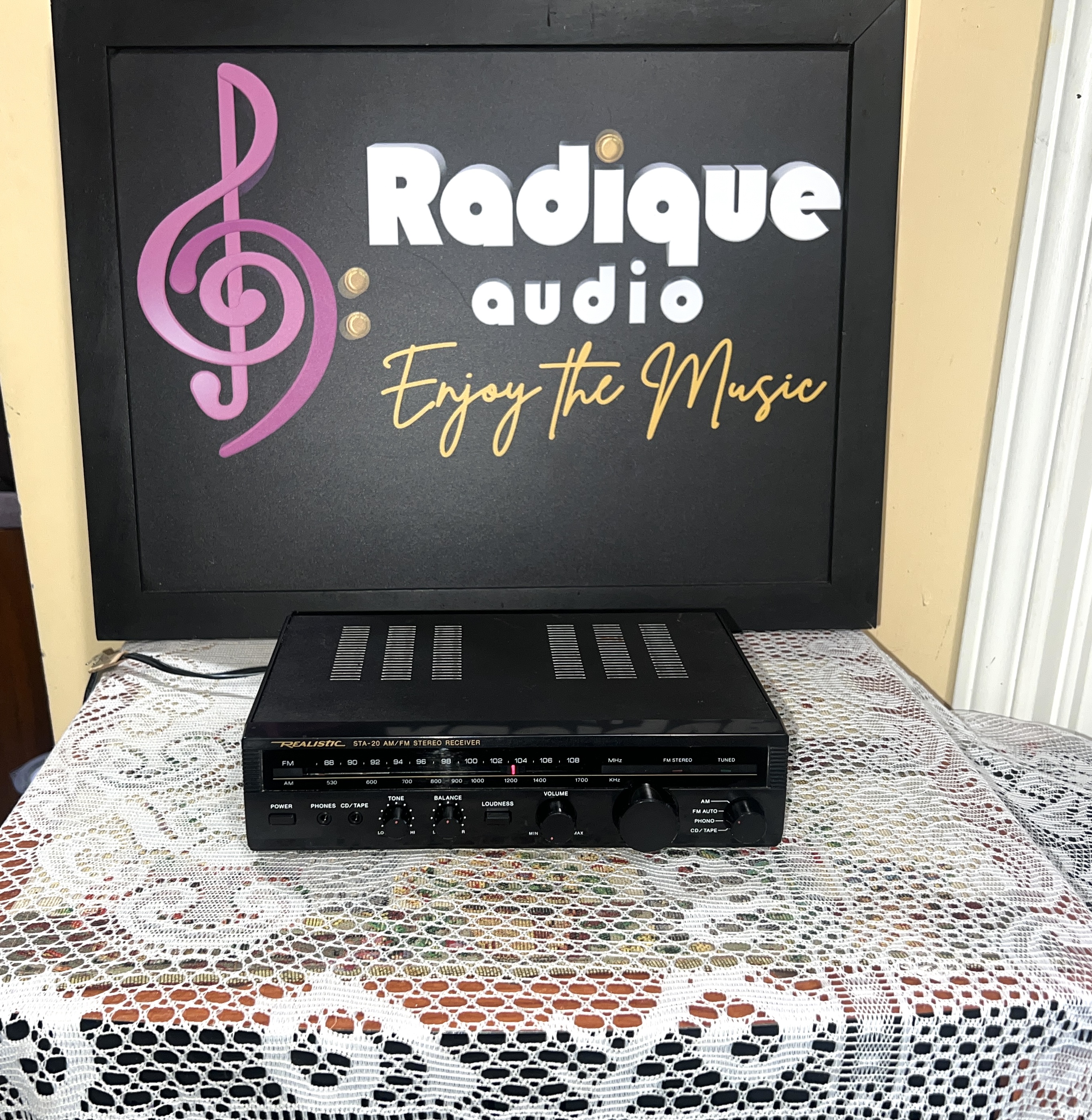
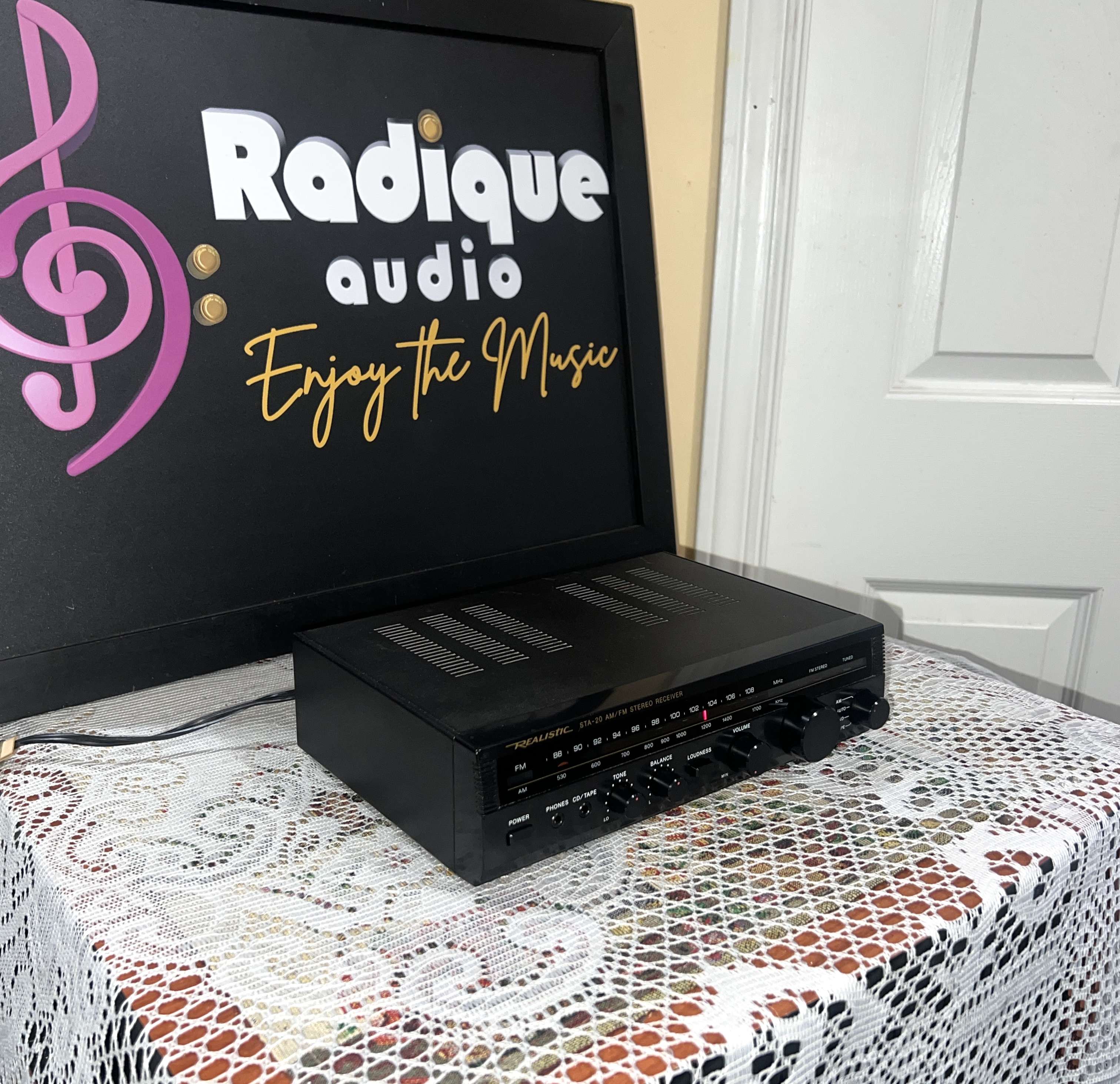
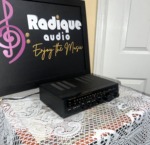
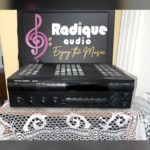
Radio Shack's smallest AM/FM stereo receiver of the 1990s, the Realistic STA-20: 5 watts per channel, a rear EQ switch made for mini-speakers, a phono input and a front jack for a phone.
✔️ Serviced on our bench to our Level 1 standard
✔️ Very good condition
✔️ Covered by Radique Warranty
✔️ Includes Perpetual Trade-Back Program eligibility
✔️ Expertly packed for safe shipping
1 in stock
A compact Realistic STA-20 AM/FM stereo receiver, rated at 5 watts per channel into 8 ohms. It has been serviced on our bench to our Level 1 standard and is in very good condition.
What it is
The STA-20 arrived in Radio Shack’s 1991 catalog under the heading “Our Smallest, Lowest Priced AM/FM Stereo Receiver”, pitched as “ideal for dorm, office or reception area.” At about ten inches wide and under three inches tall, it still fits where a full-size receiver never would: a desk, a bookshelf, a kitchen counter or a bedroom dresser. Radio Shack sold it under both its Realistic and Optimus names, and this one carries the Canadian label, from InterTAN Canada in Barrie, Ontario, which ran the Radio Shack stores here.
In Radio Shack’s own words: “Your new Optimus STA-20 AM/FM Stereo Receiver gives you excellent audio in a small package. Its 5 Watt amplifier section and built in circuit equalization give you outstanding sound quality for such a compact system.”
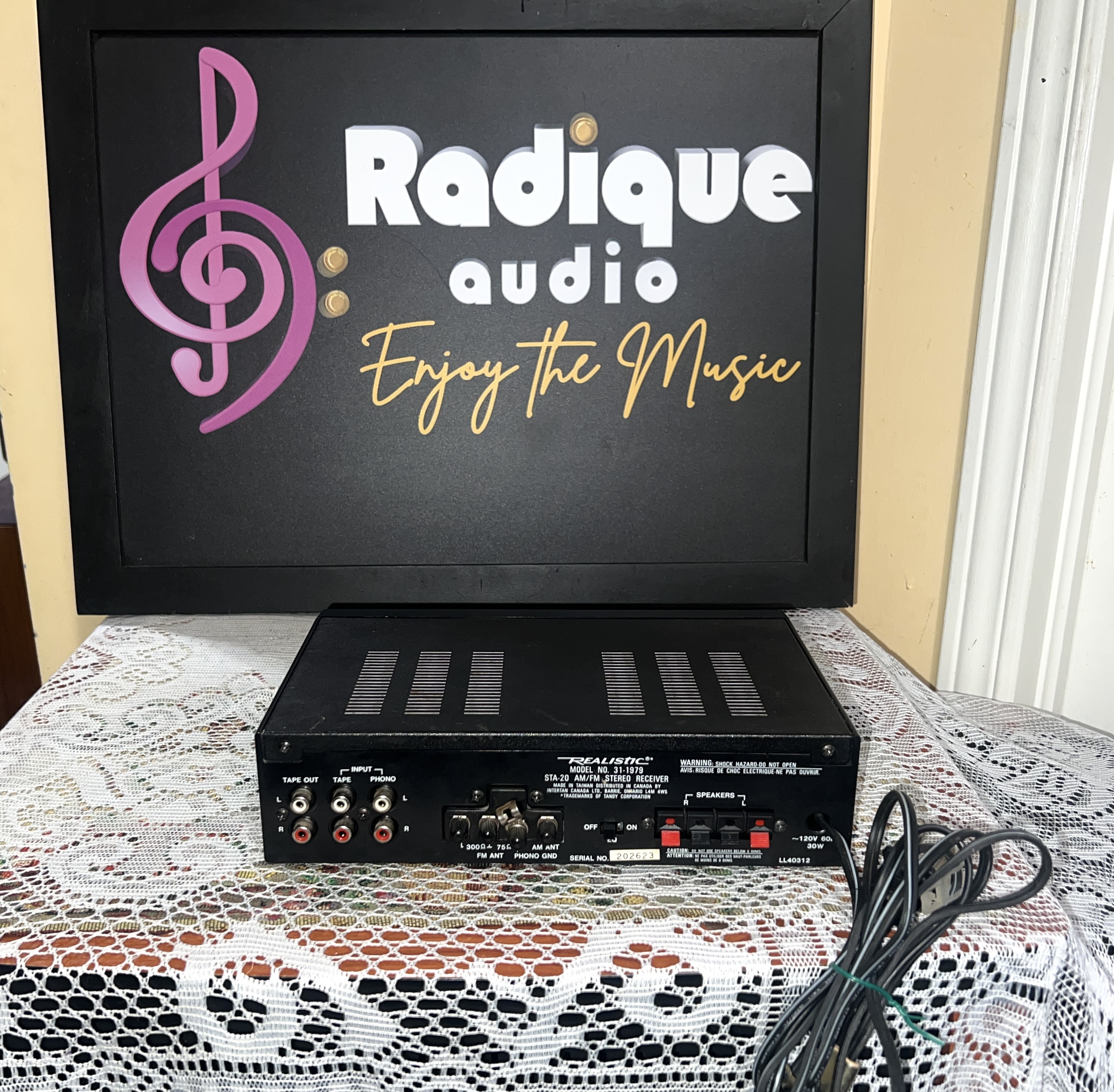
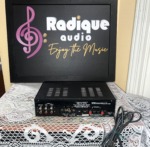
Small as it is, it covers the basics properly. There is a phono input with its own ground terminal for a turntable, a tape loop on the back, and a 3.5 mm CD/Tape jack on the front that Radio Shack put there for a portable CD or cassette player. It is just as happy with a phone or a tablet. A headphone jack, loudness, a single tone control and balance sit across the front, and the dial has FM Stereo and Tuned indicators.
The EQ switch
The feature to know about is on the back: a switch marked EQ. It turns on what Radio Shack called its special EQ circuit, built to give a “rich, full sound even from mini-speakers.” Radio Shack sold the STA-20 as the “perfect power partner” for its Minimus-7 miniature speakers, and the EQ switch is how it filled out the sound of speakers that small.
Five watts per channel is modest, and the STA-20 is made for modest rooms. With efficient bookshelf speakers at desk or bedroom volume, it is plenty. It wants 8-ohm speakers or higher (the label on the back says so). Our Realistic Minimus-5 speakers, an 8-ohm pair from the same Minimus line, are on the shelf if you want a matched Realistic desktop system.
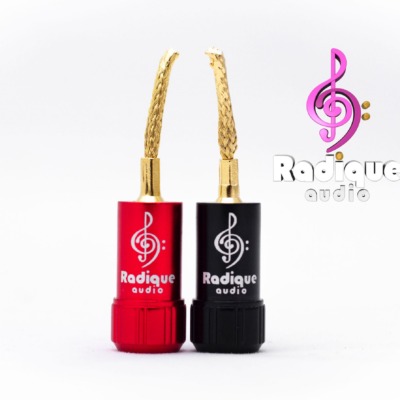
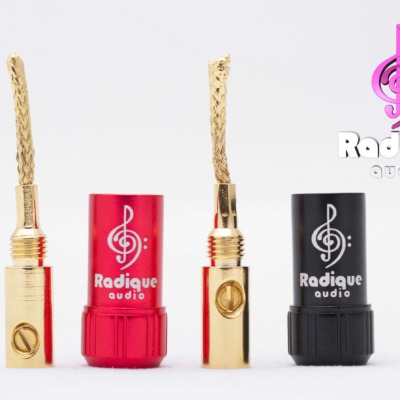
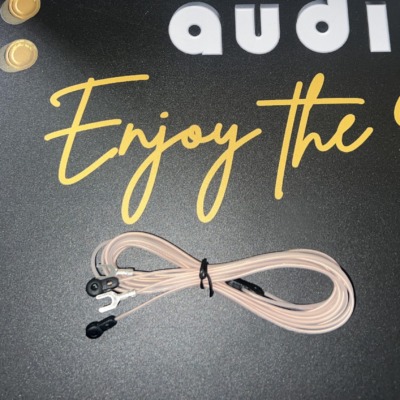
Its speaker terminals are the spring-clip type, which take bare wire or pin connectors. Our own gold-plated pin connectors are made for them, and our Custom Speaker Cable Builder will make you a pair terminated with pins. For FM, a proper antenna makes all the difference, and our indoor FM dipole antenna is a simple way to get it.
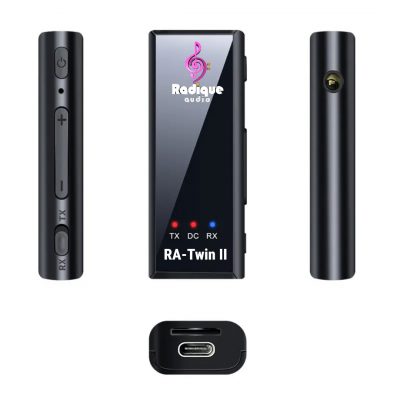
Add our RA-Twin II Bluetooth streamer and it plays from your phone, tablet or laptop as easily as from the dial.
The service it has had
Serviced on our bench to our Level 1 standard:
- Thorough testing of all inputs, outputs, and controls
- Deep cleaning and deoxidation of all pots and switches
- Blown indicator lamps replaced
- Power supply wiring checked and cleaned
- Post-service burn-in and sign-off testing
Condition
Very good, and free of significant marks.
One small thing to know: on FM, the stereo indicator flickers rather than staying steadily lit, even on a station that comes in clean.
Radio Shack’s smallest receiver, serviced and ideal for a bedroom or home-office system.
Available for pickup in Kanata, or shipped across Canada and internationally — we have sent equipment to fifteen countries in the past year, each piece packed in-house in 275 lb test double-wall boxes. Live shipping rates for your address are calculated at checkout. Backed by Radique Audio’s Bumper-to-Bumper Warranty and our Perpetual Trade-Back Program. Available for audition by appointment in Kanata.
Realistic STA-20 Compact AM/FM Stereo Receiver Specifications
- Type: compact AM/FM stereo receiver
- Service: Radique Level 1
- Power output: 5 watts per channel, minimum RMS into 8 ohms, 40 Hz–20 kHz, no more than 0.9% THD
- Frequency response: 20 Hz–20 kHz ±1.5 dB
- Signal-to-noise ratio: 70 dB (phono), 72 dB (tape)
- FM sensitivity: 7 µV (22.1 dBf, IHF); FM signal-to-noise ratio 60 dB; stereo separation 35 dB at 1 kHz
- Inputs: phono with ground terminal and tape in on the back, CD/Tape 3.5 mm jack on the front
- Outputs: tape out, one pair of speakers, 1/8-inch (3.5 mm) stereo headphone jack
- Controls: tone, balance, loudness, volume; selector for AM, FM Auto, Phono and CD/Tape; EQ switch on the back
- Indicators: FM Stereo, Tuned
- Antenna terminals: FM 300 ohm and 75 ohm, AM
- Speaker terminals: spring clips; 8-ohm speakers or higher
- Protection: overload and overheating
- Power: 120 V, 60 Hz, 30 W
- Catalog number: 31-1979
- Dimensions: (Width x Height x Depth) 10.25 x 2.75 x 7.25 inches (260 x 70 x 184 mm)
- Weight: approx. 5.5 lbs (2.5 kg)
🔌 Speaker Cable and the Right Connector
The speaker terminals here are spring clips rather than binding posts, so banana plugs and spades will not fit — our own gold-plated pin connectors are the right answer, and they make connecting and disconnecting far easier than stripping bare wire every time. We also hand-build speaker cable here in any length you need, terminated to suit, on our Custom Speaker Cable Builder. 👉
⚠️ Important Information for International Buyers
This unit is configured for North American 110/120V power. Buyers outside North America will require a step-down transformer and appropriate plug adapter.
✅ Buy With Confidence — The Radique Promise
Backed by Radique Audio’s Bumper-to-Bumper Warranty and our Perpetual Trade-Back Program. When you’re ready to move on, we’ll take it back. That’s the Radique difference.
📦 Watch how we protect your gear — our unboxing video.
📺 Curious about our business? Check out our YouTube channel for behind-the-scenes videos and more!
📞 Questions? Use the Ask a Question button above, or call us at 613-416-9995.
| Weight | 7.5 lbs |
|---|---|
| Dimensions | 11.25 × 14.25 × 6.75 in |
Realistic was Radio Shack's own brand of audio and radio gear. Radio Shack, founded in Boston in 1921, launched the line in the mid-1950s, and Realistic gear was sold across Canada through Radio Shack stores. We carry Realistic stereo receivers, bookshelf speakers, turntables and equalizers. We've had more than 30 Realistic listings so far. Every used Realistic here is inspected, tested and serviced as required, then photographed in-house and covered by our Bumper-to-Bumper Warranty and Perpetual Trade-Back Program. Don't see the model you want? Tell us on First Dibs and we'll email you when one arrives.
The Realistic models we've sold most often include the Minimus-7 bookshelf speakers and the STA-720 and STA-2250 stereo receivers.
The Realistic story
Radio Shack began in Boston in 1921 as a store and mail-order business for radio amateurs. In 1954 Harman Kardon proposed a private-label audio line for it called Realist. The Realist camera company objected, so the line became Realistic, and Harman Kardon built its first FM tuner.
Tandy and the stereo years. Tandy Corporation took over Radio Shack in 1963 and grew it to thousands of stores across the US and Canada. Realistic covered everything from STA receivers and quadraphonic QTA receivers to LAB turntables, cassette decks and the little Minimus-7 speaker.
Who built it. Realistic products were built to Radio Shack's specifications, some in Tandy's own plants and many by outside suppliers in Asia, so the maker varies by model and year. Radio Shack phased out the Realistic name in the 1990s in favour of Optimus.
Which Realistic is which?
STA stereo receivers: from budget models such as the STA-16 and STA-21 to the 75-watt STA-2000 of 1977 and the STA-2270 of 1985.
Quadraphonic QTA receivers (mid-1970s): such as the QTA-770, with SQ, CD-4 and Radio Shack's own Quatravox modes.
Amplifiers and tuners: such as the SA-1000A and SA-2000 amplifiers and the TM-1000 tuner of 1977.
Turntables: the belt-drive LAB-50 to LAB-300, the direct-drive LAB-400, and Realistic/Miracord automatics.
Speakers: the Minimus-7 and Minimus-5 bookshelf speakers and the Mach One.
Optimus era (1990s): models such as the Optimus STA-20 receiver.
Buying used Realistic: what to check
Who made it. Realistic gear came from many suppliers, so service information and parts depend on the actual maker. Check the label and the service manual.
Quadraphonic receivers. High Fidelity found the QTA-770's distortion rose toward the frequency extremes, so test one in stereo at the volume you'll use.
Minimus-7. It needs roughly 30 to 50 watts and has little bass on its own, so pair it with a subwoofer. Enthusiasts say a crossover capacitor upgrade can make a big difference.
Age. Test every input and switch, inspect speaker surrounds, and check turntable belts and automatic mechanisms.
Everything we list is inspected, tested and serviced as required here, and comes with our warranty.
You may also like…
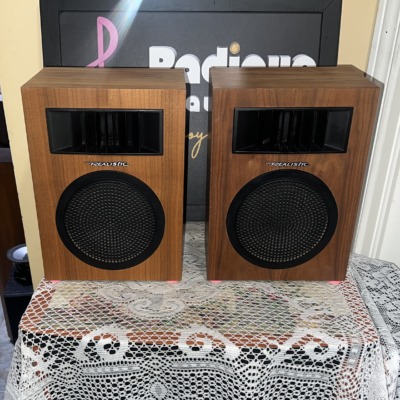
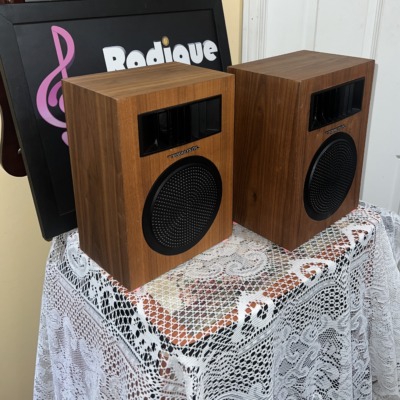
Realistic Minimus-5 Speakers, Pair – Vintage, Real Wood Veneer
A vintage pair of Realistic Minimus-5 two-way bookshelf speakers from Radio Shack, in a warm brown real wood veneer, with horn tweeters, fully tested on our bench and in very good condition.
✔️ Very good condition — free of significant marks
✔️ Real wood veneer, with rigid grilles over the woofers
✔️ Two ways in: small binding posts and an RCA-type speaker-level jack
✔️ Covered by Radique Warranty
✔️ Includes Perpetual Trade-Back Program eligibility
✔️ Expertly packed for safe shipping
RA-Twin II Bluetooth Adapter for Vintage Stereo – Receiver & Transmitter
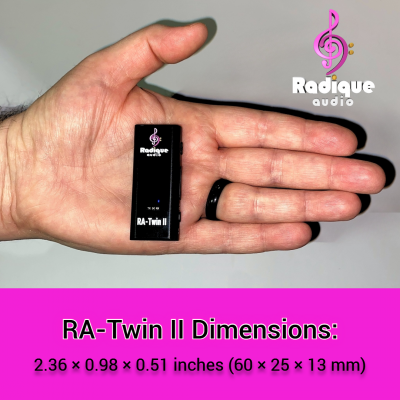
Add Bluetooth to any vintage stereo, amplifier or car stereo, or send your TV or stereo to Bluetooth headphones. Tiny but mighty, and set up in minutes.
- RX, TX and Mobile (microSD) modes
- Bluetooth 5.4, up to 10 m range
- Up to 10 hours per charge, USB-C
- Clear online manual in English & French
- 1-year warranty, Ottawa-based support
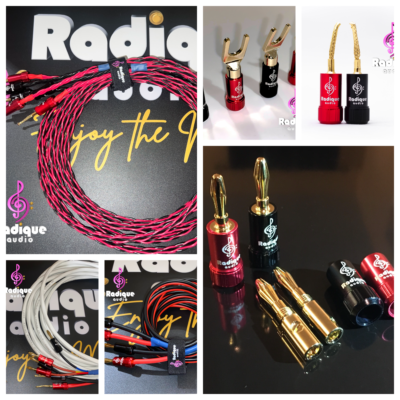
Custom Speaker Cable Builder
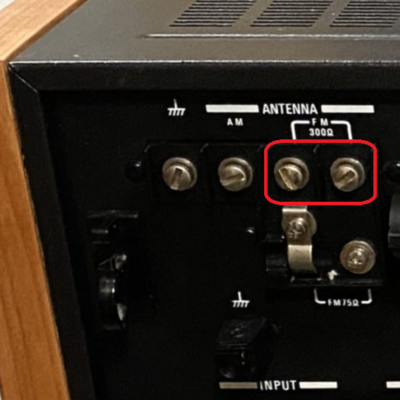
Your specs, your cable: choose the cable, the length and each connector, with live pricing.
- House CCA, House OFC, House Quad, Kimber 4PR or Kimber 4TC
- Banana, spade, pin, small spade or bare wire, chosen for each end
- Bi-wire on Kimber 4PR, Kimber 4TC and House Quad
- Hand-assembled, heat-shrink reinforced and colour-coordinated
- 1-year warranty
Related Products
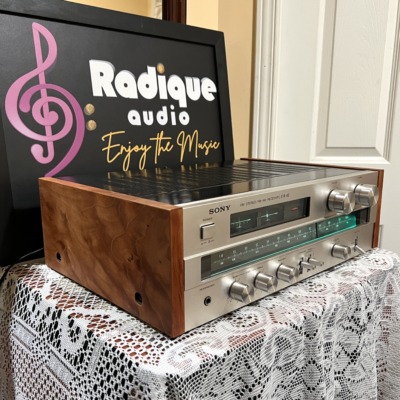
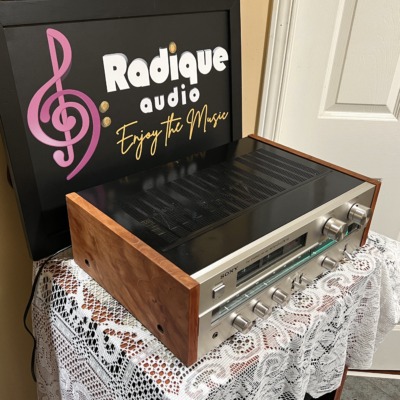
Sony STR-V2 Vintage Receiver – 25 WPC, Ottawa Valley Cherry
A 1978 Sony STR-V2 stereo receiver, dressed in Ottawa Valley cherry side panels hand-made by our master woodworker, Sean. Tested on our bench and working well.
✔️ 25 watts per channel, with a phono input for your turntable
✔️ Brushed silver faceplate with a long FM/AM dial and signal meter
✔️ Ottawa Valley cherry side panels, hand-made for this receiver
✔️ Tested on our bench and working well
✔️ Covered by Radique Warranty
✔️ Includes Perpetual Trade-Back Program eligibility
✔️ Expertly packed for safe shipping
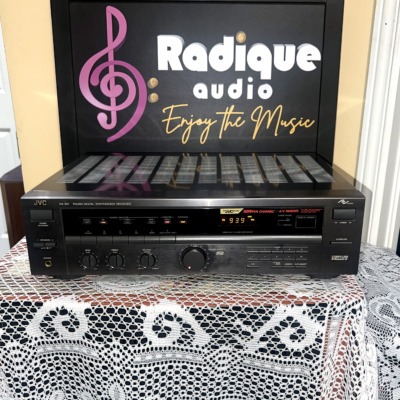
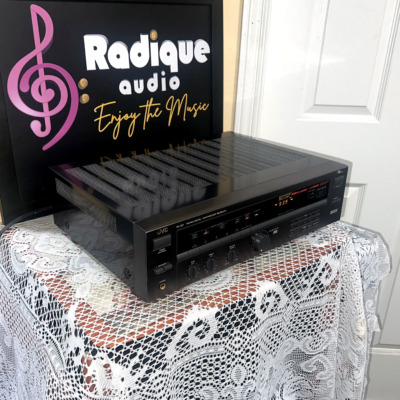
JVC RX-307 Stereo Receiver – 80 WPC, Original Remote & Manual
Eighty watts a side, a proper phono input, and the two things these almost never come with any more: the original remote and the printed manual.
✔️ Condition: Very Good
✔️ Covered by Radique Warranty
✔️ Includes Perpetual Trade-Back Program eligibility
✔️ Expertly packed for safe shipping
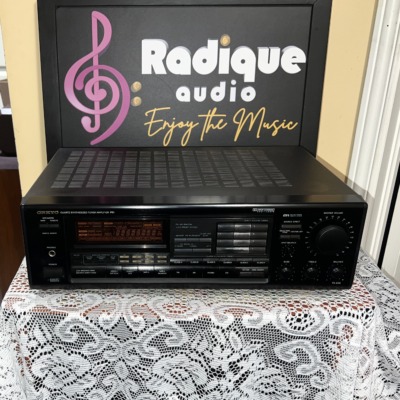
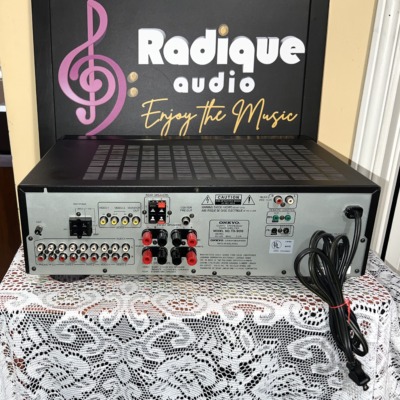
Onkyo TX-906 Stereo Receiver – 80 WPC, Dolby Pro Logic
An early-nineties Onkyo receiver with real power behind it and a phono input for your turntable, through our Level 1 service and playing as it should.
✔️ Good condition — works as it should; the black cabinet and faceplate present well
✔️ Through our Level 1 service — cleaned, deoxidized, checked and thoroughly tested on our bench
✔️ Phono input for your turntable, plus CD and two tape inputs
✔️ Covered by Radique Warranty
✔️ Includes Perpetual Trade-Back Program eligibility
✔️ Expertly packed for safe shipping
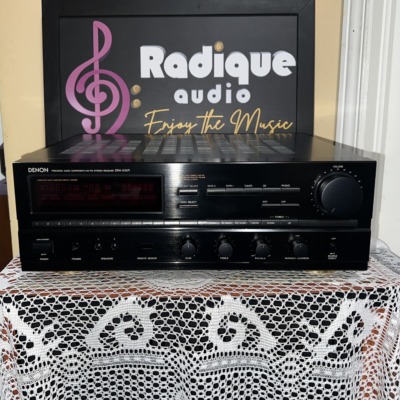
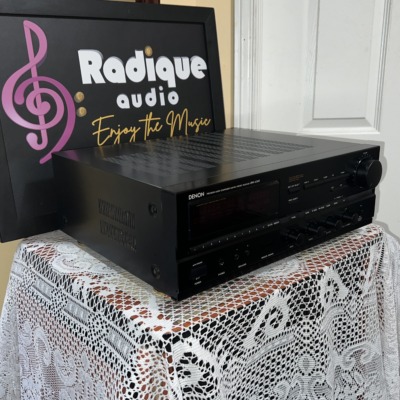
Denon DRA-835R Vintage Stereo Receiver – 100 WPC, Made in Japan
The second-from-the-top model in Denon's early-nineties stereo receiver range, made in Japan and in very good condition, with 100 watts per channel, a phono stage, motorized volume and its original remote.
✔️ Very good condition — free of significant marks
✔️ 100 WPC, MM phono and motorized volume — made in Japan
✔️ Original Denon remote included
✔️ Covered by Radique Warranty
✔️ Includes Perpetual Trade-Back Program eligibility
✔️ Expertly packed for safe shipping
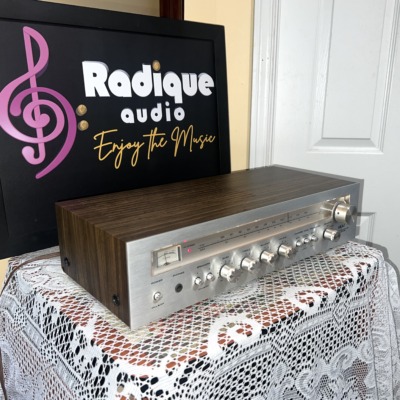
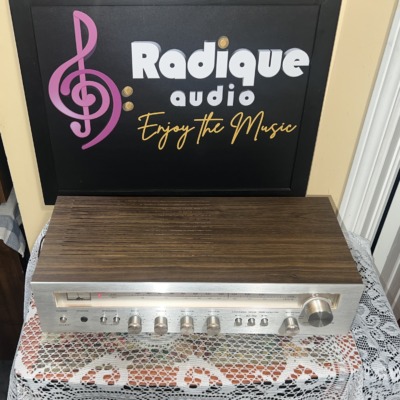
Akai AA-1115 Vintage Stereo Receiver – 15 WPC, Made in Japan
A slim late-1970s Akai AA-1115 AM/FM stereo receiver, made in Japan, silver face in its original woodgrain cabinet.
✔️ Tested on our bench, every input, output and control
✔️ Very good condition
✔️ MM phono, PLL FM tuner, speakers A and B
✔️ Covered by Radique Warranty
✔️ Includes Perpetual Trade-Back Program eligibility
✔️ Expertly packed for safe shipping
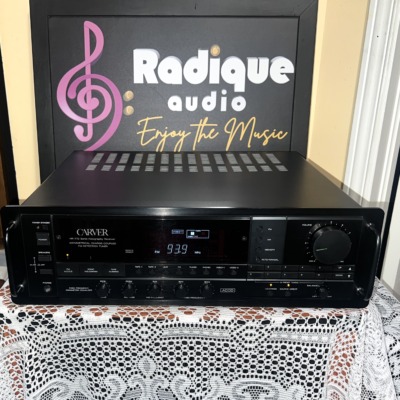
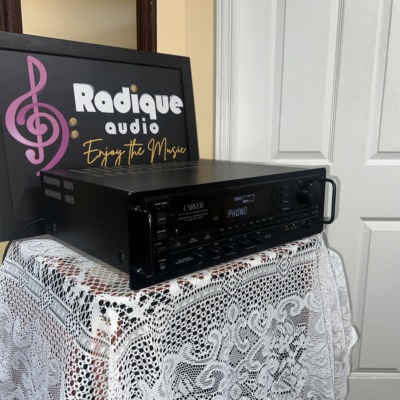
Carver HR-772 Sonic Holography Receiver – 140 WPC, Rack Ears
A Carver HR-772 stereo receiver, Carver's early-1990s flagship: 140 watts per channel, Sonic Holography, and rack ears with front handles.
✔️ Tested on our bench, Sonic Holography included
✔️ Very good condition
✔️ 140 WPC, stable to 2 ohms, MM phono, five-band EQ
✔️ Rack ears and handles for a 19-inch rack
✔️ Covered by Radique Warranty
✔️ Includes Perpetual Trade-Back Program eligibility
✔️ Expertly packed for safe shipping
