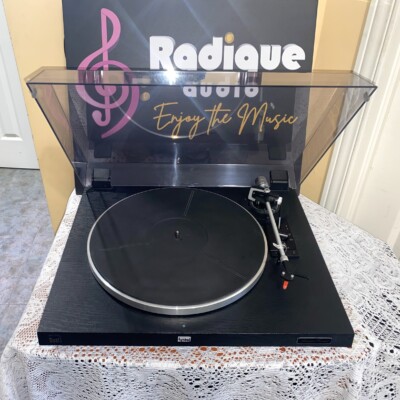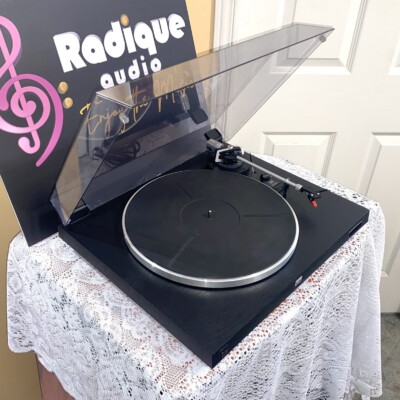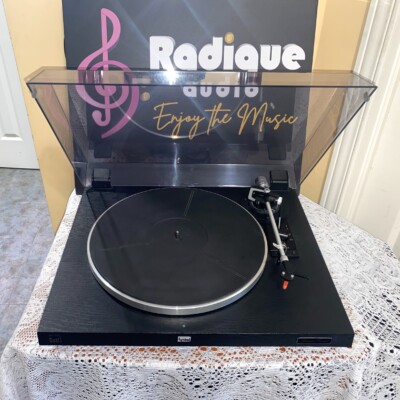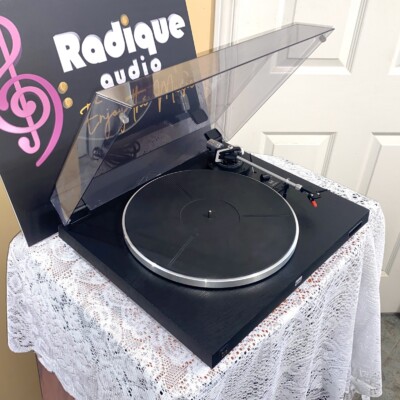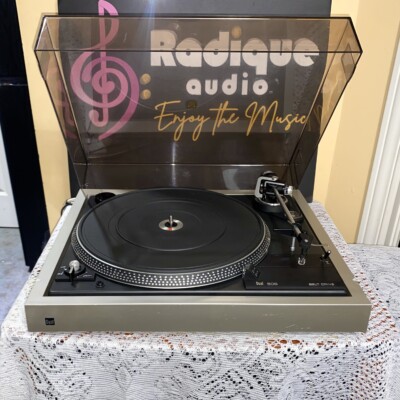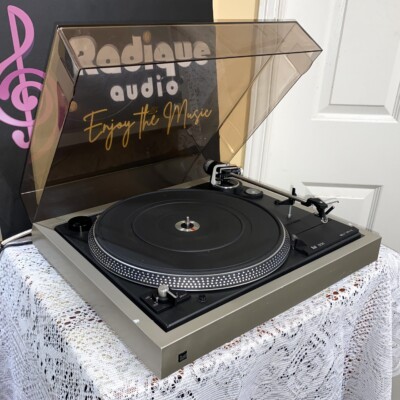


Dual grew out of the clock-parts workshops of brothers Christian and Josef Steidinger in St. Georgen, in Germany’s Black Forest, who founded Gebrüder Steidinger there in 1907. We carry vintage Dual turntables, belt-drive and automatic. We’ve had more than 20 Dual listings so far, covering 17 different models. Every used Dual here is inspected, tested and serviced as required, then photographed in-house and covered by our Bumper-to-Bumper Warranty and Perpetual Trade-Back Program. Don’t see the model you want? Tell us on First Dibs and we’ll email you when one arrives.
The Dual turntables we’ve sold most often: the CS 505, CS 506, CS 616 and CS 1236.
The Dual story, from the Black Forest
The Steidinger family made clock parts in St. Georgen in the 1800s. Christian Steidinger built a house with a workshop there in 1900, and on 1 February 1907 he and his brother Josef founded Gebrüder Steidinger, making precision parts and spring motors for gramophones. Josef soon left to start his own firm, Perpetuum.
The Dual-Motor. In 1927 the company introduced the Dual-Motor, which combined a clockwork spring with an electric motor. It sold well, and the company took the name Dual in 1935. Dual turntables won a prize at the 1937 Paris World’s Fair, and the Dual 1000 was shown in 1949.
Germany’s turntable maker. At its peak Dual was one of the largest turntable makers, with more than 3,000 employees, and in 1971 it took over its old rival Perpetuum-Ebner. Dual went bankrupt in 1982 and was bought by France’s Thomson, then in 1988 by Schneider.
Today. The last Dual factory in St. Georgen closed in 1993, and Alfred Fehrenbacher GmbH carried on building Dual turntables in St. Georgen. An investor group took over the company in 2023. Dual Electronics, the US car audio brand, is a separate company.
Which Dual is which?
Automatic changers (1950s to 1970s): record changers such as the Dual 1009, which made the brand’s name.
CS belt-drive automatics (1970s): fully automatic belt-drive turntables such as the CS 1236 and CS 1264.
CS 505 family (from 1981): the CS 505, a budget belt-drive deck with a suspended drive unit, then the CS 505-2 and its relatives, such as the CS 506.
CS 5000 (1985): a semi-automatic flagship aimed at the Rega Planar 3.
Later CS models: turntables built in St. Georgen by Fehrenbacher after 1993.
Buying used Dual: what to check
Old grease. Restorers often find the grease in Dual automatic mechanisms has hardened with age, and clean it off and re-lubricate with the right grease, not oil.
Belt and speed. On belt-drive models, check the belt and that both speeds run steadily.
Cartridge mount. The CS 505 family uses its own headshell and cartridge mount, so changing cartridges needs the right Dual mounting parts. Owners recommend moving-magnet cartridges for it.
Tonearm and automatics. Check that the arm hasn’t been knocked, and that the automatic start, return and cueing all work.
Everything we list is inspected, tested and serviced as required here, and comes with our warranty.
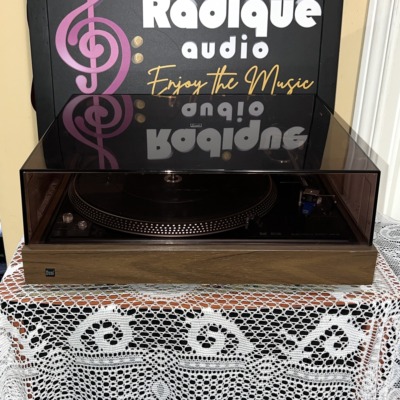
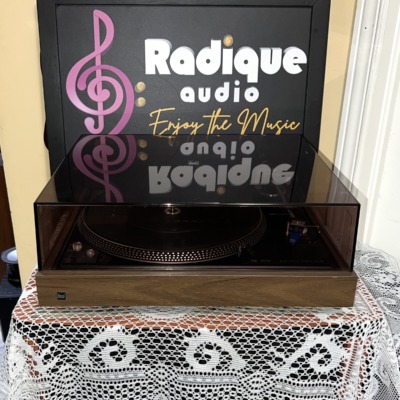
Dual 606 Direct-Drive Turntable – Made in Germany, Serviced
A German-made Dual 606 direct-drive turntable from around 1980, in a wood plinth with a polished dust cover, fully serviced by our turntable technician and in very good condition. It comes fitted with an Ortofon X1-MC moving-coil cartridge.
✔️ Very good condition — free of significant marks, smoked dust cover polished
✔️ Fully serviced by our turntable technician
✔️ Direct drive, a Dual ULM gimbal arm and an Ortofon X1-MC that plugs into any standard phono input
✔️ Covered by Radique Warranty
✔️ Includes Perpetual Trade-Back Program eligibility
✔️ Curbside delivery, local collection or freight within Canada
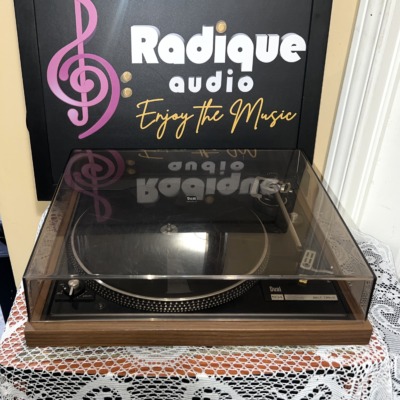
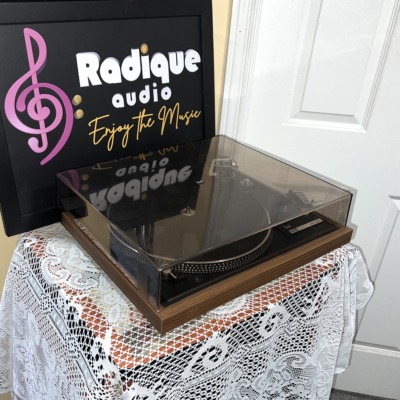
Dual 504 Belt-Drive Turntable – Made in Germany, Real Wood
A vintage Dual 504 belt-drive turntable, made in Germany in the late 1970s, in a real wood plinth in walnut with a smoked dust cover, fitted with an Ortofon FF15XE MkII cartridge, fully tested on our bench and in very good condition.
✔️ Very good condition — free of significant marks
✔️ Real wood plinth in walnut, with a smoked dust cover
✔️ Made in Germany, fitted with an Ortofon FF15XE MkII elliptical cartridge
✔️ Covered by Radique Warranty
✔️ Includes Perpetual Trade-Back Program eligibility
✔️ Curbside delivery, local collection or freight within Canada
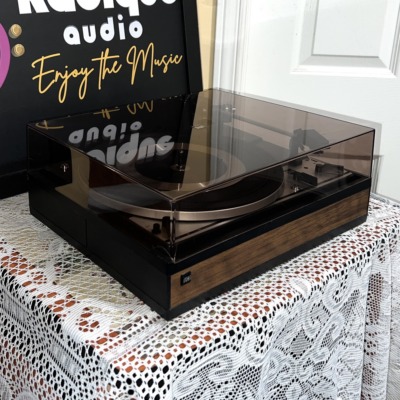
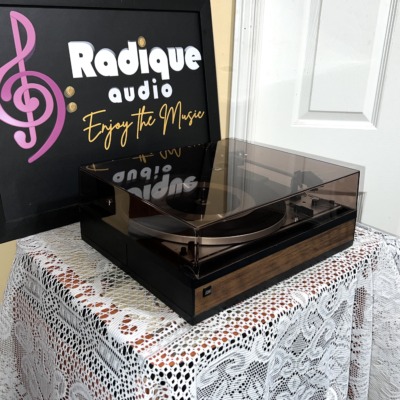
Dual 1214 Idler-Drive Turntable – German-Made 1972, Serviced
A compact, fully automatic German idler-drive from 1972, freshly serviced on our own bench.
✔️ freshly serviced on our own bench by Marc
✔️ Covered by Radique Warranty
✔️ Includes Perpetual Trade-Back Program eligibility
✔️ Curbside delivery, local collection or freight within Canada
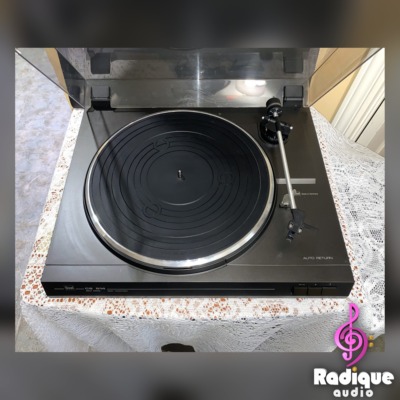
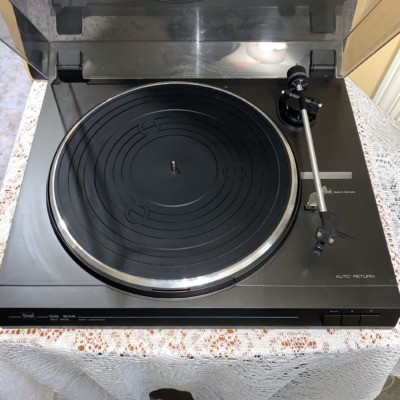
Dual CS 514 Vintage Belt-Drive Turntable – German, Stanton 680HP
A German-made Dual CS 514 semi-automatic belt-drive turntable from the mid-1980s, fitted with a Stanton 680HP cartridge.
✔️ Made in Germany, mid-1980s
✔️ Semi-automatic: the arm returns and the motor stops at the end of a side
✔️ Stanton 680HP cartridge with matching D6800HP stylus
✔️ Lightweight XM300 alloy tonearm, 304 mm die-cast platter
✔️ Ground cable upgraded with a spade connector
✔️ Dust cover included
✔️ Covered by Radique Warranty
✔️ Includes Perpetual Trade-Back Program eligibility
✔️ Curbside delivery, local collection or freight within Canada
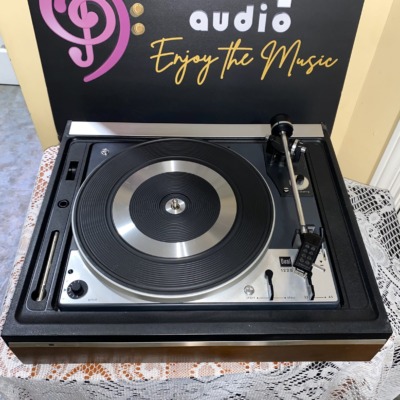

Dual 1225 Automatic Idler-Drive Turntable – Serviced
A fully automatic idler-drive deck built in Germany between 1974 and 1976 — high-torque 4-pole motor, 1.45 kg non-magnetic steel platter, 33⅓ and 45 with ±6% pitch, wow and flutter under ±0.15%. The automatic mechanism has had its hardened grease stripped and replaced with synthetic, the idler wheel cleaned, and the dust cover polished clear. Shure M75 Type D with a new stylus. Cosmetic condition good for its age.

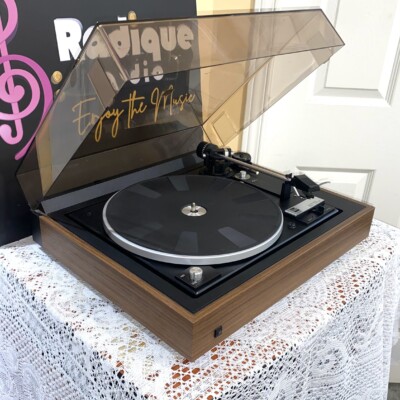
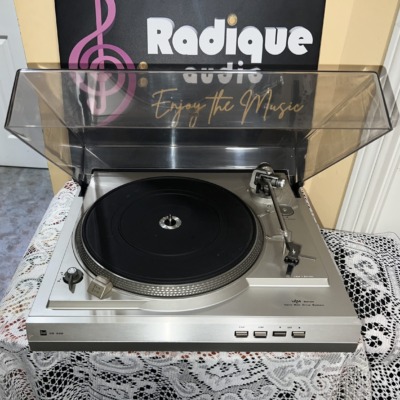
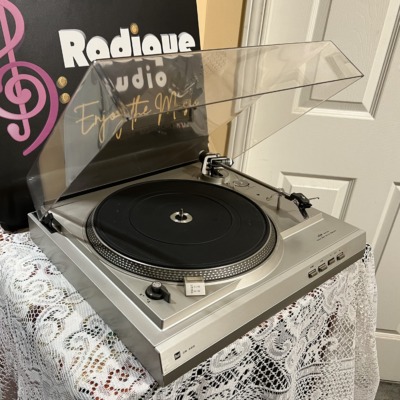
Dual CS-528 Belt-Drive Turntable – Made in Germany, Serviced
A 16-pole asynchronous motor turns a 304mm die-cast aluminium platter at ±0.07% wow and flutter, through a low-mass tubular arm on a four-point gimbal bearing. Fully automatic — start, lift and cue all handled for you. Built in Germany between 1981 and 1983. Serviced here with a new Ortofon OM cartridge and elliptical stylus, a restored dust cover, and a spade fitted to the ground lead.