
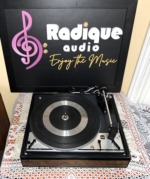
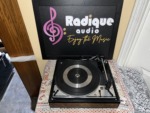
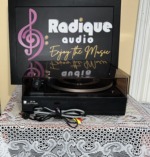
Dual 1214 Idler-Drive Turntable – German-Made 1972, Serviced
$345.00
A compact, fully automatic German idler-drive from 1972, freshly serviced on our own bench.
✔️ freshly serviced on our own bench by Marc
✔️ Covered by Radique Warranty
✔️ Includes Perpetual Trade-Back Program eligibility
✔️ Curbside delivery, local collection or freight within Canada
1 in stock
A compact, fully automatic German idler-drive from 1972, freshly serviced on our own bench.
What it is
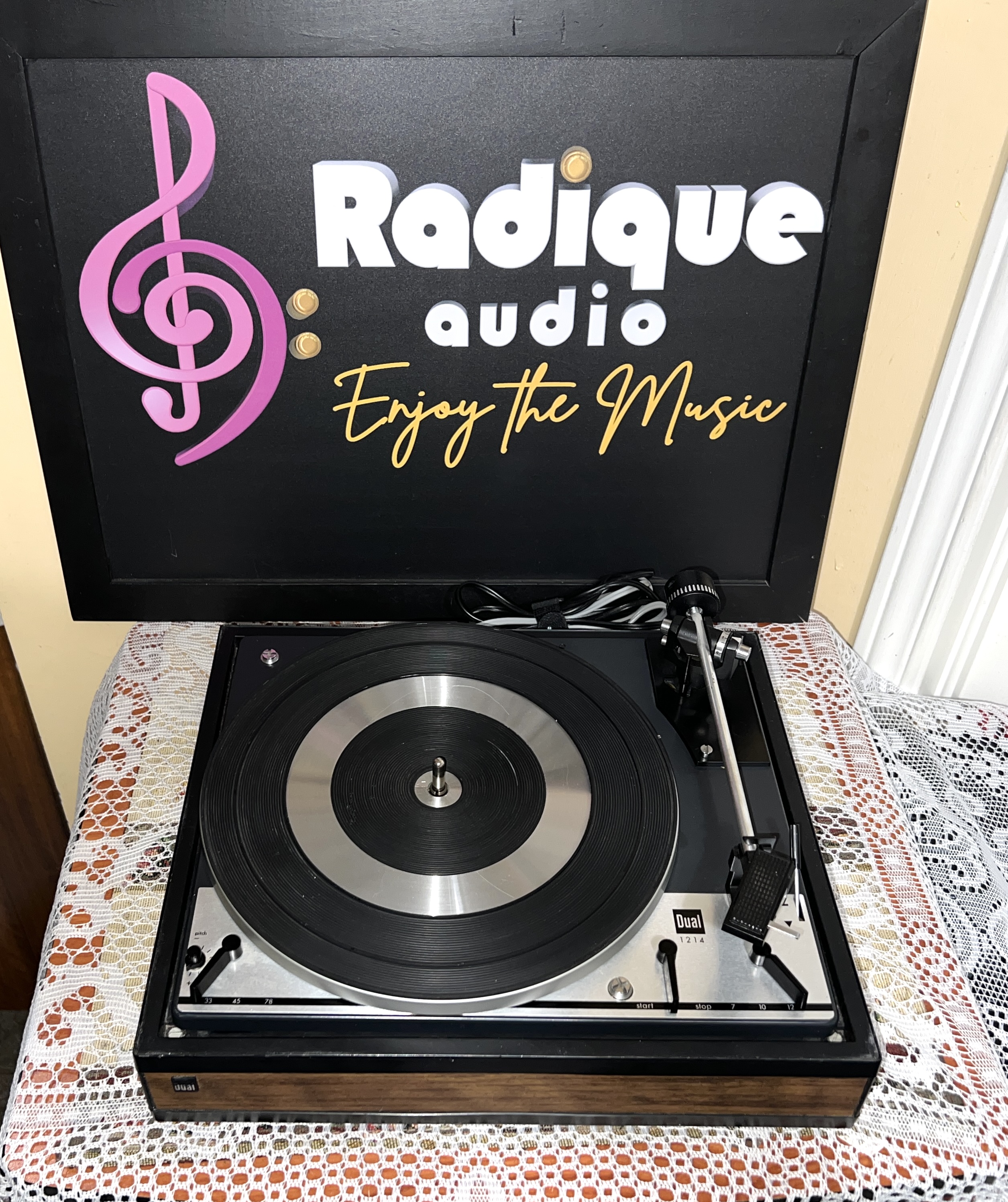
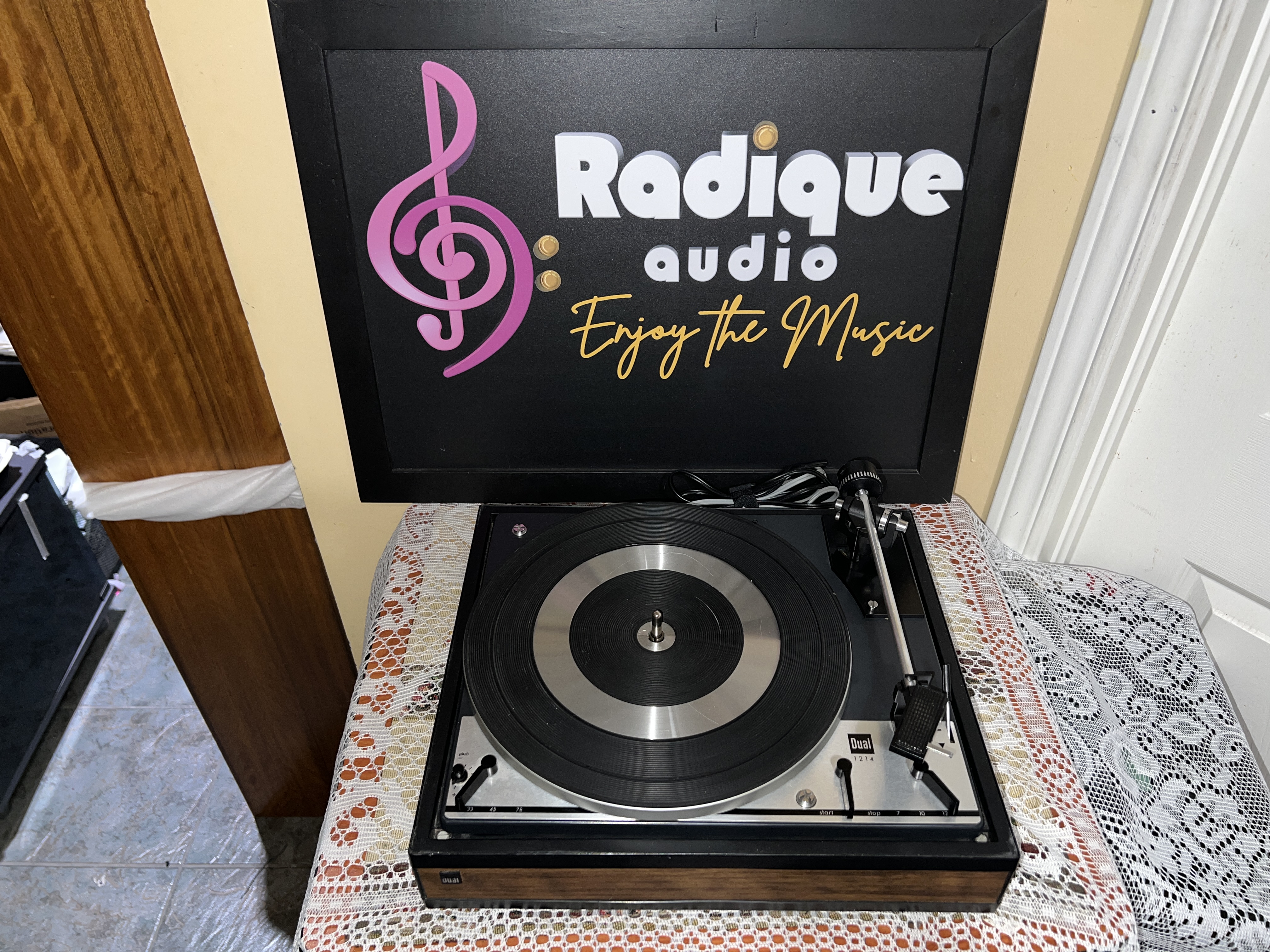
The 1214 comes from the run of Duals that built the company’s reputation — designed and made in Germany, in 1972, back when Dual were turning out automatics that outlasted the systems they were sold into. Fifty-four years later this one has been through our own bench and is working properly.
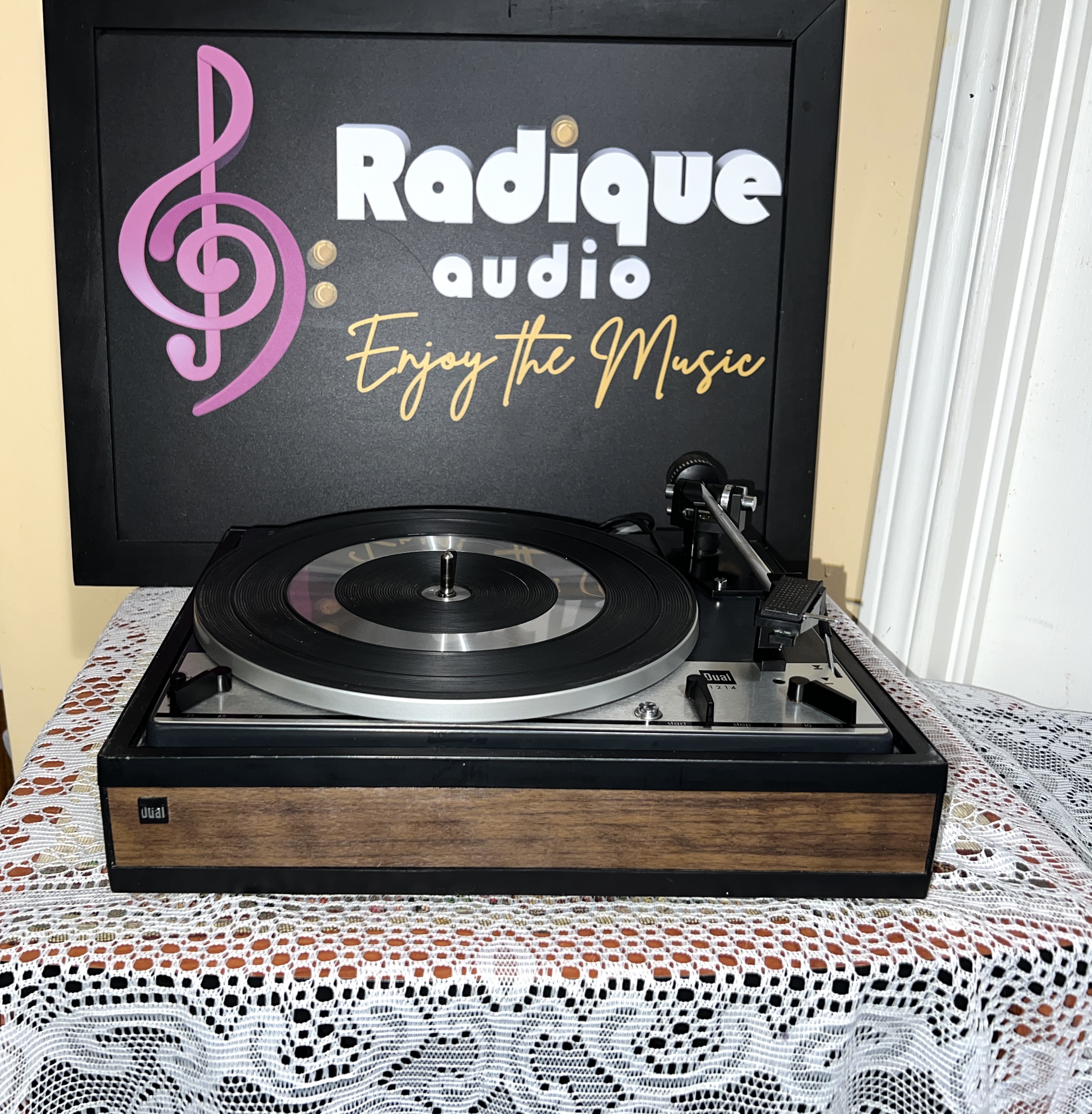
Two things stand out before you even play a record. The first is the drive: this is an idler-wheel table, not a belt, and that is the whole character of it. The second is the size. It is a genuinely compact deck for a full-function automatic — it does not sprawl across a shelf the way most three-speed changers of the era do, which makes it a rare thing for anyone fitting a real turntable into a space that will not take one.
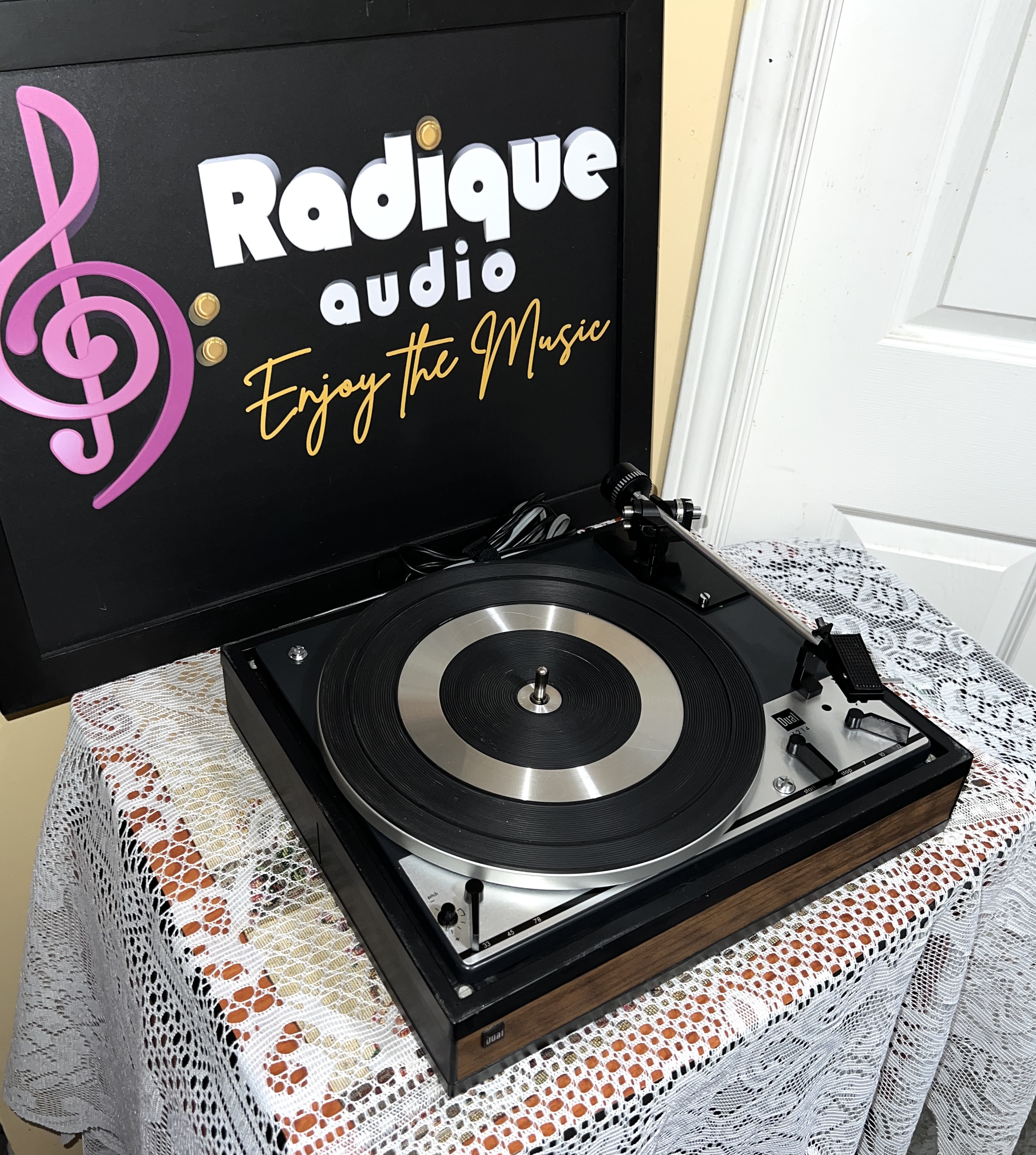
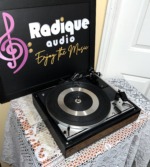
It is a three-speed, fully automatic table. Start it and the arm indexes, plays and returns on its own; at the end of the side it lifts, comes home and shuts the motor off.
Idler wheel drive, and why it is worth having
Most turntables you will meet are belt drives: a rubber band loops from a motor pulley around the platter. Idler drive does it differently. A rubber-tyred wheel — the idler — is pressed between the motor spindle and the inside rim of the platter, so the motor drives the platter through a firm mechanical coupling rather than through something stretchy.
That difference shows up as torque. A belt gives a little under load, and when the stylus hits a heavily cut passage the platter can lag for a fraction of a moment before catching up. An idler does not give. The platter is held at speed and driven hard, and what you hear is a firmer leading edge on anything with attack — drums, piano, plucked strings, brass. The word people reach for is drive, and it is the reason the great broadcast decks of the period were idlers.
Belts won the market because they are cheaper to make, and because a rigid coupling can pass motor noise up into the platter if the design is careless. That reputation stuck to idler drive for years. What has happened more recently is that listeners have gone back to well-made idlers — the Garrards, the Lencos, the Thorens — and concluded the trade was not as one-sided as it looked.
Dual clearly thought about the known weakness of the format. On this design the idler retracts from the motor spindle when the table is switched off, so it cannot sit compressed against a stationary shaft and develop a flat spot. That one detail is a large part of why a 1972 idler can still be running properly today, and why this one is.
The automatic cycle, and how to treat it
Worth knowing before you use it, because it catches people out: the change cycle is a mechanical sequence of cams and levers, and it wants to be allowed to finish. Start it and let it go through. Interrupt it part-way — by nudging the arm or reaching for the lever mid-cycle — and it will stop where it is, which looks alarming and is not damage. Treated gently and given its few seconds, it works exactly as it was designed to.
Fifty-four years on, that patience is the whole trick with these.
The cartridge
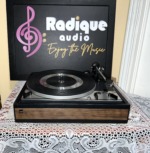
Fitted with a Shure M93E, which is the cartridge Shure themselves specified for Duals of this generation — their 1972 selection guide lists it against the 1215, 1218, 1219 and their siblings. The E is for elliptical.
Shure described the M93 as having an extra-durable stylus assembly built for heavy use in record changers, which is exactly the job here. It uses the same generator and body as the M91 and M75, and that has a practical consequence worth knowing: any stylus that fits an M93, M91 or M75 will fit this cartridge, so replacements are plentiful and you can move it up the range later simply by fitting a better stylus.
The cabinet and cover
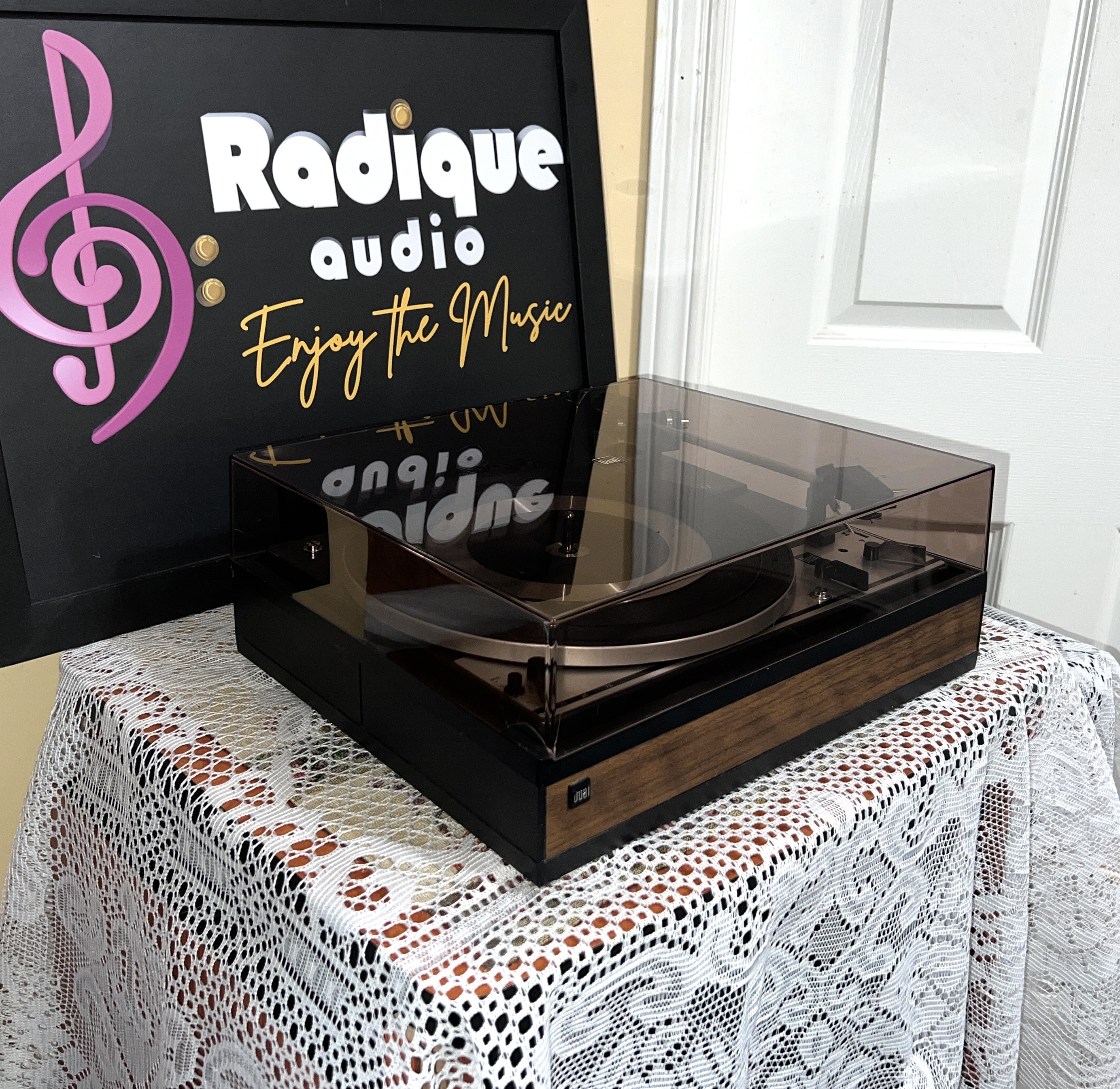
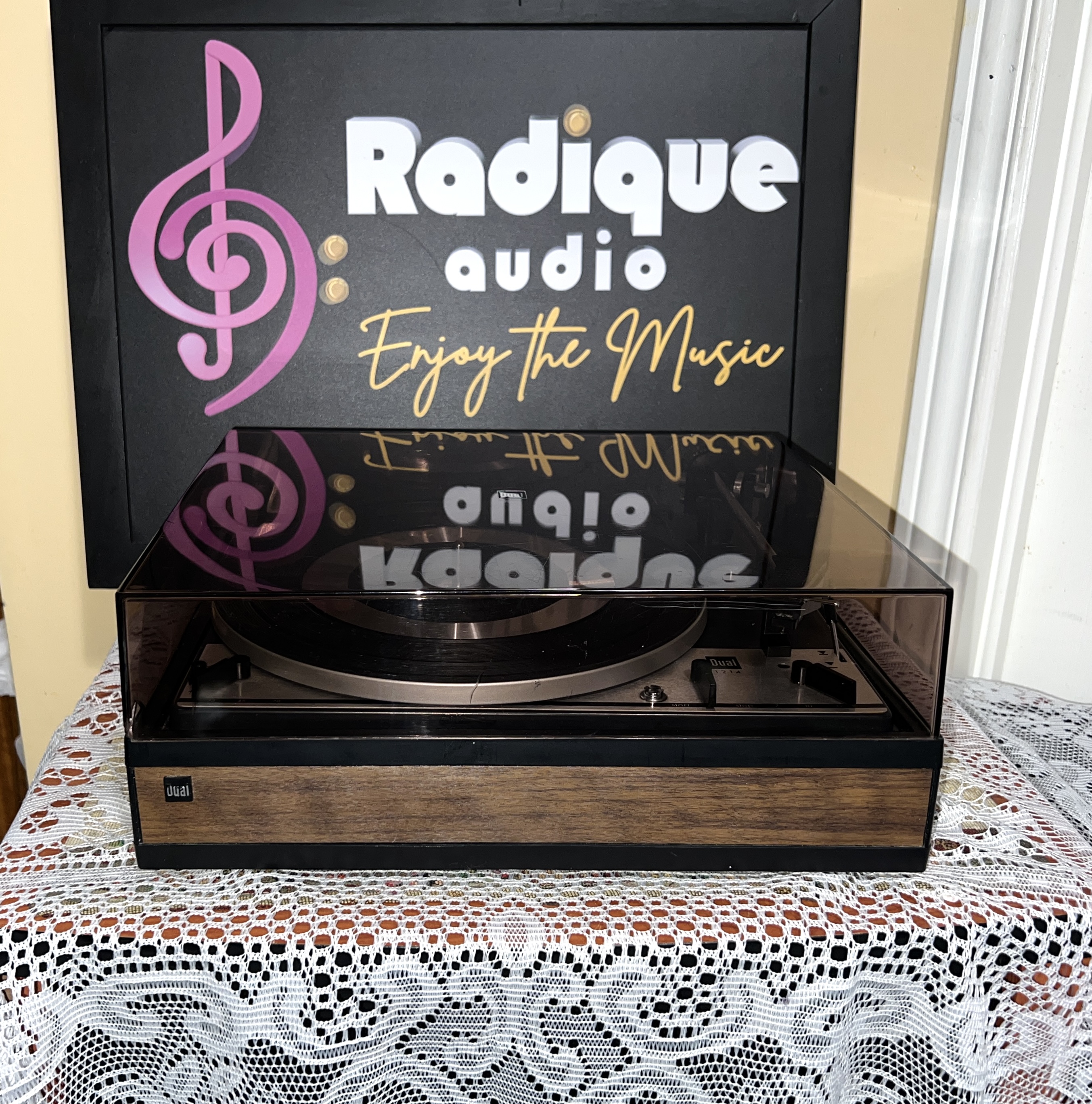
There is a band of warm wood trim across the front of the plinth, which suits the cherry-fronted vintage amplifiers of the period rather well. It came to the table this way and is not our own woodwork.
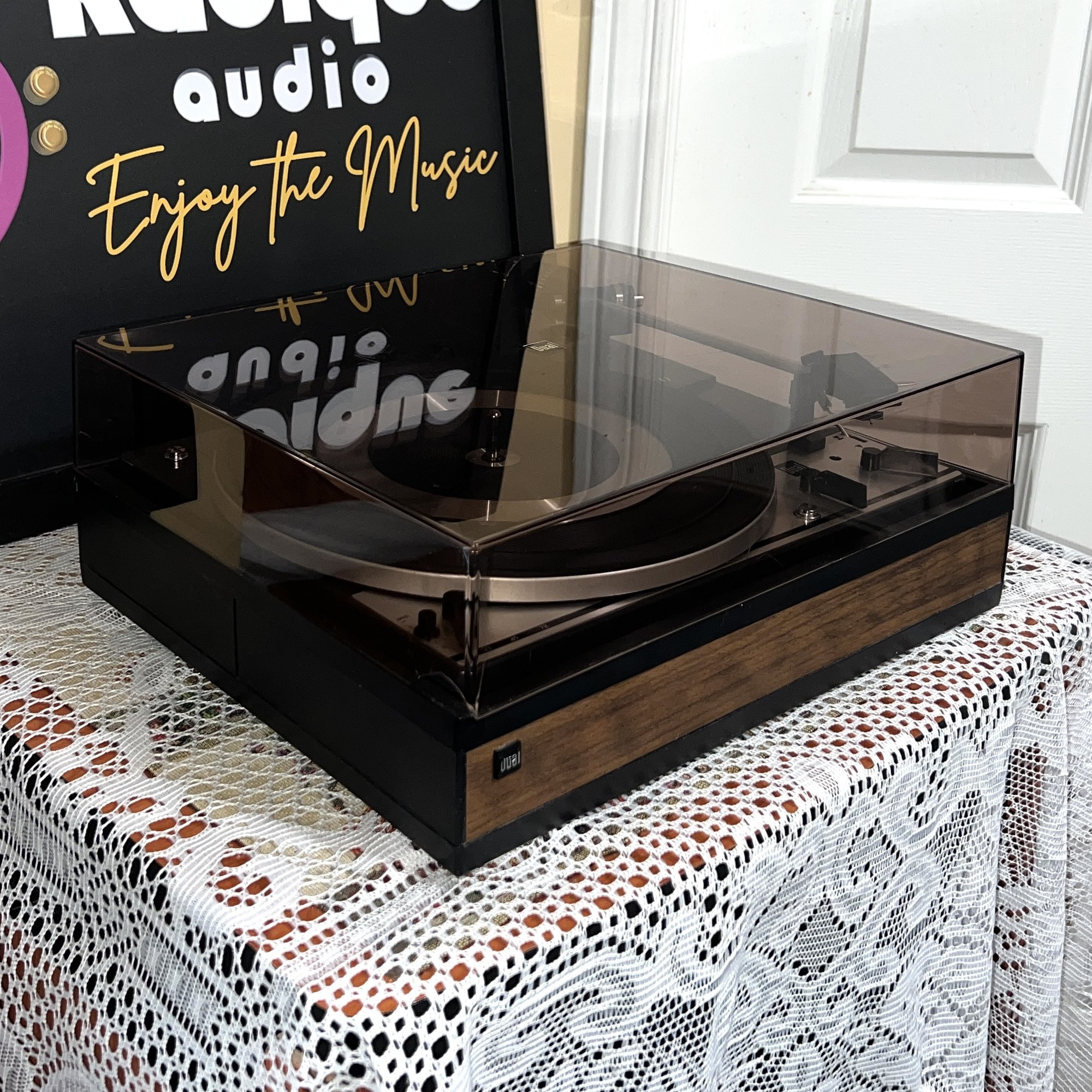
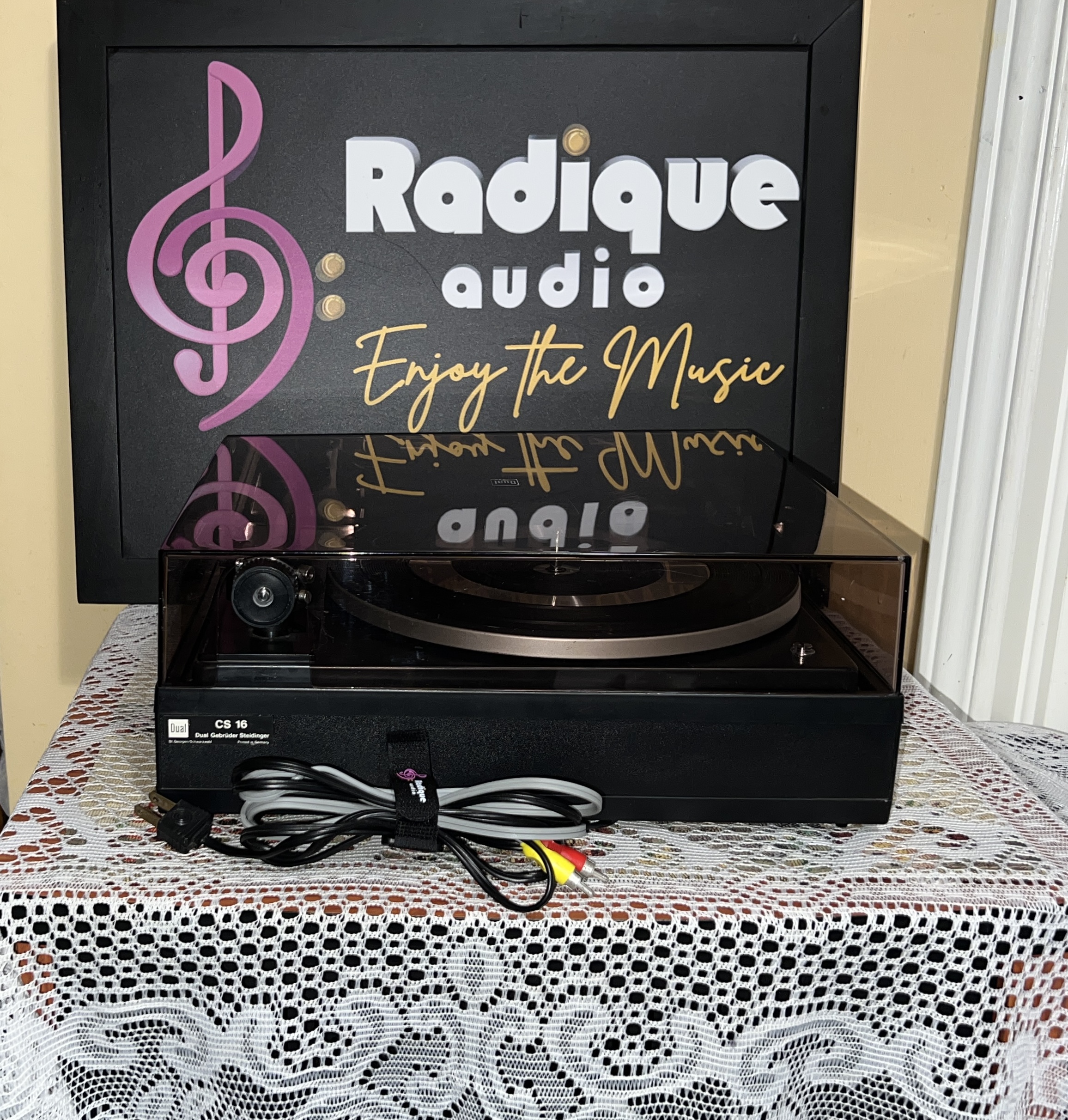
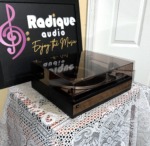
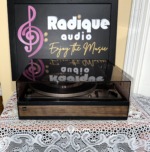
The dust cover is a lift-off design, built to be lifted away rather than swung up on hinges. Worth saying, because a lift-off Dual cover is sometimes taken for a Dual cover with a problem; on this model it is how the cover was made.
Condition
Good, at the top end of that range for a table of this age, and honestly described.
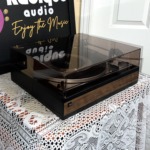
The one significant flaw is a chip out of the dust cover at the bottom left edge. The cover is otherwise sound — no cracks, no crazing — and it has been freshly polished, which has brought it up beautifully.
The table has been through our own bench, and the wood, the platter and the controls all present well. The automatic does what it should: the arm indexes to the lead-in groove, plays the side, lifts, returns to its rest and shuts the motor off.
An honest German automatic with the right cartridge on it, fresh off our bench.
Dual 1214 Specifications
- Drive: idler wheel, retracting at switch-off
- Speeds: three
- Operation: fully automatic, with auto return and shut-off
- Cartridge: Shure M93E, elliptical
- Dust cover: lift-off, no hinges by design
- Built in Germany
🚚 Curbside Delivery — This Item Ships Differently
We do not ship turntables by courier. Instead we offer personal curbside delivery by our own vehicle, collection in person from us in Kanata, or freight anywhere in Canada. Please contact us before purchasing — use the pink Ask a Question button on this page and include your postal code, and we will come back with pricing and timelines so you can decide before you buy. Full details and coverage area are on our Curbside Delivery page. 👉
⚠️ Important Information for International Buyers
This unit is configured for North American 110/120V power. Buyers outside North America will require a step-down transformer and appropriate plug adapter.
✅ Buy With Confidence — The Radique Promise
Backed by Radique Audio’s Bumper-to-Bumper Warranty and our Perpetual Trade-Back Program. When you’re ready to move on, we’ll take it back. That’s the Radique difference.
📦 Watch how we protect your gear — our unboxing video.
📺 Curious about our business? Check out our YouTube channel for behind-the-scenes videos and more!
📞 Questions? Use the Ask a Question button above, or call us at 613-416-9995.
| Drive Type | Idler Drive |
|---|---|
| Operation | Fully Automatic |
Dual grew out of the clock-parts workshops of brothers Christian and Josef Steidinger in St. Georgen, in Germany's Black Forest, who founded Gebrüder Steidinger there in 1907. We carry vintage Dual turntables, belt-drive and automatic. We've had more than 20 Dual listings so far, covering 17 different models. Every used Dual here is inspected, tested and serviced as required, then photographed in-house and covered by our Bumper-to-Bumper Warranty and Perpetual Trade-Back Program. Don't see the model you want? Tell us on First Dibs and we'll email you when one arrives.
The Dual turntables we've sold most often: the CS 505, CS 506, CS 616 and CS 1236.
The Dual story, from the Black Forest
The Steidinger family made clock parts in St. Georgen in the 1800s. Christian Steidinger built a house with a workshop there in 1900, and on 1 February 1907 he and his brother Josef founded Gebrüder Steidinger, making precision parts and spring motors for gramophones. Josef soon left to start his own firm, Perpetuum.
The Dual-Motor. In 1927 the company introduced the Dual-Motor, which combined a clockwork spring with an electric motor. It sold well, and the company took the name Dual in 1935. Dual turntables won a prize at the 1937 Paris World's Fair, and the Dual 1000 was shown in 1949.
Germany's turntable maker. At its peak Dual was one of the largest turntable makers, with more than 3,000 employees, and in 1971 it took over its old rival Perpetuum-Ebner. Dual went bankrupt in 1982 and was bought by France's Thomson, then in 1988 by Schneider.
Today. The last Dual factory in St. Georgen closed in 1993, and Alfred Fehrenbacher GmbH carried on building Dual turntables in St. Georgen. An investor group took over the company in 2023. Dual Electronics, the US car audio brand, is a separate company.
Which Dual is which?
Automatic changers (1950s to 1970s): record changers such as the Dual 1009, which made the brand's name.
CS belt-drive automatics (1970s): fully automatic belt-drive turntables such as the CS 1236 and CS 1264.
CS 505 family (from 1981): the CS 505, a budget belt-drive deck with a suspended drive unit, then the CS 505-2 and its relatives, such as the CS 506.
CS 5000 (1985): a semi-automatic flagship aimed at the Rega Planar 3.
Later CS models: turntables built in St. Georgen by Fehrenbacher after 1993.
Buying used Dual: what to check
Old grease. Restorers often find the grease in Dual automatic mechanisms has hardened with age, and clean it off and re-lubricate with the right grease, not oil.
Belt and speed. On belt-drive models, check the belt and that both speeds run steadily.
Cartridge mount. The CS 505 family uses its own headshell and cartridge mount, so changing cartridges needs the right Dual mounting parts. Owners recommend moving-magnet cartridges for it.
Tonearm and automatics. Check that the arm hasn't been knocked, and that the automatic start, return and cueing all work.
Everything we list is inspected, tested and serviced as required here, and comes with our warranty.
You may also like…
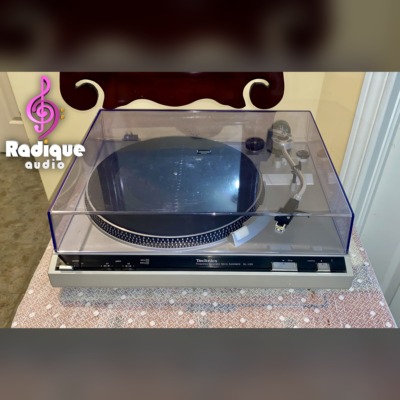
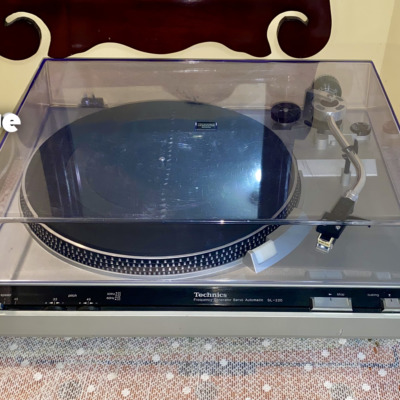
Technics SL-220 FG Servo Belt-Drive Turntable – Made in Japan
A late-1970s, made in Japan belt-drive Technics with a frequency-generator servo motor and an S-shaped arm, the quiet alternative to the direct-drive Technics everyone else buys. Choose a version for each deck's details.
✔️ Covered by Radique Warranty
✔️ Includes Perpetual Trade-Back Program eligibility
✔️ Curbside delivery along the Windsor–Québec City corridor, or pickup in Kanata
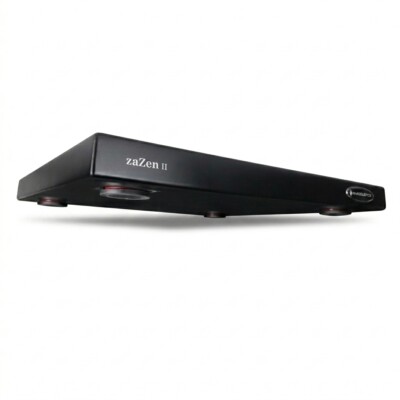
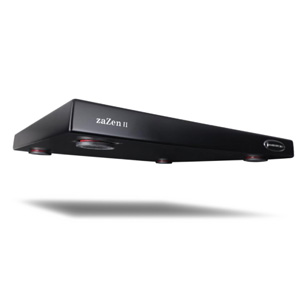
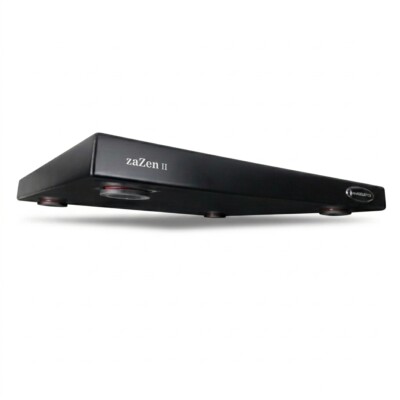
IsoAcoustics zaZen II Isolation Platform
- ✔️ Genuine IsoAcoustics, brand new, from an authorized Canadian dealer
- ✔️ Isolation platform for turntables and sensitive components up to 40 lb (18.1 kg)
- ✔️ 17 × 15 × 1.4 in (432 × 381 × 34 mm), dense fibre with built-in isolators
- ✔️ Medium-gloss black finish
- ✔️ Pick up in Kanata by appointment, or shipped across Canada and internationally
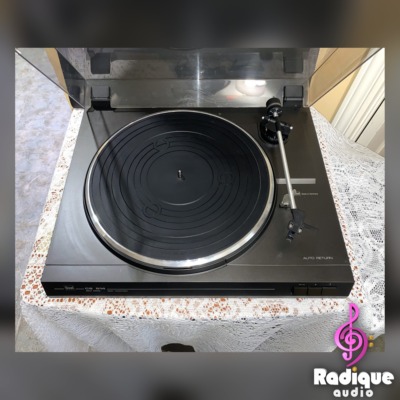
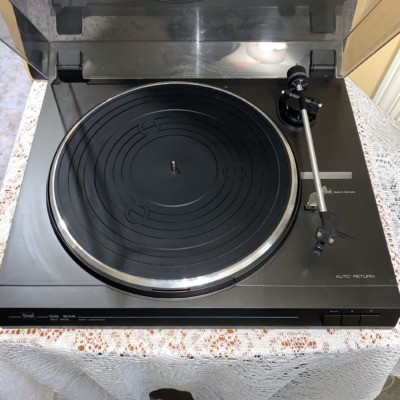
Dual CS 514 Vintage Belt-Drive Turntable – German, Stanton 680HP
A German-made Dual CS 514 semi-automatic belt-drive turntable from the mid-1980s, fitted with a Stanton 680HP cartridge.
✔️ Made in Germany, mid-1980s
✔️ Semi-automatic: the arm returns and the motor stops at the end of a side
✔️ Stanton 680HP cartridge with matching D6800HP stylus
✔️ Lightweight XM300 alloy tonearm, 304 mm die-cast platter
✔️ Ground cable upgraded with a spade connector
✔️ Dust cover included
✔️ Covered by Radique Warranty
✔️ Includes Perpetual Trade-Back Program eligibility
✔️ Curbside delivery, local collection or freight within Canada
IsoAcoustics zaZen I Isolation Platform
- ✔️ Genuine IsoAcoustics, brand new, from an authorized Canadian dealer
- ✔️ Isolation platform for turntables and sensitive components up to 25 lb (11.3 kg)
- ✔️ 17 × 15 × 1.2 in (432 × 381 × 30 mm), dense fibre with built-in isolators
- ✔️ Medium-gloss black finish
- ✔️ Pick up in Kanata by appointment, or shipped across Canada and internationally
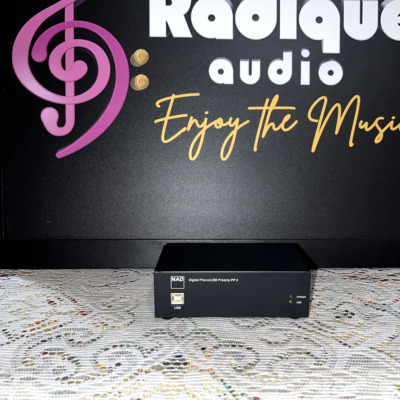
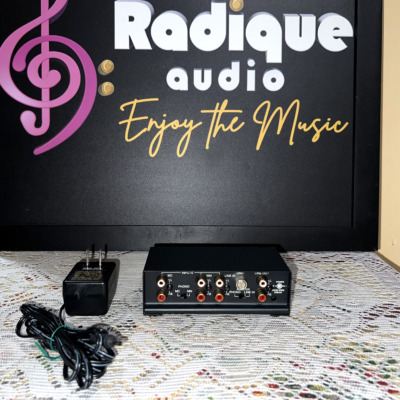
NAD PP 3 Digital Phono/USB Preamp – MM & MC, Power Supply
A proper moving-magnet and moving-coil phono stage that also digitises your records, with its original NAD power supply.
✔️ Covered by Radique Warranty
✔️ Includes Perpetual Trade-Back Program eligibility
✔️ Expertly packed for safe shipping
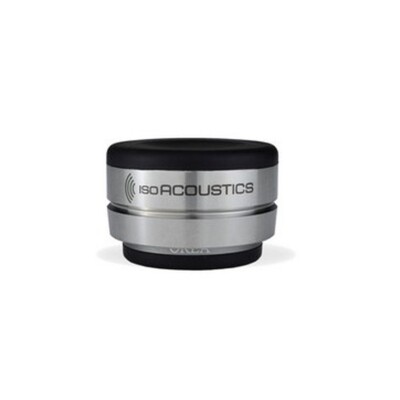
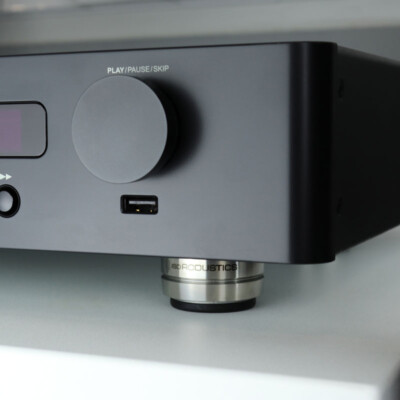
IsoAcoustics OREA Graphite Audio Isolation Foot (Single)
- ✔️ Genuine IsoAcoustics, brand new, from an authorized Canadian dealer
- ✔️ One isolation foot, rated 4 lb (1.8 kg); use three or more per component
- ✔️ Three carry 12 lb (5.4 kg), four carry 16 lb (7.2 kg)
- ✔️ Machined stainless steel, 1.6 in wide and 1.1 in tall (40 × 27 mm)
- ✔️ Pick up in Kanata by appointment, or shipped across Canada and internationally
Related Products
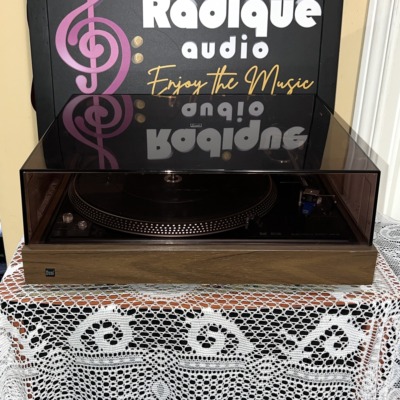
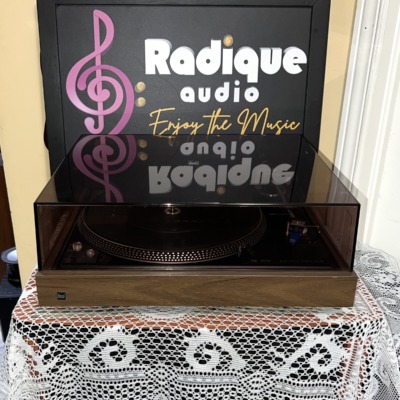
Dual 606 Direct-Drive Turntable – Made in Germany, Serviced
A German-made Dual 606 direct-drive turntable from around 1980, in a wood plinth with a polished dust cover, fully serviced by our turntable technician and in very good condition. It comes fitted with an Ortofon X1-MC moving-coil cartridge.
✔️ Very good condition — free of significant marks, smoked dust cover polished
✔️ Fully serviced by our turntable technician
✔️ Direct drive, a Dual ULM gimbal arm and an Ortofon X1-MC that plugs into any standard phono input
✔️ Covered by Radique Warranty
✔️ Includes Perpetual Trade-Back Program eligibility
✔️ Curbside delivery, local collection or freight within Canada
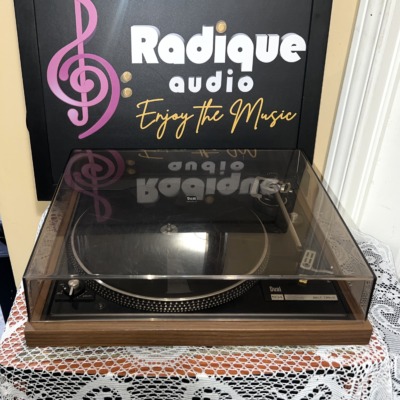
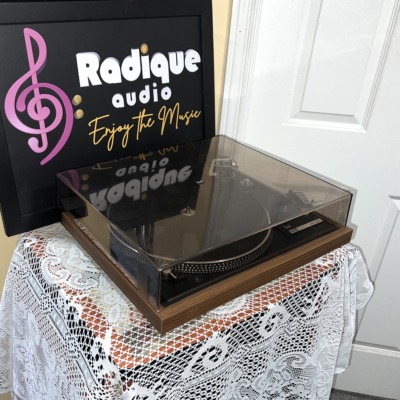
Dual 504 Belt-Drive Turntable – Made in Germany, Real Wood
A vintage Dual 504 belt-drive turntable, made in Germany in the late 1970s, in a real wood plinth in walnut with a smoked dust cover, fitted with an Ortofon FF15XE MkII cartridge, fully tested on our bench and in very good condition.
✔️ Very good condition — free of significant marks
✔️ Real wood plinth in walnut, with a smoked dust cover
✔️ Made in Germany, fitted with an Ortofon FF15XE MkII elliptical cartridge
✔️ Covered by Radique Warranty
✔️ Includes Perpetual Trade-Back Program eligibility
✔️ Curbside delivery, local collection or freight within Canada
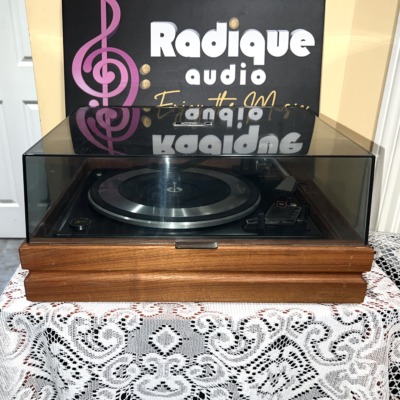
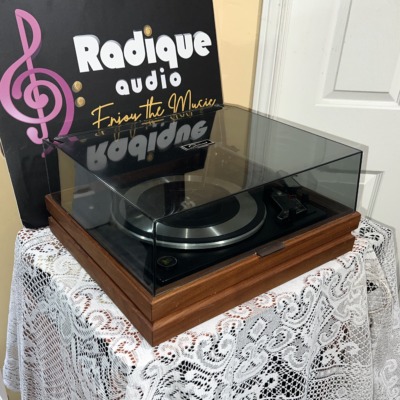
Garrard SL65B Idler-Drive Turntable – Made in England, Serviced
A Garrard SL65B automatic turntable from around 1970, made in England, in a real wood plinth with a lift-off dust cover. It has been fully serviced by our turntable technician and fitted with a new Audio-Technica stylus.
✔️ Very good condition — real wood plinth, polished lift-off dust cover
✔️ Fully serviced by our turntable technician, new Audio-Technica stylus
✔️ Idler drive, fully automatic, plays 33⅓, 45 and 78 — made in England
✔️ Covered by Radique Warranty
✔️ Includes Perpetual Trade-Back Program eligibility
✔️ Curbside delivery, local collection or freight within Canada
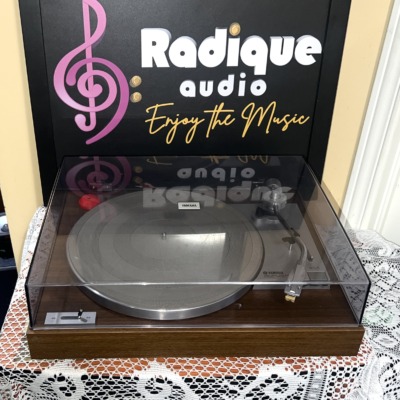
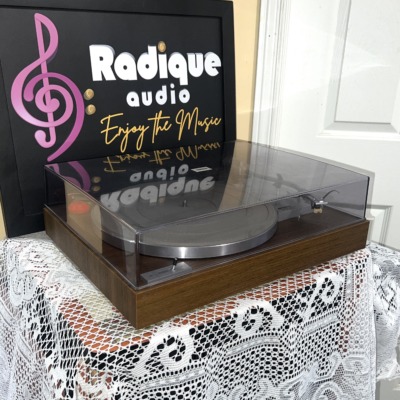
Yamaha YP-211 Belt-Drive Turntable – Made in Japan
A Yamaha YP-211 belt-drive turntable from the late 1970s, made in Japan, fitted with a Shure cartridge, tested on our bench and in very good condition.
✔️ Very good condition — hinged dust cover on good hinges
✔️ Belt drive with auto-return, tested on our bench
✔️ Shure cartridge fitted — made in Japan, late 1970s
✔️ Covered by Radique Warranty
✔️ Includes Perpetual Trade-Back Program eligibility
✔️ Curbside delivery, local collection or freight within Canada
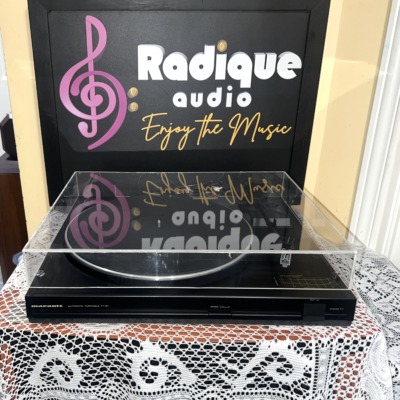
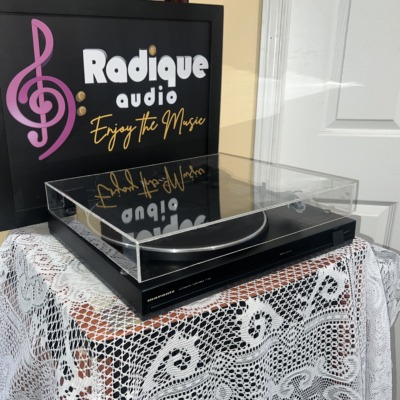
Marantz TT151 Belt-Drive Turntable – 1980s, Serviced
A Marantz TT151 belt-drive turntable from the mid-1980s, fully serviced, with a new hinged dust cover and a new Audio-Technica cartridge and stylus. It is in very good condition.
✔️ Very good condition, with a new hinged dust cover
✔️ Fully serviced: new belt, new Audio-Technica cartridge and stylus
✔️ Belt drive with auto-return, P-mount — easy to live with
✔️ Covered by Radique Warranty
✔️ Includes Perpetual Trade-Back Program eligibility
✔️ Curbside delivery, local collection or freight within Canada
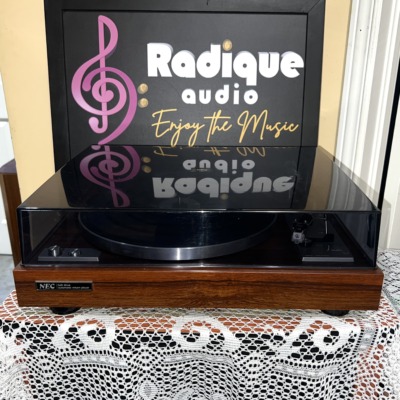
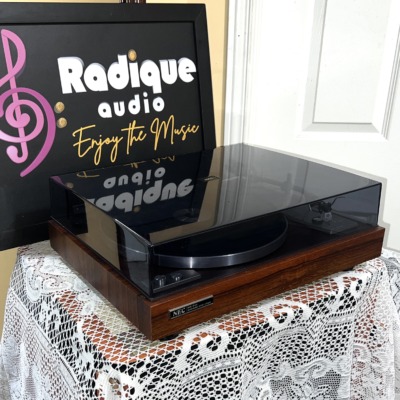
NEC NSP-5350E Belt-Drive Turntable – Auto-Return, Serviced
A rare NEC NSP-5350E belt-drive turntable with automatic return, made in Japan, in a wooden plinth with a smoked dust cover.
✔️ Audio-Technica cartridge fitted, tonearm set up, new power cord
✔️ Very good condition
✔️ Automatic arm return and REJECT, 33⅓ and 45 rpm
✔️ Covered by Radique Warranty
✔️ Includes Perpetual Trade-Back Program eligibility
✔️ Curbside delivery, local collection or freight within Canada
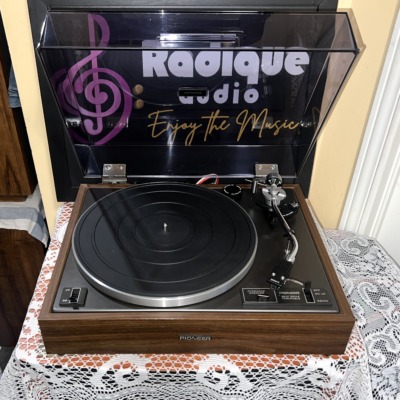
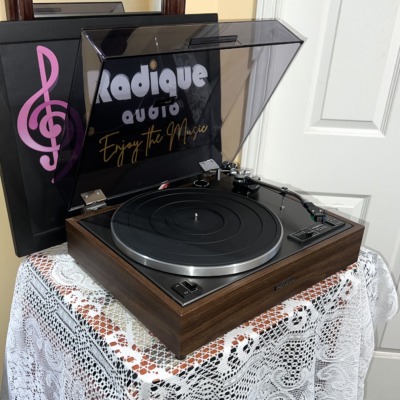
Pioneer PL-12D Belt-Drive Turntable – Made in Japan, Serviced
A 1970s Pioneer PL-12D manual belt-drive turntable, made in Japan, serviced and set up on our bench, with an Audio-Technica cartridge.
✔️ Serviced: stylus checked, tonearm set up, tracking force and speed set
✔️ Very good condition
✔️ 12-inch die-cast platter, S-shaped arm with anti-skating
✔️ Covered by Radique Warranty
✔️ Includes Perpetual Trade-Back Program eligibility
✔️ Curbside delivery, local collection or freight within Canada
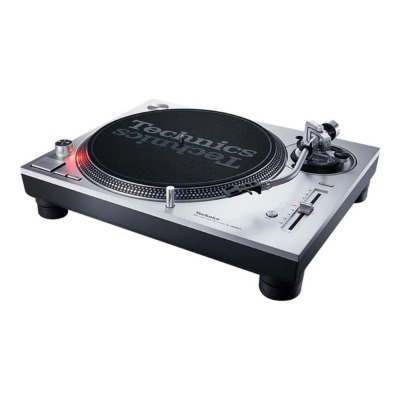
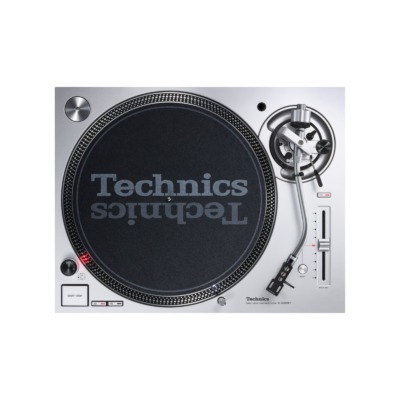
Technics SL-1200MK7 Direct-Drive Turntable – Silver, New
The Technics SL-1200 in its modern form: a brand-new, factory-sealed SL-1200MK7 in silver, with a coreless direct-drive motor, an aluminum platter and Technics' S-shaped tonearm. Sealed by Technics, so we can ship it to you.
✔️ Coreless direct-drive motor: no cogging, rock-steady speed
✔️ 33⅓, 45 and 78 rpm, with ±8% / ±16% pitch control
✔️ Detachable gold-plated phono cable and power cord
✔️ Dust cover, headshell and slipmat included; cartridge sold separately
✔️ New in the sealed Technics box: 30 days with us, then the Technics warranty
✔️ Save $100 when you pair it with a Radique amplifier or receiver that has a phono input
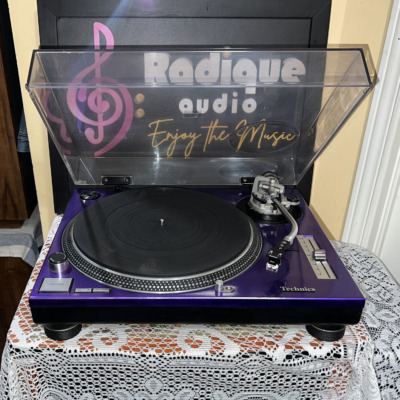
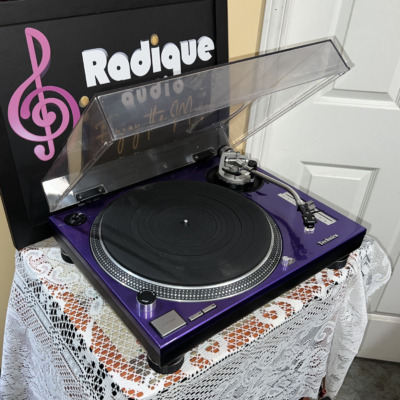
Custom Technics SL-1200 Mk II – Made to Order, Your Colour
A classic Technics SL-1200 Mk II, sourced, fully serviced and custom-painted in the colour you choose, then fitted with our Gold Series interconnects. Made to order in about 60 to 90 days.
✔️ We find the deck: a genuine Technics SL-1200 Mk II
✔️ Fitted with a brand-new Ortofon 2M Red cartridge
✔️ Full turntable service, plus a second bench test by a different tech
✔️ Multi-coat custom paint in any colour you choose
✔️ Radique Audio Gold Series Interconnects in place of the stock cables
✔️ Covered by our Bumper-to-Bumper Warranty
✔️ Includes Perpetual Trade-Back Program eligibility
✔️ Local pickup in Kanata or Curbside Delivery
