


SOLD! Acoustic Research 4-Driver Towers, Solid Cherry Caps AR93Q
$695.00
Price Per Pair
Out of stock
Get first dibs on the next one
Excellent pair of Teledyne Acoustic Research 3-way, 4-Driver AR-93Q floor-standers, customized with solid cherry wood top caps.
The AR-93 and AR-94 floorstanding speakers were introduced in late 1979, and called the “High Tech” series, because most of their emphasis was on hard-core performance rather than flashy cosmetic frills. They share the design concept of the top-of-the-line AR-9 and AR-90 speakers using dual side-facing woofers in an acoustic suspension enclosure to produce fantastic bass.
The 2 woofers are 8-inch and complement a forward facing 8-inch cone midrange and a 1.25″ dome/cone tweeter. The lesser brother of the AR-93, the AR94, received a truly outstanding review in the October 1980 issue of High Fidelity. “Frankly, we were surprised at just how impressive the AR-94’s tonal reach and balance proved to be…to the deepest organ fundamentals, we were mightily impressed with the unit’s ability to put out clean, articulate bass…High frequencies…are handled with clarity and verve.”
Very heavy and uses a wrap-around sock-style grill with top caps, a cosmetic design that Definitive Technologies, Mirage, etc. copied some 15 years later. Condition: Excellent sound and very good cosmetics (apart from some small imperfections in the socks, which are not very noticeable).
Top solid cherry wood caps are brand new, and have been keyed to facilitate their removal and reattachment, without the need of any further hardware.
AR-93 Specifications:
Years made: 1980 – 1982
Drivers: Low frequency: 8″ woofers x 2 Mid frequency: 8″ woofer High frequency: 1.25″ Dome Cone
Frequency response: 44-22K +/- 3db
Sensitivity: 87 db
Crossover frequencies: 350/2000hz
Power handling: 15-125 w
Impedance: 6 ohms
Dimensions: 31″ H x 14″ W x 11″ D, Weight: 50.0 lbs
These great-sounding vintage Acoustic Research speakers are one-of a kind, thanks to their custom Cherry Wood Top Caps. Asking $695.
| Weight | 50 lbs |
|---|---|
| Dimensions | 31 × 14 × 11 in |
Acoustic Research was founded in Cambridge, Massachusetts, in 1954 by Edgar Villchur and his former student Henry Kloss, to build the AR-1, the first speaker using Villchur's acoustic-suspension design. We carry Acoustic Research towers, bookshelf speakers, centre channels and cables. We've had around 10 Acoustic Research listings so far. Every used Acoustic Research here is inspected, tested and serviced as required, then photographed in-house and covered by our Bumper-to-Bumper Warranty and Perpetual Trade-Back Program. Don't see the model you want? Tell us on First Dibs and we'll email you when one arrives.
The Acoustic Research models we've sold include the PS2062 bookshelf speakers, the TSW-210 bookshelf speakers, the AR93 towers, the PSC25 centre and Master Series cables.
The Acoustic Research story
Edgar Villchur, who taught acoustics at New York University, patented the acoustic-suspension principle (filed 1954, granted 1956): the air sealed inside the cabinet, not a stiff mechanical suspension, acts as the woofer's main spring, for cleaner, deeper bass from a small box. He and Henry Kloss built the first AR-1s in a Cambridge loft, and Kloss left to co-found KLH in 1957.
The AR-3 and the AR turntable. The AR-3 of 1958-59 brought in AR's hemispherical dome midrange and tweeter, which Villchur and later writers credit as the first domes in a production speaker, and an AR-3 is on display at the Smithsonian. In 1961 came the AR turntable, a belt-drive design with a spring-suspended subchassis that sold in the hundreds of thousands. By 1966, AR said it held about a third of the US speaker market.
Teledyne and after. Villchur sold AR to Teledyne in 1967. The Teledyne years brought the AR-3a, the AR-LST, the four-way AR9 and the AR90 series, then the TSW series in 1987. International Jensen bought AR in December 1989, Recoton took over the name in 1996 and Audiovox in 2003. Today the Acoustic Research name belongs to VOXX International, part of Gentex Corporation since 2025. In the 1970s and 1980s, AR speakers reached Canadian dealers through A.C. Simmonds & Sons of Pickering, Ontario.
Which Acoustic Research is which?
Founders' years (1954 to 1967): the AR-1, AR-2 and AR-3, the AR turntable from 1961, then the AR-2x, AR-2ax, AR-4 and AR-4x of the mid-1960s.
Teledyne years (1967 to 1989): the AR-3a (1967), AR-5, AR-6, AR-7 and AR-LST, the AR9 (1978), the AR90 to AR94 towers (1979 to 1980), and AR amplifiers and receivers.
TSW series (1987 to the early 1990s): TSW stood for "titanium solid wood". The TSW-210 is a two-way bookshelf speaker with an 8-inch woofer, and the TSW 510 a three-way floor-stander with a 10-inch woofer. Later versions carry "-A" (1989 to 1990) or "-B" (1991) on the rear label.
International Jensen and Recoton (1990s to early 2000s): the Holographic Imaging series of 1991, and later "PS" models such as the AR328PS tower, sold in 1999, and the PSC25 centre.
Accessories: AR-branded cables, the Master Series included, were sold under the AR name long after the original company.
Buying used Acoustic Research: what to check
Level controls. Many AR speakers of the 1960s and 1970s, such as the AR-3a and AR-4, have rear midrange or tweeter level controls. Audio magazine criticised the AR-3's controls in 1968, and owners still report oxidised, crackling ones. Turn each control slowly through its range with music playing: crackle, or a tweeter or midrange dropping out, points to the control rather than the driver.
Amplifier load. The AR-3a is a 4-ohm speaker for which Audio recommended 60 clean watts per channel, and the larger TSW floor-standers, the TSW 510 included, are 4-ohm designs. Pair them with an amplifier or receiver rated for 4-ohm loads.
Surrounds and grilles. Owners of AR93 and TSW towers report refoaming the woofers, and the AR93's fabric grille sleeves are hard to replace if torn.
AR turntables. Restoration guides for the AR turntable centre on the belt, the suspension springs, the motor and pulley and the tonearm wiring.
Everything we list is inspected, tested and serviced as required here, and comes with our warranty.
You may also like…
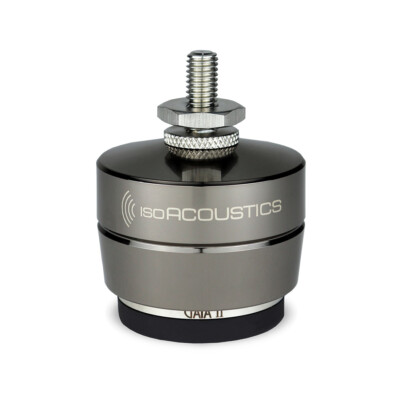
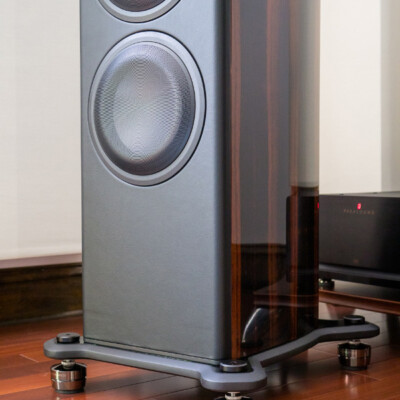
IsoAcoustics GAIA II Speaker Isolators (Set of 4)
- ✔️ Genuine IsoAcoustics, brand new, from an authorized Canadian dealer
- ✔️ A set of 4 isolators for one floor-standing speaker or subwoofer up to 120 lb (54 kg)
- ✔️ Screws in place of your spikes: M6-1.0, M8-1.25 and 1/4″-20 adaptors included
- ✔️ Machined stainless steel, dark chrome, 2 × 1.7 in (51 × 43 mm) per isolator
- ✔️ Pick up in Kanata by appointment, or shipped across Canada and internationally
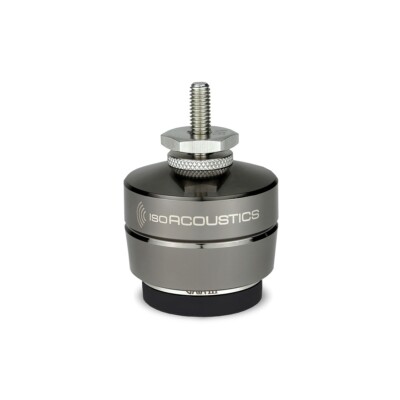
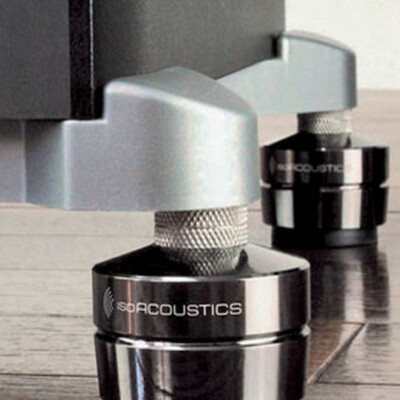
IsoAcoustics GAIA III Speaker Isolators (Set of 4)
- ✔️ Genuine IsoAcoustics, brand new, from an authorized Canadian dealer
- ✔️ A set of 4 isolators for one floor-standing speaker or subwoofer up to 70 lb (32 kg)
- ✔️ Screws in place of your spikes: M6-1.0, M8-1.25 and 1/4″-20 adaptors included
- ✔️ Stainless steel, 1.7 × 1.5 in (43 × 39 mm) per isolator
- ✔️ Pick up in Kanata by appointment, or shipped across Canada and internationally
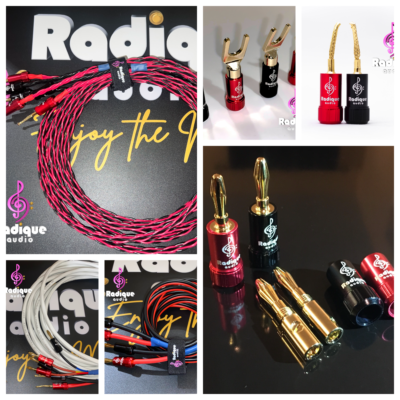
Custom Speaker Cable Builder
Your specs, your cable: choose the cable, the length and each connector, with live pricing.
- House CCA, House OFC, House Quad, Kimber 4PR or Kimber 4TC
- Banana, spade, pin, small spade or bare wire, chosen for each end
- Bi-wire on Kimber 4PR, Kimber 4TC and House Quad
- Hand-assembled, heat-shrink reinforced and colour-coordinated
- 1-year warranty
Related Products
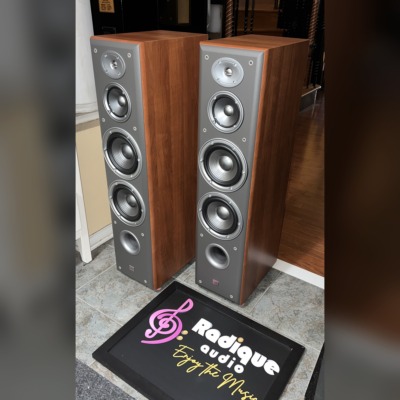
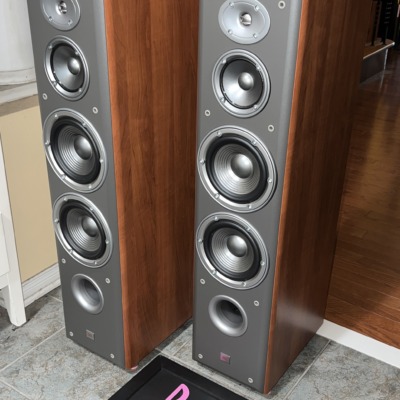
JBL Northridge E80 3-Way Towers – Cherry, Bi-Wirable, Pair
A four-driver JBL tower in the Cherry finish, with a genuine bi-amp panel.
✔️ Condition: Very Good — cabinets present well, working properly
✔️ Covered by Radique Warranty
✔️ Includes Perpetual Trade-Back Program eligibility
✔️ Expertly packed for safe shipping
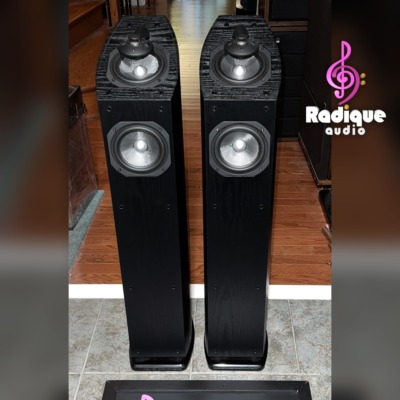
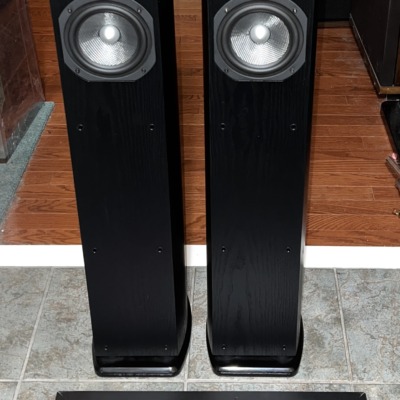
Mirage OMNI 350 Omnipolar Towers – Designed in Canada, Black Ash
A pair of slim Mirage towers built around the company's Omnipolar design, in very good condition, that fill a room with sound instead of aiming it at one chair.
✔️ Very Good condition — black ash cabinets, drivers and grilles present cleanly
✔️ Designed and engineered in Canada around Mirage's room-filling Omnipolar sound
✔️ Covered by Radique Warranty
✔️ Includes Perpetual Trade-Back Program eligibility
✔️ Expertly packed for safe shipping
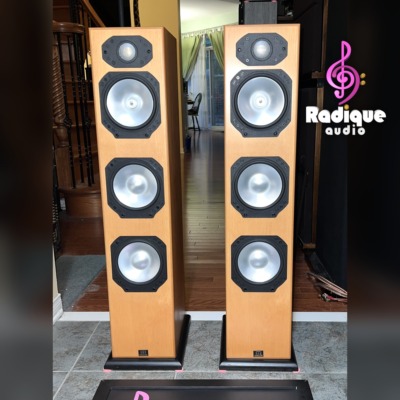
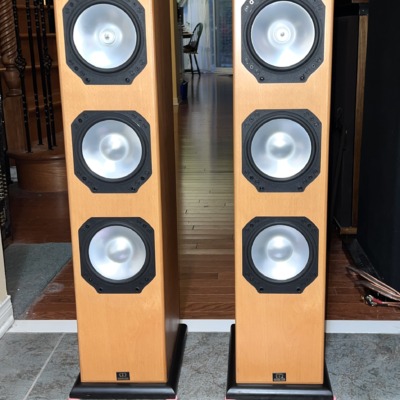
Monitor Audio Silver S8 Towers – Made in England, Warm Beech
A pair of three-way Monitor Audio towers from the Silver S range, in very good condition, with a metal driver in every position and a warm beech veneer that suits almost any room.
✔️ Very good condition — free of significant marks, in Warm Beech real wood veneer
✔️ Made in England, with Monitor Audio's C-CAM metal drivers throughout
✔️ Bi-wire and bi-amp ready — two pairs of 5-way binding posts per speaker
✔️ Covered by Radique Warranty
✔️ Includes Perpetual Trade-Back Program eligibility
✔️ Expertly packed for safe shipping
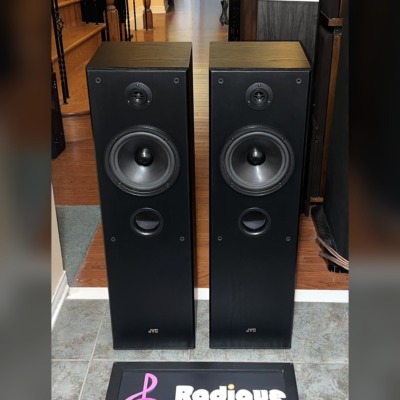
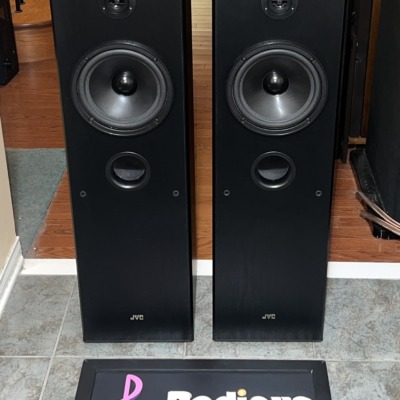
JVC Theatre Series SP-5500 Tower Speakers, Pair – 8-inch Woofers
A pair of JVC Theatre Series SP-5500 two-way tower speakers in black woodgrain, with front-ported bass-reflex cabinets, tested on our bench and in very good condition.
✔️ Very good condition — free of significant marks, grilles included
✔️ 8-inch woofers in front-ported Theatre Series towers
✔️ Built-in circuit breaker protects the tweeters
✔️ Covered by Radique Warranty
✔️ Includes Perpetual Trade-Back Program eligibility
✔️ Expertly packed for safe shipping
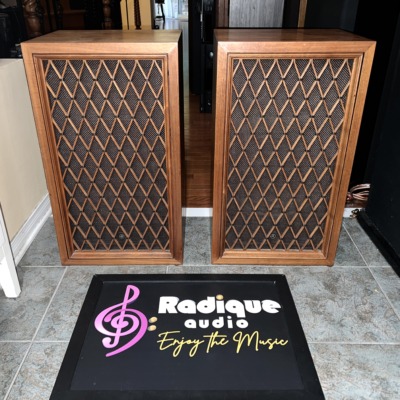
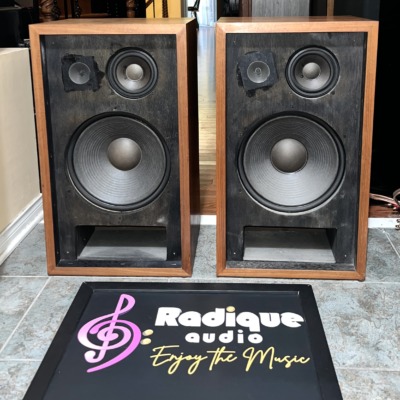
Vintage Pioneer CS-77 12″ 3-Way Speakers, Pair – Made in Japan
A pair of late-1960s Pioneer CS-77 three-way speakers, made in Japan, in walnut veneer cabinets with their wooden diamond-lattice grilles. Their High Level controls have been freshly serviced, they have been tested on our bench, and they are in good condition.
✔️ Good condition — walnut veneer, wooden lattice grilles included
✔️ High Level controls freshly serviced, tested on our bench
✔️ 12-inch woofer, three-way design — made in Japan, late 1960s
✔️ Covered by Radique Warranty
✔️ Includes Perpetual Trade-Back Program eligibility
✔️ Expertly packed for safe shipping
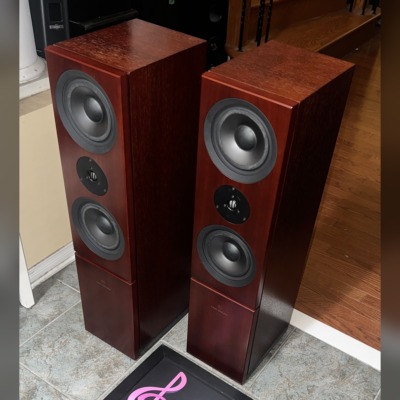
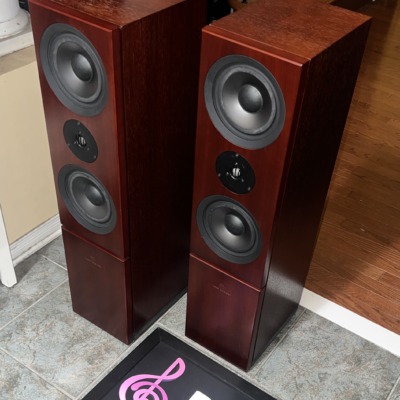
Linn Keilidh Floorstanding Speakers, Pair – Made in Scotland
A pair of Linn Keilidh floorstanding speakers, built in Glasgow, Scotland, in Linn's deep red Rosenut veneer, set up for bi-wiring.
✔️ Tested on our bench
✔️ Very good condition
✔️ Bi-wire ready: build your cable with our Cable Builder
✔️ Covered by Radique Warranty
✔️ Includes Perpetual Trade-Back Program eligibility
✔️ Expertly packed for safe shipping
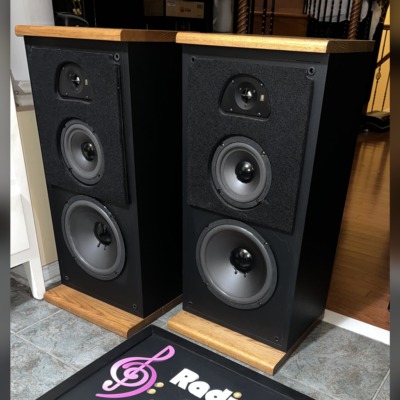
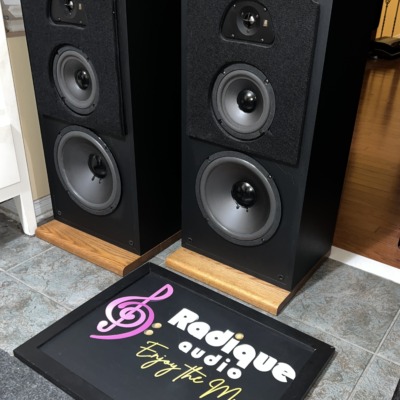
Acoustic Research TSW 510 Vintage Towers, Pair – Refoamed, Oak
A pair of Acoustic Research TSW 510 three-way floorstanding speakers from the late 1980s, with solid oak tops and plinths, freshly refoamed.
✔️ Freshly refoamed woofers and midranges
✔️ Very good condition, grilles included
✔️ 3-way acoustic suspension, 10" woofer, titanium tweeter
✔️ Covered by Radique Warranty
✔️ Includes Perpetual Trade-Back Program eligibility
✔️ Curbside delivery, local collection or freight within Canada
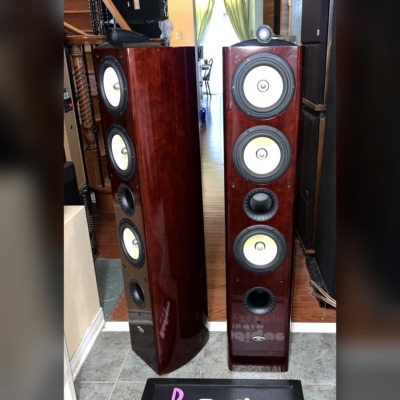
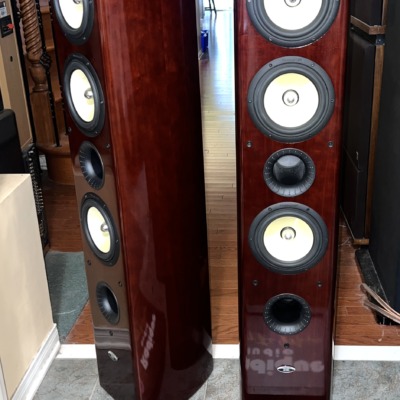
Monster THX Select Tower Speaker 200, Pair – Deep Cherry
A pair of Monster THX Select Tower Speaker 200 floorstanders in high-gloss deep cherry: three 7-inch Kevlar woofers and an open-air silk-dome tweeter in each curved cabinet. Tested on our bench before listing.
✔️ THX Select certified, from Monster's matched home theatre family
✔️ Three 7" Kevlar woofers per tower, open-air tweeter
✔️ 92 dB, 4 ohms: plays loud on modest power
✔️ Bi-wire binding posts
✔️ Very good condition
✔️ Covered by Radique Warranty
✔️ Includes Perpetual Trade-Back Program eligibility
✔️ Curbside delivery, local collection or freight within Canada
