
Vintage Pioneer CS-77 12″ 3-Way Speakers, Pair – Made in Japan
$595.00
Consignment piece. We sell it on behalf of its owner, and it's covered exactly like everything else we sell: inspected and serviced as required, and backed by our Bumper-to-Bumper Warranty and Perpetual Trade-Back Program. The one difference: it isn't eligible for Cue It Up layaway.
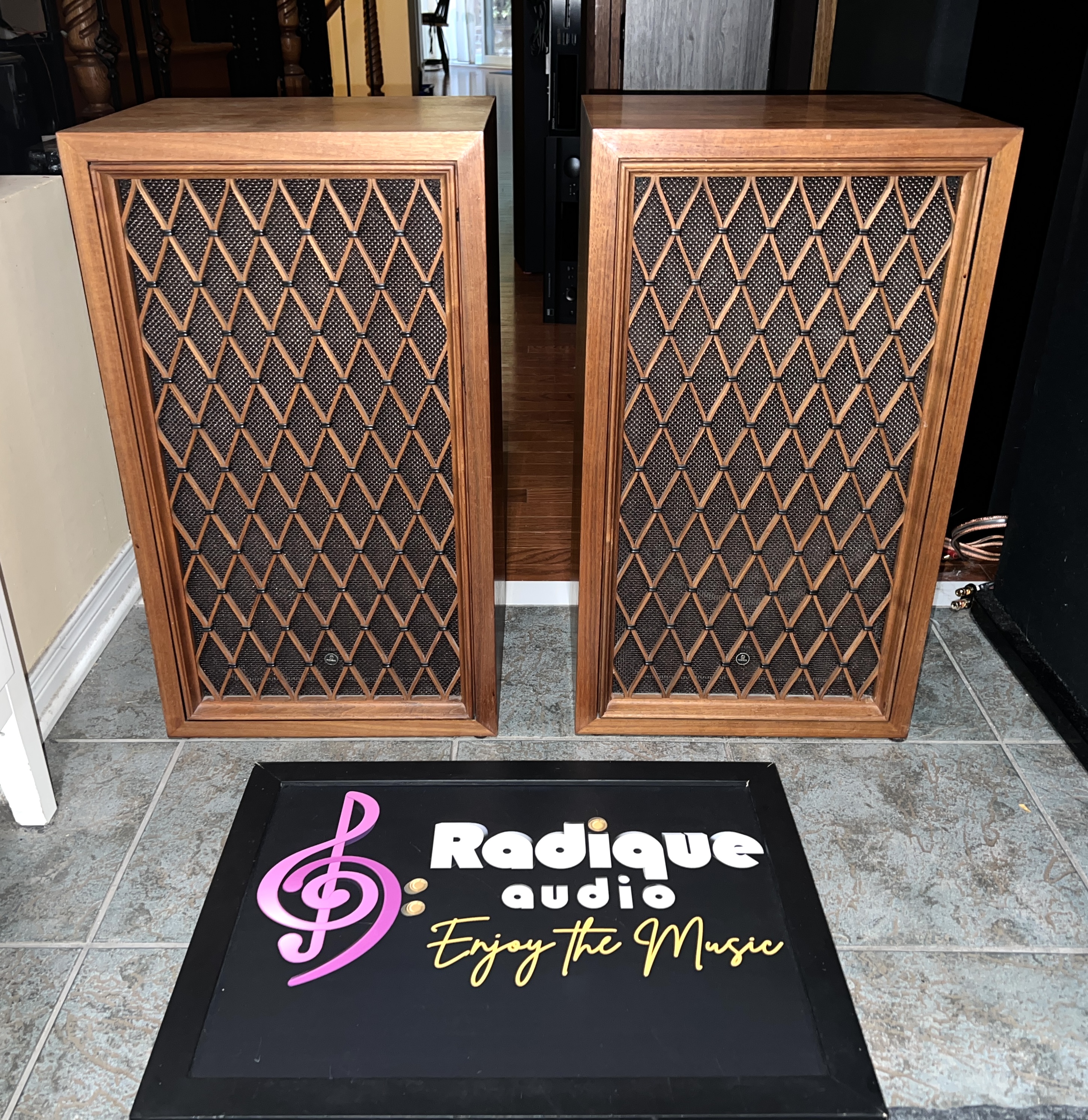
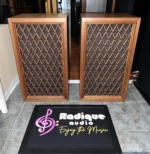
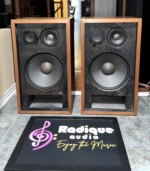
A pair of late-1960s Pioneer CS-77 three-way speakers, made in Japan, in walnut veneer cabinets with their wooden diamond-lattice grilles. Their High Level controls have been freshly serviced, they have been tested on our bench, and they are in good condition.
✔️ Good condition — walnut veneer, wooden lattice grilles included
✔️ High Level controls freshly serviced, tested on our bench
✔️ 12-inch woofer, three-way design — made in Japan, late 1960s
✔️ Covered by Radique Warranty
✔️ Includes Perpetual Trade-Back Program eligibility
✔️ Expertly packed for safe shipping
1 in stock
A pair of late-1960s Pioneer CS-77 three-way speakers, made in Japan, in walnut veneer cabinets with their wooden diamond-lattice grilles. Their High Level controls have been freshly serviced, they have been tested on our bench, and they are in good condition.
What it is
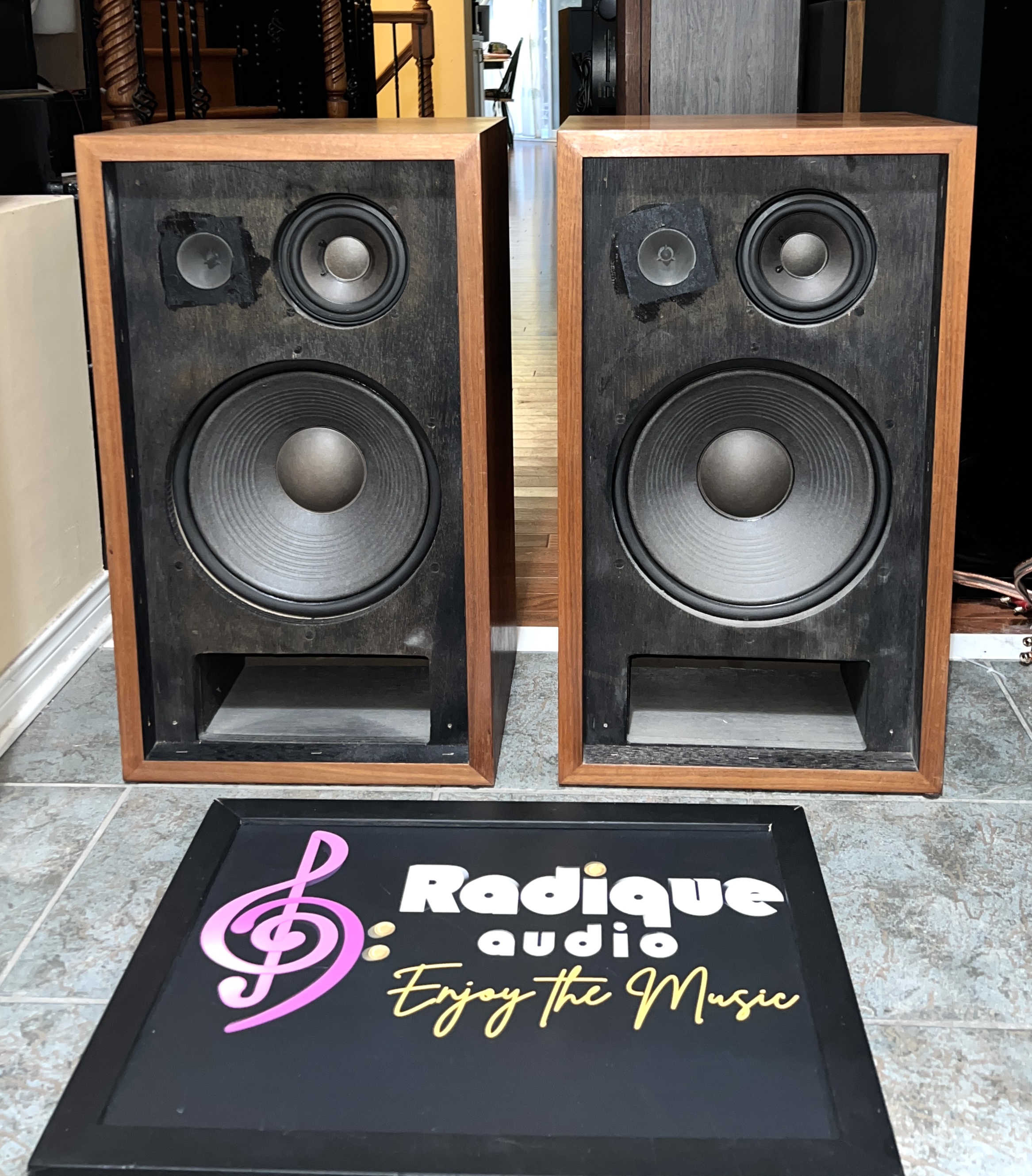
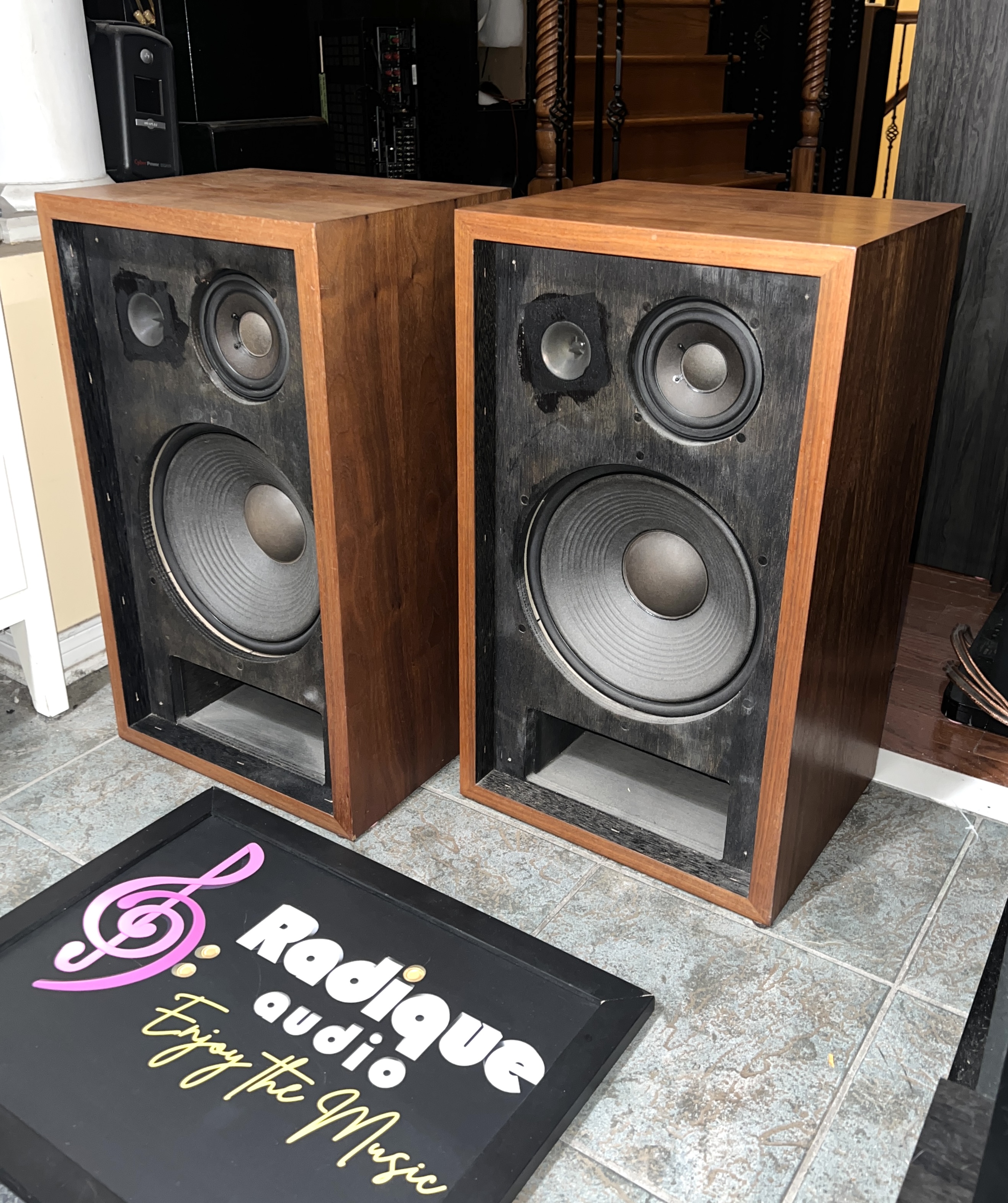
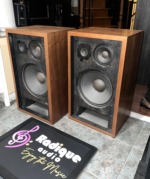
Pioneer started out as a loudspeaker maker in 1930s Tokyo, and by the late sixties its CS series was building big walnut cabinets like these. The CS-77 is a proper large-cabinet design: a 12-inch woofer does the heavy lifting, a 5-inch cone midrange carries voices and instruments, and a 3-inch cone tweeter handles the top end. A wide slot port at the base of the baffle lets the 12-inch woofer breathe, for the kind of relaxed, room-filling bass that only a big cabinet delivers.
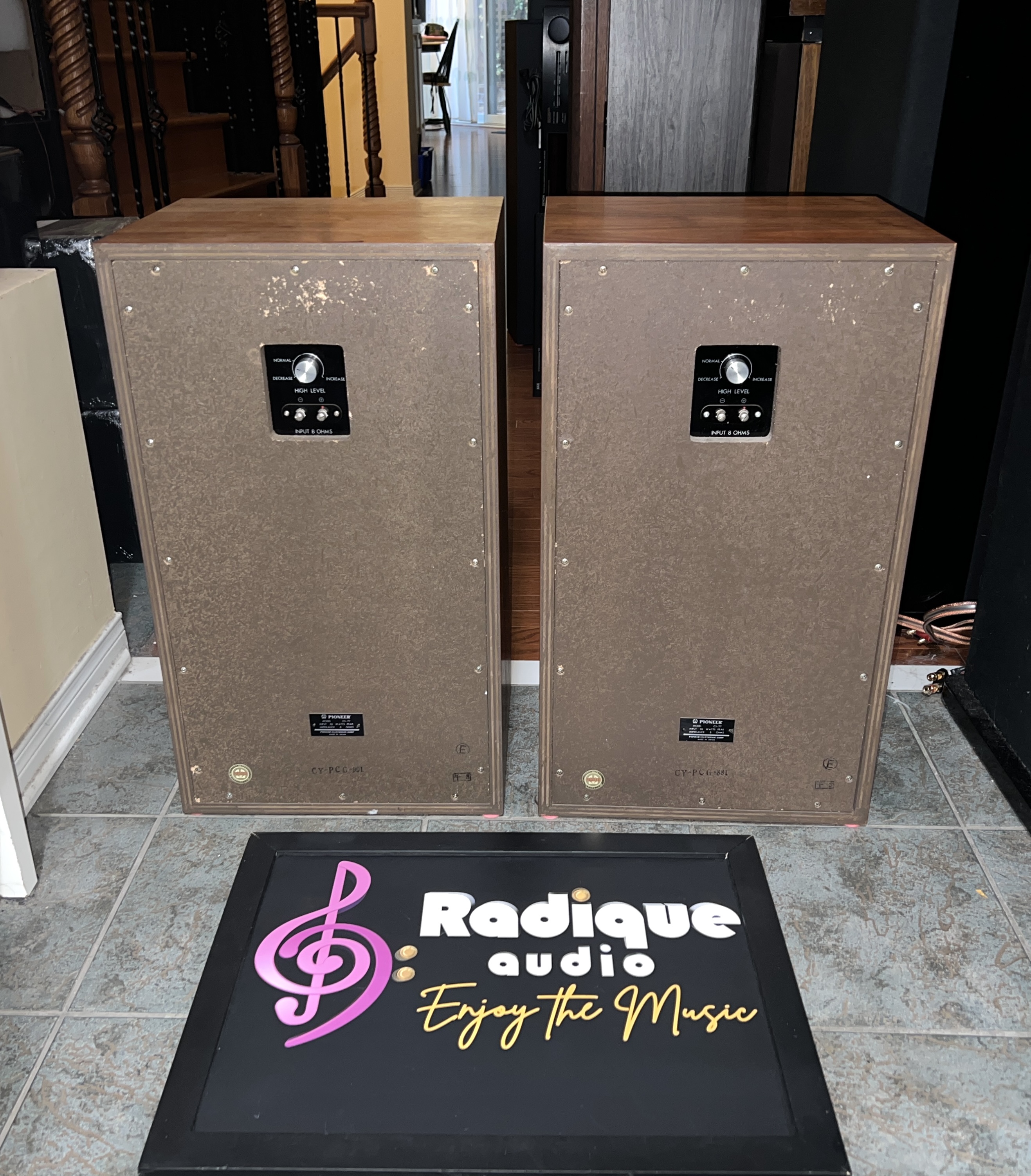
The diamond-lattice wooden grilles are the look of the era, and they lift off to show the black baffle and drivers if you prefer them bare. On the back of each speaker, a High Level control sets the treble balance from Decrease through Normal to Increase. Turn it down in a bright, hard-surfaced room, or up in a soft, furnished one, and you can match the top end to your space and your taste. They make a natural partner for a vintage receiver of the same era.
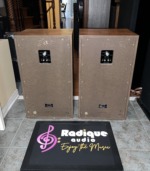
Around the back, each speaker has a pair of slotted screw terminals that take bare wire or spade connectors, and our Custom Speaker Cable Builder can make you a pair to length with spade connectors, ready to connect.
The service it has had
Condition
Good, with light wear from use. The walnut cabinets present well. One thing to know: the two cabinets are slightly different shades, most likely from one of them sitting in the sun over the years. The fibreboard backs show a few light paint flecks. The wooden lattice grilles are included.
Available for pickup in Kanata, or shipped across Canada and internationally — we have sent equipment to fifteen countries in the past year, each piece packed in-house in 275 lb test double-wall boxes. Live shipping rates for your address are calculated at checkout. Backed by Radique Audio’s Bumper-to-Bumper Warranty and our Perpetual Trade-Back Program. Available for audition by appointment in Kanata.
Pioneer CS-77 Specifications
- High Level controls on both speakers freshly serviced
- Tested on our bench before listing
- Type: three-way, three-driver bass-reflex speakers with a front slot port, sold as a pair
- Woofer: 12″ cone
- Midrange: 5″ cone
- Tweeter: 3″ cone
- High Level control on the back of each speaker: Decrease, Normal, Increase
- Input: 50 watts peak (rating plate)
- Impedance: 8 ohms
- Terminals: slotted screw terminals, one pair per speaker
- Grilles: removable wooden diamond-lattice grilles
- Finish: walnut veneer
- Made in Japan, late 1960s
- Dimensions: (Width x Height x Depth) 14.6 x 25.2 x 12.1 inches (371 x 641 x 308 mm), each
- Weight: approx. 38 lbs (17.2 kg) each
- Late-sixties Pioneer walnut and a 12-inch woofer: classic big-box sound for your vintage system.
🔌 Speaker Cable, Built on Our Own Bench
We hand-build speaker cable here in any length you need — pick the gauge and the terminations on our Custom Speaker Cable Builder. We also make our own gold-plated banana plugs, spades and pin connectors if you would rather terminate cable you already have. 👉
✅ Buy With Confidence — The Radique Promise
Backed by Radique Audio’s Bumper-to-Bumper Warranty and our Perpetual Trade-Back Program. When you’re ready to move on, we’ll take it back. That’s the Radique difference.
📦 Watch how we protect your gear — our unboxing video.
📺 Curious about our business? Check out our YouTube channel for behind-the-scenes videos and more!
📞 Questions? Use the Ask a Question button above, or call us at 613-416-9995.
| Weight | 78 lbs |
|---|---|
| Dimensions | 30.2 × 18.6 × 29.2 in |
| Impedance | 8 Ω |
| Power Handling | Up to 50 W |
| Woofer Size | 12″ |
Pioneer began in Tokyo in January 1938, when Nozomu Matsumoto set up shop around the A-8 speaker he had built the year before. By the late 1970s its SX receivers were at the heart of the hi-fi power race. We carry Pioneer stereo receivers and AV receivers, CD players, cassette decks, tuners and equalizers. We've had more than 240 Pioneer listings so far, covering 140 different models. Every used Pioneer here is inspected, tested and serviced as required, then photographed in-house and covered by our Bumper-to-Bumper Warranty and Perpetual Trade-Back Program. Don't see the model you want? Tell us on First Dibs and we'll email you when one arrives.
Pioneer is one of our two top-selling brands of vintage amps and receivers, along with Marantz. Our five best-selling Pioneer models so far: the SX-650, SX-750, SX-580, SX-780 and SX-680, all vintage stereo receivers from the 1976 and 1978 SX families. We also offer our custom cherry cabinets for these vintage Pioneers, hand-made from all-natural Ottawa Valley cherry, and we've upgraded dozens of Pioneers with them so far.
The Pioneer story, 1938 to today
Nozomu Matsumoto developed the A-8 speaker in 1937, and in January 1938 he set up Fukuin Shokai Denki Seisakusho in Tokyo. "Pioneer" was first the name of that speaker. Some histories give 1936 in Osaka as the start, but Pioneer dates itself to January 1938 in Tokyo. The company was incorporated in 1947 and renamed Pioneer Electronic Corporation in 1961.
Stereo and the US. In 1962 Pioneer introduced the PSC-5A, which it calls the first stereo with separate speaker cabinets, and its first PL turntables. Pioneer Electronics U.S.A. was founded in New York in 1966.
The power race. After a 1974 US Federal Trade Commission rule tightened how amplifier power was rated, receiver makers competed on watts. Pioneer's SX-1250 of 1976 was rated at 160 watts per channel, and the SX-1980 of 1978 to 1980 at 270.
CD and Elite. The P-D1 of 1982 was Pioneer's first CD player, and Elite-branded components were on sale by 1985.
Today. Pioneer sold its home audio business to Onkyo in 2015, keeping its car and DJ businesses, and Pioneer-branded home theatre gear was later made under licence. In December 2025 CarUX, part of Taiwan's Innolux, completed its purchase of Pioneer Corporation, which now focuses on in-car products.
Which Pioneer is which?
Early-1970s SX receivers: models such as the SX-424 to SX-828, rated at about 15 to 50 watts per channel.
The 1976 "x50" SX receivers: from the SX-450 at 15 watts per channel up to the SX-1250 at 160. Our best-selling SX-650 and SX-750 come from this family.
The 1978 "x80" SX receivers: including the SX-580, SX-680 and SX-780 we sell most, up to the SX-1980 flagship with quartz-lock tuning, which weighs more than 35 kg.
Spec and Exclusive separates: higher-end amplifiers such as the Spec-1 preamplifier (1976 to 1980) and the Exclusive C3/M3 pair (1974).
Elite: Pioneer's upper line from the mid-1980s, for example the PD-9010X CD player.
PL turntables, CT cassette decks and CD players: PL turntables from 1962, such as the PL-12 and the linear-tracking PL-L1; CT decks such as the three-head CT-F1000; and CD players from the 1982 P-D1 to magazine-loading changers such as the PD-M6.
Buying used Pioneer: what to check
Controls and switches. Crackle when you turn a control or work a switch usually means dirt, and restorers clean every pot and switch.
Capacitors. Electrolytic capacitors in 1970s receivers are often past their best, and full restorations replace them.
Big SX models. Owners and restorers report heat stress on the power-supply board of large receivers such as the SX-1250. Ask what has been done.
Relay, lamps and bias. The protection relay is a common replacement, dial lamps burn out and are often converted to LED, and restorers set the bias and DC offset.
Cassette decks. Check the heads, fast-forward and rewind, Dolby and every button. Belts age even when the deck looks perfect.
Everything we list is inspected, tested and serviced as required here, and comes with our warranty.
You may also like…
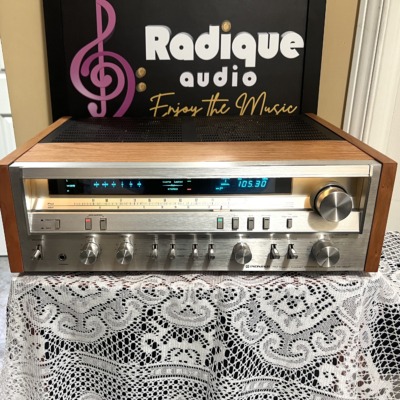
Pioneer SX-3800 Vintage Stereo Receiver – 60 WPC, Made in Japan
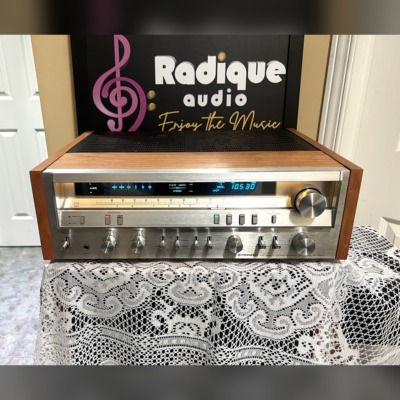
Pioneer SX-3800 stereo receiver: a 60 WPC non-switching amplifier, quartz-locked digital tuner and blue Fluoroscan meters, made in Japan and through our Level 1 service.
✔️ Choose your cabinet: original wood side panels, or custom Ottawa Valley cherry
✔️ Through our Level 1 service
✔️ 60 WPC, 0.005% THD, MM phono, pre-out / main-in, A/B speakers
✔️ ⚠️ The original wood side panels unit carries an FM disclosure — please read it below
✔️ Covered by Radique Warranty
✔️ Includes Perpetual Trade-Back Program eligibility
✔️ Expertly packed for safe shipping


IsoAcoustics GAIA II Speaker Isolators (Set of 4)
- ✔️ Genuine IsoAcoustics, brand new, from an authorized Canadian dealer
- ✔️ A set of 4 isolators for one floor-standing speaker or subwoofer up to 120 lb (54 kg)
- ✔️ Screws in place of your spikes: M6-1.0, M8-1.25 and 1/4″-20 adaptors included
- ✔️ Machined stainless steel, dark chrome, 2 × 1.7 in (51 × 43 mm) per isolator
- ✔️ Pick up in Kanata by appointment, or shipped across Canada and internationally
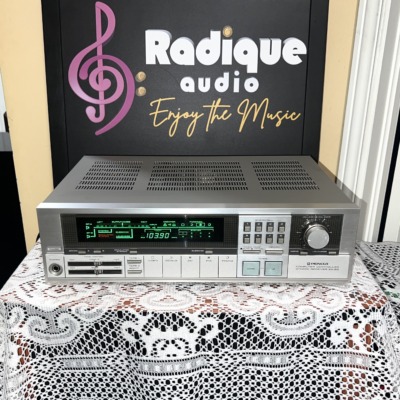
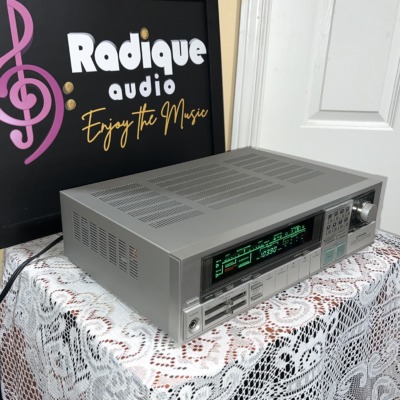
Pioneer SX-50 Vintage Stereo Receiver – 50 WPC, Silver Face
Fifty watts a channel into 8 ohms at 0.007% distortion, and — unusually for a receiver this size — pre-out and main-in jacks on the back, so it can feed a subwoofer, take an equalizer in the loop, or hand off to a larger power amp. Introduced in 1983 with switchable CD and TV audio inputs, presets held by three AA cells, and the silver face of the decade that was ending. Graded Very Good.


IsoAcoustics GAIA III Speaker Isolators (Set of 4)
- ✔️ Genuine IsoAcoustics, brand new, from an authorized Canadian dealer
- ✔️ A set of 4 isolators for one floor-standing speaker or subwoofer up to 70 lb (32 kg)
- ✔️ Screws in place of your spikes: M6-1.0, M8-1.25 and 1/4″-20 adaptors included
- ✔️ Stainless steel, 1.7 × 1.5 in (43 × 39 mm) per isolator
- ✔️ Pick up in Kanata by appointment, or shipped across Canada and internationally
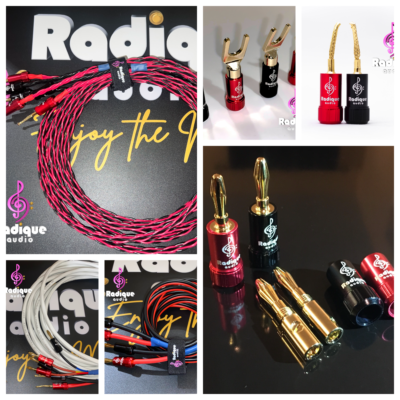
Custom Speaker Cable Builder
Your specs, your cable: choose the cable, the length and each connector, with live pricing.
- House CCA, House OFC, House Quad, Kimber 4PR or Kimber 4TC
- Banana, spade, pin, small spade or bare wire, chosen for each end
- Bi-wire on Kimber 4PR, Kimber 4TC and House Quad
- Hand-assembled, heat-shrink reinforced and colour-coordinated
- 1-year warranty
Related Products
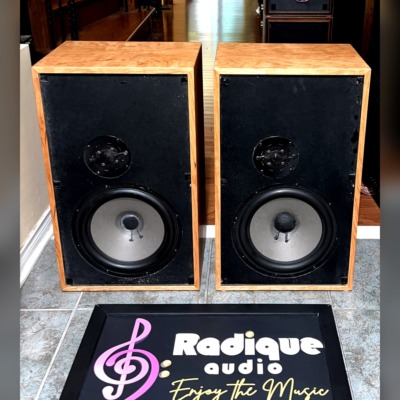
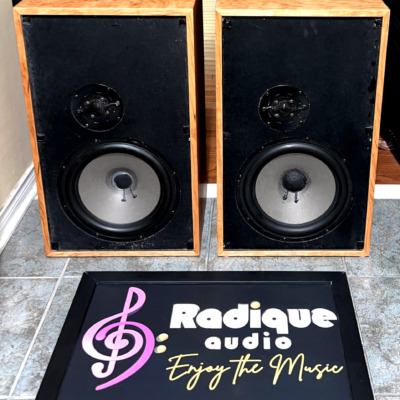
Dynaco A-35 Floor Standers — Ottawa Valley Cherry, Denmark
A pair of the famous Dynaco A-35 floor-standing loudspeakers, rebuilt in our shop with brand-new cabinets in genuine Ottawa Valley cherrywood veneer, expertly applied by hand, serviced, and fitted with upgraded five-way binding posts.
✔️ Condition: brand-new cabinets in Ottawa Valley cherry; grilles not included
✔️ Drivers through our service bench and performing as they should
✔️ Covered by Radique Warranty
✔️ Includes Perpetual Trade-Back Program eligibility
✔️ Expertly packed for safe shipping
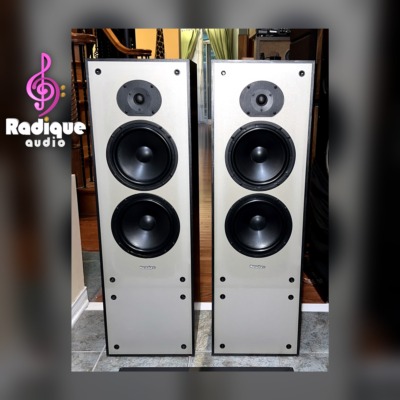
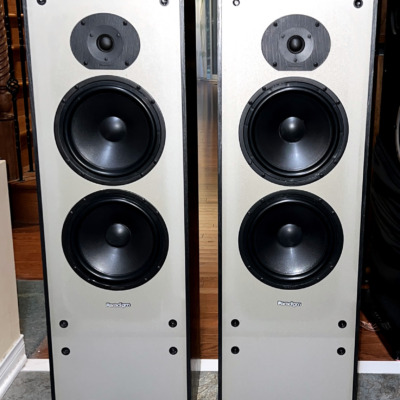
Paradigm 11se Mk II Towers, Pair — Dual 8″, Made in Canada
Built in Canada by Paradigm, and the largest speaker in the SE range — the one the rest of the series was working up to.
✔️ Condition: Good — cabinets touched up; repaired and working correctly
✔️ Covered by Radique Warranty
✔️ Includes Perpetual Trade-Back Program eligibility
✔️ Curbside delivery, local collection or freight within Canada
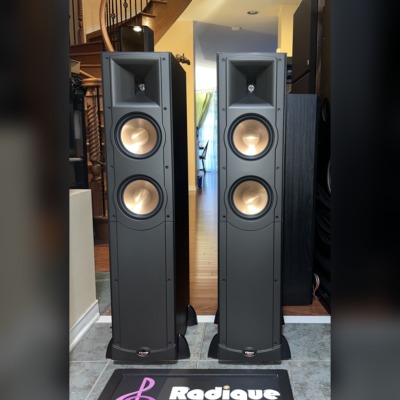
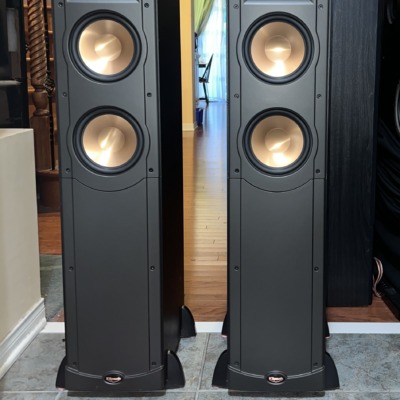
Klipsch RF-62 Reference IV Floorstanding Speakers, Pair — 97dB
The RF-62 is the tower that made Klipsch's Reference line the default answer for anyone who wanted a big, unforced sound without buying a big, expensive amplifier to get it.
✔️ Condition: Good — cabinets carry touched-up wear; drivers Very Good throughout
✔️ Covered by Radique Warranty
✔️ Includes Perpetual Trade-Back Program eligibility
✔️ Curbside delivery, local collection or freight within Canada
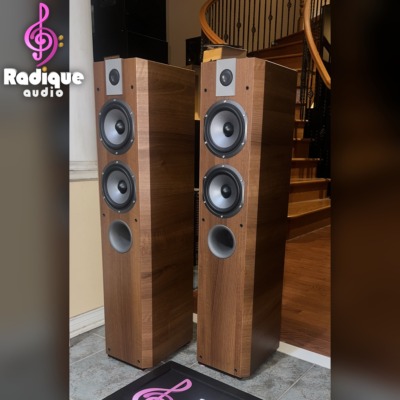
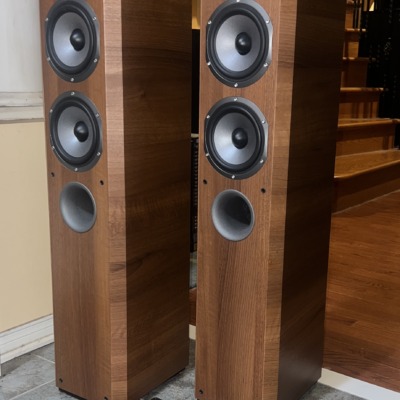
Focal Chorus 714V Floorstanders, Pair — Light Walnut, France
A pair of Focal Chorus 714V floorstanding loudspeakers in Light Walnut, made in France.
✔️ Condition: Very Good — thoroughly inspected and tested
✔️ Covered by Radique Warranty
✔️ Includes Perpetual Trade-Back Program eligibility
✔️ Expertly packed for safe shipping
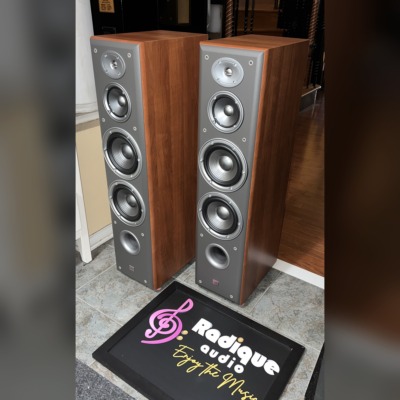
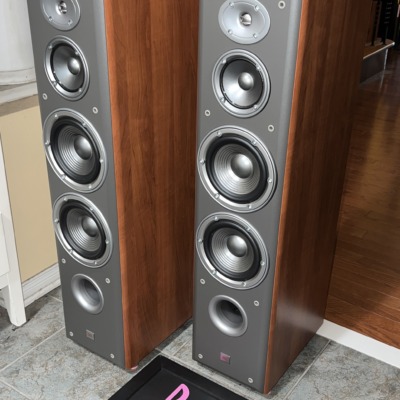
JBL Northridge E80 3-Way Towers – Cherry, Bi-Wirable, Pair
A four-driver JBL tower in the Cherry finish, with a genuine bi-amp panel.
✔️ Condition: Very Good — cabinets present well, working properly
✔️ Covered by Radique Warranty
✔️ Includes Perpetual Trade-Back Program eligibility
✔️ Expertly packed for safe shipping
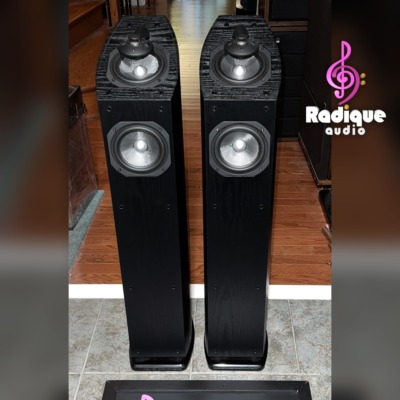
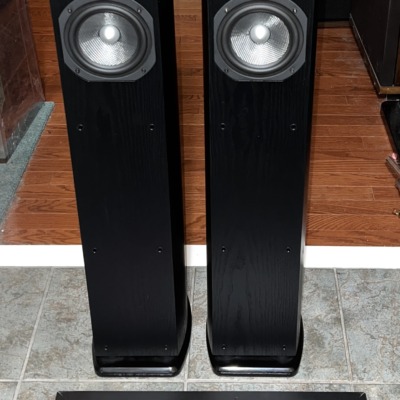
Mirage OMNI 350 Omnipolar Towers – Designed in Canada, Black Ash
A pair of slim Mirage towers built around the company's Omnipolar design, in very good condition, that fill a room with sound instead of aiming it at one chair.
✔️ Very Good condition — black ash cabinets, drivers and grilles present cleanly
✔️ Designed and engineered in Canada around Mirage's room-filling Omnipolar sound
✔️ Covered by Radique Warranty
✔️ Includes Perpetual Trade-Back Program eligibility
✔️ Expertly packed for safe shipping
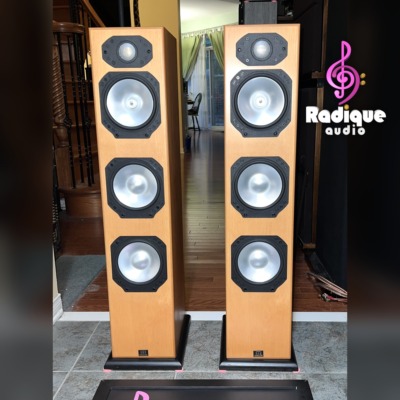
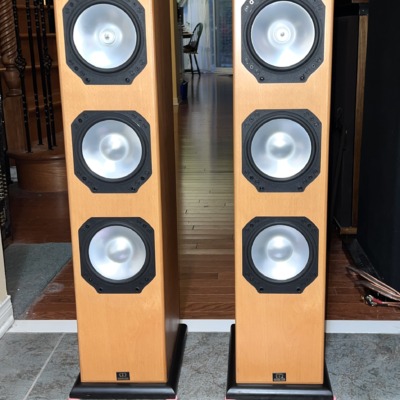
Monitor Audio Silver S8 Towers – Made in England, Warm Beech
A pair of three-way Monitor Audio towers from the Silver S range, in very good condition, with a metal driver in every position and a warm beech veneer that suits almost any room.
✔️ Very good condition — free of significant marks, in Warm Beech real wood veneer
✔️ Made in England, with Monitor Audio's C-CAM metal drivers throughout
✔️ Bi-wire and bi-amp ready — two pairs of 5-way binding posts per speaker
✔️ Covered by Radique Warranty
✔️ Includes Perpetual Trade-Back Program eligibility
✔️ Expertly packed for safe shipping
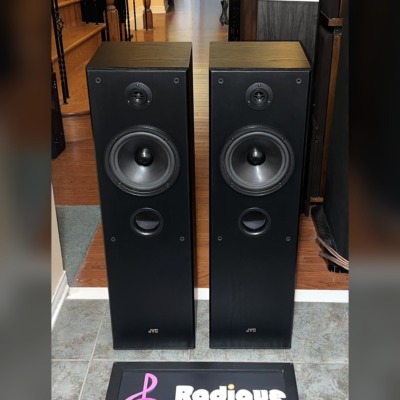
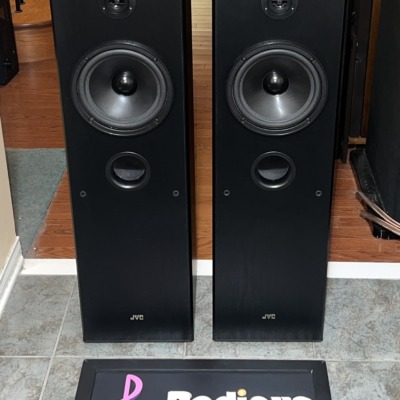
JVC Theatre Series SP-5500 Tower Speakers, Pair – 8-inch Woofers
A pair of JVC Theatre Series SP-5500 two-way tower speakers in black woodgrain, with front-ported bass-reflex cabinets, tested on our bench and in very good condition.
✔️ Very good condition — free of significant marks, grilles included
✔️ 8-inch woofers in front-ported Theatre Series towers
✔️ Built-in circuit breaker protects the tweeters
✔️ Covered by Radique Warranty
✔️ Includes Perpetual Trade-Back Program eligibility
✔️ Expertly packed for safe shipping
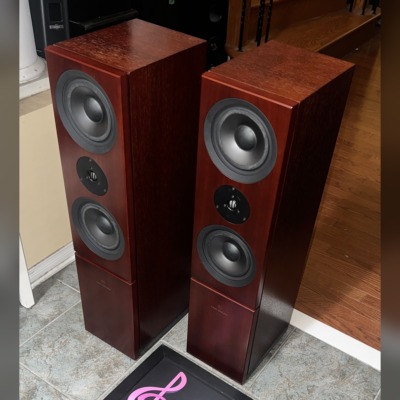
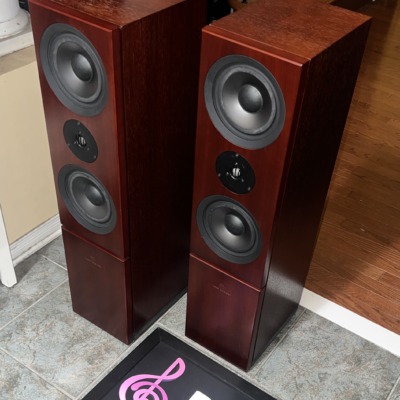
Linn Keilidh Floorstanding Speakers, Pair – Made in Scotland
A pair of Linn Keilidh floorstanding speakers, built in Glasgow, Scotland, in Linn's deep red Rosenut veneer, set up for bi-wiring.
✔️ Tested on our bench
✔️ Very good condition
✔️ Bi-wire ready: build your cable with our Cable Builder
✔️ Covered by Radique Warranty
✔️ Includes Perpetual Trade-Back Program eligibility
✔️ Expertly packed for safe shipping
