


Klipsch The Sixes Powered Speakers – Real Walnut, Like New
$499.00
Out of stock
Get first dibs on the next one
Klipsch The Sixes Powered Speakers – Real Walnut, Like New
A complete, high-performance stereo system in a beautifully styled, real-walnut-veneered pair — the Klipsch Heritage “The Sixes” powered monitors bring together classic Klipsch horn-loaded acoustics, a built-in 200-watt amplifier, and modern digital connectivity in one handsomely designed package.
Part of Klipsch’s acclaimed Heritage Wireless series, The Sixes are designed to replace an entire traditional stereo stack. With a built-in 200-watt custom-engineered amplifier delivering 100 watts per channel, an internal 24-bit/96 kHz DAC, Bluetooth wireless, and a genuinely useful complement of wired inputs, there is no need for a separate receiver, integrated amplifier, or DAC — plug in a turntable, TV, computer, or streamer and the speakers do the rest.
Each cabinet features a 1-inch titanium-loaded tweeter loaded in Klipsch’s signature Tractrix horn, paired with a 6.5-inch long-throw woofer in a ported enclosure. The result is the effortless dynamics, crisp detail, and horn-loaded clarity that have defined Klipsch for generations — now delivered from a pair of self-contained bookshelves that can dominate a dedicated two-channel system, serve as the heart of a vinyl setup, or deliver remarkably engaging sound from a television.
Connectivity is genuinely comprehensive. The rear panel offers a pair of RCA inputs with a phono/line switch and ground screw (a moving magnet phono preamplifier is built in for direct turntable connection), a 3.5mm mini-jack line input, a digital optical (Toslink) input, a USB digital input for direct connection to a PC or Mac, Bluetooth wireless streaming, and a single RCA subwoofer output for adding low-frequency reinforcement. The tactile spun-copper switches and knobs speak to the quality of the design throughout.
The cabinets are finished in real walnut wood veneer — notably warmer and more premium in presentation than the vinyl-wrapped finishes used on most lifestyle powered speakers — with matching magnetic grilles that complete the classic Heritage look. The included wireless remote control is present and fully functional, allowing full control of volume, source selection, and playback from the listening position.
This pair is in like-new cosmetic condition, presenting beautifully in every respect, and has been thoroughly inspected and tested to confirm full functionality.
Specifications:
Design: Powered bookshelf speakers with built-in amplifier and DAC
Amplifier power: 200 W total system (100 W per channel)
High-frequency driver: 1 in. (25.4 mm) titanium tweeter on Tractrix horn (each speaker)
Low-frequency driver: 6.5 in. (165 mm) long-throw woofer (each speaker)
Maximum acoustic output: 106 dB (1 m, stereo pair)
Enclosure type: Ported
DAC: 24-bit / 96 kHz
Inputs: Phono/Line (RCA pair with switch, MM phono preamp built in), 3.5 mm line, digital optical (Toslink), USB (Type B), Bluetooth
Outputs: RCA subwoofer output
Voltage: 110 / 240 VAC
Finish: Real walnut wood veneer, magnetic grilles
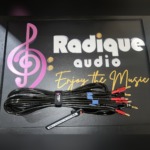
Included: Original wireless remote control, 4-conductor speaker cable (R to L), 3.5 mm aux cable, USB Type B to Type A cable, optical (Toslink) cable, power cord
Dimensions (per speaker, W x H x D): 8.625 x 16.75 x 11.0 inches (220 x 425 x 279 mm)
Weight: Right speaker (powered) 17.74 lbs (8.05 kg); Left speaker (passive) 16.00 lbs (7.26 kg)
A complete, elegant, real-wood-finished high-performance audio system in a single pair of speakers — ideal for a dedicated two-channel listening space, a premium desktop system, a vinyl setup, or as a drop-in replacement for a conventional bookshelf-and-receiver stack.
Backed by Radique Audio’s 90-day warranty and our perpetual trade-back policy, you can purchase with confidence.
| Weight | 37 lbs |
|---|---|
| Dimensions | 15 × 24 × 20.75 in |
Klipsch began in Hope, Arkansas, in 1946, when Paul W. Klipsch started building his corner-horn Klipschorn, and its Heritage speakers are still built by hand in Hope. We carry Klipsch towers, centre channels, bookshelf speakers and subwoofers. We've had more than 160 Klipsch listings so far. Every used Klipsch here is inspected, tested and serviced as required, then photographed in-house and covered by our Bumper-to-Bumper Warranty and Perpetual Trade-Back Program. Don't see the model you want? Tell us on First Dibs and we'll email you when one arrives.
The Klipsch story, 1946 to today
Paul W. Klipsch was posted to Hope, Arkansas, in 1941 as an Army officer. He patented his corner-horn design in the mid-1940s and founded Klipsch in Hope in 1946; Klipsch says its first speaker was built by hand there that year, with the horn made in a tin shed. He hired his first employee in 1948.
The Heritage line. The Klipschorn of 1946 was followed by the Heresy (1957), designed as a centre speaker to sit between a pair of Klipschorns, the Cornwall (1959), the La Scala (1963) and the Forte (1985).
A new generation. Fred Klipsch bought the company from Paul Klipsch in 1989, and headquarters later moved to Indianapolis. Paul Klipsch died in 2002 at 98. The Reference Series arrived in 1999.
A Canadian connection. In 2006 Klipsch bought Audio Products International of Toronto, with its Energy and Mirage brands. Audiovox, later VOXX, bought Klipsch in 2011, and Gentex bought VOXX in 2025.
Which Klipsch is which?
Heritage: the Klipschorn, Heresy, Cornwall, La Scala and Forte, built to order by hand in Hope. Drivers change between generations, so identify the version.
KG series (mid-1980s to early 1990s): lower-priced horn-tweeter floorstanders such as the KG 4 (1985 to 1992) and KG 5.5.
Reference (1999 onward): horn-tweeter towers, bookshelf speakers and centres, from the RB-5 and RF-7 to the later RF, RB and RC models.
Synergy (late 1990s and 2000s): such as the KSF 8.5 and the SF-1.
Subwoofers: powered models such as the RPW-10.
Buying used Klipsch: what to check
Horn diaphragms. The compression drivers in older Klipsch speakers age; owners report tired midrange diaphragms on Heritage models and raspy tweeters on some KG pairs. Listen to each horn on its own at a moderate level.
Reference tweeters. A crackling tweeter can be a loose connection, and owners say these tweeters can fail if played very loud.
Crossovers and passive radiators. Many Heritage and KG owners recap their crossovers, and KG passive radiators can have cracked surrounds.
Modifications. Aftermarket diaphragms and crossovers are common upgrades on Heritage and KG models. Ask what has been changed.
Where it was made. Heritage models are built in Hope. Check the label before calling any other Klipsch "made in USA".
Everything we list is inspected, tested and serviced as required here, and comes with our warranty.
You may also like…
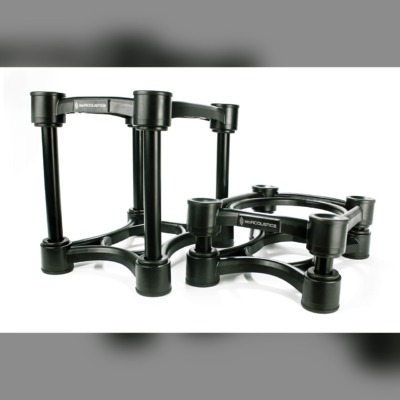

IsoAcoustics ISO-200 Isolation Stands (Pair)
- ✔️ Genuine IsoAcoustics, brand new, from an authorized Canadian dealer
- ✔️ A pair of isolation stands for large speakers and studio monitors
- ✔️ Rated to 75 lb (34 kg) short or 60 lb (27 kg) tall
- ✔️ Short 3.75 in (95 mm) or tall 8.5 in (215 mm), up to 6.5° of tilt
- ✔️ Pick up in Kanata by appointment, or shipped across Canada and internationally
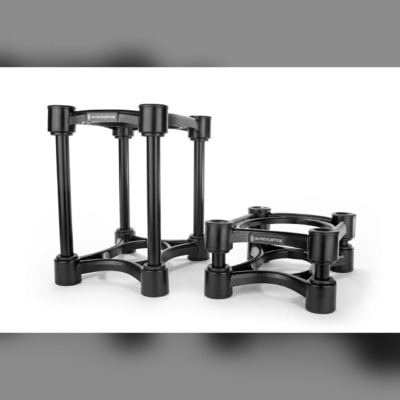

IsoAcoustics ISO-155 Isolation Stands (Pair)
- ✔️ Genuine IsoAcoustics, brand new, from an authorized Canadian dealer
- ✔️ A pair of isolation stands for medium speakers and studio monitors
- ✔️ Rated to 40 lb (18 kg) short or 35 lb (16 kg) tall
- ✔️ Short 3 in (76 mm) or tall 8.25 in (210 mm), up to 6.5° of tilt
- ✔️ Pick up in Kanata by appointment, or shipped across Canada and internationally


IsoAcoustics ISO-130 Isolation Stands (Pair)
- ✔️ Genuine IsoAcoustics, brand new, from an authorized Canadian dealer
- ✔️ A pair of isolation stands for small speakers and studio monitors, rated to 20 lb (9 kg)
- ✔️ Short 2.8 in (71 mm) or tall 8.25 in (210 mm), up to 6.5° of tilt
- ✔️ Top plate 5.1 × 6 in (130 × 152 mm)
- ✔️ Pick up in Kanata by appointment, or shipped across Canada and internationally
Related Products
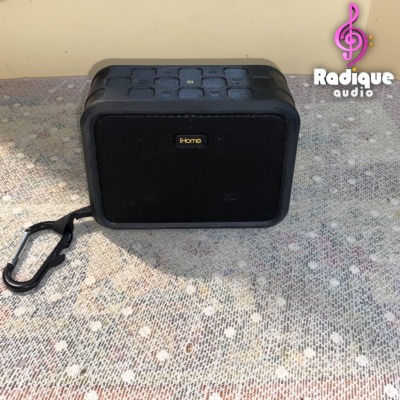
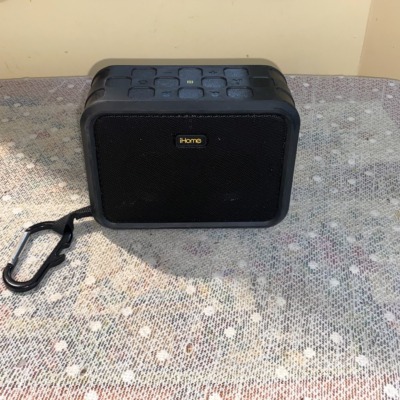
Award Winning iHome Compact Bluetooth Speaker iBN6 **Reduced**
Winner of a CES Innovations Design and Engineering award, and rated IPX7 waterproof. NFC pairs it with one touch, a speakerphone with echo cancelling handles calls, and the USB port charges your phone off its own battery. An ECO mode stretches playback to about 14 hours. Aux-in cable and DC adapter included; tested and working well.
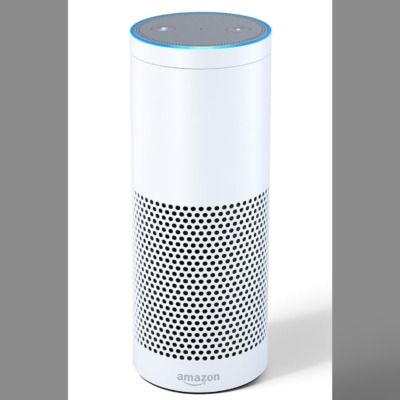

Great Sounding Amazon Smart Speaker Echo Plus
The Echo with the Zigbee hub built in, which is the version worth having — it pairs compatible bulbs, plugs and thermostats directly, with no separate bridge sitting on a shelf. Dolby sound, far-field voice recognition, multi-room music, Alexa. It listed new at $199.99 plus HST. Very good condition and working beautifully.
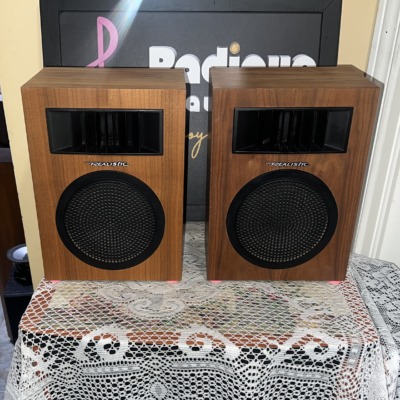
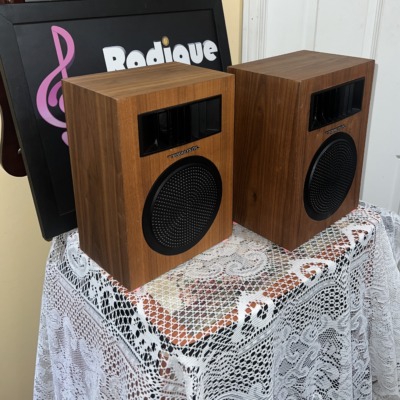
Realistic Minimus-5 Speakers, Pair – Vintage, Real Wood Veneer
A vintage pair of Realistic Minimus-5 two-way bookshelf speakers from Radio Shack, in a warm brown real wood veneer, with horn tweeters, fully tested on our bench and in very good condition.
✔️ Very good condition — free of significant marks
✔️ Real wood veneer, with rigid grilles over the woofers
✔️ Two ways in: small binding posts and an RCA-type speaker-level jack
✔️ Covered by Radique Warranty
✔️ Includes Perpetual Trade-Back Program eligibility
✔️ Expertly packed for safe shipping
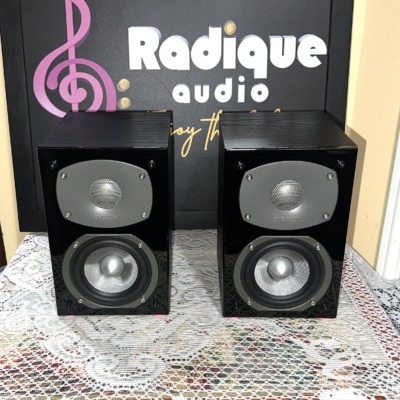
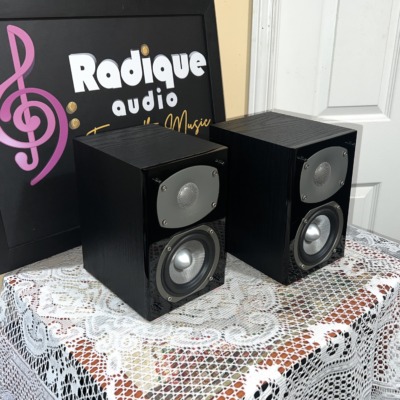
Energy C-50 Bookshelf Speakers, Pair – Ultra-Compact, Black Ash
A pair of ultra-compact Energy C-50 bookshelf speakers, designed and engineered in Canada, in black ash with gloss black front baffles and their black cloth grilles. They have been tested on our bench and are in very good condition.
✔️ Very good condition — black ash with gloss baffles, grilles included
✔️ 1-inch aluminum tweeter and 4½-inch woofer, video-shielded
✔️ Five-way binding posts — designed and engineered in Canada
✔️ Covered by Radique Warranty
✔️ Includes Perpetual Trade-Back Program eligibility
✔️ Expertly packed for safe shipping
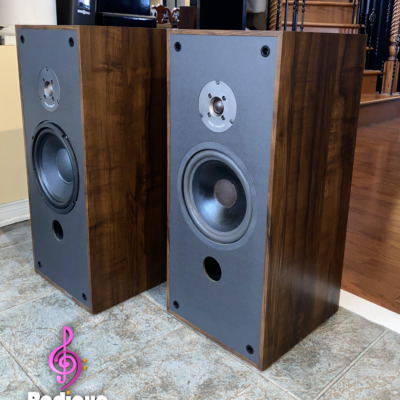
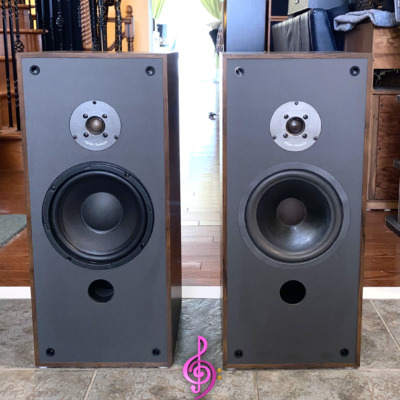
Paisley Reference Two Bookshelf Speakers, Pair – Made in Canada
A pair of Paisley Research Reference Two bookshelf speakers, made in Canada, in walnut-finish cabinets with black front baffles and their black cloth grilles. They have been tested on our bench, they play nicely, and they are in very good condition. One woofer is a replacement fitted by a previous owner, not by us; the details are under Condition.
✔️ Very good condition — walnut-finish cabinets, grilles included
✔️ Tested and playing nicely; one replacement woofer, disclosed below
✔️ 8-inch woofers, front-ported — made in Canada
✔️ Covered by Radique Warranty
✔️ Includes Perpetual Trade-Back Program eligibility
✔️ Expertly packed for safe shipping
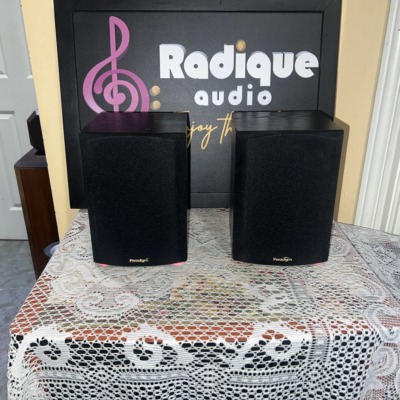
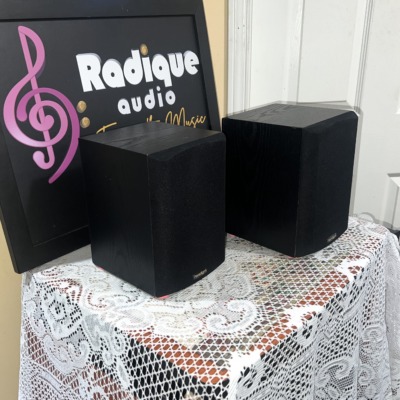
Paradigm Micro v.3 Bookshelf Speakers, Pair – Black Ash
A pair of Paradigm Micro v.3 speakers, the smallest of Paradigm's Canadian-designed Performance Series, with rubber woofer surrounds that will never need refoaming.
✔️ Tested on our bench
✔️ Fair condition, priced to match
✔️ Covered by Radique Warranty
✔️ Includes Perpetual Trade-Back Program eligibility
✔️ Expertly packed for safe shipping
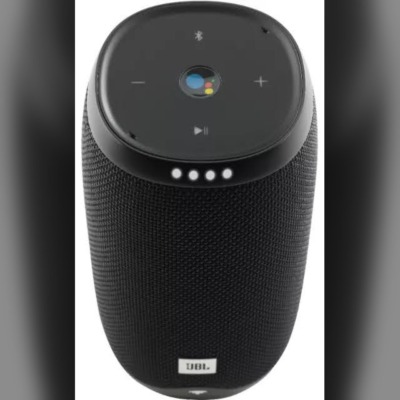

Less Than 1/2 Price! JBL Portable Bluetooth/WiFi Speaker Link 10
Wi-Fi and Bluetooth both, with Chromecast built in and Google Assistant on board, so it can be cast to or spoken to. A 4000 mAh battery gives about five hours away from a plug, and the waterproof fabric means it does not have to stay indoors. Retails at $219 plus tax. Excellent cosmetic condition, fully tested.
