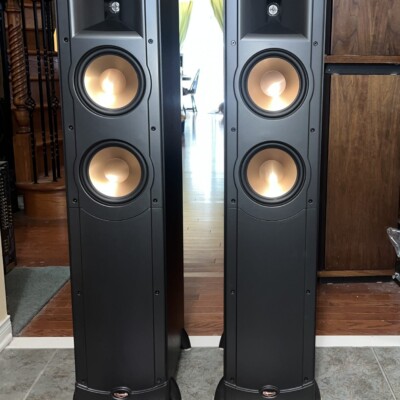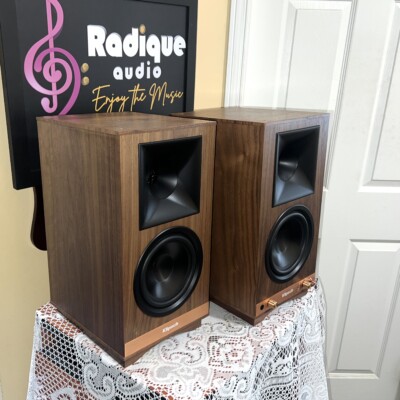


Klipsch began in Hope, Arkansas, in 1946, when Paul W. Klipsch started building his corner-horn Klipschorn, and its Heritage speakers are still built by hand in Hope. We carry Klipsch towers, centre channels, bookshelf speakers and subwoofers. We’ve had more than 160 Klipsch listings so far. Every used Klipsch here is inspected, tested and serviced as required, then photographed in-house and covered by our Bumper-to-Bumper Warranty and Perpetual Trade-Back Program. Don’t see the model you want? Tell us on First Dibs and we’ll email you when one arrives.
The Klipsch story, 1946 to today
Paul W. Klipsch was posted to Hope, Arkansas, in 1941 as an Army officer. He patented his corner-horn design in the mid-1940s and founded Klipsch in Hope in 1946; Klipsch says its first speaker was built by hand there that year, with the horn made in a tin shed. He hired his first employee in 1948.
The Heritage line. The Klipschorn of 1946 was followed by the Heresy (1957), designed as a centre speaker to sit between a pair of Klipschorns, the Cornwall (1959), the La Scala (1963) and the Forte (1985).
A new generation. Fred Klipsch bought the company from Paul Klipsch in 1989, and headquarters later moved to Indianapolis. Paul Klipsch died in 2002 at 98. The Reference Series arrived in 1999.
A Canadian connection. In 2006 Klipsch bought Audio Products International of Toronto, with its Energy and Mirage brands. Audiovox, later VOXX, bought Klipsch in 2011, and Gentex bought VOXX in 2025.
Which Klipsch is which?
Heritage: the Klipschorn, Heresy, Cornwall, La Scala and Forte, built to order by hand in Hope. Drivers change between generations, so identify the version.
KG series (mid-1980s to early 1990s): lower-priced horn-tweeter floorstanders such as the KG 4 (1985 to 1992) and KG 5.5.
Reference (1999 onward): horn-tweeter towers, bookshelf speakers and centres, from the RB-5 and RF-7 to the later RF, RB and RC models.
Synergy (late 1990s and 2000s): such as the KSF 8.5 and the SF-1.
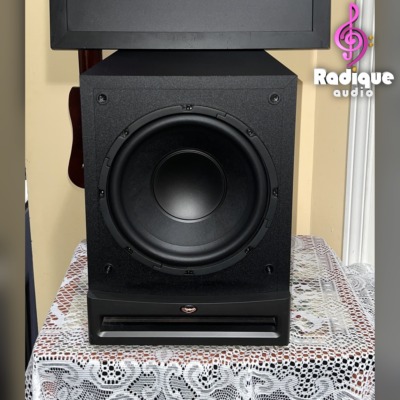
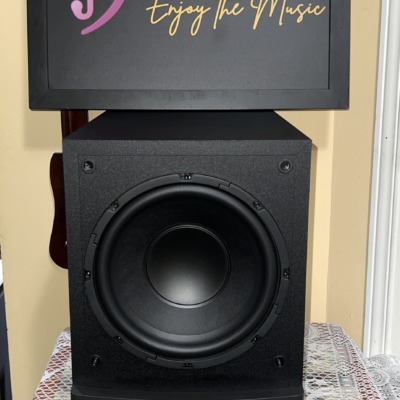
Subwoofers: powered models such as the RPW-10.
Buying used Klipsch: what to check
Horn diaphragms. The compression drivers in older Klipsch speakers age; owners report tired midrange diaphragms on Heritage models and raspy tweeters on some KG pairs. Listen to each horn on its own at a moderate level.
Reference tweeters. A crackling tweeter can be a loose connection, and owners say these tweeters can fail if played very loud.
Crossovers and passive radiators. Many Heritage and KG owners recap their crossovers, and KG passive radiators can have cracked surrounds.
Modifications. Aftermarket diaphragms and crossovers are common upgrades on Heritage and KG models. Ask what has been changed.
Where it was made. Heritage models are built in Hope. Check the label before calling any other Klipsch “made in USA”.
Everything we list is inspected, tested and serviced as required here, and comes with our warranty.
Showing 1–12 of 27 resultsSorted by price: high to low
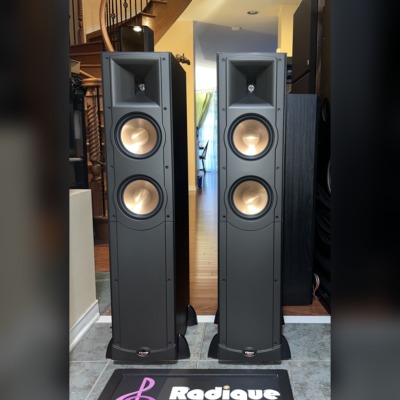
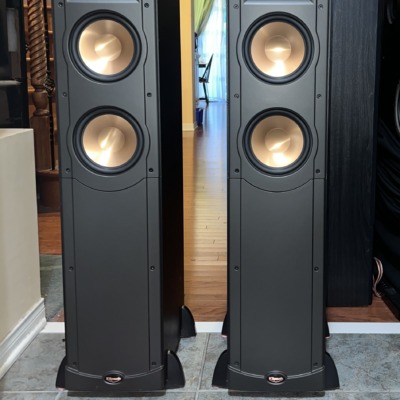
Klipsch RF-62 Reference IV Floorstanding Speakers, Pair — 97dB
The RF-62 is the tower that made Klipsch's Reference line the default answer for anyone who wanted a big, unforced sound without buying a big, expensive amplifier to get it.
✔️ Condition: Good — cabinets carry touched-up wear; drivers Very Good throughout
✔️ Covered by Radique Warranty
✔️ Includes Perpetual Trade-Back Program eligibility
✔️ Curbside delivery, local collection or freight within Canada

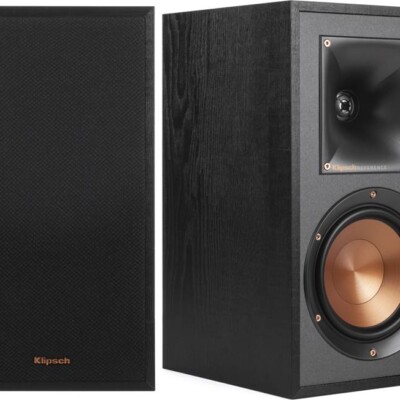
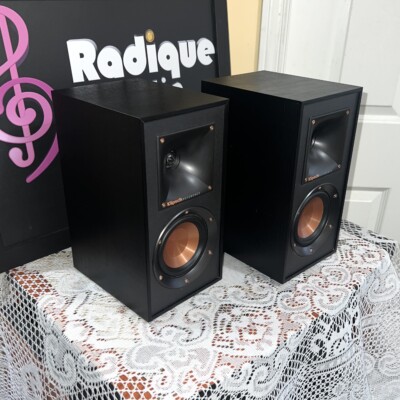
Klipsch R-51M Bookshelf Speakers — New, Sealed
The Klipsch R-51M bookshelf speakers are brand new and factory sealed — featuring the iconic 90×90° Tractrix horn, 1″ LTS aluminum tweeter, and 5.25″ copper-spun IMG woofer. With class-leading 93 dB sensitivity and bass down to 62 Hz, these are the most dynamic speakers available at this price point. Backed by Radique’s Bumper-to-Bumper Warranty and eligible for our Perpetual Trade-Back Program.
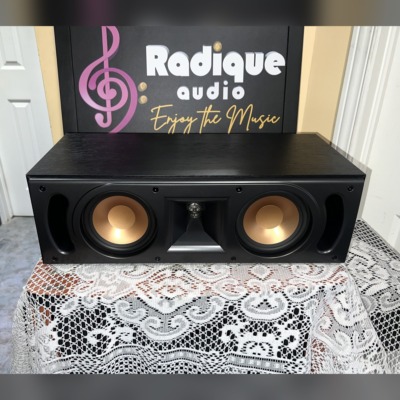

Klipsch RC-500 Center Channel Speaker 500 Watt Peak! – Black Ash
Ninety-six decibels from a Tractrix horn over a 1-inch titanium compression driver, with dual 5.25-inch Cerametallic woofers in a 2.5-way Tapered Array that stops the two woofers interfering off-axis. 67 Hz to 23 kHz, 125 watts RMS and 500 peak. Both ports fire forward, so it will sit in a cabinet. Black ash, grille included. Condition very good.

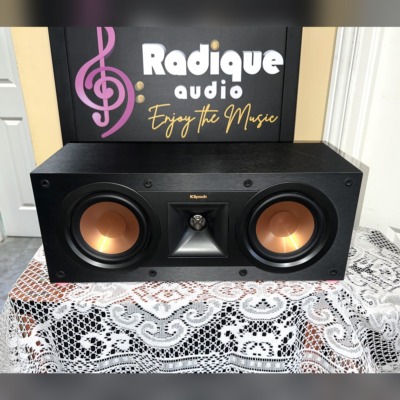
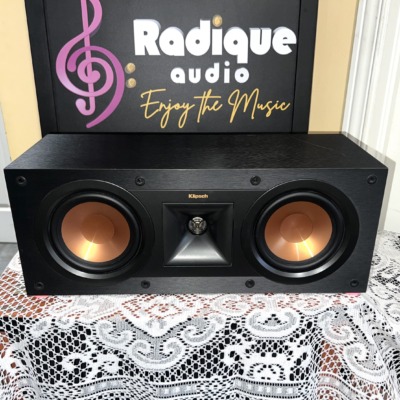
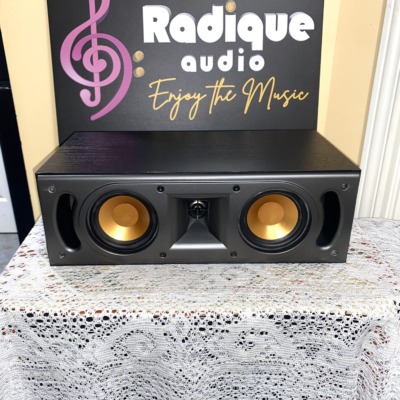
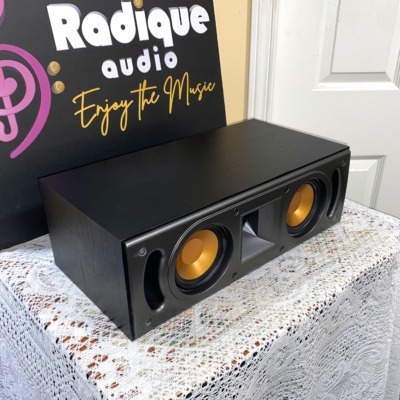
Klipsch RC-10 Center Speaker, Efficient, 300 Watt Peak
Ninety-five decibels of sensitivity, which is why a Klipsch centre keeps up with much larger front speakers on modest power. Tractrix horn over a 1-inch titanium tweeter, dual 4-inch Cerametallic woofers, and the Tapered Array that cancels interference between them. 88 Hz to 20 kHz, 8 ohms, 75 watts RMS and 300 peak. Video-shielded, black woodgrain vinyl.