


Pair of KEF 304 Series II Bookshelf Speakers – Made in England
$395.00
A 2.5-way closed box: two B200 paper-diaphragm bass drivers with only the upper one carrying on through the midrange, and a T33 tweeter above that. The bass chassis are mechanically decoupled from the cabinet, which was a first for KEF at the time. 87dB sensitive, so a 30-watt amplifier drives them properly. Very good condition, fully tested.
1 in stock
Pair of KEF 304 Series II Bookshelf Speakers – Black Finish, Very Good Condition, Tested
Discover the refined British engineering of the KEF 304 Series II (Type SP1148)—capable bookshelf speakers from the 1980s that deliver remarkable clarity and musicality. Based on the legendary KEF Concord IV design, these speakers combine sophisticated acoustic engineering with elegant simplicity. Fully tested and sounding excellent, this pair is in very good condition and ready to enhance any audio system.
British Engineering Legacy:
The KEF 304 II represents KEF’s commitment to bringing high-fidelity sound into the home. This 2½-way design employs dual B200 bass drivers (paper diaphragm, mechanically isolated from the cabinet—a KEF innovation) coupled with the T33 tweeter and a sophisticated crossover network. The dual bass drivers operate together at low frequencies but only the upper unit continues through the midrange, creating what KEF calls a 2½-way system—delivering higher maximum output and reduced distortion compared to conventional 2-way designs.
The paper diaphragm bass drivers were revolutionary for their time, offering lower moving mass than traditional cones while maintaining excellent consistency and durability. This contributed to the system’s high sensitivity (87dB SPL @ 1m/1W) and the ability to play loudly from modest amplifier power.
Sophisticated Acoustic Design:
The closed-box enclosure with moulded plinth and top caps provides:
Mechanical isolation of drivers from cabinet resonance (early KEF decoupling technique)
Reduced distortion through optimized driver mounting
Clean, articulate midrange with minimal cabinet coloration
Efficient bass loading from the well-engineered cabinet size
The B200 bass drivers feature a three-sided chassis specifically designed to decouple from the cabinet—a first for the KEF range at the time and still effective today.
Sound Character:
Users consistently praise the 304 II for its clear, natural presentation. One long-term owner noted these speakers are “quite sensitive” and perform excellently even with modest 30W vintage amplifiers, playing “loud” without strain. The speakers deliver excellent musicality while remaining honest to the source material—neither euphoric nor analytical, but truthful and engaging.
Key Specifications:
Type: 2½-way bookshelf/stand-mount loudspeaker
Enclosure: Closed box
Drive Units:
2 × B200 bass drivers (SP1069), paper diaphragm, mechanically isolated
1 × T33 tweeter (SP1074)
Crossover: SP1137 (sophisticated network)
Frequency Response: 60Hz – 20kHz (±3dB)
Sensitivity: 87dB SPL at 1m for 1W input (pink noise)
Maximum Output: 107dB SPL on program peaks
Nominal Impedance: 8Ω
Rated Maximum Power: 100W program
Amplifier Requirements: 10–100 watts per channel into 8Ω
System Resonance: 68Hz, Q=0.8
Dimensions: 680 × 280 × 315mm (26.75″ H × 11″ W × 12.4″ D)
Weight: 14kg (31 lbs) per speaker
Finish: Black (satin plinth)
Grille: Black fabric
Era: 1980–1981 (KEF 300 Series II)
Made in: England
Practical Advantages:
✅ Easy to drive – Works beautifully with modest amplifiers (10–100W)
✅ Sensitive design – Doesn’t require expensive, powerful amplification
✅ Durable construction – KEF’s solid British engineering ensures long service life
✅ Natural sound – Paper drivers age gracefully and maintain their character
✅ Stand-mount flexibility – Designed for dedicated speaker stands or substantial shelving
Condition:
These speakers are in very good condition with the black finish and grilles presenting cleanly. All drivers and tweeters are intact and functioning perfectly. Fully tested and ready to perform.
Summary:
The KEF 304 Series II represents an excellent example of 1980s British speaker design—substantial, efficient, and musically engaging. Whether you’re seeking speakers for a vintage system, a secondary listening room, or a budget-conscious audiophile setup, the 304 II delivers remarkable performance and timeless British craftsmanship.
Purchase with Confidence
Includes Radique Audio Bumper-to-Bumper Warranty
Perpetual Trade-Back Program—upgrade or swap with peace of mind
British precision and musicality—tested, very good condition, and ready to perform.
| Weight | 65 lbs |
|---|---|
| Dimensions | 16.4 × 28 × 30.75 in |
KEF was founded in 1961 by former BBC engineer Raymond Cooke, in a Nissen hut on the Kent Engineering & Foundry site in Maidstone, England, which gave the company its name. We carry KEF satellite systems, bookshelf speakers, towers, centre channels and subwoofers. We've had more than 70 KEF listings so far, covering nearly 40 different models. Every used KEF here is inspected, tested and serviced as required, then photographed in-house and covered by our Bumper-to-Bumper Warranty and Perpetual Trade-Back Program. Don't see the model you want? Tell us on First Dibs and we'll email you when one arrives.
The KEF models we've sold most often include the HTS1001.2 satellites and HTC1001.2 centre from the KHT1005.2 system, the KUBE-1 subwoofer, the C75 towers and the Q95c centre.
The KEF story, 1961 to today
Raymond Cooke, a former BBC engineer, founded KEF in 1961 in Maidstone, Kent, and named it after the owner of the site, Kent Engineering & Foundry. Its first speaker, the three-way K1, used a tweeter with a Melinex diaphragm, and the compact Celeste followed.
BBC monitors and Reference. KEF drive units were used in the BBC's LS3/5a mini-monitor of 1975, and KEF built it under licence. The Reference Series followed from 1977.
Uni-Q. In 1988 KEF introduced its Uni-Q driver, which puts the tweeter in the centre of the midrange cone, first in the C Series. Uni-Q went on to the Q Series, the KHT satellite systems of the 2000s such as the "Egg", the LS50 of 2012 and the LS50 Meta of 2020.
Today. KEF belongs to Hong Kong's Gold Peak group, through GP Industries, which also owns Celestion, and it is still based in Maidstone.
Which KEF is which?
1960s and 1970s classics: the K1, Celeste, Concord, Chorale, Cantata, Calinda and Corelli.
Reference Series (from 1977): such as the 103, 104/2 and 105, and the Model 100 centre of the 1990s.
C Series (1985 to about 1991): the first C models, then Uni-Q models from 1988, such as the C35, C95 and the C75 tower.
Q Series (from 1990): several generations, including the Q15 to Q95c of 1997 to 2000.
KHT satellite systems (2000s): the KHT2005 "Egg", the KHT1005 and KHT1005.2 (with HTS1001.2 satellites, an HTC1001.2 centre and the KUBE-1 subwoofer), and the KHT5005.2.
T Series (2010) and LS50 (2012 on): the slim T101 speakers for walls and stands, and the LS50 and LS50 Meta.
Buying used KEF: what to check
Satellites need their sub. KEF's small satellites hand the bass to a subwoofer, so buy them with one or make sure you have one.
Uni-Q drivers. The tweeter sits in the centre of the midrange cone. Check the cone for dents, and make sure every tweeter plays.
Subwoofers. Play a KUBE-1 or PSW subwoofer at volume, and check the surround on the KUBE-1's passive radiator.
T Series. The cabinets are only 35 mm deep and were designed for walls or KEF's own stands, so check that the brackets or stands come with them.
Older models. C Series and Reference models are now 35 to 40 years old, so inspect every surround.
Everything we list is inspected, tested and serviced as required here, and comes with our warranty.
You may also like…
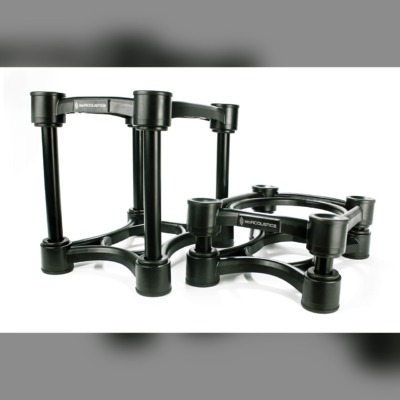

IsoAcoustics ISO-200 Isolation Stands (Pair)
- ✔️ Genuine IsoAcoustics, brand new, from an authorized Canadian dealer
- ✔️ A pair of isolation stands for large speakers and studio monitors
- ✔️ Rated to 75 lb (34 kg) short or 60 lb (27 kg) tall
- ✔️ Short 3.75 in (95 mm) or tall 8.5 in (215 mm), up to 6.5° of tilt
- ✔️ Pick up in Kanata by appointment, or shipped across Canada and internationally
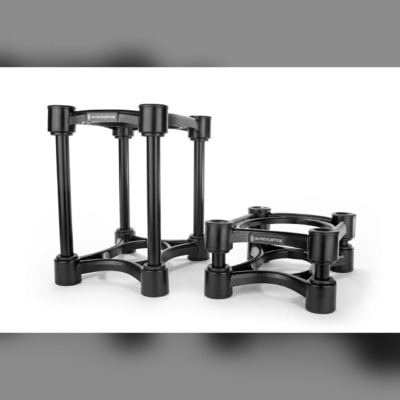

IsoAcoustics ISO-155 Isolation Stands (Pair)
- ✔️ Genuine IsoAcoustics, brand new, from an authorized Canadian dealer
- ✔️ A pair of isolation stands for medium speakers and studio monitors
- ✔️ Rated to 40 lb (18 kg) short or 35 lb (16 kg) tall
- ✔️ Short 3 in (76 mm) or tall 8.25 in (210 mm), up to 6.5° of tilt
- ✔️ Pick up in Kanata by appointment, or shipped across Canada and internationally


IsoAcoustics ISO-130 Isolation Stands (Pair)
- ✔️ Genuine IsoAcoustics, brand new, from an authorized Canadian dealer
- ✔️ A pair of isolation stands for small speakers and studio monitors, rated to 20 lb (9 kg)
- ✔️ Short 2.8 in (71 mm) or tall 8.25 in (210 mm), up to 6.5° of tilt
- ✔️ Top plate 5.1 × 6 in (130 × 152 mm)
- ✔️ Pick up in Kanata by appointment, or shipped across Canada and internationally
Related Products
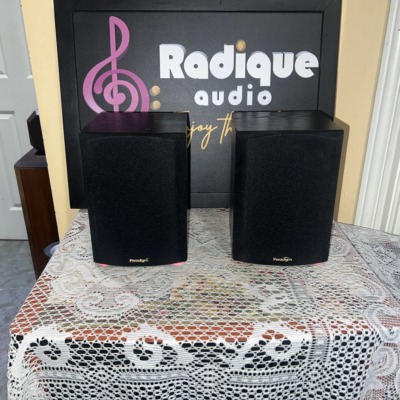
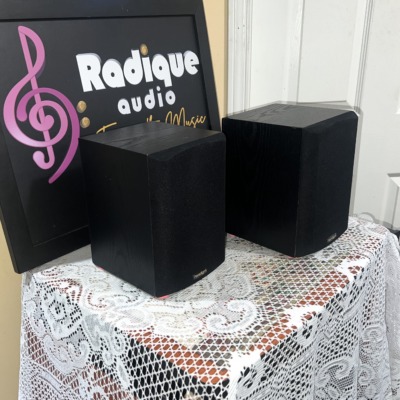
Paradigm Micro v.3 Bookshelf Speakers, Pair – Black Ash
A pair of Paradigm Micro v.3 speakers, the smallest of Paradigm's Canadian-designed Performance Series, with rubber woofer surrounds that will never need refoaming.
✔️ Tested on our bench
✔️ Fair condition, priced to match
✔️ Covered by Radique Warranty
✔️ Includes Perpetual Trade-Back Program eligibility
✔️ Expertly packed for safe shipping
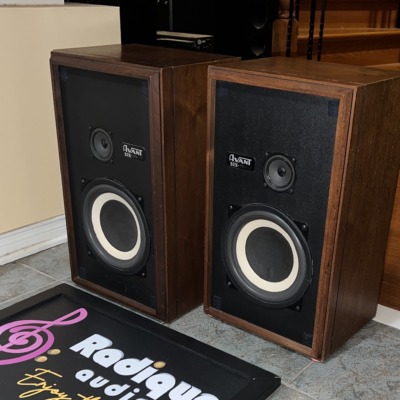
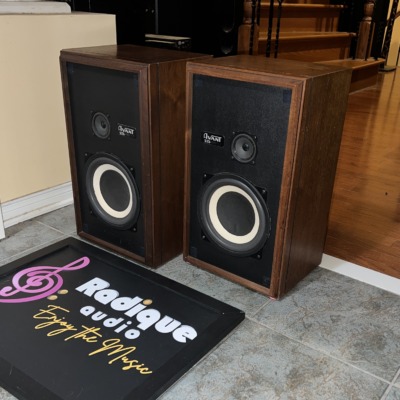
Avant 1AX Bookshelf Speakers, Pair – Canadian, Real Wood Veneer
A matched pair of Avant 1AX bookshelf speakers: Canadian-built, dressed in real wood veneer, with freshly refoamed woofers and sequential serial numbers.
✔️ Good condition — the real wood veneer is sound, with light scuffs on the tops
✔️ Woofers refoamed on our bench with new surrounds
✔️ Made in Canada — a sequential-serial matched pair
✔️ Covered by Radique Warranty
✔️ Includes Perpetual Trade-Back Program eligibility
✔️ Expertly packed for safe shipping
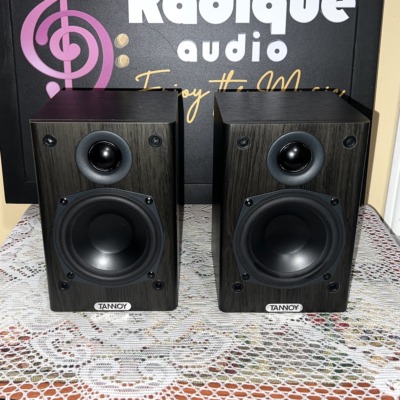
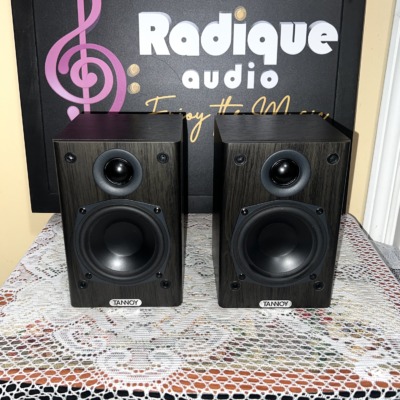
Tannoy Mercury FR Custom Compact Speakers – Dark Oak, Pair
A pair of compact two-way Tannoy speakers from the limited Custom edition of Tannoy's Mercury F-series, in very good condition, with a wall bracket built into the back of each cabinet.
✔️ Very good condition — free of significant marks; both grilles included
✔️ The limited Custom edition of Tannoy's Mercury F-series, in Dark Oak
✔️ Built-in wall bracket — hang them, or stand them on a shelf
✔️ Covered by Radique Warranty
✔️ Includes Perpetual Trade-Back Program eligibility
✔️ Expertly packed for safe shipping
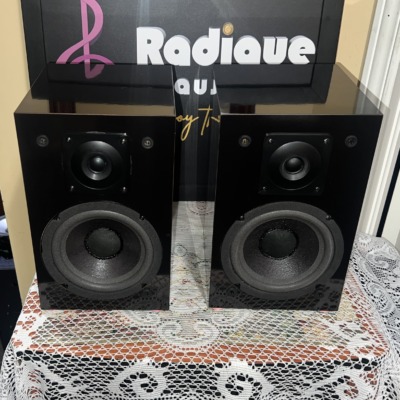
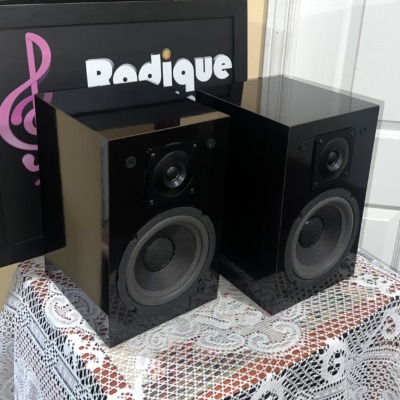
NHT Model 1C Bookshelf Speakers, Pair – Gloss Black, Re-Foamed
A pair of NHT Model 1C bookshelf speakers in gloss black, dated 1992, in very good condition and freshly re-foamed by us.
✔️ Very good condition — free of significant marks; grilles included
✔️ Freshly re-foamed by us — new woofer surrounds
✔️ Sealed and magnetically shielded — made in the USA in 1992
✔️ Covered by Radique Warranty
✔️ Includes Perpetual Trade-Back Program eligibility
✔️ Expertly packed for safe shipping
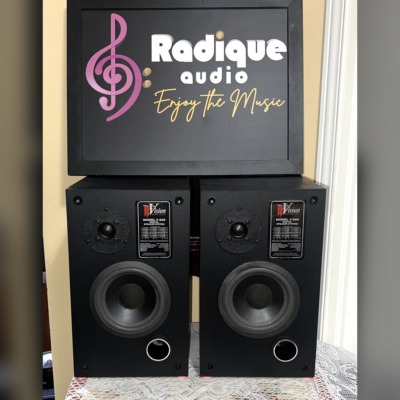
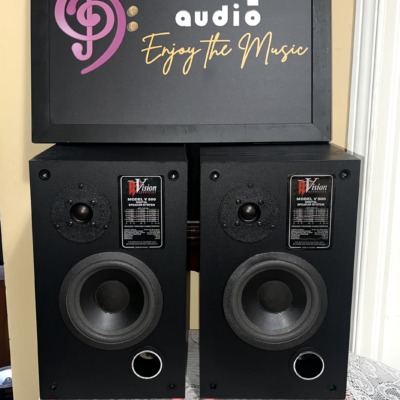
Vision Acoustics V500 Bookshelf Speakers, Pair – Made in Canada
A pair of solidly built, Canadian-made Vision Acoustics V 500 bookshelf speakers in black ash, rated at a sensitive 92 dB, fully tested on our bench and in very good condition.
✔️ Very good condition — free of significant marks, in black ash
✔️ Efficient 92 dB design, easy for a modest receiver to drive
✔️ Made in Canada, with 5-way binding posts
✔️ Covered by Radique Warranty
✔️ Includes Perpetual Trade-Back Program eligibility
✔️ Expertly packed for safe shipping
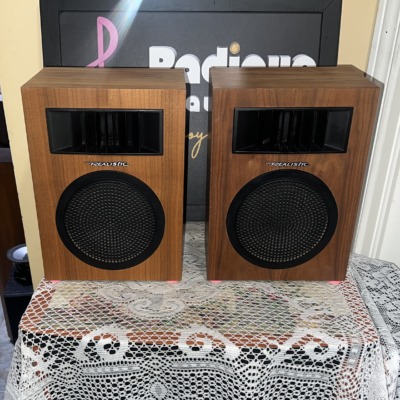
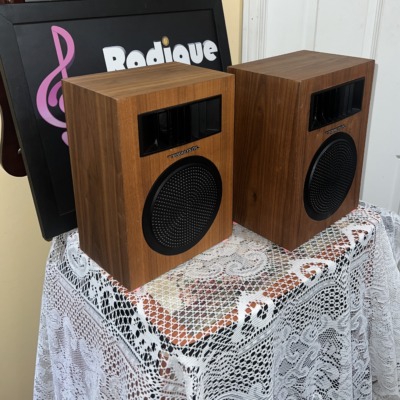
Realistic Minimus-5 Speakers, Pair – Vintage, Real Wood Veneer
A vintage pair of Realistic Minimus-5 two-way bookshelf speakers from Radio Shack, in a warm brown real wood veneer, with horn tweeters, fully tested on our bench and in very good condition.
✔️ Very good condition — free of significant marks
✔️ Real wood veneer, with rigid grilles over the woofers
✔️ Two ways in: small binding posts and an RCA-type speaker-level jack
✔️ Covered by Radique Warranty
✔️ Includes Perpetual Trade-Back Program eligibility
✔️ Expertly packed for safe shipping
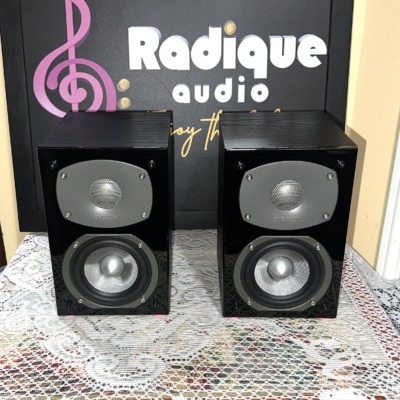
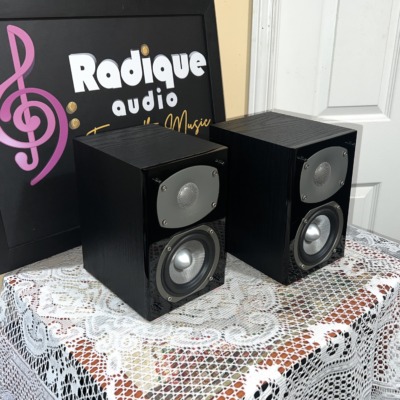
Energy C-50 Bookshelf Speakers, Pair – Ultra-Compact, Black Ash
A pair of ultra-compact Energy C-50 bookshelf speakers, designed and engineered in Canada, in black ash with gloss black front baffles and their black cloth grilles. They have been tested on our bench and are in very good condition.
✔️ Very good condition — black ash with gloss baffles, grilles included
✔️ 1-inch aluminum tweeter and 4½-inch woofer, video-shielded
✔️ Five-way binding posts — designed and engineered in Canada
✔️ Covered by Radique Warranty
✔️ Includes Perpetual Trade-Back Program eligibility
✔️ Expertly packed for safe shipping
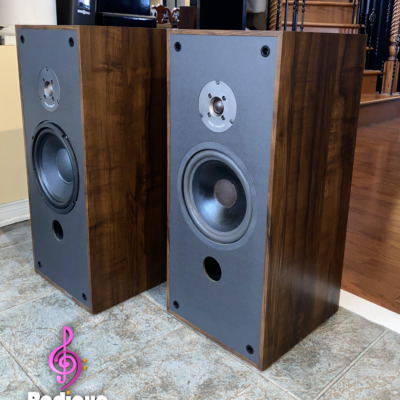
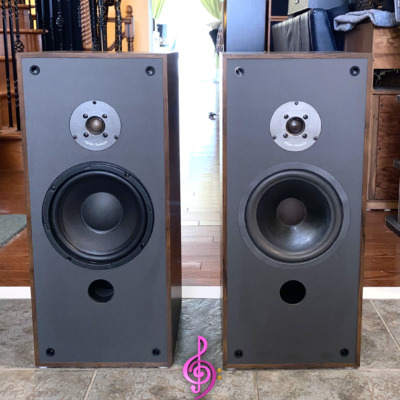
Paisley Reference Two Bookshelf Speakers, Pair – Made in Canada
A pair of Paisley Research Reference Two bookshelf speakers, made in Canada, in walnut-finish cabinets with black front baffles and their black cloth grilles. They have been tested on our bench, they play nicely, and they are in very good condition. One woofer is a replacement fitted by a previous owner, not by us; the details are under Condition.
✔️ Very good condition — walnut-finish cabinets, grilles included
✔️ Tested and playing nicely; one replacement woofer, disclosed below
✔️ 8-inch woofers, front-ported — made in Canada
✔️ Covered by Radique Warranty
✔️ Includes Perpetual Trade-Back Program eligibility
✔️ Expertly packed for safe shipping
