
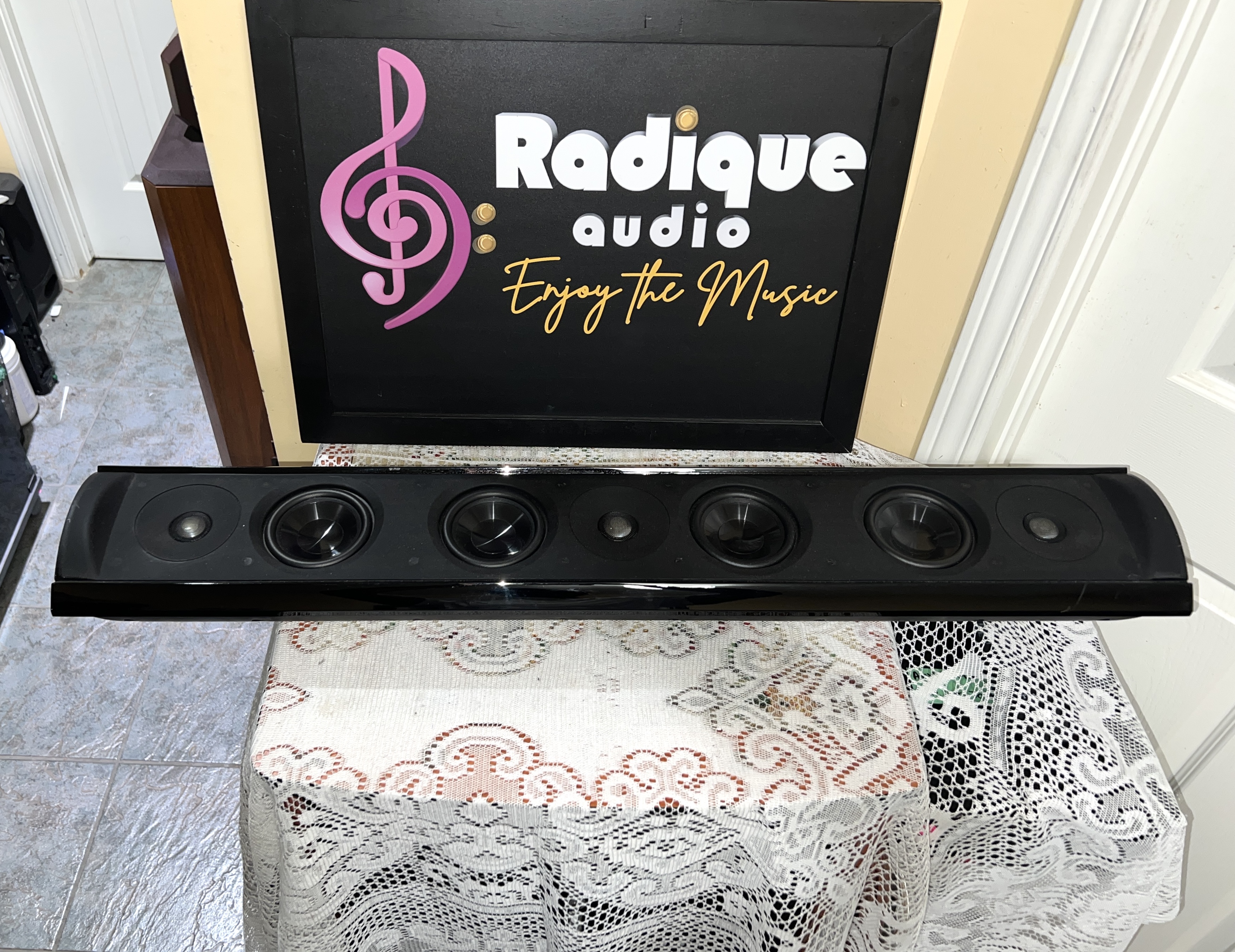


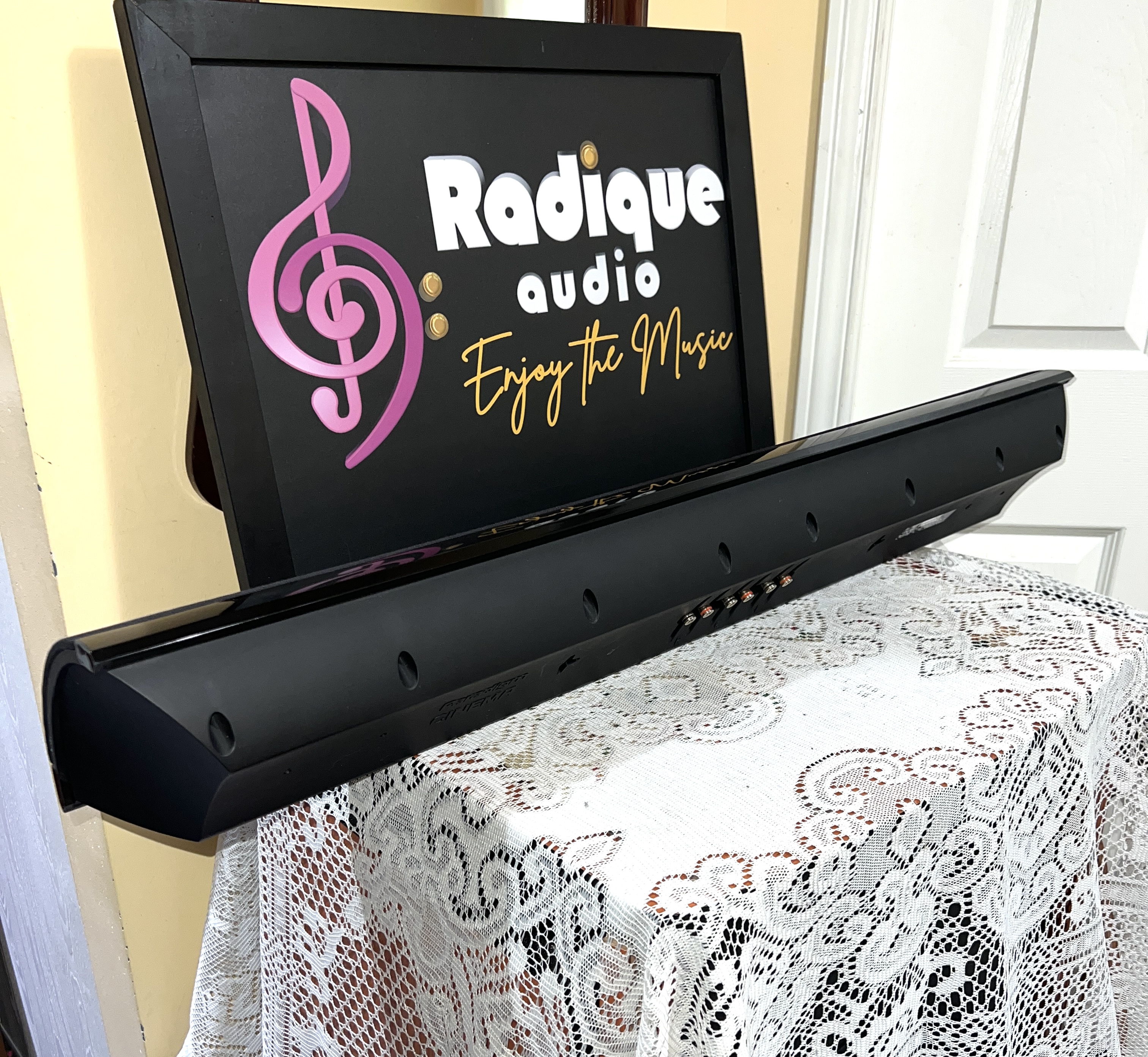

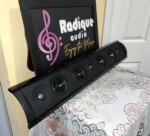
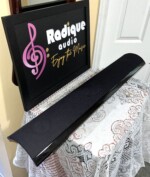
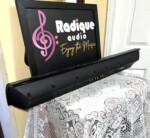
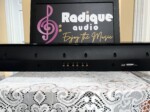

Paradigm Cinema Trio All-in-One On-Wall LCR Speaker, Black
$295.00
Left, centre and right in one 36-inch on-wall bar — seven drivers, three S-PAL satin-anodized aluminium dome tweeters and four mineral-filled polypropylene mid/bass cones, crossed second-order at 1.8 kHz. Response is plus or minus 2 dB from 125 Hz to 20 kHz, 89 dB sensitive, and it takes 15 to 200 watts. Removable feet, so it wall-mounts or sits on a shelf. Built in Canada; very good condition.
Out of stock
Get first dibs on the next one
A Canadian-made, 7-driver, 3-channel on-wall speaker bar that delivers seamless left, center, and right home theater sound from a single sleek enclosure.
Designed and manufactured in Canada, the Paradigm Cinema Trio packs a full 3-channel (left, center, right) speaker array into one slim, on-wall enclosure, making it an ideal space-saving solution for TV setups where three separate speakers aren’t practical. Each of its three channels uses Paradigm’s S-PAL satin-anodized pure-aluminum dome tweeters, paired with neodymium magnets and ferro-fluid cooling, for transparent, airy high frequencies with excellent power handling. A wire mesh tweeter guard and Paradigm’s WaveGuide technology work together to deliver a smooth, wide dispersion pattern so sound stays consistent whether you’re centered or off to the side of the screen.
The mid/bass section uses four mineral-filled polypropylene cone drivers per channel with high-temperature voice coils and oversized ferrite magnets, integrated through a reference-quality 2nd-order crossover for seamless blending across the frequency range. Rear-panel push-through binding posts with Paradigm’s Easy-Glide channels make wiring simple, and the unit includes removable feet, giving you the flexibility to wall-mount it or set it on a table or shelf. This unit is in Very Good cosmetic and working condition, gone through by Radique Audio to confirm full functionality.
Specifications (verified via Paradigm’s official product page and owner’s manual):
Design: On-wall left/center/right, 7-driver, 3-channel, 2-way acoustic suspension
High frequency drivers: Three 25-mm (1 in) S-PAL pure-aluminum dome tweeters, ferro-fluid damped and cooled
Mid/bass drivers: Four 102-mm (approx. 4 in) mineral-filled polypropylene cones per channel, 25-mm high-temperature voice coils
Crossover: 2nd-order electro-acoustic at 1.8 kHz
Frequency response (on-axis): ±2dB from 125 Hz to 20 kHz
Frequency response (30° off-axis): ±2dB from 125 Hz to 18 kHz
Low frequency extension: 85 Hz (DIN)
Sensitivity (room/anechoic): 89 dB / 86 dB
Suitable amplifier power range: 15–200 watts
Maximum input power: 70 watts per channel
Impedance: Compatible with 8 ohms
Finish: Black Gloss
Includes removable feet for table/shelf placement or on-wall mounting
Dimensions: (Width x Height x Depth) 36 x 6.3125 x 4.0625 inches (914 x 160 x 103 mm)
Weight: 16.8 lbs (7.6 kg)
This Canadian-built Paradigm Cinema Trio brings genuine audiophile-grade sound to a compact, all-in-one on-wall footprint — perfect for anyone wanting big three-channel performance without cluttering their setup. Grab this Very Good condition unit while it’s available.
Backed by Radique Audio’s Bumper-to-Bumper Warranty and our Perpetual Trade-Back Program, you can purchase with confidence.
| Weight | 19 lbs |
|---|---|
| Dimensions | 8 × 40 × 10.3 in |
Paradigm has designed loudspeakers in the Toronto area since 1982, with engineering roots that run through Ottawa: it took part in the National Research Council's loudspeaker research here, and its research lab has been in Ottawa since 1993. We've had more than 600 Paradigm listings so far, covering 193 different models, more than any other brand we resell. Every used Paradigm here is inspected, tested and serviced as required, then photographed in-house and covered by our Bumper-to-Bumper Warranty and Perpetual Trade-Back Program. Don't see the model you want? Tell us on First Dibs and we'll email you when one arrives.
Our five best-selling Paradigm models so far: the Cinema 330 v.3 on-wall speakers, the Mini Monitor bookshelf speakers, the Monitor 7 towers, and the PS-1000 and PDR-10 subwoofers.
The Paradigm story, 1982 to today
Jerry VanderMarel and Scott Bagby founded Paradigm in 1982 in the Toronto area, VanderMarel running sales and marketing and Bagby design and manufacturing. Their first speakers made their debut at a Toronto audio show that year, and Paradigm says 12 dealers signed on.
The Ottawa years. In the 1980s almost every major Canadian speaker maker measured its designs in the National Research Council's anechoic chamber here in Ottawa, and Paradigm took part in the research Dr. Floyd Toole led at the NRC, which paired chamber measurements with blind listening tests. Paradigm built its own anechoic chamber in 1988, sparing its engineers the five-hour drive to Ottawa. In the late 1980s and early 1990s it was one of several Canadian companies in the NRC's Athena project, which studied speakers that adapt to the room. NRC scientists Peter Schuck and Marc Bonneville then joined Paradigm, which says it opened its Ottawa research centre, PARC, for them in 1993. That lab went on to design Anthem's electronics and its room-correction system. A 1990s Paradigm Titan is now part of the collection at Ingenium, Canada's science and technology museums, here in Ottawa.
Growth. Paradigm moved into the US market in the mid-1980s, added its first in-wall speaker in 1989 and launched the Monitor series in 1990. The Titan was a hit by 1991, the Atom followed in 1992, and the PS-1000 of 1994 was its first powered subwoofer. By 1992 Stereophile counted about 256 Paradigm dealers in the US.
Reference and the new factory. The Reference line, with its Studio speakers, arrived in the mid-1990s; Stereophile reviewed the Studio/100 in 1997. In 1998 Paradigm bought Sonic Frontiers, which brought Anthem into the family. In 2001 it moved into a new Mississauga factory with what it calls the hemisphere's largest privately owned anechoic chamber, at 33,000 cubic feet. A tour that year found the plant finishing 1,500 speakers a day, with driver frames cast, cones moulded and voice coils wound in-house.
Changes of hands. Co-founder Jerry VanderMarel left in 2005, when the private-equity firm ShoreView Industries became Scott Bagby's partner; together they went on to buy MartinLogan. Compact lines such as Cinema were built overseas from the start, and from the 2010s Monitor was too, while Prestige (2014), Persona (2016) and Founder (2021) have been built in Mississauga. In 2019 Scott Bagby and his son John bought Paradigm, Anthem and MartinLogan back from ShoreView, and their company, PML Sound International, added GoldenEar at the start of 2025.
Which Paradigm is which?
Performance Series (1990s to 2006): the entry line, with the Atom, Titan, Focus, Esprit and Phantom. A 1990s Titan's label reads "Performance Series … Made in Canada". At the end of 2006 the Atom and Titan moved into the Monitor line.
Monitor (from 1990): the step-up line, and from 2006 the entry line; today's version is Monitor SE. In the early 1990s it was topped by the Studio Monitor tower, in real wood veneer.
Reference Studio (mid-1990s to mid-2010s): the Studio/20, 40, 60, 80 and 100 plus matching centres, with die-cast aluminium driver chassis and aluminium-dome tweeters, made in numbered versions. From the v.2 generation of 1999 the sides came in laminate or, for a little more, real wood veneer. A favourite here is the Studio/80 v.2, a slim 2.5-way tower from about 1999 to 2003; the pairs with real wood sides are the ones to find.
Signature (2004–2016): the flagship of its day, part of the Reference family.
Cinema (from about 2000): compact home-theatre satellites and centres in polymer cabinets, designed to be used with a subwoofer, later sold as Cinema CT packages.
Millenia (from 2006): slim aluminium-cabinet speakers made to suit flat-panel TVs. The little MilleniaOne was Sound & Vision's 2011 Product of the Year.
Stylus (from 1999): weatherproof outdoor speakers.
Today's lines: Monitor SE, Premier (2018), Prestige (2014), Founder (2021) and the Persona flagship (2016).
Subwoofers: from the PS-1000 (1994) and Servo-15 (1996) through the PS and PW series to Defiance (2018).
Buying used Paradigm: what to check
The rear label. Where a Paradigm was built depends on the line and the year, and some names were reused (the Atom and Titan moved from Performance to Monitor, and the Esprit name appeared in more than one line), so the label tells you exactly what you have.
Veneer or laminate. On Reference Studio models from 1999 on, real wood veneer sides were an option; look closely at the sides before you assume.
Woofer surrounds. Owners report foam surrounds needing replacement on some older models, including early Titans. Press gently around each one.
Powered subwoofers. The amplifier is the part most likely to have aged. Run a used sub at volume and check that auto-on still works.
Everything we list is inspected, tested and serviced as required here, and comes with our warranty.
You may also like…
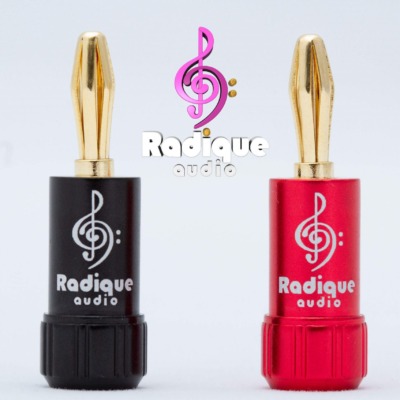
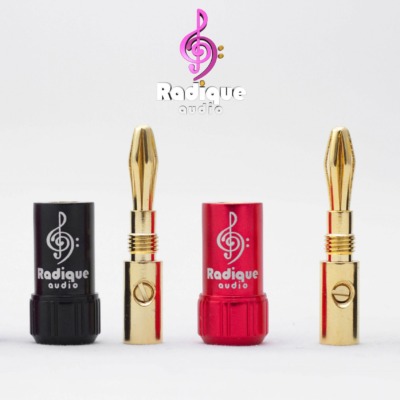
Gold Plated Banana Plugs by Radique Audio – Dual Set Screws
Dual set screws rather than a single screw or a compression sleeve, so the wire is held at two points and will not work loose behind the rack. Six-leaf gold-plated springs for a tighter grip in the binding post, full-length non-conductive jackets colour-coded for polarity, and gentle knurling that will not fray heavy cable. 19.4 g a pair, 25% heavier than the brand we used to carry. Fits 12 to 18 AWG.
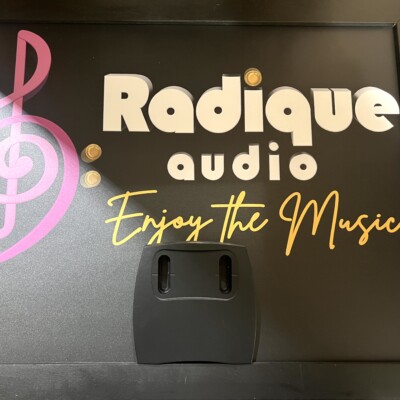
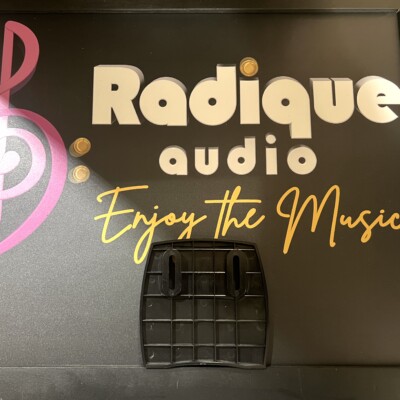
Paradigm Cinema 200/400/Trio – Horizontal Shelf-Mount Support
The genuine Paradigm support that lets a Cinema 200, 400 or Trio sit horizontally on a shelf rather than on a wall, with adjustable tilt so the tweeter can be aimed at ear height — which matters most when it is under a television. It stays visible in use and is styled to match. 4.75 by 4.5 inches, 57 grams. Supplied in black, silver or white as stock allows; the colour cannot be chosen.
Related Products


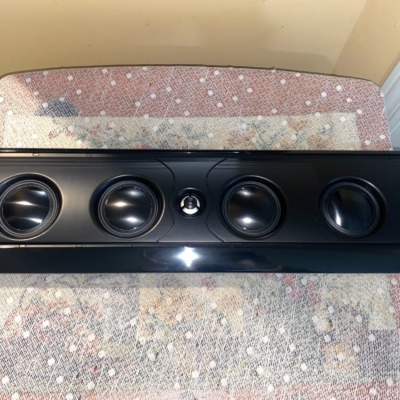
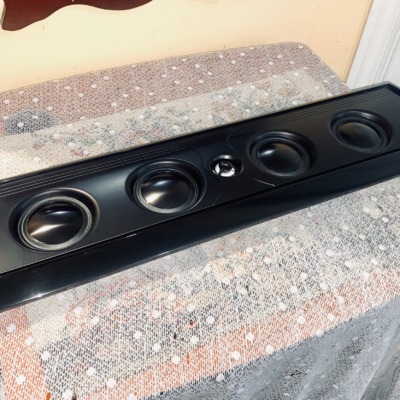
Definitive Technology 5-Driver Wall-mount Speaker XTR-40
Five drivers in an aircraft-grade extruded aluminium cabinet an inch and a half deep: two 3.5-inch XTDD dome drivers, each pressure-coupled to its own low-bass radiator, around the same one-inch aluminium dome tweeter used in Definitive's Mythos ST towers. 92 dB, 8 ohms, up to 100 watts. The wall bracket is included and takes it vertical or horizontal.
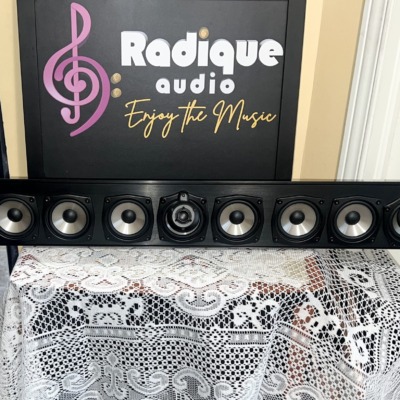
Mirage Uni-Theater 3-in-1 LCR Speaker – Omnipolar – Glass Stand
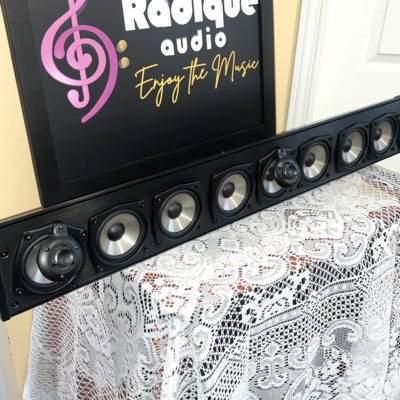
One aluminum cabinet holding three acoustically isolated channels — each with a 3/4-inch titanium hybrid dome in Mirage's Omniguide module, a 3-inch woofer and two 3-inch passive radiators. The left and right modules angle outward; the centre fires straight ahead. It is passive, so it needs an AVR with discrete L, C and R outputs. 36.5 inches wide, 19 lbs, with the original glass table stand and wall bracket.

Samsung HW-T550 2.1 Soundbar + Wireless Sub, Bluetooth
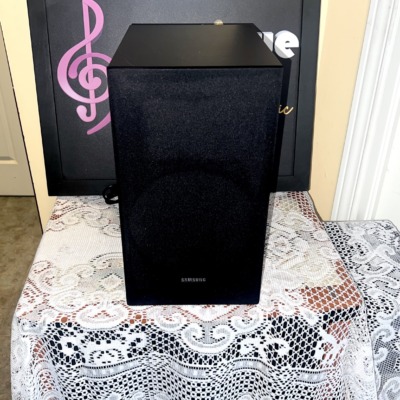
The soundbar and its matching PS-WR55D wireless subwoofer, 160 watts each for 320 total — four drivers in the bar, a 6.5-inch front-firing woofer in the sub, joined over 2.4 GHz with no audio cable between them. HDMI ARC, optical, an HDMI 1.4 pass-through, Bluetooth 4.2 and DTS Virtual:X. Original remote and wall bracket included. Very good cosmetic condition.
Monitor Audio Radius 250HD LCR Speaker – Gloss Black, Wall-Mount
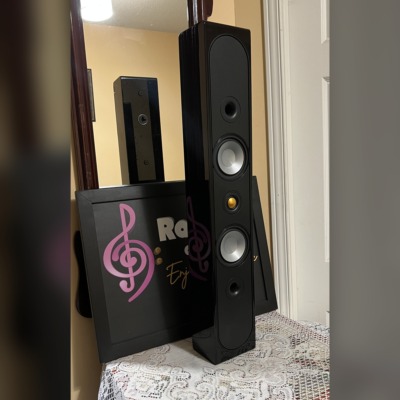
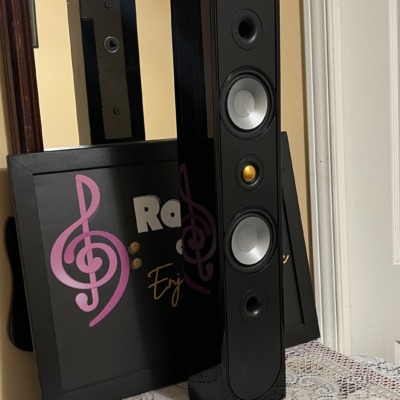
A slim gloss black Monitor Audio speaker from the Radius HD range, in good condition, built to work as a left, center, right or rear speaker, standing upright, lying flat or hung on a wall.
✔️ Good condition — light scratches visible under bright light; grille included
✔️ One slim speaker for left, center, right or rear duty
✔️ Two rear keyhole slots; the matching wall bracket is listed separately
✔️ Covered by Radique Warranty
✔️ Includes Perpetual Trade-Back Program eligibility
✔️ Expertly packed for safe shipping
Monitor Audio Radius 250HD LCR Speakers, Pair – Gloss Black
A matched pair of slim gloss black Monitor Audio speakers from the Radius HD range, in good condition, each built to work as a left, center, right or rear speaker, standing upright, lying flat or hung on a wall.
✔️ Good condition — light scratches visible under bright light; grilles included
✔️ Two slim speakers for a stereo pair, left and right of a center, or a set of rears
✔️ Two rear keyhole slots on each; the matching wall bracket is listed separately
✔️ Covered by Radique Warranty
✔️ Includes Perpetual Trade-Back Program eligibility
✔️ Expertly packed for safe shipping
