
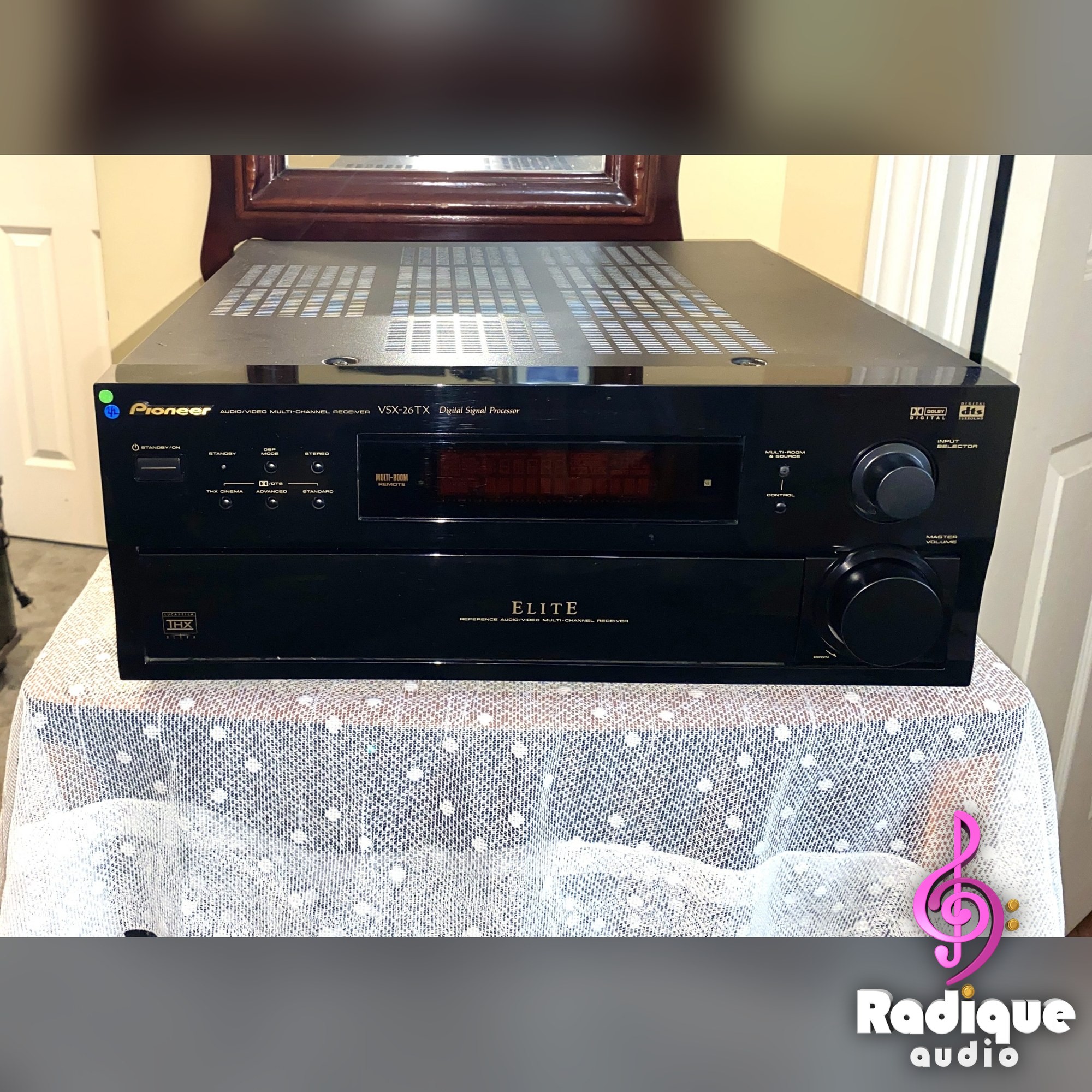

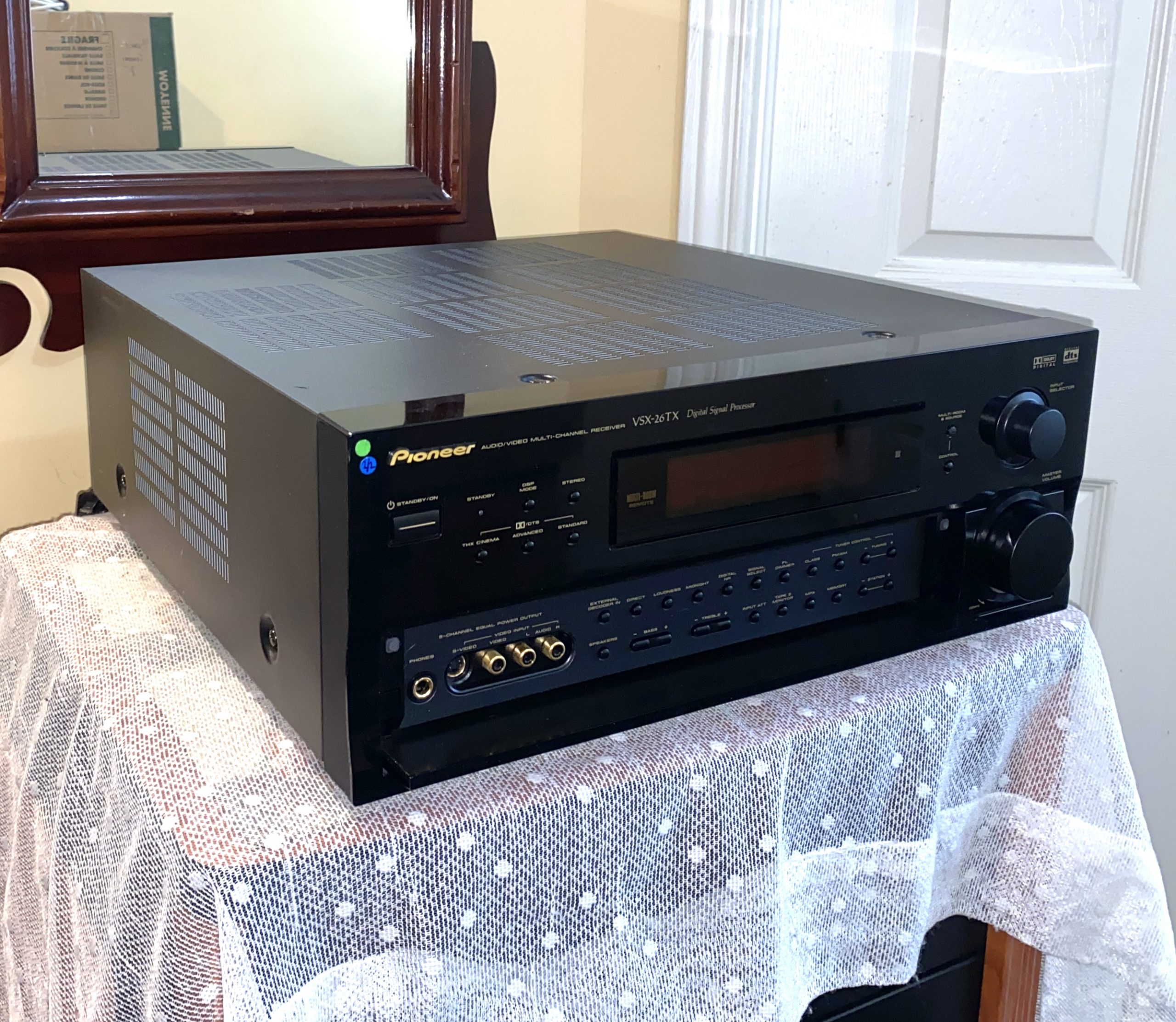



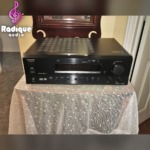

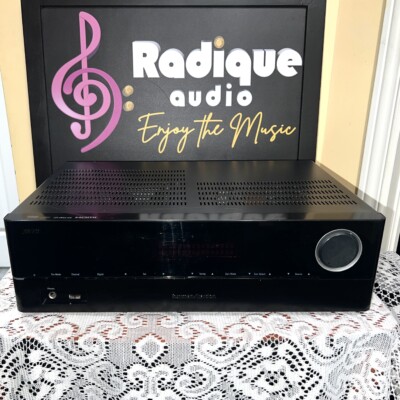
Pioneer Elite 500 Watt 5.1 AVR with Phono VSX-26TX
$345.00
Five 100-watt amplifier sections on Hex power MOS FET outputs, THX certified, with a full set of 5.1 pre-outs and 5.1 pre-ins. Seven pairs of analog inputs plus a dedicated phono stage and four digital inputs, on Elite 5-way binding posts. 31 lbs. Remote and PDF manual included; very good condition.
1 in stock
Pioneer Elite VSX-26TX 500 Watt 5.1 AVR with Phono
This Heavy, high quality Pioneer Elite AVR incorporates 5 independent 100 watt built in power amplifiers, all with high-performance Hex power MOS FET output transistors. This construction provides improved linearity and accurate reproduction of each channel for true high fidelity reproduction from even the most demanding Dolby Digital and DTS program sources.
True Home Cinema with THX® Certification The HOME THX CINEMA surround mode employs special processing to allow you to enjoy movie soundtracks with the same level of power and realism you experience in well designed movie theaters. You can enjoy this effect with both Dolby Digital, Dolby Surround and DTS sources.
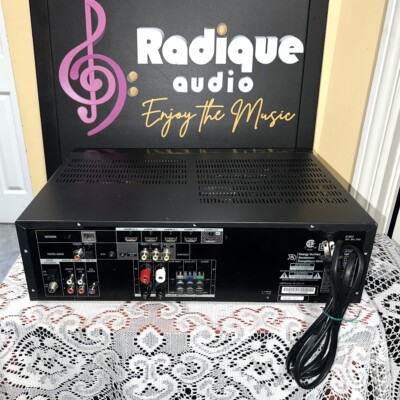
The VSX-26TX boasts a full set of 5.1 Pre-Outs, 5.1 Pre-Ins, 4 Digital Inputs, 7 pairs of analog inputs plus a dedicated Phono stage, and of course, beefy Pioneer Elite 5-Way bindings for all speaker outputs.
Other features include switchable impedance, midnight mode for late night listening, multi-room / multi-source operation, dimmable display, direct mode, and button concealing Pioneer Elite Front panel.
Specifications:
Power output: 100 watts per channel into 8Ω (stereo)
Surround output: 100W (front), 100W (center), 100W (rear)
Frequency response: 5Hz to 100kHz
Total harmonic distortion: 0.09%
Input sensitivity: 4.7mV (MM), 335mV (line)
Signal to noise ratio: 80dB (MM), 101dB (line)
Output: 335mV (line)
Video Connections: composite
Dimensions: 420 x 173 x 470mm, Weight: 14.1kg (31 lbs)
Includes Pioneer Remote and soft copy of manual in PDF. Asking just $345 for this high fidelity Pioneer Elite 5.1 AVR with Phono, in very good condition.
| Weight | 35 lbs |
|---|---|
| Dimensions | 22.5 × 20.5 × 10.8 in |
Pioneer began in Tokyo in January 1938, when Nozomu Matsumoto set up shop around the A-8 speaker he had built the year before. By the late 1970s its SX receivers were at the heart of the hi-fi power race. We carry Pioneer stereo receivers and AV receivers, CD players, cassette decks, tuners and equalizers. We've had more than 240 Pioneer listings so far, covering 140 different models. Every used Pioneer here is inspected, tested and serviced as required, then photographed in-house and covered by our Bumper-to-Bumper Warranty and Perpetual Trade-Back Program. Don't see the model you want? Tell us on First Dibs and we'll email you when one arrives.
Pioneer is one of our two top-selling brands of vintage amps and receivers, along with Marantz. Our five best-selling Pioneer models so far: the SX-650, SX-750, SX-580, SX-780 and SX-680, all vintage stereo receivers from the 1976 and 1978 SX families. We also offer our custom cherry cabinets for these vintage Pioneers, hand-made from all-natural Ottawa Valley cherry, and we've upgraded dozens of Pioneers with them so far.
The Pioneer story, 1938 to today
Nozomu Matsumoto developed the A-8 speaker in 1937, and in January 1938 he set up Fukuin Shokai Denki Seisakusho in Tokyo. "Pioneer" was first the name of that speaker. Some histories give 1936 in Osaka as the start, but Pioneer dates itself to January 1938 in Tokyo. The company was incorporated in 1947 and renamed Pioneer Electronic Corporation in 1961.
Stereo and the US. In 1962 Pioneer introduced the PSC-5A, which it calls the first stereo with separate speaker cabinets, and its first PL turntables. Pioneer Electronics U.S.A. was founded in New York in 1966.
The power race. After a 1974 US Federal Trade Commission rule tightened how amplifier power was rated, receiver makers competed on watts. Pioneer's SX-1250 of 1976 was rated at 160 watts per channel, and the SX-1980 of 1978 to 1980 at 270.
CD and Elite. The P-D1 of 1982 was Pioneer's first CD player, and Elite-branded components were on sale by 1985.
Today. Pioneer sold its home audio business to Onkyo in 2015, keeping its car and DJ businesses, and Pioneer-branded home theatre gear was later made under licence. In December 2025 CarUX, part of Taiwan's Innolux, completed its purchase of Pioneer Corporation, which now focuses on in-car products.
Which Pioneer is which?
Early-1970s SX receivers: models such as the SX-424 to SX-828, rated at about 15 to 50 watts per channel.
The 1976 "x50" SX receivers: from the SX-450 at 15 watts per channel up to the SX-1250 at 160. Our best-selling SX-650 and SX-750 come from this family.
The 1978 "x80" SX receivers: including the SX-580, SX-680 and SX-780 we sell most, up to the SX-1980 flagship with quartz-lock tuning, which weighs more than 35 kg.
Spec and Exclusive separates: higher-end amplifiers such as the Spec-1 preamplifier (1976 to 1980) and the Exclusive C3/M3 pair (1974).
Elite: Pioneer's upper line from the mid-1980s, for example the PD-9010X CD player.
PL turntables, CT cassette decks and CD players: PL turntables from 1962, such as the PL-12 and the linear-tracking PL-L1; CT decks such as the three-head CT-F1000; and CD players from the 1982 P-D1 to magazine-loading changers such as the PD-M6.
Buying used Pioneer: what to check
Controls and switches. Crackle when you turn a control or work a switch usually means dirt, and restorers clean every pot and switch.
Capacitors. Electrolytic capacitors in 1970s receivers are often past their best, and full restorations replace them.
Big SX models. Owners and restorers report heat stress on the power-supply board of large receivers such as the SX-1250. Ask what has been done.
Relay, lamps and bias. The protection relay is a common replacement, dial lamps burn out and are often converted to LED, and restorers set the bias and DC offset.
Cassette decks. Check the heads, fast-forward and rewind, Dolby and every button. Belts age even when the deck looks perfect.
Everything we list is inspected, tested and serviced as required here, and comes with our warranty.
You may also like…
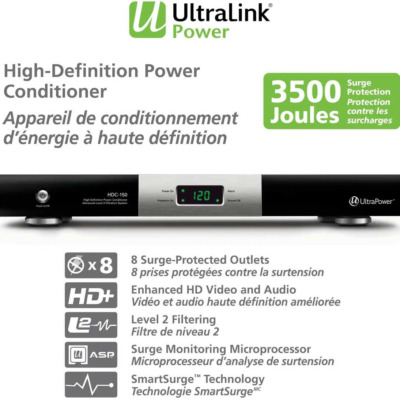
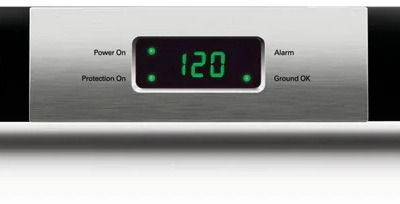
Ultralink High Def Power Conditioner with Display, BNIB HDC150
Eight surge-protected, filtered AC outlets with isolated banks for digital, video, audio and high-current components — four always-on, four switched.
Enough outlets for the whole stack, not just the amplifier — television, Blu-ray and streamer alongside a receiver, or turntable, CD player and cassette deck alongside a vintage amp. 3,500 joule protection, EMI/RFI filtration to 58 dB, and surge protection on the coax and network lines most conditioners leave unguarded. Patented ASP voltage monitoring and a 15 amp resettable breaker.
Brand new, unopened, in original packaging with full manufacturer warranty.
Related Products
SLS QG-500AVR 5.1 AV Receiver – Q-Line Gold, 100 WPC
An SLS QG-500AVR 5.1-channel AV receiver, the receiver from SLS and Quincy Jones's Q-Line Gold home theater system, with every function on the front panel.
✔️ Tested on our bench, all five channels and the sub out
✔️ Very good condition
✔️ Dolby Digital, DTS, Pro Logic II, AM/FM with 30 presets
✔️ Covered by Radique Warranty
✔️ Includes Perpetual Trade-Back Program eligibility
✔️ Expertly packed for safe shipping
Harman Kardon AVR 1510S 375W 5.1 Receiver – 4K HDMI, Spotify
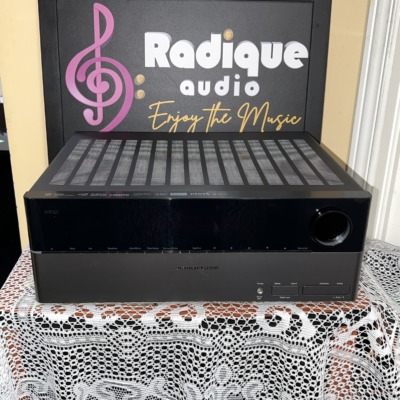
Seventy-five watts to each of five channels, four 3D-ready HDMI inputs with 4K pass-through, and one HDMI output with ARC. Spotify Connect, vTuner and DLNA over Ethernet, front-panel USB, optical and coaxial digital in. A digital supply keeps the whole thing to ten pounds. Level 1 serviced here; cosmetically graded Good.
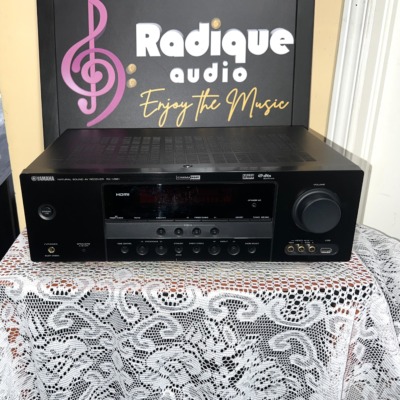
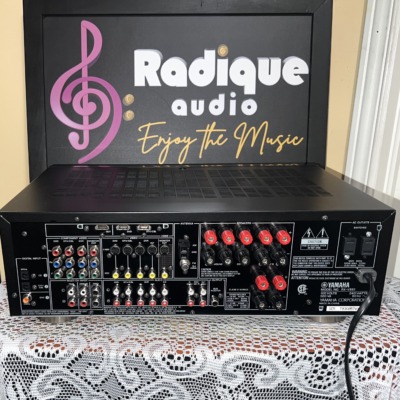
Yamaha RX-V561 5.1 AVR 500W — 2x HDMI, 3 Digital In, Remote
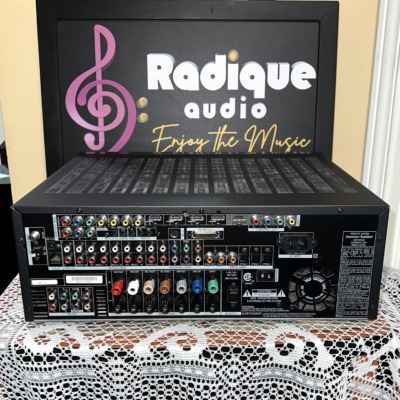
100 watts minimum RMS on every one of the five channels into 8 ohms, and dynamic power that climbs to 110, 130, 160 and 180 watts into 8, 6, 4 and 2 ohms — a receiver that keeps increasing output as the load gets harder has a supply with something in reserve. Where it earns its keep is bass management: a crossover selectable across nine points from 40 Hz to 200 Hz with a 12 dB per octave high-pass on front, centre and surround. Two HDMI inputs, three digital, remote included. Very good condition.
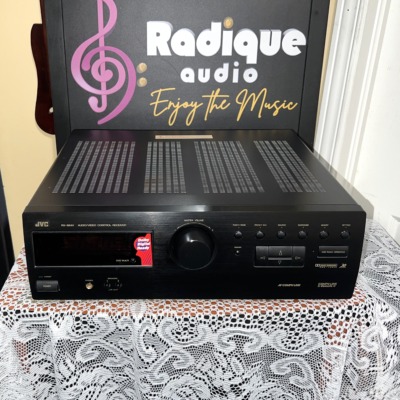
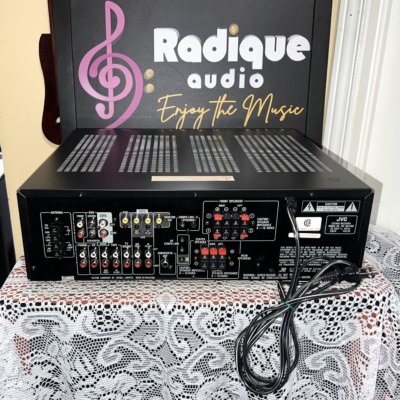
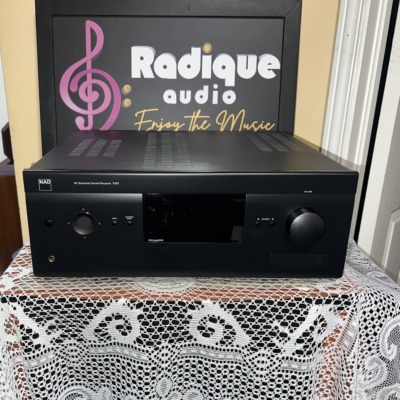
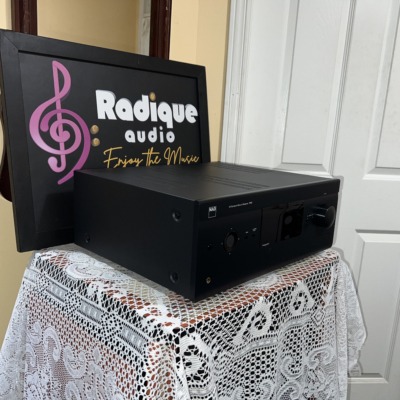
NAD T 757 7.1 AV Receiver – 7 x 60W, 7 Digital Inputs, Remote
A 7.1-channel NAD surround receiver in very good condition, rated at 60 watts per channel with all seven channels driven, with seven digital audio inputs, NAD's modular design and a remote.
✔️ Very good condition — free of significant marks; remote included
✔️ 7 x 60 W, all channels driven — Dolby TrueHD and DTS-HD Master Audio
✔️ Seven digital audio inputs and four HDMI inputs (1080p and 3D)
✔️ Covered by Radique Warranty
✔️ Includes Perpetual Trade-Back Program eligibility
✔️ Expertly packed for safe shipping
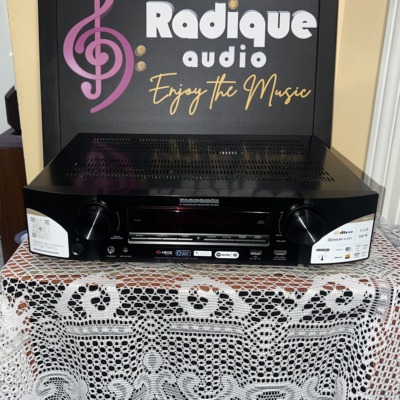
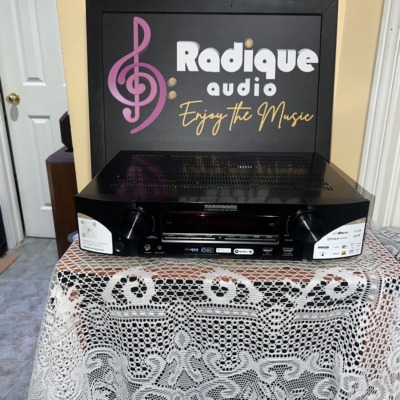
Marantz NR1510 Slim 5.2 AV Receiver – 4K, Wi-Fi, Phono, Remote
A slim Marantz NR1510 5.2-channel AV receiver, just over 4 inches tall, with 4K HDR video switching, HEOS streaming over Wi-Fi, Bluetooth and AirPlay 2, and a phono input for your turntable. It is in excellent condition, comes with its original Marantz remote, and has been thoroughly tested on our bench.
✔️ Excellent condition, with the original Marantz RC040SR remote
✔️ 4K HDR with Dolby Vision and eARC, HEOS, Wi-Fi, Bluetooth and AirPlay 2
✔️ Phono input and two subwoofer outputs — thoroughly tested on our bench
✔️ Covered by Radique Warranty
✔️ Includes Perpetual Trade-Back Program eligibility
✔️ Expertly packed for safe shipping
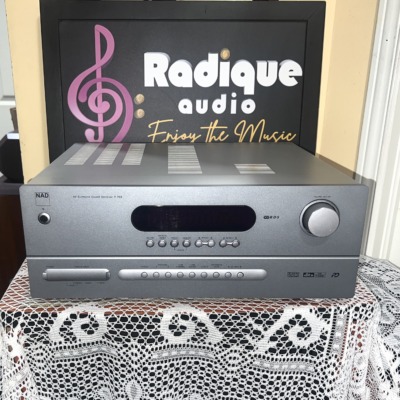
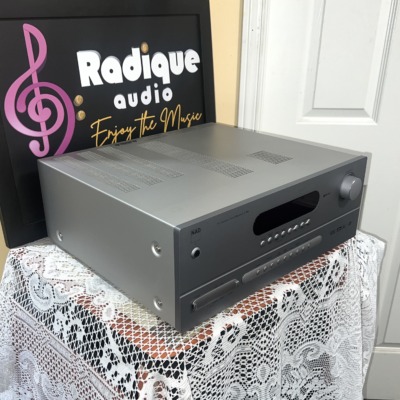
NAD T 753 6.1 AV Receiver – 70 WPC, 6 Digital Inputs, Remote
A NAD T 753 6.1-channel AV receiver in NAD's matte grey, designed and engineered in Canada, rated at 70 watts per channel, with six digital inputs, Soft Clipping and a pre-programmed remote. It has been thoroughly tested on our bench and is in very good condition.
✔️ Very good condition, with a pre-programmed remote and a power cable
✔️ 70 WPC conservatively rated — Sound & Vision measured 93.7 W, five channels
✔️ Six digital inputs, 7.1 pre-outs, Soft Clipping — thoroughly tested
✔️ Covered by Radique Warranty
✔️ Includes Perpetual Trade-Back Program eligibility
✔️ Curbside delivery, local collection or freight within Canada
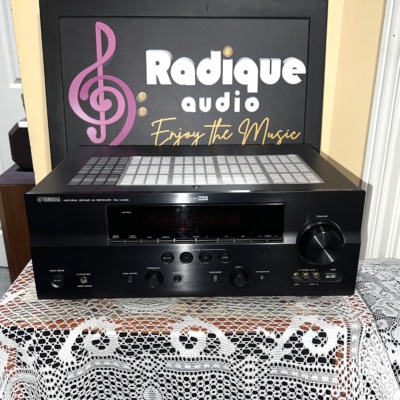
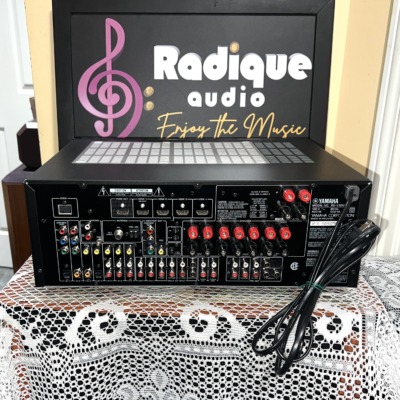
Yamaha RX-V1065 7.2 AV Receiver – 105 WPC, Phono, Zone 2, Remote
A Yamaha RX-V1065 7.2-channel AV receiver, 105 watts per channel, with four HDMI inputs, a phono input and Zone 2, plus its original remote and manual.
✔️ Tested on our bench, every input and output
✔️ Very good condition
✔️ Original Yamaha remote and printed owner's manual
✔️ 4 HDMI in, 1080p, YPAO, MM phono, Zone 2
✔️ Covered by Radique Warranty
✔️ Includes Perpetual Trade-Back Program eligibility
✔️ Expertly packed for safe shipping
