


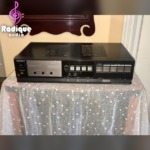
Sansui A-700 Vintage Integrated Amplifier – 55 WPC, Japan
$195.00
Out of stock
Get first dibs on the next one
Sansui 55 WPC Integrated Amp w/ Phono and retro multi-colour backlit display.
55 watts minimum rms per channel @ .06 THD
Speaker load impedance: 8Ω (minimum)
Signal to noise ratio: 72dB (MM), 95dB (line)
Inputs- Phono, Tuner, Tape 1, Tape 2
Speaker outputs – A, B
Sansui CompuSelect system when used with matching Sansui components
Loudness Push-button
3 AC Rear Outlets
Dimensions: 430 x 112 x 230mm, Weight: 5.2kg
Asking just $195 for this cool, retro-looking made in Japan Sansui A-700, with great sound, plenty of power and a good phono stage.
| Weight | 13.46 lbs |
|---|---|
| Dimensions | 20.93 × 8.41 × 13.06 in |
Sansui was founded in Tokyo by Kosaku Kikuchi, who began making transformers in 1944 and incorporated Sansui Electric in 1947. We carry Sansui stereo receivers, integrated amplifiers, tuners, equalizers and cassette decks. We've had more than 40 Sansui listings so far. Every used Sansui here is inspected, tested and serviced as required, then photographed in-house and covered by our Bumper-to-Bumper Warranty and Perpetual Trade-Back Program. Don't see the model you want? Tell us on First Dibs and we'll email you when one arrives.
Sansui models we've sold more than once include the RG-700 and SE-1000 equalizers.
The Sansui story, 1947 to today
Kosaku Kikuchi started making transformers in Tokyo in 1944 and founded Sansui Electric in 1947. Amplifier kits and finished amplifiers followed from 1954, tube receivers from 1956, and the AU-111 tube integrated amplifier in 1965.
The golden age. Solid-state amplifiers such as the AU-555 arrived in the late 1960s. In the 1970s Sansui made QS four-channel receivers and big stereo receivers such as the 9090DB, and from 1978 DC amplifiers such as the AU-717 and AU-919 and the G-series receivers.
New owners. In 1989 Polly Peck of London took control of Sansui. In the 1990s a controlling interest passed to the Semi-Tech group of James Ting, a Canadian businessman whose electronics company was based in Markham, Ontario, and Grande Holdings of Hong Kong took over in 1999.
After the original company. Production wound down in the early 2000s, and Sansui filed for court rehabilitation in 2012 and went bankrupt in 2014. Products sold under the Sansui name since then are made by licensees in different countries, not by the original company.
Which Sansui is which?
Tube era (1950s to 1960s): kits and amplifiers such as the AU-111 of 1965.
1970s receivers: such as the 8080 and 9090DB, the 1976 "No. 1 Line" from the 221 to the 881, and the QRX four-channel receivers.
Integrated amplifiers: the AU-555 of the late 1960s, the AU-x07 and AU-x17 families from 1978 such as the AU-717, the AU-919, budget A-series models, and the AU-α907i of 1987.
G-series receivers (1978 to 1980): from the G-2000 to the G-33000, with quartz-locked digital tuning on the later G-x700 models.
Tuners and equalizers: such as the TU-9900 and T-510 tuners, the SE-9 and SE-1000 equalizers, and the RG-700 and RG-707.
Cassette decks: SC, D and D-X series decks.
Buying used Sansui: what to check
Fuse resistors. A technician who restored a 9090DB for Sound & Vision called replacing the fusible resistors on the driver board the number one job, and restorers find fuse resistors gone high in value on other models.
Capacitors and glue. TONE Audio says AU-717s will probably need most of their capacitors replaced, and that the glue used at the factory has become corrosive and should be removed. Ask for proof of any recap.
No relay click. If the protection relay doesn't click in, an output may have DC on it, which often means failed output transistors.
Controls and lamps. Scratchy volume and balance controls need cleaning, and dial lamps are often converted to LED.
Later products. Goods sold as Sansui since the early 2000s were made by licensees, so don't expect vintage Sansui engineering in them.
Everything we list is inspected, tested and serviced as required here, and comes with our warranty.
Related Products
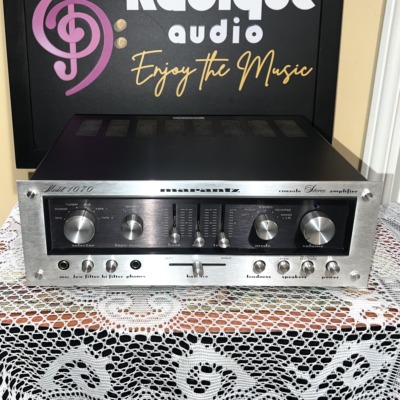
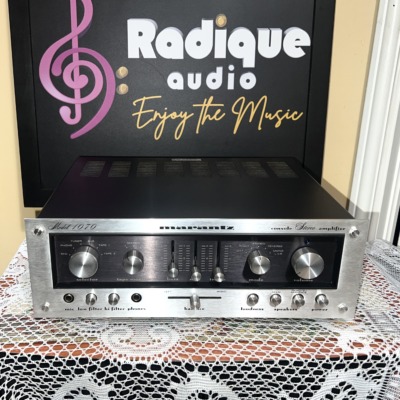
Marantz 1070 Vintage Integrated Amplifier – 35 WPC, Serviced
A slim mid-seventies Marantz integrated amplifier, through our Level 1 service, in very good condition, with a phono stage, a three-band tone section and a microphone input on the front panel.
✔️ Very good condition — free of significant marks
✔️ Through our Level 1 service on our own bench
✔️ MM phono stage, three-band tone sliders and a front-panel mic input
✔️ Covered by Radique Warranty
✔️ Includes Perpetual Trade-Back Program eligibility
✔️ Expertly packed for safe shipping
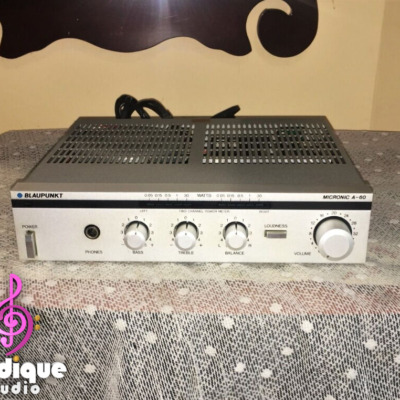
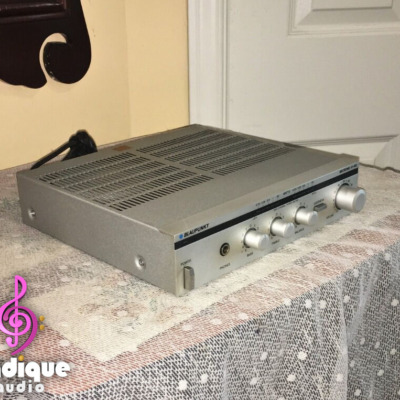
Blaupunkt Micronic A-60 Micro Amplifier – 20 WPC, Made in Japan
A rare Blaupunkt Micronic A-60 micro amplifier from 1981, designed in Germany and made in Japan: 20 watts per channel with LED power meters, in a case 25 cm wide.
✔️ Tested on our bench, input, outputs and every control
✔️ Very good condition
✔️ 20 WPC, LED power meters, one RCA input
✔️ Covered by Radique Warranty
✔️ Includes Perpetual Trade-Back Program eligibility
✔️ Expertly packed for safe shipping
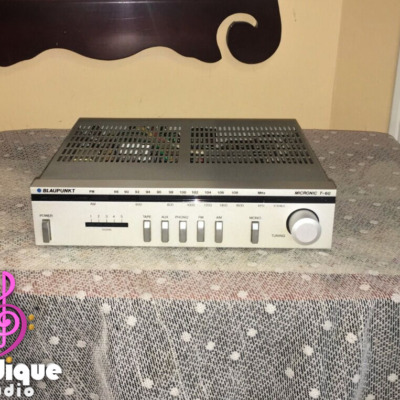
Blaupunkt Micronic A-60 + T-60 Micro System – 20 WPC, Bundle
The complete Blaupunkt Micronic 60 system from 1981, the A-60 amplifier and the matching T-60 AM/FM tuner and preamplifier, together for less than buying them separately.
✔️ Tested on our bench, both units
✔️ Both very good
✔️ Radio, phono, tape and a 20-watt amplifier in a stack 25 cm wide
✔️ Covered by Radique Warranty
✔️ Includes Perpetual Trade-Back Program eligibility
✔️ Expertly packed for safe shipping
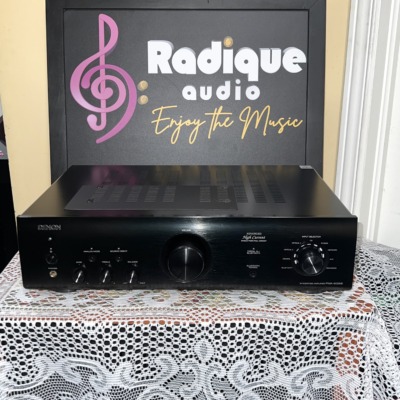
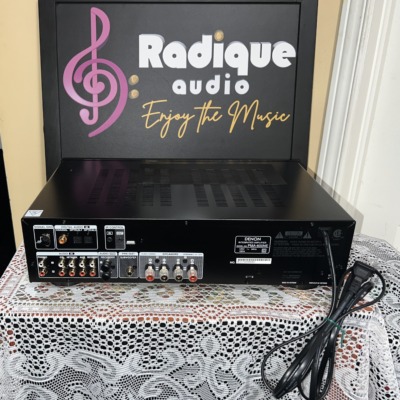
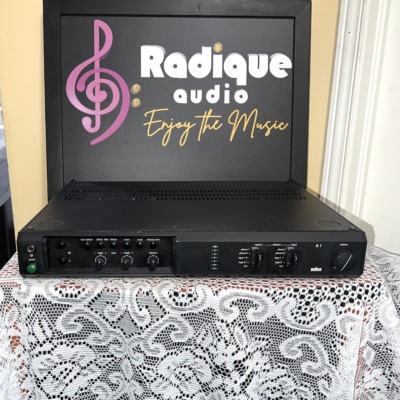
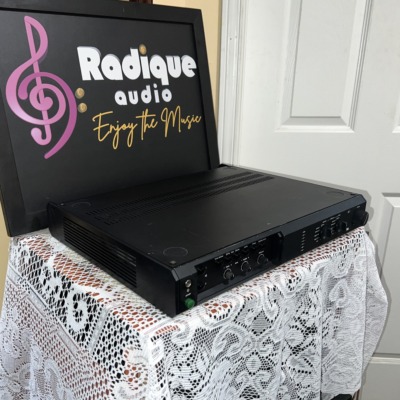
Braun Atelier A1 Vintage Integrated Amp – 55 WPC, Pre-Out, Japan
The component that makes the rest of an Atelier system work, and the one people hunting these usually look for first. 55 watts per channel into 8 ohms and 80 into 4, with a preamplifier section that separates from the power stage — engineering that is not an afterthought to the industrial design. 445 mm wide and 70 mm tall, the exact footprint of the T1 tuner and C1 deck, so the stack reads as one machined object. Made in Japan for Braun. Good condition.
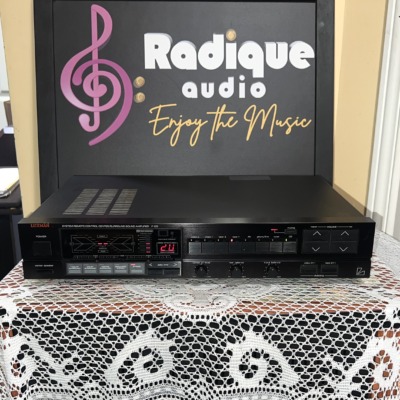
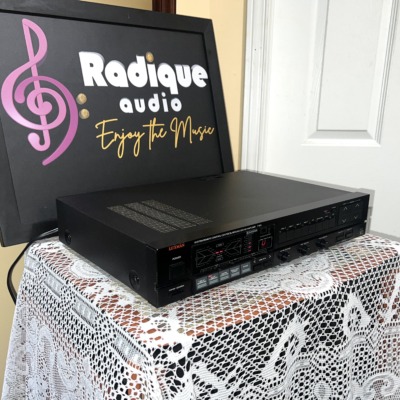
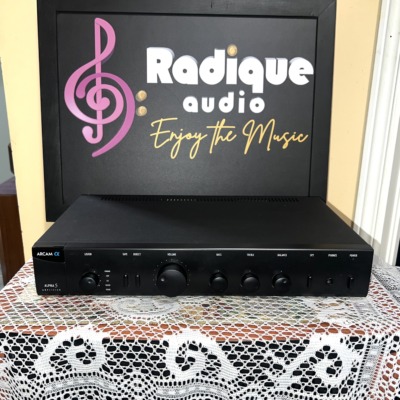
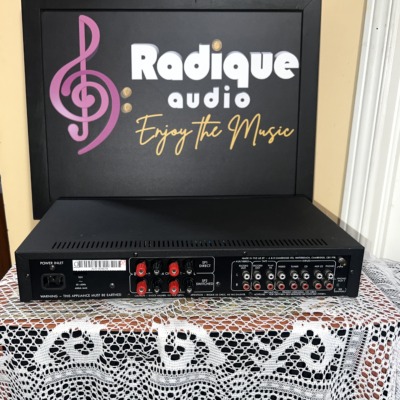
Arcam Alpha 5 Integrated Amplifier – 40 WPC, Made in England
A British integrated amplifier from Arcam's Cambridge factory, 40 watts a side, built on the principle that anything which does not improve the sound does not go in the box.
✔️ Condition: Very Good — tested and working properly
✔️ Covered by Radique Warranty
✔️ Includes Perpetual Trade-Back Program eligibility
✔️ Expertly packed for safe shipping
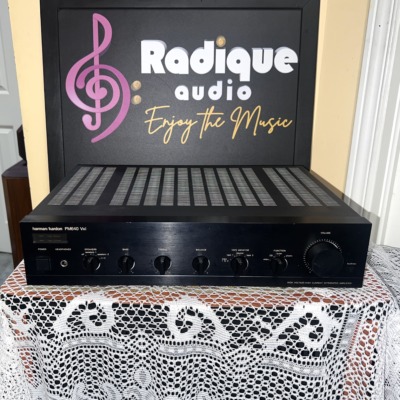
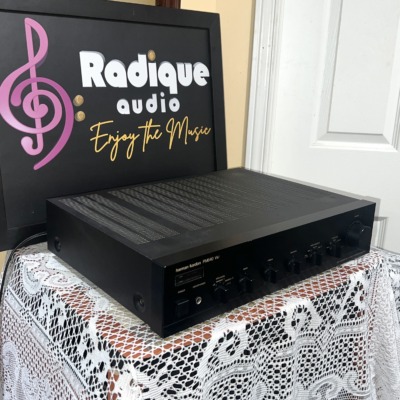
Harman Kardon PM640VXi Vintage Integrated Amp – 45 WPC, Japan
A 45-watt amplifier built by a company that spent the 1980s arguing the watts were the wrong thing to look at.
✔️ Condition: Very Good
✔️ Covered by Radique Warranty
✔️ Includes Perpetual Trade-Back Program eligibility
✔️ Expertly packed for safe shipping
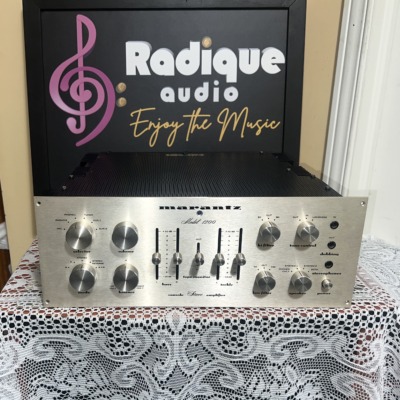
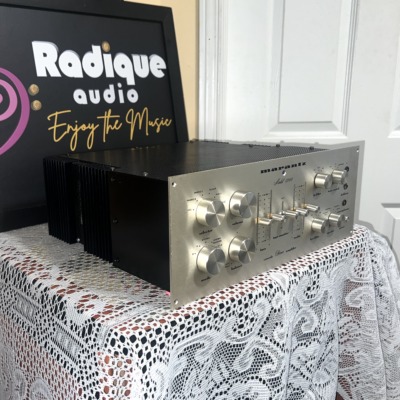
Marantz 1200 Vintage Integrated Amplifier – 100 WPC, Made in USA
Marantz's flagship integrated of the early seventies, built in Sun Valley, California, through our Level 2 service and playing as it should.
✔️ Very Good condition — faceplate and knobs present well, light marks of age; offered in the stock black metal case
✔️ Through our Level 2 service — a substantial round of component replacement on the bench, then bias and offset set and the amp run in
✔️ Covered by Radique Warranty
✔️ Includes Perpetual Trade-Back Program eligibility
✔️ Expertly packed for safe shipping
