



Sony TC-K65 Cassette Deck Serviced Cherry Wood Panels Made in Japan
$395.00
Out of stock
This one has sold. Want first dibs on the next one?
We take these in regularly. Leave your name and email, and we’ll email you the moment one is listed, so you hear first. No cost, no obligation.
Email me when one is listed
Stock up on tape. Maxell UR 120 Blank Cassette, $15.00 →
Other cassette decks we have in stock now
3 in stock · $195.00–$395.00 · all ship
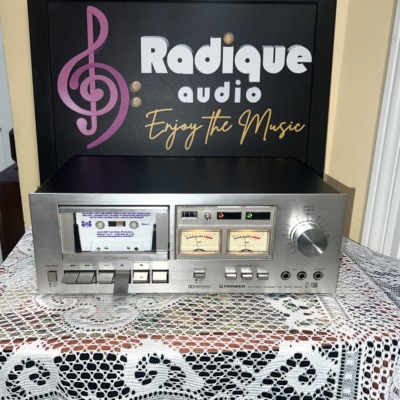 Pioneer CT-F500 Silver Face Cassette Deck – Serviced, Japan$395.00Ships
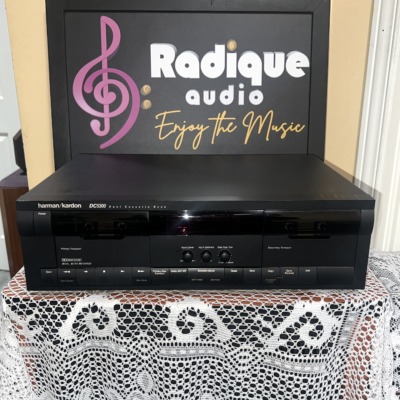 Harman Kardon DC5300 Dual Cassette Deck – Serviced, Japan$345.00Ships
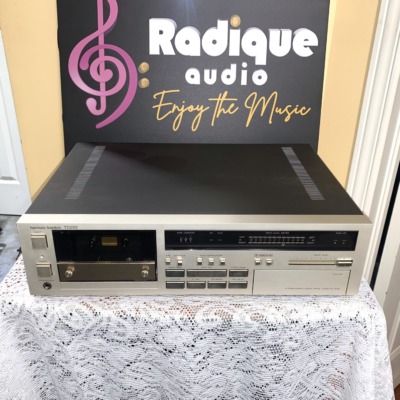 Harman Kardon Ultrawideband Linear Phase Cassette Deck TD292$195.00Ships
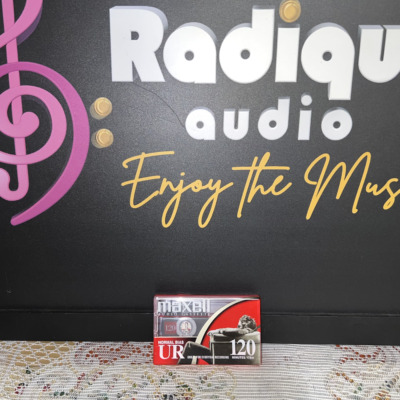
Stock up on tape.
Sealed Maxell UR 120 blank cassettes, normal bias: sixty minutes a side, ready for any deck.
Maxell UR 120 Blank Cassette, $15.00 →Sony TC-K65 Cassette Deck Serviced Cherry Wood Panels Made in Japan
A beautifully restored Sony TC-K65 cassette deck from the dawn of the metal tape era, featuring custom Ottawa Valley cherry wood side panels that transform this already-handsome component into a genuine statement piece — freshly serviced and working beautifully.
The TC-K65 represents Sony’s landmark transition into microprocessor-controlled cassette deck design, combining a 4-bit LSI CPU transport management system with metal tape capability, Sony’s celebrated S&F (Sendust & Ferrite) record/playback head, Random Music Sensor (RMS) programmable playback, and exceptional sound quality from a direct-coupled amplifier section — all made in Japan between 1979 and 1981. The S&F head combines the high-frequency characteristics of ferrite with the high magnetic saturation of Sendust alloy, delivering exceptional frequency response and low distortion that users consistently describe as warm, detailed, and musical — rivalling more expensive decks of the era. The dual-motor design (a BSL brushless, slotless motor for playback and recording, and a high-torque motor for rewind) eliminates the complex single-motor transmission systems of lesser decks, contributing directly to transport stability and long-term reliability.
The microprocessor logic control system manages all transport operations in timed sequence, ensuring each mechanism completes its operation fully before the next initiates — preventing tape stretch, reducing mechanical stress, and enabling the direct-change operation that allows moving between transport modes without pressing stop first. The Hall element frequency servo system detects pulses from the motor’s rotor magnet and processes them digitally through the CPU, ensuring stable, accurate tape speed at all times.
Sony’s RMS (Random Music Sensor) system uses the microprocessor to detect unrecorded portions of four seconds or more between tracks, storing up to 16 consecutive song positions and allowing random or sequential playback selection — a remarkably sophisticated feature for 1979 that remains genuinely convenient today. The Rec Mute with auto-space function works in tandem with RMS during recording, automatically creating the inter-track spacing needed for accurate song detection on playback. The LED Peak Program Meters use a dual-indication system displaying both the instantaneous peak level and a held peak simultaneously, making optimal recording level setting straightforward and reliable.
It has undergone our Level One service and testing which should ensure many more years of reliable performance ahead. All transport functions including fast-forward, rewind, play, record, and pause operate correctly and at normal speed. The custom Ottawa Valley cherry wood side panels replace the original wood case with premium furniture-grade cherry veneer, providing warm aesthetic appeal that integrates beautifully with vintage audio systems and natural wood décor.
Good Condition: Cherry wood panel upgrade and full service, but showing a few additional marks along the top lip of the front face and on the faceplate itself. Still presents very well for its age and is fully serviced and working
Key Specifications:
Type: 2-head, dual-motor stereo cassette deck
Heads: S&F (Sendust & Ferrite) record/playback; Magnetic Focus 4-gap erase
Motors: BSL (brushless, slotless) for play/record; high-torque for rewind
Control: 4-bit 42-pin LSI microprocessor transport sequencing
Tape compatibility: Type I, II, III (FeCr), IV (Metal) with independent bias/EQ
Frequency response: 20 Hz – 19,000 Hz (Metal); 30 Hz – 17,000 Hz (Type II/III)
Wow and flutter: 0.04% WRMS
Signal-to-noise ratio: 68 dB (Dolby B on); 58 dB (Dolby off)
Total harmonic distortion: 1.0%
Noise reduction: Dolby B with MPX filter
Special features: RMS (Random Music Sensor, up to 16 songs), Rec Mute with auto-space, mic/line mixing, recording master volume (fade in/out), LED Peak Program Meters with peak hold, non-contact magnet clutch, direct-change operation, timer function, remote control connector (RM-50 compatible)
Inputs: Line 77.5 mV, Mic 0.25 mV
Output: Line 0.44V
Connections: Microphone jack, headphone jack, remote connector
Years of manufacture: 1979 – 1981
Country of manufacture: Japan
Finish: Silver faceplate with custom Ottawa Valley cherry wood side panels (installed)
Service: Level One serviced, all transport functions verified correct including fast-forward
Includes: Custom cherry wood side panels (installed)
Dimensions: (Width x Height x Depth) 430 x 130 x 290 mm (16.9 x 5.1 x 11.4 inches)
Weight: 5.7 kg (12.6 lbs)
Made in Japan, the Sony TC-K65 is a landmark cassette deck that combined microprocessor transport control, metal tape capability, and Sony’s celebrated S&F head technology in a single beautifully designed component — now enhanced with custom Ottawa Valley cherry wood side panels and freshly serviced for many more years of reliable, musical performance.
🌳 Caring for Your Ottawa Valley Cherry Wood Panels
The custom cherry wood side panels on this piece are sanded to a silky 320-grit smoothness and hand-finished with boiled linseed oil and a final beeswax polish — no stains, no polyurethane, no synthetics. For tips on keeping them looking their best for decades, including safe cleaners, what to avoid, and how to manage sunlight exposure as the wood develops its natural patina, see our Cherry Wood Cabinet Care Guide. 👉
Backed by Radique Audio’s 90-day warranty and our perpetual trade-back policy, you can purchase with confidence.
| Weight | 14.6 lbs |
|---|---|
| Dimensions | 15.4 × 20.9 × 9.1 in |
| Cassette Wells | Single Well |
| Noise Reduction | Dolby B |
Sony began in Tokyo in 1946, founded by Masaru Ibuka and Akio Morita, and it helped bring the world the Walkman and the compact disc. We carry Sony stereo and AV receivers, CD players, cassette decks, amplifiers and speakers. We've had more than 220 Sony listings so far, covering more than 185 different models. Every used Sony here is inspected, tested and serviced as required, then photographed in-house and covered by our Bumper-to-Bumper Warranty and Perpetual Trade-Back Program. Don't see the model you want? Tell us on First Dibs and we'll email you when one arrives.
Sony models we've sold more than once include the TC-K61 cassette deck, the CDP-CE305 and CDP-C335 CD players, the STR-DA5700ES AV receiver and the STR-4800SD stereo receiver.
The Sony story, 1946 to today
Masaru Ibuka and Akio Morita founded Tokyo Tsushin Kogyo ("Totsuko") in Tokyo in 1946, growing out of a radio repair business Ibuka had started the year before. The company was renamed Sony in 1958.
Tape and transistors. The G-model tape recorder of 1950 is described as Japan's first, and the TR-55 transistor radio of 1955 was the first Sony-branded product.
ES. Sony describes the TA-1120 integrated amplifier of 1965 as the first all-silicon-transistor stereo amplifier and dates its ES ("Elevated Standard") line from it.
Walkman and CD. The Walkman went on sale in Japan in July 1979. Sony worked with Philips on the compact disc, and Sony's CDP-101 was among the first CD players on sale in Japan in October 1982. Sony still makes ES AV receivers.
Which Sony is which?
STR receivers: stereo receivers from the late 1960s on, such as the STR-6120, and later AV receivers, including ES models.
TA amplifiers and ES separates: from the TA-1120 to the TA-E86 preamplifier and TA-N86 power amplifier (1978).
CDP CD players: from the CDP-101 (1982) and CDP-701ES (1983) to changers such as the CDP-CE305 and CDP-C335 we sell often.
TC tape decks: reel-to-reel recorders until 1985, and cassette decks such as the TC-K61 and the three-head TC-K777ES.
SS speakers: such as the SS-G7 floorstanders of 1978.
Buying used Sony: what to check
CD players. Open and close the drawer several times; hesitation can be an early sign of trouble. Laser pickups wear, skipping is a symptom, and tray belts age.
Cassette decks. Belts dry out and cause slipping or uneven playback, and worn heads dull the sound. Run fast-forward and rewind, and check Dolby.
Amplifiers and receivers. Noisy switches and dirty relay contacts cause many faults, and bias settings drift with age. On tuners, look for blown bulbs and broken dial cords.
Everything we list is inspected, tested and serviced as required here, and comes with our warranty.
You may also like…
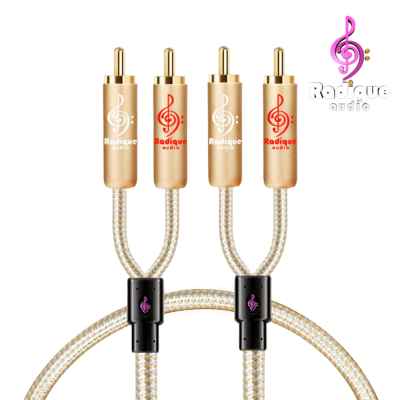
Radique Audio Gold Series RCA Stereo Interconnect Cable
RCA cables that are kind to vintage jacks: dual RCA to dual RCA, in 0.2, 0.75 or 1.5 m.
- Slim gold-plated plugs with vintage-safe grip pressure
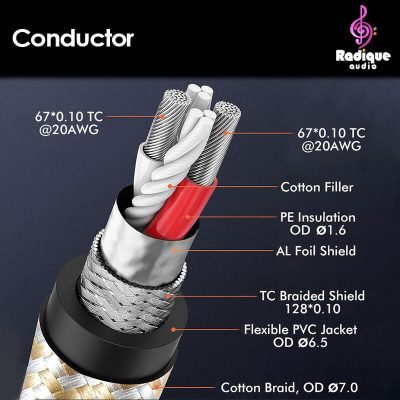
- Dual shielding: aluminum foil and 128-strand braided copper
- Reinforced splitters; 7 mm gold cotton and nylon mesh jacket
- Three lengths, chosen above the Add to Cart button
- 1-year warranty
Related Products
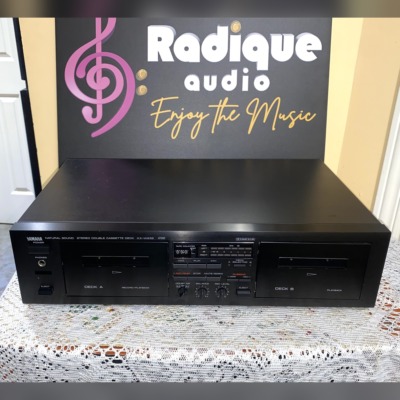
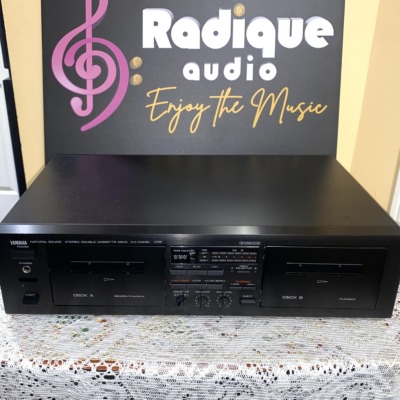
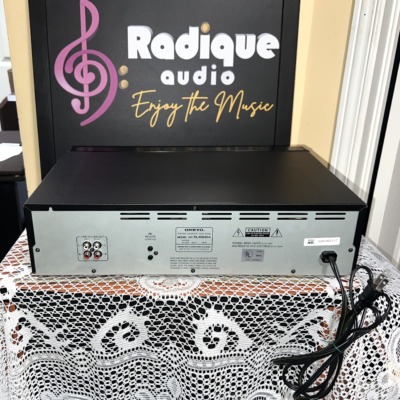
Yamaha KX-W232 Dual Cassette Deck – Dolby B & C, Made in Japan
A Japanese-built Yamaha dual cassette deck from the early nineties, tested on our bench and in good condition, priced to reflect one door quirk we describe below.
✔️ Good condition — a rear-panel crack and a Deck A door quirk, both explained below
✔️ Tested on our bench and working as it should
✔️ Two decks with Dolby B and C — made in Japan
✔️ Covered by Radique Warranty
✔️ Includes Perpetual Trade-Back Program eligibility
✔️ Expertly packed for safe shipping
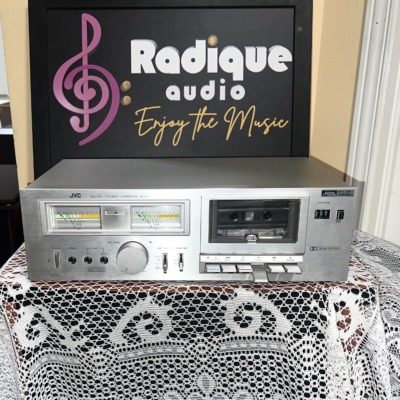
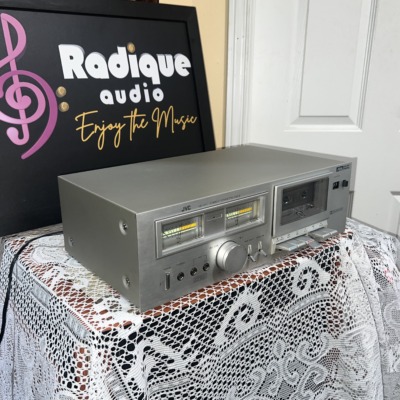
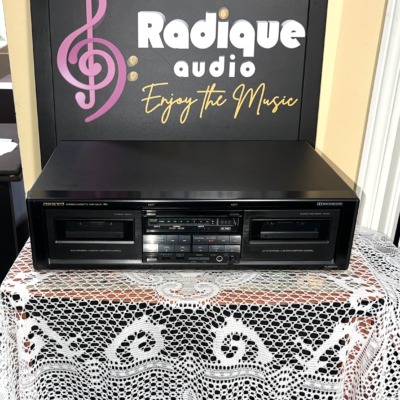
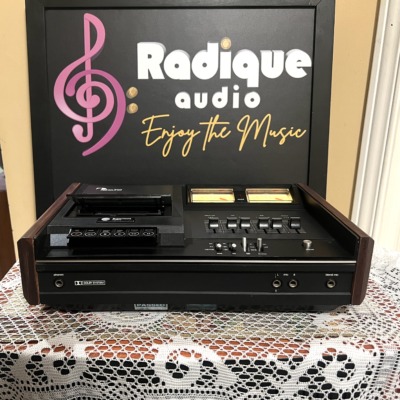
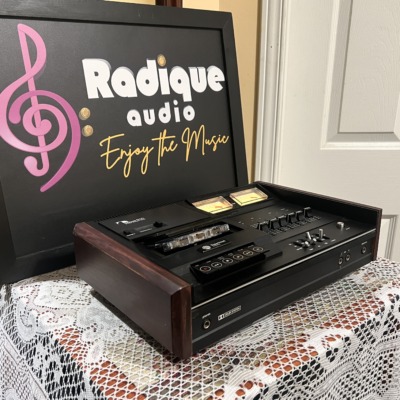
Nakamichi 500 Dual-Tracer Cassette Deck – Walnut, Made in Japan
Nakamichi's mid-seventies top-loading deck with walnut side panels, serviced on our bench and playing as it should.
✔️ Good condition — honest general wear for a fifty-year-old deck, and no damage
✔️ Serviced on our bench — our standard cassette deck service before it was listed
✔️ Walnut side panels fitted, with the original white side panels included
✔️ Covered by Radique Warranty
✔️ Includes Perpetual Trade-Back Program eligibility
✔️ Expertly packed for safe shipping
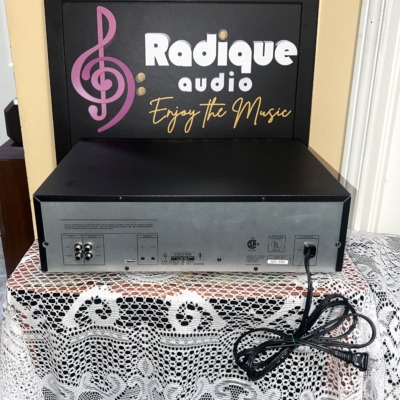
Harman Kardon DC5300 Dual Cassette Deck – Serviced, Japan
A Japanese-built Harman Kardon dual cassette deck from the early nineties, serviced on our bench and in very good condition.
✔️ Very Good condition — faceplate, cassette doors and display window present cleanly
✔️ Serviced on our bench — our standard cassette deck service before it was listed
✔️ Two auto-reverse decks with Dolby B and C, made in Japan
✔️ Covered by Radique Warranty
✔️ Includes Perpetual Trade-Back Program eligibility
✔️ Expertly packed for safe shipping
