


Yamaha CR-820 Vintage Stereo Receiver – 50 WPC, Walnut
$795.00
Out of stock
Get first dibs on the next one
Vintage Yamaha 50 WPC Stereo Receiver in original cabinet in real Walnut Veneer.
Introducing the Yamaha CR-820 AM/FM Stereo Receiver, a classic piece of audio equipment from the late 1970s that combines performance, versatility, and Yamaha’s signature build quality.
Key Features:
– Wide Dynamic Range: Offers an extensive range of output powers with low noise and distortion. – Dual Metering: Includes both signal strength and center-zero meters for precise tuning. – Noise Distortion Clearance Range (NDCR): Yamaha’s unique approach to measuring performance across a wide power range. – Versatile Controls: Includes bass, presence, treble, loudness, and balance adjustments. – Multiple Input/Output Options: Accommodates various audio sources and speaker setups.
Technical Specifications:
– Power Output: 50 watts per channel into 8Ω (stereo) – Frequency Response: 20Hz to 20kHz – Total Harmonic Distortion: 0.02% – Input Sensitivity: 2mV (MM), 120mV (line) – Signal to Noise Ratio: 78dB (MM), 97dB (line) – Damping Factor: 40 – Tuning Range: FM, MW – Speaker Load Impedance: 4Ω (minimum)
Dimensions and Weight:
– Width: 508 mm (20 inches) – Height: 167 mm (6.57 inches) – Depth: 395 mm (15.55 inches) – Weight: 13kg (28.66 lbs)
Design and Build Quality:
The CR-820 features Yamaha’s classic styling with a monochrome faceplate, clean knobs, and oversized rectangular switches. It’s housed in a wood cabinet with walnut veneer, offering a timeless aesthetic that complements its robust performance.
Perfect for Audio Enthusiasts:
The Yamaha CR-820 is ideal for those who appreciate vintage audio equipment with excellent sound quality and versatility. Its ability to drive a variety of speakers and its well-regarded sound signature make it a popular choice among collectors and music lovers alike.
Experience the warm, detailed sound of the Yamaha CR-820, a receiver that continues to impress audiophiles decades after its initial release.
Asking $795 for this high quality 70’s Yamaha Stereo Receiver in very good vintage condition, and working beautifully. Includes printed manual.
| Weight | 32 lbs |
|---|---|
| Dimensions | 24 × 10.57 × 19.55 in |
Yamaha began as an organ maker in Hamamatsu, Japan, in 1887. It made gramophones from the 1920s and began hi-fi with the 1954 HiFi Player. We carry Yamaha AV receivers, vintage stereo receivers, CD players, subwoofers and speakers. We've had more than 280 Yamaha listings so far, covering nearly 200 different models. Every used Yamaha here is inspected, tested and serviced as required, then photographed in-house and covered by our Bumper-to-Bumper Warranty and Perpetual Trade-Back Program. Every AV receiver we list is tested input by input on our bench: each HDMI input and output, the analog, optical and coaxial inputs, the subwoofer outputs and the wireless features where it has them. Don't see the model you want? Tell us on First Dibs and we'll email you when one arrives.
Yamaha models we've sold most often: the SW-3 subwoofer, the NX-E270 surrounds, and the RX-V1400, RX-V850 and RX-V800 AV receivers.
The Yamaha hi-fi story
Torakusu Yamaha built his first reed organ in Hamamatsu in 1887 and founded Nippon Gakki in 1897; the company was renamed Yamaha Corporation in 1987. Yamaha calls the 1954 HiFi Player its first audio product, and dates its first Natural Sound (NS) speakers to 1967.
1970s hi-fi. The CA-700 and CA-500 of 1972 were Yamaha's first integrated amplifiers, and the CA-1000 of 1973 could switch its output stage between Class A and Class A/B. The NS-1000 and NS-1000M speakers of 1974 used beryllium dome drivers, and the NS-10M of 1978, sold for home use, became a studio monitor.
CD and surround. The CD-1 of 1982 was Yamaha's first CD player. The DSP-1 of 1986 was a Digital Sound Field Processor, and in 1993 the RX-V870 became the first Yamaha receiver with CINEMA DSP. The RX-V992 of 1997 added built-in Dolby Digital decoding.
AVENTAGE. The AVENTAGE (RX-A) receiver line launched in 2010, above the RX-V range.
Which Yamaha is which?
CA integrated amplifiers (1972 to about 1979): the CA-500, CA-700, CA-1000 and CA-2000, followed by the A-series.
CR receivers (mid-1970s to about 1980): the CR-1000, then the CR-620 to CR-2020 generation of 1977 to 1979.
NS speakers: from the NS-690 and the beryllium NS-1000 to the NS-10M bookshelf speaker, made from 1978 to 2001.
CD players: from the CD-1 of 1982 to the CDX and GT-CD models.
RX-V AV receivers (from at least 1991): such as the RX-V800, RX-V850 and RX-V1400 we sell often. Built-in Dolby Digital arrived in 1997, YPAO room calibration in 2003 and HDMI in the mid-2000s.
RX-A AVENTAGE (from 2010): the step-up AV receivers. The RX-Z models were the flagships until 2007.
Buying used Yamaha: what to check
Formats. On an AV receiver, check what it decodes and connects to: Dolby Digital from 1997, room calibration from 2003, HDMI from the mid-2000s.
HDMI boards. On modern AV receivers, HDMI is usually the first thing to fail. We test every HDMI input and output before listing.
CR receivers. Owners suggest asking whether service bulletins were done on a CR-2020, and expect scratchy controls and burnt-out dial lamps on any unserviced unit.
NS speakers. Check that the tweeters on an NS-10M are original and both work, and inspect the beryllium domes on an NS-1000, since Yamaha stopped making beryllium diaphragms in 1997.
Everything we list is inspected, tested and serviced as required here, and comes with our warranty.
Related Products
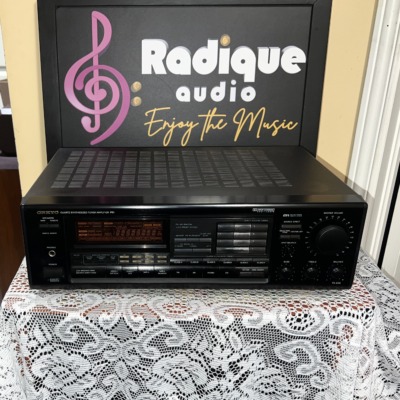
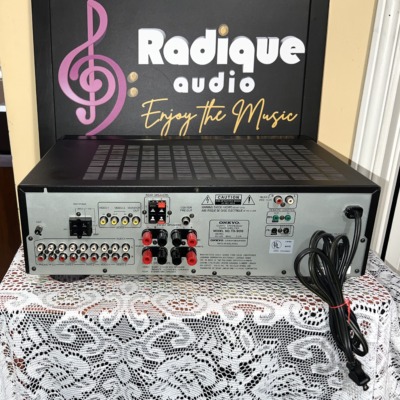
Onkyo TX-906 Stereo Receiver – 80 WPC, Dolby Pro Logic
An early-nineties Onkyo receiver with real power behind it and a phono input for your turntable, through our Level 1 service and playing as it should.
✔️ Good condition — works as it should; the black cabinet and faceplate present well
✔️ Through our Level 1 service — cleaned, deoxidized, checked and thoroughly tested on our bench
✔️ Phono input for your turntable, plus CD and two tape inputs
✔️ Covered by Radique Warranty
✔️ Includes Perpetual Trade-Back Program eligibility
✔️ Expertly packed for safe shipping
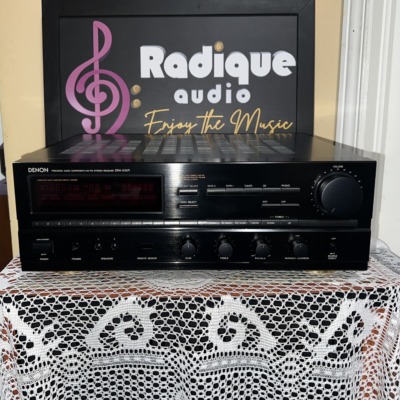
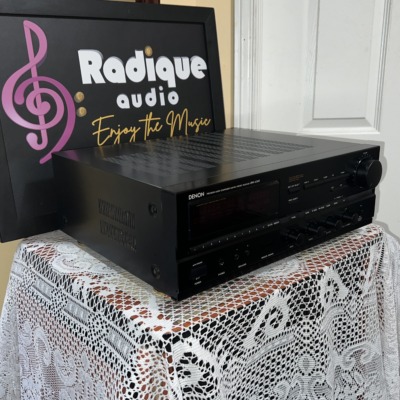
Denon DRA-835R Vintage Stereo Receiver – 100 WPC, Made in Japan
The second-from-the-top model in Denon's early-nineties stereo receiver range, made in Japan and in very good condition, with 100 watts per channel, a phono stage, motorized volume and its original remote.
✔️ Very good condition — free of significant marks
✔️ 100 WPC, MM phono and motorized volume — made in Japan
✔️ Original Denon remote included
✔️ Covered by Radique Warranty
✔️ Includes Perpetual Trade-Back Program eligibility
✔️ Expertly packed for safe shipping
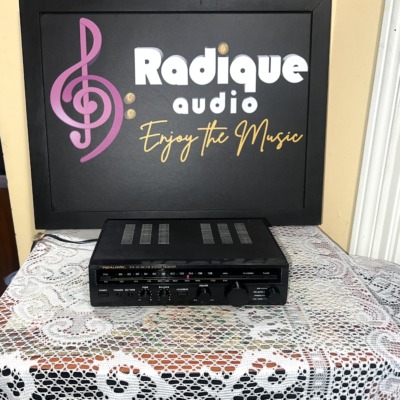
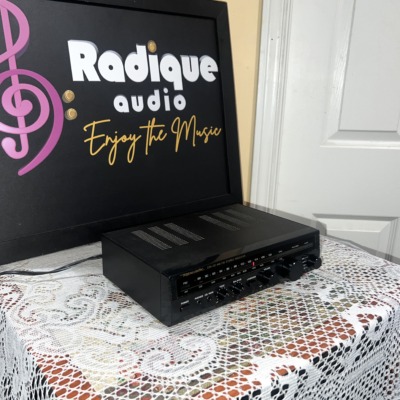
Realistic STA-20 Compact AM/FM Stereo Receiver – 5 WPC, Serviced
Radio Shack's smallest AM/FM stereo receiver of the 1990s, the Realistic STA-20: 5 watts per channel, a rear EQ switch made for mini-speakers, a phono input and a front jack for a phone.
✔️ Serviced on our bench to our Level 1 standard
✔️ Very good condition
✔️ Covered by Radique Warranty
✔️ Includes Perpetual Trade-Back Program eligibility
✔️ Expertly packed for safe shipping
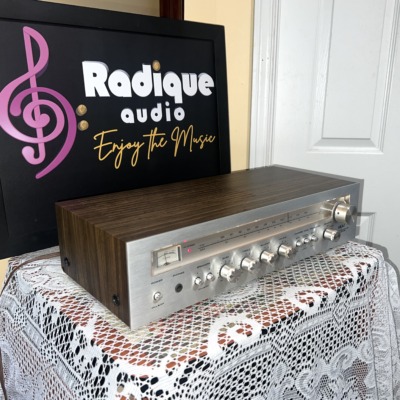
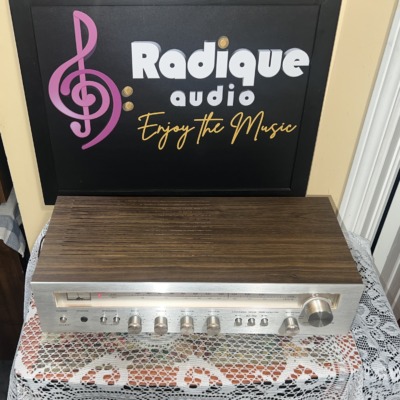
Akai AA-1115 Vintage Stereo Receiver – 15 WPC, Made in Japan
A slim late-1970s Akai AA-1115 AM/FM stereo receiver, made in Japan, silver face in its original woodgrain cabinet.
✔️ Tested on our bench, every input, output and control
✔️ Very good condition
✔️ MM phono, PLL FM tuner, speakers A and B
✔️ Covered by Radique Warranty
✔️ Includes Perpetual Trade-Back Program eligibility
✔️ Expertly packed for safe shipping
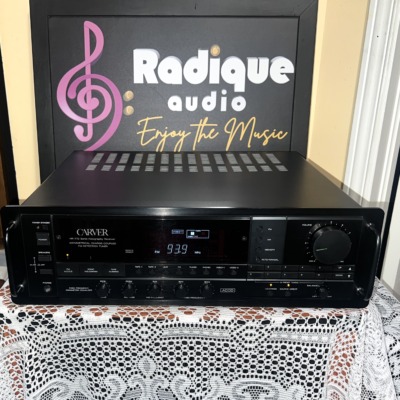
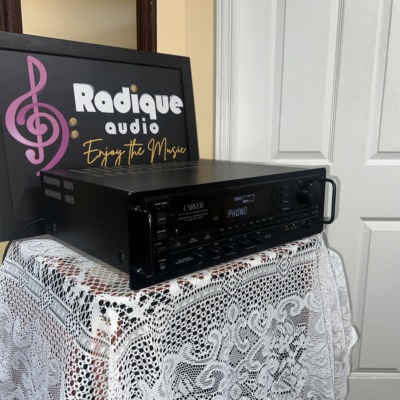
Carver HR-772 Sonic Holography Receiver – 140 WPC, Rack Ears
A Carver HR-772 stereo receiver, Carver's early-1990s flagship: 140 watts per channel, Sonic Holography, and rack ears with front handles.
✔️ Tested on our bench, Sonic Holography included
✔️ Very good condition
✔️ 140 WPC, stable to 2 ohms, MM phono, five-band EQ
✔️ Rack ears and handles for a 19-inch rack
✔️ Covered by Radique Warranty
✔️ Includes Perpetual Trade-Back Program eligibility
✔️ Expertly packed for safe shipping
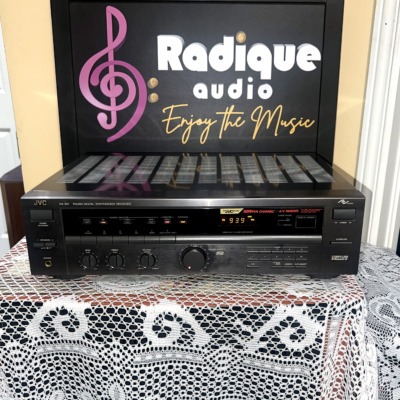
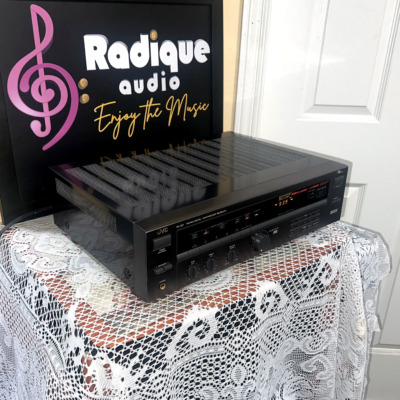
JVC RX-307 Stereo Receiver – 80 WPC, Original Remote & Manual
Eighty watts a side, a proper phono input, and the two things these almost never come with any more: the original remote and the printed manual.
✔️ Condition: Very Good
✔️ Covered by Radique Warranty
✔️ Includes Perpetual Trade-Back Program eligibility
✔️ Expertly packed for safe shipping
