


Yamaha NS-IW470 3-Way 6.5″ In-Wall Speakers — Pair, Black
$175.00
The midrange and tweeter both swivel, so you can aim them at the seat rather than at the opposite wall — useful in a room that is not symmetrical. A 6.5-inch coated paper woofer, a 2-inch paper midrange with its own level control, and a 1-inch silk dome. 55 Hz to 28 kHz, 6 ohms, wired internally with Monster Cable. Light traces of a previous installation, no damage.
1 in stock
Yamaha NS-IW470 3-Way 6.5″ In-Wall Speakers — Pair, Black
A pair of Yamaha NS-IW470 three-way in-wall speakers in black — a versatile, easy-to-install system built around an impressive crossover network and swivelling high-frequency drivers, showing minor signs of a previous installation but no noteworthy flaws or damage.
Yamaha’s NS-IW470 is a capable and well-engineered in-wall speaker that punches above its modest footprint. The three-way driver complement — a 6.5″ coated paper cone woofer, a 2″ paper cone midrange, and a 1″ silk soft dome tweeter — covers a wide frequency range of 55 Hz to 28 kHz, and the swivel-mounted tweeter and midrange allow precise aiming toward the primary listening position. This is a genuinely useful feature in asymmetrical rooms or installations where the listener is not directly in front of the speaker.
The crossover network is a particular strength of this design. Yamaha engineered a low-distortion, high-capacity custom crossover that preserves transient integrity across the frequency band, and the internal wiring uses Monster Cable throughout — a detail that speaks to Yamaha’s intent to deliver a clean, uncompromised signal path from input to driver. A level adjustment control for the midrange allows fine-tuning to suit the room’s acoustic character or listener preference. At 120 watts peak / 40 watts nominal, these speakers have ample headroom for home theater or whole-house audio applications.
These speakers have been thoroughly inspected and tested to confirm full functionality. Cosmetically, both units show minor signs consistent with a previous installation — light traces of paint or mounting contact on the frames — but present cleanly with no damage, broken clips, or driver flaws of any kind.
Type: 3-way in-wall
Woofer: 6.5″ coated paper cone
Midrange: 2″ paper cone, level-adjustable, swivel-mounted
Tweeter: 1″ silk soft dome, swivel-mounted
Frequency response: 55 Hz – 28 kHz
Sensitivity: 87 dB / 2.83 V / 1 m
Impedance: 6 ohms
Nominal input power: 40W
Maximum input power: 120W (peak)
Speaker terminals: push-type
Internal wiring: Monster Cable
Crossover: Low-distortion, high-capacity custom network
Finish: Black
No digital inputs or outputs
Dimensions per speaker: (Width x Height x Depth) 8.9 x 3.8 x 11.9 inches (226 x 97 x 303 mm)
Mounting depth: 3.1 inches (78 mm)
Weight: 3.0 lbs (1.4 kg) each
A well-built Yamaha three-way in-wall pair with an audiophile-grade crossover and swivelling drivers — an ideal choice for home theater, multi-room audio, or any installation where clean, unobtrusive sound reproduction is the goal. Lightly used, fully tested, and ready for their next home
Backed by Radique Audio’s Bumper-to-Bumper Warranty and our Perpetual Trade-Back Program, you can purchase with confidence.
| Weight | 8 lbs |
|---|---|
| Dimensions | 16 × 14 × 13 in |
Yamaha began as an organ maker in Hamamatsu, Japan, in 1887. It made gramophones from the 1920s and began hi-fi with the 1954 HiFi Player. We carry Yamaha AV receivers, vintage stereo receivers, CD players, subwoofers and speakers. We've had more than 280 Yamaha listings so far, covering nearly 200 different models. Every used Yamaha here is inspected, tested and serviced as required, then photographed in-house and covered by our Bumper-to-Bumper Warranty and Perpetual Trade-Back Program. Every AV receiver we list is tested input by input on our bench: each HDMI input and output, the analog, optical and coaxial inputs, the subwoofer outputs and the wireless features where it has them. Don't see the model you want? Tell us on First Dibs and we'll email you when one arrives.
Yamaha models we've sold most often: the SW-3 subwoofer, the NX-E270 surrounds, and the RX-V1400, RX-V850 and RX-V800 AV receivers.
The Yamaha hi-fi story
Torakusu Yamaha built his first reed organ in Hamamatsu in 1887 and founded Nippon Gakki in 1897; the company was renamed Yamaha Corporation in 1987. Yamaha calls the 1954 HiFi Player its first audio product, and dates its first Natural Sound (NS) speakers to 1967.
1970s hi-fi. The CA-700 and CA-500 of 1972 were Yamaha's first integrated amplifiers, and the CA-1000 of 1973 could switch its output stage between Class A and Class A/B. The NS-1000 and NS-1000M speakers of 1974 used beryllium dome drivers, and the NS-10M of 1978, sold for home use, became a studio monitor.
CD and surround. The CD-1 of 1982 was Yamaha's first CD player. The DSP-1 of 1986 was a Digital Sound Field Processor, and in 1993 the RX-V870 became the first Yamaha receiver with CINEMA DSP. The RX-V992 of 1997 added built-in Dolby Digital decoding.
AVENTAGE. The AVENTAGE (RX-A) receiver line launched in 2010, above the RX-V range.
Which Yamaha is which?
CA integrated amplifiers (1972 to about 1979): the CA-500, CA-700, CA-1000 and CA-2000, followed by the A-series.
CR receivers (mid-1970s to about 1980): the CR-1000, then the CR-620 to CR-2020 generation of 1977 to 1979.
NS speakers: from the NS-690 and the beryllium NS-1000 to the NS-10M bookshelf speaker, made from 1978 to 2001.
CD players: from the CD-1 of 1982 to the CDX and GT-CD models.
RX-V AV receivers (from at least 1991): such as the RX-V800, RX-V850 and RX-V1400 we sell often. Built-in Dolby Digital arrived in 1997, YPAO room calibration in 2003 and HDMI in the mid-2000s.
RX-A AVENTAGE (from 2010): the step-up AV receivers. The RX-Z models were the flagships until 2007.
Buying used Yamaha: what to check
Formats. On an AV receiver, check what it decodes and connects to: Dolby Digital from 1997, room calibration from 2003, HDMI from the mid-2000s.
HDMI boards. On modern AV receivers, HDMI is usually the first thing to fail. We test every HDMI input and output before listing.
CR receivers. Owners suggest asking whether service bulletins were done on a CR-2020, and expect scratchy controls and burnt-out dial lamps on any unserviced unit.
NS speakers. Check that the tweeters on an NS-10M are original and both work, and inspect the beryllium domes on an NS-1000, since Yamaha stopped making beryllium diaphragms in 1997.
Everything we list is inspected, tested and serviced as required here, and comes with our warranty.
Related Products
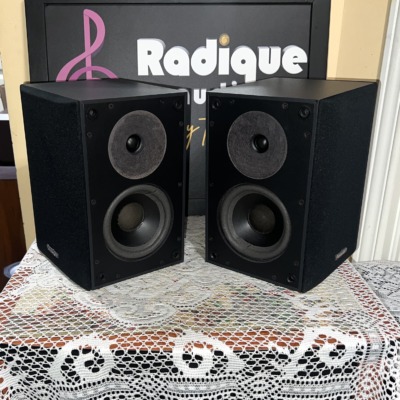
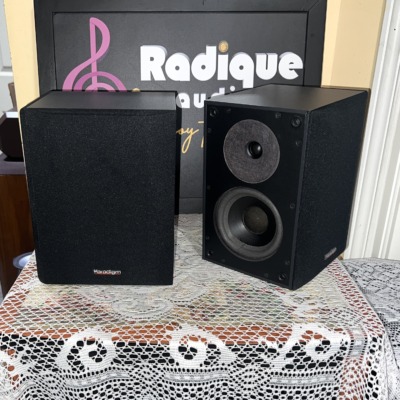
Paradigm ADP-150 Dipole Surround Speakers, Pair – Made in Canada
A heavy, solidly built pair of Paradigm ADP-150 dipole surround speakers, made in Canada, in black with their cloth grilles. All four woofers have been freshly re-foamed, the pair has been tested on our bench, and it is in very good condition.
✔️ Very good condition — black cloth grilles included
✔️ All four woofers freshly re-foamed, tested on our bench
✔️ Dipole surround design — made in Canada
✔️ Covered by Radique Warranty
✔️ Includes Perpetual Trade-Back Program eligibility
✔️ Expertly packed for safe shipping
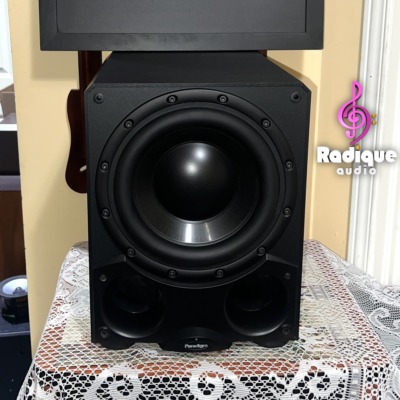
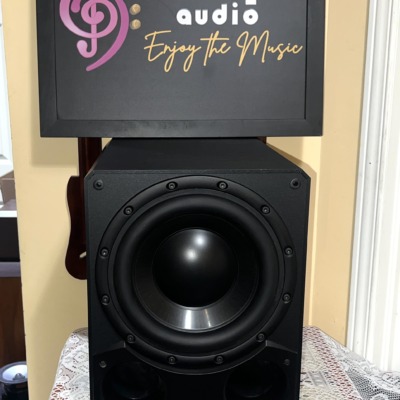
Paradigm DSP-3100 v.2 10″ Subwoofer – 600W Peak, Made in Canada
A black Paradigm DSP-3100 v.2 powered subwoofer, made in Canada, with a 10-inch front-firing driver and 200 watts RMS (600 watts dynamic peak) on board. It has been tested on our bench and is in very good condition.
✔️ Very good condition — removable black cloth grille included
✔️ 10-inch front-firing driver, 200 W RMS / 600 W peak Class-D
✔️ Front ports for hidden installs — made in Canada
✔️ Covered by Radique Warranty
✔️ Includes Perpetual Trade-Back Program eligibility
✔️ Expertly packed for safe shipping
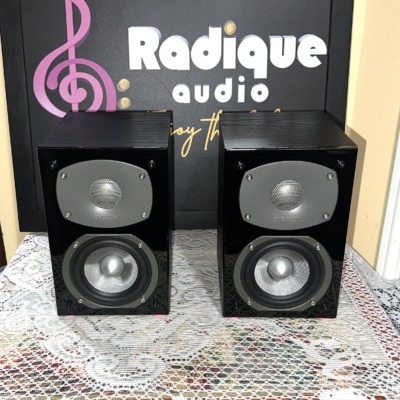
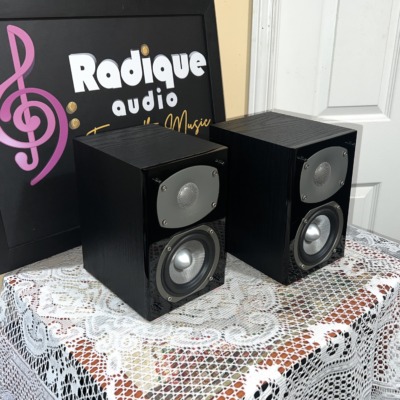
Energy C-50 Bookshelf Speakers, Pair – Ultra-Compact, Black Ash
A pair of ultra-compact Energy C-50 bookshelf speakers, designed and engineered in Canada, in black ash with gloss black front baffles and their black cloth grilles. They have been tested on our bench and are in very good condition.
✔️ Very good condition — black ash with gloss baffles, grilles included
✔️ 1-inch aluminum tweeter and 4½-inch woofer, video-shielded
✔️ Five-way binding posts — designed and engineered in Canada
✔️ Covered by Radique Warranty
✔️ Includes Perpetual Trade-Back Program eligibility
✔️ Expertly packed for safe shipping
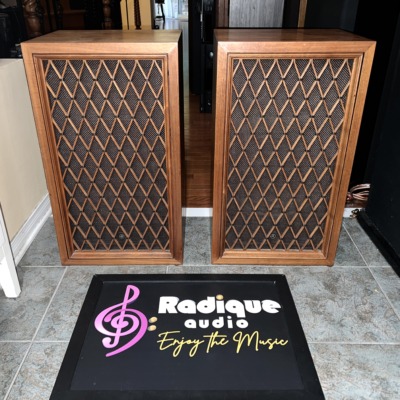
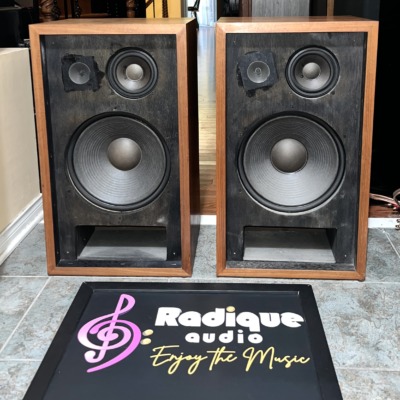
Vintage Pioneer CS-77 12″ 3-Way Speakers, Pair – Made in Japan
A pair of late-1960s Pioneer CS-77 three-way speakers, made in Japan, in walnut veneer cabinets with their wooden diamond-lattice grilles. Their High Level controls have been freshly serviced, they have been tested on our bench, and they are in good condition.
✔️ Good condition — walnut veneer, wooden lattice grilles included
✔️ High Level controls freshly serviced, tested on our bench
✔️ 12-inch woofer, three-way design — made in Japan, late 1960s
✔️ Covered by Radique Warranty
✔️ Includes Perpetual Trade-Back Program eligibility
✔️ Expertly packed for safe shipping
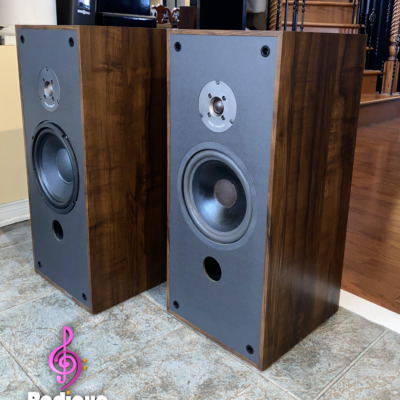
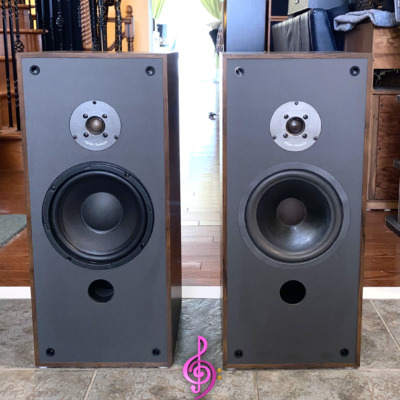
Paisley Reference Two Bookshelf Speakers, Pair – Made in Canada
A pair of Paisley Research Reference Two bookshelf speakers, made in Canada, in walnut-finish cabinets with black front baffles and their black cloth grilles. They have been tested on our bench, they play nicely, and they are in very good condition. One woofer is a replacement fitted by a previous owner, not by us; the details are under Condition.
✔️ Very good condition — walnut-finish cabinets, grilles included
✔️ Tested and playing nicely; one replacement woofer, disclosed below
✔️ 8-inch woofers, front-ported — made in Canada
✔️ Covered by Radique Warranty
✔️ Includes Perpetual Trade-Back Program eligibility
✔️ Expertly packed for safe shipping
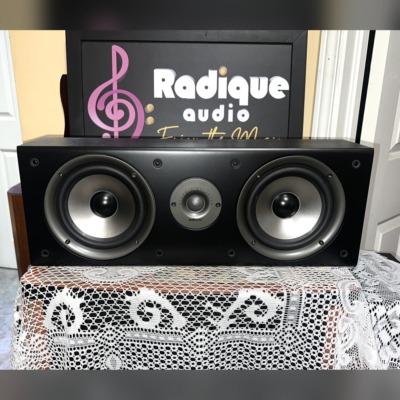
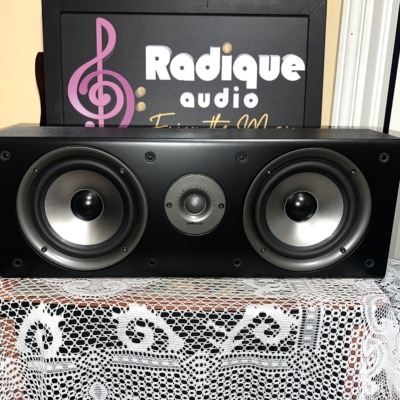
Polk CS2 Series II Center Channel Speaker – Dual 6.5″ Woofers
A Polk Audio Monitor CS2 Series II center channel speaker in black, with dual 6½-inch woofers for full-bodied, clear dialogue. It has been tested on our bench and is in very good condition.
✔️ Very good condition — black wood-grain, black cloth grille included
✔️ Dual 6½-inch Dynamic Balance woofers for clear, full-bodied dialogue
✔️ 90 dB, 8 ohms, magnetically shielded — tested on our bench
✔️ Covered by Radique Warranty
✔️ Includes Perpetual Trade-Back Program eligibility
✔️ Expertly packed for safe shipping
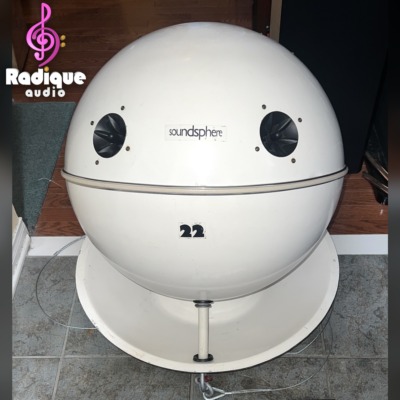
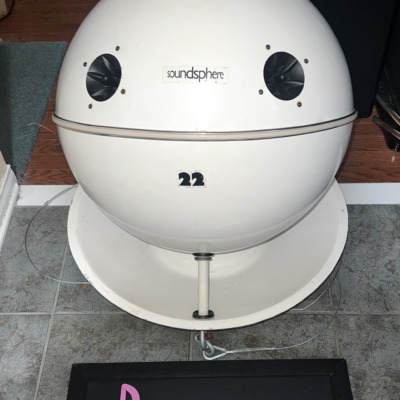
SoundSphere 2212-1 Omnidirectional Speakers, Pair – Made in USA
A pair of vintage SoundSphere 2212-1 omnidirectional speakers, made in the USA: the big white hanging spheres that fill a whole room with sound, with their steel cables for hanging from the ceiling. They have been cleaned up and thoroughly tested on our bench, and they are in good condition.
✔️ Good condition — cleaned up, commercial history disclosed below
✔️ 360° hemispherical sound: 12-inch driver plus four piezo tweeters
✔️ Steel hanging cables included — made in the USA
✔️ Covered by Radique Warranty
✔️ Includes Perpetual Trade-Back Program eligibility
✔️ Curbside delivery, local collection or freight within Canada
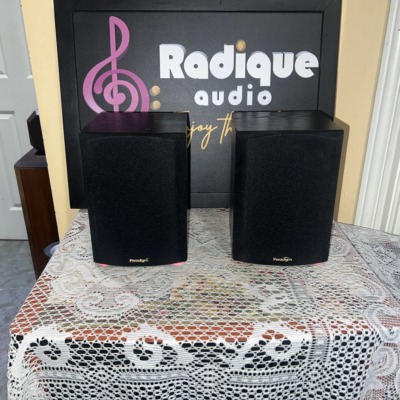
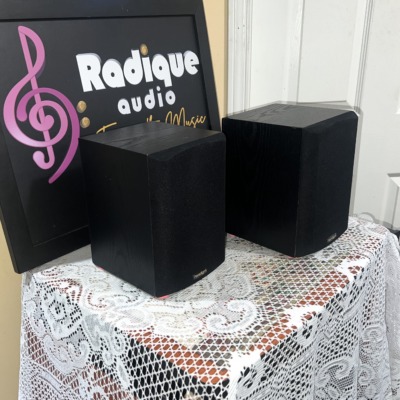
Paradigm Micro v.3 Bookshelf Speakers, Pair – Black Ash
A pair of Paradigm Micro v.3 speakers, the smallest of Paradigm's Canadian-designed Performance Series, with rubber woofer surrounds that will never need refoaming.
✔️ Tested on our bench
✔️ Fair condition, priced to match
✔️ Covered by Radique Warranty
✔️ Includes Perpetual Trade-Back Program eligibility
✔️ Expertly packed for safe shipping
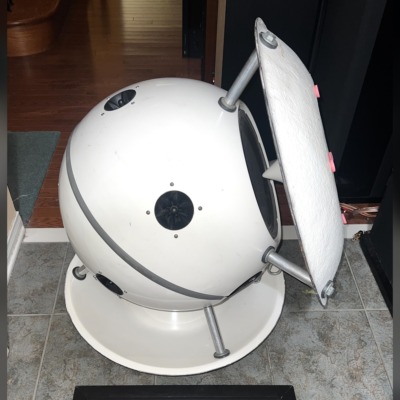
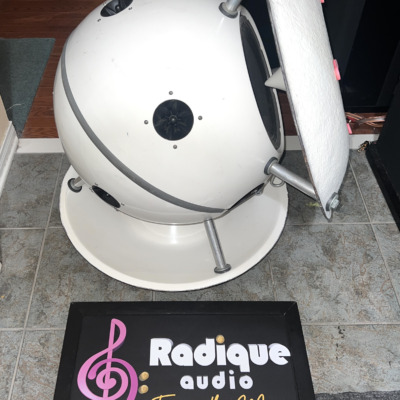
SoundSphere 2212-2 Omnidirectional Speaker – 400 W, Made in USA
A single SoundSphere 2212-2, the big two-reflector model, made in the USA: two 12-inch woofers, six tweeters and 400 watts, sending sound through 360 degrees.
✔️ Tested on our bench, both woofers and all six tweeters
✔️ Good condition, wear from use
✔️ Two reflectors, 400 W RMS, 4 ohms, 1/4-inch input
✔️ Covered by Radique Warranty
✔️ Includes Perpetual Trade-Back Program eligibility
✔️ Curbside delivery, local collection or freight within Canada
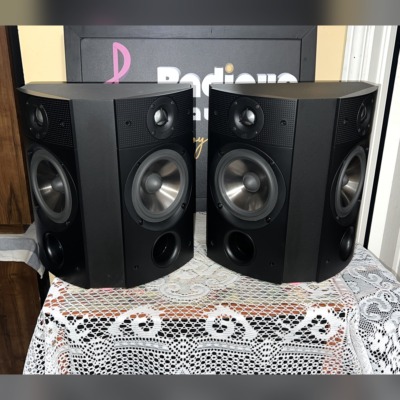
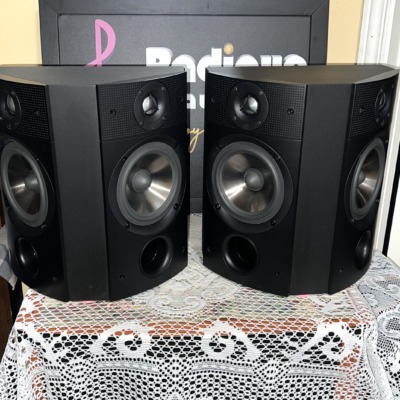
PSB Image S50 Bipole Surround Speakers, Pair – Made in Canada
A pair of PSB Image S50 bipole surround speakers in black, made in Canada, with grilles and keyhole wall brackets.
✔️ Tested on our bench, both driver sets in each cabinet
✔️ Very good condition, grilles included
✔️ Bipole: fills the room instead of pointing at you
✔️ Covered by Radique Warranty
✔️ Includes Perpetual Trade-Back Program eligibility
✔️ Expertly packed for safe shipping
