
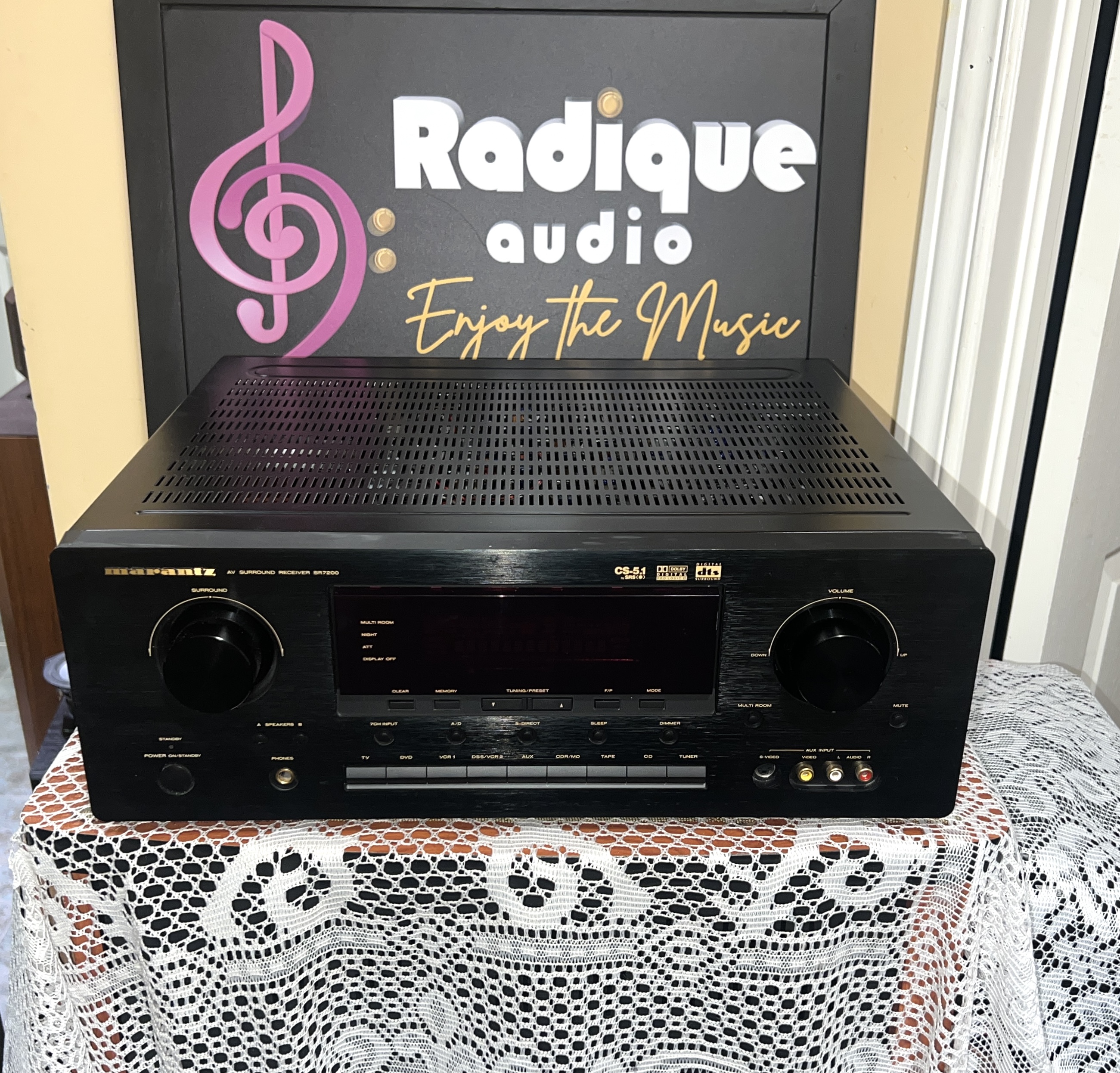
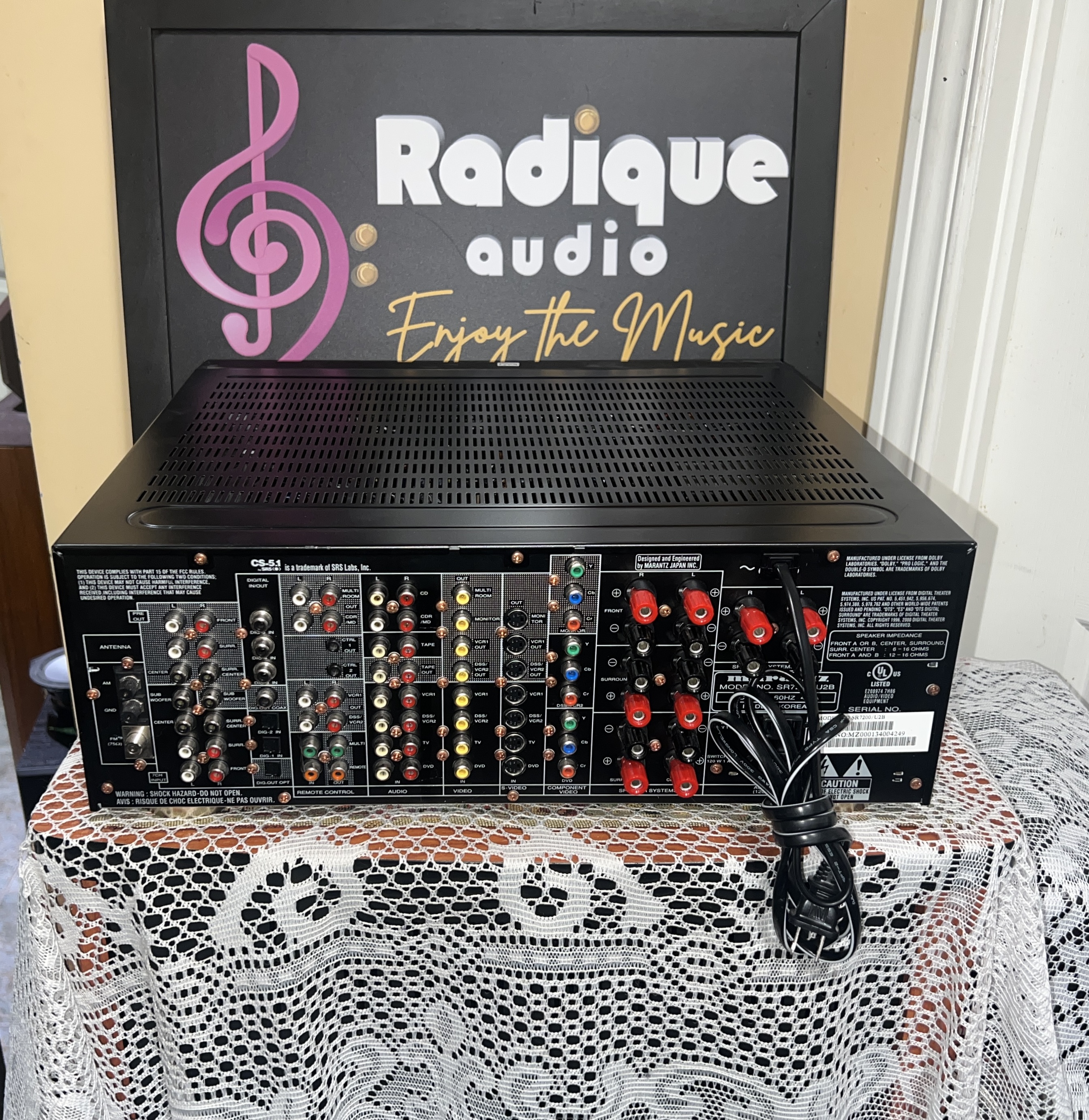
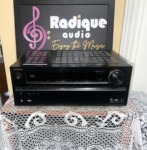
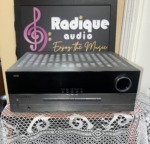
Marantz SR7200 6.1 AV Receiver – For Parts/Repair
$75.00
Sold as-is for parts or repair, with no warranty and no trade-back: our confirmed issue is a scratchy front left channel that cuts in and out when its connection is wiggled. A Marantz 6.1 receiver of 2001 for a DIY repair or high-quality donor parts.
✔️ Sold as-is, for parts or repair
✔️ No warranty or trade-back; all sales final
✔️ Expertly packed for safe shipping
1 in stock
An early-2000s Marantz SR7200 6.1-channel AV surround receiver, sold as-is for parts or repair.
Assessed as repairable by our senior technician, this early-2000s receiver is being sold strictly “as-is”: a large backlog of billable client work, plus in-house service of higher-value components, both need to take priority. Featuring classic Marantz build quality, this is an excellent pickup for a DIY technician looking for a solid 6.1 channel repair project or high-quality internal donor components.
What we found
– Our confirmed issue on this unit, from our bench test: the front left channel is scratchy, and the sound cuts in and out when the front left connection is wiggled.
There may well be other issues. These are the ones we know about.
Available for pickup in Kanata, or shipped across Canada and internationally. Live shipping rates for your address are calculated at checkout.
Sold as-is, for parts or repair. This unit is not covered by our Bumper-to-Bumper Warranty, is not eligible for our Perpetual Trade-Back Program, and all sales are final.
Can you fix this one?
If you could bring this receiver back to life, and you enjoy working on used and vintage audio gear, we might have a spot for you on our team. Read our tech wanted ad on our Join Our Team page.
Marantz SR7200 6.1 AV Receiver Specifications
- Type: 6.1-channel AV surround receiver, Dolby Digital, DTS
- Power output: 105 watts per channel into 8 ohms, six channels
- 7.1-channel analog input, A and B front speakers, multi-room
- Component, S-video and composite video switching
- No remote included
- Introduced 2001
- Dimensions: (Width x Height x Depth) 17.3 x 6.5 x 16.7 inches (440 x 164 x 425 mm)
- Weight: 32.8 lbs (14.9 kg)
⚠️ Important Information for International Buyers
This unit is configured for North American 110/120V power. Buyers outside North America will require a step-down transformer and appropriate plug adapter.
Sold As-Is — Please Read
This unit is offered as-is for parts or repair. It is not covered by our Bumper-to-Bumper Warranty and is not eligible for the Perpetual Trade-Back Program. All sales final.
📞 Questions? Use the Ask a Question button above, or call us at 613-416-9995.
| Weight | 34.8 lbs |
|---|---|
| Dimensions | 20.7 × 21.3 × 10.5 in |
Marantz began in 1953 in Queens, New York, where Saul Marantz built tube preamplifiers and amplifiers, and by the 1970s it was making receivers with champagne-gold faceplates, blue-lit dials and flywheel tuning. We carry Marantz receivers, amplifiers and preamps, turntables, tuners, CD players and cassette decks. We've had more than 150 Marantz listings so far, covering nearly 100 different models. Every used Marantz here is inspected, tested and serviced as required, then photographed in-house and covered by our Bumper-to-Bumper Warranty and Perpetual Trade-Back Program. Many Marantz components were sold without their wood case, so we also make new cherry WC-22 and WC-10 style cabinets. Don't see the model you want? Tell us on First Dibs and we'll email you when one arrives.
Our five best-selling Marantz models so far: the SR4023 stereo receiver, the vintage 2225, the SR7000 AV receiver, the SR4320 stereo receiver and the vintage 2238B.
The Marantz story, 1953 to today
Saul B. Marantz founded the company in New York in 1953. His first product, the Audio Consolette preamplifier, became the Model 1, and Marantz dates the first Consolettes to 1952–53. Marantz says the early factory was in Woodside, Queens.
The tube years. Through the late 1950s and early 1960s Marantz built a small run of tube separates in New York that collectors still chase: the Model 7 preamplifier (1958), the Model 9 power amplifier (1960) and the Model 10B tuner (1964).
Superscope and the move to Japan. In 1964 Superscope, the company that also distributed Sony tape recorders in the US, bought Marantz, and Saul Marantz resigned at the end of 1967. The Model Eighteen of 1968 was the first Marantz receiver, rated at 40 watts per channel. Under Superscope, design moved to California and, from the late 1960s, production moved to Japan through Standard Radio, which became Marantz Japan in 1975. Receivers such as the 2230 and 2270 are listed as designed in the USA and produced in Japan.
The power race. After a 1974 Federal Trade Commission rule tightened how amplifier power was rated, receiver makers competed on watts. Marantz's Model 2500 of the late 1970s was rated at 250 watts per channel and had an oscilloscope tuning display.
Philips, Denon and today. In 1980 Philips bought Superscope's stake in Marantz Japan and the brand outside the US and Canada. Marantz says its CD-63 of 1982 was one of the first CD players, and its "KI Signature" models carry the initials of Ken Ishiwata, who joined in 1978. In 2001 Marantz Japan bought the trademark back from Philips, and in 2002 it combined with Denon to form D&M Holdings. In September 2025 HARMAN, a Samsung company, completed its purchase of Sound United, the parent of Marantz and Denon.
Which Marantz is which?
Tube separates (1950s–60s): the Models 1, 7, 8B, 9 and 10B, built in New York. Rare collector pieces.
First receivers (from 1968): the Model Eighteen, followed by the Nineteen at the end of 1969.
22xx receivers (from 1972): the first set was the 2215, 2230, 2245 and 2270, with the champagne-gold faceplate, blue-lit dial and "Gyro-Touch" flywheel tuning. A higher number generally means more power: the 2230 is rated at 30 watts per channel, the 2270 at 70. Later "B" versions such as the 2220B and 2285B followed.
Big late-1970s receivers: the 2325 (125 watts per channel), the 2500 flagship and four-channel "Quad" receivers.
1000-series integrated amplifiers: for example the 1060 (30 watts per channel, from 1971), the 1070 and the 1150 (75 watts per channel). The slim 1030, 1040, 1060 and 1070 share their case size with tuners such as the 104, 105 and 112.
Tuners: from the tube Model 10B to solid-state models such as the 2130, with its oscilloscope display.
Wood cases: Marantz sold its wood cases separately: the WC-22 for the 22xx receivers, the WC-10 for the slim 1000-series amplifiers and 100-series tuners, and the WC-1 for larger models such as the 1200. That is why so many turn up bare. A customer who sold Marantz in Ontario in the 1970s told us the cases his shop ordered were built here in Canada, by Westinghouse. Our own cherry WC-22 and WC-10 style cabinets are made in Canada too.
CD players: from the CD-63 of 1982 to the KI Signature versions.
Buying used Marantz: what to check
Dial and meter lamps. Burnt-out bulbs are common on 1970s receivers and are often replaced, sometimes with LEDs. Ask which, if the look of the dial matters to you.
The dial itself. The diffuser sheet behind the dial ages and can dull the glow. Check that the Gyro-Touch pointer moves smoothly and tracks the stations; dial cords are a common replacement part.
Controls and switches. Crackle when you turn a control or work a switch usually means dirt. Try every input, and walk away from a unit that drops a channel.
Capacitors and bias. Electrolytic capacitors in 1970s gear are often past their best, and full restorations replace them. Restorers also set the bias and DC offset.
Cosmetics. Pitting on the faceplate points to damp storage, and dents or water stains to rough handling.
Everything we list is inspected, tested and serviced as required here, and comes with our warranty.
Related Products
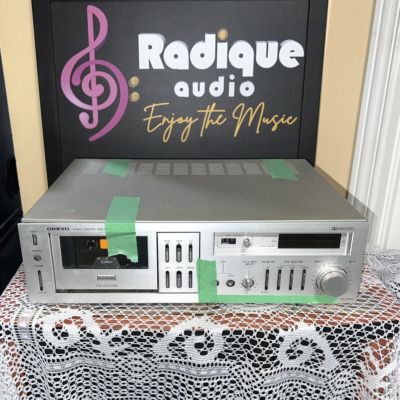
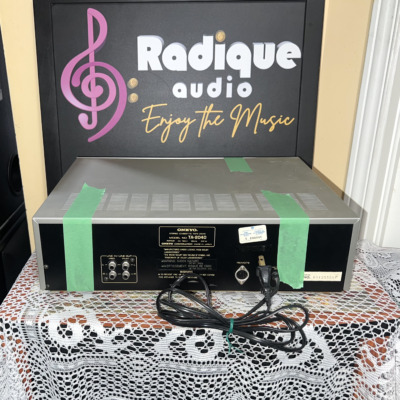
Onkyo TA-2040 Cassette Deck – Silver, Japan, For Parts/Repair
Sold as-is for parts or repair: multiple faults, not covered by our warranty, not eligible for trade-back, all sales final. What it is, is a 1980 Japanese-built two-head deck with a sendust head, full-logic transport, FG-servo motor and Dolby B — not economic for our bench, and a completely different arithmetic if you have a soldering iron.
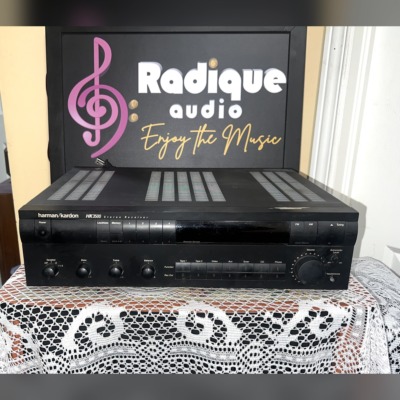
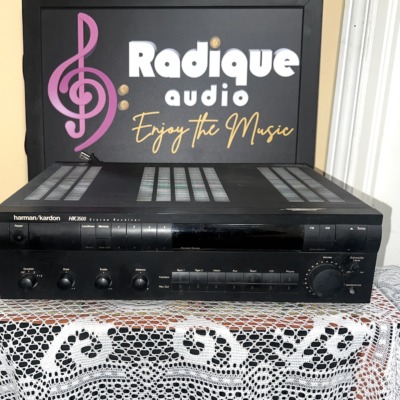
Harman Kardon HK3500 Stereo Receiver – 50 WPC, For Parts/Repair
Sold as-is for parts or repair, with no warranty and no trade-back: input lights stay on, the tuner input only holds while its button is pressed, and the controls crackle. A 50-watt-per-channel Harman Kardon with a subwoofer out, for the DIY tech.
✔️ Sold as-is, for parts or repair
✔️ No warranty or trade-back; all sales final
✔️ Expertly packed for safe shipping
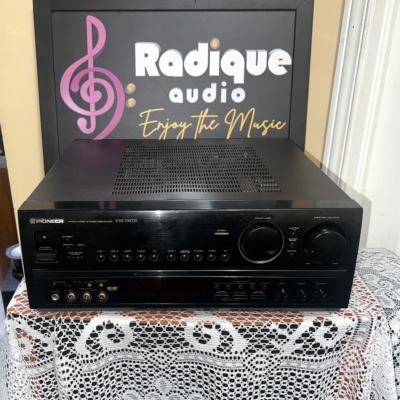
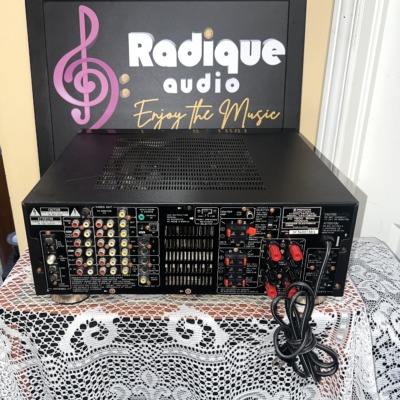
Pioneer VSX-D903S AV Receiver – 1994, For Parts/Repair
Sold as-is for parts or repair, with no warranty and no trade-back: it powers on, but there is no sound from the front or surround speakers. A 1994 Pioneer Pro Logic receiver for a donor or a DIY repair.
✔️ Sold as-is, for parts or repair
✔️ No warranty or trade-back; all sales final
✔️ Expertly packed for safe shipping
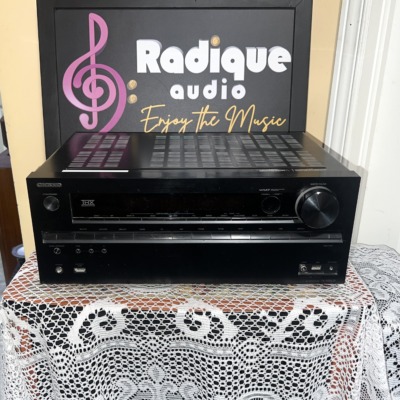
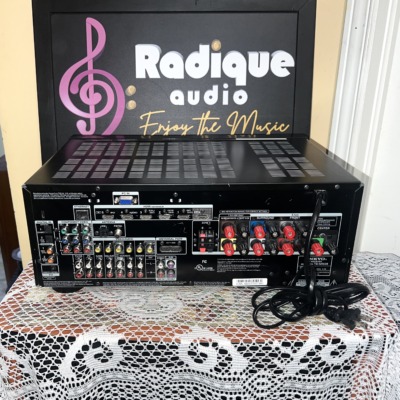
Onkyo TX-NR609 7.2 AV Receiver – 2011, For Parts/Repair
Sold as-is for parts or repair, with no warranty and no trade-back: a relay clicks repeatedly but it never powers on, and our senior tech was uncertain it could be repaired. A 2011 Onkyo 7.2 receiver for a donor or a troubleshooting project.
✔️ Sold as-is, for parts or repair
✔️ No warranty or trade-back; all sales final
✔️ Expertly packed for safe shipping
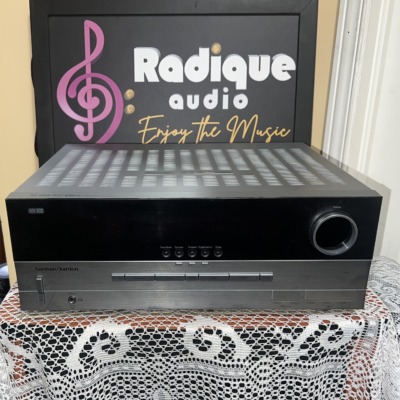
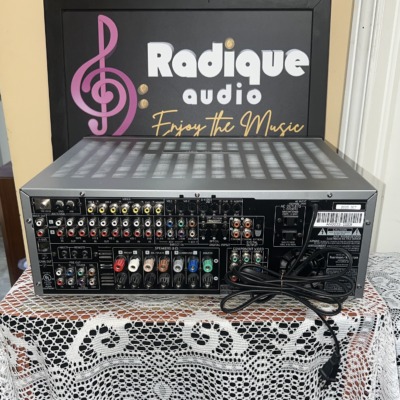
Harman Kardon AVR 340 7.1 AV Receiver – For Parts/Repair
Sold as-is for parts or repair, with no warranty and no trade-back: sound comes only from the subwoofer output, on analog and digital, even after a factory reset. A Harman Kardon 7.1 receiver for the DIY repair crowd.
✔️ Sold as-is, for parts or repair
✔️ No warranty or trade-back; all sales final
✔️ Expertly packed for safe shipping


Yamaha RX-V1070 41lb! Natural Sound AVR *As-Is*
Sold as-is, for parts or repair, with no warranty and no trade-back. There is no sound output from any channel and the display is frozen; it has not been serviced. When it worked it was a 1993 flagship — 110 watts a channel at 0.015% distortion, Dolby Pro Logic, MM phono, pre-outs, and 41 lbs of it. For someone who repairs things.


Sony RCD-W3 Single Deck Playback – See Description
Sold as-is, and here is why: the left tray's laser has failed, so it will not record and will not play from that side. The right tray still plays CD, CD-R and CD-RW, and the digital outputs, analogue outputs and headphone jack with level control all work. That makes it a working CD player, a repair project, or parts. No returns, no warranty.

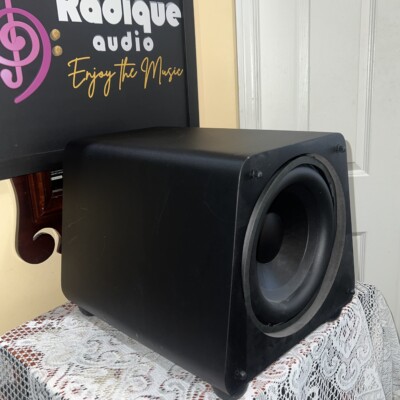
GoldenEar ForceField 4 Subwoofer – Parts/Repair, Amp Needs Work
Sold as-is for parts or repair — the amplifier board requires service and is not represented as working. What is good: the cabinet, very good cosmetically with its non-parallel walls intact; the custom front-firing 10-inch long-throw woofer, tested and working; and the 11 by 13 inch quadratic planar down-firing passive radiator, undamaged. GoldenEar supplies a replacement amplifier board through its service channel.

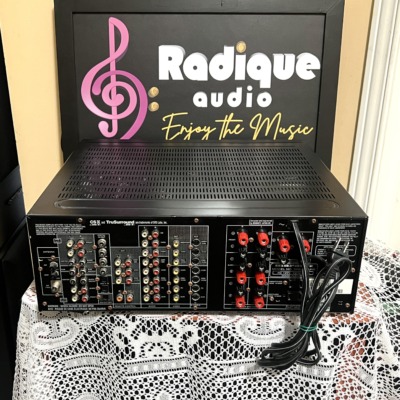
Marantz SR6300 6.1-Ch AV Receiver 100 WPC — For Parts/Repair
Does not power on. Sold as-is for parts or repair, with no warranty and no trade-back. Cosmetically it presents very well, with no significant marks to the faceplate or cabinet. Working, it was a 100-watt-per-channel 6.1 receiver with Dolby Digital EX, DTS-ES and a full set of 6.1 pre-outs. 32.7 lbs of bench project.
