


Harman Kardon Single Well Cassette Deck, Made in Japan CD191
$245.00
Out of stock
This one has sold. Want first dibs on the next one?
We take these in regularly. Leave your name and email, and we’ll email you the moment one is listed, so you hear first. No cost, no obligation.
Email me when one is listed
Stock up on tape. Maxell UR 120 Blank Cassette, $15.00 →
Other cassette decks we have in stock now
3 in stock · $195.00–$345.00 · all ship
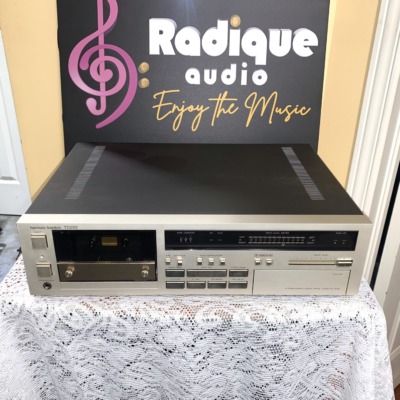 Harman Kardon Ultrawideband Linear Phase Cassette Deck TD292$195.00Ships
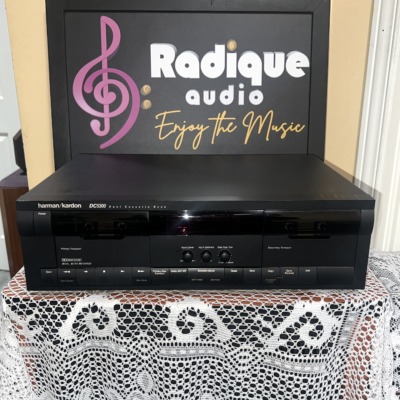 Harman Kardon DC5300 Dual Cassette Deck – Serviced, Japan$345.00Ships
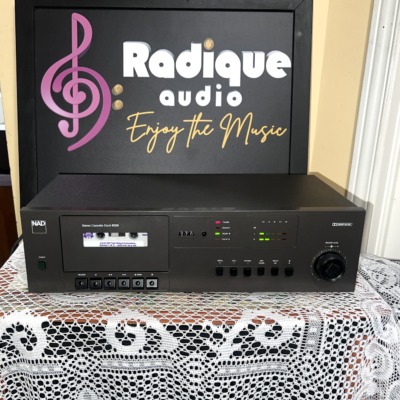 NAD 6130 Stereo Cassette Deck – Dolby B/C, Serviced, Japan$245.00Ships
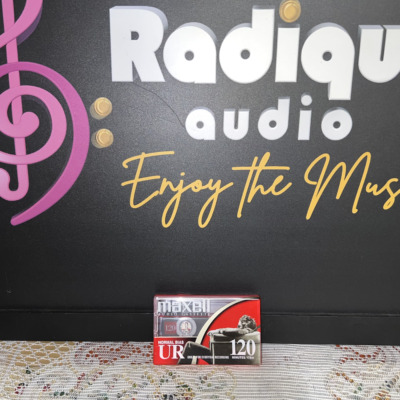
Stock up on tape.
Sealed Maxell UR 120 blank cassettes, normal bias: sixty minutes a side, ready for any deck.
Maxell UR 120 Blank Cassette, $15.00 →High Quality Single Well 80’s Vintage Cassette Deck from Harman Kardon, made in Japan.
From Harman Kardon:
“The CD191 provides a quality of sound that is rare even in esoteric equipment, let alone a moderately priced deck. The reason is the combination of ultra wide band response and Dolby C noise reduction circuitry.
The CD191 gives you spectacular frequency response of 20Hz to 21kHz (±3dB) with any tape formulation. This means an exceptionally faithful reproduction in the high frequency range.
And thanks to Dolby C, the signal to noise ratio is 72dB, keeping tape noise inaudible.
The CD191 also incorporates features that give you both extra convenience and added control over your recordings. With the Auto Repeat System engaged, the CD191 will automatically rewind and replay a tape once it has reached the end.
And for precision recording, you also get a bias fine trim that lets you adjust the bias precisely to the tape you are using.
Simply put, the CD191 gives you fidelity far superior to any deck in its price range. Almost as good, in fact, as our more expensive cassette decks.”
Specifications:
Type: 2-head, single compact cassette deck
Track System: 4-track, 2-channel stereo
Tape Speed: 4.75 cm/s
Heads: 1 x record/playback, 1 x erase
Tape Type: type I, CrO2, Metal
Noise Reduction: B, C
Frequency Response: 20Hz to 20kHz (Metal tape)
Signal to Noise Ratio: 73dB (dolby C)
Wow and Flutter: 0.05%
Total Harmonic Distortion: 0.9%
Input: 50mV (line), 0.65mV (mic)
Output: 0.38V (line)
Dimensions: 440 x 122 x 343mm, Weight: 7.3kg
Year: 1982
Includes soft copy of manual in PDF. Asking $245 for this great quality HK Made in Japan Cassette Deck.
| Weight | 16.09 lbs |
|---|---|
| Dimensions | 21.32 × 8.80 × 17.50 in |
| Cassette Wells | Single Well |
| Noise Reduction | Dolby B, Dolby C |
Harman Kardon began in New York in 1953, founded by Sidney Harman, who was born in Montreal, and Bernard Kardon. Harman Kardon calls its 1954 Festival D1000 the first hi-fi receiver. We carry Harman Kardon stereo receivers, AV receivers, integrated amplifiers, cassette decks and CD players. We've had more than 130 Harman Kardon listings so far. Every used Harman Kardon here is inspected, tested and serviced as required, then photographed in-house and covered by our Bumper-to-Bumper Warranty and Perpetual Trade-Back Program. Every AV receiver we list is tested input by input on our bench: each HDMI input and output, the analog, optical and coaxial inputs, the subwoofer outputs and the wireless features where it has them. Don't see the model you want? Tell us on First Dibs and we'll email you when one arrives.
The Harman Kardon story, 1953 to today
Sidney Harman and Bernard Kardon left the David Bogen Company, where Kardon was chief engineer, and founded Harman Kardon in New York in 1953. Harman was born in Montreal in 1918 and grew up in New York. Kardon retired in the 1950s.
Receivers first. Harman Kardon calls the Festival D1000 of 1954 the first hi-fi receiver and the Festival TA230 of 1958 the first stereo receiver. The Citation II tube power amplifier of 1959, designed by Stu Hegeman, sold as a kit or ready-built.
Cassette and the 1970s. Harman Kardon says its CAD-5 of 1970 was the first hi-fi cassette recorder with Dolby noise reduction. Its "Twin Powered" receivers of the 1970s, such as the 430 and 730, gave each channel its own power supply.
Owners. Sidney Harman sold the company to Beatrice Foods in the late 1970s, when he became US Deputy Secretary of Commerce. He formed Harman International in 1980 and bought Harman Kardon back in 1985. Samsung bought HARMAN in 2017, and Harman Kardon remains one of its brands.
Which Harman Kardon is which?
Tube era (1950s and 1960s): Festival receivers, and Citation kits and factory-built units such as the Citation I preamplifier and II amplifier.
1970s receivers: the 330 series, the Twin Powered 630, 930, 430 and 730, and the HK670.
1980s receivers: the "i" models such as the hk690i, advertised for its high current capability, and the 330i.
Citation separates: solid-state Citation amplifiers and preamplifiers from 1970 to the 1990s, including the Citation XX of the early 1980s.
Cassette decks: from the CAD-4 and CAD-5 to the 1980s decks numbered CD91 to CD491. Those "CD" models are cassette decks, not CD players; Harman Kardon CD players carry "HD" names.
AV receivers (late 1990s on) and later stereo: the AVR line, such as the AVR 3600, and stereo models such as the HK 3700 and HK 990.
Buying used Harman Kardon: what to check
Dial and meter lamps. Owners report dead or flickering lamps on 1970s receivers such as the 930, 430 and 330C; many are replaced with LEDs.
Capacitors. Expect a 1970s receiver that hasn't been recapped to need it.
Output stage. Owners report blown output transistors on the 730 and 430, often caused by a failed part nearby. Both channels should play cleanly at a realistic level.
Switches. Owners say the 1980s "i" receivers are prone to dirty switches that make channels cut out. Try every input and the balance control.
AV receivers. HDMI is usually the first thing to fail on a modern AV receiver. We test every HDMI input and output before listing.
Everything we list is inspected, tested and serviced as required here, and comes with our warranty.
Related Products
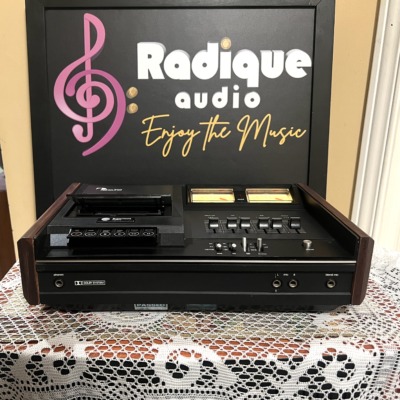
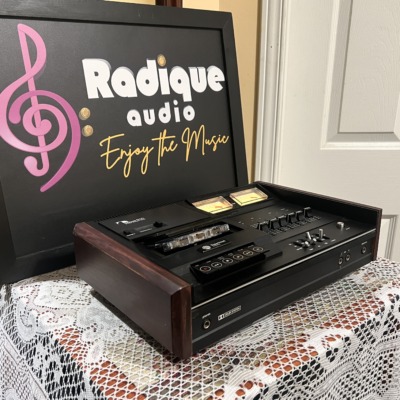
Nakamichi 500 Dual-Tracer Cassette Deck – Walnut, Made in Japan
Nakamichi's mid-seventies top-loading deck with walnut side panels, serviced on our bench and playing as it should.
✔️ Good condition — honest general wear for a fifty-year-old deck, and no damage
✔️ Serviced on our bench — our standard cassette deck service before it was listed
✔️ Walnut side panels fitted, with the original white side panels included
✔️ Covered by Radique Warranty
✔️ Includes Perpetual Trade-Back Program eligibility
✔️ Expertly packed for safe shipping
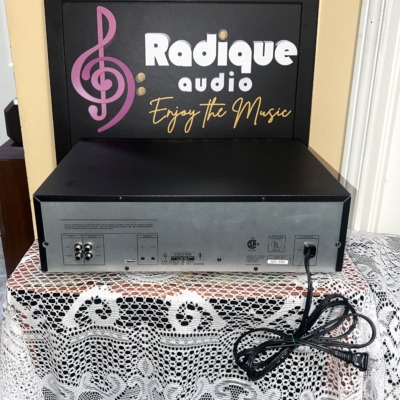
Harman Kardon DC5300 Dual Cassette Deck – Serviced, Japan
A Japanese-built Harman Kardon dual cassette deck from the early nineties, serviced on our bench and in very good condition.
✔️ Very Good condition — faceplate, cassette doors and display window present cleanly
✔️ Serviced on our bench — our standard cassette deck service before it was listed
✔️ Two auto-reverse decks with Dolby B and C, made in Japan
✔️ Covered by Radique Warranty
✔️ Includes Perpetual Trade-Back Program eligibility
✔️ Expertly packed for safe shipping
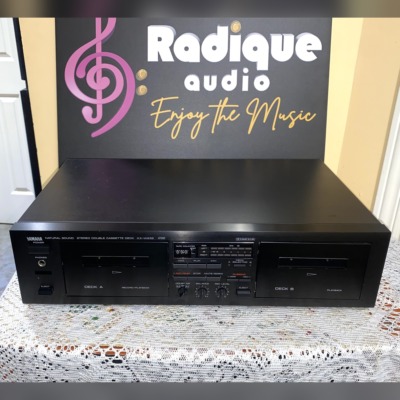
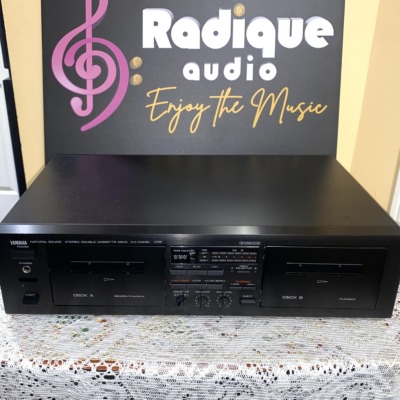
Yamaha KX-W232 Dual Cassette Deck – Dolby B & C, Made in Japan
A Japanese-built Yamaha dual cassette deck from the early nineties, tested on our bench and in good condition, priced to reflect one door quirk we describe below.
✔️ Good condition — a rear-panel crack and a Deck A door quirk, both explained below
✔️ Tested on our bench and working as it should
✔️ Two decks with Dolby B and C — made in Japan
✔️ Covered by Radique Warranty
✔️ Includes Perpetual Trade-Back Program eligibility
✔️ Expertly packed for safe shipping
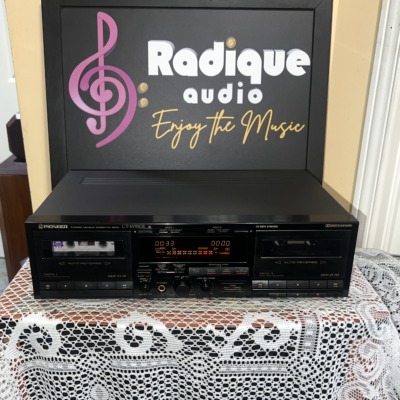
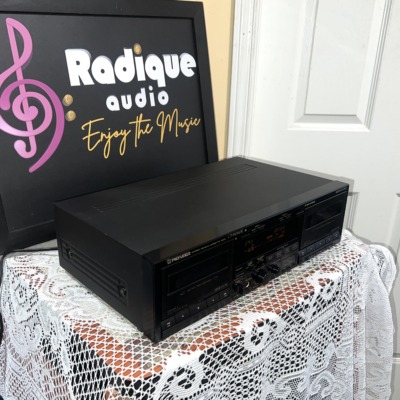
Pioneer CT-W550R Dual Cassette Deck – Dolby B/C, HX Pro, Japan
A 1991 Pioneer CT-W550R twin cassette deck, made in Japan, with auto-reverse on both decks, Dolby B and C and Dolby HX Pro.
✔️ Serviced on our bench
✔️ Very good condition
✔️ High-speed dubbing, CD synchro recording, music search
✔️ Covered by Radique Warranty
✔️ Includes Perpetual Trade-Back Program eligibility
✔️ Expertly packed for safe shipping
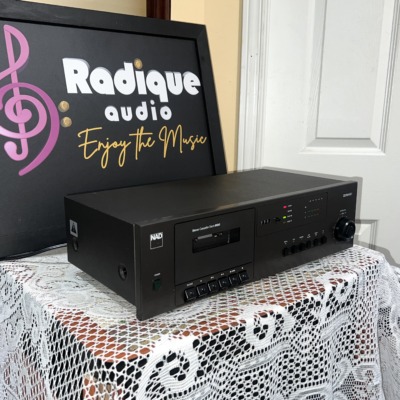
NAD 6130 Stereo Cassette Deck – Dolby B/C, Serviced, Japan
A mid-1980s NAD 6130 cassette deck, made in Japan, with Dolby B and C, a hard permalloy head and a belt-driven flywheel transport.
✔️ Serviced on our bench
✔️ Very good condition
✔️ Covered by Radique Warranty
✔️ Includes Perpetual Trade-Back Program eligibility
✔️ Expertly packed for safe shipping
