
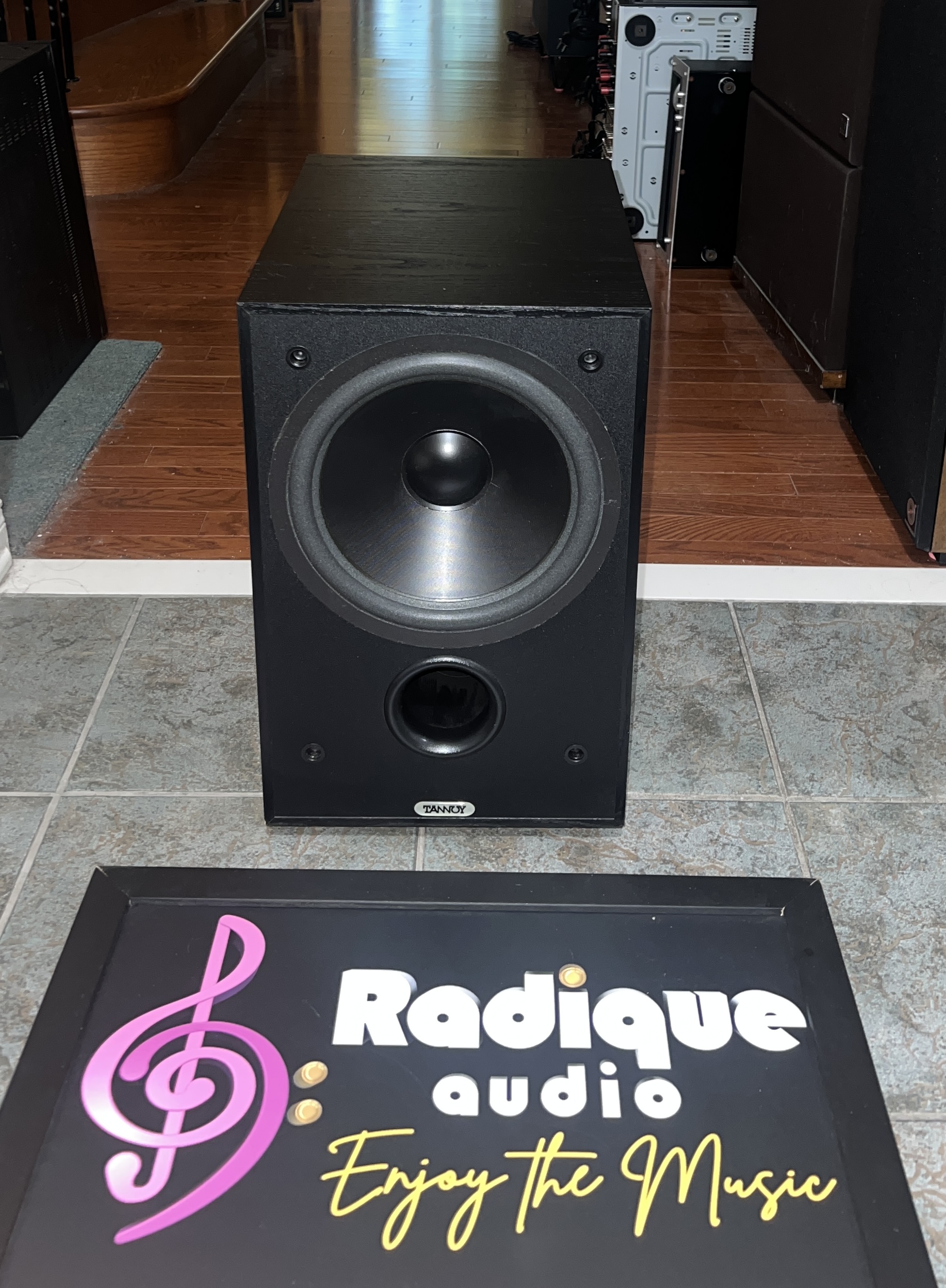
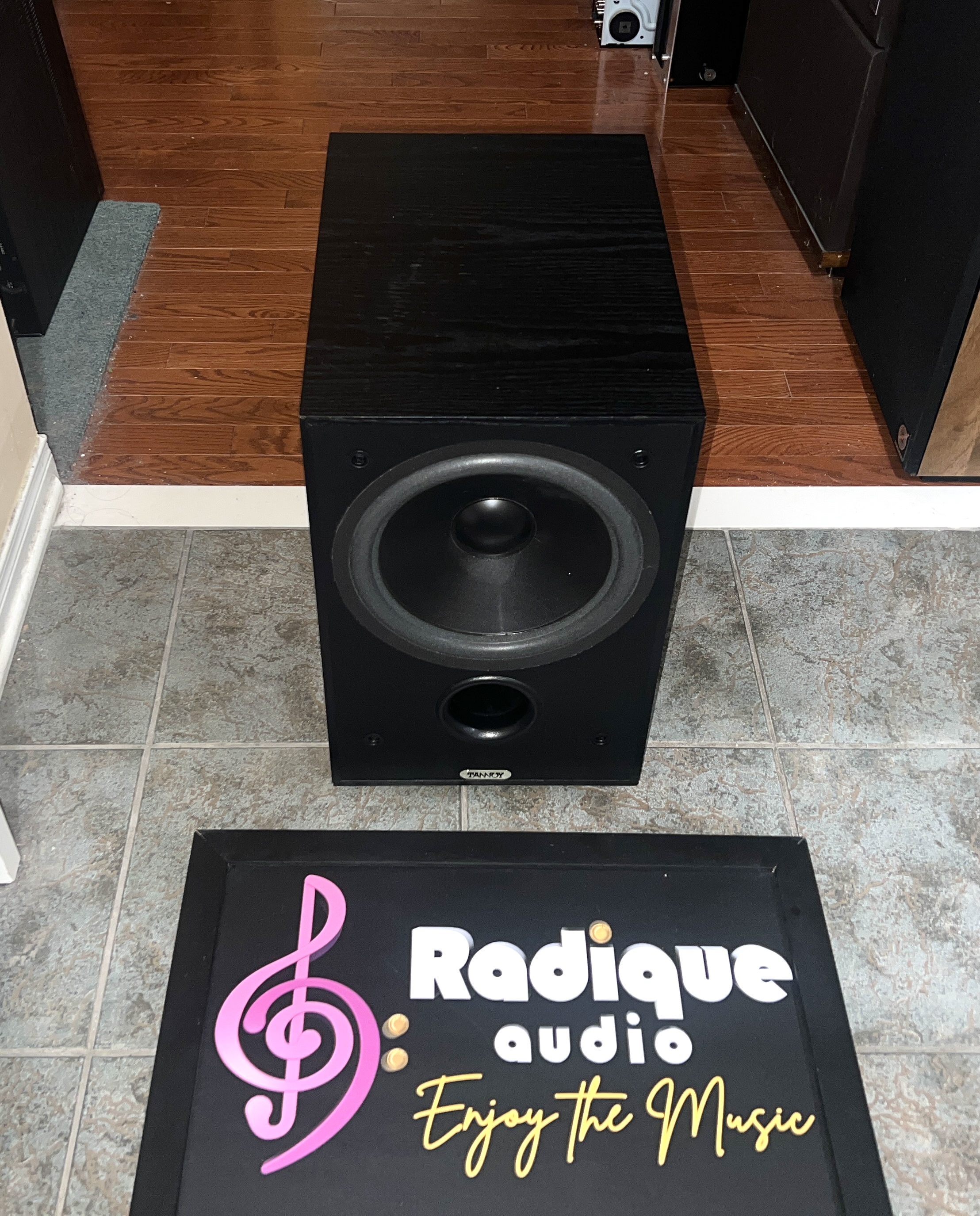
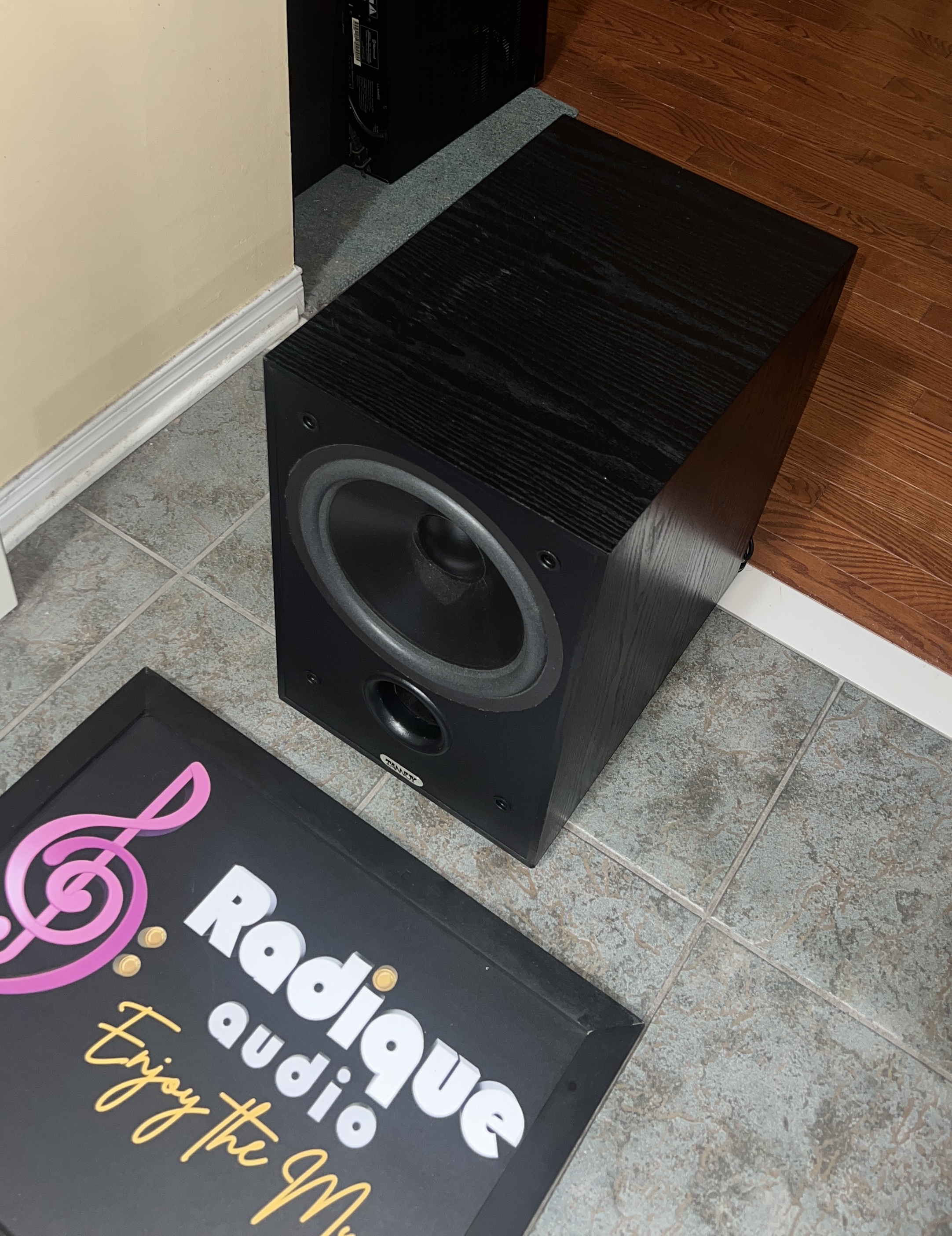
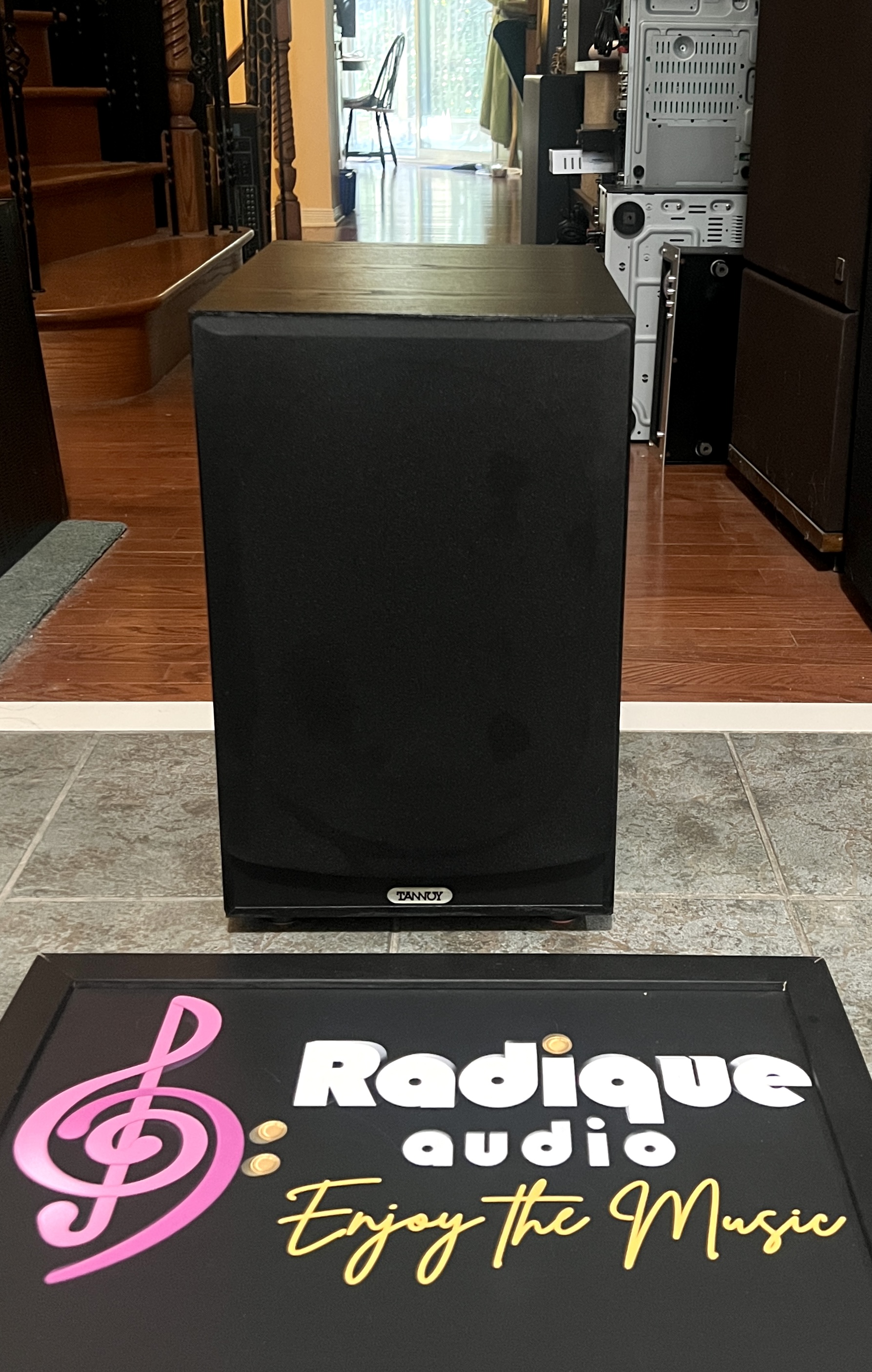
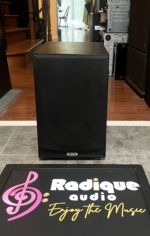

Tannoy PS 110 Subwoofer — Made in Canada, 10-Inch, 110W MOSFET
$295.00
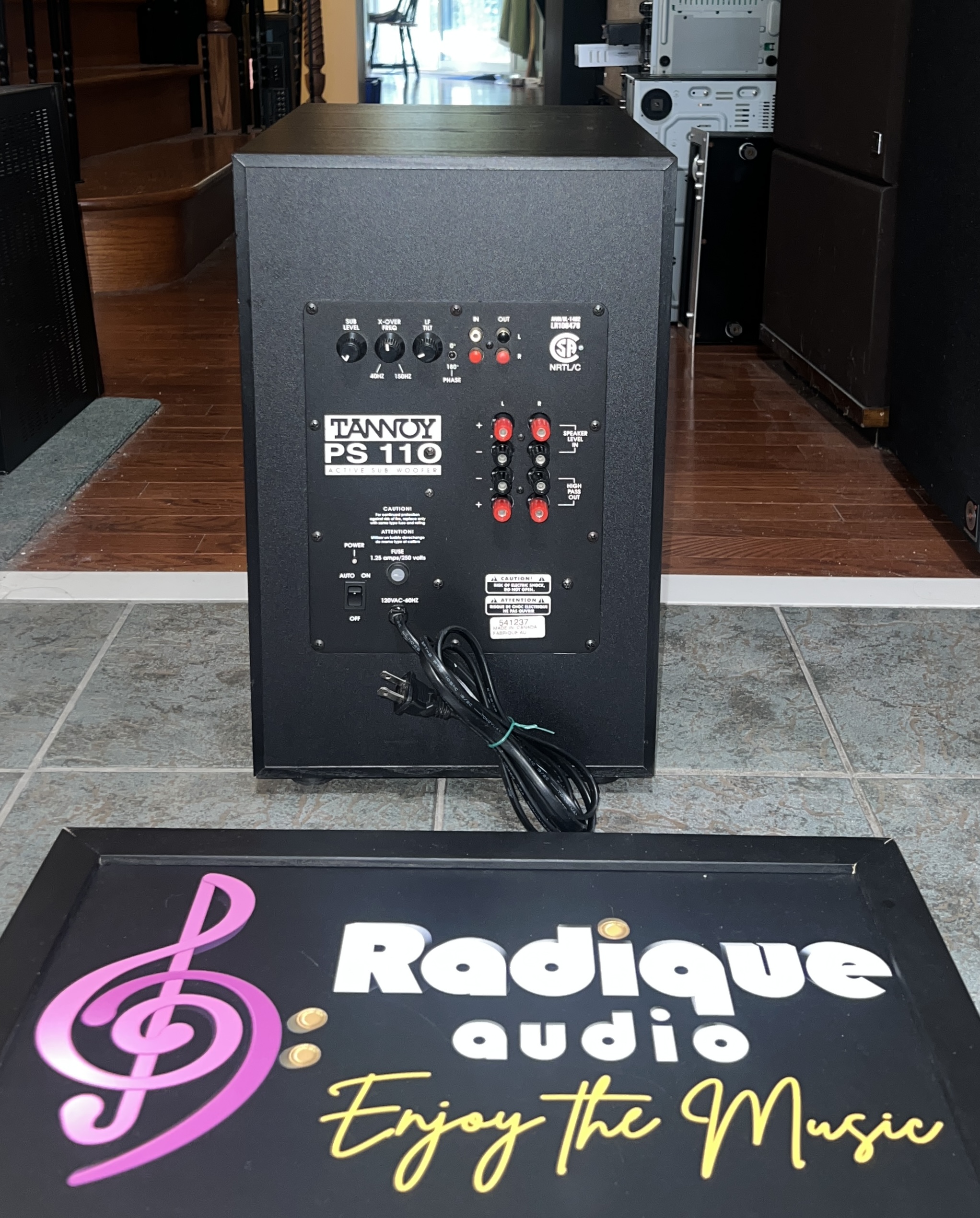
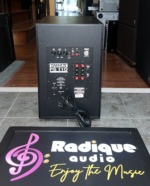
A ten-inch long-throw driver in a front-ported cabinet with a 110-watt MOSFET amplifier on the rear plate. The connection panel is the reason to hunt one down: speaker level in, and a second pair of posts marked High Pass Out, so an amplifier with no subwoofer output can run it and get its mains high-passed in return. Crossover 40 to 150 Hz, LF tilt, phase switch. Built in Canada; condition good.
Out of stock
This one has sold. Want first dibs on the next one?
We take these in regularly. Leave your name and email, and we’ll email you the moment one is listed, so you hear first. No cost, no obligation.
Email me when one is listed
Audiophile quality without the audiophile price. Gold Series Subwoofer Cable, from $39.00 →
Other subwoofers we have in stock now
3 in stock · $245.00–$295.00 · all ship
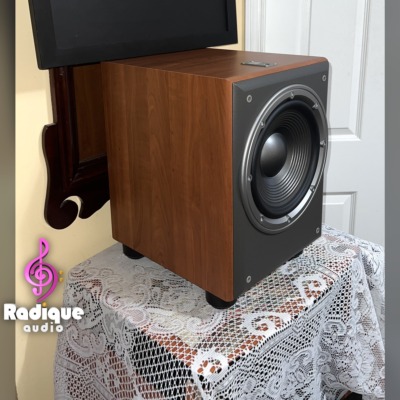 JBL Northridge E150P 10-Inch Powered Subwoofer – Cherry, 150W$295.00Ships
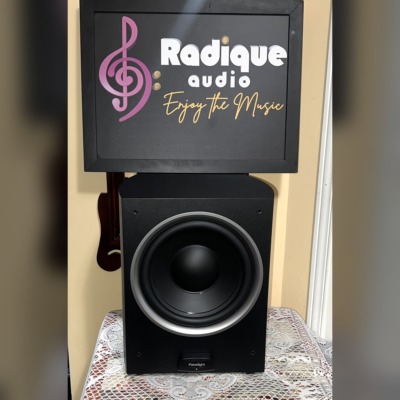 Paradigm PDR-10 v.4 10″ Powered Subwoofer – 300W Peak, Serviced$295.00Ships
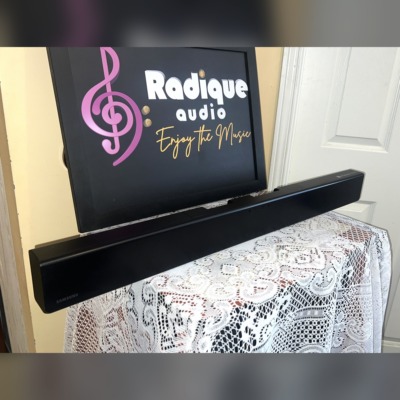 Samsung HW-T550 2.1 Soundbar + Wireless Sub, Bluetooth$245.00Ships
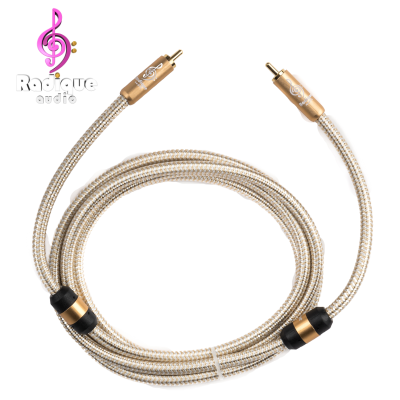
Audiophile quality without the audiophile price.
Our own Gold Series subwoofer cable: gold-plated corrosion-resistant connectors, heavy shielding, and slim plug jackets that fit behind a sub pushed against a wall. Four stock lengths, 2 to 10 metres, so the run from your amplifier to wherever the sub really sits is one cable.
Gold Series Subwoofer Cable, from $39.00 →Tannoy PS 110 Active Sub-Woofer — Made in Canada, 10-Inch Long-Throw Driver, 110-Watt MOSFET Amplifier, Speaker Level and Line Level Connections
A Canadian-built 10-inch powered subwoofer in good condition, with a rear panel that will connect to almost anything, vintage or modern.
Made in Canada
Start with where it was made, because it is not what anyone expects from a Tannoy. This one was built in Canada — the plate on the back says so, and carries CSA certification alongside it. For a British marque best known for Scottish-built studio monitors, a Canadian-made subwoofer is an unusual thing to find.
Driver and Amplifier
The PS 110 pairs a long-throw 10-inch woofer in a front-ported cabinet with a 110-watt MOSFET amplifier built into the rear panel. Front porting matters on a subwoofer more than on anything else in a system: it means the cabinet can go against a wall or into a corner without the port loading against the room and turning the bass into one loud note.
The Connection Panel
The connection panel is the reason this one is worth hunting for. There are line level RCA inputs and outputs for left and right, and separate speaker level binding posts for left and right — and crucially, a second pair of binding posts marked High Pass Out.
Works With Vintage Systems
That is what makes this subwoofer work with a vintage amplifier or receiver that has no subwoofer output at all. Run speaker cable from the amplifier into the Speaker Level In posts, then a second pair from the High Pass Out posts to your main speakers, and the job is done. Better still, the main speakers come out of it high-passed rather than simply passed along, so they are relieved of the deep bass they were struggling with — which is where most of the audible improvement in adding a subwoofer actually comes from. Most subwoofers built in the last twenty years assume a modern receiver with a dedicated LFE jack and cannot be used any other way. This one does not care what decade your amplifier came from.
Modern System Connection
For a modern system, the line level inputs take the subwoofer output from a receiver or processor, and the line level outputs pass the signal onward.
Room Adjustment
The adjustment set is just as thorough. The crossover sweeps from 40 to 150 Hz. There is a sub level pot for balancing the subwoofer against the mains, an LF tilt control for shaping the bottom end to suit the room, and a phase switch offering 0 or 180 degrees. Most subwoofers give you a level knob, a crossover dial and nothing else. This gives you enough adjustment to actually solve a room rather than compromise with it, which is the whole difficulty with siting a subwoofer in a normal-sized listening room. The power switch has three positions — Auto, On and Off — so it can sleep with the system or stay awake as you prefer.
What It Does and Does Not Do
On what it does and does not do: this is a controlled, well-behaved subwoofer rather than a brute. It reaches down into the high 20s with real pitch definition — you hear which note the bass player is on, not just that something low happened. It suits bookshelf speakers and modest towers rather than high-output monitors, and an onboard limiter protects the driver from overexcursion if it is asked for more than it has. Maximum output is 110 dB.
Cabinet and Condition
The cabinet is finished in black vinyl and sits on four substantial rubber feet that keep it from coupling into the floor.
Tested Here
It has been tested here to confirm it performs as originally designed, and grades good.
A Canadian-built 10-inch subwoofer that connects to a 1975 receiver as happily as to a modern processor, and can be dialled into a real room rather than placed and hoped for.
Features
- Made in Canada, CSA certified
- 10-inch long-throw woofer in a front-ported cabinet
- 110-watt MOSFET amplifier
- Speaker level inputs — works with vintage amplifiers that have no subwoofer output
- High Pass Out speaker terminals — main speakers are filtered, not just passed through
- Line level RCA inputs and outputs, left and right
- Crossover adjustable 40 to 150 Hz
- LF tilt control for room shaping
- Phase switch, 0 or 180 degrees
- Three-position power switch — Auto, On, Off
- Onboard limiter protects the driver
- Four heavy rubber isolation feet
Tannoy PS 110 Active Sub-Woofer Specifications
- Model: PS 110 Active Sub-Woofer
- Design: Active front-ported subwoofer
- Driver: 10-inch long-throw woofer
- Amplifier: 110 watts, MOSFET
- Crossover: Variable 40 to 150 Hz
- Controls: Sub level, crossover frequency, LF tilt, phase (0/180), power (Auto/On/Off)
- Speaker Level Connections: Left and right inputs, left and right High Pass outputs
- Line Level Connections: Left and right RCA in, left and right RCA out
- Maximum SPL: 110 dB
- Power: 120 V AC, 60 Hz
- Certification: CSA, ANSI/UL-1492
- Country of Manufacture: Canada
- Finish: Black vinyl
- Condition: Good
- Dimensions: (Width x Height x Depth) 11.3 x 17.5 x 16.5 inches (287 x 445 x 419 mm)
- Weight: 32 lbs (14.5 kg)
🔊 Subwoofer Cable
This subwoofer takes a line-level feed on RCA. Our Gold Series Subwoofer Cable is a shielded lead built for exactly that run, in stock and ready to go. 👉
⚠️ Important Information for International Buyers
This unit is configured for North American 110/120V power. Buyers outside North America will require a step-down transformer and appropriate plug adapter.
✅ Buy With Confidence — The Radique Promise
Backed by Radique Audio’s Bumper-to-Bumper Warranty and our Perpetual Trade-Back Program. When you’re ready to move on, we’ll take it back. That’s the Radique difference.
📦 Watch how we protect your gear — our unboxing video.
📺 Curious about our business? Check out our YouTube channel for behind-the-scenes videos and more!
📞 Questions? Use the Ask a Question button above, or call us at 613-416-9995.
| Weight | 34 lbs |
|---|---|
| Dimensions | 20.5 × 15.3 × 21.5 in |
Tannoy began in London in 1926, and since the late 1940s it has been known for its Dual Concentric driver, with the tweeter set in the centre of the woofer. We carry Tannoy towers, bookshelf speakers, centre channels and subwoofers. We've had more than 210 Tannoy listings so far, covering more than 65 different models. Every used Tannoy here is inspected, tested and serviced as required, then photographed in-house and covered by our Bumper-to-Bumper Warranty and Perpetual Trade-Back Program. Don't see the model you want? Tell us on First Dibs and we'll email you when one arrives.
Our five best-selling Tannoy models so far: the Mercury mx3 towers, the Mercury mx2 and mx1 bookshelf speakers, the PS 110 subwoofer and the Mercury mxC centre.
The Tannoy story, 1926 to today
Guy R. Fountain founded the company in London in 1926 as the Tulsemere Manufacturing Company, making rectifiers and battery chargers for radio sets. It became Tannoy in 1928, a name taken from the tantalum alloy in his rectifier.
The Dual Concentric. Ronnie Rackham's Dual Concentric driver first appeared as the "Monitor Black" in 1947 or 1948 (sources differ). The Monitor Silver, Red and Gold generations followed through the 1950s and 1960s, then the HPD in 1974.
Scotland. Harman International bought Tannoy in 1974, and production moved from London to Coatbridge, Scotland, in 1976. Managers bought the business in 1981, Tannoy merged with Goodmans in the mid-1980s and joined Denmark's TC Group in 2002.
Today. Music Group, later Music Tribe, bought TC Group in 2015. From 2016 the lower-priced ranges, such as Mercury, were made in China, while Prestige stayed in Scotland, where Tannoy's headquarters and assembly are now in Hamilton.
Which Tannoy is which?
1970s HPD cabinets: the Arden, Berkeley, Cheviot, Devon and Eaton, all with Dual Concentric drivers. The Arden, Cheviot and Eaton were reissued as the "Legacy" series in 2017.
Mercury (early 1980s onward): the entry range, through many generations. Our best-selling mx3, mx2, mx1 and mxC come from this family.
Profile (1991 to 1994) and Sensys DC (about 2004): Dual Concentric ranges between Mercury and Prestige.
Revolution (1998 onward): cherry-veneered models such as the R1, R2 and R3.
Prestige (1980s onward): the traditional-styled Dual Concentric range, such as the Westminster and Stirling, later in Gold Reference versions.
Definition (2009): birch-ply Dual Concentric models built in Scotland, such as the DC8 and DC10T.
Buying used Tannoy: what to check
HPD-era surrounds. The surrounds on 1970s drivers rot with age, and many have been replaced. Ask what was replaced and with what.
Dating the drivers. Frame colour alone is not a reliable guide to a Dual Concentric's age; construction details date it better.
Reused names. An Arden, Cheviot or Eaton may be a 1970s original or a 2017 Legacy reissue.
Origin label. From 2016, Mercury and Revolution models were made in China and Prestige in Scotland. Check the label if it matters to you.
Everything we list is inspected, tested and serviced as required here, and comes with our warranty.
You may also like…
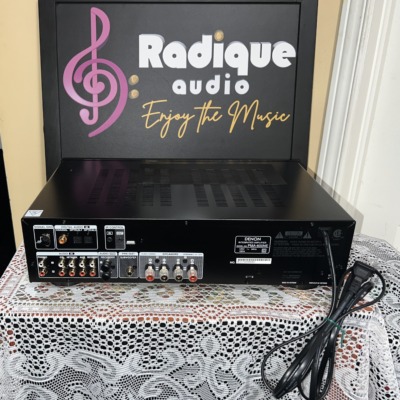
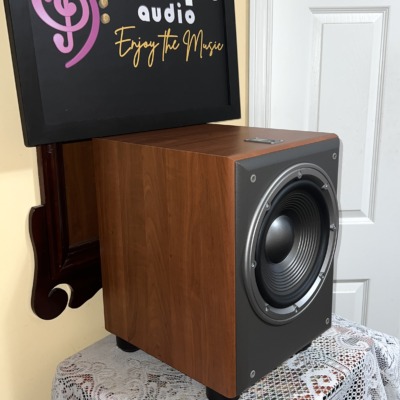
JBL Northridge E150P 10-Inch Powered Subwoofer – Cherry, 150W
A solidly built JBL powered ten, in the uncommon Cherry finish rather than the usual black.
✔️ Condition: Very Good — cabinet presents well, working properly
✔️ Covered by Radique Warranty
✔️ Includes Perpetual Trade-Back Program eligibility
✔️ Expertly packed for safe shipping


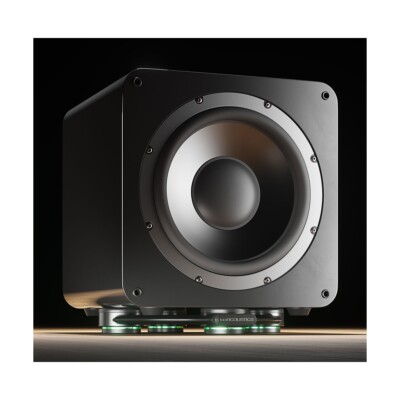
IsoAcoustics Aperta Sub XL Subwoofer Isolation Stand
- ✔️ Genuine IsoAcoustics Aperta Sub XL, brand new in box
- ✔️ Low-profile isolation stand for front-firing and side-firing subwoofers up to 160 lbs (72.6 kg)
- ✔️ Includes 1 stand plus 4 carpet discs for carpeted surfaces
- ✔️ Helps reduce energy transfer, room rattle, and muddy bass smear for tighter low-frequency performance
- ✔️ Backed by a 2-year manufacturer’s warranty in Canada
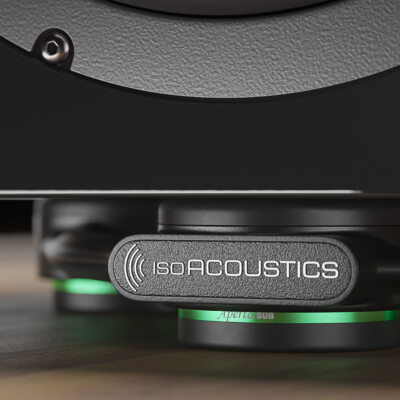
IsoAcoustics Aperta Sub Subwoofer Isolation Stand
- ✔️ Genuine IsoAcoustics Aperta Sub, brand new in box
- ✔️ Low-profile isolation stand for front-firing and side-firing subwoofers up to 80 lbs (36.3 kg)
- ✔️ Includes 1 stand plus 4 carpet discs for carpeted surfaces
- ✔️ Helps reduce energy transfer, room rattle, and muddy bass smear for tighter low-frequency performance
- ✔️ Backed by a 2-year manufacturer’s warranty in Canada

Related Products
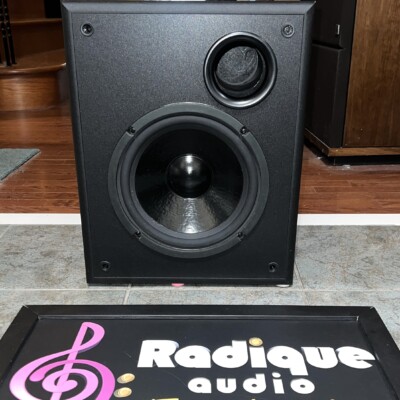
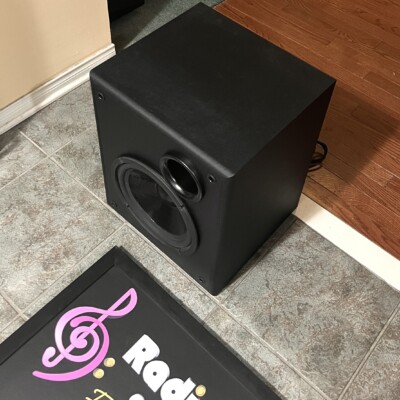
Yamaha SW-3 Active Servo Subwoofer — 10″ Woofer | Air Woofer Tec
Yamaha’s Active Servo Technology couples a negative-impedance drive amplifier to a Helmholtz resonator port — the Air Woofer opening — so the amplifier corrects the driver’s motion as it works. 100 watts into a 25 cm cone, rated down to 25 Hz, with a continuously variable 50–150 Hz high-cut at 24 dB per octave. Speaker-level and line inputs both. Very good condition.
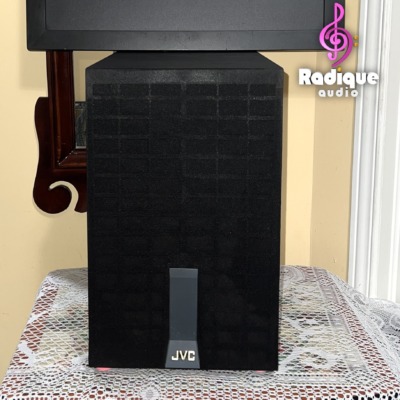
JVC SX-PW33 Slim Tower Subwoofer — 6.5in, 100W, High-Pass Out
A tall, narrow bass column meant to stand beside a cabinet rather than in front of it — 8.25 inches across the front and unusually deep at 17, which is the trade: the depth buys back the internal volume the narrow baffle gives away, so a 6.5 inch woofer is properly loaded in a strip of floor barely wider than a hardcover book. Driven by an integrated 100 watt amplifier, with speaker-level inputs and high-pass outputs so it works with an amplifier that has no subwoofer output at all. Good condition.
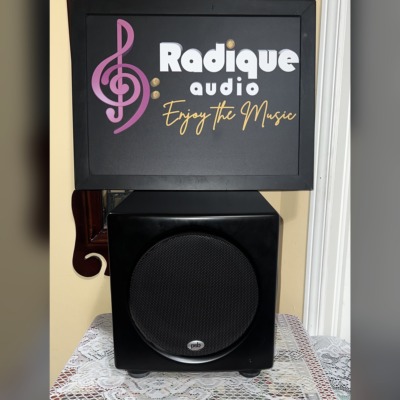
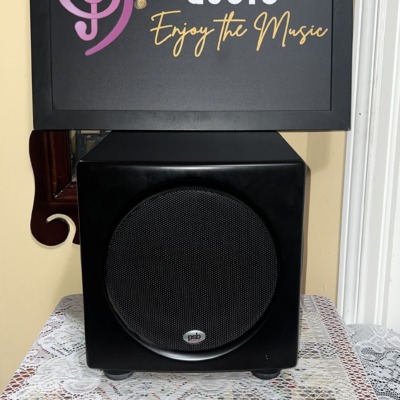
PSB SubSeries HD10 10″ Powered Subwoofer — 750W, 2000W Peak!
A serious subwoofer in about a square foot of floor, from one of the most respected names in Canadian loudspeaker design, with deep, powerful bass for home theatre and most music.
✔️ Good condition — light scuffs on the top, and a little vibration when played loud (details below)
✔️ 10-inch driver, two passive radiators and a 750 W Class H amplifier
✔️ Line-level and high-level inputs — works even with a receiver that has no sub out
✔️ Covered by Radique Warranty
✔️ Includes Perpetual Trade-Back Program eligibility
✔️ Expertly packed for safe shipping
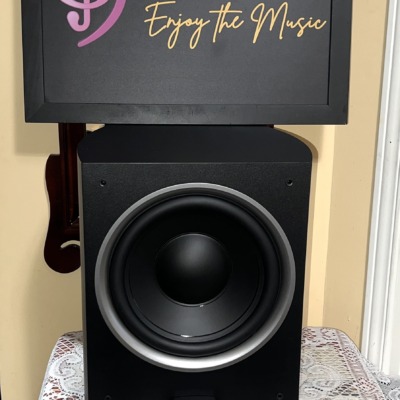
Paradigm PDR-10 v.4 10″ Powered Subwoofer – 300W Peak, Serviced
A black Paradigm PDR-10 v.4 powered subwoofer, with a 10-inch forward-firing driver and 100 watts RMS (300 watts dynamic peak) on board, serviced on our bench and in very good condition.
✔️ Very good condition — free of significant marks
✔️ Serviced on our bench and tested before listing
✔️ 10-inch forward-firing driver, 100 W RMS and 300 W dynamic peak
✔️ Covered by Radique Warranty
✔️ Includes Perpetual Trade-Back Program eligibility
✔️ Expertly packed for safe shipping
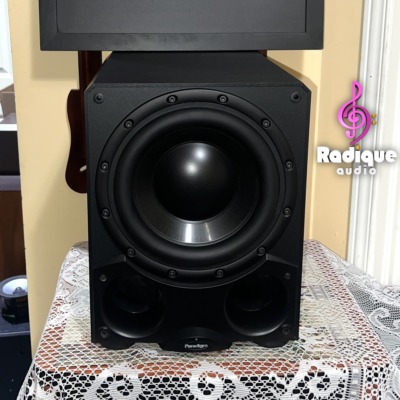
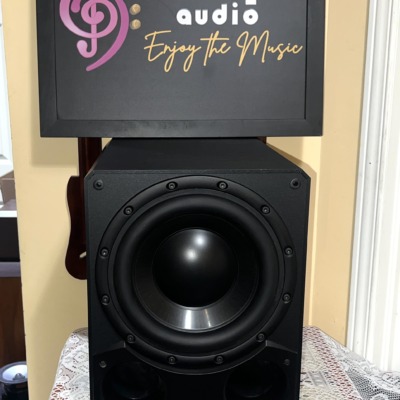
Paradigm DSP-3100 v.2 10″ Subwoofer – 600W Peak, Made in Canada
A black Paradigm DSP-3100 v.2 powered subwoofer, made in Canada, with a 10-inch front-firing driver and 200 watts RMS (600 watts dynamic peak) on board. It has been tested on our bench and is in very good condition.
✔️ Very good condition — removable black cloth grille included
✔️ 10-inch front-firing driver, 200 W RMS / 600 W peak Class-D
✔️ Front ports for hidden installs — made in Canada
✔️ Covered by Radique Warranty
✔️ Includes Perpetual Trade-Back Program eligibility
✔️ Expertly packed for safe shipping
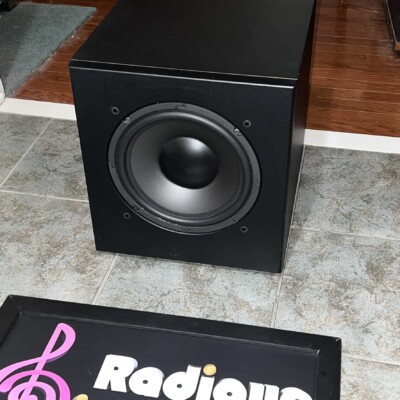
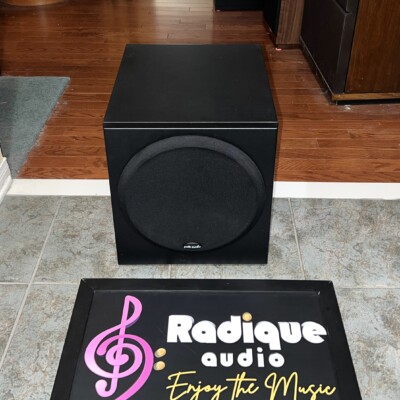
Polk Audio PSW350 10″ Front-Firing Powered Subwoofer 260W
A 10-inch front-firing Dynamic Balance woofer on a 100-watt RMS amplifier — 260 watts dynamic — in a dual-rear-ported cabinet good for 25 to 180 Hz. Speaker-level in and out, stereo line inputs and an unfiltered LFE jack, with a variable 60 to 160 Hz low-pass and a phase switch. 37 lbs, black matte. Very good cosmetic condition.
