


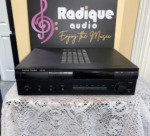
Kenwood KT-33 AM/FM Stereo Tuner
$75.00
Out of stock
Get first dibs on the next one
Kenwood KT-33 AM/FM Stereo Tuner – Tested, Working Perfectly
Discover the reliable tuning and classic design of the Kenwood KT-33—a compact AM/FM stereo tuner from the early 1980s that delivers clean, straightforward radio reception. Fully tested and working perfectly, this vintage tuner is ready to complement any classic audio system or vinyl setup.
The KT-33 exemplifies Kenwood’s no-nonsense approach to tuner design—simple, functional, and built to last. With solid FM sensitivity and selectivity paired with full AM coverage, the KT-33 provides dependable access to broadcast radio without excessive complexity. The clean analog design means minimal digital noise and interference—attributes that make vintage tuners like this particularly valued by analog purists and vinyl collectors.
Straightforward Feature Set:
FM tuning range: 88–110 MHz (standard FM broadcast band)
AM tuning range: 500 kHz–1600 kHz (standard AM band)
Analog dial tuning with smooth, easy-to-use mechanical controls
Stereo indicator light for FM stereo reception
Signal strength meter for optimizing antenna placement
Standard RCA audio outputs (left/right)
Antenna connections: 75Ω (coaxial) and 300Ω (twin-lead) terminals
Compact, lightweight design perfect for modest shelving or system integration
Original design approximately 1981—built in an era of meticulous Japanese craftsmanship
Why Vintage Tuners Matter:
In the streaming era, vintage tuners like the KT-33 remind us of the pleasure of exploring radio discovery—stumbling upon unexpected stations, enjoying uninterrupted musical programming, or catching live broadcasts. The KT-33’s simplicity means it will function reliably for decades with minimal maintenance. No software updates, no connectivity issues—just honest radio tuning.
Key Features:
Full AM/FM broadcast coverage
Clean analog tuning circuitry
Stereo indicator and signal strength meter
Dual antenna inputs (75Ω and 300Ω)
Compact, space-saving form factor
Mechanical tuning control (no touch-sensitive surfaces to fail)
Fully tested and working perfectly
Specifications:
FM Range: 88–110 MHz
AM Range: 500 kHz–1600 kHz
Frequency Response: 30Hz–15kHz (FM)
Signal-to-Noise Ratio: Approx. 70dB (FM), 50dB (AM)
Total Harmonic Distortion: <0.5% (FM)
Output Level: Approximately 0.75V (standard RCA level)
Antenna Impedance: 75Ω (coaxial), 300Ω (balanced/twin-lead)
Power Consumption: Approximately 10W
Dimensions: Compact shelving unit (approximately 15.75″ × 5.5″ × 12″)
Weight: Approximately 3.25 kg (7.2 lbs)
Year: Circa 1981
Made in: Japan
A solid, dependable tuner for anyone seeking straightforward FM/AM radio reception without complications—perfect for vintage audio collectors, analog enthusiasts, or anyone rediscovering the joy of radio, asking just $75; buy with confidence and benefit from Radique’s “Bumper to Bumper” warranty and Perpetual trade back policy.
| Weight | 9 lbs |
|---|---|
| Dimensions | 16 × 19.75 × 9.5 in |
Kenwood began in 1946 as Kasuga Radio in Nagano Prefecture, Japan. As Trio, it sold its products in America under the Kenwood name, and took that name worldwide in 1986. We carry Kenwood stereo receivers and AV receivers, power amplifiers, preamplifiers, tuners and CD players. We've had nearly 60 Kenwood listings so far, covering about 50 different models. Every used Kenwood here is inspected, tested and serviced as required, then photographed in-house and covered by our Bumper-to-Bumper Warranty and Perpetual Trade-Back Program. Don't see the model you want? Tell us on First Dibs and we'll email you when one arrives.
Kenwood models we've sold more than once include the KM-208 power amplifier and the KA-550D integrated amplifier.
The Kenwood story, 1946 to today
Kasuga Radio was founded in 1946 in Nagano Prefecture, Japan, making radio components, and opened a mass-production plant in Tokyo in 1955. It was renamed Trio around 1960.
Where the name came from. Kenwood was coined in America. Bill Kasuga and George Aratani set up Kenwood Electronics in the early 1960s to sell Trio products in the US, and Kasuga said he chose "Ken" because it works as both a Japanese and an American name. Trio later bought Kenwood Electronics, and in 1986 the whole company became Kenwood Corporation.
The hi-fi years. Trio-Kenwood built KR receivers through the 1970s, the KA-1000 integrated amplifier with heat-pipe cooling in 1980, and late-1980s amplifiers with Sigma Drive, which takes the feedback loop out to the speaker terminals. The KR-A receivers ran from the mid 1980s to the mid 1990s.
Today. Kenwood merged with JVC between 2008 and 2011, and JVCKENWOOD Corporation now owns the brand. In Canada, Kenwood today sells car audio, two-way radios and earbuds rather than home hi-fi.
Which Kenwood is which?
1970s KR receivers: such as the KR-2600 of 1976 to 1978, at 15 watts per channel.
KA integrated amps: the KA-1000 of 1980, and the late-1980s "D" models such as the KA-990D, KA-880D and KA-550D, with Sigma Drive.
Power amps and separates: such as the KM-208 power amp of 1987 to 1988, the high-end L-series, and the Basic M and C separates.
KR-A receivers (1984 to 1996) and later AV receivers such as the KRF-A 4020 of 1999.
Tuners and CD players: KT tuners and DP CD players and changers.
Related Products
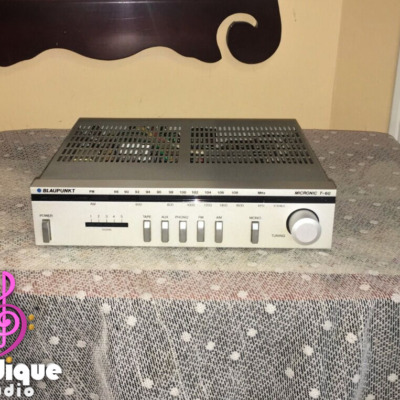
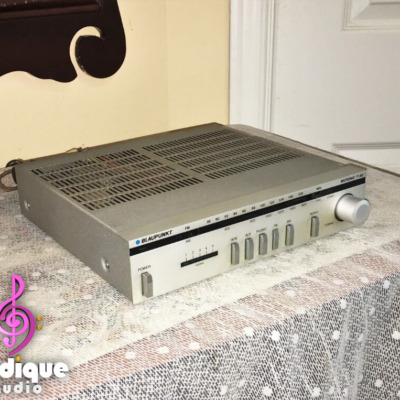
Blaupunkt Micronic T-60 AM/FM Tuner & Preamp – Made in Japan
A rare Blaupunkt Micronic T-60 AM/FM tuner and preamplifier from 1981, designed in Germany and made in Japan, with a phono input for your turntable.
✔️ Tested on our bench, every input, the output and the tuner
✔️ Very good condition
✔️ AM/FM tuner plus phono, aux and tape inputs
✔️ Covered by Radique Warranty
✔️ Includes Perpetual Trade-Back Program eligibility
✔️ Expertly packed for safe shipping
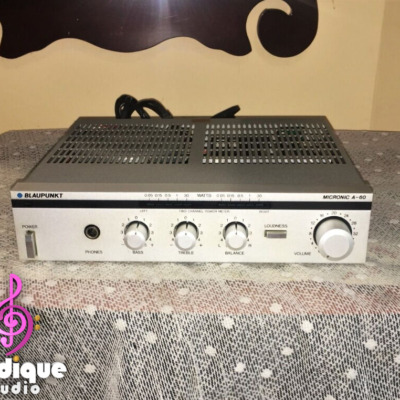
Blaupunkt Micronic A-60 + T-60 Micro System – 20 WPC, Bundle
The complete Blaupunkt Micronic 60 system from 1981, the A-60 amplifier and the matching T-60 AM/FM tuner and preamplifier, together for less than buying them separately.
✔️ Tested on our bench, both units
✔️ Both very good
✔️ Radio, phono, tape and a 20-watt amplifier in a stack 25 cm wide
✔️ Covered by Radique Warranty
✔️ Includes Perpetual Trade-Back Program eligibility
✔️ Expertly packed for safe shipping
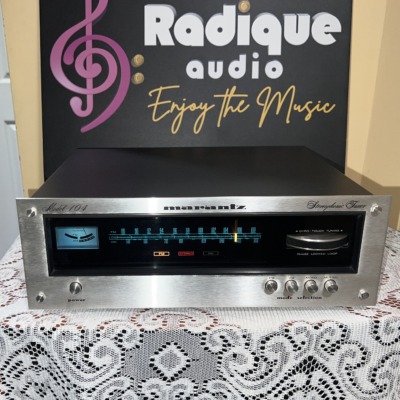

Marantz Model 104 AM/FM Tuner — Made in Japan, Excellent
We sold this tuner ourselves and it came back through our Perpetual Trade-Back Program — so we know what it was when it left, and it has been through our bench again since. A 1976 Model 104 in excellent cosmetic condition: silver face, blue dial lighting, made in Japan.
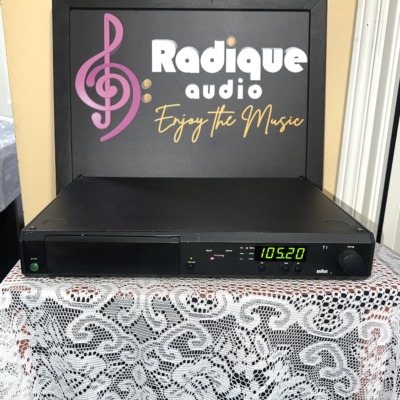
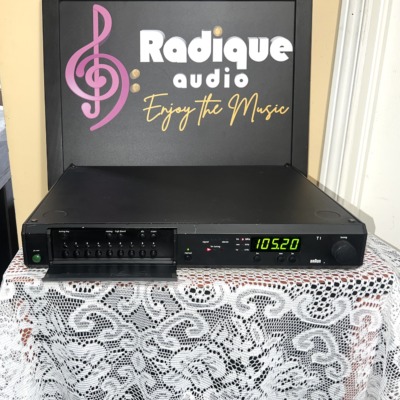
Braun Atelier T1 Slim AM/FM Tuner — 9 Presets, Quartz, Japan
An analogue tuner given a quartz-referenced five-digit readout — the precision of a synthesised design with a real analogue front end behind it, which tends to hold a weak signal more gracefully. The nine presets are not memories: each station button carries its own tuning adjustment, set by hand with a small screwdriver through the panel, so it is effectively nine little tuners in one chassis. Made in Japan, 445 mm wide and 70 mm tall to match the Atelier deck. Good condition.
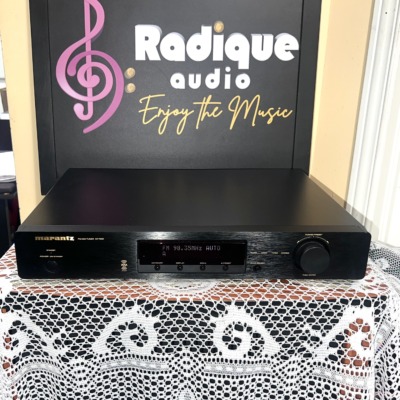
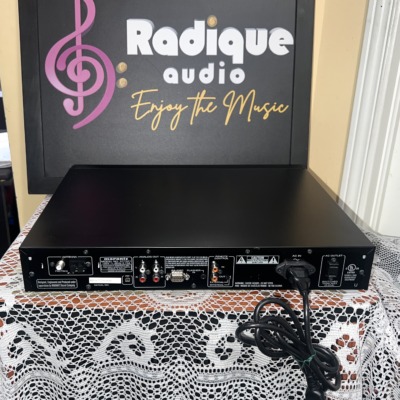
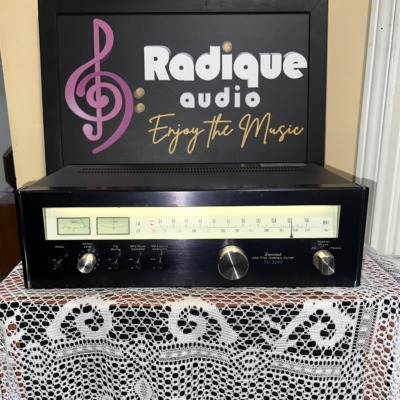
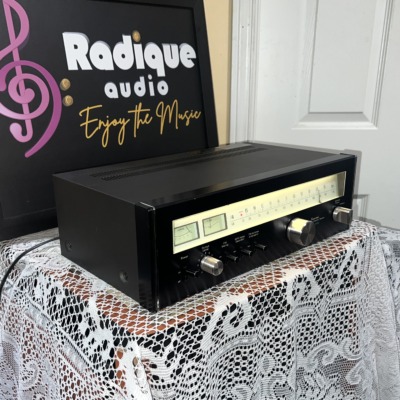
Sansui TU-5900 AM/FM Stereo Tuner — Dolby FM, Made in Japan
An analogue AM/FM stereo tuner from Sansui's strongest years, built in Japan in the mid-seventies as the matching partner to the AU-series integrated amplifiers, and a good deal more serious inside than its modest size suggests.
✔️ Condition: Very Good
✔️ Level One — named in the copy
✔️ Covered by Radique Warranty
✔️ Includes Perpetual Trade-Back Program eligibility
✔️ Expertly packed for safe shipping
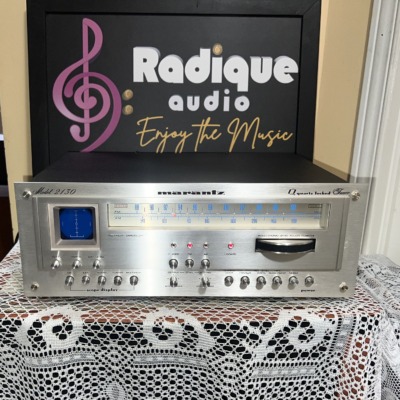
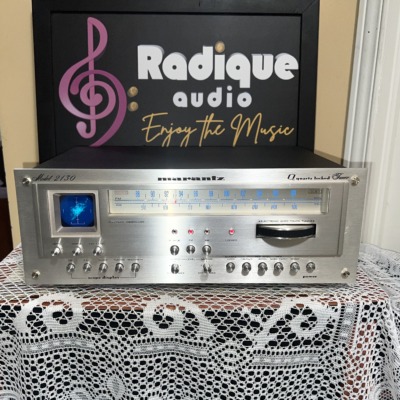
Marantz Model 2130 AM/FM Tuner – Oscilloscope, Original Box
Marantz's quartz-locked flagship tuner with its built-in oscilloscope, in excellent condition and complete with its original Marantz carton.
✔️ Excellent condition — the scope traces cleanly, and the original Marantz carton is included
✔️ Tested on our bench and needed no service
✔️ Built-in oscilloscope, quartz lock and wide/narrow IF — Marantz's flagship tuner of 1978
✔️ Covered by Radique Warranty
✔️ Includes Perpetual Trade-Back Program eligibility
✔️ Expertly packed for safe shipping
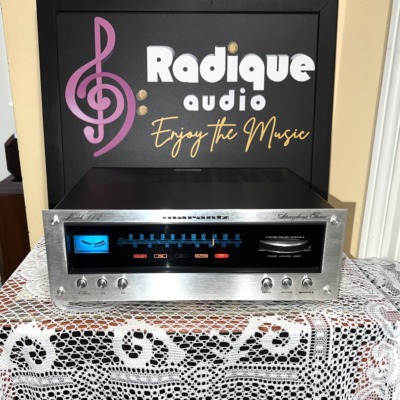
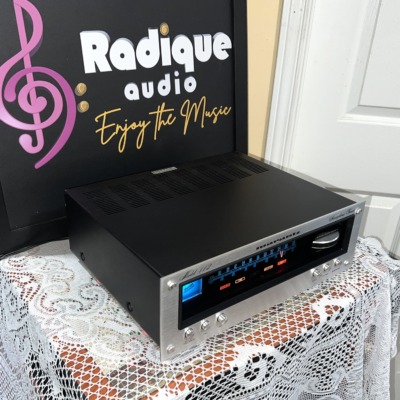
Marantz Model 112 Vintage AM/FM Stereo Tuner – Made in Japan
A mid-1970s Marantz Model 112 AM/FM stereo tuner, designed in the USA and made in Japan, serviced on our bench.
✔️ Serviced on our bench, dial lamps replaced
✔️ Very good condition
✔️ Gyro-Touch flywheel tuning, tuning meter, FM stereo in our bench test
✔️ Bare chassis, or in a cherry cabinet built in our own shop
✔️ Covered by Radique Warranty
✔️ Includes Perpetual Trade-Back Program eligibility
✔️ Expertly packed for safe shipping
