

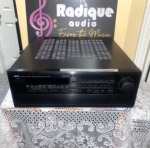
Harman Kardon HK3300 Stereo Receiver – 20 WPC
$245.00
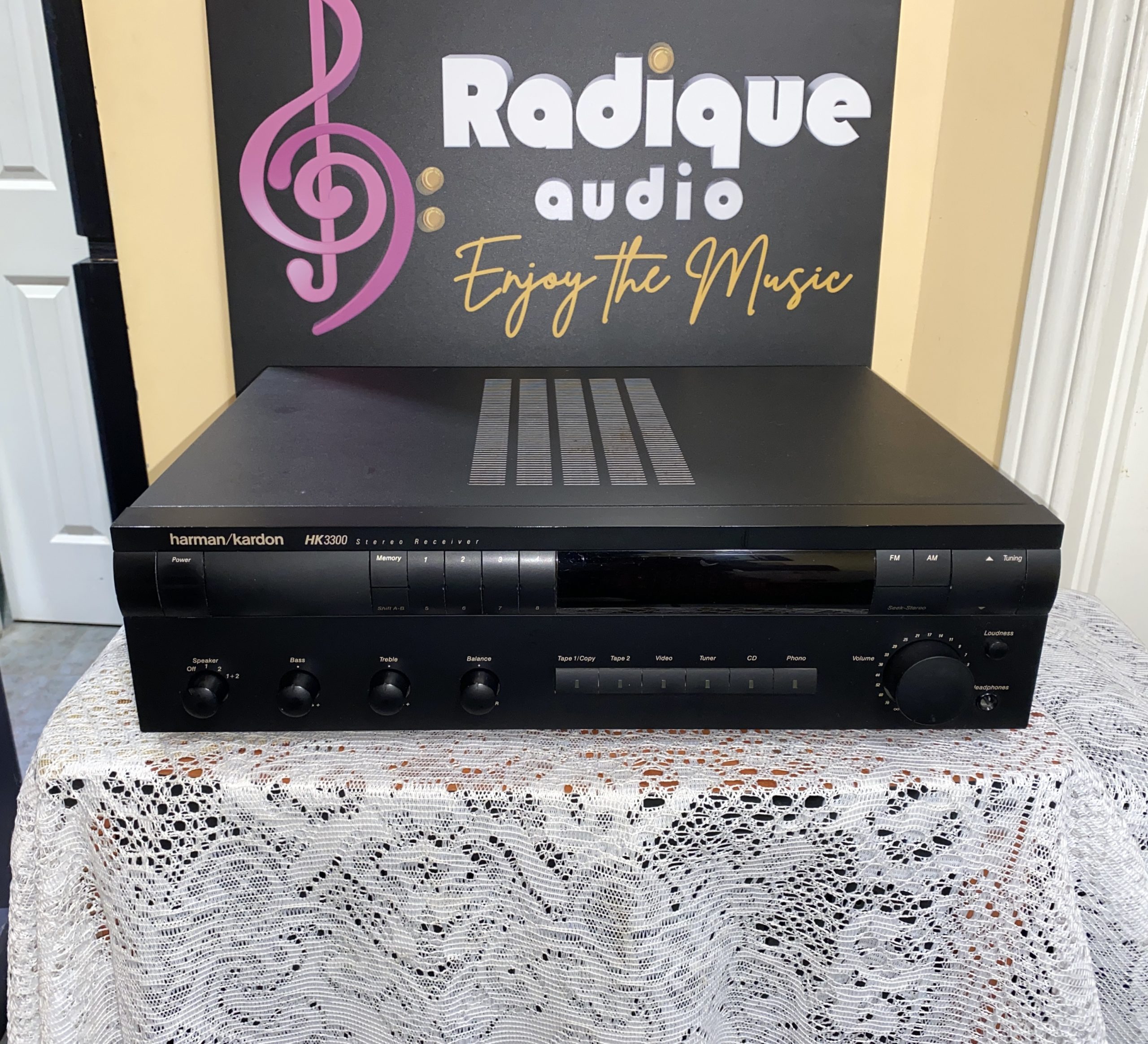
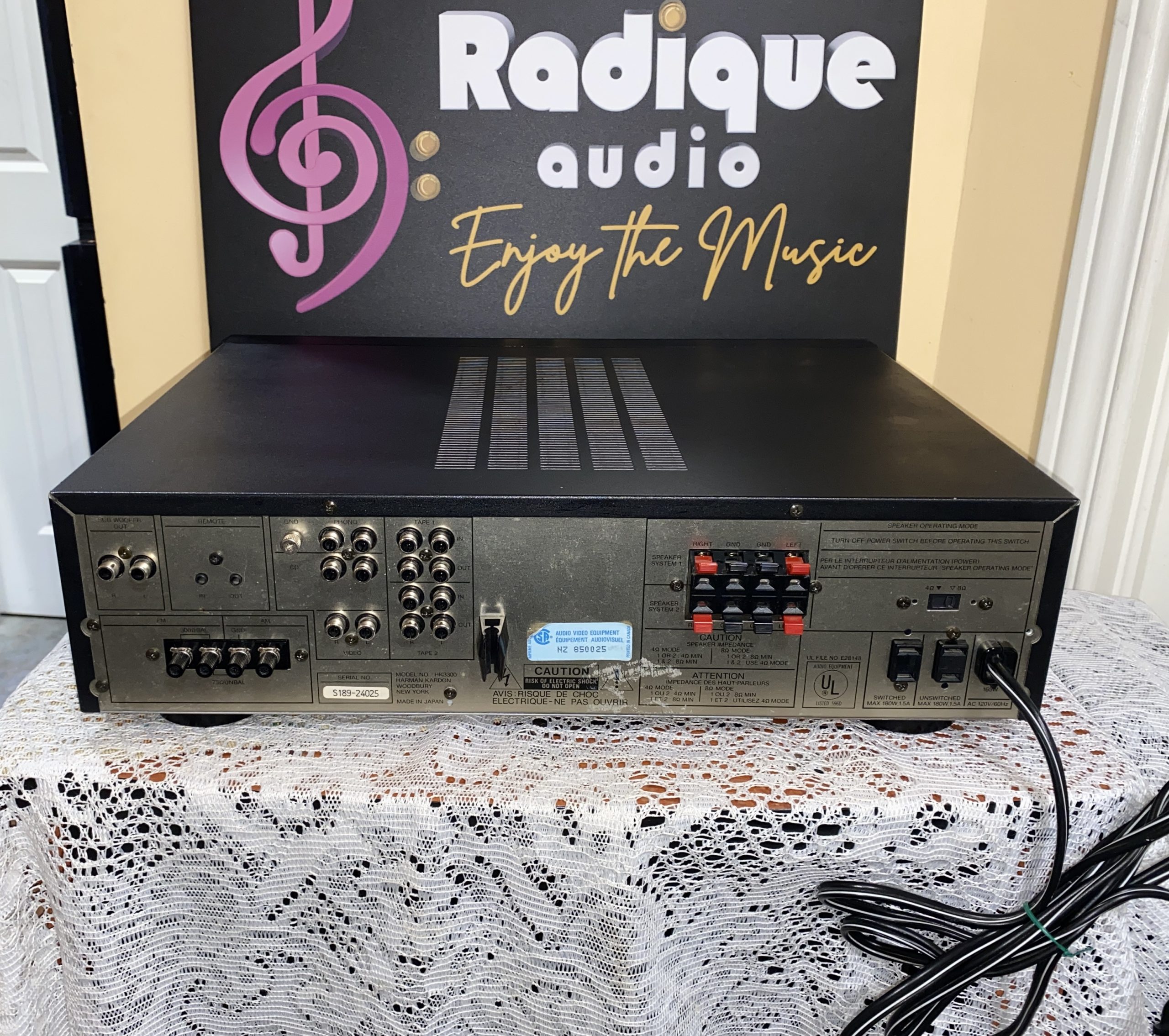
Twenty watts a channel at 0.09% distortion, with a 40-watt dynamic peak and a damping factor of 60 — Harman Kardon’s high-current approach rather than a large power figure. Bandwidth is quoted at 0.5 Hz to 120 kHz, there is an MM phono input at 1.8 mV and dual subwoofer outputs, and impedance is switchable between 8 and 4 ohms. Built 1991–94. Tested and working well.
1 in stock
Harman Kardon HK3300 AM/FM Stereo Receiver – 20 Watts Per Channel with w/ Phono & Dual Sub outputs; Tested, Working Well
Discover the elegant simplicity and refined sound of the Harman Kardon HK3300—a beautifully designed 1991-1994 stereo receiver that delivers sophisticated musicality and impressive current capacity. Fully tested and working well, this compact yet capable receiver is the perfect foundation for vinyl playback, digital audio, or classic music systems.
The HK3300 exemplifies Harman Kardon’s design philosophy: straightforward elegance combined with genuine sonic performance. With 20 watts per channel (8Ω), the HK3300 may appear modestly powered, but its high instantaneous current capability and 40-watt dynamic peak power deliver surprising impact with any reasonable loudspeaker, excelling with efficient speakers (89dB+) or quality bookshelf designs. The result is precise, dynamic sound with excellent control—proof that refined engineering trumps raw wattage.
The ultrawide-bandwidth amplifier design (0.5Hz–120kHz) ensures exceptional transient accuracy and phase linearity, allowing every musical detail to shine through with clarity and naturalism. The signature Harman Kardon high-current output stage maintains tight control over speaker drivers, producing crisp dynamics, accurate bass, and smooth, grain-free highs that music lovers appreciate.
Comprehensive Connectivity:
Moving Magnet phono input with precision RIAA equalization—ideal for turntables
Dual subwoofer outputs for easy integration with powered subs
Three audio line inputs for CD players, DACs, and streamers
Composite video switching (VCR, laserdiscs, aux video)
Tape monitor loop for recording capability
A/B speaker selector for dual speaker systems
Headphone output with separate level control
Front-panel inputs for portable audio devices
Key Features:
20W per channel (8Ω, 0.09% THD) – conservatively rated with high current capacity
High Instantaneous Current Capability (HICC) for speaker control
Ultrawide-bandwidth amplifier: 0.5Hz–120kHz response
40-watt dynamic peak power for transient punch
Damping factor: 60 for excellent bass control
Phono input with 75dB S/N (MM), precision RIAA
Dual subwoofer outputs allowing connection of one or two powered subwoofers for flexible bass integration
FM/MW tuner with 30 presets
Compact, elegant black matt finish
Fully tested and working well
Specifications:
Power Output: 20W/ch (8Ω, 20Hz–20kHz, 0.09% THD)
Frequency Response: 0.5Hz–120kHz
Dynamic Peak Power: 40W (high current capability)
Damping Factor: 60
Signal-to-Noise Ratio: 75dB (phono), 95dB (line)
Input Sensitivity: 1.8mV (MM phono), 115mV (line)
Impedance: 8Ω or 4Ω selectable
Dimensions: 443 × 126 × 349mm (17.4″ × 5″ × 13.75″)
Weight: 6.4kg (14.1 lbs)
Year: 1991–1994
Reviewers and owners consistently praise the HK3300 for its “amazing sound and power out of a fairly small box,” “great build quality,” and “clean, natural audio reproduction.” For a receiver that looks as good as it sounds—elegant, compact, and uncluttered—the HK3300 remains a benchmark for minimalist high-end design; buy with confidence and benefit from Radique’s Bumper-to-Bumper Warranty and Perpetual Trade-Back Program.
| Weight | 16 lbs |
|---|---|
| Dimensions | 18 × 21.4 × 9 in |
Harman Kardon began in New York in 1953, founded by Sidney Harman, who was born in Montreal, and Bernard Kardon. Harman Kardon calls its 1954 Festival D1000 the first hi-fi receiver. We carry Harman Kardon stereo receivers, AV receivers, integrated amplifiers, cassette decks and CD players. We've had more than 130 Harman Kardon listings so far. Every used Harman Kardon here is inspected, tested and serviced as required, then photographed in-house and covered by our Bumper-to-Bumper Warranty and Perpetual Trade-Back Program. Every AV receiver we list is tested input by input on our bench: each HDMI input and output, the analog, optical and coaxial inputs, the subwoofer outputs and the wireless features where it has them. Don't see the model you want? Tell us on First Dibs and we'll email you when one arrives.
The Harman Kardon story, 1953 to today
Sidney Harman and Bernard Kardon left the David Bogen Company, where Kardon was chief engineer, and founded Harman Kardon in New York in 1953. Harman was born in Montreal in 1918 and grew up in New York. Kardon retired in the 1950s.
Receivers first. Harman Kardon calls the Festival D1000 of 1954 the first hi-fi receiver and the Festival TA230 of 1958 the first stereo receiver. The Citation II tube power amplifier of 1959, designed by Stu Hegeman, sold as a kit or ready-built.
Cassette and the 1970s. Harman Kardon says its CAD-5 of 1970 was the first hi-fi cassette recorder with Dolby noise reduction. Its "Twin Powered" receivers of the 1970s, such as the 430 and 730, gave each channel its own power supply.
Owners. Sidney Harman sold the company to Beatrice Foods in the late 1970s, when he became US Deputy Secretary of Commerce. He formed Harman International in 1980 and bought Harman Kardon back in 1985. Samsung bought HARMAN in 2017, and Harman Kardon remains one of its brands.
Which Harman Kardon is which?
Tube era (1950s and 1960s): Festival receivers, and Citation kits and factory-built units such as the Citation I preamplifier and II amplifier.
1970s receivers: the 330 series, the Twin Powered 630, 930, 430 and 730, and the HK670.
1980s receivers: the "i" models such as the hk690i, advertised for its high current capability, and the 330i.
Citation separates: solid-state Citation amplifiers and preamplifiers from 1970 to the 1990s, including the Citation XX of the early 1980s.
Cassette decks: from the CAD-4 and CAD-5 to the 1980s decks numbered CD91 to CD491. Those "CD" models are cassette decks, not CD players; Harman Kardon CD players carry "HD" names.
AV receivers (late 1990s on) and later stereo: the AVR line, such as the AVR 3600, and stereo models such as the HK 3700 and HK 990.
Buying used Harman Kardon: what to check
Dial and meter lamps. Owners report dead or flickering lamps on 1970s receivers such as the 930, 430 and 330C; many are replaced with LEDs.
Capacitors. Expect a 1970s receiver that hasn't been recapped to need it.
Output stage. Owners report blown output transistors on the 730 and 430, often caused by a failed part nearby. Both channels should play cleanly at a realistic level.
Switches. Owners say the 1980s "i" receivers are prone to dirty switches that make channels cut out. Try every input and the balance control.
AV receivers. HDMI is usually the first thing to fail on a modern AV receiver. We test every HDMI input and output before listing.
Everything we list is inspected, tested and serviced as required here, and comes with our warranty.
Related Products
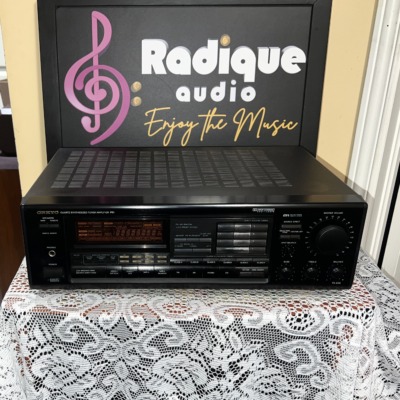
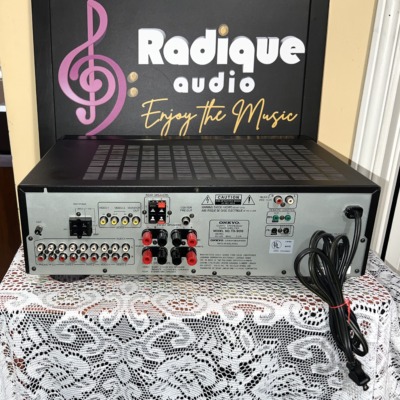
Onkyo TX-906 Stereo Receiver – 80 WPC, Dolby Pro Logic
An early-nineties Onkyo receiver with real power behind it and a phono input for your turntable, through our Level 1 service and playing as it should.
✔️ Good condition — works as it should; the black cabinet and faceplate present well
✔️ Through our Level 1 service — cleaned, deoxidized, checked and thoroughly tested on our bench
✔️ Phono input for your turntable, plus CD and two tape inputs
✔️ Covered by Radique Warranty
✔️ Includes Perpetual Trade-Back Program eligibility
✔️ Expertly packed for safe shipping
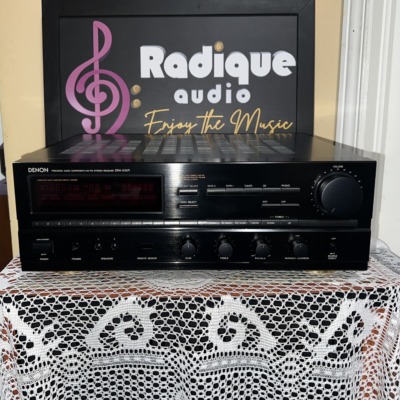
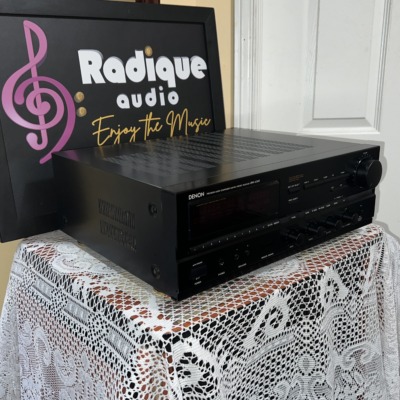
Denon DRA-835R Vintage Stereo Receiver – 100 WPC, Made in Japan
The second-from-the-top model in Denon's early-nineties stereo receiver range, made in Japan and in very good condition, with 100 watts per channel, a phono stage, motorized volume and its original remote.
✔️ Very good condition — free of significant marks
✔️ 100 WPC, MM phono and motorized volume — made in Japan
✔️ Original Denon remote included
✔️ Covered by Radique Warranty
✔️ Includes Perpetual Trade-Back Program eligibility
✔️ Expertly packed for safe shipping
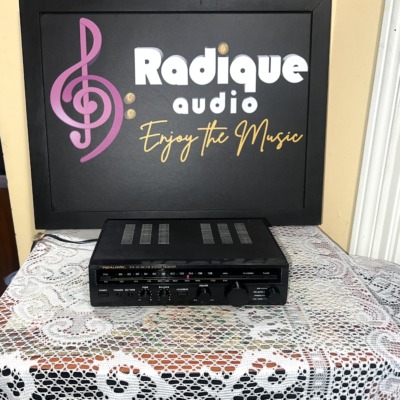
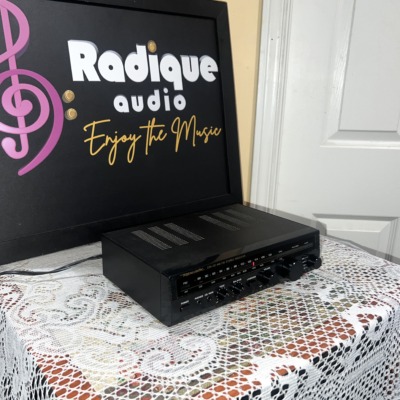
Realistic STA-20 Compact AM/FM Stereo Receiver – 5 WPC, Serviced
Radio Shack's smallest AM/FM stereo receiver of the 1990s, the Realistic STA-20: 5 watts per channel, a rear EQ switch made for mini-speakers, a phono input and a front jack for a phone.
✔️ Serviced on our bench to our Level 1 standard
✔️ Very good condition
✔️ Covered by Radique Warranty
✔️ Includes Perpetual Trade-Back Program eligibility
✔️ Expertly packed for safe shipping
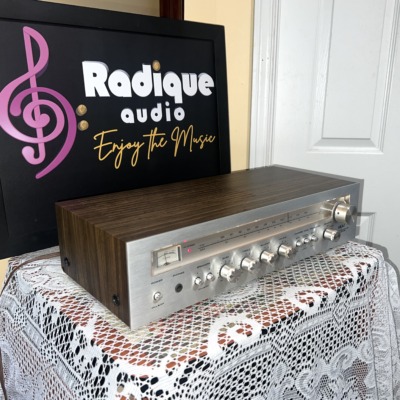
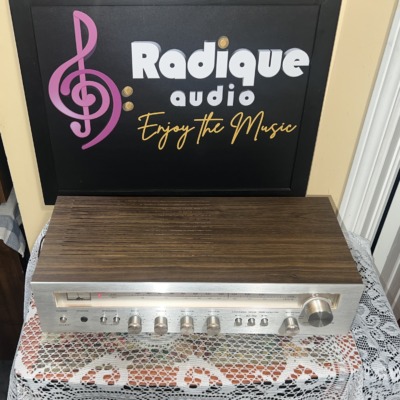
Akai AA-1115 Vintage Stereo Receiver – 15 WPC, Made in Japan
A slim late-1970s Akai AA-1115 AM/FM stereo receiver, made in Japan, silver face in its original woodgrain cabinet.
✔️ Tested on our bench, every input, output and control
✔️ Very good condition
✔️ MM phono, PLL FM tuner, speakers A and B
✔️ Covered by Radique Warranty
✔️ Includes Perpetual Trade-Back Program eligibility
✔️ Expertly packed for safe shipping
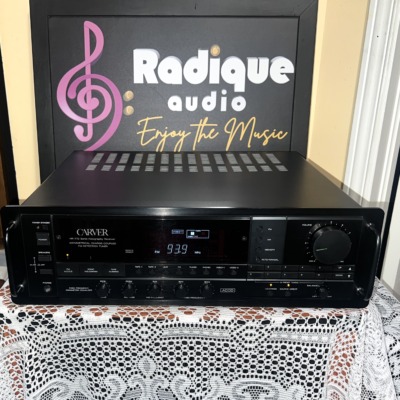
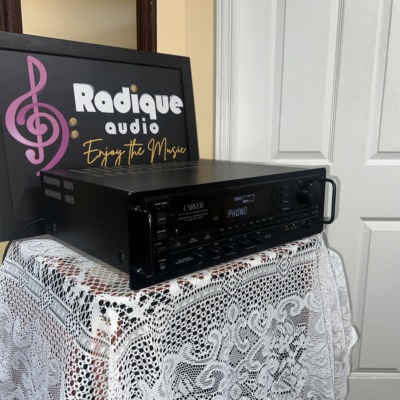
Carver HR-772 Sonic Holography Receiver – 140 WPC, Rack Ears
A Carver HR-772 stereo receiver, Carver's early-1990s flagship: 140 watts per channel, Sonic Holography, and rack ears with front handles.
✔️ Tested on our bench, Sonic Holography included
✔️ Very good condition
✔️ 140 WPC, stable to 2 ohms, MM phono, five-band EQ
✔️ Rack ears and handles for a 19-inch rack
✔️ Covered by Radique Warranty
✔️ Includes Perpetual Trade-Back Program eligibility
✔️ Expertly packed for safe shipping
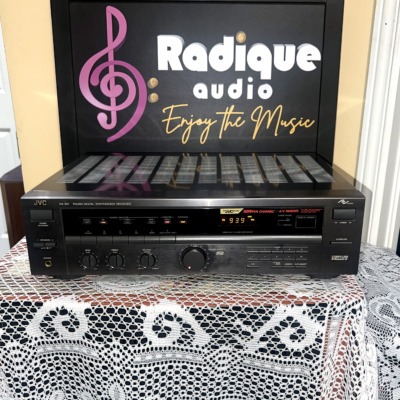
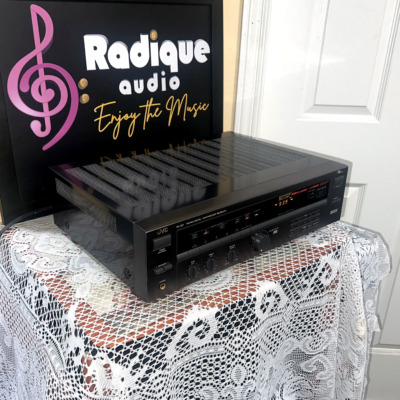
JVC RX-307 Stereo Receiver – 80 WPC, Original Remote & Manual
Eighty watts a side, a proper phono input, and the two things these almost never come with any more: the original remote and the printed manual.
✔️ Condition: Very Good
✔️ Covered by Radique Warranty
✔️ Includes Perpetual Trade-Back Program eligibility
✔️ Expertly packed for safe shipping
